Abstract Logo Design vs Literal Marks for B2B
Selecting between abstract logo design and literal iconography is an operational decision, not an aesthetic preference. Literal marks reduce friction for single-capability practices. Abstract marks build expandable equity for mid-market professional services firms scaling across multiple sectors. This guide provides the strategic decision framework for UK corporate leaders.
 By Stuart Crawford
 Reviewed by Tabitha Ayers
Updated 9 min read
On this page9 min left
- What Is Abstract Logo Design?
- Why Literal Logos Feel Safer to Corporate Boards
- Empirical Reality and Low-Attention Processing Speed
- The Cost for Scaling Professional Services
- Mitigating Brand Risk Across Touchpoints
- Won't an Abstract Mark Confuse Buyers?
- Abstract vs Literal Framework
- The Verdict
- Frequently asked questions
Abstract logo design is a branding methodology that uses non-representational geometric shapes, conceptual forms, or typography-adjacent symbols to represent an organisation’s overarching identity without illustrating its specific physical products, operational tools, or current services.
Key Strategic Insights Prevents Capability Lock-in: Abstract marks allow professional practices to expand service lines without invalidating their visual asset. Superior Cognitive Speed: Empirical testing shows abstract geometric marks achieve a 74.8% correct recognition rate in low-attention environments, outperforming descriptive symbols. Scalable Brand Equity: Descriptive icons explain immediate function for early-stage firms; abstract marks accumulate long-term institutional value for scaling enterprises.
While a literal logo explains what a business delivers today, an abstract mark creates operational headroom for what the enterprise becomes tomorrow. For mid-market accountancy, legal, and consultancy firms, forcing a visual mark to describe technical capabilities introduces costly commercial constraints.
Mid-market professional services firms frequently default to descriptive iconography during a rebrand because immediate clarity feels safe to a board of directors. Yet, forcing a visual mark to explain complex corporate capabilities creates visual lock-in.
When a £15m management consultancy, accountancy, or commercial law practice expands into technology advisory or M&A integration, a literal icon depicting their founding discipline becomes an operational constraint.
Selecting between an abstract mark and a descriptive symbol is not a matter of graphic taste. It is a strategic choice between reducing immediate buyer friction and building long-term, expandable brand equity.
What Is Abstract Logo Design?
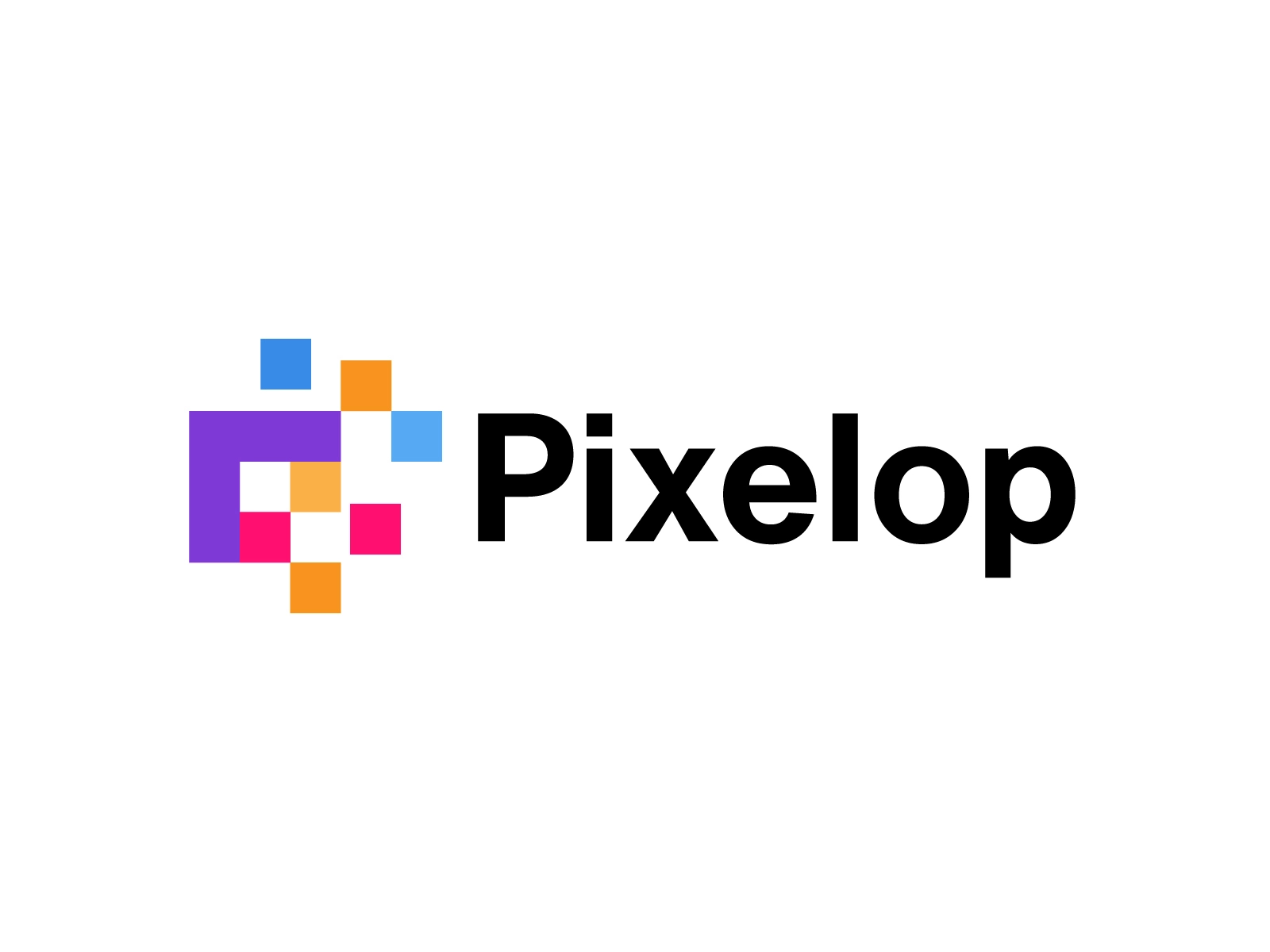
Abstract logo design is a visual identity strategy that represents a corporate entity using non-representational geometric or conceptual forms rather than explicit visual depictions of products, services, or physical objects.
- Conceptual Representation: Abstract marks convey corporate attributes—such as momentum, precision, or integration—rather than illustrating operational activities.
- Visual Versatility: Non-literal forms scale cleanly across digital interfaces, physical environments, and corporate assets without tying the brand to a single product line.
- Expandable Equity: Abstract designs allow corporate entities to pivot or introduce new business units without invalidating their primary visual mark.
“Abstract logo design uses non-representational geometric or conceptual forms to represent a corporate entity without explicitly depicting its physical products or services.”
Understanding how this approach fits into broader corporate visual strategy requires assessing the full spectrum of types of logos available to modern enterprises.
For firms evaluating their overall identity architecture, exploring our core logo design services clarifies how visual marks integrate with broader market positioning.
Why Literal Logos Feel Safer to Corporate Boards
Corporate leadership teams routinely favour literal iconography during brand refreshes because explicit visual communication minimises immediate cognitive effort for prospective clients.
When a commercial audience evaluates a B2B service provider, reducing perceived risk is paramount. A literal icon—such as a building silhouette for a property consultancy or a stylised ledger for an accounting firm—instantly signals sector specialisation.
Empirical research validates why non-designers gravitate toward figurative imagery.
A 2024 study on icon design preference demonstrated that figurative icons scored consistently higher than abstract marks across key user metrics, including “Recognisable,” “Effective,” “Familiar,” and “Concrete.” Within figurative categories, natural objects performed best in consumer testing.
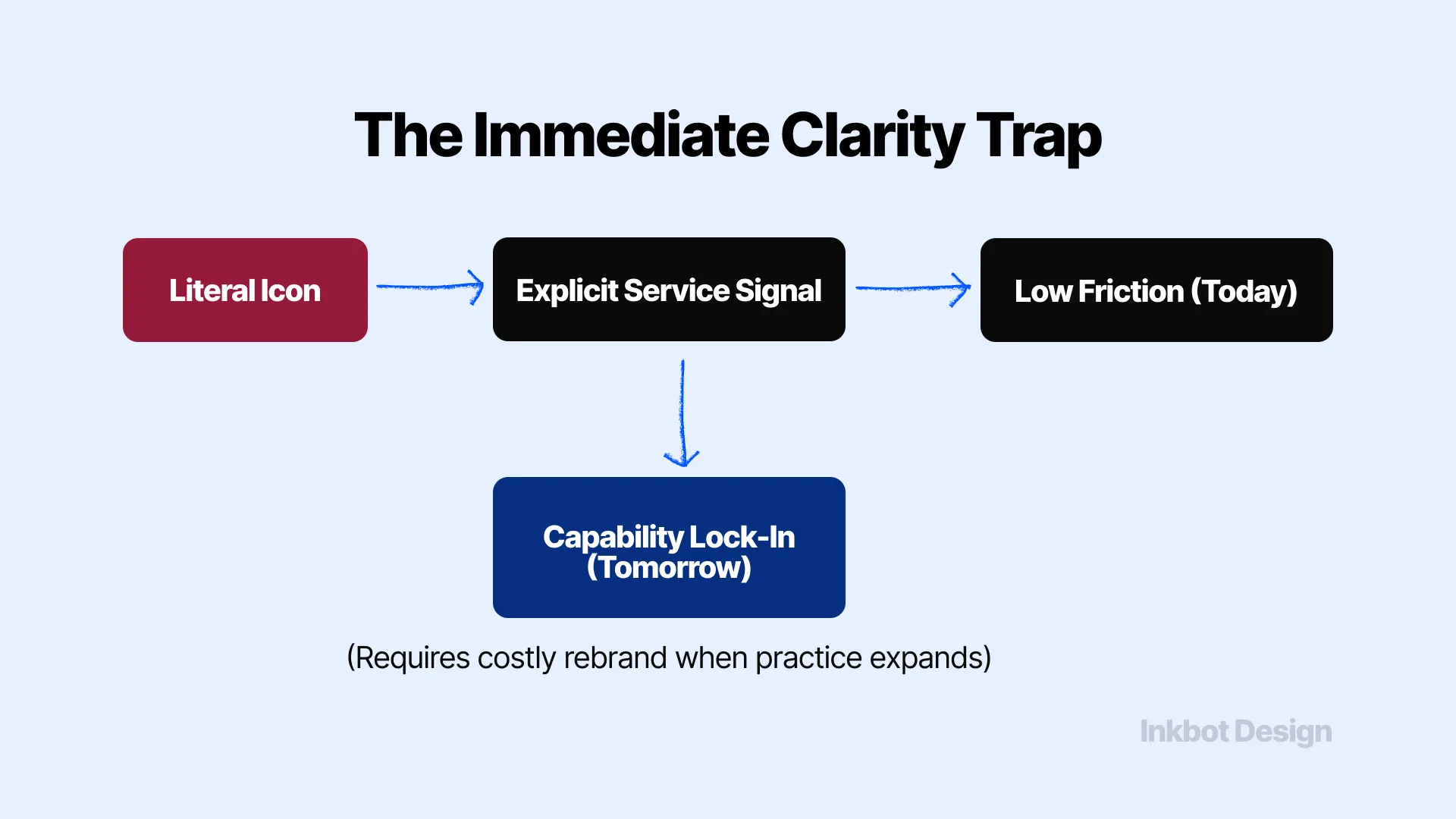
For single-discipline practices operating in highly localised markets, literal icons function as efficient conversion mechanics. They eliminate ambiguity at the exact point of buyer evaluation. If a practice exists solely to deliver one service within one geographic region, explicit visual instruction reduces the marketing spend required to establish category association.
Intelligent executives choose literal iconography because it works as an immediate signpost. Expecting a corporate logo to bear the full burden of market positioning, however, fundamentally misunderstands how enterprise brand equity accumulates over time.
Empirical Reality and Low-Attention Processing Speed
While figurative icons perform well in static preference surveys, professional services brands do not exist in vacuum-sealed testing environments.
They compete in high-speed, low-attention corporate environments where visual marks are processed in milliseconds on mobile screens, pitch decks, and sponsorship boards.
In low-attention-exposure environments, abstract logo design offers clear operational advantages over descriptive graphics.
Research investigating logo recognition under brief exposure revealed that abstract marks were identified faster and more accurately than suggestive or descriptive logos.
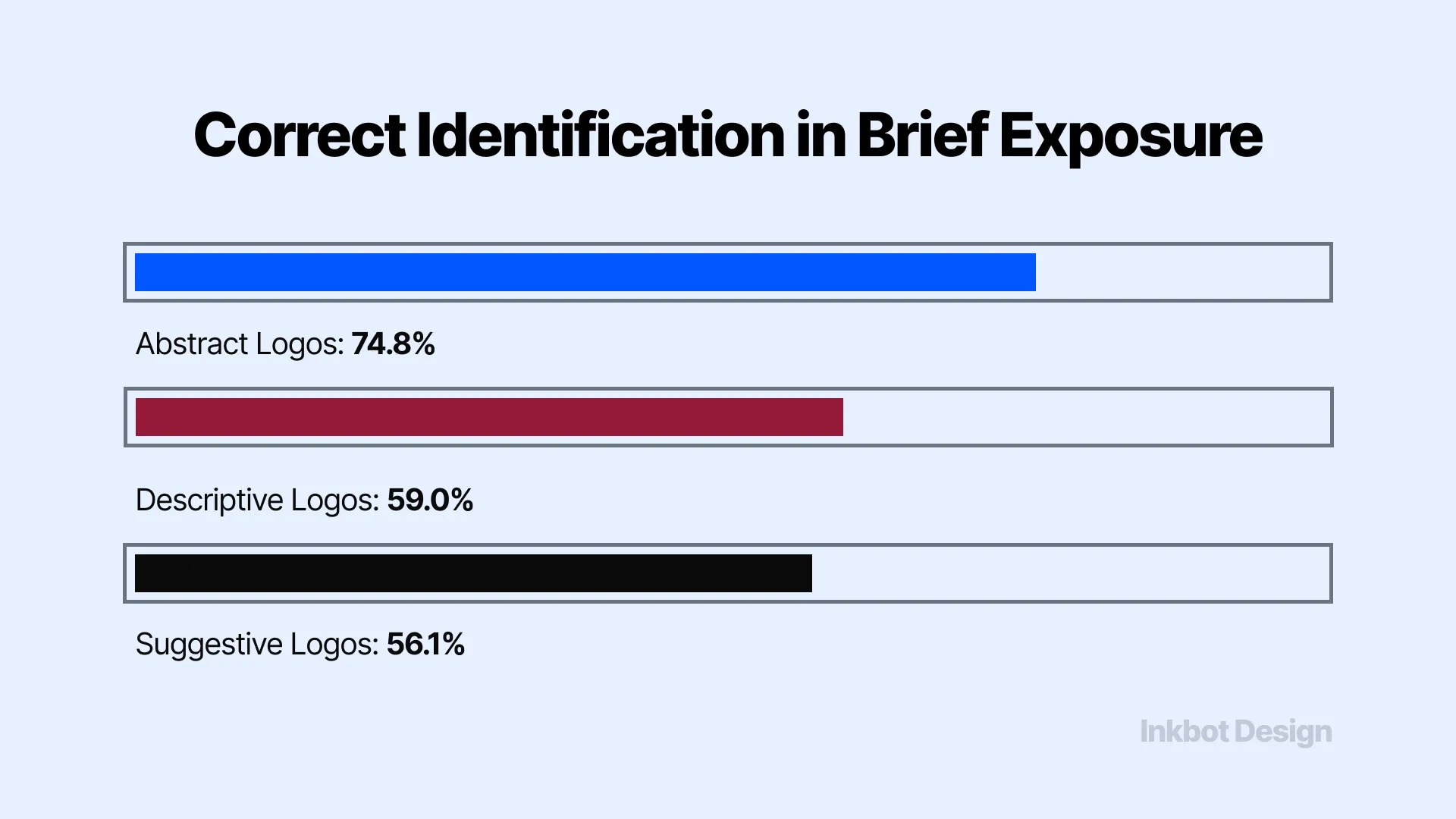
In controlled visual perception testing evaluating corporate mark recognition under brief visual exposure (tachistoscopic testing at sub-500ms intervals), researchers demonstrated that abstract geometric marks achieved a 74.8% correct identification rate.
By contrast, suggestive logos achieved 56.1%, and descriptive figurative logos reached only 59.0% (Luffarelli, Stamatogiannakis, & Yang, Journal of Marketing Research).
This operational advantage is grounded in visual neurobiology. A 2024 study on pattern recognition by Kim et al. found that simplified geometric shapes with distinctive boundary features elicit higher perceptual arousal and yield faster long-term memory traces through bottom-up cognitive processing.
Rather than requiring the observer’s prefrontal cortex to parse complex narrative details, a disciplined abstract mark registers rapidly as an integrated perceptual unit.
A 2024 Korean study on brand-logo pattern recognition showed that simpler shapes with distinctive visual characteristics elicit greater perceptual arousal and form stronger long-term memory traces through bottom-up cognitive processing.
Rather than requiring the viewer to decipher complex narrative details, a bold abstract form immediately engages visual memory.
“A literal logo forces the brain to read a sentence; a strong abstract mark forces the brain to recognise a face. In low-attention corporate channels, speed of visual recognition consistently outperforms detailed narrative explanation.”
Moreover, empirical analysis of corporate semiotics published in Frontiers in Communication (2026) highlights that corporate marks functioning as pure signifiers allow organisations to attach new commercial meanings over time, whereas literal illustrations bind the brand’s perceived capability to the depicted object.
The Cost for Scaling Professional Services
For a UK professional services firm employing 50 to 200 people, the greatest commercial risk of a literal logo is capability lock-in.
Mid-market professional practices rarely remain static. Growth strategies depend on expanding service portfolios, acquiring boutique practices, or moving up-market into higher-value strategic consulting. A literal logo ties corporate identity to historical capabilities rather than future enterprise value.
Consider a £12m engineering consultancy based in Manchester that built its reputation on structural inspections.
A rebrand featuring a stylised steel-beam icon reinforces the founding service. Three years later, the firm expands into environmental compliance and smart-infrastructure advisory. The literal icon now actively misleads prospective corporate clients, framing a multi-disciplinary consultancy as a tactical contractor.
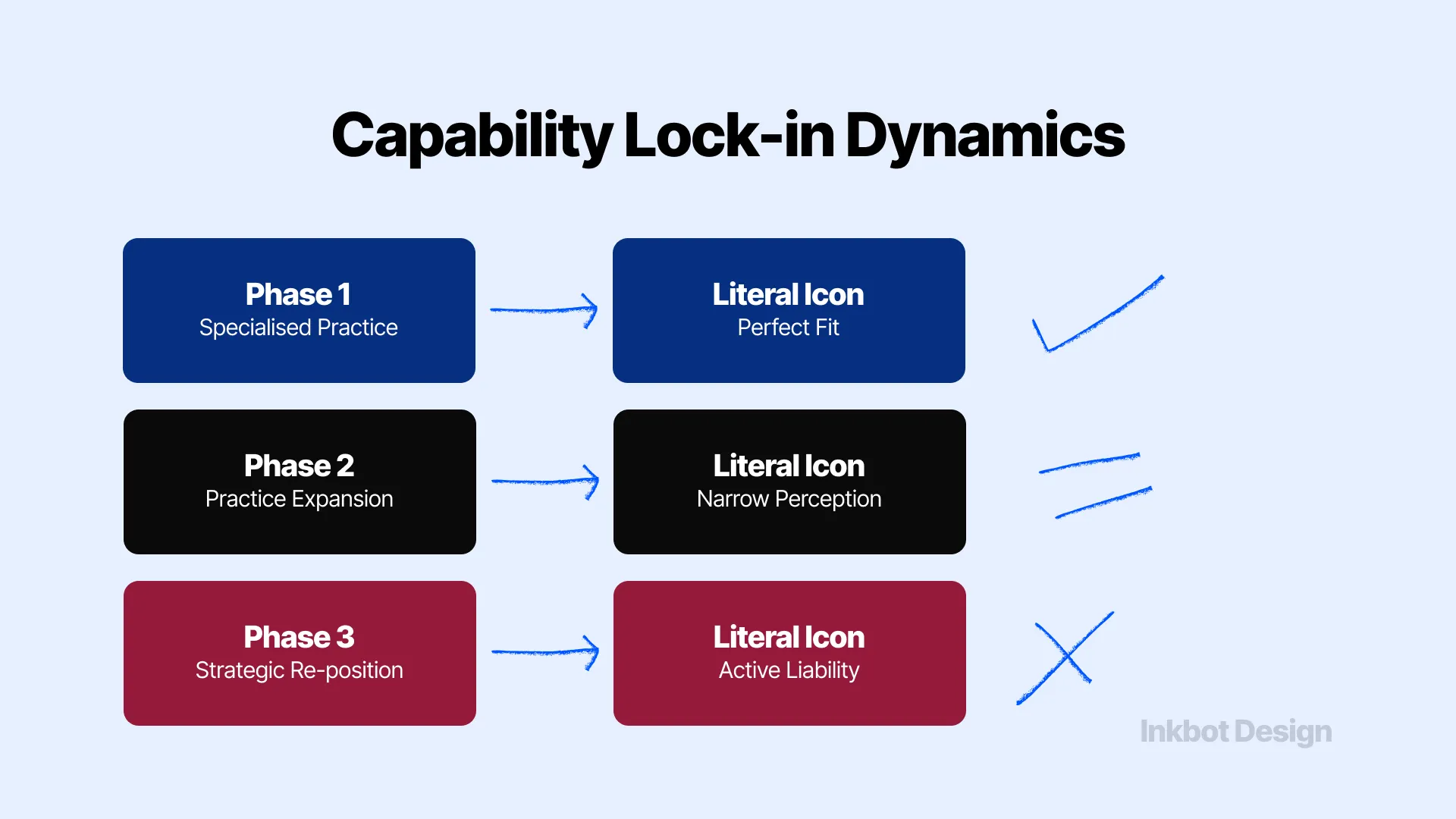
To resolve this mismatch without replacing the visual mark, the firm must spend significant capital on corrective marketing campaigns. Alternatively, they face the expensive disruption of another complete rebrand.
Market data highlights this shift toward flexible brand architecture. VistaPrint’s 2024 logo trends analysis indicates that expressive, flexible logo systems have replaced rigid, single-use marks across commercial sectors.
Similarly, the 2024 LogoLounge Trend Report documents a systemic move toward simplification and abstraction, enabling brands to maintain structural continuity as commercial offerings diversify.
Firms seeking inspiration on how global enterprises navigate these visual shifts can study our analysis of 100 famous logos, which illustrates how multinational corporations systematically transition from descriptive marks to pure abstract equity over time.
Mitigating Brand Risk Across Touchpoints

I’ve led brand identity projects for professional services firms across 21 countries for over 17 years. The practical challenges of literal versus abstract design routinely surface during high-stakes corporate repositioning.
“When managing the identity development for The Lab in Belfast, the brief demanded a visual framework that felt concept-led rather than literal. The business required a mark capable of scaling across physical retail, digital platforms, and corporate partnerships without getting trapped in category clichés. Leaning into obvious laboratory apparatus would have boxed the enterprise into a narrow operational corner. By deploying a flexible abstract system, we secured an ownable visual mark that accommodates future growth without requiring structural alterations to the core identity.”
When evaluating your own corporate visual architecture, examining recent market movements in our logo design trends analysis reveals how forward-thinking B2B organisations protect their visual equity against premature obsolescence.
Won't an Abstract Mark Confuse Buyers?
The most persistent objection raised by managing partners during rebrand discussions is the fear of market ambiguity: “If our logo does not depict our service, how will prospective clients understand what we do?”
This objection assumes the corporate mark operates in total isolation. In modern B2B commerce, a logo never appears without context. It sits alongside corporate headlines, pitch documentation, proposal covers, digital domain names, and executive commentary.
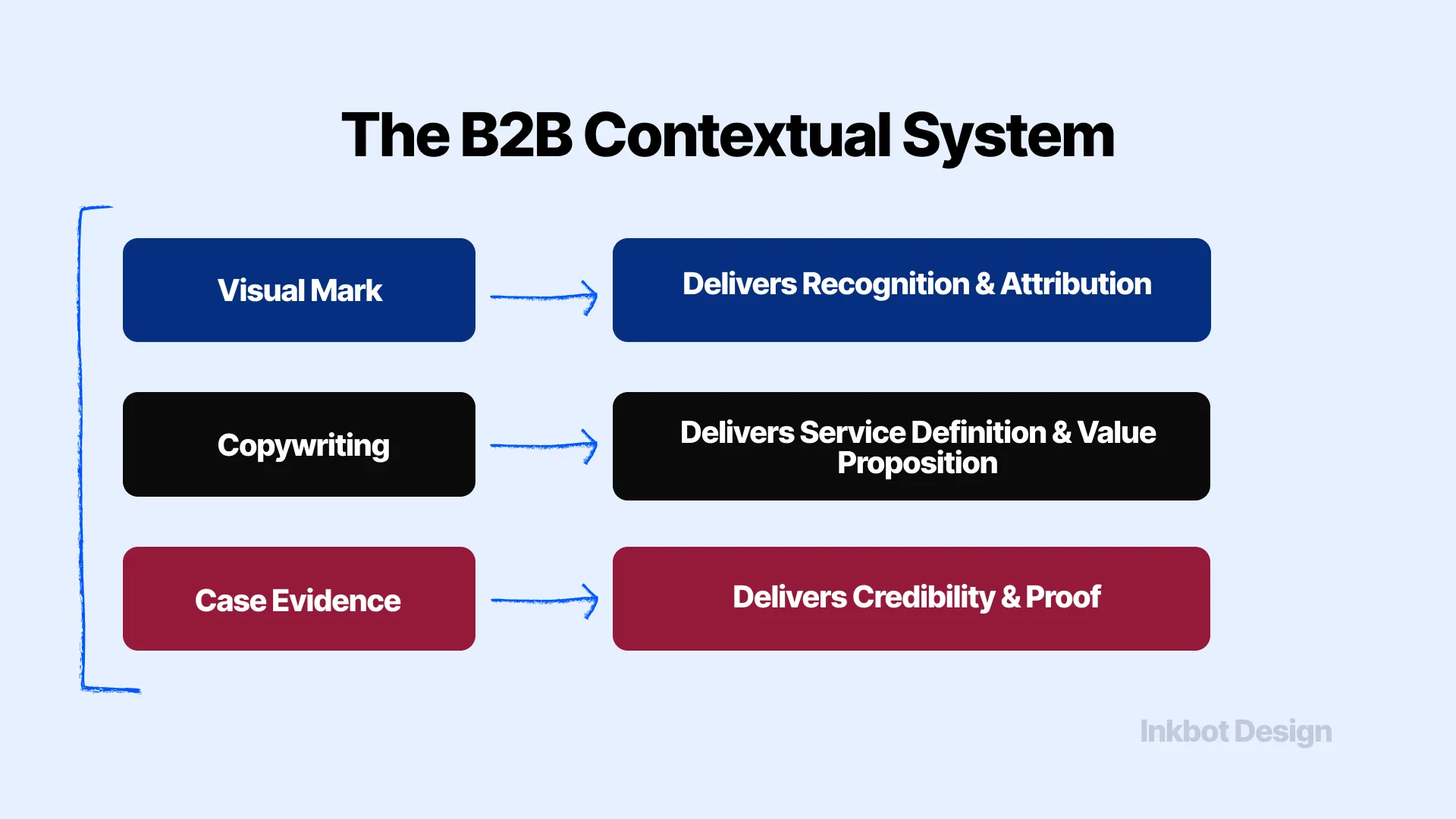
The logo's primary operational role is attribution and recognition, not service description. Expecting a visual symbol to communicate complex legal, financial, or technical service offerings oversimplifies the purchasing process.
Copywriting, case studies, and partner interactions define service scope; the abstract mark secures visual ownership of the trust built across those touchpoints.
Abstract vs Literal Framework
Practice Profile & Scenario | Default Industry Choice | Strategic Cost | Recommended Approach | Commercial Justification |
|---|---|---|---|---|
Audit Firm Expanding to Tech Consulting | Literal Abacus/Ledger Icon | Constrains high-margin technology positioning | Pure Abstract Mark | Separates visual equity from legacy compliance services |
Boutique Regional Law Practice | Scales of Justice Symbol | Blends into local competitor noise | Custom Logotype vs Logomark System | Elevates partner reputation without category clichés |
Commercial Property Advisory | Building Silhouette Graphic | Signals a low-tier brokerage rather than asset management | Geometric Abstract System | Projects institutional capital scale to corporate boards |
Healthcare Strategy Consultancy | Cross / Caduceus Graphic | Traps firm in clinical delivery rather than executive advisory | Abstract Conceptual Mark | Positions practice at the executive board level |
Environmental Engineering Firm | Green Leaf / Globe Icon | Triggers immediate greenwashing skepticism | Structured Abstract Mark | Communicates technical rigour over superficial symbolism |
M&A Advisory Practice | Interlocking Chains / Hands | Communicates dated transaction tactics | Dynamic Abstract Geometry | Reflects sophisticated capital structuring capabilities |
Reducing Friction vs Scaling Meaning
The debate over corporate iconography is resolved by framing the decision in terms of brand maturity and operational goals.
Literal icons function as friction-reduction tools. They assist early-stage businesses in establishing immediate category association when marketing budgets are restricted and the service scope is narrow.
Abstract marks function as meaning-scaling tools. They provide mid-market corporate entities with an ownable, unconstrained canvas that accommodates service diversification, corporate acquisitions, and international expansion.
“Literal iconography reduces friction for single-service businesses; abstract marks scale ownable equity for multi-disciplinary enterprise brands. Choosing an abstract logo design is a commitment to building long-term enterprise value over short-term visual description.”
The Verdict
Defaulting to a literal logo during a corporate rebrand traded future positioning flexibility for comfortable board consensus.
For mid-market UK professional services firms preparing for acquisition, international growth, or service line expansion, explicit iconography creates structural brand friction.
Abstract logo design protects corporate visual identity from capability lock-in, ensuring enterprise visual equity expands alongside commercial operations.
If your current visual mark reflects where your practice started rather than where your firm is going, it is actively dragging down your market valuation.
Request a free Brand Equity Audit™ at /services/brand-audits/./ This structured diagnostic identifies exactly where your visual identity is losing commercial ground and outlines the strategic steps required to align your visual mark with your growth trajectory.
Frequently asked questions
What is the main difference between an abstract logo and a literal icon?
An abstract logo uses non-representational geometric or conceptual forms to express corporate identity, whereas a literal icon uses explicit visual depictions of physical objects, tools, or specific services.
Does abstract logo design work well for professional services firms?
Yes — abstract logo design is particularly effective for mid-market professional services firms because it prevents capability lock-in, allowing practices to expand into new service categories without invalidating their primary visual mark.
Are literal logos easier for clients to recognise than abstract marks?
No — empirical research demonstrates that abstract marks achieve a 74.8% correct identification rate under brief exposure, outperforming descriptive logos (59.0%) and suggestive logos (56.1%) in low-attention environments.
When should a B2B firm choose a literal logo over an abstract mark?
A B2B firm should choose a literal logo when operating as a single-service practice with limited marketing resources, where immediate, explicit category identification is required to reduce friction in initial customer acquisition.
Can an abstract logo communicate trust to corporate buyers?
Yes — abstract logos build corporate trust by projecting institutional scale and sophistication, relying on surrounding context, partner reputation, and editorial copywriting to define specific service capabilities.
How does abstract logo design impact corporate acquisition valuation?
Abstract logo design enhances corporate acquisition valuation by creating transferable, category-agnostic visual equity that seamlessly integrates newly acquired practices or subsidiary business units.
Do abstract logos trigger stronger long-term memory than complex graphics?
Yes — Korean research from 2024 indicates that simpler geometric forms with distinctive features trigger higher perceptual arousal and stronger long-term memory traces through bottom-up cognitive processing.
Will an abstract logo require a larger marketing budget to establish?
No — while an abstract mark requires clear contextual copy during initial launch, its superior processing speed in digital environments lowers the ongoing cost of maintaining visual recall across corporate channels.
How often do global enterprise brands transition from literal to abstract marks?
Global enterprise brands frequently transition from literal to abstract marks as their product lines diversify, moving from descriptive founding symbols to streamlined geometric marks that scale internationally.
Should a rebrand completely replace a historic literal mark with an abstract design?
Yes — if the historic literal mark constrains market perception or misrepresents current high-margin service offerings, replacing it with an abstract design helps secure future brand equity.