Brand Transition Strategy: How to Rebrand for Growth Without Losing the Clients
A brand transition strategy decides what your firm keeps, what it changes and what it proves to clients before anything launches. For UK professional services firms rebranding ahead of growth or acquisition, the expensive risk sits with the existing client who quietly decides the firm has changed for the worse.
 By Stuart Crawford
 Reviewed by Tabitha Ayers
13 min read
On this page13 min left
- How a Brand Transition Strategy Works
- Where Brand Transitions Lose Clients
- What to Keep: The Cues Clients Already Rely On
- What to Change: Making the Firm Legible to the Buyers It Wants Next
- Why the Experience Has to Arrive Before the Logo
- How to Tell Whether Clients Are Staying
- Protect the Reasons Clients Stay, Then Give New Buyers a Reason to Start
- Frequently asked questions
Rebrands in professional services rarely come undone on launch day.
They come undone in a client's accounts payable inbox: a firm name the finance team doesn't recognise on an engagement letter, an email domain their filters have never seen, new bank details on an invoice.
Each one is a small, reasonable cause for a client to stop and ask what else has changed.
Clients do ask.
Clutch, the B2B ratings and reviews platform, surveyed 416 consumers in September 2025 and found that 98% notice when a favourite brand changes its logo, packaging or colours, and 87% form assumptions when a familiar brand changes its look or messaging.
Modernisation.
Trend-chasing.
A new target audience.
Trouble behind the scenes.
A rebrand gets read as evidence of something, whether you intended it or not.
So I treat a brand transition as a managed transfer of trust. The clients who fund the firm today already rely on specific cues: names, people, service habits, and the way an invoice looks.
Growth depends on keeping those cues intact while the firm becomes easier for new buyers to understand and hire.
A plan organised around the big reveal gets that order backwards, which is why transition planning belongs inside your wider brand strategy from the first workshop, not bolted on once the logo is signed off.
How a Brand Transition Strategy Works

A brand transition strategy moves a firm from its current brand to a new one without breaking the trust existing clients hold. It works in three ordered moves: decide what stays recognisable, decide what visibly changes for new buyers, and prove the promise through service before launch.
- Keep: the distinctive assets, relationships and service behaviours clients already use to recognise and trust the firm.
- Change: the positioning, language and visual cues that stop the buyers you want next from understanding what the firm does.
- Prove: the operational changes that make the new promise true on the client's first contact after launch.
Brand transition strategy is the planned transfer of client trust to a new brand: keep recognised cues, change growth barriers, and prove the promise operationally.
Where Brand Transitions Lose Clients
Most of the damage in a failed transition comes from changes people didn't ask for and weren't told about.
The Clutch September 2025 survey found that 52% of consumers prefer modest brand updates every few years, only 17% welcome frequent changes, and 44% said too many rebrands reduce their trust.
Change is tolerated. Unexplained, repeated change is punished.
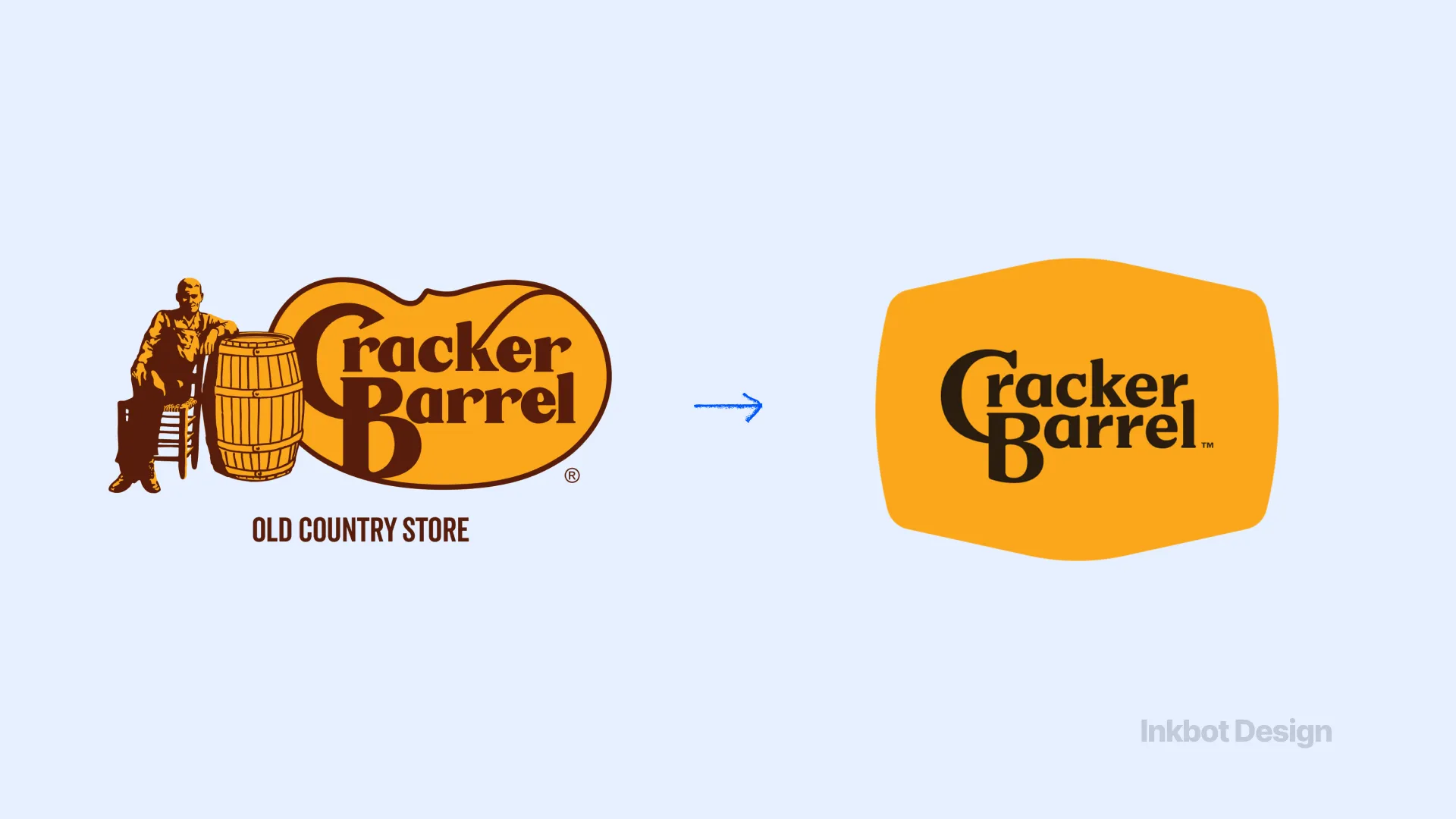
The textbook case is Tropicana. In January 2009, PepsiCo replaced the orange-with-a-straw on the Tropicana Pure Premium carton with a plain glass of juice and a new typeface. Advertising Age reported that unit sales fell by roughly 20% by late February, and PepsiCo reinstated the original packaging within weeks.

The juice hadn't changed. Shoppers used the orange to find it on the shelf, and when the orange disappeared, a meaningful number of them picked up something else.
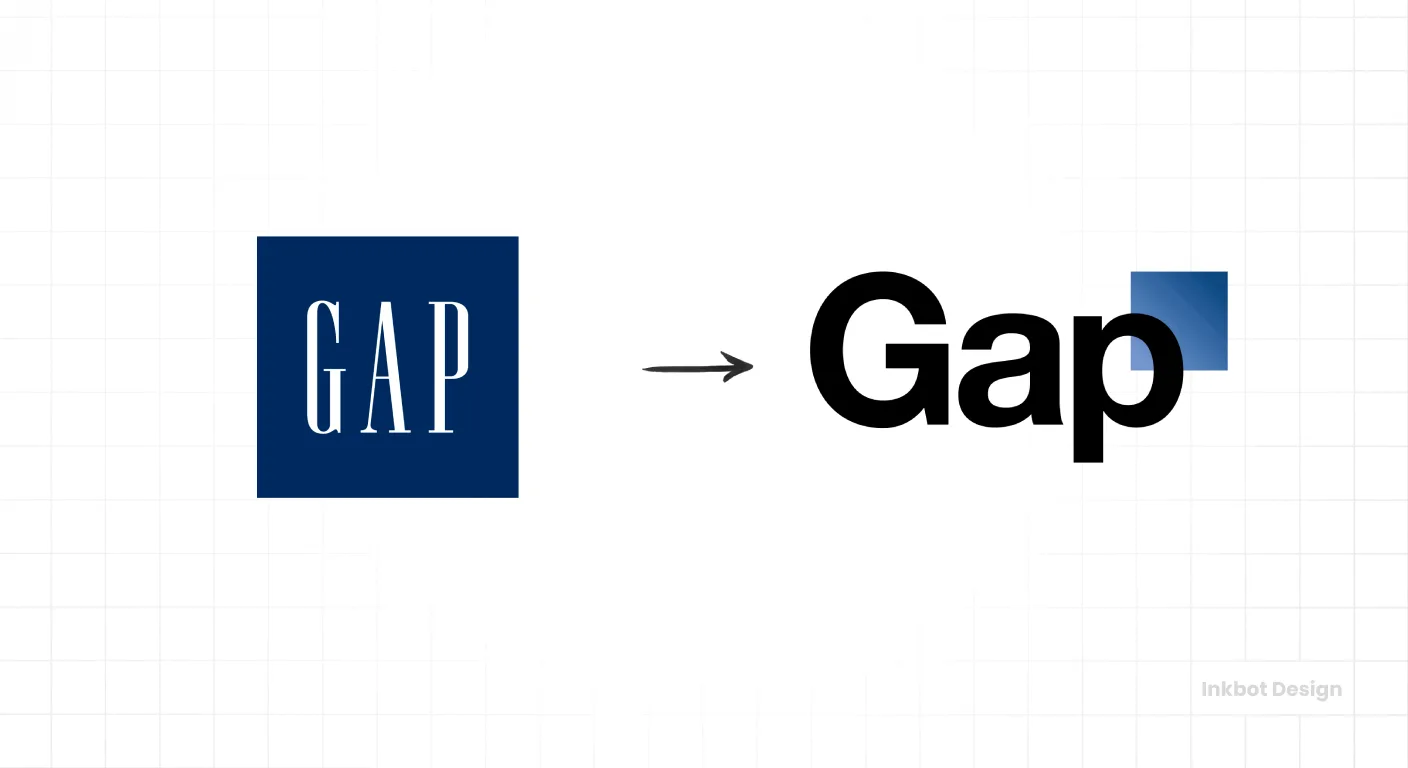
Gap repeated the pattern in October 2010, swapping its blue-box wordmark for a new logo and withdrawing it after roughly a week of customer backlash. Different sector, same mechanism: customers treated a change of cue as a change of substance.
The obvious objection from a CEO reading this: those are consumer brands; my clients are finance directors who buy expertise, not packaging. Fair.
Nobody moves their audit because the logo changed. The risk in professional services is slower and quieter.
Switching costs keep B2B clients in place until something gives them a reason to look around, and a rebrand that coincides with a partner departure, a slower response time or a confusing invoice hands them that reason, complete with a story (“they've changed since the rebrand”).
The logo doesn't lose the client. It gives the client a narrative for leaving that they were already halfway to.
What to Keep: The Cues Clients Already Rely On
Loyalty is built on accumulated confidence, and very little of it sits in the logo. UserTesting's 2025 global brand-loyalty research found that 68% of loyal customers would stay with their preferred brand even if prices rose, and that they would pay 25% more on average for a brand they trust.
In the US sample, the leading loyalty drivers were consistent product quality (59%), positive experiences (58%) and trust built over years of use (56%). Every one of those is about continuity.
The pattern I see most often is a leadership team that can name every problem with the old brand and can't name a single thing its clients would miss.
Distinctive assets: audit what clients recognise, not what the partners like
A distinctive brand asset is worth keeping when clients actually link it to the firm.
Jenni Romaniuk of the Ehrenberg-Bass Institute for Marketing Science, in Building Distinctive Brand Assets (2018), sets two tests for any asset: it must be unique to the brand, and it must be famous, meaning a large share of the market connects it to the brand without prompting.
A colour the partners are tired of may pass both tests. A strapline the founders love may pass neither.
Run the test with clients, not internally. Show a sample of existing clients the firm's colour, symbol, typography and any recurring phrase with the name removed, and record which ones they attribute correctly. Assets that pass stay, even if they get redrawn. Assets that fail are free to change.
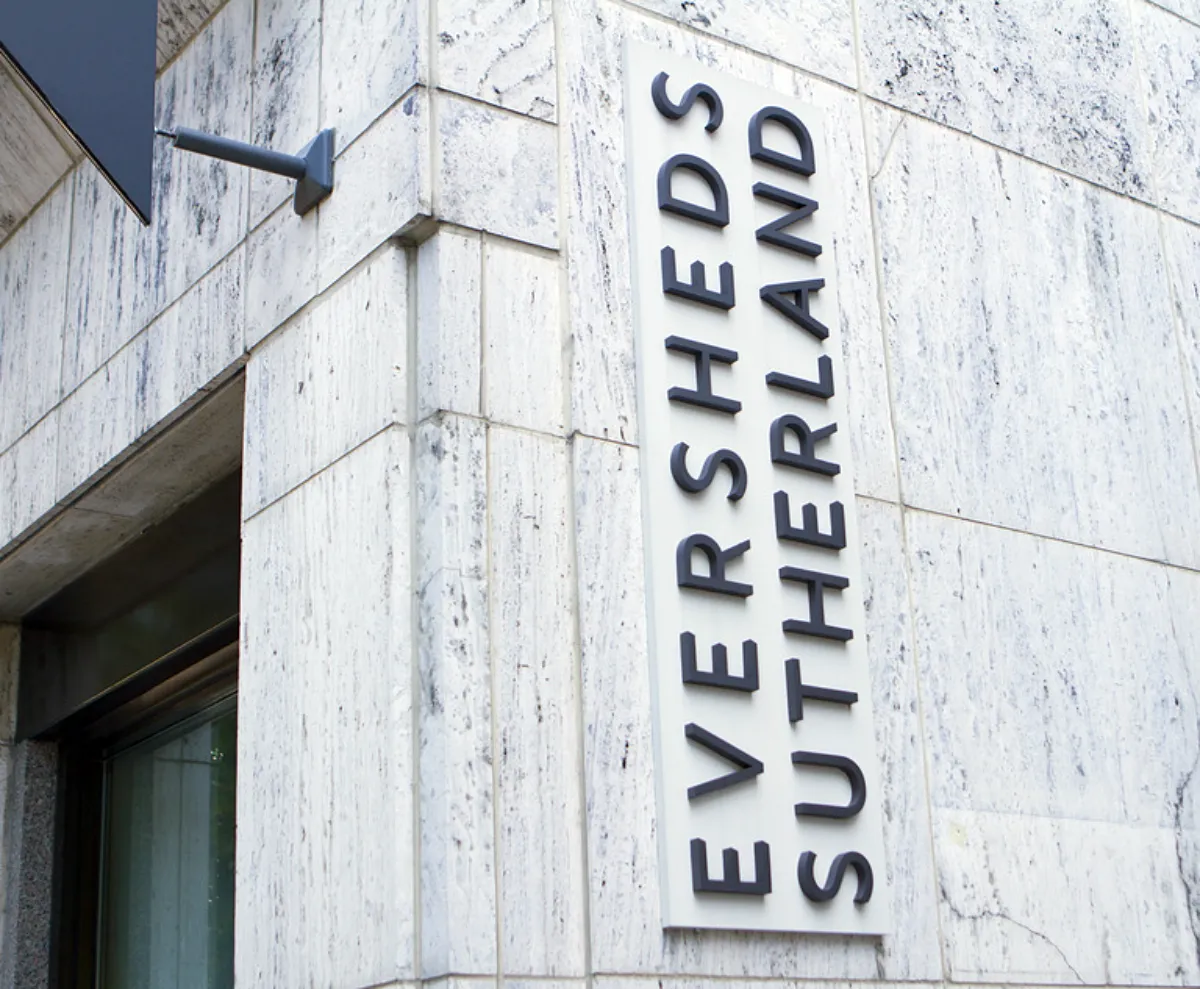
Names deserve the same discipline. When Eversheds combined with Sutherland Asbill & Brennan in 2017, and Bond Dickinson with Womble Carlyle the same year, both firms carried legacy names into the new brand rather than inventing one. The clients on each side kept a name they already trusted.
The relationship layer: people carry the brand in professional services
In a professional services firm, the named partner or relationship manager is the most trusted brand asset the firm owns. Clients hired Sarah, not the typeface.
Keep named relationship owners stable throughout the transition window, and never schedule a rebrand to coincide with a partner exit, a restructure of client teams, or a change in who signs engagement letters.
Stacked changes are exactly what the 87% in the Clutch data turn into assumptions.
The relationship owner should also be the first person who tells a key client about the change, by phone or in person, before any email or press release.
The Clutch 2025 survey found that consumers who understood why a brand had changed were more likely to see the move as intentional and trustworthy. The partner's call is where that understanding gets built.
The operational layer: invoices, domains, bank details and legal names
Your clients' finance teams are trained to distrust exactly what a careless rebrand produces.
A new trading name on an invoice, an unfamiliar sending domain and changed bank details are the standard signs of invoice-redirection fraud, and a well-run accounts-payable team will hold payment until each one is verified.
Hit them with all three in one month, and you have manufactured friction with your most valuable clients.
Stage these changes separately. Keep the old email domain forwarding for at least a full billing cycle (in practice, a year is safer). Send written notice of any entity-name change with the partner's covering note before the first invoice under the new name.
Don't change bank details in the same quarter as the name unless the change is unavoidable, and if it is, confirm by phone. Update supplier-portal records, panel registrations and procurement databases before the public launch, not after a client's system rejects your invoice.
“A client does not experience your rebrand as a new identity. They experience it as a sequence of small, unfamiliar signals: a new name on a letter, a new sender in the inbox, new details on an invoice. Each one is a question. The transition succeeds when every question is answered before the client has to ask it.”
What to Change: Making the Firm Legible to the Buyers It Wants Next
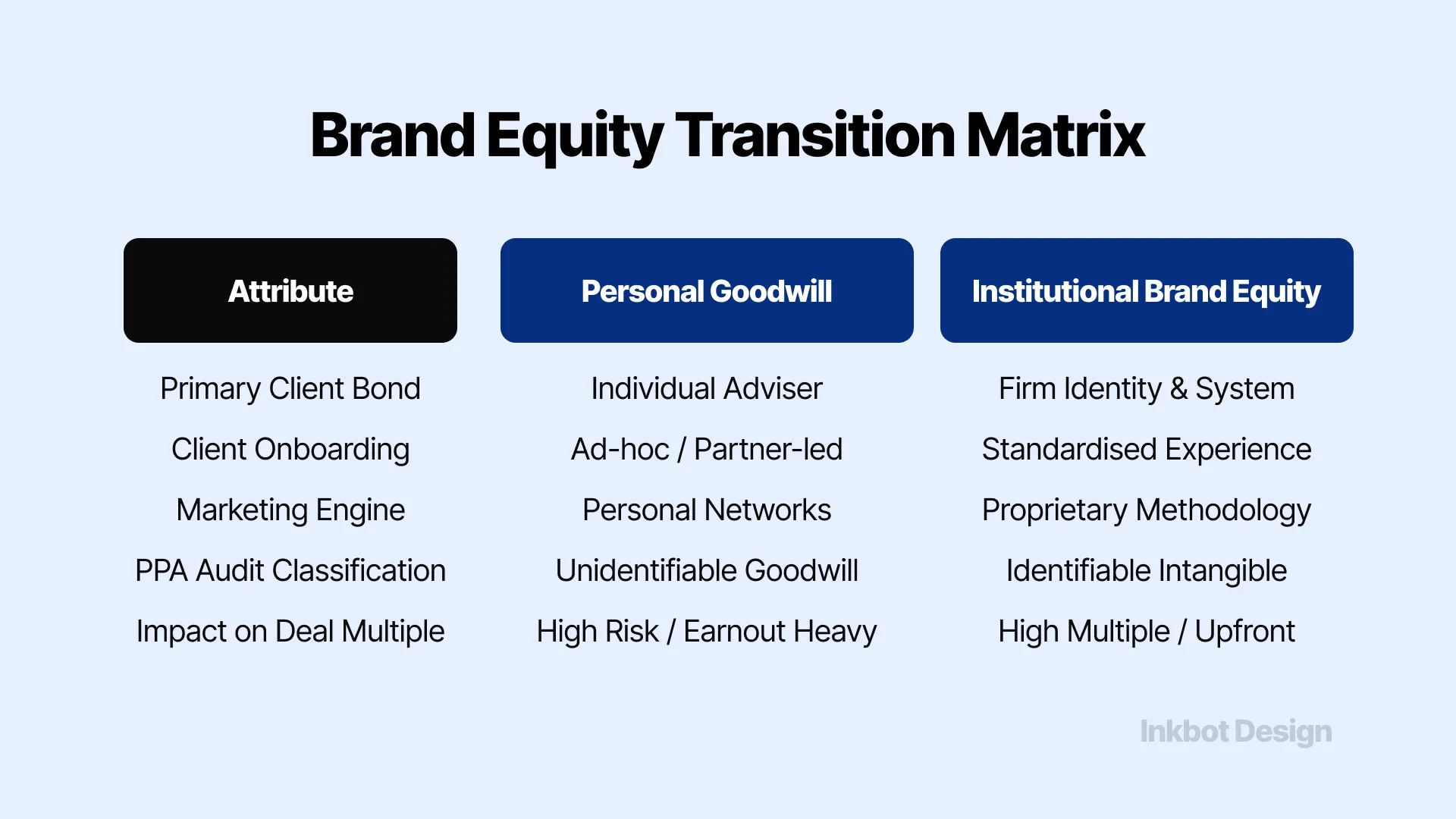
If keeping cues were the whole job, the safest transition would be no transition. It isn't, because firms grow mainly by winning more buyers.
Byron Sharp's How Brands Grow (2010), built on research from the Ehrenberg-Bass Institute, shows that brands with larger market share have many more buyers and only slightly higher loyalty… The existing base funds the growth; new buyers deliver it.
So change the cues that block acquisition, and only those. Typical candidates in professional services:
- A name or descriptor that shrinks the firm. A regional place name when you now win national mandates; “& Co” suggesting a two-partner practice when you have 150 people.
- Service language written for insiders. Practice-area labels that mirror your internal org chart rather than the problem a buyer is trying to solve.
- A website built as a brochure. Pages are organised by department rather than by sector and client situation, with no proof for a new buyer to check.
- Visual cues that date the firm in the eyes of a younger generation of finance directors and general counsel, provided they failed the distinctive-asset test above.
The Clutch 2025 survey found that 92% of consumers see rebrands as potentially necessary, and that execution determines the response. Buyers accept change that clearly serves them.
The supplied research also suggests 73% say authenticity in reflecting current culture would increase trust, which supports meaningful evolution over surface modernisation.
A quick test for each proposed change: can a buyer who has never heard of the firm tell, within ten seconds on the homepage, what the firm does and who it does it for? If a change doesn't move that answer, it's decoration, and decoration spends client trust without buying anything.
Why the Experience Has to Arrive Before the Logo

The new brand is a promise, and clients judge it on their next contact with the firm. Forrester's 2025 US Customer Experience Index found that 25% of brands declined, only 7% improved, and 68% stayed flat.
Most organisations are standing still or slipping on experience, so a rebrand announcing “clearer, faster, more commercial” followed by the same slow partner turnaround doesn't read as neutral. It reads as proof that the rebrand was cosmetic.
Service is where the promise gets confirmed. Qualtrics' 2026 Consumer Experience Trends research (20,000 consumers, 14 countries, 18 industries) found that good customer service produces higher satisfaction than good value for money for 92% of respondents.
A professional services client paying £400 an hour is more sensitive to this, not less. The fee is already a statement of expected quality.
That is why the sequence matters more than any single step. Most transition plans put the reveal date in the calendar first and treat operations as rollout tasks that follow. The order that protects clients runs the other way:
Stage | What happens | Checkpoint before moving on |
|---|---|---|
1. Inventory trust cues | Test distinctive assets with clients; list named relationships; map every operational touchpoint (invoices, domains, letters, portals, registers) | A signed-off “keep” list exists |
2. Define the change | Positioning, service language and the specific cues blocking new buyers | Every change has a named acquisition reason |
3. Build the proof | Fix whatever the new promise depends on: response times, reporting, onboarding, portal | The promise is already true for current clients |
4. Tell key clients first | Relationship owners brief top clients personally, explaining what improves and what stays | Every top-tier client has heard it from a person |
5. Stage the operational switch | Name, domain, invoices and bank details changed in separate, pre-announced steps | No client receives more than one unfamiliar signal at a time |
6. Public launch | Website, identity, PR, recruitment and pitch materials | Stages 1–5 complete |
7. Monitor behaviour | Leading indicators tracked against pre-launch baselines | See the next section |
The second objection a CEO will raise: staging all of these delays the launch, and we need the new brand in the market before the acquisition or the growth push.
Sometimes the date is fixed. Then compress the stages rather than skip them. Stages 3 and 4 are the ones that clients feel. If only one survives the timetable, keep stage 4, because a personal explanation buys time for proof that is still arriving.
One newer element belongs in stage 3. Qualtrics' 2026 research found that 73% of customers already use AI and that 86% would share more personal data if organisations were clearer about how it is used.
If the new brand introduces an AI-assisted client portal, automated reporting or chat-based support, the transition has to explain what the client gains, how their data is handled and how they reach a human.
An unexplained new system arriving alongside a new name is two unfamiliar signals, not one.
“Clients do not stay because the new brand looks better. They stay because nothing they relied on broke, and something they cared about improved. Build the improvement first, protect the reliance throughout, and the new identity becomes the confirmation of a change clients have already felt rather than a claim they have to test.”
How to Tell Whether Clients Are Staying
Silence is not approval. Qualtrics' 2026 research found that only three in ten customers now give direct feedback, so a transition team waiting for complaints will learn about a problem only after the client has already moved the work elsewhere.
Measure behaviour, set baselines before launch, and review monthly for the first two quarters.
Leading indicators that work in professional services:
- Instruction volume per key client: new matters, engagements or projects opened by each top-tier client, against the same period last year.
- Days to payment after the first renamed invoice: a jump points straight at accounts payable friction from the operational switch.
- Email deliverability on the new domain: bounce and spam folder rates, especially for large corporate clients with strict filtering.
- Renewal and panel outcomes: fee reviews, retender invitations and panel reappointments during the transition window.
- Branded search for the old and new names: people still searching for the old name need to land on a useful page.
- Enquiry source and fit: whether new enquiries come from the sectors and sizes the change was designed to reach, which is the acquisition half of the scorecard.
Pair the numbers with a handful of structured conversations. Relationship owners ask three or four key clients what changed for them in the first 90 days, and record the answers verbatim.
Given how few clients volunteer feedback, the ones you ask are your early-warning system.
Protect the Reasons Clients Stay, Then Give New Buyers a Reason to Start
Every figure in this piece points the same way. Customers notice change and conclude it (Clutch, 2025).
Loyalty rests on quality, experience and years of trust rather than on the identity itself (UserTesting, 2025). Growth still depends on reaching new buyers (Ehrenberg-Bass Institute).
And experience, far more than the announcement, decides whether a promise is believed (Forrester, 2025; Qualtrics, 2026).
A brand transition that respects all four stops, being a launch project and becomes a sequence: keep the cues clients rely on, change the cues that block the buyers you want, and make the new promise true before you publish it. The logo is the last thing that should change, not the first.
The first action to take this week: list your top 20 clients by fee income and, for each one, write down what they would notice first if the brand changed tomorrow. If that list is hard to write, the transition plan isn't ready.
If you want an outside view before committing to the budget, request a free Brand Equity Audit™. It's a structured diagnostic that shows exactly where your current brand is losing commercial ground, which assets are worth protecting, and what needs to change before your next growth phase.
Frequently asked questions
What is the difference between a brand transition and a rebrand?
A rebrand is the new identity and positioning. A brand transition is the managed move from the old brand to the new one, covering what stays recognisable, the order in which clients encounter changes, and the operational proof behind the new promise. A firm can commission an excellent rebrand and still run a poor transition.
Should we tell existing clients about a rebrand before announcing it publicly?
Yes — key clients should hear about a rebrand from their relationship owner before any public announcement. The Clutch September 2025 survey found consumers who understood why a brand changed were more likely to see the change as intentional and trustworthy. A personal briefing gives that explanation before assumptions form.
After a merger, should a professional services firm keep both names?
Keeping legacy names is the lower-risk option when each firm brings clients who trust its name, which is why Eversheds Sutherland and Womble Bond Dickinson both retained their legacy names in their 2017 combinations. A new single name makes sense when neither legacy name reaches the buyers the combined firm needs.
Is it true that a rebrand always causes client churn?
No — a rebrand causes churn when it coincides with changes clients can feel, such as a partner departure, slower service or confusing invoices. UserTesting's 2025 research found loyalty rests on consistent quality, positive experiences and long-term trust. Protect those, and a visual change is rarely the reason a client leaves.
When should a firm refresh its brand rather than rebrand?
A refresh is appropriate when the positioning still works, and only the expression looks dated. A full rebrand is warranted when the firm's name, positioning, or structure prevents new buyers from understanding what it does. The Clutch September 2025 survey found 52% of consumers prefer modest updates every few years, so a refresh is the lower-risk default.
How do you measure whether a brand transition is working?
Measure client behaviour against pre-launch baselines: instruction volume per key client, days to payment after renamed invoices, email deliverability on the new domain, renewal and panel outcomes, and fit of new enquiries. Qualtrics' 2026 research found that only three in ten customers give direct feedback, so waiting for complaints misses most problems.
Should we change bank details at the same time as the firm's name?
No — changing a firm's name and bank details in the same period mirrors the pattern of invoice-redirection fraud, and clients' accounts payable teams will often hold payment until both are verified. Stage the changes separately, give written notice from the relationship owner, and confirm any new bank details by phone.