Rebrand Timeline: The 5 Decisions That Set the Schedule
A rebrand timeline for a mid-size firm is set by business decisions, not design deliverables. The new identity arrives mid-process, once positioning, internal alignment and client risk are settled. Sequencing those five decisions correctly protects fee income and client trust. Here is the order that works, and where the logo belongs.


On this page9 min left
- How Long Does a Rebrand Timeline Actually Take?
- The Real Sequence Is Business Decisions, Not Design Deliverables
- The 5 Decisions, In the Order That Protects Value
- Protecting Client Relationships While the Brand Changes
- Why a 2026 Rebrand Launches to Two Audiences
- The Verdict: Sequence Before Symbol
- Frequently asked questions
There is elapsed time, and there is decision time, and for a mid-size professional services firm, these are not the same thing.
A studio can produce a new identity in eight weeks.
The reason a rebrand takes six to nine months is that the firm has to make five business decisions in the right order first, and each one requires people who are not used to agreeing quickly to agree.
If you are budgeting the schedule around design production, you are budgeting the wrong variable.
The rebranding process is a sequence of decisions, with a design deliverable somewhere near its midpoint — not a run-up to a logo reveal.
How Long Does a Rebrand Timeline Actually Take?
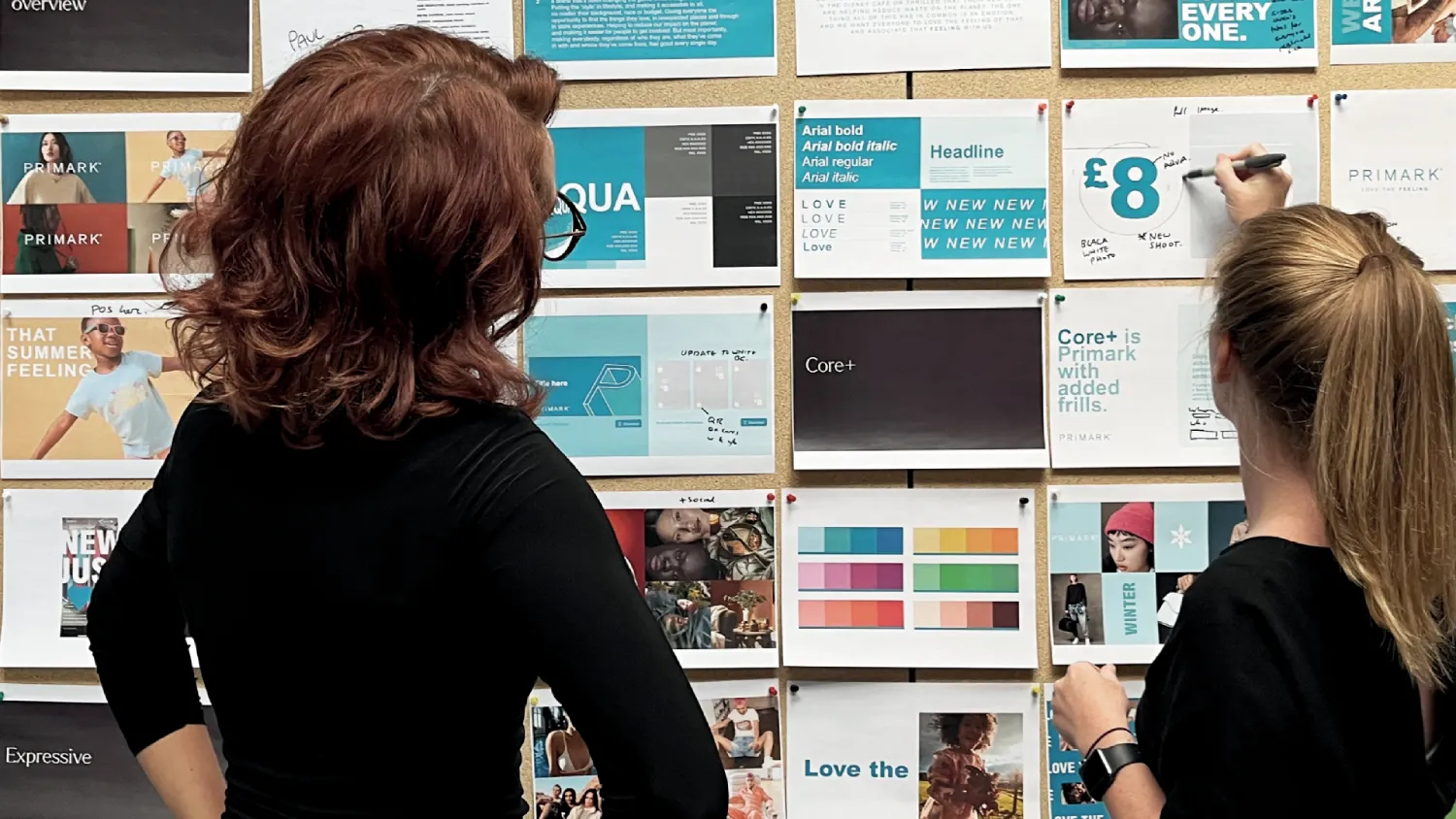
A rebrand timeline for a firm of 50–200 people typically runs six to nine months from decision to full rollout. The design work occupies a fraction of that.
The rest is spent settling positioning, aligning internal stakeholders, managing client risk, and rolling out across every touchpoint without breaking search visibility or trust.
- Positioning and internal alignment consume more calendar time than any other stage, because they require partner-level consensus.
- Identity design is genuinely fast once the strategy is fixed — typically six to eight weeks.
- Rollout and measurement extend well past launch day, often another quarter.
A rebrand timeline is the sequence of business decisions — positioning, internal alignment, client risk, operational readiness and rollout — with the new visual identity arriving mid-process, not at the end.
The Real Sequence Is Business Decisions, Not Design Deliverables
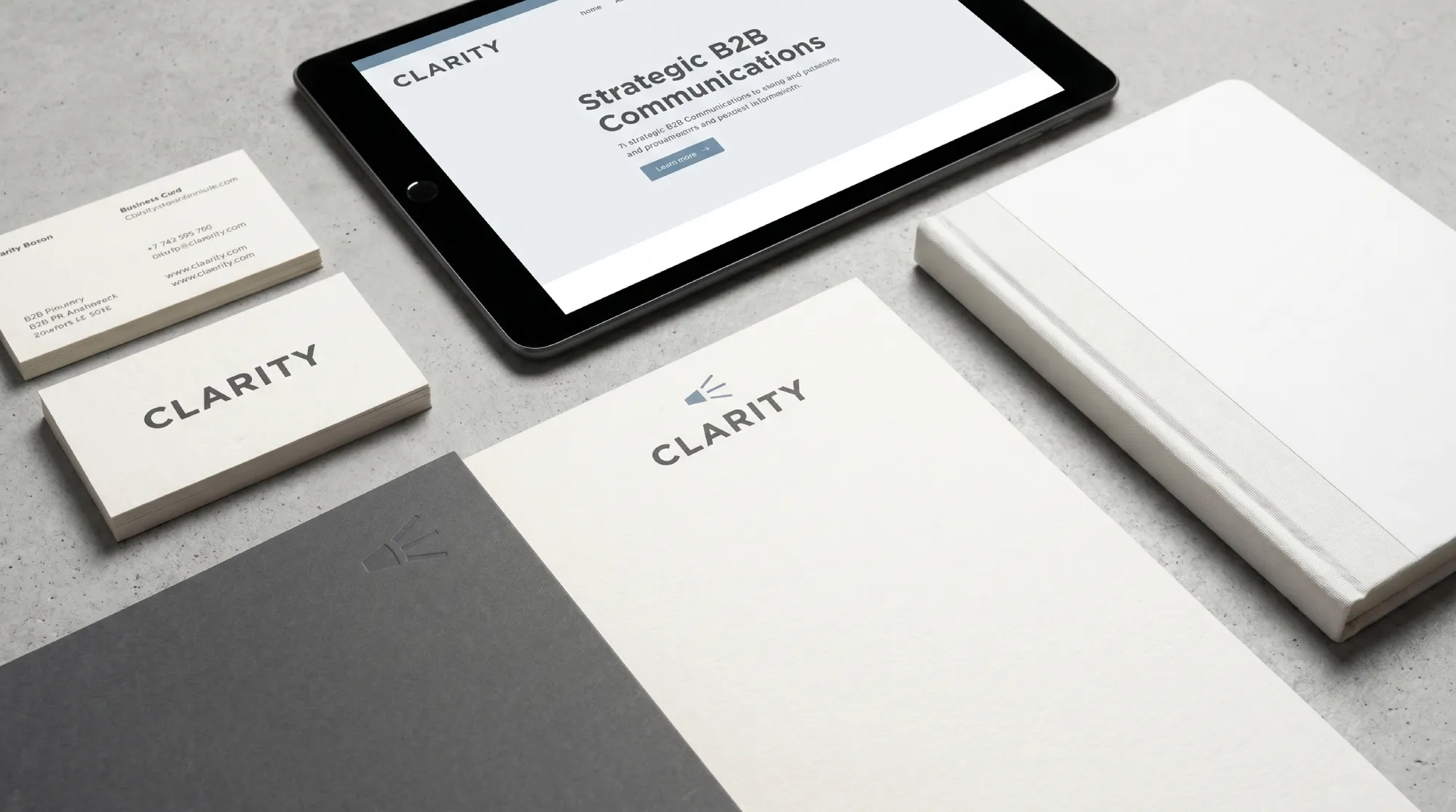
Most published rebrand timelines are agency workflow maps in business attire. They open with discovery, move to identity in week five, treat internal rollout as a training exercise, and end on measurement.
It is a tidy diagram. It is also backwards for a firm whose revenue lies in relationships rather than products.
The reason the order matters is buying psychology, not project management. Forrester's 2025 Buyers' Journey Survey found that 68% of B2B buyers already have a front-runner vendor in mind at the start of a purchase — and that front-runner wins 80% of the time.
Your position is being decided long before anyone issues an RFP. A rebrand that rushes to a new logo without first settling what the firm now stands for is repainting a shopfront while leaving the sign ambiguous. The visual identity cannot express a position that the firm has not yet agreed on.
So the sequencing rule is simple to state and hard to follow. The firm earns the right to a new visual identity by first making the decisions behind it. Design is the expression of a settled position, not the process that discovers it.
“The logo is not the finish line of a rebrand. It is the moment the firm makes public a set of decisions it should already have made in private. Get those decisions in the wrong order, and no amount of design craft rescues the launch — you will have expressed, beautifully, something the partners still disagree about.”
Where competing timelines place identity at Phase 3 of 5 and still frame the whole exercise as building towards it, the sharper view treats identity as downstream of alignment.
This matters most for firms where several partners each describe the business differently — which, in my experience, is the case for most firms.
The 5 Decisions, In the Order That Protects Value
Each decision below gates the one that follows, so the order is not arbitrary.
Settle them out of sequence, and you compress the wrong stage — usually the design, because design is the visible part and therefore the part everyone assumes is the bottleneck. It never is.
1. Positioning — what the firm now stands for.
Everything downstream inherits this decision, so vagueness here is expensive later.
The test is concrete: can the firm state, in one sentence, what changed about how it competes — the move upmarket, the new specialism, the acquired capability?
If three partners answer that sentence three ways, the firm is not ready to design anything. It is ready to have the positioning argument it has been avoiding.
2. Internal alignment — getting the people who sell the firm to describe it the same way.
More than 40% of B2B deals stall because of misalignment within the buying group, according to the Edelman-LinkedIn 2025 B2B Thought Leadership Impact Report.
The same fracture exists on the right side. A firm can launch a flawless identity while its partners, fee earners and business-development team still pitch three different companies.
Alignment is a gating decision, not a rollout afterthought — which is exactly where most timelines misfile it.
3. Client risk — deciding what changes for existing relationships, and how.
For a professional services firm, this is the decision with the most immediate revenue at stake, and it has no equivalent in a product rebrand.
4. Operational readiness — deciding what must be in place before launch day.
Contracts, email domains, proposal templates, letterheads, the website, and search redirects.
Skip the redirect mapping, and a firm can lose years of accumulated search ranking in a single weekend, because every old URL that 404s instead of redirecting drops the authority it had earned. This is not the studio's eighth week.
This is the firm's own admin, and it is slower than anyone plans for.
5. Market rollout — deciding the order in which audiences find out.
Not everyone learns at once. Existing clients before the market. Staff before clients. The rollout decision sequences who hears what, when, so no important relationship discovers the change from a press release.
Identity design slots between decisions two and four. It cannot precede alignment, and it must precede operational readiness. That placement — mid-timeline — is the whole argument.
Protecting Client Relationships While the Brand Changes
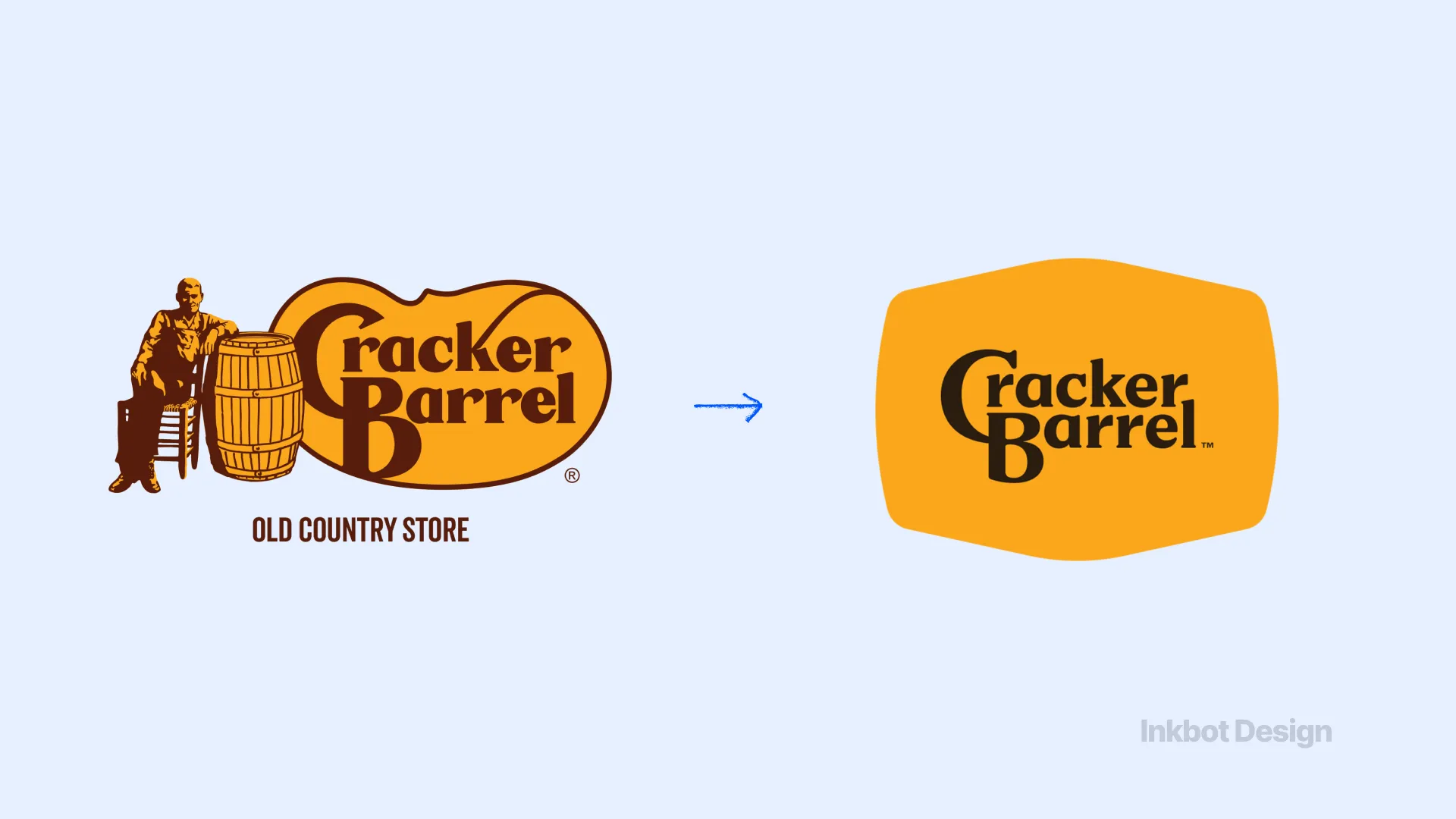
For a firm that sells expertise, the rebrand's largest financial exposure is not the design fee. It is the risk that a long-standing client reads the change as instability.
This is the decision competing timelines omit entirely, and it is the one a Managing Partner worries about at 2 am.
The exposure is structural. Forrester's 2025 research found that the average B2B purchase now involves 13 people within the buyer's organisation and 9 external influencers.
A rebrand does not land on one contact — it lands across a client's whole internal network, several of whom have no relationship with you and will judge the change on surface signals alone.
A partner's trusted counterpart may understand the repositioning; the client's procurement lead and finance director see only that a familiar supplier suddenly looks different.
The mechanism that reduces this risk is sequence, again. Existing clients should hear the reasoning directly, from their own contact, before the identity appears anywhere in public. Told first and told why, a client experiences the rebrand as a source of confidence.
Finding the same client on a changed invoice, the client takes it as a warning sign. The design is identical in both cases. The sequence is the entire difference between reassurance and alarm.
The two objections a sceptical leader raises here are fair.
First: isn't this overcautious — clients care about the work, not the letterhead?
They care about the work, yes, but the network judging the relationship is larger than your one contact, and most of it relies on only surface-level signals.
Second: won't a phased, relationship-first rollout slow everything down?
It adds days to the rollout decision, not weeks to the timeline — and it is far cheaper than re-earning a client who felt blindsided.
Protecting brand equity through a transition is a discipline in its own right; a considered rebranding equity strategy treats client continuity as a design input, not a communications afterthought.
Why a 2026 Rebrand Launches to Two Audiences
A rebrand launched in 2026 has to satisfy two audiences that read a firm in completely different ways. Humans need confidence, relevance and proof.
AI systems need clear, consistent, structured information to interpret the firm accurately. Get the machine-readable layer wrong, and the firm becomes harder to find at the exact moment it has repositioned.
In January 2026, Forrester reported that generative AI search had become a starting point for B2B buyers — but that buyers increasingly rely on internal colleagues and external influencers to validate what AI tools tell them.
The same report notes that AI tools offer speed while often returning incomplete or unreliable information, so buyers compensate by seeking human validation. Both facts point the same way for a rebrand timeline: the launch has to feed the machine and arm the humans who check it.
In practice, the operational readiness decision now includes an additional checklist.
Named experts and visible subject-matter authority on the site. Original research or a genuine point of view. Client proof and case studies.
Clear author and firm information. Consistent explanations of services and specialisms, so an AI model interpreting the firm returns a coherent answer rather than a fragmented one.
A firm that rebrands without updating this layer can find that the new positioning is invisible to the tools now shaping first impressions. Consistent, well-structured brand assets enable both humans and language models to describe the firm in the same way.
The Verdict: Sequence Before Symbol
Plan the rebrand timeline as five decisions, not five design phases, and the schedule stops being mysterious.
Positioning and internal alignment take calendar time because they need consensus. Client risk is the decision with revenue attached to it.
Operational readiness and rollout determine whether the launch protects value or leaks it. The new identity is the expression of all of that, which is why it belongs in the middle of the timeline, not at its end.
The single most useful thing to do today is establish where the brand actually stands before you sequence anything.
Request a free Brand Equity Audit™ — a structured diagnostic that identifies exactly where the brand is losing commercial ground, so the decisions above are made on evidence rather than instinct.
Frequently asked questions
How long does a rebrand take for a mid-size firm?
Six to nine months from decision to full rollout is realistic for a firm of 50–200 people. The design work is a small part of that; positioning, internal alignment and phased client rollout consume most of the calendar because they require partner-level consensus rather than studio time.
When in the rebrand timeline should the new logo be designed?
Mid-process, not at the end. Identity design should follow positioning and internal alignment — so it expresses a settled position — and precede operational readiness, so redirects, templates and the website are built around the finished identity rather than retrofitted.
What's the difference between a rebrand and a brand refresh timeline?
A refresh updates visual elements against an unchanged position and can take weeks. A rebrand changes what the firm stands for and requires the full decision sequence — positioning, alignment, client risk, readiness, rollout — which is why it runs to months, not weeks.
How do I rebrand without losing clients?
Sequence the rollout so existing clients hear the reasoning directly from their own contact before the new identity appears publicly. Told first and told why, clients read the change as confidence; when they discover it in a changed invoice, they read it as instability.
Why do rebrands stall internally?
Because internal alignment is treated as a rollout task rather than a gating decision, more than 40% of B2B deals stall due to buying-group misalignment, per the Edelman-LinkedIn 2025 report; the same fracture on the sell side means partners pitch different firms until alignment is reached.