
Rebranding Equity Strategy: Protect Value During a Rebrand
Unmanaged corporate rebrands erase commercial value under the guise of modernisation.
When a £15 million professional services business decides to update its market presence ahead of an acquisition, a private equity raise, or a new market expansion, executive leadership usually focuses on creative differentiation.
Logos are refined, colour systems updated, and agency partners selected. Yet, the vast majority of these initiatives fail to account for a far quieter financial threat: equity drop-off during the identity transition.
Protecting your commercial standing during a corporate identity shift requires a systematic brand audit process.
Brand equity does not live in an agency presentation deck or a vector file. It lies in the psychological shortcuts your clients, referral partners, and market prospects use to justify paying your premium fees.
Treating an identity update as a creative design project rather than a structured commercial migration risks severing those exact shortcuts.
- Halt creative exploration until completing a Brand Equity Audit™ to quantify recognition, search equity, and client trust.
- Use Stage 2 asset mapping: categorise elements as Retain, Evolve, or Discard and preserve high-trust markers.
- Execute Stage 3 continuity: retain legacy hue, modernise typography, and keep core positioning vocabulary to avoid visual rupture.
- Follow Stage 4 phased rollout: internal, tier-one clients, partners, then public; personally brief top clients to preserve trust and prevent churn.
- Implement Stage 5 technical realignment: map every legacy URL to targets with strict 301 redirects retained at least 12 months to protect search equity.
How Is a Rebranding Equity Strategy Executed?

A rebranding equity strategy is executed through a five-stage migration process that audits existing recognition assets, maps core commercial trust markers, isolates transferable equity, executes phased design updates, and aligns digital infrastructure to prevent market drop-off.
Equity Migration Stage Pipeline
- Stage 1 — Audit & Recognition Baseline: Isolate existing brand equity vs. active liabilities.
- Stage 2 — Core Asset Mapping: Identify non-negotiable commercial trust markers.
- Stage 3 — Migration Architecture: Design visual and semantic continuity bridge.
- Stage 4 — Phased Stakeholder Rollout: Internal Alignment → Key Clients → Public Launch.
- Stage 5 — Infrastructure & Technical Realignment: Digital SEO redirects, domains, and collateral sweep.
- Audit & Baseline: Measure existing brand recognition, search equity, and client trust markers before altering creative assets.
- Asset Mapping: Isolate the precise visual, verbal, and structural elements that drive client acquisition and retention.
- Migration Architecture: Design the updated identity system around continuous commercial signals rather than total visual rupture.
- Phased Communication: Roll out identity changes systematically across key client tiers, staff, and public channels to maintain institutional trust.
- Technical Realignment: Transfer online domain authority, search visibility, and operational touchpoints without technical data loss.
A rebranding equity strategy systematically audits, maps, and transfers existing brand recognition, trust, and commercial positioning into an updated identity without eroding market value.
Prerequisites for an Equity Migration
Executing a rebranding equity strategy requires concrete baseline metrics before creative discovery begins.
Attempting an identity migration without these initial parameters guarantees an unmanaged loss of equity.
- Clear Commercial Trigger: The initiative must serve a defined commercial goal—such as entering a new sector, merging two practices, or positioning for a 3x valuation multiple—rather than internal aesthetic boredom.
- Documented Revenue Attribution: You must know precisely which client types, sectors, and service lines drive current EBITDA. Equity preservation efforts must protect high-margin revenue drivers first.
- Complete Touchpoint Inventory: A compiled registry of every location where the current brand identity operates, covering digital domains, client portals, proposals, legal documents, pitch decks, and physical environments.
- Executive Authority Alignment: The Managing Partner, CEO, and board must agree that brand equity is a measurable balance sheet asset, not a subjective art project.
Stage 1: The Brand Equity Audit & Baseline Recognition Measurement
The first stage of an equity migration requires establishing exactly what your market recognises, values, and trusts about your current firm. You cannot protect what you have not quantified.
| Asset Category | Measurement Method | Migration Action |
|---|---|---|
| Distinctive Assets | BRAND Database Testing | Retain or Evolve |
| Search Authority | Domain Equity Mapping | Strict 301 Redirects |
| Client Trust | Accenture/Edelman Framework | Tiered Outreach |
| Market Perception | Qualitative Client Interviews | Bridge Positioning |
Firms frequently make the error of assuming their logo design is their primary brand asset. A peer-reviewed study published in Behaviour Research Methods introduced the BRAND database and evaluated consumer responses across 244,400 data points.
The researchers uncovered that in 2024, approximately 46% of major brand cases exhibited inconsistent logo usage across consumer touchpoints.
If nearly half of major organisations operate fragmented visual systems, your firm’s brand equity likely lives in places other than a standardised logo file. It may reside in a distinctive shade of blue, a specific phrase used in proposal documents, or the reputation of key partners.
How to Execute Stage 1
Conduct a multi-channel audit measuring four distinct equity markers:
- Distinctive Asset Recognition: Test visual elements (symbols, colour palettes, typography patterns) with existing clients and unexposed market prospects to separate high-value assets from outdated liabilities.
- Search and Organic Equity: Map top-performing website pages, backlink profiles, and non-branded search terms generating qualified client enquiries.
- Client Trust Attribution: Deploy targeted qualitative surveys across your top 20% revenue-generating accounts to identify why they selected your firm over competitors.
- Internal Alignment Baseline: Audit how senior partners articulate the firm’s core proposition during sales pitches to spot internal positioning fragmentation.
Failure Mode at Stage 1
Treating the audit as an internal consensus exercise. When leadership teams vote internally on what to keep from an old identity, they select items based on personal nostalgia or executive preference rather than commercial market recognition.
Stage 2: Core Asset Mapping & Value Extraction

Once the audit data is collected, Stage 2 categorises every visual, verbal, and structural element into three distinct operational buckets: Retain, Evolve, or Discard.
“Brand equity does not migrate because a new identity resembles the old one. It migrates when clients recognise the firm, understand its core promise, trust its execution, and experience unbroken commercial value after the transition.”
According to Accenture research, 62% of respondents consider trust a primary factor when deciding whether to engage with a brand, while Edelman reports that 80% of buyers must trust the brands they actively use.
Trust is a commercial relationship being transferred during an identity update. If you discard the visual or verbal signals that anchor that trust, you reset client trust back to zero.
| Asset Status | Strategic Purpose | Professional Services Example |
| Retain | High recognition, high trust asset. Non-negotiable continuity marker. | Secondary colour mark, established legal firm naming structure, core tagline. |
| Evolve | Outdated execution containing strong underlying equity. Requires modern refinement. | Heavy geometric logo icon modernised into a clean vector system; typography update. |
| Discard | Low recognition, zero commercial value, or active market liability. | Generic stock photography patterns, confusing sub-brand naming structures. |
How to Execute Stage 2
Map every brand element strictly against client conversion data. If an old graphic symbol has an 85% recognition rate among enterprise procurement heads, it must be retained or carefully integrated into the new visual system.
If a tagline has zero recall among prospects, discard it regardless of how attached internal partners remain.
Failure Mode at Stage 2
Failing to isolate liabilities from equity assets. Retaining outdated design elements solely to avoid internal friction dilutes the impact of the new identity system’s repositioning.
Stage 3: The Equity Migration Architecture & Identity Design
Stage 3 translates mapped equity parameters into an updated visual and verbal system. The goal is visual evolution combined with positioning clarity.
Modernising a brand does not require severing connection with legacy strength. Kantar’s 2025 BrandZ analysis recorded the combined value of the Global Top 100 brands at $10.7 trillion—an increase of 29% year on year.
Crucially, Kantar reported that brands that disrupted or reinvented their categories generated 71% of all incremental value created between 2006 and 2025.
Transformation creates commercial value, but unmanaged visual rupture destroys trust. The creative process must build an intentional bridge between past authority and future direction.
Visual Migration Continuity Bridge
- Monolithic Dark Blue
- Serif Typography
- Complex Crest Icon
- Deep Blue + Cobalt Accent
- Modern Editorial Serif
- Distilled Geometry Icon
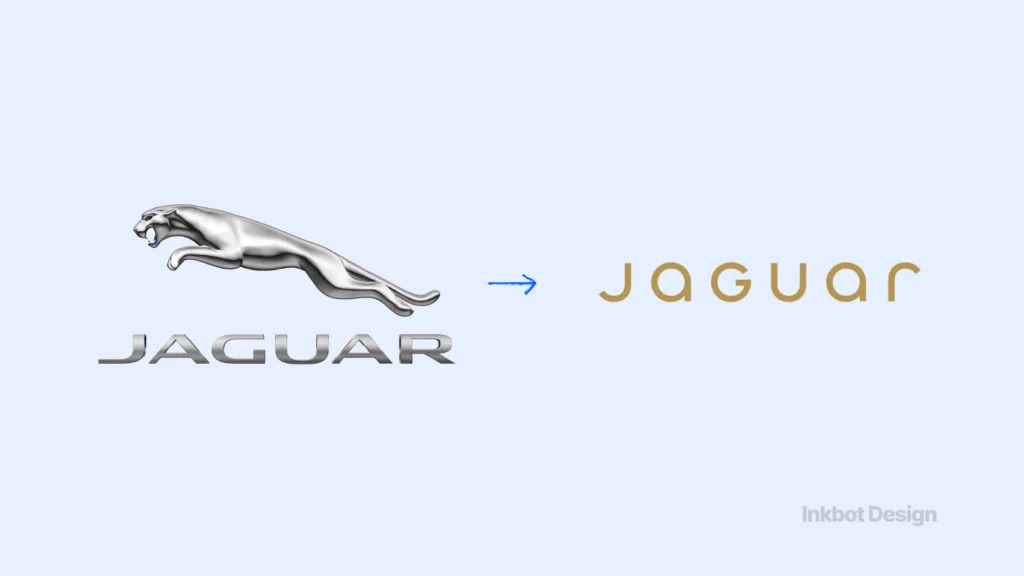
The risk of visual rupture was highlighted during Jaguar’s November 2024 “Copy Nothing” brand repositioning.
A 2025 case study from Aalborg University analysed 50 public responses to the repositioning campaign, uncovering recurring patterns of market confusion, scepticism, and severe nostalgia for legacy product cues.
When the audience perceives an identity update as a total rejection of brand heritage, commercial authority breaks down.
How to Execute Stage 3
Structure the creative execution around strict continuity rules:
- Colour Palette Migration: Retain a primary or secondary hue from the legacy identity to preserve subconscious visual recognition across digital platforms.
- Typographic Hierarchy: Modernise typography while maintaining structural tone (e.g., updating a traditional serif to a modern editorial serif rather than switching prematurely to a geometric sans-serif).
- Verbal Framing: Maintain core positioning vocabulary across pitch decks and proposal headers so existing clients experience no service disruption.
Failure Mode at Stage 3
Designing for internal executive applause rather than market legibility.
When an agency presents radical visual options that sever all connection to legacy equity, leadership often selects the most visually extreme option to prove change occurred.
Stage 4: Strategic Communication & Phased Stakeholder Transition
An equity migration fails when market stakeholders are surprised by an identity change. Stage 4 manages identity rollout as an intentional narrative transition.
Phased Stakeholder Rollout Sequence
Internal Launch
Weeks 1–2Tier-1 Clients
Weeks 3–4Key Partners
Weeks 5–6Public Launch
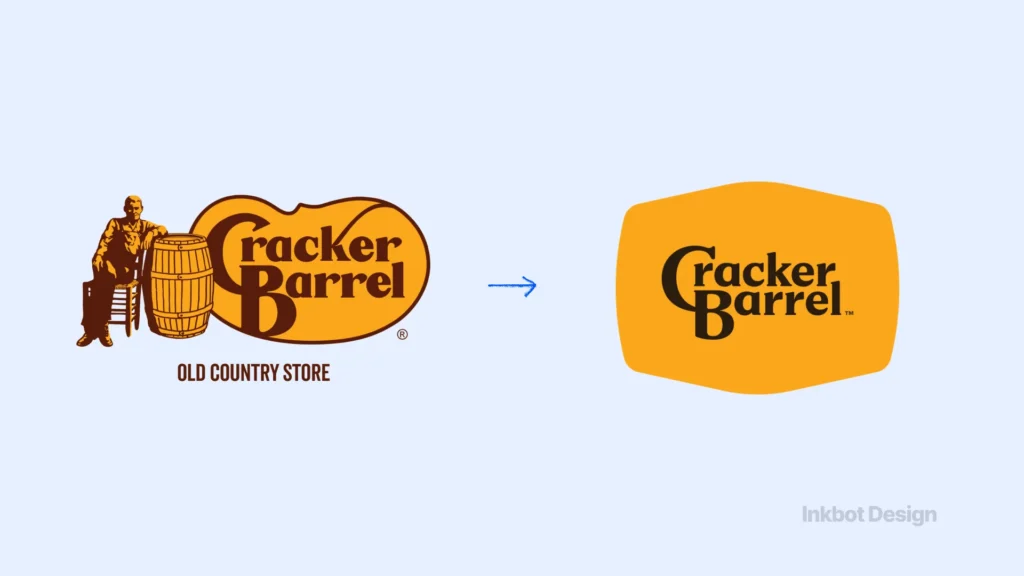
Week 7+The financial impact of mismanaged communication was evident during Cracker Barrel’s 2025 identity update. In August 2025, Cracker Barrel introduced a simplified corporate mark that eliminated its recognised “Old Timer” illustration.
Following widespread consumer backlash, the company reversed its decision and restored the original identity. According to Reuters reporting via ABC News, Cracker Barrel’s shares fell by up to 13% during the backlash window.
The company publicly acknowledged that it had failed to explain “who we are” and who it would remain after the update. The market did not reject modern design; it rejected an uncommunicated shift in corporate identity that appeared to abandon core brand heritage.
How to Execute Stage 4
Execute stakeholder communication across four distinct phases:
- Internal Alignment (Weeks 1–2): Train senior partners, fee earners, and client-facing staff on the strategic why behind the change. Staff must articulate the transition comfortably before external announcements.
- Key Account Briefings (Weeks 3–4): Personally contact your top 20% revenue clients. Frame the rebrand as an investment in expanded capability that directly benefits their account.
- Network & Referral Partners (Weeks 5–6): Send direct briefings to key referral channels explaining that ownership, key teams, and core service delivery remain entirely unchanged.
- Public Market Campaign (Week 7+): Roll out the new identity system across public PR channels, website environments, and commercial marketing.
Failure Mode at Stage 4
Announcing an identity change via a mass, impersonal email broadcast. When key enterprise clients discover a major rebrand via a generic marketing newsletter, it creates unnecessary doubt regarding corporate stability and ownership changes.
Stage 5: Systemic Rollout, Technical Redirects, & Market Alignment
The final stage ensures that the updated identity deploys flawlessly across digital, operational, and legal infrastructure, without loss of search engine visibility or broken touchpoints.
Digital asset migration carries substantial search equity risk. When updating website domains, URL structures, or brand names online, technical SEO management dictates the efficiency of equity transfer.
Google’s official developer documentation specifies that site managers must retain 301 redirects from old URLs to updated targets for at least one full year.
Removing redirects prematurely destroys years of built-in domain authority, leading to a severe collapse in organic traffic.
Map every legacy page strictly to its direct target equivalent via 301 redirects:
oldfirm.co.uk/services/tax-consulting → 301 → newfirm.com/services/tax-consulting
Mandatory Retention Period: Minimum 12 Months (Per Google Webmaster Guidelines)How to Execute Stage 5
Implement a comprehensive technical alignment checklist:
- Complete 301 Map: Map every legacy URL to its direct modern equivalent. Ensure zero destination pages drop to generic homepages.
- Google Search Console Realignment: Submit updated sitemaps, execute change-of-address notifications, and monitor indexation status daily post-launch.
- Third-Party Profile Update: Update company entity records across LinkedIn, corporate registers, industry directories, and review platforms within 48 hours of launch.
- Legal and Collateral Sweep: Replace identity markers across active contracts, billing systems, email signatures, and pitch presentation templates.
Failure Mode at Stage 5
Treating digital migration as a simple domain switch. Swapping web domains without precise 301 redirect mapping results in broken backlinks, lost search engine rankings, and dropped client lead generation.
Where Strategic Expertise Overrides Rules
Standard brand migration processes work well for transactional consumer updates, but professional services firms require seasoned executive judgement during identity transitions.

Preserving Equity vs Modernising Outdated Identity Systems
When auditing a legacy B2B brand, junior strategists often recommend updating every visual element to fit contemporary design trends. Experienced leadership recognises when an aesthetic flaw is actually a core equity asset.
Consider a 40-year-old Belfast legal practice possessing a heavy, traditional typographic mark.
While modern design trends favour ultra-minimalist sans-serif fonts, replacing that traditional typography with a generic modern font erases decades of implied stability, regional authority, and institutional trust.
Executive judgment determines when to refine a legacy asset and when to keep it intact.
Navigating Internal Partner Friction
In a professional services firm with 10 to 30 equity partners, individual partners often hold intense emotional attachments to specific legacy elements.
Managing partner leadership requires balancing partner sentiment against objective market research data.
When data show that a partner’s favourite logo variation creates confusion among target clients, leadership must enforce strategic alignment over individual preferences.
A Professional Services Rebrand Case
To understand equity migration in practice, examine how a mid-sized B2B consultancy successfully executes this framework.
Worked Example: Apex Consulting Migration
- Audit: Identified primary equity was green colour palette & "Apex" name
- Map: Retained "Apex" prefix; evolved "Apex Regional Advisory" → "Apex Strategy"
- Design: Modernised typography; retained signature emerald green accent
- Launch: 1-on-1 calls with top 30 corporate accounts prior to PR launch
- Technical: Mapped 450+ legacy URLs via 301 redirects; zero traffic loss
The Scenario
Apex Regional Advisory, a 120-person UK-based corporate advisory practice generating £18 million in annual revenue, is prepared to expand into European technology sectors.
Their existing identity looked regional, outdated, and fractured across five regional offices. However, 70% of their annual revenue came from long-standing enterprise accounts that explicitly trusted the legacy brand.
The Equity Strategy Execution
Instead of executing a total name change and complete visual overhaul, the executive team deployed a targeted rebranding equity strategy:
- Audit Phase: Market testing revealed that while the full name “Apex Regional Advisory” felt geographically restricted, the short form “Apex” and its distinct emerald green colour system carried high trust scores among corporate procurement teams.
- Asset Mapping: The team decided to retain the core name “Apex”, evolve the descriptor from “Regional Advisory” to “Apex Strategy Group”, and retain the signature emerald colour while modernising overall brand typography.
- Phased Rollout: Before launching publicly, senior partners conducted direct briefings with their top 30 enterprise clients. They explained that ownership, senior teams, and fee structures remained unchanged, framing the update as a strategic infrastructure expansion to support cross-border deals.
- Technical Deployment: The web migration preserved 100% of existing search authority by mapping over 450 legacy URLs to new domain structures, maintaining strict 301 redirects for over 18 months.
The Outcome
Apex Strategy Group successfully repositioned into European markets, secured a 15% increase in average retainer fees within 12 months, and experienced zero client attrition during the transition.
Equity Migration Over Visual Replacement
Most rebranding advice treats equity preservation as a superficial tactical checklist: retain your core colours, update your pitch decks, announce the change on social media, and roll out a new visual system.
These steps are standard procedure, but they leave the primary commercial question unaddressed: what exact value is being transferred from the old brand to the new identity?
The prevailing agency view argues that a successful rebrand requires radical visual disruption to signal market transformation. Creative agencies push for total visual replacement because new creative systems generate agency publicity and industry design awards.
| Default Approach (Agency-Led) | Equity Migration (Inkbot Strategy) |
|---|---|
| Focuses on visual replacement | Focuses on commercial equity transfer |
| Discards legacy design assets | Audits and isolates high-trust assets |
| Sudden public reveal | Phased stakeholder communication |
| Risks client churn and SEO drop-off | Preserves search authority and fee power |
That default approach puts commercial value at severe risk.
Brand equity does not move simply because your updated logo looks modern. It moves when your clients still recognise your business, understand your value proposition, trust your operational delivery, and encounter unbroken commercial value post-launch.
When visual modernisation destroys established recognition shortcuts, it forces your sales team to re-explain who you are to prospects who previously understood your authority. That friction damages conversion rates and erodes fee premiums.
The correct approach is to treat identity updates as an equity migration. Isolate your highest-value recognition markers before touching a single design file. Evolve visual assets deliberately around proven trust markers, and roll out changes systematically across your client base.
Protect the commercial authority that built your firm while building the visual infrastructure your firm needs for its next phase of growth.
The Verdict
A corporate rebrand should never be managed as a cosmetic design exercise. For a professional services business employing 50 to 200 people, your brand identity is a balance sheet asset that directly supports fee premiums, client retention, and market valuation.
Action Plan for Executive Leadership
If your firm is preparing for a strategic rebrand ahead of an acquisition, market expansion, or corporate repositioning, execute these three steps immediately:
- Halt Creative Exploration: Stop reviewing logo designs or colour concepts until you have completed a quantitative brand equity audit.
- Isolate Core Recognition Markers: Audit your existing touchpoints to identify which visual, verbal, and structural assets drive current client trust and search engine authority.
- Execute a Managed Migration: Structure your identity rollout around a phased communication plan and strict technical redirect architecture.
To identify exactly where your brand currently holds market equity and where you risk commercial drop-off during an identity update, request a structured Brand Equity Audit™.
We assess your existing visual recognition, search authority, and market positioning to provide a strategic blueprint for migrating your identity without loss of value.
FAQs
What is a rebranding equity strategy?
A rebranding equity strategy is a structured business process that audits, preserves, and transfers existing market recognition, client trust, and commercial value from a legacy brand identity into an updated visual and verbal system without eroding market share or search engine visibility.
How do you preserve brand equity during a major rebrand?
Preserving brand equity requires quantifying existing recognition markers before design work begins. Identify high-trust visual assets, retain core positioning messaging, execute phased communication across key account tiers, and maintain 301 technical redirects for digital assets for at least 12 months post-launch.
Why do corporate rebrands lose client trust?
Corporate rebrands erode trust when visual changes are executed as a sudden, uncommunicated rupture. When clients experience abrupt identity changes without clarity on what remains unchanged in service delivery, ownership, and core values, they perceive heightened commercial risk.
How long should you keep search engine redirects after a rebrand?
Google’s official developer documentation recommends retaining 301 redirects from legacy URLs to updated web targets for at least one full year. Removing domain redirects prematurely destroys established backlink authority and search engine ranking positions.
What is the difference between brand evolution and brand revolution?
Brand evolution involves modernising typography, colour palettes, and visual systems while maintaining recognisable structural elements. Brand revolution represents a complete identity overhaul, suitable only when a firm undergoes fundamental structural shifts, such as post-merger integration or complete business model pivots.
How does a rebrand affect client retention in professional services?
Unmanaged rebrands trigger client churn by creating confusion around firm stability, key team retention, and service focus. Conversely, a managed equity migration reinforces client confidence by framing identity updates as investments in expanded operational capabilities.
Should you change your business name during a corporate rebrand?
No — changing a business name should occur only if the existing name represents an active commercial liability, legal conflict, or geographical restriction. Retaining your core name preserves built-in brand awareness and search authority while allowing visual elements to modernise.
What is a brand equity audit?
A brand equity audit is a quantitative diagnostic process that evaluates market recognition, search engine authority, drivers of client trust, and touchpoint consistency across an organisation prior to initiating identity redesign work.
How do you measure visual brand recognition before rebranding?
Visual brand recognition is measured by testing legacy identity components—such as symbols, colour palettes, and typographic patterns—across existing clients and unexposed market prospects using structured research methodologies, such as the BRAND database framework.
Why do senior partners often resist corporate identity updates?
Senior partners resist identity updates when rebrands are presented as subjective design projects that ignore the firm’s historical achievements. Engaging partners in structured equity audits demonstrates that legacy value is being protected rather than discarded.
Can a bad rebrand impact a firm’s valuation during an acquisition?
Yes — a mismanaged rebrand that erodes search visibility, creates market confusion, or triggers key client churn directly reduces EBITDA performance and lowers transaction valuation multiples during acquisition negotiations.
What is the first step in planning an enterprise rebrand?
The first step is establishing an equity baseline through a comprehensive audit. Quantify your firm’s current search authority, high-value client trust markers, and touchpoint assets before engaging creative design teams.
