Institutional Trust Is Not What Your Financial Brand Is Selling (But It Should Be)
Institutional trust is the primary purchase criterion for high-net-worth clients selecting an independent financial adviser. Most firms try to earn it by looking like a bank – and fail. This article explains the mechanism that actually works: purpose-led conviction that creates bonds no competitor can copy.
 By Stuart Crawford
 Reviewed by Tabitha Ayers
Updated 15 min read
On this page15 min left
- What Is Institutional Trust?
- The Trust Gap That Is Costing Independent Advisers Mandates
- Why Purpose-Led Conviction Builds Trust That Consistency Never Can
- The Myth That Is Holding Your Brand Back
- The State of Institutional Trust in Financial Services in 2026
- What Actually Goes Wrong
- How to Build Institutional Trust That Actually Works
- The Verdict
- FAQ: Institutional Trust in Financial Services Branding
Your brand is not failing because it looks unprofessional. It is failing because it looks exactly like everyone else in a sector that consumers already barely trust.
The 2025 Edelman Trust Barometer puts financial services at 64% global trust – technically above the threshold, technically “trusted.” But that same report ranks financial services near the bottom of all 17 sectors measured.
Decades of consistent navy palettes, serif wordmarks, and restrained luxury aesthetics have produced a sector that clients regard with functional acceptance rather than genuine confidence. Consistency was supposed to build trust. The data says it hasn't.
For independent financial advisory and wealth management firms targeting high-net-worth and ultra-high-net-worth clients, this creates both a problem and a window.
- The problem: your brand looks like a smaller, less credible version of an institution nobody fully trusts anyway.
- The window: the firms winning mandates in this market are not winning on visual credibility. They are winning on conviction – on the communication of a worldview so specific and so genuinely held that the right clients feel it was built for them.
That is what real institutional trust looks like in 2026. Not a logo that looks like a bank. A brand that makes your clients feel they have found the only firm that actually understands them.
You can explore how this applies specifically to your practice in the Inkbot Design guide to financial services branding – but first, let us establish what institutional trust actually is, and why most IFAs are building the wrong thing entirely.
What Is Institutional Trust?
Institutional trust is a client's confidence that a firm will act competently, ethically, and in their interest over time – without needing constant reassurance or individual proof.

Key components:
- Perceived competence: The belief that the firm has the expertise to manage complexity that the client cannot manage alone
- Perceived integrity: The belief that the firm's interests align with the client's interests, especially when they diverge
- Perceived durability: The belief that the firm will still exist, and still be relevant, in ten years
Institutional trust in independent financial advisory is built through demonstrated purpose-led conviction – the communication of specific values and worldview that create alignment before a single meeting takes place.
The Trust Gap That Is Costing Independent Advisers Mandates
Financial services are trusted. Just not very much.
And the gap between “technically trusted” and “genuinely preferred” is where mandates are lost.
Why Sector-Level Trust Data Misleads Boutique Advisory Firms
The 2025 Edelman Trust Barometer shows financial services at 64% global trust – up 2 points from 2024, and trusted in 17 of 28 countries surveyed. That sounds reassuring. It is not.
Financial services sits near the bottom of all 17 sectors Edelman measures, trailing technology, education, and food. Banking specifically reached 66% globally in 2024, the most trusted financial subsector, having gained 15 trust points since 2015.
But those gains belong predominantly to large, nationally recognised institutions – not to the independent boutique sitting in Leeds or Edinburgh with three partners and a polished website.
Sector trust data aggregates across every firm in the category. When high-net-worth clients evaluate an independent financial adviser for the first time, they are not granting that firm the same level of trust they extend to Barclays. They are starting from zero.
The sector's improved trust scores make no practical difference to a boutique firm's new business conversion rate.
The implication for brand strategy is direct. An IFA cannot borrow institutional trust from sector proximity. It must build something more specific, more personal, and more compelling than a large institution can credibly offer.
Independent financial advisers operate in a sector where aggregate trust figures mask the reality facing boutique firms. Each new client relationship starts from a trust deficit that no sector reputation can bridge. The brand must close that gap before the first meeting, or the meeting never happens. Generic institutional aesthetics do not close that gap. Purpose-led conviction does.
Why Purpose-Led Conviction Builds Trust That Consistency Never Can
Every credible financial advisory firm has a consistent brand. Consistency is not a differentiator. It is a disqualifier if you fail it, and invisible if you achieve it.
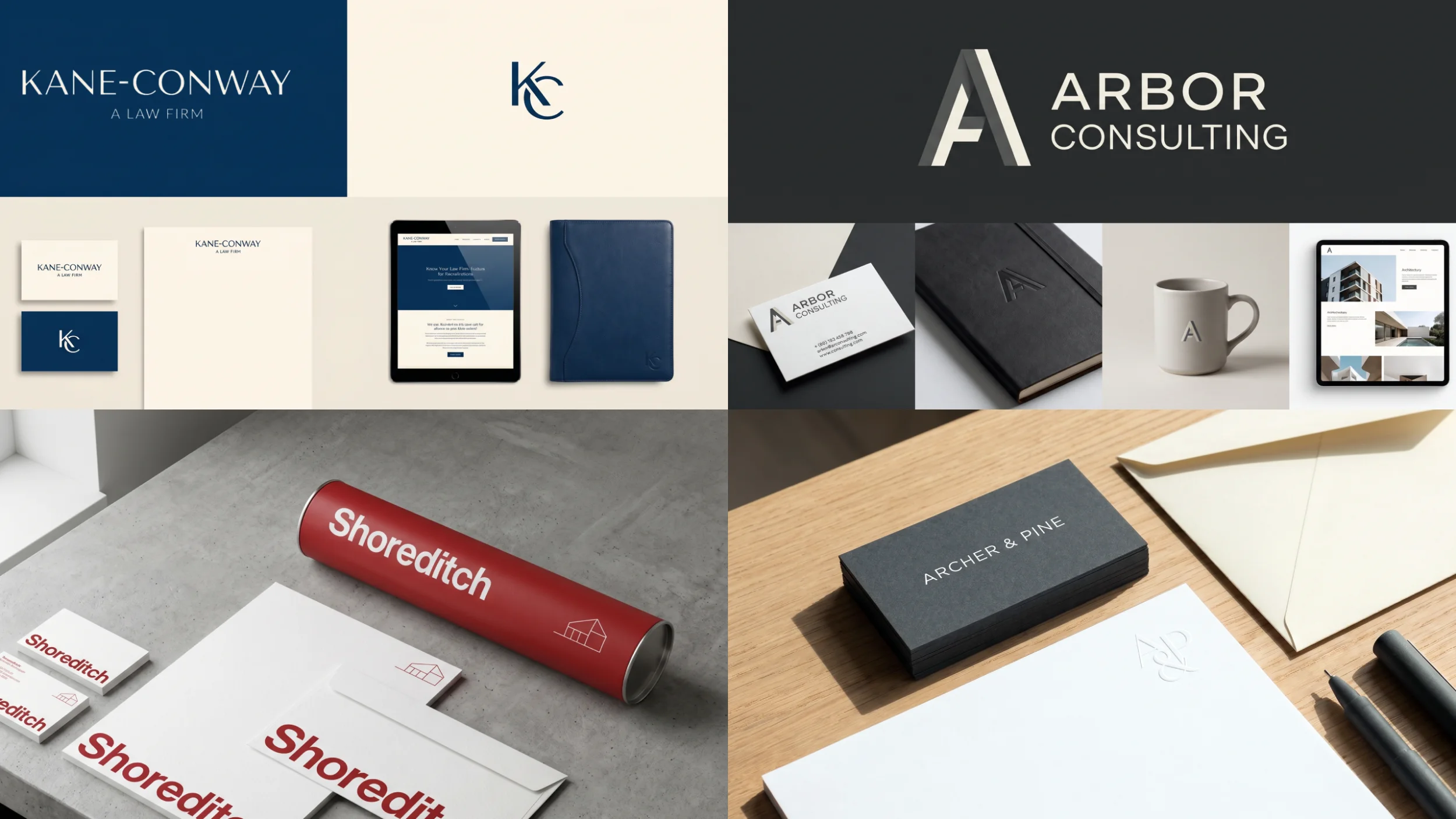
The Distinction Between Relational Trust and Institutional Trust for Independent Advisers
Large institutions earn institutional trust through scale, heritage, balance sheet strength, and regulatory visibility. An independent advisory firm cannot credibly claim any of those signals in the way that HSBC or St. James's Place can.
Attempting to do so – through classical visual codes, authority-signalling imagery, and deliberately impersonal brand language – communicates the wrong category to the right clients.
High-net-worth clients selecting a boutique independent adviser are not choosing the firm. They are choosing the people. They are buying the belief that these specific individuals understand their specific situation, share their values about wealth and legacy, and will be available in a way a large institution structurally cannot.
Relational trust – built through the communication of authentic conviction, human perspective, and specific worldview – is the mechanism that closes this deal.
A financial advisory brand built on shared convictions and perceived authenticity creates loyalty that survives product updates, pricing changes, and competitive pressure.
This is not because the convictions are marketing copy. It is because when clients feel genuinely understood, the emotional and ideological bond created is not transferable to a competitor. The competitor would have to be you to capture it.
Why Shared Values Create Bonds That Visual Credibility Cannot
The brands that attract HNW and UHNW clients most effectively in 2026 are not the ones that look most prestigious. They are the ones who communicate the most specific, most coherent point of view about what wealth management is for.
What we know from the Edelman data is this: financial services have failed to meaningfully improve their trust position for most of the last decade despite heavy investment in brand consistency and compliance-driven communication.
The sector that invested most in looking credible built a trust floor, not a trust ceiling. Firms that want to rise above that floor need a different mechanism – and the mechanism available to independents, which large institutions cannot authentically deploy, is conviction.
The most defensible financial advisory brands are built on what the founders genuinely believe about money, people, and long-term stewardship – expressed with enough specificity that the right clients recognise themselves in it, and enough honesty that the wrong clients self-select out. That selectivity is not a risk. It is the point.
The Myth That Is Holding Your Brand Back
This was once reasonable strategic advice.
When financial services branding began evolving as a discipline in the late 1990s and 2000s, the primary challenge was establishing category recognition – communicating to clients, many of whom were new to private wealth management, that a given firm belonged in the same conversation as the established institutions.
Visual codes borrowed from banking – classical typefaces, restrained colour palettes, understated photography – served that purpose. If you looked like a trusted institution, you borrowed a fraction of that trust.
That logic has collapsed.
Why the “Institutional Aesthetic” Has Become a Trust Liability in 2026
The 2025 Edelman Trust Barometer places financial services near the bottom of 17 sectors for trust – despite decades of consistent institutional branding.
The aesthetic intended to signal credibility has instead become visually indistinguishable from the category clients distrust.
RFI Global MacroMonitor (2025 Trends Report) data shows that 84% of American consumers express concerns about AI in banking, and the institutions they are most concerned about are those that look most institutional. The association is not accidental.
Simultaneously, neobanks have built the fastest-growing primary banking relationships in any market – 29% of US consumers now use neobanks as their primary bank, nearly doubling since 2022 (RFI Global MacroMonitor) – using brand identities that look nothing like a traditional financial institution.
Monzo, Starling, and Revolut built client bases worth billions without a single piece of classical institutional imagery. They built on values, experience, and transparent communication of purpose.
Independent advisory firms are not neobanks. But the signal is clear: looking like a bank no longer confers the trust it once implied.
Audit your brand for institutional camouflage. Every element that communicates “we are credible because we look like a larger firm” should be replaced with an element that communicates “we are credible because we have a specific, articulable point of view that you can hold us to.”
The State of Institutional Trust in Financial Services in 2026
The trust environment facing independent advisory and wealth management firms in 2026 is more complex than at any prior point – and the complexity creates specific, exploitable opportunities for firms willing to brand around the right signals.
AI Adoption Is Eroding the Trust That Technology Was Supposed to Build
The technology firms that were supposed to modernise financial services and raise client confidence have instead introduced a new category of anxiety.
According to the RFI Global MacroMonitor (2025 Trends Report), 84% of American consumers express concerns about AI in banking, citing privacy, security, reduced human interaction, and errors as their primary concerns.
RFI Global Trends & Predictions 2026 reports that 54% of consumers actively doubt AI's accuracy in financial services.
Only 23% of US households are comfortable with AI for fraud detection – compared to 74% in Singapore and 50% in Canada, suggesting the US market in particular carries a significant trust deficit around AI-driven financial processes.
This data has a direct implication for an independent advisory brand strategy.
The large institutions deploying AI at scale are also the institutions absorbing the reputational cost of consumer anxiety about AI. Independent advisers – structurally built on human expertise, individual relationships, and personal accountability – are positioned to benefit from that anxiety if they deliberately brand for it.
A firm that communicates “this is what human-led financial advice looks like, and why it matters now” is not just differentiating on service. It is differentiating on the single most resonant trust signal in the current environment.
The Demand for Transparency Has Moved From Preference to Prerequisite
RFI Global MacroMonitor data shows 32% of consumers demand regular audits and transparency for AI systems. But the transparency demand extends beyond AI.
The shift described by RFI Global as moving from “digital access to digital empowerment” – where clients want control, customisation, and transparency, not just access – mirrors exactly what HNW clients have always demanded from their advisers.
The difference in 2026 is that consumer banking experiences are now setting this expectation, meaning clients arrive at wealth management relationships with higher transparency expectations than prior generations.
The advisory firms building trust most effectively in 2026 are those making their decision-making visible. Not just what they recommend, but why. Not just how they manage portfolios, but what they believe about the purpose of wealth.
IndoorMedia's “9 Financial Services Marketing Trends to Watch in 2026” notes that generic content no longer works and that thought leadership from human experts lands differently – building credible financial brands in ways that automated content cannot replicate.
The Switching Pressure Creating New Client Acquisition Opportunities
According to RFI Global MacroMonitor, 11% of households considering switching financial providers cite fraud concerns as a primary driver.
Deposit safety concerns affect 37% of US households amid AI-enabled fraud fears (RFI Global Trends Report 2026). The neobank market, now used by 29% of US consumers as their primary bank and moving from a growth to and value-and-profitability focus, is beginning to compete for the full-service client relationships that private advisory firms have traditionally owned.
Traditional advisory firms that fail to innovate their trust communication risk competing on price alone – the worst position in a sector selling premium, personalised service.
The firms most vulnerable are those whose brand communicates nothing differentiated: no discernible conviction, no specific worldview, no emotional resonance with the client they are trying to serve.
The state of institutional trust in financial services in 2026 can be summarised in one sentence: the mechanisms that built category trust for a generation have reached their ceiling, and the next increment of competitive advantage belongs to the firms willing to build trust through specificity of conviction rather than familiarity of aesthetic.
What Actually Goes Wrong

Three former private banking executives launched Northbrook & Co., a boutique financial advisory firm in Leeds targeting high-net-worth clients. They came from major institutions. They had the credentials, the network, and the combined track record.
What they built with their initial brand was the visual and verbal language of the institutions they had left – aggressive growth imagery, generic finance clichés, pound signs and upward-trending graphs, a corporate aesthetic that communicated nothing about who they were or what they believed.
Stuart Crawford has led brand identity projects for professional services firms across 21 countries for over 17 years, and the Northbrook & Co. pattern is the most common single error in independent advisory branding.
The partners had spent careers in institutions where brand was someone else's department, and the instinct was to replicate what felt authoritative. The problem was that the visual language they borrowed was designed for institutions with balance sheets, branch networks, and regulatory prominence. Northbrook & Co. had none of those.
All they had – and all any boutique advisory firm has – is the conviction of its founders and the quality of its relationships.
The rebrand shifted entirely. Away from institutional mimicry, toward the specific worldview of three individuals who had spent decades inside the system and had left because they believed clients deserved something it could not provide.
The outcome: a unified identity that gave three partners with different corporate backgrounds a single coherent voice.
Early-stage partnerships were secured before the official website launched. A client quote that said precisely what any boutique IFA brand should aim to produce: “It's given us the confidence to stand toe-to-toe with the biggest firms in Leeds.”
Not by looking like them. By knowing exactly what made them different from them.
How to Build Institutional Trust That Actually Works
Decision Point | The Wrong Way | The Right Way | Why It Matters |
|---|---|---|---|
Visual identity direction | Borrow institutional codes – navy, serif, classical photography – to signal credibility | Develop a visual language that expresses the firm's specific worldview and client philosophy | Institutional codes are associated with institutions that clients distrust; specificity signals conviction |
Messaging approach | Generic capability statements (“experienced team,” “tailored solutions,” “client-first approach”) | Specific articulation of what the firm believes about wealth, legacy, and the client relationship | Generic messaging is indistinguishable from competitors; conviction-based messaging self-selects the right clients |
Trust-building mechanism | Consistency and compliance: ensure all materials look and sound the same | Visible human expertise: founders named, perspectives published, worldview communicated across all touchpoints | Consistency is a hygiene factor; visible human conviction is the differentiator in an AI-anxious market |
Response to the AI trend | Adopt AI-driven communications tools to appear modern | Use AI operationally while explicitly foregrounding human expertise and relationship accountability in brand communications | 54% of consumers doubt AI accuracy in financial services (RFI Global 2026); human-led positioning is a commercial advantage |
Client segmentation signal | Broad appeal – avoid anything that might narrow the audience | Deliberate specificity that attracts the right clients and implicitly excludes the wrong ones | HNW clients are selecting a relationship, not a commodity; brands that try to appeal to everyone attract no one at premium fees |
Digital experience | Polished, impersonal website with minimal human presence | Founder-visible digital presence with published perspectives, named team, and clear communication of firm values | The buying decision for boutique IFA services is relational; the digital experience must begin the relationship, not just describe the service |
Competitive positioning | Position against other boutique IFAs on similar terms | Position against the structural limitations of large institutions – offering what they cannot | Independent advisers cannot win against institutional scale; they must make scale irrelevant by offering what scale prevents |
The Verdict
The financial advisory firms that will build durable competitive positions in the next five years are not the ones with the most refined visual identity system.
They are the ones that have decided, with specificity and commitment, what they believe – and built a brand capable of communicating that conviction to exactly the clients they want to serve.
The data support this without ambiguity. Financial services sit near the bottom of all sectors in terms of trust, despite decades of consistent institutional signalling (2025 Edelman Trust Barometer).
AI is eroding consumer confidence in the large institutions driving digital transformation (RFI Global 2025 and 2026).
Neobanks with zero heritage are capturing primary banking relationships at scale through values-led branding. And the switching pressure in the market is only increasing.
For an independent advisory firm, this means one thing: the strategy of looking credible by looking institutional has already failed at the sector level.
The approach available to boutique firms – and unavailable to the institutions they compete against – is to build trust through visible, specific, articulable conviction.
- What do you believe about wealth?
- What kind of client relationship is possible?
- What are you asking your clients to trust you with, and why should they?
Those are not marketing questions. They are the foundation of a brand that builds institutional trust in 2026.
If you are uncertain where your current brand is failing to communicate that conviction – or where it is actively working against you – the Brand Equity Audit™ is the place to start. It is a structured diagnostic that identifies exactly where the brand is losing commercial ground and what to do about it.
FAQ: Institutional Trust in Financial Services Branding
What is institutional trust in financial services?
Institutional trust in financial services is a client's confidence that a firm will act competently, ethically, and in their long-term interest – without requiring constant reassurance. For independent advisory firms, it is built through demonstrated conviction and visible expertise, not through scale or heritage.
How do independent financial advisers build trust with high-net-worth clients?
Independent financial advisers build trust with high-net-worth clients by communicating a specific, articulable worldview about wealth and the client relationship – creating emotional alignment before a meeting takes place. Clients at this level are selecting people, not products; the brand must reflect the actual conviction of the individuals running the firm.
Why do financial services rank low in trust despite high awareness?
The 2025 Edelman Trust Barometer shows financial services near the bottom of 17 sectors measured, despite sitting above the 60% trust threshold. Decades of institutional aesthetics and compliance-driven communication have produced functional acceptance rather than genuine confidence. The category is trusted in the same way public utilities are: reluctantly, without enthusiasm.
What is the difference between institutional trust and relational trust for advisory firms?
Institutional trust is conferred by scale, heritage, and regulatory prominence – signals available primarily to large firms. Relational trust is earned through perceived alignment of values, human accountability, and specificity of conviction. Independent advisory firms cannot credibly claim institutional trust signals; relational trust is the mechanism available to them and the one that HNW clients are actually responding to.
How does AI adoption affect trust in financial services in 2026?
According to RFI Global MacroMonitor (2025 Trends Report), 84% of American consumers express concerns about AI in banking. RFI Global Trends & Predictions 2026 reports that 54% of consumers doubt the accuracy of AI in financial services. This creates a competitive window for independent advisers who can brand around human expertise and personal accountability as explicit differentiators.
What branding mistakes do boutique financial advisory firms most commonly make?
The most common mistake is institutional mimicry – borrowing the visual codes of large banks to signal credibility. This approach is now counterproductive: it associates the firm with institutions clients distrust, signals “a smaller version of something familiar” rather than “a specific alternative,” and offers nothing emotionally differentiating to HNW clients making a relational purchase decision.
How should a wealth management firm communicate trust in its brand?
A wealth management firm should communicate trust by making its convictions visible: publishing the perspectives of named founders, stating explicitly what the firm believes about wealth and the client relationship, and building a visual and verbal identity around that worldview. Generic capability claims – “experienced,” “tailored,” “client-first” – are indistinguishable from every competitor and communicate nothing.
Does brand consistency build institutional trust for financial advisory firms?
Brand consistency is a necessary baseline, not a trust-building mechanism. Every credible firm in the sector achieves basic consistency; it has become invisible. The 2025 Edelman Trust Barometer shows that financial services have sat near the bottom of sector trust rankings despite decades of consistent brand behaviour. Consistency prevents disqualification; conviction builds preference.
What role does thought leadership play in financial services trust-building?
Thought leadership from named human experts builds credible financial brands in ways that automated or generic content cannot (IndoorMedia, 2026). Market commentary, published perspectives, and video content from identified professionals with demonstrable expertise signal the human conviction that HNW clients are actually selecting when they choose an independent adviser. The expert must be identifiable – “our team” is not thought leadership.
How do neobanks affect the trust dynamics for traditional advisory firms?
Neobanks have demonstrated that institutional heritage is not a prerequisite for financial client trust: 29% of US consumers now use neobanks as their primary bank (RFI Global MacroMonitor, 2025), nearly double the rate in 2022. These brands built client bases on values alignment and digital experience, not heritage signals. The implication for independent advisory firms is that the rules have changed: conviction and experience quality now outperform pedigree.
When should an independent advisory firm rebrand?
An independent advisory firm should rebrand when its visual and verbal identity communicates a category (institutional banking) rather than a conviction (specific worldview), when it cannot articulate in one sentence what makes the firm genuinely different for a specific type of client, or when new business conversations consistently start with the firm having to explain itself rather than the prospect already having a formed impression.
What is a Brand Equity Audit, and why does it matter for financial advisory firms?
A Brand Equity Audit is a structured diagnostic that evaluates where a brand is losing commercial ground – across positioning, visual identity, messaging, and digital presence – and identifies the specific changes that would improve client acquisition and retention. For financial advisory firms, it identifies whether the brand is building the right type of trust with the right clients, or competing on terms it cannot win.