Sales Enablement Branding for Professional Services Firms
Sales enablement branding aligns your firm’s visual identity, messaging, and sales tools so every prospect interaction reinforces the brand you’ve built. Most professional services firms treat sales and branding as separate functions. That separation costs them deals. This guide identifies exactly where the gap opens and how to permanently close it.
 By Stuart Crawford
 Reviewed by Tabitha Ayers
Updated 18 min read
On this page18 min left
- What Is Sales Enablement Branding?
- Why Professional Services Firms Lose Deals Their Brand Should Win
- The Core Components of Sales Enablement Branding
- How to Build a Sales Enablement Brand System
- Sales Enablement Branding in 2026
- Brand Coherence in Professional Services: Why It Generates Revenue
- The Verdict
- Frequently asked questions
Sales enablement branding is not a marketing problem your creative team will fix with better templates.
It is a commercial failure point where years of brand investment – your positioning, your reputation, your premium pricing – gets quietly dismantled by the people who are supposed to be monetising it.
Every professional services firm loses this fight in the same way. The firm builds a credible, differentiated brand identity design.
Marketing produces polished collateral. Then a partner sends an unbranded proposal from a personal Word template. A sales director uses a three-year-old pitch deck with the wrong logo. A junior associate emails a prospect in a tone that doesn't align with the firm's documented brand voice.
The prospect, evaluating five firms simultaneously across multiple touchpoints, unconsciously perceives that this firm is inconsistent. Inconsistent firms cannot be trusted with complex problems.
That perception does not get articulated in a post-pitch debrief. It shows up in the silence after a proposal is submitted and the shortlist goes to someone else.
Firms with dedicated sales enablement functions achieve 49% higher win rates on forecasted deals, according to G2's sales enablement research.
That number is not generated by buying a platform. It is generated by ensuring that the brand that earns trust in the market is the same brand that shows up in the sales cycle.
This guide is written for partners and managing directors of professional services firms who already know their brand and their sales results are not telling the same story. It identifies where the break happens, why it costs more than most firms calculate, and what to fix first.
What Is Sales Enablement Branding?
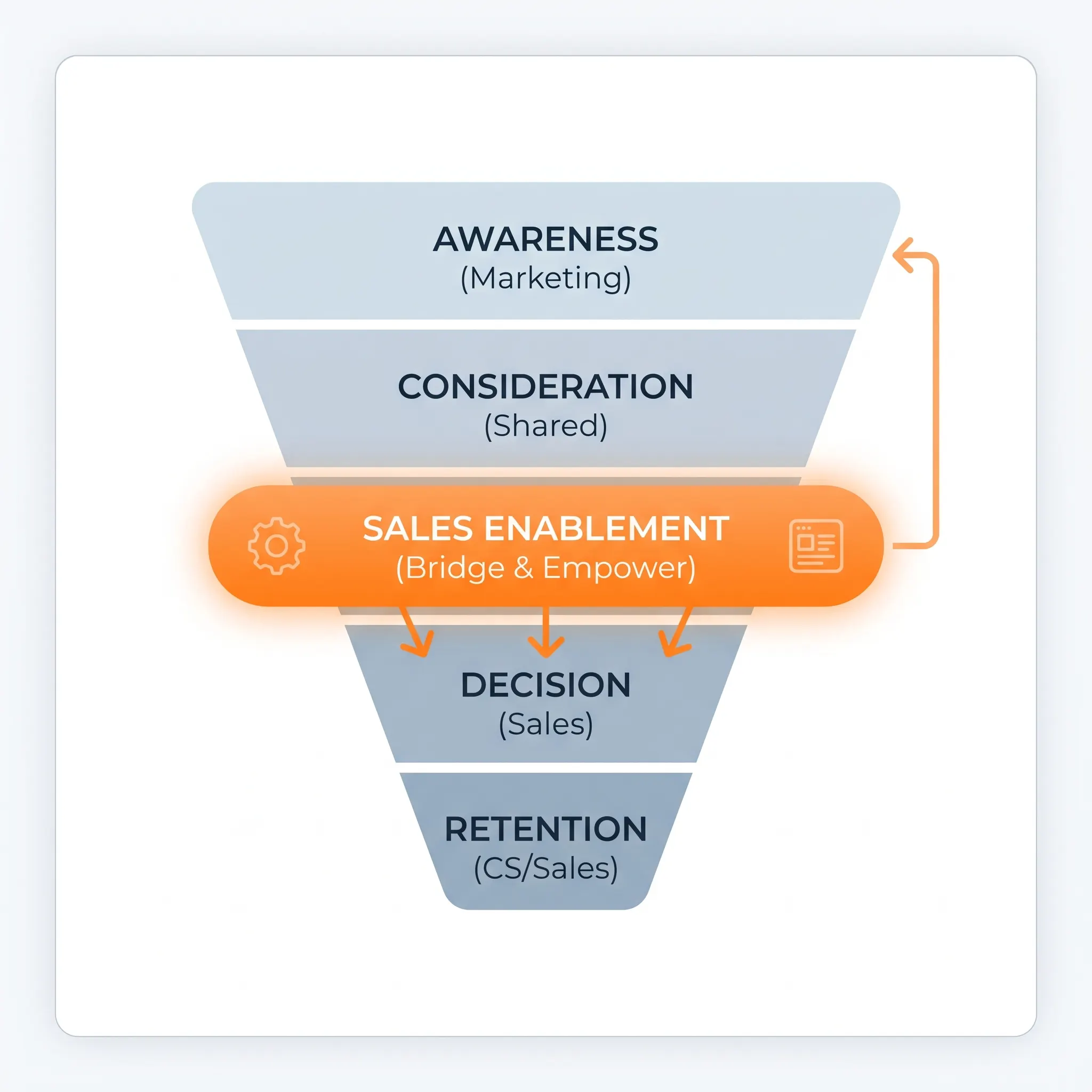
Sales enablement branding is the deliberate alignment of a firm's brand identity – its visual standards, positioning, tone of voice, and value framework – with every tool, asset, and interaction used by the sales function.
Key components:
- Branded sales collateral: proposals, pitch decks, one-pagers, and case study templates that comply with brand visual standards
- Brand-aligned messaging: value propositions, objection responses, and email sequences written in the firm's documented tone of voice
- Sales training that builds brand literacy, not just product knowledge
Sales enablement branding ensures that the brand a prospect encounters in a Google search, on LinkedIn, and in a meeting with a senior partner is the same, not three related but inconsistent versions of it.
Why Professional Services Firms Lose Deals Their Brand Should Win
Professional services firms in the UK spend significantly on brand positioning. They commission strategy work. They build websites. They define their differentiation.
Then the sales cycle begins, and the handoff from marketing to sales occurs without any structured transfer of brand standards or messaging architecture.
The result is two brands operating simultaneously: the one marketing is built, and the one sales is improving.
This is not a technology failure. It is a governance failure. Brand standards that live in a PDF on a shared drive are not operational. They are aspirational.
Firms that achieve genuine sales-brand alignment treat brand standards as sales infrastructure – built into templates, enforced through approval workflows, embedded in training.
McKinsey & Company's research on brand consistency shows a 10–20% revenue lift for organisations that maintain coherent brand signals across channels.
Professional services firms operating across long, multi-stakeholder sales cycles are, by definition, multi-channel. Every channel in that cycle is a brand touchpoint.
Every inconsistency is a compounding tax on the trust the firm is trying to earn.
Brand investment without sales enablement alignment is a leaking bucket. You can keep increasing spending on brand building. Still, if the sales function undermines those same signals in every pitch, the net brand equity contribution to revenue will always underperform. Professional services firms paying premium agency fees for positioning work while allowing sales reps to freelance their materials are spending at both ends of the same problem.
How Brand Inconsistency Creates a Credibility Deficit During Evaluation
Professional services buyers are not buying a product that they can test before committing. They are buying a future state – a legal outcome, a financial transformation, a consulting result – that does not yet exist.
The only evidence available during the buying decision is the firm's demonstrated competence. Brand is the primary vehicle for communicating that competence before the work begins.
When brand signals are inconsistent across the evaluation journey – a strong website, a weak proposal, an off-tone email from the partner – the buyer's subconscious registers a coherence deficit.
A firm that cannot manage its own internal consistency is signalling that it may struggle to manage the client's complexity. This is not a rational calculation. It is a pattern recognition response.
The signal that loses the deal is often the one the firm did not know it was sending.
The Core Components of Sales Enablement Branding
Every asset a prospect receives during the sales process is a brand interaction. Proposals, pitch decks, capability statements, one-pagers, email signatures, and even the structure of a follow-up email sequence carry brand signals – intentionally or by default.
Most professional services firms operate with brand guidelines that cover marketing assets. Fewer have brand standards specifically applied to sales collateral. The distinction matters.
People with brand literacy produce marketing assets. Sales collateral is produced by people under commercial pressure with varying levels of design and brand competence.
The fix isn't producing better templates, and we're hoping sales teams use them. It is building templates that cannot be broken without significant effort – locked layouts, embedded brand fonts, restricted colour palettes, pre-approved imagery styles.
The personalisation space must be structurally separated from the brand space.
Brand-Aligned Messaging and Value Proposition Frameworks
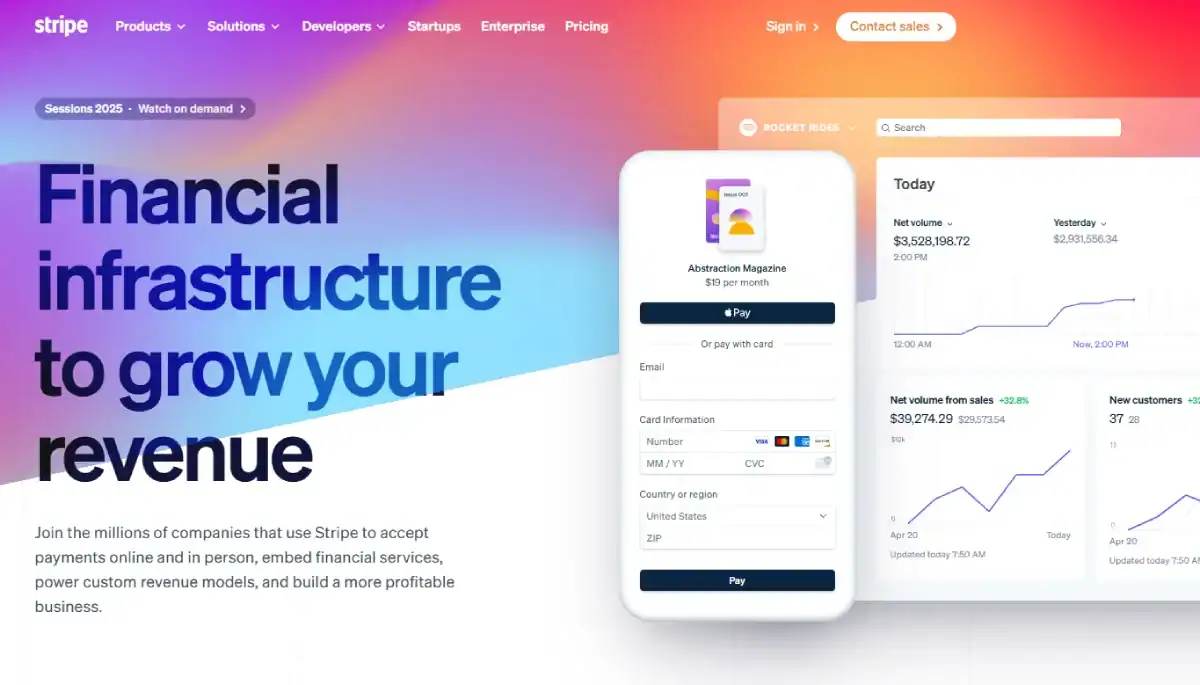
Visual consistency without messaging consistency is a house with matching walls and mismatched foundations.
A proposal that looks like the brand but reads like a different firm's positioning has the worst of both worlds: it creates expectation (through visual fidelity). It then immediately undermines it (through tonal inconsistency).
Brand-aligned sales enablement messaging means translating the firm's positioning into sales-ready language. This is not the same as the brand strategy document.
It is the operational layer beneath it: the specific phrases that carry the positioning, the benefit statements built around the firm's differentiators, the value proposition language calibrated to the specific buyer personas in the target market.
Firms with strong sales-marketing alignment – where messaging architecture is built once and used consistently across both functions – achieve 20% annual revenue growth, compared to a 4% revenue decline for misaligned organisations, according to SiftHub's alignment research.
Objection-Handling Scripts That Reinforce Brand Voice
Objection handling is where brand voice most commonly breaks down. When a prospect pushes back on the fee, timeline, or capability, the instinctive response is to go off-script.
The sales rep reverts to a personal selling style, which may be effective for that individual but which introduces brand inconsistency at the most commercially sensitive moment of the sales cycle.
Brand-aligned objection-handling scripts do two things simultaneously: they provide the sales rep with a structured, tested response and frame it in the firm's brand voice.
The positioning that makes the firm distinct should be most clearly articulated at the exact moment it is being challenged – not abandoned.
The Myth That Is Costing Your Firm Qualified Leads: Sales Reps Should Customise Their Materials
For years, the received wisdom in B2B sales coaching was simple: personalise everything. Tailor the proposal to the prospect. Adapt the messaging to the individual. The generic pitch loses to the targeted one.
This was reasonable advice in an era when personalisation was rare. Receiving a proposal that referenced your specific context felt like attention. It built rapport.
The advice has not aged well. Forrester Research's B2B buying behaviour studies document that buyers now engage with vendor content across ten or more touchpoints before initiating direct contact.
The evaluation is no longer conducted in a single meeting. It is assembled from a sequence of brand impressions – website, LinkedIn presence, referral conversations, downloaded content, and eventually a proposal or pitch deck.
Brand coherence across that sequence is what builds cumulative trust. One off-brand touchpoint introduced by a rep exercising “personalisation” can disrupt that sequence and register as a credibility discontinuity.
The correct position in 2026 is structured customisation: personalise the data, case studies, prospect-specific references, and problem framing. Lock the visual identity, the brand voice, and the positioning claims. These are not constraints on the sales rep.
They are the brand's contribution to the sales cycle – assets the rep cannot build independently and should not attempt to replace.
How to Build a Sales Enablement Brand System
Before building anything new, map what exists.
A sales touchpoint audit documents every asset and interaction a prospect encounters from first contact to signed contract.
For most professional services firms, the audit reveals a minimum of twelve to eighteen distinct touchpoints – and a consistent pattern of brand degradation as the sequence progresses from marketing-controlled to sales-controlled territory.
The audit questions are direct: Does this asset use the approved brand typeface? Does the copy reflect the firm's documented tone of voice?
Would a prospect who encountered this asset first form an accurate impression of the firm's positioning? The answers produce a coherence map. The map identifies the specific points where brand equity is being lost.
For firms considering a structured review of this kind, the Brand Equity Audit™ is a diagnostic that identifies exactly where the brand is losing commercial ground – including in the sales cycle – and what to fix first.
Creating a Branded Sales Toolkit
A branded sales toolkit is not a folder of templates. It is a system of brand-compliant, sales-ready assets built to remove the decisions that produce inconsistency. The toolkit includes:
- A master pitch deck template with locked layout and unlocked content zones
- A proposal template with brand-specified typography, colour application, and imagery guidance
- A library of pre-approved case studies in two formats: narrative (for proposals) and proof-point (for pitch decks)
- An email sequence library with brand-voice copy for initial outreach, follow-up, objection response, and close
- An objection-handling reference aligned to the firm's positioning claims
The operational principle is to treat constraints as enablers.
By removing the decisions that produce bad brand outcomes, the sales team is freed to focus on the decisions that produce good commercial outcomes: which case study is most relevant, which pain point to lead with, which prospect-specific detail to surface.
Training Sales Teams to Become Brand Custodians
A toolkit without training is unused. Training without a toolkit is inconsistent. Both are necessary.
Brand custodianship training for sales teams is not a session on the logo usage guidelines. It is a commercial education in why brand coherence matters during the sales cycle – what it costs when it breaks down, and what it earns when it holds.
Sales professionals respond to commercial arguments. Present the data (49% higher win rates for firms with structured enablement), connect it to their personal quota performance, and the adoption problem largely resolves.
The training must also address the common failure mode: ad-hoc client requests for non-standard materials.
The answer cannot be “no” – it must be “here is the brand-compliant way to do that.” Every exception acknowledged without a compliant alternative creates a precedent for future brand erosion.
Sales Enablement Branding in 2026
The industry has spent five years building the infrastructure for sales enablement and approximately two years beginning to understand that, without brand coherence, that infrastructure produces mediocre results at scale.
Platform adoption accelerated dramatically: over 70% of B2B companies had adopted dedicated sales enablement platforms by the end of 2025, up from 34% in 2021, according to Revenue Memo's annual analysis. Forecasting accuracy improved by 26% among early adopters. These are real operational gains.
The gains, however, are partially offset by a new problem the platforms introduced: content proliferation. Firms now produce more sales content than ever. Most of it is produced faster, by more people, with less brand oversight. The result is an expanded library of off-brand material available to sales teams at scale.
Organisations with mature sales enablement functions achieve 27% higher customer lifetime value, often driven by brand-aligned content and sales interactions that reinforce the positioning throughout the client relationship, not just during acquisition.
That figure, drawn from the same body of research, points to something the platform vendors rarely emphasise: the value is not in the volume of content, it is in the coherence of the brand signals embedded in that content.
For professional services firms specifically, 2026 presents a specific market condition: buyers are more sceptical, sales cycles are longer, and the competitive set in most professional services categories has expanded.
The firms that are winning new business disproportionately are those that have solved the coherence problem – where the prospect encounters a consistent, credible brand signal at every stage of the evaluation, and arrives at the proposal stage with a pre-formed impression of competence.
Companies aligning sales enablement with branding report 32% higher quota attainment through structured content and coaching programmes, according to research cited in G2's enablement reports. Better salespeople do not generate that number.
It is generated by giving existing salespeople the brand infrastructure they need to perform consistently.
The other 2026 dynamic worth noting: AI-generated content has entered the sales cycle. Prospects are receiving AI-produced outreach at volume.
In this environment, brand voice distinctiveness is not a creative preference – it is a commercial differentiator.
A firm with a well-defined, consistently applied brand voice stands out from AI-generated noise precisely because it sounds like a specific, coherent entity rather than a statistical average of its category.
Sales enablement branding in 2026 is not about producing more content – it is about ensuring that the content you produce carries a coherent brand signal at every touchpoint in the evaluation cycle. The firms achieving 49% higher win rates are not outspending their competitors on content. They are outperforming them on brand coherence, which means every prospect interaction compounds rather than erodes the trust their brand has built in the market.
The Difference Between Brand Compliance and Brand Coherence
Brand compliance means following the rules: correct logo, approved colours, specified typeface, and legally cleared messaging. It is necessary. It is not sufficient.
A firm can be fully brand-compliant and commercially invisible. Compliance prevents brand damage. Coherence generates brand value.
Most professional services firms operating brand guidelines focus almost exclusively on compliance – monitoring for off-logo usage, checking proposal formatting, correcting rogue email signatures. These activities preserve the floor. They do not build above it.
Brand Coherence in Professional Services: Why It Generates Revenue
Brand coherence is the condition where every prospect touchpoint – regardless of channel, team member, or context – reinforces the same commercial positioning claim. It is the difference between a firm that looks consistent and a firm that means the same thing everywhere a prospect encounters it.
In professional services, coherence is revenue-generating because the buying decision is fundamentally a trust decision.
A law firm prospect evaluating two shortlisted firms of similar capability and similar price will choose the one that has communicated its positioning more coherently across the evaluation journey. Not the smartest. Not the cheapest. The one that felt most reliably like itself at every point of contact.
Achieving coherence requires aligning brand, sales, and client service under a single positioning framework. The brand strategy work that establishes differentiation in the market must extend all the way into the sales cycle – and beyond it into the client relationship – or its commercial value stops at the website.
A Quick Fix
A Belfast-based manufacturing client came to us after six months of declining qualified lead volume. The brief they presented was a sales problem: the pipeline had dried up, conversion rates were down, and the sales director was under pressure.
The actual problem took about twenty minutes to find. The firm had a strong brand – precision engineering, technical authority, premium positioning. That brand existed on the website, in their trade press advertising, and in their marketing materials. It did not exist anywhere in the sales process.
Sales reps were sending unbranded pitch decks built in personal PowerPoint templates. Email follow-ups were written in a casual, generic tone that had no relationship to the technical authority the firm had spent years establishing. One rep was using a proposal template from a previous employer. Another had removed the firm's brand colours because “they didn't print well.
The prospects – procurement managers and operations directors at mid-market manufacturers – were encountering a premium brand in their initial research and a generic, slightly incoherent firm when the sales process began. The brand was creating a credibility expectation that the sales materials were failing to meet immediately.
We rebuilt the entire sales toolkit: a locked pitch deck template, a branded proposal framework, an email sequence library written in the firm's established voice, and objection-handling scripts anchored in the positioning. The result: lead conversion rates increased 40% within a quarter. Pipeline value added: £150,000.
The sales director did not get better at selling. The brand started doing part of the selling for him.
Sales Enablement Branding – The Wrong Way and the Right Way
Decision Point | The Wrong Way | The Right Way | Why It Matters |
|---|---|---|---|
Pitch deck ownership | Sales reps build individual decks | Locked master template with unlocked content zones | Prevents brand erosion at the highest-stakes touchpoint |
Proposal tone | Each partner writes in their personal style | Pre-approved copy blocks in documented brand voice | Ensures the firm sounds like itself regardless of who submits |
Objection handling | Reps improvise responses under pressure | Brand-voice scripts aligned to positioning claims | Brand advantage is most present when it is most challenged |
Case study format | Narrative written fresh per pitch | Approved library in two formats: narrative and proof-point | Consistency and availability – reps use what exists |
Email outreach | Generic CRM templates or personal style | Brand-voice sequence library for each stage of the cycle | The evaluation begins before the meeting; brand coherence starts here |
New hire onboarding | Product training + CRM walkthrough | Product training + brand literacy education | Sales reps who understand brand position use brand assets correctly |
Brand deviation requests | Approved ad hoc, creating precedent | Redirected to a compliant alternative | Every approved exception creates permission for the next one |
The Verdict
The firms losing pitches they should win are rarely losing on capability. They are losing coherence.
This is the commercially uncomfortable truth that most sales coaching, most CRM implementation, and most sales enablement platform investment do not address. If the brand is inconsistent across the evaluation cycle, the capability argument never fully lands.
The prospect does not articulate a brand problem.
They articulate a feeling – this firm did not feel quite right. That feeling is a brand signal, and it was sent by a PowerPoint template a sales rep built on a Tuesday afternoon.
The 49% improvement in win rate documented for firms with structured enablement is not primarily a process improvement. It is a brand coherence improvement delivered through process infrastructure. The platform is the vehicle. The brand is the asset.
For professional services firms, this has a specific implication. You are selling trust. Your brand is the only tangible proof of trustworthiness available to a prospect before the work begins. Every touchpoint in the sales cycle either compounds that proof or erodes it. There is no neutral ground.
The single most important directive: audit your sales cycle as a brand experience before you spend another pound on brand building.
Map every touchpoint. Score every asset for brand coherence. Identify the specific points where the premium positioning your firm has built in the market is being abandoned by the people responsible for converting it into revenue.
The Brand Equity Audit™ is the structured diagnostic that does exactly that – identifying where the brand is losing commercial ground and what to fix first. It is free. The cost of not doing it is not.
Frequently asked questions
What is the difference between sales enablement and sales enablement branding?
Sales enablement covers all tools, content, and training that help sales teams close deals more effectively. Sales enablement branding is the practice of ensuring all those tools and content consistently reflect the firm's brand identity, positioning, and voice. Enablement without branding scales inconsistency; enablement with branding scales trust.
Why do professional services firms struggle with sales enablement branding specifically?
Professional services firms typically operate with a strong divide between the marketing function, which owns the brand, and the fee-earning partners, who own sales. Neither group has primary responsibility for the intersection – so sales collateral gets produced in a brand vacuum, and brand standards get written for marketing channels that never reach the sales cycle.
How does brand consistency in the sales cycle affect win rates?
Organisations with dedicated sales enablement functions that incorporate brand alignment achieve 49% higher win rates on forecasted deals, according to G2's research. The mechanism is trust accumulation: a prospect who encounters a coherent brand at every evaluation touchpoint arrives at the proposal stage with a higher baseline of credibility already attributed to the firm.
What assets should be included in a branded sales toolkit?
A functional branded sales toolkit covers the full sales cycle: a locked pitch deck master, a proposal template, a case study library in multiple formats, a brand-voice email sequence for each stage of the cycle, and objection-handling scripts aligned to the firm's positioning. Each asset removes the decisions that produce brand inconsistency under commercial pressure.
When should a professional services firm conduct a sales touchpoint audit?
A sales touchpoint audit is worth conducting whenever conversion rates drop without an obvious commercial cause, before launching a new positioning or rebrand, during onboarding new partners or sales staff, or when expanding into a new market segment. Brand coherence gaps are most visible when the sales cycle is mapped in sequence – rarely obvious when assets are evaluated in isolation.
Is brand-aligned sales enablement only relevant for large firms?
The commercial case is arguably stronger for smaller professional services firms. A ten-partner firm does not have the brand volume to absorb inconsistency – every touchpoint carries disproportionate weight. Larger firms can generate trust through sheer market presence. Smaller firms must generate it through coherence, because each prospect interaction is a larger proportion of the total brand experience they receive.
What is the commercial cost of brand misalignment in the sales cycle?
Companies with strong sales-marketing alignment – including brand coherence across the sales function – achieve 20% annual revenue growth, compared to a 4% revenue decline for misaligned organisations, according to SiftHub's alignment research. For a professional services firm billing £3M annually, the gap between those two trajectories represents a six-figure annual commercial consequence.
How do you train sales teams to maintain brand standards?
Brand custodianship training for sales teams focuses on commercial consequences rather than aesthetic rules. Present the win rate data. Connect brand coherence to individual quota performance. Provide compliant alternatives for every deviation scenario. Compliance improves when sales teams understand that brand standards are sales assets – not marketing constraints imposed on their autonomy.
What is the relationship between brand voice and sales performance?
Brand voice in the sales cycle functions as a consistency signal. A firm with a well-defined, consistently applied tone of voice communicates clarity about what it is and who it serves. That clarity is commercially persuasive, particularly in professional services categories where differentiation is difficult to communicate through service descriptions alone. In a 2026 market saturated with AI-generated outreach, a distinctive brand voice is a direct differentiator.
Should sales proposals be brand-designed documents?
A sales proposal is both a commercial document and a brand document. Treating it as only the former – as most professional services firms do – means the highest-stakes sales asset in the cycle is also the most likely to undermine the brand positioning built by every preceding touchpoint. Proposals must meet brand visual standards: typeface, colour, layout, and imagery must be consistent with the firm's established identity.
How does sales enablement branding support client retention?
Organisations with mature sales enablement functions achieve 27% higher customer lifetime value, according to available industry research. Part of this is explained by brand coherence extending beyond acquisition: when the brand signals communicated during the sales cycle are consistent with the client experience during the engagement, the relationship begins from a position of validated expectation rather than discovery or disappointment.
What should a firm fix first if its sales cycle is inconsistent with its brand?
Fix the proposal template first. The proposal is the point of highest commercial consequence and the asset most commonly produced outside brand standards. A compliant, locked proposal template addresses the most costly brand failure point immediately, while the broader toolkit is being developed. Every day a non-compliant proposal goes out to a prospect, the firm's brand investment is partially reversed.