Boutique Law Firm Rebranding: How Specialist Practices Out-Position Magic Circle Firms
Boutique Law Firm Rebranding works when it turns a real strategic direction into a clearer client choice. The strongest programs do not begin with a logo route. They begin with a decision about who the firm serves, what it wants to be known for, how partner authority supports the firm brand, and what must change across the client experience.
 By Stuart Crawford
 Reviewed by Tabitha Ayers
10 min read

On this page10 min left
Boutique Law Firm Rebranding is not primarily a design exercise. It is a business decision about how the firm is understood, selected, and remembered by clients, referrers, recruits, and the market.
For a specialist practice, a dated identity can create a quiet but expensive problem.
Prospective clients may not understand the firm’s expertise quickly enough. Referral sources may see individual partners as the brand rather than the firm.
Recruitment candidates may assume the culture is less ambitious than it is. None of those issues can be solved reliably by replacing a logo alone.
I recommend treating rebranding as an opportunity to align five connected elements: market positioning, client value proposition, verbal identity, visual identity, and the practical client experience.
The work should make it easier for the right people to answer a simple question: Why should this firm be chosen over another credible option?
Decide Whether You Need a Rebrand

A full rebrand is appropriate when the firm’s current brand no longer reflects the business it is becoming. A refresh is appropriate when the underlying position is sound, but its expression feels inconsistent or dated.
A website-only project is appropriate when the brand is clear, but the digital journey prevents visitors from finding relevant expertise or making contact.
The distinction matters because firms often spend on the wrong level of intervention. A website redesign cannot resolve a vague proposition. Conversely, changing the name, logo, and stationery may create needless disruption when the real issue is weak content structure or poor conversion paths.
Use Business Triggers, Not Aesthetic Frustration
I would begin with the strategic trigger rather than a preference for a more contemporary style. The table below provides a useful decision rule.
Business condition | Best initial response | Why |
|---|---|---|
The firm has changed practice focus, target clients, geography, or fee model | Full rebrand | The market position and message likely need rebuilding. |
A merger, succession event, or partner departure changes the firm’s identity | Full rebrand or major architecture review | The firm must establish continuity beyond individual names. |
The identity is inconsistent, but clients still understand the firm’s value | Brand refresh | The position may remain valid, but execution requires discipline. |
Enquiries are weak because services are difficult to find online | Website and content redesign | Information architecture may be the primary failure. |
The firm receives strong referrals but struggles to convert unfamiliar prospects | Messaging and website improvement | The proof of value may not be sufficiently visible. |
The firm is known for work it no longer wants to prioritise | Full rebrand | A change in market perception requires more than surface updates. |
A useful test is to ask partners separately to describe the ideal client, the most valuable matter, the firm’s differentiator, and the reason a client would pay a premium. If the answers are materially different, the problem is probably strategic. If the answers are aligned but external materials fail to communicate them, a refresh or digital rebuild may be sufficient.
Know When a Name Change Is Worth the Risk
Changing a law firm name can be necessary, particularly after a merger, a leadership transition, or a move away from a founder-dependent identity. It can also be disruptive. Longstanding clients may worry that ownership, the service model, or the legal entity has changed when it has not.
I would consider a name change only when at least one of these conditions applies:
- The existing name excludes future leaders or reinforces dependence on a retiring partner.
- The name inaccurately signals the firm’s scope of practice, location, or client base.
- A merger requires a credible shared identity rather than a temporary combination of names.
- The name creates a material practical problem, such as confusion with another business or poor digital discoverability.
If recognition is strong and the issue is simply that the visual identity feels old-fashioned, preserving the name is usually the lower-risk choice. A carefully managed refresh can retain accumulated trust while improving relevance.
Treat Compliance as a Design Constraint
Legal branding needs more scrutiny than consumer branding. Claims about outcomes, expertise, rankings, comparisons, awards, client relationships, and fees should be checked before publication. The same applies to testimonials, case studies, imagery, confidentiality, and descriptions of regulated services.
This should not be left until launch week. Include a compliance review stage in the approval process, with clear ownership for checking website copy, credentials, social profiles, pitch materials, advertising, and partner biographies. A strong creative idea that cannot be substantiated is not a strong brand asset.
Fair warning: the risk is not confined to dramatic claims. A phrase such as “the leading specialist” may appear harmless in a headline but can create questions about evidence, scope, and audience interpretation. Precise language often feels more authoritative than inflated language.
For broader decision criteria, this guide on when and how to rebrand can help partners separate a genuine strategic shift from a cosmetic impulse.
Create a Position That Supports Premium Work
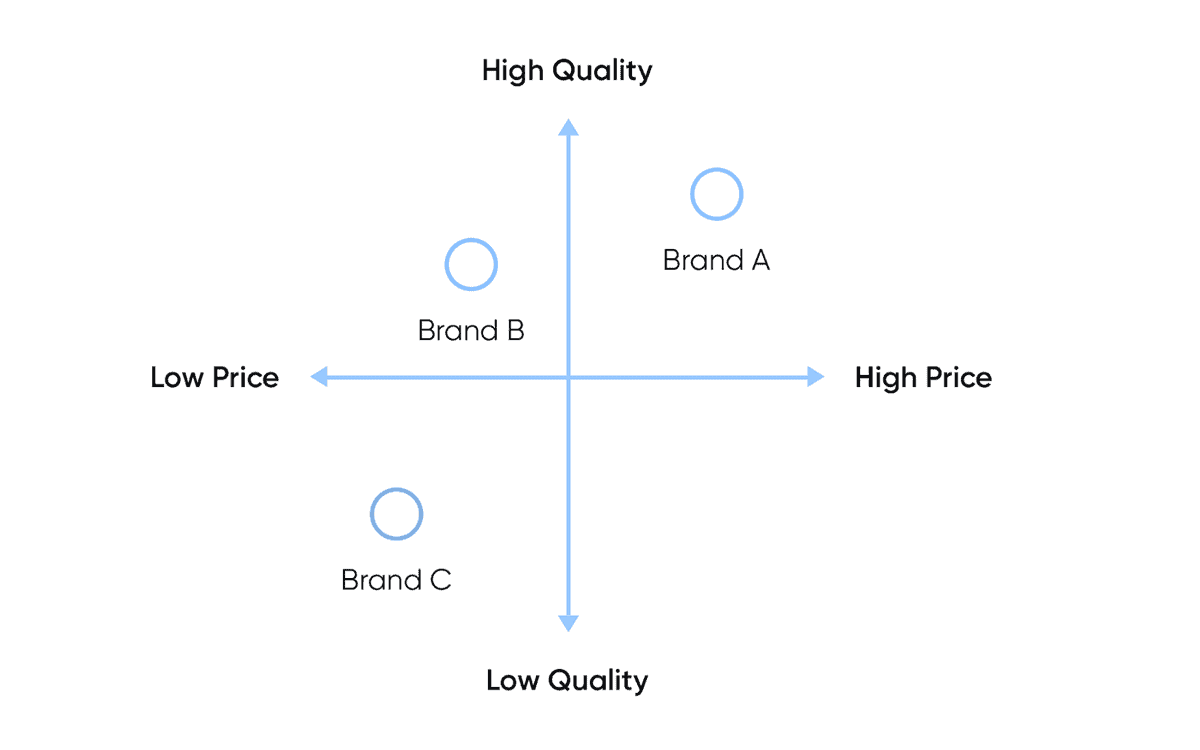
A boutique firm cannot win by sounding like a smaller version of a national full-service practice. Its advantage usually comes from focus, senior attention, speed of judgment, sector understanding, or an unusually clear way of solving a specific client problem.
Positioning turns that advantage into a deliberate market choice. It defines the category the firm wants to occupy, the audience it serves best, the problems it solves, and the evidence that makes the promise credible.
Start With Client Economics, Not Practice Labels
“Commercial law,” “employment law,” and “private client” are practice descriptions. They are not, by themselves, positions. Buyers already know those services exist. What they need to understand is why this firm is especially relevant to their situation.
Consider two employment boutiques. One describes itself as a provider of employment law advice. The other focuses on helping founder-led technology companies manage sensitive people issues without slowing investment, growth, or leadership decisions. The second statement is not merely more polished. It identifies a buyer, commercial context, and practical outcome.
I recommend building the position around four questions:
- Which clients create the strongest strategic and commercial fit?
- What high-consequence problem do they need resolved?
- What does the firm do differently in substance, process, or access to senior lawyers?
- What proof makes the promise believable?
Proof may include recognised sector depth, relevant matter experience, a distinctive delivery model, partner accessibility, useful thought leadership, or a credible network. It should not rely on generic claims about excellence, quality, or client service.
Research the Gap Between Internal Belief and External Perception
Partner workshops are valuable, but they are not enough. Partners tend to know the nuance behind the firm’s work. Clients and referrers only see what is communicated through conversations, recommendations, directories, search results, proposals, and the website.
Structured interviews with clients, referral partners, recruits, and internal teams can reveal where the gap sits. For example, a firm may believe it is admired for commercial pragmatism, while clients primarily praise its ability to make difficult decisions feel manageable. That distinction matters. The latter is a more human and ownable messaging platform.
The objective is not to ask stakeholders to design the brand. It is to identify recurring language, perceived strengths, moments of friction, and credibility gaps. Research should also challenge assumptions. If no interviewee can explain a claimed differentiator without prompting, it may be an internal aspiration rather than a market position.
Convert Positioning Into a Usable Message System
A positioning statement is an internal tool. It must be translated into usable language for the homepage, practice pages, proposals, biographies, recruitment materials, and client conversations.
A practical verbal identity normally includes:
- A concise firm proposition that explains relevance and value.
- Audience-specific messages for priority client groups and referrers.
- Practice-level narratives that connect legal capability to business consequences.
- Evidence statements that partners can support consistently.
- Tone of voice principles that make the language recognisable without becoming theatrical.
This is where a considered law firm brand strategy earns its value. It prevents visual decisions from becoming a substitute for difficult commercial choices.
Living Group’s TLT rebrand case study describes a program intended to align messaging, positioning, and visual identity with the firm’s strategy and the reasons clients and employees chose it. That connection is the central principle: a rebrand should make strategic truth easier to recognise, not manufacture it.
Build the Identity and Brand Architecture

Once the position is clear, design has a precise job: create recognition, signal the appropriate level of authority, and make the firm easier to understand across every meaningful touchpoint.
The identity should be distinctive enough to be remembered, but restrained enough to support serious legal decisions. Those aims are not opposites. Credibility comes from coherence, clarity, and evidence, not from copying familiar legal symbols.
Create Distinctiveness Without Looking Performative
Many legal identities default to dark blue, serif typography, scales of justice, city photography, and abstract architectural forms. These choices can be appropriate, but they rarely differentiate a specialist practice on their own.
A more useful approach is to establish a design system with clear rules. That system can include typography, colour, imagery, illustration, data visualisation, templates, motion, and editorial layouts. The question is not whether a colour palette looks bold in a presentation. It is whether a prospect can recognise the firm after seeing a partner profile, an insight article, a proposal, and a recruitment post over several months.
Test proposed identity routes in realistic contexts before approval:
- A mobile homepage with a complex service message.
- A partner biography alongside a headshot and credentials.
- A high-value pitch document.
- A client alert addressing a sensitive legal development.
- A recruitment page viewed by a lateral hire.
- A small email signature or PDF attachment, where decorative details often fail.
A brand that works only as a large logo on a white page is not ready for implementation.
Control the Balance Between Partner and Firm Brand
Boutique practices commonly rely on prominent partners for referrals and client confidence. That is commercially valuable, but it can create fragility when the firm’s identity is too closely tied to a single person.
Brand architecture establishes the relationship between the firm, practice groups, sector offerings, offices, and individuals. It answers practical questions: Does the firm lead with its collective proposition or with named experts? Are practice names consistent? Can a client understand who owns the relationship if a senior partner is unavailable? Does the website make the team feel broader than one rainmaker?
I would not hide strong partner reputations. Instead, place them inside a consistent firm system. Partner profiles should demonstrate individual authority while reinforcing the shared client value proposition, sector focus, and delivery model. This makes succession easier and gives recruits confidence that the platform is bigger than any one name.
Design the Website Around Decisions, Not Departments
A website should help a visitor recognise their situation, assess credibility, and take the next sensible action. Organising everything solely around internal departments can make it harder, especially for buyers who understand a business problem but not the relevant legal category.
A good structure may combine services with sectors, client situations, lawyer expertise, proof, and timely insight. The right balance depends on how clients buy. For a disputes boutique, a visitor may begin by identifying the type of conflict. For a private wealth practice, the starting point may be a life event or a cross-border complexity.
Before commissioning a rebuild, inspect analytics, search behaviour, enquiry paths, and common questions from business development teams. If the structure remains sound, a website reskin may be sensible. If users cannot locate essential services or understand the firm’s relevance, rebuild the architecture before styling the pages.
For practical inspiration, review law firm branding examples with a critical eye. The right direction is not the most visually dramatic example. It is the one that best supports your firm’s intended position.
Implement the Rebrand Without Losing Trust
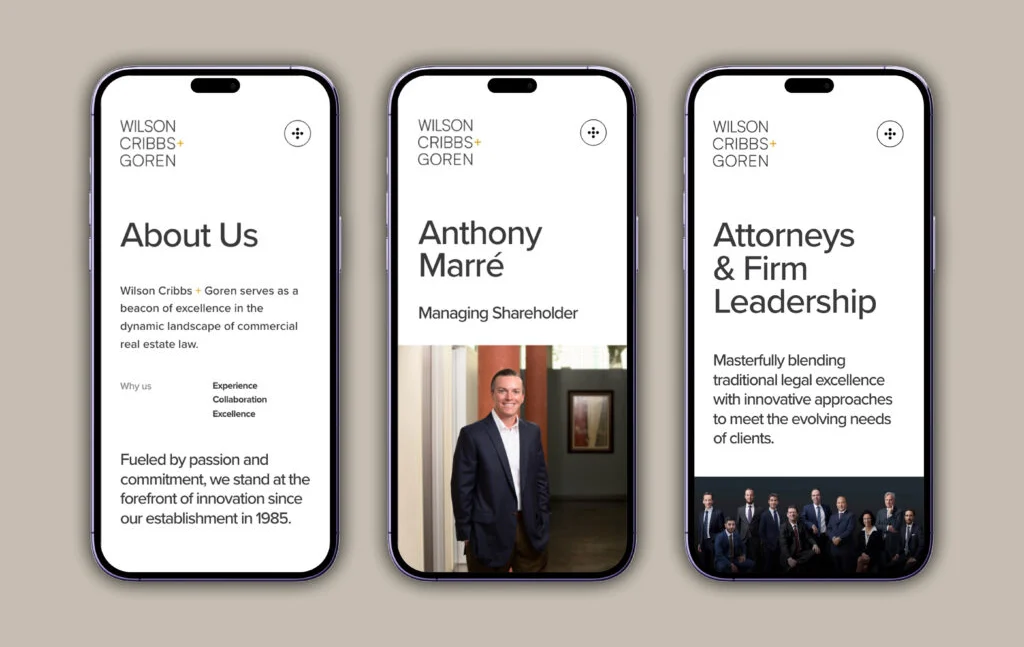
The launch is where many otherwise strong rebrands lose discipline. The firm reveals a new homepage, but old biographies, outdated directory entries, proposal templates, portal screens, and email signatures remain in circulation. That inconsistency suggests uncertainty precisely when the firm intends to signal control.
Implementation requires governance, sequencing, and an inventory of every location where the old brand appears.
Build a Migration Inventory Before Launch
I recommend appointing a single accountable launch owner, supported by representatives from leadership, marketing, IT, HR, finance, operations, and compliance. Their first shared document should be a rebrand migration inventory.
Touchpoint category | Typical items to audit | Common failure if missed |
|---|---|---|
Digital | Website, domains, redirects, profiles, email signatures, portals | Broken links, search loss, inconsistent names |
Client communications | Proposals, engagement letters, alerts, templates, invoices | Clients question whether documents remain valid |
Business development | Credentials, pitch decks, directory submissions, event assets | Teams revert to old files under pressure |
Operations | Signage, stationery, office templates, video meeting backgrounds | The old identity persists in daily use |
People and recruitment | Job adverts, onboarding, internal documents, careers pages | New hires receive mixed cultural signals |
Fresh Pies’ Bellevue Law case study illustrates the breadth of a typical rollout, covering identity, website, office templates, email signatures, and marketing literature. The lesson is straightforward: implementation is a systems project, not a publication date.
Preserve Trust Through Clear Client Communication
Clients do not need a dramatic brand manifesto. They need reassurance that the people, service, commitments, and legal arrangements they rely on remain clear.
For high-value or long-standing relationships, individual outreach from the relationship partner is often more appropriate than a generic launch announcement. Explain what is changing, what is not changing, why the update reflects the firm’s direction, and where clients should go if they need help. If the legal entity, banking details, domain, or engagement process changes, communicate this separately and with exceptional clarity.
A public announcement can then support broader awareness. It should focus on client relevance rather than internal taste. “We have a new logo” is not a compelling message to clients. “We have clarified how our specialist team supports complex founder disputes” may be true and demonstrable, provided it is.
Measure Business Outcomes, Not Applause
A rebrand should not be judged by compliments at launch. Set baseline measures before work begins, then review them at defined intervals after implementation. The most useful measures vary by strategic objective.
Strategic objective | Possible indicators |
|---|---|
Attract better fit enquiries | Qualified enquiries, conversion rate, matter value, source quality |
Improve referral confidence | Referrer feedback, repeat introductions, target sector referrals |
Strengthen premium positioning | Fee realisation, proposal win rate, client perception interviews |
Support recruitment | Quality of applicants, offer acceptance, candidate feedback |
Improve digital performance | Relevant organic traffic, service page engagement, consultation requests |
Build internal adoption | Template usage, partner participation, staff understanding surveys |
Attribution will rarely be perfect. A rise in instructions may result from market conditions, a lateral hire, content activity, improved sales follow-up, or branding. That is not a reason to avoid measurement. It is a reason to compare several indicators and ask whether they move in the direction predicted by the strategy.
For example, Living Group reported that its Cripps campaign achieved a 4.47% click-through rate, exceeding the stated 2.93% industry benchmark. That is a useful campaign signal, but it should be interpreted alongside enquiry quality and commercial outcomes rather than treated as proof that identity alone drove growth.
Conclusion
Boutique Law Firm Rebranding works when it turns a real strategic direction into a clearer client choice.
The strongest programs do not begin with a logo route. They begin with a decision about who the firm serves, what it wants to be known for, how partner authority supports the firm brand, and what must change across the client experience.
I would make the rebrand accountable to commercial outcomes from day one.
Define the position, test the proof, govern the migration, protect client confidence, and measure the results after launch. That is how a new identity becomes an asset rather than an expensive announcement.
Questions people ask
How much does boutique law firm rebranding cost?
There is no dependable universal figure because scope drives cost. A focused refresh with messaging and essential templates requires materially less work than a renamed firm with research, strategy, identity, website rebuild, migration support, and launch communications. I would first define the business problem, then request a phased scope that separates essential decisions from optional enhancements.
How long does a boutique law firm rebrand take?
Timing depends on decision speed, stakeholder availability, compliance review, website complexity, and the number of materials that must change. A narrow refresh can move relatively quickly, while a full repositioning and digital implementation may take several months. Allow additional time for partner alignment and migration controls; these are common sources of delay.
Should we change our law firm’s name during a rebrand?
Only if the current name creates a strategic or practical constraint. A name change can help solve succession, merger, misalignment, or confusion problems. Avoid it when recognition is valuable and the issue can be solved through clearer messaging, a stronger identity, or a better website.
How can a boutique firm look distinctive without losing credibility?
Build distinction around the firm’s actual position and proof, then test the identity in serious working contexts such as proposals, legal updates, biographies, and mobile screens. Credibility comes from clarity and consistency. It does not require copying the visual conventions of larger firms.
What should happen to partner profiles in the new brand?
Partner profiles should retain individual authority while reinforcing the collective firm proposition. Use a consistent format for sectors, client problems, experience, credentials, and points of view. Avoid turning every profile into a separate mini-brand with conflicting claims or tone.
What happens to our existing website and domain?
Keep the existing domain where possible unless there is a compelling reason to change it. If a domain change is necessary, plan redirects, email updates, search monitoring, profile updates, and direct client communication. Retain useful content where it remains accurate, but rewrite pages that no longer reflect the firm’s strategy.
How do we preserve client trust during a rebrand?
Communicate early and personally with key clients, especially in partner-led relationships. Explain continuity as clearly as change. Keep service uninterrupted, ensure documents remain accurate, and make practical updates, such as contact details and portal access, easy to understand.