Law Firm Positioning Strategy: Stop Competing With the Magic Circle
Magic Circle firms grew past £2.3bn in 2025. No 15-partner firm out-scales that, and imitating it wastes the one advantage a smaller firm holds. A working law firm positioning strategy owns a specific high-stakes problem or buyer context a global generalist cannot credibly prioritise — making the client’s choice easier.
 By Stuart Crawford
 Reviewed by Tabitha Ayers
Updated 12 min read
On this page12 min left
A managing partner told me his firm had “lost another one to a name” — a mid-market acquisition mandate that went to a Magic Circle firm the client admitted was more expensive and no more expert.
The firm had spent two years widening its service list to look bigger. It had made itself easier to overlook. That is the trap most positioning work walks straight into, and it is the one this piece exists to break.
Linklaters reported FY2025 revenue of £2.32bn, up 11%, with US profit up 57%. Clifford Chance reported £2.4bn, up 9%.
No firm of 10 to 50 partners out-scales those numbers, and every hour spent trying to signal comparable breadth is an hour spent competing on the one dimension where a smaller firm cannot win.
The commercial cost is direct: partners write down premium work to “stay competitive” against firms they were never positioned to beat. A serious law firm branding agency starts by refusing that fight entirely.
How a Winning Law Firm Positioning Strategy Is Built

A law firm positioning strategy that beats larger competitors is built in five stages: define the buyer's decision moment, choose the ground a global generalist cannot credibly prioritise, prove capability with evidence rather than adjectives, wire the position through every client touchpoint, and hold it long enough to compound. The sequence matters more than any single stage.
- Positioning against a scaled competitor means owning a specific problem, not claiming broader coverage.
- A fee premium follows a clearer position because clarity reduces the buyer's perceived risk.
- Consistency across delivery, not messaging alone, is what makes a position defensible.
A law firm positioning strategy wins against larger competitors by owning a specific high-stakes problem or buyer context that global generalists cannot credibly prioritise.
What You Need in Place Before You Start
Positioning fails most often before stage one, because the firm has not settled who inside it gets to decide. Positioning is a governance act, not a marketing task.
If three equity partners each describe the firm differently in the same pitch, no amount of downstream copywriting fixes it — the client hears the disagreement before you do.
Two entry conditions are non-negotiable.
First, a partner with authority to say no to good-fit-poor work, because a position is defined as much by what you decline as what you pursue.
Second, honest data on where recent instructions actually came from — sector, deal size, referral source — rather than where partners assume they come from.
Firms routinely discover their real book concentrates in an area their website barely mentions.
The Thomson Reuters Institute estimates that the average law-firm partner spends roughly 300 hours of their own time annually, with recurring losses in research, drafting, and onboarding to unfamiliar issues.
Positioning around work you already do efficiently, rather than work you wish you won, closes that gap directly.
Stage One: Define the Decision Moment You Want to Own
Start with the moment the buyer decides, not the service you sell. A general counsel does not go to market for “corporate law” — they face one specific, high-consequence decision, usually under a board deadline, and reach for the firm that visibly owns that exact situation.
A 12-partner tax practice that positions around “HMRC dispute resolution for owner-managed businesses” gets the call the moment a founder receives a discovery assessment. “Full-service tax” gets forgotten. Own the moment, and the instruction follows.
The failure mode here is defining the position by practice area. “We do commercial litigation” is a category, not a position; every competitor occupies it.
“We are the firm you call when a founder-led business faces a bet-the-company shareholder dispute” is a decision moment — narrower, and therefore selectable.
You know this stage is done when a partner can name the exact scenario in one sentence that a client would recognise as their own.
“The buyer never chooses the firm with the most services. They choose the firm that most obviously owns the decision in front of them. Breadth is a reason to be shortlisted and then forgotten; specificity is a reason to be instructed.”
Stage Two: Choose Ground the Global Generalist Cannot Prioritise
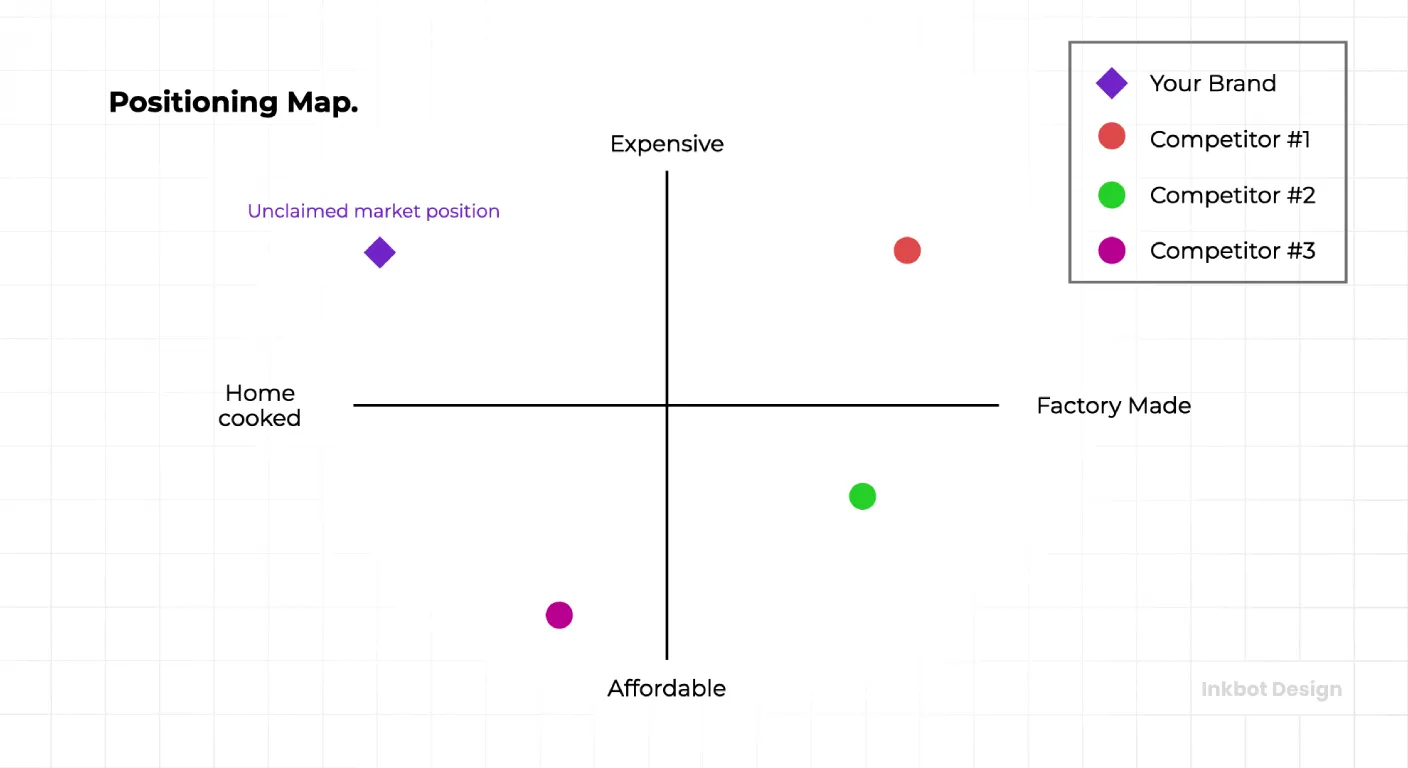
Pick the ground a £2.4bn firm cannot credibly defend, then plant your flag there permanently.
A global full-service firm optimises for the largest, most repeatable mandates; it structurally cannot prioritise a lower-mid-market or sector-specific niche without diluting its own economics. That structural constraint is your opening.
Clifford Chance identified private markets — particularly private credit — as a major driver of FY2025 growth. A challenger firm does not compete with that by claiming private capital coverage.
It competes by owning a defined slice of the giant treats as marginal: sponsor-backed management teams, portfolio-company legal operations, or lower-mid-market sponsor deals where partner attention, not scale, decides the outcome.
The failure mode is choosing ground that is merely smaller rather than genuinely defensible — a niche a larger firm can absorb the moment it becomes lucrative, which offers no protection.
Stage Three: Prove Capability With Evidence, Not Adjectives
Replace every claim of quality with a piece of evidence a sceptic could verify.
“Market-leading expertise” is invisible; a named reported matter, a defined track record in a specific transaction type, or a quantified outcome is not.
The buyer discounts adjectives automatically because every competitor uses the same ones.
This is where the risk-reduction mechanism does its work. A buyer instructing a smaller firm over a famous one carries career risk if the choice goes wrong.
Concrete evidence of repeated success in their exact situation lowers the perceived risk below the threshold at which the safe default — hiring the big name — is no longer obviously safer.
That is the causal chain by which a sharper position justifies a premium fee: not persuasion, but risk transferred off the buyer's desk.
Stage Four: Wire the Position Through Delivery, Not Just Messaging
A position lives or dies in how the work is actually delivered, not in how it is described. Clients experience positioning at the second missed deadline, the associate-heavy team on a “senior attention” mandate, and the surprise invoice.
More than half of UK corporate legal departments told Thomson Reuters they expect to increase the amount of work handled internally over the next five years, and 65% already use alternative legal service providers.
Buyers now separate work by value and provider fit. A firm claiming “senior judgement” must actually staff a senior, or the position collapses on contact.
The judgment layer sits here, and it is where 17 years of brand work shows against thin AI-generated competitors. Deciding which delivery signals to over-invest in — where a smaller firm can visibly out-serve a global one — is not a rote step.
It requires reading a specific client's real anxieties. In 17 years of brand work, the pattern I see most often is firms that nailed their positioning statement and then delivered exactly like everyone else.
Stage Five: Hold the Position Long Enough to Compound
A position becomes an asset only when it is held past the point of boredom. Partners tire of their own message roughly two years before the market registers it — the firm hears its tagline daily; a referring accountant hears it maybe twice a year.
Change tack every eighteen months to chase the newest practice area, and you never accumulate the recall that makes you the obvious call.
The referrer who can finish the sentence “they're the ones for—” is worth more than any campaign, and that sentence takes years of the same words to write.
The freshness test is whether the market repeats your position back to you unprompted.
When a referrer describes your firm using your own framing — “they're the ones for X” — the position has compounded. Until then, you are still paying to establish it, and abandoning it resets the meter to zero.
The 2026 Positioning Landscape
The strategic ground shifted in 2025 in ways that make the “look bigger” reflex actively dangerous.
Magic Circle-scale firms intensified US competition — Linklaters posting 11% growth to £2.32bn and Clifford Chance 18% US revenue growth — which means “international capability” is no longer a challenger claim worth making. It has been commoditised by firms that own it outright.
Three shifts create the opening instead. Private capital is reshaping premium demand, and Clifford Chance reported 36% revenue growth in the Middle East versus 6% in Europe, rewarding firms that articulate a defined corridor — UK–Gulf infrastructure, UK–US technology — rather than a vague global reach.
In-house teams are insourcing, so external counsel must position themselves as an extension of a sophisticated legal function, bringing specialist judgement at pressure points rather than commodity labour.
And AI has become a client-value issue: the Solicitors Regulation Authority (SRA), the professional regulator, backs AI in research and drafting while stressing accuracy, confidentiality, supervision, and client transparency.
“Responsible AI-enabled delivery” is a defensible position only when governance genuinely backs it — the brand claim is faster answers and more senior time on judgement, never “we use AI.”
The Sequence Error That Ruins Most Positioning Work
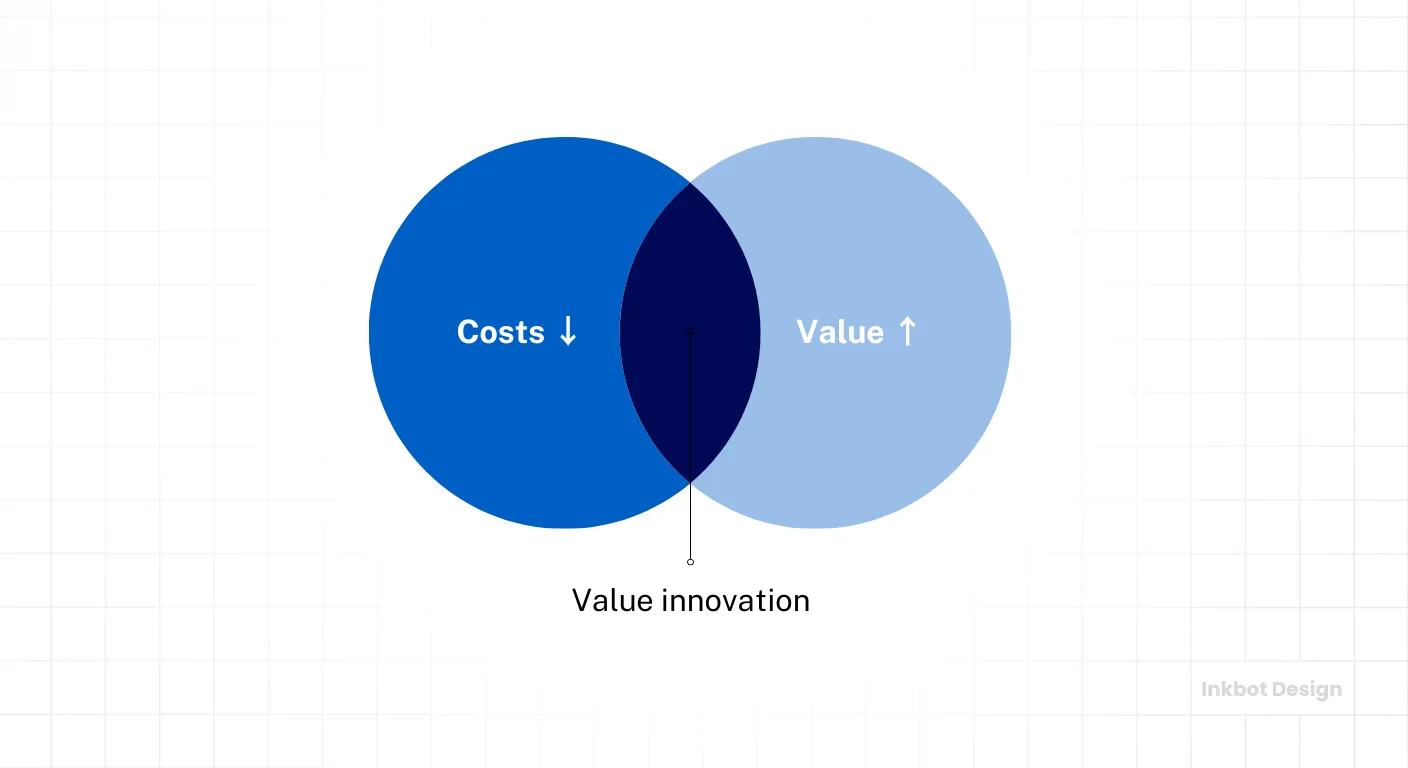
Here is the correction: the whole method turns on. Most firms do the evidence and delivery work after they have already announced a position built on aspiration. They decide what they want to be known for, publish it, then scramble to prove it.
The intelligent version of this instinct is real: leadership wants to set direction and rally the firm behind it, and that impulse is why capable practitioners do it. It still produces a position that the market can feel is unearned.
The provided market data settles the disagreement. With 28% of UK corporate legal departments planning to reduce legal spend and 65% already using ALSPs, buyers are actively separating firms by demonstrated fit rather than stated ambition.
A position announced before it is delivered reads as marketing; a position extracted from work you already do well reads as fact.
Reverse the order.
Audit where you already win, name that ground, then amplify — do not invent a position and chase it. Firms exploring a boutique law firm rebrand most often need this reversal rather than a new logo.
Your positioning statement should describe your best existing work, not your aspirational future.
The Default Approach | What It Costs | The Better Approach | Why It Wins |
|---|---|---|---|
Widen services to match bigger firms | Dilutes the one advantage you hold | Own one decision moment | Selectable; giants can't prioritise it |
Claim “international reach” | Commoditised by £2bn+ firms | Name a defined corridor | Specific enough to be credible |
Announce aspirational position | Reads as marketing | Extract position from existing work | Reads as a demonstrated fact |
Lead with adjectives | Discounted automatically | Lead with verifiable evidence | Lowers buyer's perceived risk |
Change message every 18 months | Never compounds | Hold past boredom | Builds market salience |
Two objections a sceptical partner raises here.
First: “Won't narrowing cost us the general work that pays the bills?” No — brand positioning for solicitors sharpens what you lead with, not what you accept; the general work still arrives, but now premium-priced through a firm perceived as a specialist.
Second: “Our expertise really is broad — why hide it?” You are not hiding it; you are giving the buyer a reason to remember you. Breadth is discovered after instruction, never before it.
The Verdict
The firm that lost the acquisition mandate did not lose in terms of expertise.
It lost because it had made itself indistinguishable from every other capable firm the client could have called, and against that backdrop, the famous name is simply the safer default.
Widening the service list made the problem worse. The whole argument of this piece is that scale is the wrong axis, and the moment you accept that, a different and winnable game opens up.
Do that, and the fee premium stops being a line you defend in every pitch and becomes the price a buyer expects to pay for a firm that visibly owns their problem.
They still see the number. They stop reaching for a cheaper comparison because there isn't an obvious one.
The sequence is the strategy: extract the position from where you already win, rather than announcing an ambition and chasing it.
Do that, and the fee premium stops being something you argue for and becomes something the buyer concedes without noticing.
The first action today: pull your last twenty instructions and identify the single decision moment where you already win more than you lose.
That is your position. To find exactly where your brand is currently losing that ground, request a free Brand Equity Audit™ — a structured, written diagnostic, delivered in 48 hours with no sales call, that identifies precisely where your positioning is leaking commercial value and what to do about it.
Frequently asked questions
What is a law firm's positioning strategy?
A law firm's positioning strategy is the deliberate choice of a specific problem, buyer context, or decision moment that a firm wants to own in the market. It defines what the firm is instantly known for, which shapes who instructs it, at what fee, and for what kind of work.
Why does my firm keep losing pitches to larger firms?
Firms lose to larger competitors when nothing distinguishes them beyond the capabilities that every rival also claims. When two firms look equally capable, the buyer defaults to the safer, more famous name. Winning requires owning specific ground that the larger firm cannot credibly prioritise, removing the “safe default” advantage.
How does positioning let a firm charge higher fees?
A clearer position lowers the buyer's perceived risk of choosing a smaller firm. Verifiable evidence of success in the buyer's exact situation transfers risk off their desk, removing the reason to default to a costlier, well-known name and justifying a premium for demonstrated fit.
Is it true that smaller firms should compete on breadth?
No — breadth is where larger firms are strongest and cannot be beaten. Linklaters and Clifford Chance both exceeded £2.3bn in revenue in FY2025. Competing on scale wastes a smaller firm's advantage. Owning a specific niche that a global generalist treats as marginal is defensible; matching breadth is not.
What's the difference between positioning and differentiation?
Differentiation names what makes a firm different; positioning decides which single difference to own in the buyer's mind and builds everything around it. Differentiation is a list of attributes. Positioning is a strategic choice to be known for one thing, delivered consistently.
How do I choose which niche to position around?
Audit where recent instructions are actually concentrated by sector, deal size, and referral source, then identify the decision moment at which the firm already wins more than it loses. Position around demonstrated strength, not aspiration — a position extracted from real work reads as fact, not marketing.
When should a law firm rebrand versus reposition?
Reposition when the firm wins the wrong work or competes on the wrong axis; rebrand the visual identity only once the position is settled. A new logo in an unclear position changes nothing. Positioning is the strategic decision; identity is its expression.
How long before a positioning strategy shows results?
Positioning compounds over roughly two years, longer than most partners expect. The market registers a position through repetition, not announcement. Results appear first as referrers describing the firm in its own framing, unprompted; abandoning the position early resets that accumulation to zero.
Does AI change how law firms should position themselves?
Yes — AI has shifted from an efficiency project to a client-value issue. The SRA supports AI in research and drafting while stressing supervision and transparency. The defensible position is faster answers and more senior judgement time for clients, backed by real governance, not the claim “we use AI.”
Why do most positioning strategies fail?
Most fail because firms announce an aspirational position before proving it through delivery. Buyers now separate firms by demonstrated fit — 65% of UK corporate legal departments already use alternative providers. A position not backed by the actual work reads as marketing, and the market discounts it.
How does in-house insourcing affect positioning?
More than half of UK corporate legal departments expect to increase internal work over five years. External counsel must position themselves as an extension of a sophisticated in-house team — specialist judgement and capacity at pressure points — rather than as general legal labour that in-house teams can now absorb themselves.
Can a firm own a decision moment without narrowing its services?
Yes — owning a decision moment governs what the firm leads with, not what it accepts. The firm still takes broader work, but arrives priced as a specialist. Breadth is discovered after instruction; specificity is what earns the instruction in the first place.