Law Firm Brand Strategy: Find the Constraint Before You Fund the Rebrand
Most law firms commission a rebrand before deciding what the firm is for. The result is a sharper logo attached to the same undifferentiated offer. A working law firm brand strategy starts by naming the commercial constraint, forces the partnership decisions that constraint requires, and then briefs the visual identity.
 By Stuart Crawford
 Reviewed by Tabitha Ayers
14 min read
On this page14 min left
- How a Law Firm Brand Strategy Is Built
- The Investment Question Most Partnerships Ask Wrong
- Why the 2026 Legal Market Punishes the Undifferentiated Firm
- Diagnose the Constraint Before You Brief Anyone
- The Decisions That Must Precede Design
- Turning the Decisions Into Identity, Pitches and Partner Behaviour
- How to Tell Whether a Law Firm Brand Strategy Is Working
- Verdict: Make the Hard Choices First, Then Pay for the Design
- Frequently asked questions
Average worked rates at law firms rose 7.3% in 2025. Your clients' general counsel noticed, and the question now sitting under every fee conversation is a simple one: what does the extra money buy?
If the honest answer is “the same as last year, only dearer”, a new logo will not change it. An identity built to express choices the partnership never made is a new identity with nothing behind it, and a year later, the fee conversations sound the same.
That is the argument of this guide. Law firm brand strategy is a commercial operating decision, and most partnerships ask the investment question the wrong way round.
“What should a rebrand cost?” has no useful answer. “Which constraint is stopping us from winning, pricing, cross-selling, recruiting or integrating at the level our legal work deserves?” does.
Identity comes after that answer. (For the wider case on what a brand does for a legal practice, start with our guide to law firm branding; this piece is the investment layer underneath it.)
How a Law Firm Brand Strategy Is Built

A law firm brand strategy is built in four stages: diagnose the commercial constraint the brand must fix, make the partnership decisions that constraint demands, express those decisions in identity, pitches and partner behaviour, then measure against fee and win-rate data. Skipping the first two produces decoration.
- Diagnosis comes first because “we look dated” is a symptom; a constraint is a commercial fact with a number attached, such as a realisation rate, a pitch-loss pattern or a lateral who said no.
- Partnership decisions come second because an identity can only express the choices the equity partners have agreed to be held to.
- Measurement uses fee, pitch, cross-referral and recruitment data, because awareness metrics cannot tell a managing partner whether the money was well spent.
Law firm brand strategy is the partnership's decision about which clients, work, and fees it pursues, expressed through identity, pitches and partner behaviour.
The Investment Question Most Partnerships Ask Wrong
The rebrand-budget question is not a stupid one. Partnerships buy into discrete projects with fixed scopes. Marketing spend sits on an annual cost line that the management board scrutinises line by line. Agencies quote by deliverable.
The whole market trains managing partners to think in logos, websites and fee estimates, so “what does a rebrand cost?” is the rational response to how the service is sold.
It is still the wrong unit. A brand is only worth money if it moves one of five commercial levers, and each lever calls for different work, some of which is not brand work at all.
Constraint | How it shows up in the numbers | What the brand strategy has to do | Where the brand cannot help |
|---|---|---|---|
Winning | Shortlisted, then lost on “fit” or price | Give the buyer a specific reason to prefer the firm that lowers their risk of choosing wrong | A practice that is genuinely weaker than the rest of the shortlist |
Pricing | Rates agreed, then discounted or written off | Make explicit what the premium buys, in outcomes that the client's finance team recognises | Matter management that leaks unbillable time |
Cross-selling | Clients have been using one practice for years | Present one firm-wide proposition instead of a federation of practice groups | A compensation system that rewards partners for keeping clients to themselves |
Recruiting | Strong laterals decline, or leave within two years | Tell a candidate what the firm is building and where they fit in it | Pay below market |
Integrating | Post-merger client attrition: two websites, two pitch decks | Give the combined firm one story that both legacy client bases can believe in | A merger with no commercial logic |
The right-hand column matters as much as the rest. Anyone telling you a brand can fix a compensation system that punishes cross-referral is selling you something. (Usually a rebrand.)
The mechanism that makes a brand a commercial tool is the way legal services are bought.
A general counsel cannot assess the quality of legal advice before buying it, so the purchase is made on risk and decided by proxies: reputation, peer recommendations, and how precisely the firm describes the client's problem.
A firm that describes one buyer's problem better than everyone else on the shortlist lowers that buyer's perceived risk. Lower perceived risk is what a higher fee rests on.
“Our work comes from relationships, not branding”
This is the objection nearly every managing partner raises, and it is half right. Relationships win most mid-market legal work.
The brand is what those relationships carry and what remains when they end: when a relationship partner retires, when the general counsel moves to another company, when a referred prospect looks up the firm before returning the call.
A brand held entirely in partners' heads leaves with the partners. A law firm's brand strategy is how the firm's reputation outlives any single relationship.
Why the 2026 Legal Market Punishes the Undifferentiated Firm

Pricing pressure. Thomson Reuters, the legal information and research group, reports that 90% of legal spend still flows through standard hourly-rate arrangements. A client paying more per hour inside an unchanged model will look for evidence that the hour is worth more. Most law firm websites offer none.
AI has become a proof point. 77% of legal clients say it is essential that their firms deliver AI-enabled quality improvements, and 71% of in-house legal professionals expect outside firms to change their commercial models as AI use increases. Only 28% of law firms report changing their pricing structure in response. In a 2026 study, just 36% of stand-out lawyers strongly agreed their firm had a clear AI strategy, and 25% that it had a plan to monetise AI use.
The investment is invisible. Law firm technology spending rose 9.7% in 2025, and knowledge-management spending rose 10.5%; technology expenditure climbed a further 11.6% year on year in Q2 2026. Clients cannot value an investment that nobody has explained to them in terms that affect their matters.
The work is leaving. 52% of corporate legal respondents expect more work to move in-house over the next five years. Undifferentiated outside counsel is the easiest line in a legal budget to replace.
Read together, the figures describe one problem. Firms are spending more, charging more and explaining less. The brand strategy is where the explaining gets done.
“A law firm that has raised its rates, raised its technology spend and changed nothing about how it describes its value has opened a gap between price and proof. Clients fill that gap with their own explanation, and the one they reach for first is that the firm is charging more for the same work.”
Diagnose the Constraint Before You Brief Anyone
Start with the fee and pitch data, not a visual audit
A law firm brand diagnosis starts in the practice management system and the pitch log, not the style guide.
Five data sets locate the constraint: lost-pitch reasons over the last two years; realisation and write-off rates by practice group; where discounts are conceded, and at what stage; the share of clients instructing more than one practice; and lateral offer acceptance.
Whichever data set looks the worst relative to the firm's legal standing is the constraint the brand strategy is meant to fix. If none of them looks bad, the firm may not need a brand investment this year, and an honest agency will tell you so.
Ask clients why they chose you, then compare it with what partners say
Partners describe a law firm by what it does. Clients describe it in terms of why they bought it.
The distance between those two descriptions is the most useful thing a diagnosis produces. Among clients of firms that regard themselves as innovative, fewer than 1% named innovation as the primary reason they chose the firm.
The quality that the partnership believes sets it apart barely registers at the moment of purchase. Client interviews, run by someone other than the relationship partner, surface the reasons that do register, and those reasons tend to be narrower, more practical and more sector-specific than anything on the website.
Test the brand claims against what the firm pays for
70% of stand-out lawyers described their firms as client-centric, yet only 25% said client feedback influenced compensation.
A brand claim that the compensation system contradicts will be contradicted in front of clients by the partners doing the work.
So the diagnostic question is blunt. What does the firm actually pay partners for? That answer is the firm's real positioning, regardless of what the brochure says.
How to know the diagnosis is finished
The diagnosis is complete when the management board can state the constraint in one sentence, including a number.
“We reach the shortlist for [sector] mandates and lose on price.”
“Fewer than [x]% of our corporate clients use our employment team.”
The usual failure at this stage is a diagnosis that drifts into fonts, colour palettes and a competitor's mood board. That is a visual audit. Useful later. Useless now.
The Decisions That Must Precede Design
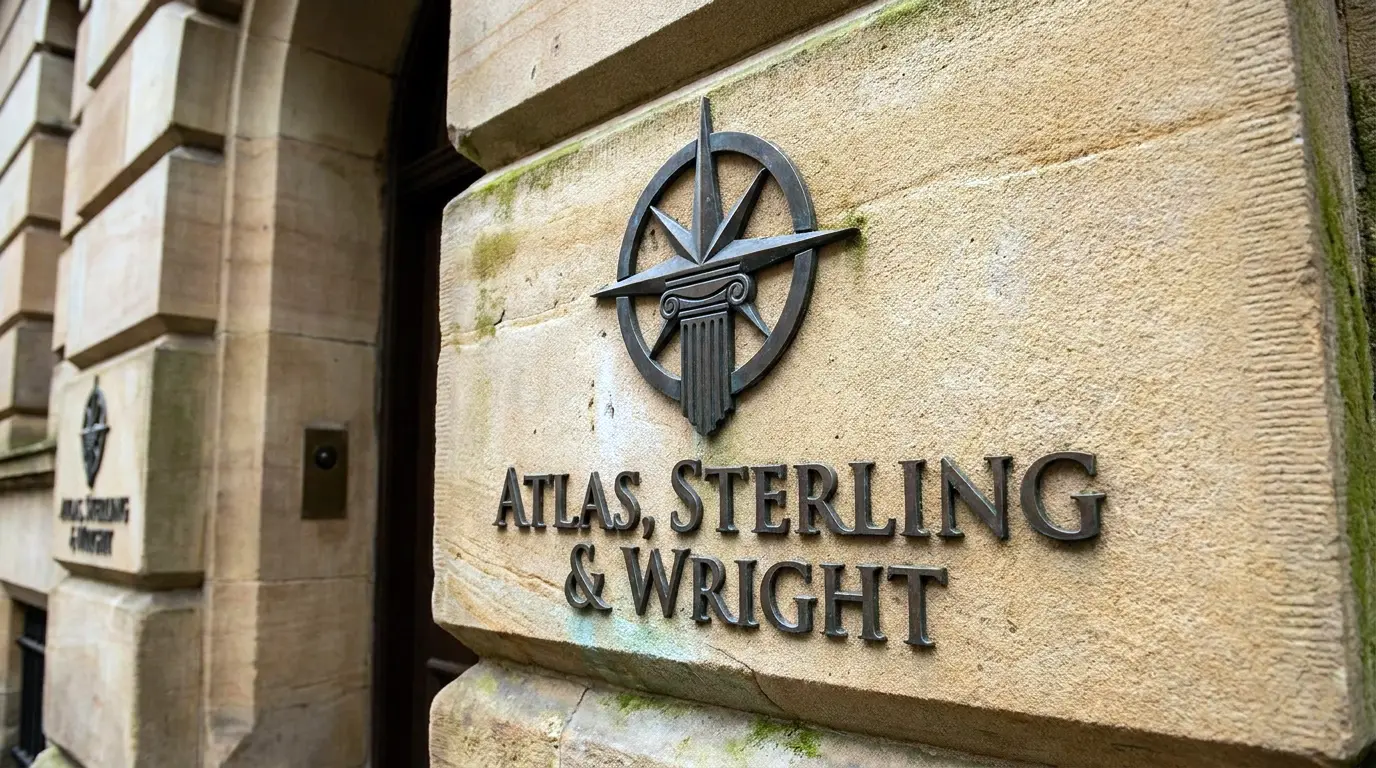
The case for starting with identity is stronger than it looks. A visual change is tangible; it gives thirty partners something concrete to react to, and it tells the whole firm that the partnership is serious.
Agencies reinforce the habit because their portfolios are visual and their credentials pitches lead with logos.
The trouble is what the designer is then being asked to do. An identity expresses decisions.
When the decisions have not been made, the designer ends up averaging the views of every partner in the room, and the output is an average: a navy wordmark, a serif typeface, and messaging about being “commercial, client-focused and innovative”.
Clients have already shown that those words do not decide their choice.
The expensive mistake is buying design before the firm has chosen what the design is supposed to say. Underspending on design is a far rarer problem.
Four decisions come first.
Decide who the firm is for, and whom it stops chasing
The first positioning decision names the clients, sectors and matter sizes the firm leads with. Specificity reduces a buyer's perceived risk.
A general counsel at a food manufacturer reads “we act for owner-managed food and drink businesses supplying the major grocers” and recognises their own problem; “a full-service commercial law firm” is recognised by nobody.
The second half of the decision, which the firm stops actively pursuing, is where most partnerships flinch.
Decide what the premium buys.
The second decision states, in terms a client's finance director would accept, what a client gets at the firm's rate that a cheaper firm or the in-house team would not provide.
Faster turnaround on a named type of matter. Sector knowledge that shortens every instruction. Technology that changes the cost of a process, with the pricing to match.
With 71% of in-house teams expecting outside firms' commercial models to change as AI use grows, and only 28% of firms having changed pricing, how AI shows up in the fee is now part of this decision. It is no longer a question for the IT committee.
Decide which practices lead the brand.
The third decision is the political one. A 25-partner firm cannot lead with eight practices equally; the brand needs one or two lead propositions, with the rest in support.
The management board takes this decision on the commercial evidence from the diagnosis, and takes it before any agency hears the words “practice-group microsites”.
Decide what partners will be held to
The fourth decision agrees on what partners will do differently, and ties at least some of it to how they are rewarded.
The distance between the 70% of firms calling themselves client-centric and the 25% paying for client feedback is exactly the distance clients experience. A brand promise with no behaviour attached is a slogan.
These four decisions need decision rights. The management board decides; the wider partnership is consulted and informed.
Nobody has ever reached consensus on a shade of navy across 34 equity partners, and nobody should try.
“We're full-service. Narrowing will cost us work”
The second objection nearly every managing partner raises. Positioning governs what the firm leads with, not what it accepts.
A firm that leads with owner-managed businesses still takes the private client matter that walks through the door; it stops spending pitch hours and website space trying to be everything to everyone. The narrowing happens in the pitch, not at intake.
The test that the decisions are real is a one-page decision record, signed off by the management board, that a pitch team could use to decline a pitch.
If nothing on that page would ever cause the firm to walk away from work, nothing on it has been decided.
“Law firm brands do not fail for want of design budget. They fail when an identity is commissioned before the partnership has decided who the firm is for, what its premium buys and which practices lead. A designer makes those decisions that produce a brand. A designer handed a committee a product.”
Turning the Decisions Into Identity, Pitches and Partner Behaviour
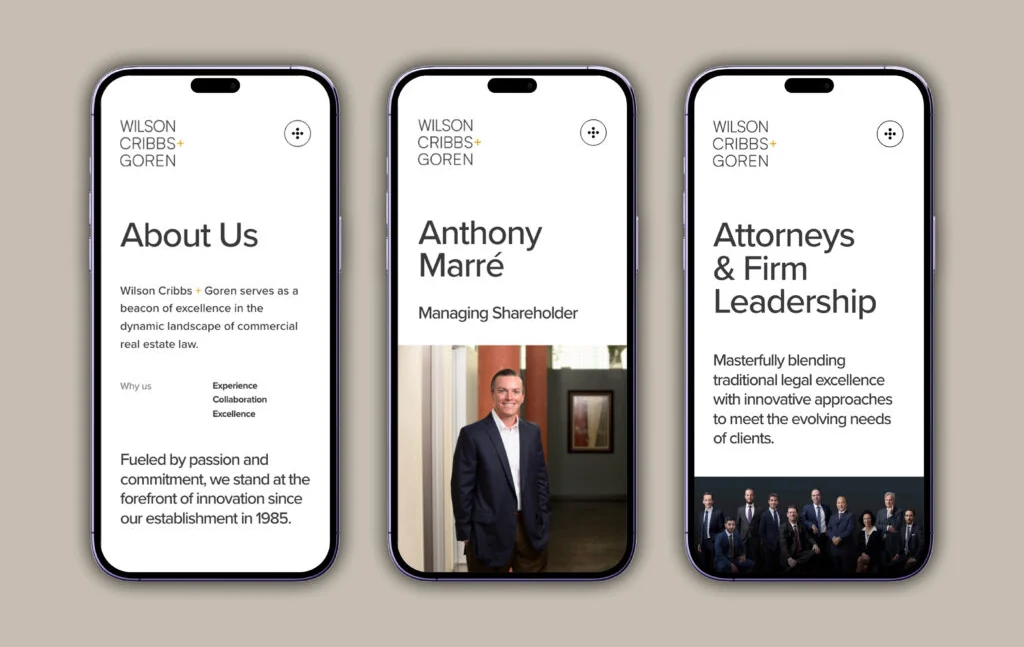
Build in the order clients meet the brand at the moment of purchase. That is rarely the logo.
- Positioning statement and proof. One paragraph per lead proposition, each backed by matters the firm can name with client consent.
- Pitch and panel documents. This is where the premium is argued to a buyer with a budget. Rewrite them before the website; they carry more fee income than any page on it.
- The website. Organised around the lead propositions and the client problems they solve, instead of an alphabetical list of 30 practice areas.
- The visual identity. Scoped by the decisions. Sometimes the diagnosis shows the existing identity is serviceable and a refresh will do; sometimes a merger or a genuine repositioning needs a new one. The decisions tell you which, before anyone quotes.
- Partner equipment. Three sentences every partner can say about the firm, the proof behind each, and the behaviour agreed in the fourth decision.
The failure mode at this stage is familiar: a launch event, new email signatures, and pitch decks quietly reverting to the old boilerplate within a couple of quarters.
The brand lives in pitch rooms. If the pitch documents have not changed, the brand has not changed either.
How to Tell Whether a Law Firm Brand Strategy Is Working
Measure against the constraint named in the diagnosis. Each one has its own lagging number:
Constraint | What to track |
|---|---|
Winning | Shortlist-to-win conversion in the lead sectors; panel reappointments |
Pricing | Realisation rate and frequency of discount requests on lead propositions |
Cross-selling | Share of clients instructing two or more practices |
Recruiting | Lateral offer acceptance; departures within 24 months of joining |
Integrating | Retention of each legacy firm's top clients through the first panel review after the merger |
The leading indicator arrives much sooner. Prospects, referrers and clients start repeating the firm's positioning back: in RFP wording, in feedback interviews, in the way a referring accountant introduces the firm.
The second early sign is internal. Pitch teams use the new material without being chased. If partners are quietly reverting to the old decks, fix that before reading any of the lagging numbers.
Website traffic and awareness figures are worth tracking. A managing partner should not accept them as proof of return.
Verdict: Make the Hard Choices First, Then Pay for the Design
Clients are paying more per hour, expecting AI to show up in the quality and price of their legal work, and planning to move more of it in-house.
In that market, a law firm brand strategy earns its cost only when it fixes a named commercial constraint: a pricing gap, a pitch-loss pattern, a cross-selling failure, a recruitment problem, or a merger that never became one firm.
The sequence decides the outcome.
Diagnose the constraint, make the partnership decisions it demands, and only then brief identity, pitches and the website. Reverse the order, and you buy a more expensive version of the firm you already have.
The first action to take today: pull the last two years of lost-pitch reasons and realisation rates by practice group, put them in front of the management board, and ask which one the board is least comfortable discussing. Start there.
If you would rather have that diagnosis done independently, request a free Brand Equity Audit™.
Inkbot Design's Brand Equity Audit™ is a structured diagnostic that identifies exactly where your firm's brand is losing commercial ground, and what to do about it first.
Frequently asked questions
How much does a law firm's brand strategy cost in the UK?
The cost of a law firm's brand strategy depends on how much diagnosis the firm has already done, how many practices and offices the positioning must cover, and whether the identity needs a refresh or a rebuild. Budget for diagnosis separately from design.
How long does a law firm brand strategy take?
A law firm's brand strategy takes as long as the partnership takes to make its positioning decisions. Diagnosis and design run on predictable timelines; the variable is the management board's agreement on who the firm is for and which practices lead. Firms that settle decision rights before the project starts move fastest.
Is a law firm brand strategy the same as a marketing plan?
No — a law firm brand strategy decides what the firm stands for, who it serves and what its premium buys. A marketing plan decides how to communicate that through channels, campaigns and budgets over a year. The marketing plan depends on the brand strategy; without one, campaigns promote a firm that has not decided what it offers.
Should a full-service law firm specialise in building a stronger brand?
No, a full-service law firm does not need to stop offering services to build a stronger brand. It needs to choose one or two propositions to lead with in pitches and on its website. Positioning governs what a firm leads with, and the firm can still accept matters outside those lead propositions.
Can a brand strategy help a law firm charge higher fees?
Yes — a brand strategy supports higher fees when it lowers a specific buyer's perceived risk by describing their problem more precisely than competing firms do. Legal quality cannot be inspected before purchase, so clients pay for confidence. Brand cannot rescue fees where the underlying service, matter management or sector expertise is weaker than the competition's.
Who should own the brand strategy in a law firm partnership?
The managing partner and management board should own a law firm's brand strategy, with the marketing and business development team running it day-to-day. Positioning decisions change which clients the firm pursues and which practices lead, so they need the authority of the body that sets the firm's strategy. Marketing alone cannot hold them against partner disagreement.
How is AI changing law firm brand strategy?
AI has turned value into a brand question. 77% of legal clients say AI-enabled quality improvements from their law firms are essential, yet only 28% of law firms have changed their pricing in response. A law firm's brand strategy now has to state how the firm's technology changes what clients receive and what they pay.
When should a law firm rebrand after a merger?
A merged law firm should rebrand once the partnership has decided the combined firm's lead propositions and target clients, rather than on completion day. A name and identity chosen before those decisions tend to reflect the negotiation between the legacy firms rather than what the combined firm's clients need to hear. Protect legacy client relationships first.