B2B Buyer Messaging Isn’t Copy. It’s Internal Enablement.
Average B2B buying committees have expanded to 13 stakeholders. Messaging isn’t about getting the prospect’s attention anymore; it is about equipping your internal champion to survive the boardroom assault. Learn how to structure your positioning as an internal enablement system rather than external marketing copy.
 By Stuart Crawford
 Reviewed by Tabitha Ayers
Updated 7 min read
On this page7 min left
Average B2B buying committees have increased from five stakeholders a decade ago to approximately 8–13 stakeholders in 2024–2025 for typical mid-market and enterprise purchases.
Messaging is no longer an exercise in capturing a prospect's attention. It is a utility designed to help a mid-level champion survive an internal boardroom assault.
If your firm’s current brand messaging framework relies on clever taglines rather than role-specific risk mitigation, your deals are quietly dying in Slack channels you never see.
What Is B2B Buyer Messaging?
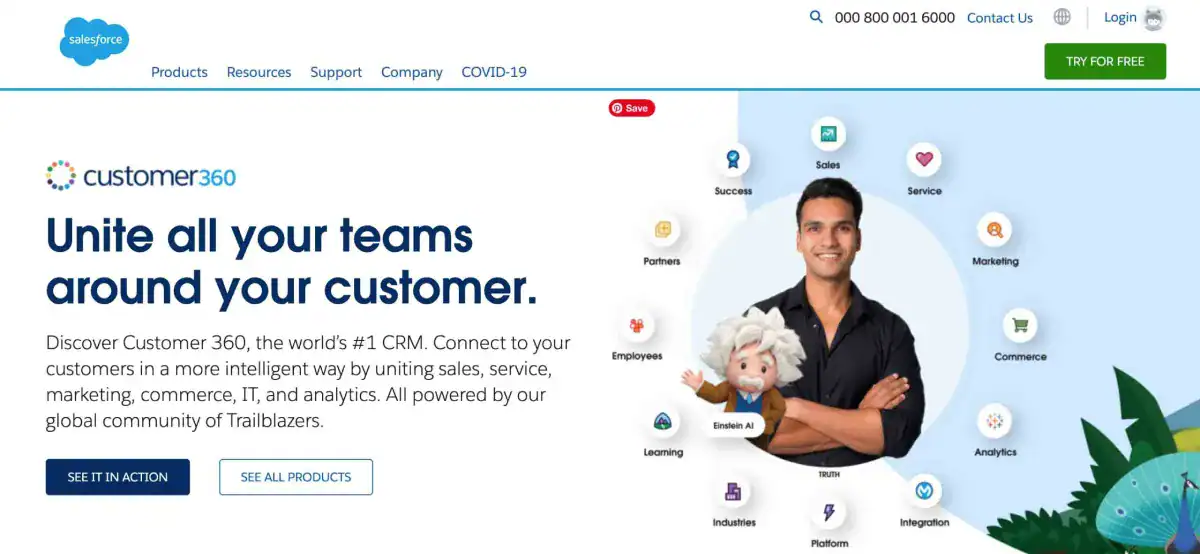
B2B buyer messaging is a structured system of role-specific arguments designed to equip internal champions to defend your professional services firm across multi-stakeholder buying committees.
- It provides distinct justification paths for conflicting internal agendas, from finance to IT.
- It standardises the vocabulary your buyer uses when advocating for your firm in closed-door meetings.
- It connects functional deliverables directly to board-level commercial objectives.
When a firm ignores the committee dynamic, the sales cycle breaks.
As the size of the buying committee and cross‑functional review increases, the average sales cycle length increases substantially. Multi‑stakeholder enterprise deals commonly span 6–12+ months, depending on deal value, according to McKinsey & Company data.
Throughout that period, buying groups typically interact with 20–30 seller-related content touchpoints before purchase, per Forrester Research.
Roughly 70–80% of buyers report they have a shortlist or preferred vendor set before engaging sales.
This means your brand voice copywriting must do the heavy lifting of committee persuasion entirely in the dark. If the messaging fails to arm the champion, the firm never makes the list.
The Anatomy of Committee-Grade Messaging
A functional B2B messaging system consists of three distinct, load-bearing parts. They must be developed in sequence.
The Anchor: The Shared Narrative
The shared narrative is the single, one-page document that connects the specific problem to the company-level KPI the board cares about.
A Chief Financial Officer and a Chief Technology Officer will disagree on methodology, but they must agree on the ultimate commercial objective.
The core value proposition sits here. It provides the baseline agreement that makes the rest of the conversation possible.
The Divergence: Role-Specific Justification Paths
Different stakeholders prioritise radically different types of proof.
The messaging that excites a marketing director will actively alienate a procurement officer.
According to Deloitte customer experience reports, a CFO requires quantified ROI and Total Cost of Ownership data. Gartner research indicates that IT and CTO roles prioritise evidence of security and integration above all else.
Procurement and legal teams want terms, compliance, and risk mitigation. Effective messaging provides isolated, role-specific documents that address these exact anxieties without cross-contamination.
You do not send the visionary marketing deck to the compliance officer.
The Vehicle: The Dark Social Elevator Pitch
Buying journeys are becoming highly fragmented.
A 2026 trend brief on B2B purchasing notes that “dark social”—the untraceable circulation of links in private Slack channels, WhatsApp groups, and internal emails—shapes deals before sales get involved.
Your champion needs a 50-word elevator pitch that they can copy and paste into a Teams message without feeling embarrassed.
“We stopped writing messaging for the website and started writing it for the internal copy-paste. If your positioning statement cannot survive being pasted verbatim into a sceptical Slack channel by a mid-level manager, it is functionally useless in modern B2B sales.
Where Professional Services Firms Get This Wrong
The fatal error most professional services firms make is treating their messaging as an external persuasion tool rather than an internal diagnostic one.
Firms assume that if they convince the primary contact, the deal is won.
They load their pitch decks with visionary language about transformation and partnership. Gong win-loss studies reveal the precise cost of this approach: common single-item causes for late-stage loss are cross-functional misalignment and unanswered stakeholder objections.
Up to 50–70% of late-stage stalls cite procurement, IT, or legal concerns, or a simple lack of internal justification.
A reader might object here: “We offer bespoke consulting; our value cannot be boiled down to rigid internal documents.” The reality is that your value will be reduced to its essentials.
The only question is whether you control the reduction, or whether a stressed internal procurement manager does it for you at 4:00 PM on a Friday.

Messaging as an Internal Enablement System
Focus on messaging as an internal enablement system, not external copy.
The prevailing view dictates that messaging exists to make the firm look unique in a crowded market. Intelligent practitioners hold this view because differentiation is technically necessary for a premium positioning.
However, differentiation fails if the committee cannot operationalise it. The only messaging that reliably wins multi‑stakeholder corporate deals is messaging designed first to be internalised and propagated by the buyer champion and their stakeholders.
It requires short, role‑specific justification paths. It requires a one‑page shared narrative that connects those paths to the company-level KPI the board cares about.
A 2025 benchmark roundup on buying committees confirmed that the modern B2B buying group is now large enough that committee size, touchpoints to close, journey length, and win rates all need to be measured together rather than as isolated metrics.
Another 2026 trend summary highlights that enterprise buying committees are averaging 8.3 members, and 67% of buyers now use AI-powered evaluation tools to assess suppliers.
Your messaging must be clear enough for both an overwhelmed champion and an extraction algorithm to parse instantly.
If your messaging requires a charismatic partner in the room to explain it, you do not have a messaging strategy. You have a dependency.
The Verdict
The defining characteristic of successful professional services messaging in 2026 is utility, not creativity.
A brilliant tagline does nothing to satisfy an IT director auditing your security protocols, just as a visionary brand story will not pass a CFO looking for Total Cost of Ownership metrics.
Messaging must act as an internal enablement system.
By structuring your communications into a shared narrative supported by role-specific justification paths, you equip your internal champion with the exact tools they need to defend your fees behind closed doors.
You stop fighting the committee and start arming the advocate.
Audit your current materials immediately. Look at the PDF your sales team sends after the first successful call. If it only speaks to the person who took the meeting, you are setting them up to fail in the boardroom.
Request a free Brand Equity Audit™ at /services/brand-audits// to identify exactly where your brand messaging is losing commercial ground to the competition, and what to do about it.
Frequently asked questions
What is the difference between B2B and B2C messaging?
B2B messaging addresses multiple stakeholders within a formal buying committee over a 6–12 month sales cycle. B2C messaging typically targets a single decision-maker focused on immediate, emotionally driven purchases. B2B requires role-specific risk mitigation, whereas B2C relies on broad appeal.
Why do late-stage B2B deals often stall?
Deals stall because internal champions lack the messaging required to defend the purchase to other departments. Gong win-loss data show that 50–70% of late-stage stalls are due to unaddressed objections in procurement, IT, or legal, rather than to a lack of interest from the primary contact.
How many people are in a typical B2B buying committee?
Average B2B buying committees consist of 8–13 stakeholders for mid-market and enterprise purchases, according to Forrester Research. Each stakeholder evaluates the purchase against entirely different functional metrics, requiring separate, targeted justification paths.
What is a role-specific justification path?
It is a targeted messaging document designed to address the specific anxieties of a single department. A CFO receives ROI metrics, while an IT director receives security and integration data. This prevents cross-contamination of messaging during the internal review process.
Is emotional appeal relevant in B2B buyer messaging?
Yes — but only at the champion level. The primary contact requires emotional resonance and trust to initiate the process. However, that emotion must be immediately backed by hard data and risk-mitigation materials to justify the decision to highly rational compliance teams.
When should a business update its B2B messaging?
A business should update its messaging ahead of a strategic rebrand, before a major growth phase, or when win-loss data indicates an increase in deals lost to “no decision.” Static messaging fails when market conditions or average committee sizes expand.
How does dark social impact B2B messaging?
Dark social refers to untrackable internal communications, such as Slack or WhatsApp. Because 70–80% of buyers formulate a shortlist before contacting sales, your messaging must be concise and clear enough for a champion to copy and paste verbatim into these private channels.
What is a shared narrative in B2B sales?
A shared narrative is a single, foundational document that connects the specific service offering to the board-level commercial objectives. It ensures that while IT and Finance review different metrics, they agree on the ultimate business goal the purchase serves.
How do AI evaluation tools change B2B messaging?
With 67% of buyers using AI-powered evaluation tools to assess suppliers, B2B messaging must be highly structured and free of vague jargon. AI algorithms extract concrete entities and clear value propositions; they discard abstract corporate filler.
Can we use the same pitch deck for all B2B clients?
No — using a universal pitch deck guarantees failure at the committee level. A single deck forces the CFO to read visionary marketing copy and the marketing director to read compliance terms. Materials must be segmented by the reader's role and specific business objective.