What Makes Distinctive Brand Assets (DBAs) & Visual Salience
Distinctive brand assets are the non-name cues — colour, shape, logo, sound — that let buyers identify your firm quickly. Most content treats them as aesthetics. The real job is memory: recognition, attribution, retrieval. Judge assets by fame, uniqueness, and consistency, not taste, and a rebrand protects value instead of erasing it.
 By Stuart Crawford
 Reviewed by Tabitha Ayers
Updated 11 min read
On this page11 min left
- What Are Distinctive Brand Assets?
- Why This Matters for a Firm Facing a Rebrand
- The Anatomy: The Three Jobs a Distinctive Brand Asset Does
- Where People Get It Wrong: Confusing Style With Salience
- A Worked Example: Auditing Assets Before a Rebrand
- The Sharper Way to Think About Distinctive Brand Assets
- The Verdict
- Frequently asked questions
Three partners at a mid-sized accountancy firm once approved a rebrand because the new palette “felt more premium.”
18 months later, referral sources were describing them by the old colour they'd just retired.
The firm had spent £40,000 making itself harder to recognise – and nobody in the room had asked the only question that mattered.
That question is not does this look distinctive?
It is: will a buyer identify us from this cue, quickly, in the moment they're deciding?
Distinctive brand assets are the answer to the second question, and most content about them answers the first.
This is the discipline of building recognition into a brand deliberately rather than hoping good taste does the job – what we call The Brand Equity System.
What Are Distinctive Brand Assets?
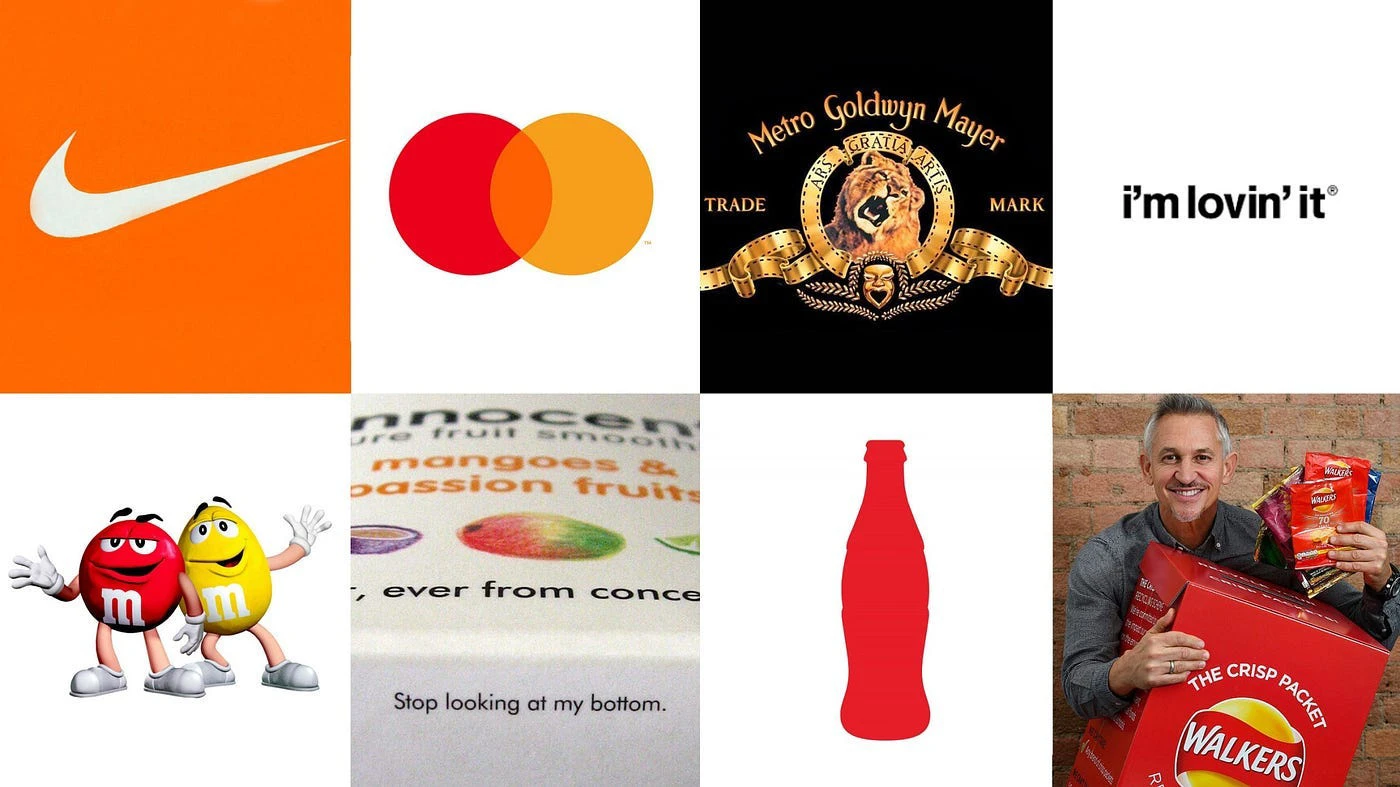
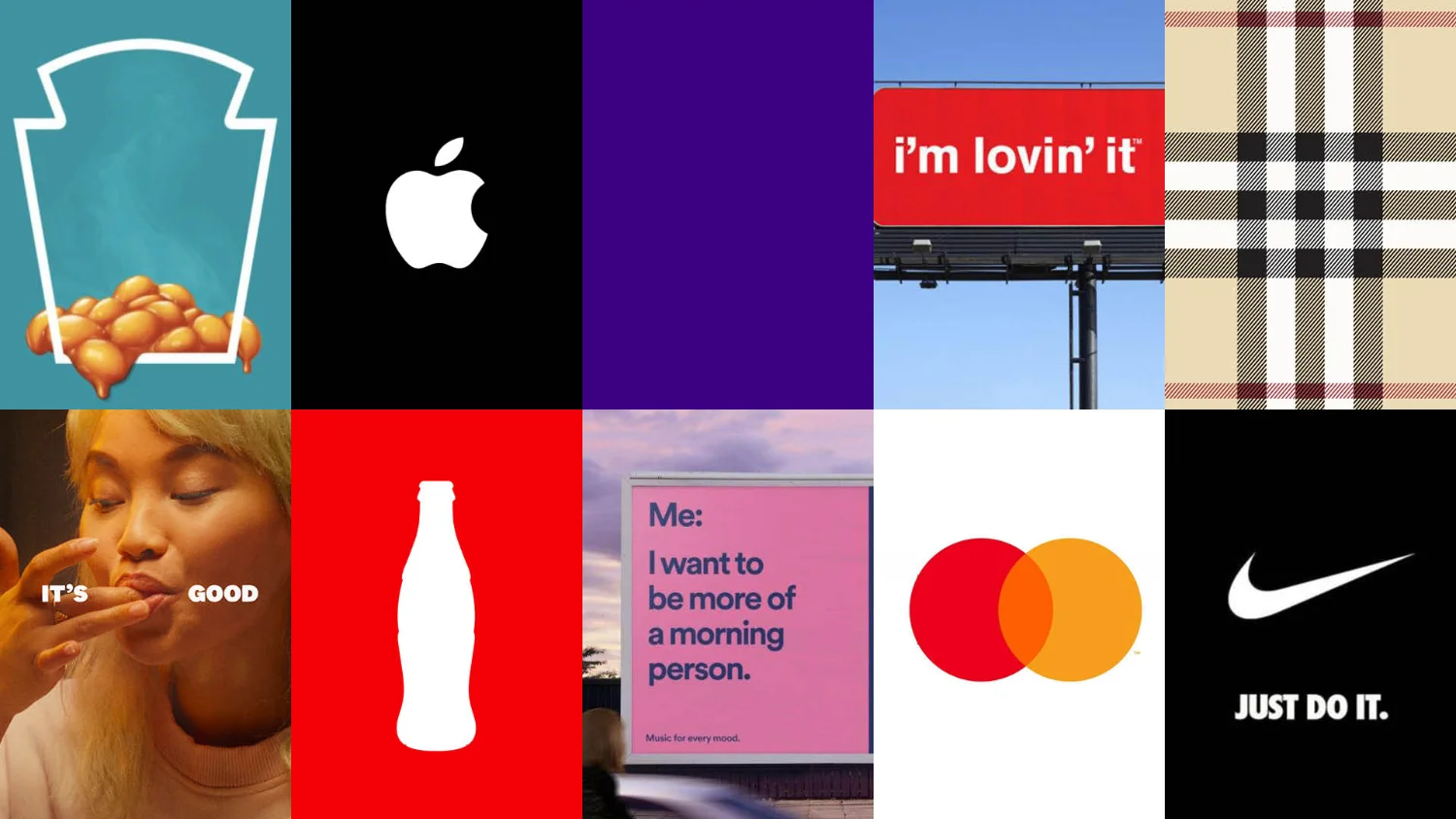
Distinctive brand assets (DBAs) are the non-name elements – colour, shape, logo, typeface, sound, character – that let a buyer identify a brand without reading its name.
Coined by Byron Sharp and Jenni Romaniuk at the Ehrenberg-Bass Institute, they function as memory structures rather than decoration. Their job is to recognise and correct attribution under real buying conditions.
- A DBA works only when it triggers the right brand in memory – uniqueness without attribution is wasted.
- Assets are divided into visual (colour, shape, logo) and audio (sonic, jingle); visual assets generally carry linkage more reliably.
- Their value is measured, not judged, by how famous and how uniquely owned each cue is.
Distinctive brand assets are non-name brand cues, such as colour, shape, logo, and sound, that help buyers recognise and correctly attribute a brand in a buying situation.
This piece sits within the broader discipline of brand identity design, where these cues are created, tested, and codified rather than left to individual designer preference.
Why This Matters for a Firm Facing a Rebrand
A rebrand is the single moment a professional services firm is most likely to destroy its own recognition – and most likely to do it by accident.
When a 12-partner tax practice retires a colour or reshapes a logo, it is not making an aesthetic choice. It is editing the memory structures that referral sources, past clients, and shortlisting buyers use to retrieve the firm's name.
The commercial stakes are concrete. A firm's “shelf” is not a supermarket aisle; it is a shortlist, a referral conversation, a LinkedIn feed where a prospect half-remembers “the firm with the deep green reports.”
Strip that cue out, and the half-memory has nothing to attach to.
A long-standing competitive salience study found roughly one-third of salience came from out-of-store exposure and two-thirds from in-store – evidence that recognition cues have to work across every context a buyer encounters, not just the website.
A distinctive asset is not a thing you own because you designed it. You own it only when enough buyers reliably connect that cue to your name and not a competitor's. Everything else is a logo you happen to like.
The Anatomy: The Three Jobs a Distinctive Brand Asset Does
Most content collapses DBAs into one vague benefit – “salience.” In practice, a cue does up to three separate jobs, and a rebrand can strengthen one while wrecking another.
Separating them is the difference between an audit and a guess.
Recognition: Is This Cue Familiar?
Recognition is the buyer's sense that they have seen this cue before.
It is the lowest bar and the easiest to build, which is why most firms overweight it.
Familiarity alone does not sell – a buyer can recognise a colour and still attach it to the wrong firm.
Recognition is necessary but never sufficient; it is the entry ticket, not the win.
Attribution: Does This Cue Point to Us Specifically?
Attribution is whether a familiar cue retrieves the correct brand name.
This is where most assets quietly fail. A 2011 doctoral thesis on distinctive assets found that using a distinctive asset as a substitute for the brand name was generally riskier than pairing them, often reducing correct brand linkage.
The same thesis found supplemented ads – asset plus name – had significantly higher odds of correct linkage at the aggregate level.
Attribution, not familiarity, is the asset that a rebrand must protect above all else.
Retrieval: Does the Buying Situation Bring Us to Mind?
Retrieval is the cue working in reverse – the category situation triggering the brand.
A prospect thinking “we need a firm for the acquisition” should surface your firm before they see any of your materials.
DBAs support retrieval by tying consistent cues to the need state over time.
The 2011 thesis also found that visually distinctive assets were generally more effective than verbal ones for correct linkage, which is why a strong visual system outperforms a clever strapline for retrieval.

Where People Get It Wrong: Confusing Style With Salience
The common mistake is judging a brand asset by whether it looks distinctive rather than whether it performs distinctively. These are not the same measurement, and a firm can score high on one while scoring zero on the other.
A 2023 study by Ipsos and Jones Knowles Ritchie found only 15% of brand assets were judged truly distinctive – meaning the overwhelming majority of assets brands invest in are not doing the recognition job at all.
The same study found only 19% of logos reached the top “gold” level of distinctiveness, while just 4% of brand colours and 6% of slogans did.
Most colour palettes and taglines, in other words, are decorations that buyers cannot reliably attribute.
Taste tells you whether an asset is good design. It tells you nothing about whether a buyer will connect that asset to your name in three seconds under pressure. Those are different questions, and only the second one has commercial consequences.
The correction is a change of measure. Judge every candidate asset on fame (how many buyers recognise it) and uniqueness (how few competitors could claim it) – not on whether the partner group finds it elegant.
A Worked Example: Auditing Assets Before a Rebrand
Take a 60-person litigation practice preparing to reposition ahead of a growth phase. The instinct is to redesign everything. The correct first move is to inventory what already carries attribution, then protect it.
The audit works in three steps.
- First, list every candidate cue the firm currently uses: palette, logo mark, report format, and any recurring photographic or typographic style.
- Second, score each on fame and uniqueness, ideally with buyer data rather than internal opinion.
- Third, sort the results: high-fame, high-uniqueness assets are protected and evolved slowly; low-fame assets are candidates for a bolder change because there is little recognition to lose.
This is where the 2026 benchmarking evidence becomes practical. That study found shape-based assets such as logos and packaging performed strongest, at 40% Fame and 71% Uniqueness, while colour assets performed weakest, at 12% Fame and 39% Uniqueness.
For a services firm, the lesson is that a distinctive structural mark or document format may be a more defensible asset than a colour used by a dozen competitors.
A 2026 practitioner piece framed DBAs as operational assets to be protected and evolved slowly, warning that campaign refreshes can strip away codes that took years to build.
Asset scenario | Recommended action | Why |
|---|---|---|
Colour shared with three competitors | Change or strengthen | Low uniqueness – little attribution to protect |
Distinctive logo mark, high recall | Protect, evolve slowly | High fame and uniqueness – core memory structure |
Recently launched tagline | Retain and build | 6% of slogans reach gold; it needs time, not replacement |
Consistent report/document format | Formalise as an asset | Product-form cues reached 31% gold distinctiveness |
Sonic or verbal cue used once | Deprioritise | Verbal assets carry less linkage reliability than visual assets |
Palette buyers already attribute to the firm | Protect above all | Attribution is the asset a rebrand most often destroys |
The Sharper Way to Think About Distinctive Brand Assets
Intelligent practitioners hold the “make it distinctive” view for good reason: distinctiveness genuinely helps brands stand out, and the Ehrenberg-Bass work that popularised DBAs is sound. The problem is not the theory.
It is the compression of that theory into “look different,” which loses the mechanism.
Here is the sharper synthesis. Distinctive brand assets sit between mental availability and physical availability.
Category cues trigger the need state – a buyer realises they need a firm – and DBAs help that buyer identify the right brand quickly once attention is there.
That reframes the whole exercise. The job is not subjective or unique. It is a measurable linkage between a cue and brand memory.
This matters because it separates three things the generic “builds awareness” claim blurs together: recall, recognition, and identification in the buying moment.
A firm that understands the split stops asking “does this look on-brand?” and starts asking “does this cue increase memory structures and correct brand identification?” One question is about taste. The other is about whether the brand gets found and chosen.
The most expensive mistake in a rebrand is not an ugly logo. It is a beautiful one that no buyer connects to your name. Distinctiveness you cannot attribute is a cost, not an asset – and taste is exactly the wrong instrument for telling the two apart.
A sceptical reader will raise two objections here. First: this sounds like FMCG theory that doesn't apply to a services firm with no shelf.
It does apply – the shelf is simply a shortlist or a referral conversation, and the same attribution mechanics govern whether the firm surfaces.
Second: we can't run buyer research on every asset. You do not need to; a 2021 study found that mental availability metrics could be added to existing brand health tracking at no additional data-collection cost, where brand perception data was already being gathered.
The measurement is more accessible than it looks.
The Verdict
Distinctive brand assets are memory infrastructure.
That is the whole argument, and everything above substantiates it: recognition, attribution, and retrieval are three separate jobs; taste measures none of them.
The evidence – from the 15% of assets judged truly distinctive to the fame-and-uniqueness gap between shapes and colours – shows that most brands invest in cues that never do the recognition work at all.
For a firm undergoing a rebrand, this reframes the entire risk profile. The danger is not spending money on design. It is spending money to erase the one or two cues buyers actually use to retrieve your name, because they look tired to the people who see them every day.
Familiarity breeds contempt internally and recognition externally – and only one of those two audiences buys anything.
The single most important thing to do is this: before changing a single asset, find out which of your current cues buyers already attribute to you, and protect those first. Judge every asset by fame, uniqueness, and consistency – never by taste.
If you want that mapped precisely for your firm, request a free Brand Equity Audit™ at /services/brand-audits/,/ which identifies exactly where your brand is losing commercial ground and what to do about it.
Frequently asked questions
What are distinctive brand assets?
Distinctive brand assets are non-name brand cues – colour, shape, logo, typeface, sound, character – that let buyers identify a brand without reading its name. Coined by the Ehrenberg-Bass Institute, they act as memory structures whose job is recognition and correct attribution, not decoration.
How are distinctive brand assets different from a logo?
A logo is one distinctive asset among several. Distinctive brand assets also include colour, shape, typeface, sound, and character. A logo becomes a genuine asset only when buyers reliably attribute it to your brand and not to any competitor's. Otherwise, it is simply a mark you own legally but not in memory.
Why do distinctive brand assets matter for a professional services firm?
Because a services firm's “shelf” is a shortlist or referral conversation, and distinctive assets are how buyers retrieve the firm's name in that moment. Weak or missing cues mean a half-remembered prospect has nothing to attach the memory to, costing recognition exactly when it converts.
Is it true that colours are the strongest brand asset?
No – a 2026 benchmarking study found colour assets performed weakest, at 12% Fame and 39% Uniqueness, while shape-based assets like logos performed strongest at 40% Fame and 71% Uniqueness. Colour matters, but structural cues generally carry attribution more reliably.
How do we decide which brand assets to keep in a rebrand?
Score each current cue on fame (how many buyers recognise it) and uniqueness (how few competitors could claim it). Protect and evolve high-scoring assets slowly; change low-scoring ones freely. Never retire a cue that buyers already attribute to you simply because it looks tired internally.
Can rebranding damage brand recognition?
Yes – a rebrand edits the memory structures buyers use to retrieve your name. Retiring a colour or reshaping a logo that buyers already attribute to you removes a working recognition cue. A 2026 practitioner piece warned that refreshes can strip away codes that took years to build.
What's the difference between recognition and attribution?
Recognition is a buyer sensing a cue is familiar. Attribution is the cue that retrieves the correct brand name. A cue can be recognised but misattributed to a competitor. Attribution is the harder, more valuable job, and the one a rebrand must protect first.
Are visual or verbal brand assets more effective?
Visual assets are generally more effective for correct brand linkage. A 2011 doctoral thesis on distinctive assets found that visual distinctive assets outperformed verbal ones for correct brand linkage, which is why a strong visual system tends to beat a clever strapline for reliable recognition.
Should distinctive assets replace the brand name in advertising?
No – using a distinctive asset as a substitute for the brand name is generally riskier and often reduces correct linkage. A 2011 doctoral thesis found that supplemented ads, pairing asset and name, had significantly higher odds of correct brand linkage than the name alone.
How many brand assets are actually distinctive?
Few. A 2023 Ipsos and Jones Knowles Ritchie study found only 15% of brand assets were judged truly distinctive. Only 19% of logos reached “gold” distinctiveness, alongside 4% of colours and 6% of slogans – evidence that most brands underuse or misuse their own codes.
When should we measure distinctive brand assets?
Before any rebrand and, ideally, on an ongoing basis. A 2021 study found that mental availability metrics could be added to existing brand health tracking at no additional data-collection cost, where brand perception data was already being gathered, making measurement more accessible than firms assume.
Do distinctive brand assets affect likability?
No – a 2011 doctoral thesis found no discernible relationship between distinctive assets and overall ad likeability. An asset's job is recognition and attribution, not being liked. This is why judging assets by taste is the wrong instrument for the commercial job they exist to do.