How to Identify Brand Decay Before It Impacts Revenue
Brand decay is not a design problem. It is a presence problem – and the firms that discover this too late are already watching their pitch win rates slip, their fee conversations get harder, and their best senior hires go elsewhere without being able to explain why.
Most professional services leaders assume brand decay looks like an outdated logo or an inconsistent colour palette. Those are symptoms of a surface-level problem.
The commercial damage stems from something older and quieter: the gradual erosion of your firm’s mental availability among the buyers you need. And that erosion happens whether your brand guidelines are immaculate or non-existent.
According to the Journal of Advertising Research, which analysed 20 years of brand sales data from the Advertising Research Foundation (ARF), businesses that stop active broad-reach communication lose an average of 16% of sales after one year, 25% after two years, and 36% after three years.
The firms that notice this decline tend to attribute it to market conditions, pricing pressure, or specific competitive threats. Rarely do they attribute it to the slow, invisible erosion of their brand’s presence in the minds of buyers they never managed to reach directly.
This guide gives you a diagnostic framework for identifying brand decay at the stage where intervention is still commercially efficient – before the pitch log starts telling a story you cannot explain.
A structured brand audit is the fastest way to surface where that erosion has already taken hold. But before commissioning one, you need to understand what you are looking for.
- Brand decay is a presence and trust problem, not merely design; it erodes mental availability, revenue and talent.
- Monitor commercial signals: declining pitch win rate, harder upsell and cross-sell, and lower-quality enquiries indicate decay.
- Commission an external brand audit across LinkedIn, search, directories and AI outputs; visual fixes alone won't stop decay.
- Act early: reduced broad-reach communication causes average sales declines of 16%, 25%, 36% (Journal of Advertising Research).
What Is Brand Decay?
Brand decay is the gradual, compounding erosion of a firm’s market authority, commercial presence, and buyer perception, resulting in reduced mental availability at category entry points, a declining fee premium, and weakened differentiation against competitors who may be objectively inferior.

Key components:
- Brand decay begins in buyer perception, not internal brand assets
- Brand decay accelerates once a firm reduces active market presence, regardless of visual consistency
- Brand decay is measurable through commercial indicators (pitch win rate, fee realisation, talent acquisition) before it is visible in design outputs
Brand decay is the progressive loss of a firm’s standing in the minds of buyers who are not yet actively engaged, making it commercially invisible until it is commercially expensive.
The 5 Warning Signs of Brand Decay
Brand decay rarely announces itself. It accumulates in the gaps between your last major client win and your next pitch, in the fee conversation that goes slightly differently than it used to, in the senior candidate who chose someone else, and you never found out why.
The following five warning signs are diagnostic indicators – commercially observable signals that brand decay is already present and compounding.
Warning Sign 1: Your Pitch Win Rate Has Dropped Without a Clear Competitive Explanation
When a professional services firm starts losing pitches that should have been straightforward wins, the instinctive response is to examine the pitch itself: the proposal quality, the pricing, the team presentation.
What rarely gets examined is the buyer’s pre-pitch impression of the firm.
In professional services procurement, the shortlist decision is made before the pitch.
A buyer who has an indistinct or dated mental model of your firm will shortlist with less confidence and score your pitch against a lower baseline.
The pitch did not lose the work.
The brand did – weeks or months earlier, when the buyer was forming a view from your LinkedIn presence, your website, your search visibility, and what their peers said about you when your name came up.
The commercial signal: a declining pitch win rate without a satisfying competitive explanation is a brand decay indicator, not a pitch effectiveness problem.
Warning Sign 2: Clients Are Harder to Upsell and Cross-Sell
Brand equity in professional services functions as an internal permission structure.
A client who holds your firm in high regard – who associates your name with authority, reliability, and premium capability – is more receptive to expanding their relationship with you.
A client whose perception of your firm has drifted toward a commodity provider will default to competitive tendering for adjacent services, even when your firm is the logical incumbent.
According to Dash.app’s 2026 branding statistics, 68% of companies report that brand consistency adds 10–20% to revenue growth.
The inverse is equally true: brand inconsistency degrades the internal client permission that enables organic revenue growth.
If cross-sell and upsell conversations have become harder without any change in your service quality or pricing, the brand is doing less commercial work than it should.
Warning Sign 3: You Are Attracting the Wrong Quality of Enquiry
Professional services firms experiencing brand decay often report a paradox: they are receiving more inbound enquiries, but the quality of those enquiries has declined.
More small engagements, more price-sensitive buyers, more clients who require more convincing on value. The firm’s total lead volume looks healthy in isolation. The commercial conversion does not.
This pattern has a specific cause. Brand decay does not make a firm invisible – it makes a firm less distinctive. A less distinctive firm attracts less sophisticated buyers.
Sophisticated buyers, those capable of valuing quality over price, gravitate toward firms whose brands convey authority, specificity, and confidence.
A diffuse or dated brand presence reads as a diffuse capability, regardless of the actual service quality delivered.
The signal is not fewer enquiries. The signal is enquiries that are structurally harder to convert at the right margin.
Warning Sign 4: Your Brand Assets Are Inconsistent Across Touchpoints
This is the most visible symptom of brand decay and the one most commonly treated as the cause. It is not the cause.
It is evidence that brand management has been deprioritised – and that deprioritisation has also affected the less visible brand investments that matter more.
According to Dash.app’s 2026 branding statistics, 47% of brands publish off-brand content every year – nearly half of all organisations admit their content does not match their brand guidelines.
In a professional services context, that incoherence is read by sophisticated buyers as organisational disorder. A firm that cannot present itself consistently cannot be trusted to manage complex, high-stakes work consistently.
The 55% of a first impression driven by visual elements (Dash.app, 2026) means that a prospect encountering your firm for the first time across a misaligned set of touchpoints – outdated website, active LinkedIn, inconsistent pitch deck – has already formed a judgement before a single conversation takes place.
Warning Sign 5: Your Firm Is Harder to Describe in a Sentence
Ask three partners to describe your firm’s positioning in one sentence. If you receive three different answers – or three hedged, over-complicated answers – brand decay has already reached a strategic level.
This is the most dangerous form of decay because it is internal. External brand inconsistency is a symptom. Internal positioning incoherence is the disease.
A firm that has grown by adding service lines, acquiring practices, or responding to client demand across an expanding geography often finds that its original positioning no longer accurately describes what it does.
No one has updated it. No one is quite sure how to.
The consequence is that every outward-facing communication defaults to generic: “full-service”, “client-focused”, “sector-specific expertise”.
Positioning that could apply to any firm in the category provides no brand equity, regardless of how well it is designed.
Brand decay in professional services is commercially invisible until it is commercially expensive. The firms that act on early warning signs – declining pitch win rates, harder upsells, diffuse enquiry quality – before those signals compound into a revenue story are the ones that preserve their fee premium and their market position. The firms that wait for a crisis brief a branding agency from a significantly weakened position, with a longer recovery timeline and a higher intervention cost.
What Brand Decay Costs Professional Services Firms
The commercial cost of brand decay is real, measurable, and consistently underestimated by the firms experiencing it – because the losses compound across multiple revenue lines simultaneously rather than showing up as a single identifiable decline.
The Sales Attrition Effect of Reduced Brand Presence
The Journal of Advertising Research’s 20-year study, drawing on Advertising Research Foundation (ARF) data, provides the most robust longitudinal evidence on how commercial performance responds to declines in brand presence.
Average sales decline is 16% after one year without broad-reach communication, 25% after two years, and 36% after three years.
In professional services, “broad-reach communication” does not mean advertising in the traditional sense. It means consistent visibility at category entry points: active publishing, search presence, speaking, awards, thought leadership, and the distributed LinkedIn presence of your senior people.
A firm that reduces or deprioritises all of these in favour of delivery focus is, from a brand performance perspective, going dark – and the data says the cost accumulates on a predictable curve.
The Pitch Premium Erosion Effect
Brand equity in professional services is the principal mechanism by which firms charge more than their direct competitors for objectively similar work.
When brand equity erodes, the fee premium erodes with it. The firm does not immediately lose clients.
It starts winning the same work at lower rates, or it loses the competitive comparison to firms whose brands communicate more confidence than their actual capabilities warrant.
The Talent Acquisition Effect
Professional services firms compete for senior talent on brand as much as on compensation. According to Dash.app’s 2026 branding statistics, 77% of consumers prefer engaging with brands they follow on social media.
The talent corollary: senior professionals considering a career move conduct the same brand evaluation as a sophisticated client.
A firm with a coherent, authoritative, consistently visible brand signals internal organisation, strategic clarity, and career viability.
A firm with a decayed brand signals the opposite – regardless of the actual quality of the culture.
Brand decay in professional services attacks three revenue lines simultaneously: it reduces pitch win rate through degraded pre-pitch impression; it compresses fee premium by eroding the authority differential that justifies higher rates; and it weakens talent acquisition, which limits the firm’s capacity to deliver at the level its remaining premium requires. These three effects compound. A firm that addresses only one – typically the visual one – does not arrest the decay.
Myth: Tighter Brand Guidelines Will Fix Brand Decay
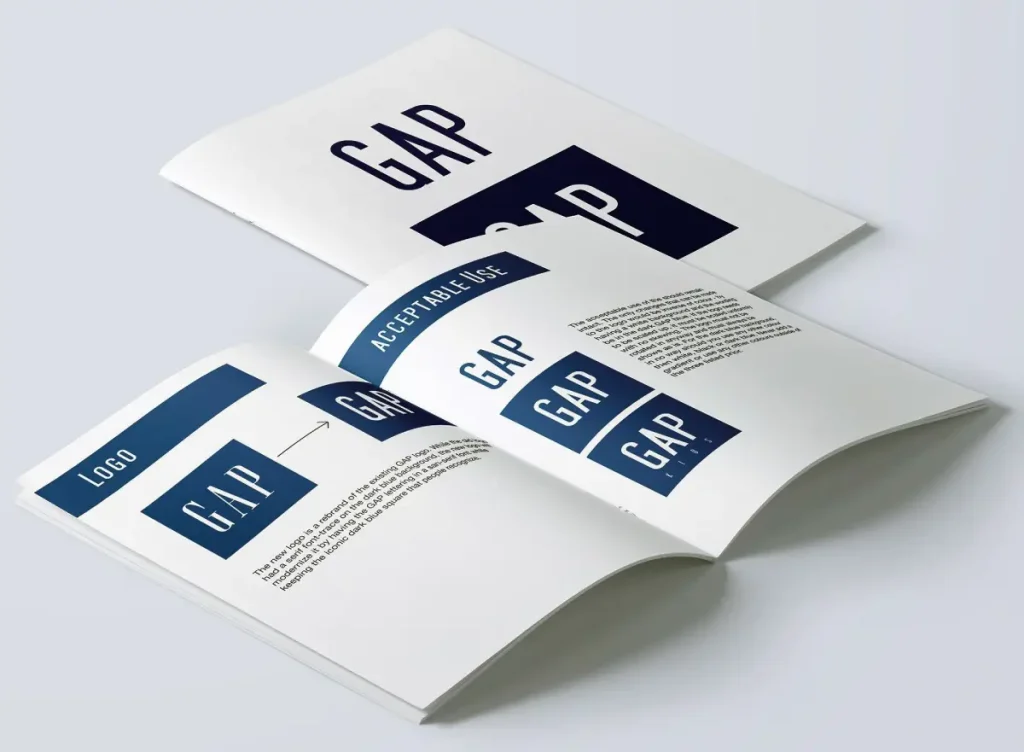
Brand guidelines as a solution to brand decay was reasonable advice in the era of controlled broadcast communication.
When a firm’s brand lived primarily in its brochures, office signage, and print advertising, visual consistency, controlled by a style guide, was an effective proxy for brand health.
That era ended before most professional services leaders noticed.
In 2026, your firm’s brand lives in places you do not control and cannot update with a guidelines document: in the LinkedIn activity of 47 partners posting independently, in the Google search result page your prospect looks at before the first meeting, in the AI-generated summary that appears when a GC asks ChatGPT which law firms specialise in cross-border M&A, and in the third-party review and directory listings that predate your current positioning.
According to Dash.app’s 2026 branding statistics, 47% of brands publish off-brand content every year – the guidelines exist, the incoherence exists, and one does not prevent the other. The guidelines were never the problem.
The replacement directive is this: audit your brand’s external presence across every channel where a sophisticated buyer might encounter it before you update a single design asset.
The question is not “does this look like our brand?” The question is “does this accurately represent the firm we are today, in the language that matters to the buyers we are trying to reach?”
The former is a design brief. The latter is a brand audit. They are not the same thing, and confusing them accelerates brand decay as the guidelines get tighter.
The professional services firms that conflate brand consistency with brand health are solving the wrong problem with the right amount of effort. Consistent application of a weak or outdated positioning compounds decay – it does not reverse it. Visual discipline in the service of an incoherent strategy is a sophisticated way to go nowhere.
Brand Decay in 2026: What the Evidence Now Shows
The commercial and cultural conditions for brand decay have changed materially in the past three years.
Understanding the 2026 environment is essential for any firm planning a brand investment because the decay mechanisms differ in kind, not just in degree.
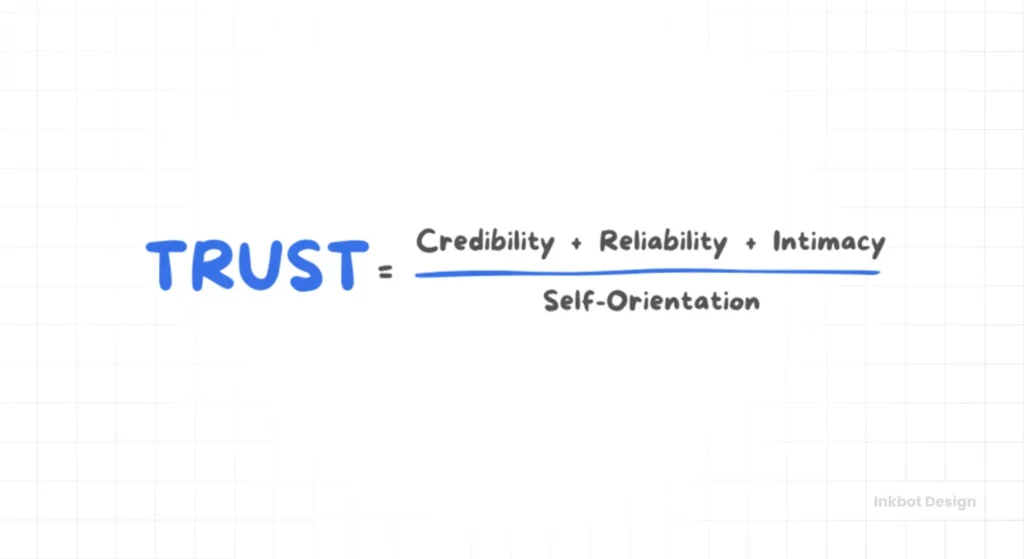
Trust Has Replaced Visibility as the Primary Brand Currency
Lippincott, the brand strategy consultancy, noted in May 2026 that leading organisations are now commissioning “trust briefs” rather than creative briefs.
The structural shift reflects a fundamental change in how brand value is built and lost: in a content-saturated environment, AI-generated communication, and algorithmic distribution, visibility is cheap, and trust is scarce.
The implication for professional services firms is direct. Brand decay in 2026 is not primarily a visibility problem – it is a trust erosion problem.
A firm that has reduced its authentic, expert-led communications in favour of templated content, repurposed materials, or AI-generated volume publishing is not maintaining brand presence. It is accelerating trust decay while appearing active.
The ICAS “State of Brand Safety” research (July 2025) found that 75% of consumers feel less favourable toward brands whose advertisements appear alongside misinformation content, and 51% would stop using products entirely if their brand’s advertising appeared near inappropriate content.
The brand safety research finding translates directly to professional services: where your firm appears, and what it appears alongside, is brand content. Every distribution decision is a brand decision.
AI Discovery Is Rewriting the Brand Perception Formation Process
In 2026, a significant proportion of sophisticated buyers conduct brand research through AI-assisted discovery – querying ChatGPT, Perplexity, or Google AI Mode for category recommendations, competitive comparisons, and firm-specific assessments.
This is not a future scenario. It is the current behaviour of the GCs, CFOs, and audit committee chairs who commission the work your firm wants.
AI-generated summaries draw on the totality of a firm’s indexed presence: published thought leadership, awards, client testimonials, LinkedIn content, directory listings, news coverage, and website copy.
A firm with a decayed brand – fragmented positioning, outdated content, thin publishing history – will receive a weaker AI-generated representation than a competitor with consistent, authoritative, current content, regardless of relative service quality.
The consequence: brand decay in 2026 degrades not only human perception but AI-mediated perception – and the latter is increasingly the first impression your firm makes.
Omnichannel Incoherence Has Become the Default Mode of Brand Decay
According to June 2026 market reporting, leading organisations are moving beyond siloed marketing tactics to integrate paid media, CRM, and lifecycle marketing into an omnichannel system.
The firms that are not doing this are, by default, maintaining the fragmented communication structures that are the primary mechanism of brand decay at scale.
In professional services, the typical fragmentation pattern is: the website reflects the firm’s positioning as of the last major redesign (usually three to five years ago); the partners’ LinkedIn profiles reflect personal positioning, not firm positioning; the pitch materials reflect individual service line positioning; and the published thought leadership reflects the interests of whoever is writing, not the firm’s strategic priorities.
Each of these assets functions as a brand touchpoint. None of them is coordinated.
The 2026 Cracker Barrel case illustrates the speed at which brand change decisions can be reversed by market reaction – the firm unveiled a new logo, faced immediate public backlash, and reversed the decision.
The lesson is not that brands should avoid change.
The lesson is that change without audience understanding, without the intelligence a proper brand diagnostic provides, produces exactly the kind of reactive crisis that makes brand investment seem risky when the actual risk was in the absence of a structured process.

Data Decay Is Compounding Brand Decay
A finding from the 2024 Landbase research set that is not widely discussed in brand strategy contexts: B2B contact data decays at 22.5–70.3% annually, with 70.8% of business contacts changing within 12 months.
Email decay accelerated to 3.6% per month as of November 2024.
The brand consequence is direct. Brand presence depends on reach. Reach in professional services depends on data quality.
A firm whose CRM contact base is three years old and without active maintenance has effectively lost the ability to communicate with between 22% and 70% of the professional relationships that constitute its brand’s commercial network.
Poor data quality costs US businesses $3.1 trillion annually, according to Landbase, and a significant proportion of that cost is the invisible brand investment that never reaches its intended audience because the contact data has decayed.
Brand decay and data decay are not parallel problems. They are the same problem viewed through different lenses.
In 2026, brand decay is not one problem – it is the intersection of trust erosion, AI visibility degradation, omnichannel incoherence, and data decay operating simultaneously. Professional services firms that address only one dimension – the most visible one, which is usually visual – are treating a symptom while the underlying commercial erosion continues. The firms gaining ground are those running structured diagnostics across all four dimensions before investing in visible brand outputs.
How Professional Services Firms Diagnose Brand Decay Accurately
Accurate diagnosis of brand decay requires a structured process rather than an internal review.
The reason is straightforward: the firms experiencing the most significant brand decay are systematically the least equipped to diagnose it themselves.
Internal brand perception and external buyer perception diverge exactly when brand investment has been reduced – because the people inside the firm still hold the mental model of the brand at its highest equity point, while the external market has been quietly revising downward.
The Internal/External Perception Gap
The most commercially dangerous form of brand decay in professional services is the gap between how the firm sees itself and how sophisticated buyers see it. This gap widens when:
- Senior leadership has been embedded in delivery and reduced public-facing communication
- The firm’s positioning was last articulated during a period of growth that no longer reflects current service breadth
- Client relationships are deep but narrowly distributed, meaning the firm’s brand reputation is strong in a specific network and weak everywhere outside it.
- The website, pitch materials, and LinkedIn presence were last updated in different years, reflecting different strategic priorities.
Inkbot Design’s brand audit process is structured specifically to measure this gap – not to evaluate whether the logo is current, but to establish what sophisticated buyers encounter when they research your firm before the first conversation, and what that encounter communicates about your firm’s current capability and authority.
Brand Decay vs Brand Refresh vs Rebrand: The Decision Framework
Professional services leaders often conflate three distinct interventions. The confusion is expensive.
| Decision Point | The Wrong Way | The Right Way | Why It Matters |
| Diagnosing the problem | Assume decay = outdated visuals | Audit external buyer perception first | Visual symptoms may mask strategic positioning failure |
| Deciding between refresh and rebrand | Choose based on budget or personal preference | Choose based on the size of the positioning gap | A refresh on a broken positioning wastes both time and budget |
| Briefing on the work | Start with “we need a new website” | Start with “here is what we want buyers to think when they encounter us” | Output-first briefs produce output. Outcome-first briefs produce commercial change |
| Measuring success | Count new assets produced | Track pitch win rate, fee realisation, talent quality at 6 and 12 months | Brand investment that cannot be evaluated commercially is decoration |
| Managing the rollout | Update assets gradually as budget allows | Coordinate all touchpoints as a single launch | Partial rollout creates a new form of incoherence |
| Involving senior partners | Brief them and execute | Make senior partner positioning a core input | Partner-level LinkedIn presence is a primary brand asset in professional services |
| Post-launch activity | Assume the new brand does the work passively | Increase active communication to embed the new positioning | A new brand without increased presence decays faster than an established one |
The Verdict
Brand decay destroys fee premium before it destroys pitch volumes, and most professional services firms discover this in the wrong order.
They notice the pitch losses first, investigate the wrong cause, and by the time the commercial pattern is undeniable, they are briefing a brand intervention from a position of weakness rather than strategic choice.
The evidence is unambiguous.
Firms that reduce brand presence lose measurable commercial performance on a predictable timeline – 16% in year one, 25% in year two, 36% in year three (Journal of Advertising Research).
The firms that catch the decay early, before those curves compound, act on the indicators described in this guide: pitch win rate changes they cannot explain, upsell resistance in established client relationships, enquiry quality that is declining in sophistication, and internal positioning that three senior partners describe differently.
In 2026, the decay mechanisms are more complex than they were five years ago. Trust erosion, AI visibility degradation, omnichannel incoherence, and data decay now operate simultaneously. Visual guidelines cannot address any of them.
The firms gaining commercial ground are running structured diagnostics before they commission visible brand outputs.
The single most important directive from this guide is this: do not commission brand work before you have established what a sophisticated buyer encounters when they research your firm today, unprompted and without your involvement.
That encounter is your current brand. Everything else is aspiration.
If you want to establish the gap between your current brand and the one your commercial position requires, the Inkbot Design Brand Equity Audit™ is a structured diagnostic that identifies exactly where the brand is losing commercial ground and what to do about it.
No creative work before the diagnosis. That is the sequence that produces commercial outcomes.
Frequently Asked Questions About Brand Decay
What is brand decay, and how does it differ from a brand becoming outdated?
Brand decay is the erosion of a firm’s commercial effectiveness – measured through pitch win rate, fee premium, and buyer perception – rather than a purely visual judgment. An outdated brand looks old; a decayed brand actively costs the firm commercial ground. The distinction matters because visual updates cannot reverse commercial decay.
How quickly does brand decay affect revenue?
According to a 20-year study published in the Journal of Advertising Research using Advertising Research Foundation data, sales decline an average of 16% after one year of reduced brand presence, 25% after two years, and 36% after three years. The curve is not linear – compounding accelerates in years two and three.
Can brand decay happen even when a firm is growing?
Brand decay can occur during periods of firm growth, particularly when growth is driven by referrals from a narrow partner network rather than a broad market presence. Revenue growth and brand health are independent variables; a firm can grow even as its market authority outside its existing client network declines.
What is the difference between visual inconsistency and brand decay?
Visual inconsistency is a symptom of brand decay, not its cause. Brand decay is the erosion of buyer perception, market authority, and mental availability. A firm can maintain perfect visual consistency while experiencing significant decay in positioning relevance, presence, and trust – all of which carry greater commercial consequence than design coherence.
How do professional services firms typically discover they have brand decay?
Professional services firms typically discover brand decay through commercial signals rather than brand metrics: declining pitch win rates, harder fee conversations, senior talent choosing competitors, or difficulty articulating a distinctive positioning. By the time these signals are unmistakable, the decay has usually been accumulating for two to three years.
Does hiring an in-house marketing team prevent brand decay?
In-house marketing capability reduces some forms of brand decay – specifically, visual inconsistency and content frequency – but does not address the strategic and positioning forms of decay that carry the greatest commercial consequence. Brand decay driven by outdated positioning, reduced senior presence, or AI visibility gaps requires an external diagnostic capability to accurately identify.
What is the relationship between data decay and brand decay?
Data decay and brand decay are compounding problems. According to Landbase (2024), B2B contact data decays 22.5–70.3% annually. A firm whose contact base has aged significantly has lost the reach required to sustain brand presence, meaning brand investment does not reach its intended professional network – accelerating the very decay it was designed to prevent.
How do mergers and acquisitions accelerate brand decay?
Mergers and acquisitions introduce competing brand identities, positioning statements, and design systems into a single firm. Without a structured integration process, the result is a hybrid brand that coherently represents neither predecessor firm, reducing mental availability for both legacy client networks and new prospects simultaneously.
Should a firm rebrand or refresh when brand decay is identified?
The correct intervention depends on the size of the positioning gap, not the severity of the visual degradation. A refresh addresses surface-level incoherence. A rebrand is required when the firm’s actual capabilities, market position, or target audience have shifted materially from the positioning the brand currently communicates. Choosing between them without a brand diagnostic first is a coin toss.
How long does it take to reverse brand decay?
Brand equity takes longer to rebuild than it takes to erode, because buyer perception changes more slowly than brand assets do. A structured brand intervention – diagnostic, positioning work, identity update, and sustained presence campaign – typically produces measurable commercial improvement within 12–18 months for professional services firms, with full recovery requiring 24–36 months in cases of significant decay.
What role does LinkedIn play in brand decay for professional services firms?
LinkedIn is the primary brand touchpoint for professional services firms in the current environment, because it is where sophisticated buyers observe senior partner thinking, firm culture, and positioning before initiating contact. A firm whose LinkedIn presence is inconsistent, infrequent, or generically corporate is experiencing brand decay at its most commercially consequential touchpoint.
Is brand decay reversible?
Brand decay is reversible, but the cost and timeline of reversal scale with the decay’s duration and depth. Early intervention – at the warning sign stage described in this guide – produces faster and less expensive recovery than intervention triggered by a commercial crisis. The firms with the best outcomes are those that treat brand health as a commercial metric and run regular diagnostics rather than waiting for the revenue story to force the issue.
