B2B Paid Media Strategy: Stop Optimising for CPL
Most B2B paid media strategy focuses entirely on platform tactics. For professional services firms managing long sales cycles, real performance requires integrating paid media with core brand positioning, targeting the complete buying committee, and optimising for pipeline quality rather than cheap lead volume.
 By Stuart Crawford
 Reviewed by Tabitha Ayers
Updated 11 min read
On this page11 min left
- What Actually Drives B2B Paid Media Strategy?
- Why Tactical Optimisation Appeals to Smart Boards
- The Revenue Plateau: Where Channel Tactics Break Down
- Designing Media for the Professional Services Buying Committee
- The Objection: “Brand Campaigns Waste Performance Budgets”
- Integrating Brand Positioning With Demand Generation
- The Verdict
- Frequently asked questions
Most B2B paid media strategy is simply channel optimisation masquerading as business strategy.
Real performance for professional services firms comes from integrating media with core positioning, sales motion, and buying committee dynamics — not from endlessly tweaking platform bids.
When a 100-person accountancy practice invests £10,000 a month into LinkedIn to generate whitepaper downloads, they gain measurable engagement.
When those downloads consistently fail to convert into £50,000 advisory retainers, the board usually blames the agency, the platform, or the ad creative. The actual failure sits higher up.
The firm built a conversion engine disconnected from the brand positioning required to win high-trust, high-value professional services mandates.
Integrating these systems is the only reliable way to accelerate pipeline velocity. This requires treating advertising as one component within a broader ecosystem of digital marketing services. The objective is never the click.
The objective is the commercial mandate.
What Actually Drives B2B Paid Media Strategy?
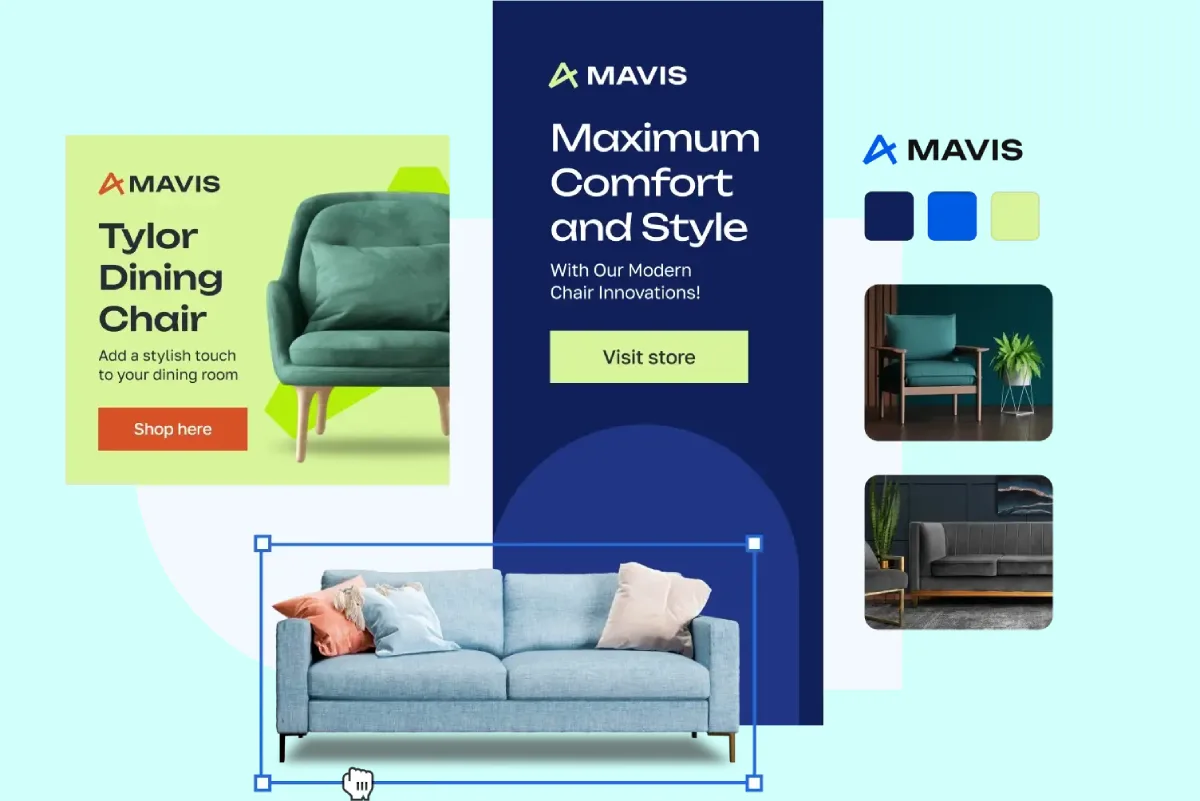
A successful b2b paid media strategy integrates core brand positioning with targeted demand generation to engage the entire buying committee across long sales cycles.
- It optimises for pipeline quality. Success is measured by sales-qualified opportunities and revenue influence, rejecting top-of-funnel vanity metrics.
- It targets committee roles, not individuals. Messaging adapts to address the distinct priorities of economic buyers, technical evaluators, and internal champions.
- It unifies brand and demand. Brand recall campaigns directly support conversion campaigns, lowering the ultimate cost of client acquisition.
Why Tactical Optimisation Appeals to Smart Boards
The prevailing view in digital marketing assumes that success relies entirely on algorithmic efficiency. Boardrooms and managing directors readily accept this premise because platform metrics offer immediate, objective clarity.
The Allure of the Cost-Per-Lead Metric
Cost-per-lead (CPL) dominates board reporting because it behaves like a traditional operational efficiency metric.
Managing directors trained to optimise supply chains or billable hours naturally gravitate toward reducing the unit cost of a lead.
2025 B2B PPC benchmarks covering Google and LinkedIn confirm significant variations in CPL across platforms, driving media buyers to shift budgets toward the cheapest impression constantly. This mathematical certainty comforts executives.
If the marketing department reduces CPL by 15% quarter over quarter, the board assumes the firm is capturing market share efficiently.
The Illusion of Total Attribution
Digital platforms sell the promise of perfect attribution. B2B marketers present dashboards showing exactly which Google Search ad generated a specific form submission.
This linear tracking validates the marketing spend immediately. When eMarketer reported that US B2B digital ad spending would grow by 15% year-on-year in 2024 to reach $18–19 billion, much of that capital flowed directly into channels offering this exact deterministic tracking.
Firms invest heavily because the software promises absolute proof of return on ad spend (ROAS) on a touch-by-touch basis.
Why Short-Term Cycles Satisfy Executive Reporting
Quarterly earnings and annual partner meetings demand immediate evidence of marketing impact. Tactical optimisation delivers this speed.
A firm can launch a Meta campaign on Monday, A/B test three headlines by Wednesday, and present a winning click-through rate (CTR) to the partnership on Friday.
This rapid feedback loop mimics business momentum.
The marketing team feels productive, the agency justifies its retainer, and the managing director possesses concrete data to defend the budget allocation to the wider partnership.
The Revenue Plateau: Where Channel Tactics Break Down
Tactical efficiency eventually hits a hard commercial ceiling.
The mechanics that generate cheap leads actively work against generating high-value professional services retainers.
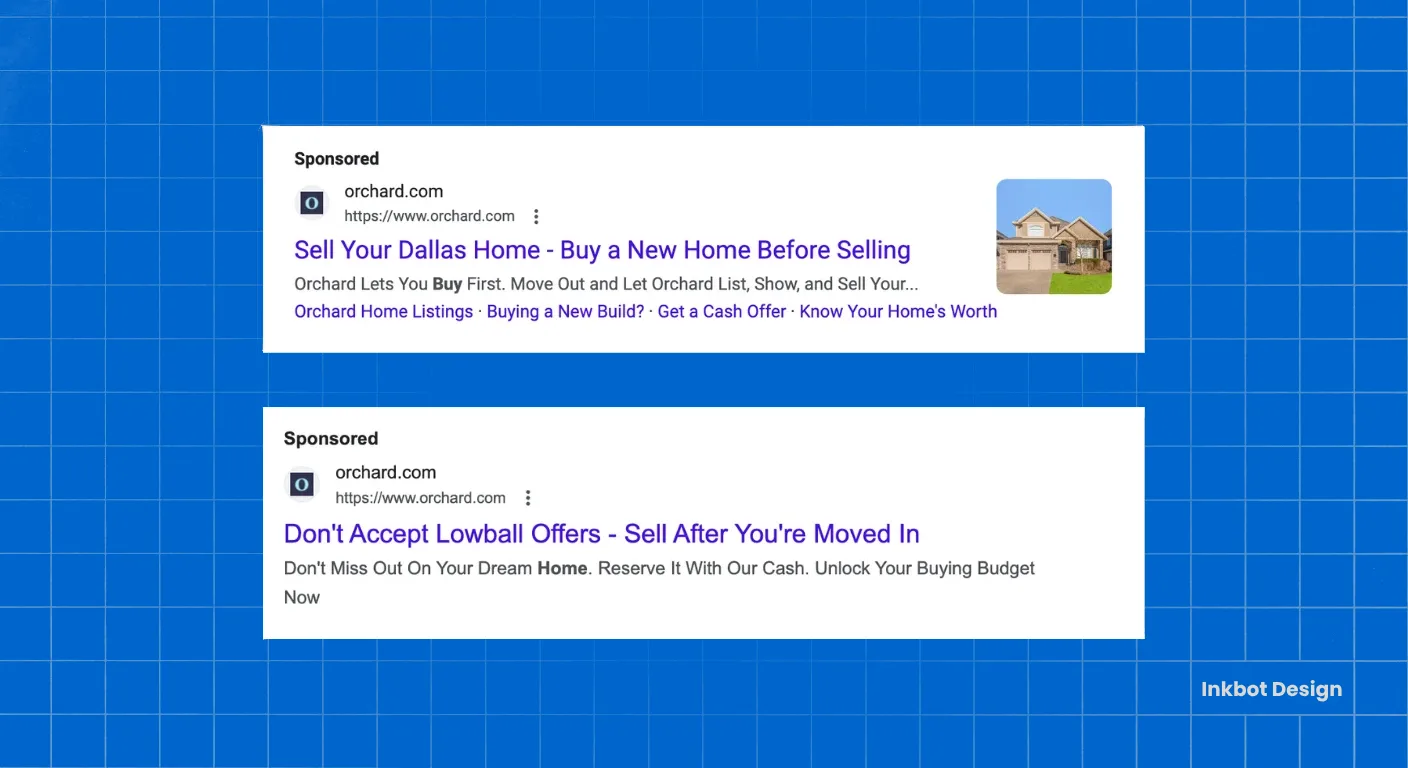
The 200-Day Professional Services Sales Cycle
B2B sales do not happen at the speed of a web click.
Go-to-market benchmarks show that average B2B customer journeys span well over 200 days from first touch to closed revenue, with the transition from marketing-qualified lead (MQL) to sales-qualified lead (SQL) as the primary bottleneck.
A tactical media strategy optimises only for that first touch. When a management consultancy uses clickbait to drive £20 webinar signups, they fill their CRM with junior analysts who possess zero purchasing authority.
The 200-day cycle stagnates because the initial lead quality fundamentally cannot support a six-figure commercial conversation.
“The market dictates value at each stage of the buyer journey. Your job is not to force arbitrary CPL targets upon platform algorithms, but to build media systems that understand and respond to real market value. When firms optimise exclusively for the cheapest click, they inevitably optimise themselves entirely out of the target market.”
Why Platform Benchmarks Mislead Professional Advertisers
Relying on generic industry benchmarks causes professional services firms to misallocate capital. B2B PPC benchmarks routinely highlight the low CPLs available on Meta or Google Display.
However, these averages blend software-as-a-service (SaaS) trials with enterprise consulting contracts. A £100 CPL is disastrous for a £50/month software tool but exceptionally cheap for a £150,000 legal retainer.
When professional services firms chase the lowest benchmarked CPL, they degrade their brand positioning to appeal to a mass audience, ultimately destroying the premium perception required to close complex advisory work.
The Shift Toward Pipeline Velocity over Volume
Real optimisation requires tuning campaigns to unblock deal friction, not just to generate form fills.
2025 B2B PPC and paid social benchmark reports confirm that optimising toward lead quality — specifically sales-qualified opportunities (SQO), pipeline velocity, and long-term ROAS — yields far more stable performance than chasing top-of-funnel volume.
If a law firm's pipeline consistently stalls at the technical evaluation stage, the paid media strategy must deploy technical case studies targeting in-house counsel to accelerate the deal.
Generating 500 new top-of-funnel leads solves nothing if the existing pipeline remains frozen.
Designing Media for the Professional Services Buying Committee
A single individual rarely buys professional services. Treating B2B paid media strategy as a direct-response exercise aimed at a solitary “persona” ignores how corporate capital is actually deployed.
In 17 years of brand work, the pattern I see most often is professional services firms advertising to the junior researcher while completely ignoring the partner who signs the cheque.
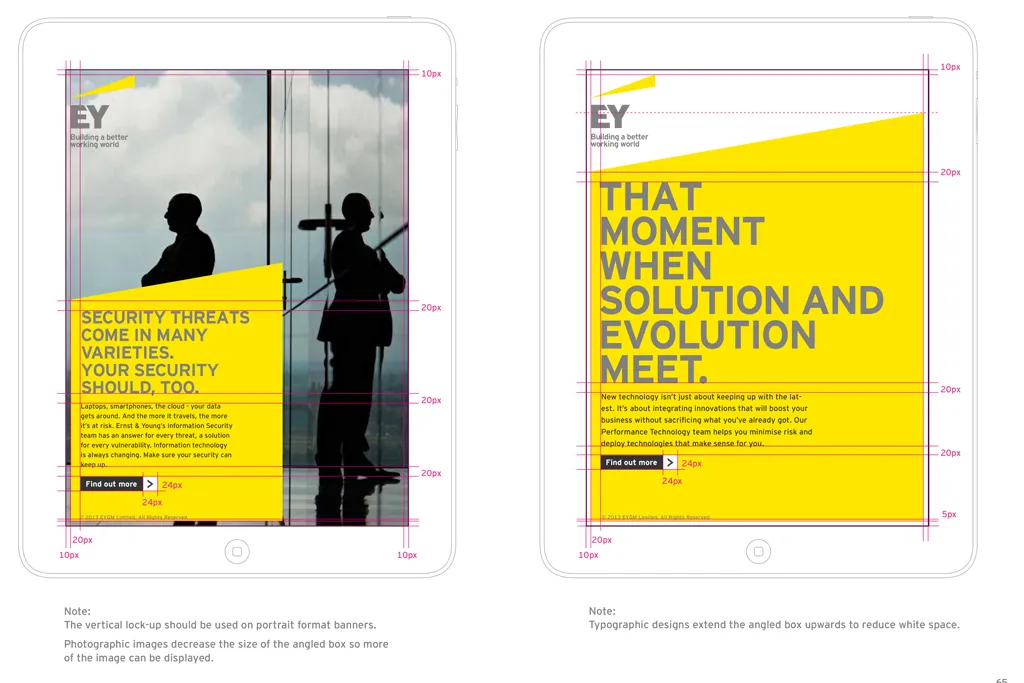
Mapping the Economic Buyer Against the Technical Evaluator
A B2B paid media strategy must run parallel campaigns delivering conflicting messages to different stakeholders within the same target account.
The Economic Buyer (often the CEO or CFO) requires messaging focused on risk mitigation, ROI, and strategic advantage. The Technical Evaluator (the internal department head) requires messaging detailing methodology, integration, and operational efficiency.
If an architecture firm serves the same generic “innovative design” advertisement to both the property developer's CFO and their lead engineer, the impression is wasted on both.
Allocating Budget Across the LinkedIn Control Channel
Targeting this matrix of buyers requires precise environmental control.
Aggregated B2B ad spend data from 2024–2025 indicates LinkedIn’s share of B2B ad budgets is growing into the 30–40% range, overtaking individual Google properties as the single largest channel line item for many B2B firms.
LinkedIn dominates because it allows advertisers to distinguish between the Economic Buyer and the Technical Evaluator by seniority and job function.
This precision justifies the platform's higher initial costs. Paying £15 for a click from a verified CFO is mathematically superior to paying £1 for 15 clicks from unknown interns.
Structuring Mobile-First Creative for Senior Decision-Makers
B2B advertising creative must align with executives' consumption habits. eMarketer reports that mobile formats now account for the majority of total B2B digital ad spend in the US.
Furthermore, LinkedIn’s own creative trend analysis (conducted with partners like VidMob) reveals that human, video-led, emotionally expressive creative delivers substantially higher engagement and completion rates than traditional, sterile corporate B2B ads.
Managing directors review vendors on their phones during commutes.
If a firm's media strategy relies on text-heavy desktop whitepapers, those whitepapers become invisible to the senior decision-makers who must approve high-value contracts.
The Objection: “Brand Campaigns Waste Performance Budgets”
When a professional services firm faces revenue pressure, the managing director usually demands that the marketing team halt all “brand awareness” advertising and redirect every pound into direct-response lead generation.
The logic is understandable: brand is perceived as unmeasurable fluff, while demand capture is perceived as revenue.
The False Dichotomy Between Brand and Demand
This objection fundamentally misunderstands how buyers assess risk. Brand and demand are not opposing forces competing for budget; they are sequential phases of the same system.
Recent cross-channel analyses of B2B marketing projects demonstrate that integrated digital channels — combining SEO, content marketing, and paid search/social — consistently deliver stronger long-term ROI than siloed traditional channels.
You cannot capture demand that does not exist. If a prospect has never heard of a boutique consultancy, clicking their direct-response ad carries massive perceived professional risk.
“Professional services firms sell invisible expertise. The brand positioning is the only proxy the buyer has for the quality of the unrendered service. When firms cut brand spending to fund demand capture, they force their sales teams to introduce the firm and close the deal in the same conversation.”
How Brand Positioning Lowers Customer Acquisition Cost
A strong market position actively subsidises the performance marketing budget.
Recent benchmarking by Dreamdata across major ad networks shows LinkedIn delivering significantly higher ROAS for B2B campaigns than Google Search and Meta, despite its higher baseline CPCs.
This efficiency occurs because buyers on LinkedIn are primed for professional engagement. When a buyer already recognises a firm's brand from sustained awareness campaigns, their friction to convert on a targeted demand ad drops.
The initial brand investment yields a lower final cost per acquisition.
Protecting Premium Pricing Through Consistent Market Presence
Tactical direct-response advertising commoditises professional services.
If an accountancy firm only runs ads offering “Free Tax Audits”, the market categorises them as a discount provider. Consistent brand media preserves the pricing power required to operate a profitable 100-person firm.
The media strategy must continually reinforce the firm's category-specific authority and distinct viewpoint, ensuring that when the sales team issues a proposal, the premium fee is expected rather than contested.
Integrating Brand Positioning With Demand Generation
A strategic B2B paid media strategy abandons isolated channel tactics in favour of a structured progression that mirrors the buying committee's psychological journey.
The architecture relies on three sequential stages: Awareness, Consensus, and Commitment.
The Awareness Stage: Establishing Category Authority
The top of the media funnel must project the firm's core positioning without asking for a transaction.
At this stage, campaigns target the entire identifiable buying committee within a designated account list. The objective is to establish mental availability.
An engineering consultancy might promote ungated video content that details its unique approach to sustainable infrastructure.
The success metric here is not form submissions; it is target account reach, video completion rates, and the generation of highly specific retargeting audiences.
The Consensus Stage: Arming the Internal Champion
Deals die when the internal champion cannot defend the vendor choice to the wider board. The middle of the media strategy must supply this champion with ammunition.
Using the audiences built during the Awareness stage, the firm deploys targeted case studies, methodology breakdowns, and competitive comparisons.
This content must be technically rigorous.
If an HR consultancy is pitching a restructure, the Consensus media must provide the HR Director with the exact compliance and ROI data they need to overcome the CFO's inevitable objections.
The Commitment Stage: Mitigating Post-Pitch Risk
Performance marketing does not stop when the proposal is submitted. The final stage of a B2B paid media strategy targets the specific accounts currently sitting in the active sales pipeline.
During this critical window, the buying committee is actively assessing the risk of hiring the firm. Commitment stage media should deploy highly specific social proof, partner interviews, and implementation guarantees directly to those few individuals.
This is tactical optimisation deployed correctly: using media spend specifically to unblock the final 10% of the deal cycle.
The Verdict
Treating B2B paid media strategy as an exercise in algorithmic bid manipulation actively harms professional services firms.
The mechanics of performance marketing must be subordinated to the realities of complex buying committees, 200-day sales cycles, and the absolute necessity of maintaining premium brand positioning.
Performance cannot be measured in clicks or top-of-funnel leads. True performance is defined strictly by the acceleration of sales-qualified opportunities and the successful closure of high-value mandates.
If your current media spend is generating volume but the partnership is starving for quality, the solution is not a new ad platform.
The solution is integrating your conversion mechanics with a defensible brand position. Audit exactly what your market position actually is before spending another pound on capturing demand.
Frequently asked questions
What is a B2B paid media strategy?
A B2B paid media strategy is the structured deployment of advertising capital across digital platforms to influence target accounts. Professional services require integrating core brand positioning with targeted demand generation to engage multiple decision-makers across long, complex sales cycles, rather than simply optimising for cheap leads.
Why is cost-per-lead (CPL) a dangerous metric for B2B?
CPL is dangerous because it incentivises volume over quality. Optimising strictly for the cheapest CPL often leads platforms to serve ads to junior staff with no purchasing power. For professional services, this fills the CRM with unqualified contacts, stalling the pipeline and wasting sales team resources.
How does the buying committee impact paid media?
The buying committee impacts paid media by requiring parallel, role-specific campaigns. A CFO (Economic Buyer) needs messaging focused on ROI and risk mitigation, while a department head (Technical Evaluator) needs methodology and integration specs. Serving a generic ad to both roles wastes the impression.
Should B2B firms invest in brand awareness or lead generation?
Yes — both are required as a unified system. Brand awareness creates the necessary trust and mental availability that makes direct lead generation efficient. Cutting brand spend to fund demand capture forces sales teams to pitch cold, which increases the final cost of customer acquisition.
What is the best platform for B2B paid media?
LinkedIn is currently the most effective control channel for B2B professional services. Despite higher initial costs, LinkedIn allows advertisers to isolate specific seniority levels and job functions within target accounts, ensuring media budget is spent only on verified decision-makers.
How long does a B2B paid media campaign take to show ROI?
Because average B2B customer journeys often exceed 200 days, true revenue ROI cannot be accurately measured in weeks. Short-term performance must be measured by pipeline velocity and the generation of sales-qualified opportunities (SQO), rather than immediately closed-won revenue.
What is the difference between B2B and B2C paid media?
The primary difference is the purchase mechanism. B2C advertising targets a single individual for an immediate, low-risk emotional purchase. B2B advertising must influence a multi-person committee over several months to facilitate a high-risk, logic-driven commercial investment.
When should a firm pause its B2B paid media campaigns?
A firm should pause campaigns when its core brand positioning is undefined or contradictory. Running conversion media without a clear, defensible market position merely amplifies a confusing message, leading to poor lead quality and wasted capital. Address the brand equity first.
Is video effective for B2B advertising?
Yes — mobile-first, video-led creative is highly effective in B2B. LinkedIn data shows that human, emotionally expressive video content delivers substantially higher engagement and completion rates than traditional, text-heavy corporate advertisements, aligning with how executives actually consume media.
How do you measure the success of a B2B paid media strategy?
Success must be measured by revenue influence and pipeline quality. Key metrics include the number of sales-qualified opportunities (SQO) generated, the reduction in sales cycle length (pipeline velocity), and the overall return on ad spend (ROAS) tracked through CRM integration.