Communicating a Rebrand Without Losing Clients or Referrals
Communicating a rebrand succeeds when clients and referrers can explain what changed, what stayed, and how to find you now — not when they admire the new logo. This guide reframes rebrand communication as relationship continuity and referral accuracy, with the sequence, the message, and the findability work that protect commercial ground.


On this page9 min left
The email announcing your new name will be admired for about a day.
Then a referrer you've never met will describe your firm to a prospect from memory, and everything you actually spent money on rides on whether they get it right.
That is the part of communicating a rebrand that the guides skip. Most treat it as a launch: reveal the identity, explain the rationale, update the website, repeat the message.
Useful, as far as it goes. But it's written for the firm doing the announcing, not for the people who have to keep trusting you, buying from you, finding you, and recommending you once the announcement has scrolled out of the inbox.
A rebrand isn't communicated when people admire the new look.
It's communicated when a client can tell a colleague what changed, what didn't, and how to find you now — accurately, without you in the room.
The stakes are concrete. According to Salesforce's State of the Connected Customer research, 88% of customers say trust becomes more important during times of change. A rebrand is a self-inflicted time of change.
Handle the communication as a trust handover, and you protect the relationships; handle it as a visual reveal, and you gamble them.
If you want the full operational view of how this fits within the wider project, our rebranding process outlines the stages that this article's communication piece falls under.
How Do You Communicate a Rebrand Successfully?
You communicate a rebrand successfully by making the change repeatable: every client, referrer, and staff member can state what changed, what stayed the same, and how to find or recommend the firm now. Sequencing and press releases serve that goal. They are not the goal.
- Internal teams are briefed before anyone external, because clients usually hear the rebrand through people they already know.
- The message leads with continuity — what has not changed — because that is what a nervous client needs first.
- Findability is fixed in parallel, so a referrer who searches the old name still lands on you.
Communicating a rebrand successfully means clients and referrers can accurately explain what changed, what stayed the same, and how to find or recommend the firm now.
“Fine — But Who Do I Tell, and in What Order?”
Tell the people closest to the relationship first, then work outward: staff, then key clients and active referrers by personal contact, then the wider market, then the public channels.
The logic is that trust travels through existing relationships, not press releases.
Edelman's 2026 Trust Barometer, drawn from nearly 34,000 respondents across 28 countries, found that 78% of employees globally trust their employer to do what is right. That internal trust is your first distribution channel.
A client rarely reads your press release; they hear “we've changed our name” from the partner they already deal with. If that partner is confident and consistent, the client is reassured before the announcement ever reaches them. If the partner is caught off guard, no press release can repair it.
The sequence itself is table stakes — every competent guide gets it roughly right.
Where firms actually come unstuck is two steps most sequences barely mention: the active referrer who was never on the contact list, and the dormant client who'll next need you in eighteen months and will search for a name that no longer exists.
Hold those two in mind; the next two sections are about them.
“So What Do I Actually Say?”
Say what changed, say plainly what did not, and give people a short version they can repeat without you. The message that matters is not the one you broadcast — it's the one a client reconstructs from memory three weeks later when a peer asks who handled their acquisition.
Most announcements fail here by leading with the firm's excitement: new name, new marque, a paragraph on the journey.
The client's actual question is quieter and more anxious: Is my matter still safe? Is my point of contact the same? Is the fee arrangement the same? Answer those first.
The Branded Agency's guidance on rebrand announcements makes the same point from the customer side — people care far less about the new font than about whether service and continuity hold. Lead with what stays.
The change is the smaller part of the message, even though it's the part you're proudest of.
Then compress it. A client cannot relay four paragraphs, but they can relay a sentence: “Same team, same office, new name — they used to be Hartley & Vine, now they're Vine Partners.” That sentence is the real deliverable of the whole exercise.
Write it yourself, include it in the announcement, add it to the email signature, and hand it to every client-facing person as the line they use. If you don't author the repeatable version, your clients will improvise one, and that's where accuracy dies.
“A rebrand announcement is a script written for other people's mouths. If a client can't repeat what changed and what stayed in one sentence, the communication has failed — however elegant the launch looked.”
There is judgement in this that no template supplies. In 17 years of brand work, the pattern I see most often is that the firms proudest of their new identity are the ones who most need to be talked out of leading with it.
The judgement call is nearly always the same: subtract the parts you love, keep the parts they need.
“Yes, But How Do Clients and Referrers Still Find Me?”
Fix findability in parallel with the announcement, not after it, because a referrer searching under your old name is a warm lead you can lose. This is the work almost every rebrand guide omits, and it's where the relationship-continuity argument becomes technical rather than sentimental.
Consider how a referral actually reaches you. A former client tells a peer, “You should call the firm that did our merger.” The peer doesn't have your number.
They search — and 80% of people visit a professional-services firm's website when evaluating providers, according to Hinge Marketing's professional-services research, which identifies the website as the most commonly used information source.
If that search returns your old name and a broken path, the referral evaporates, and you never learn it existed. That is the quiet cost of a purely visual rebrand: the losses are invisible because they never contact you to say so.
So the findability work is not optional housekeeping. Old domain redirects to new, permanently. The old name appears deliberately on the site — “formerly Hartley & Vine” — so search, and humans both connect the two.
Directory listings, professional-body profiles, LinkedIn company pages, Google Business Profile, and email signatures all move together.
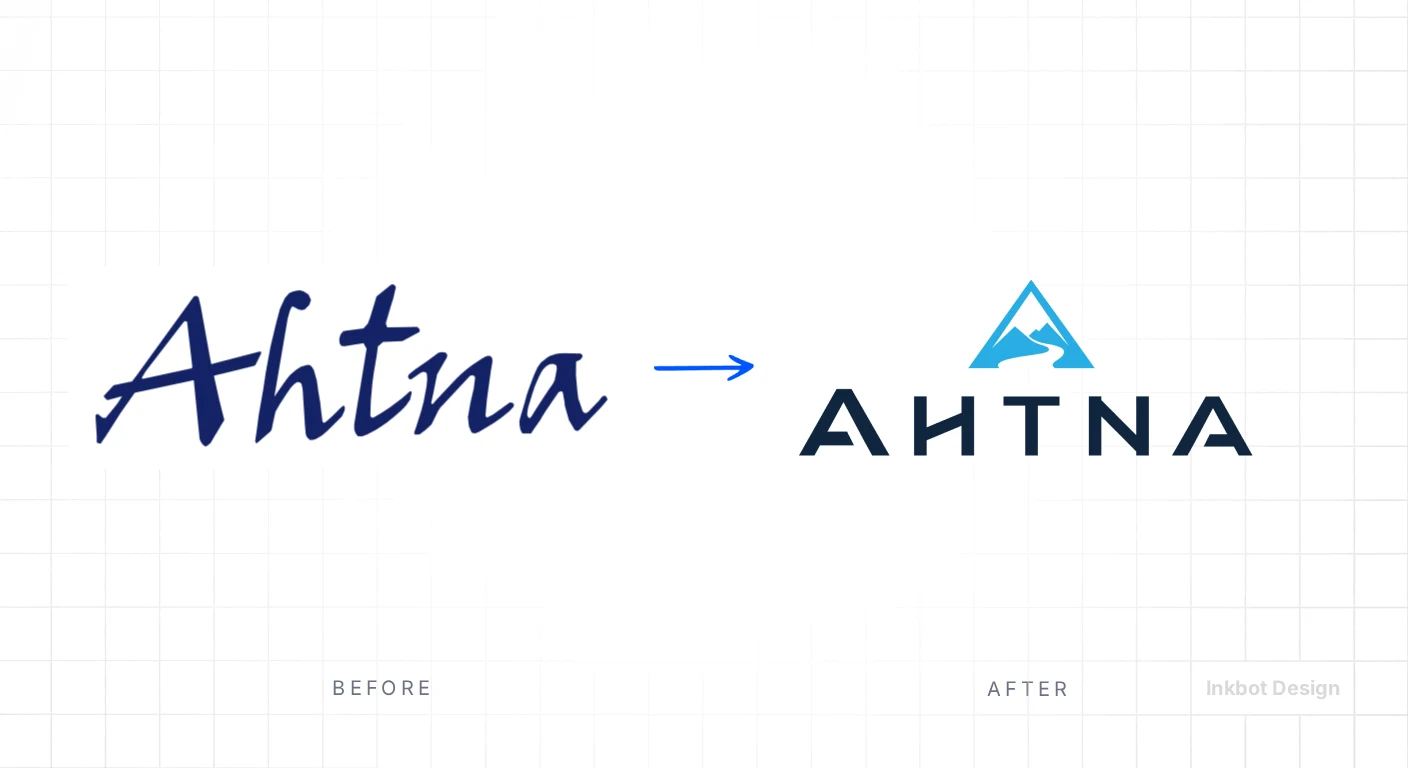
Ahtna's September 2026 rebrand is the model. The company phased the rollout across its website, proposal materials, signage, and customer communications — and stated flatly that the change touched none of its existing contracts, ownership, or client relationships—continuity message and findability plan, shipped as one move.
There's a newer audience to satisfy as well. Ask an AI assistant, “good litigation firms in Leeds”, and the answer is stitched from whatever the web currently says about you.
If half the internet still calls you the old name, you're a blurrier entity to the machine and the referrer alike — two audiences, one fix: make the old name and the new resolve to the same place, everywhere.
For the deeper mechanics of preserving recognition through the switch, our work on protecting brand equity during a rebrand goes beyond what this blog post can cover.
What's Driving Professional-Services Rebrands in 2026
Professional-services rebrands in 2026 are increasingly driven by consolidation and AI repositioning — both of which raise the stakes for continuity, because the firm's offering is changing, not just its name.
When the story is bigger than a new logo, the communication has more to carry.
Consolidation is one driver.
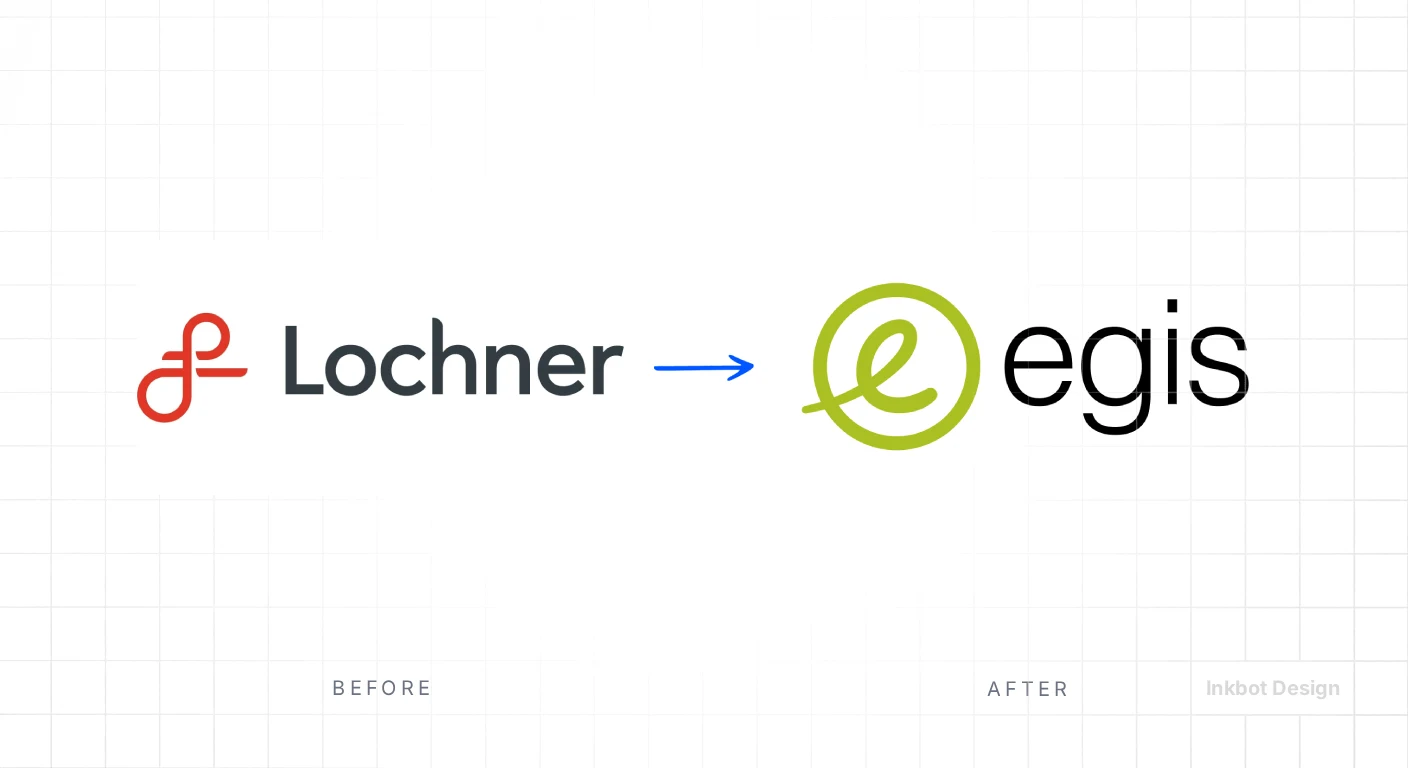
In August 2026, H.W. Lochner announced it had rebranded as Egis following its 2025 merger, unifying the business under the Egis brand across infrastructure, consulting, and engineering services.
Marsh McLennan announced in October 2025 that it would move to the Marsh brand, with its businesses adopting the identity through a transition beginning in 2026, to bring capabilities under one market-facing name.
In both, clients of the absorbed brand need to know their relationship survived the merger intact — the continuity message doing real commercial work.
AI is the other driver, and it's a harder communication problem than a merger. A merger changes your name; an AI repositioning changes your claim.
In March 2026, Perficient rebranded as an AI-native services and consulting partner under the line “Different. For Real.” — moving from selling technology consultancy to selling transformation.
Scale that down to your firm: the day you rebrand from “chartered accountants” to “AI-enabled advisory,” your oldest client's first thought isn't nice logo. Is it that the people who've done my accounts for 9 years now are doing something I didn't ask for?
If your communication doesn't answer that in the first line, the rebrand reads as trend-chasing, and you've spent money making a loyal client nervous.
Change the name if you must. Never let the name change outrun the answer to “do I still want what you sell?”
Communicated Means Repeatable
The measure of a rebrand's communication isn't the applause on launch day.
It's whether, months later, a client can accurately tell a peer what you're now called and that nothing they rely on has changed — and whether that peer, searching a half-remembered name, still lands on you. Admiration is cheap and fades.
Repeatability and findability protect fee income even as the underlying identity changes.
Do one thing before you announce anything: write the exact sentence you want a client to repeat about this rebrand — “same team, same terms, new name, here's where they are now” — then search your own old name and see whether a stranger acting on that sentence actually lands on you. If they don't, you have a findability problem no launch event will fix.
Want it checked properly first? Request a free Brand Equity Audit™ — it shows exactly where the brand is losing commercial ground, and what to do about it.
Frequently asked questions
Who should you tell about a rebrand first?
Tell internal staff first, then key clients and active referrers by personal contact, then the wider market and public channels. Clients usually hear a rebrand through the person they already deal with, so a briefed, confident team is the first and most trusted distribution channel for the news.
What should a rebrand announcement actually say?
Lead with what has not changed — team, contacts, service, fees — then state plainly what has, and give a one-sentence version people can repeat. Clients care more about continuity than about the new identity, so reassurance about stability comes before the reveal, not after.
How do clients find a firm after a name change?
Redirect the old domain permanently, name the old brand on the new site as “formerly [old name],” and update directories, professional profiles, and Google Business Profile together. A referrer searching a half-remembered old name should still land on you; broken paths lose warm leads silently.
Is it true that a rebrand can lose you referrals you never see?
Yes — a referral often reaches you through a third party who searches your name rather than contacting you directly. If that search returns an outdated name or a dead link, the prospect never arrives, and you never learn that the referral happened, making findability a direct revenue issue.
Why are professional-services firms rebranding in 2026?
Consolidation and AI repositioning are the main drivers. Mergers such as H.W. Lochner becoming Egis unify firms under a single brand, while firms like Perficient rebrand to signal AI-native capabilities. Both change the firm's offer, not just its look, raising the stakes on communicating continuity.