Pre-Merger Brand Strategy Starts With Governance, Not Design
A law firm merger creates decisions about naming, positioning, partner authority and client confidence. Those decisions need to happen before the new identity is commissioned. This guide explains how Managing Partners can establish brand decision rights, assess existing brand equity and agree on the future firm's market position before completion.



On this page9 min left
- What Is Pre-Merger Brand Strategy?
- Why Should Brand Decisions Happen Before a Merger Completes?
- Which Brand Decisions Must Be Settled Before Completion?
- Who Should Have Authority Over the Combined Firm's Brand?
- How Should a Merged Law Firm Choose Its Future Brand?
- What Should Managing Partners Do When Brand Decisions Remain Unresolved?
- The combined firm's brand needs a decision owner before it needs a designer.
- Questions people ask
A merger between two law firms can take months of negotiation. Yet the decision about what the combined firm should stand for can be left until somebody commissions a new logo.
That is the wrong sequence.
Pre-merger brand strategy establishes how two organisations will combine their existing brand equity, market positioning, naming, reputation and stakeholder relationships.
The work should begin before completion, while the commercial direction and decision-making arrangements are still open to influence.
McKinsey & Company reported in Where Mergers Go Wrong (2004) that the average merging company loses between 2% and 5% of its combined customers. That research is historical, and it does not isolate brand-related losses. It does illustrate why customer continuity deserves attention during integration.
For Managing Partners, the challenge is particularly interesting. A 15-partner commercial law firm merging with a 20-partner regional practice is combining more than two names. The firms may have different reputations, referral networks, practice-area strengths and ideas about the clients they want to attract.
Those differences need to be resolved before the identity work begins.
A sound starting point is to understand the wider principles of professional services brand strategy and how brand transition strategy connects existing brand equity with a future market position.
What Is Pre-Merger Brand Strategy?
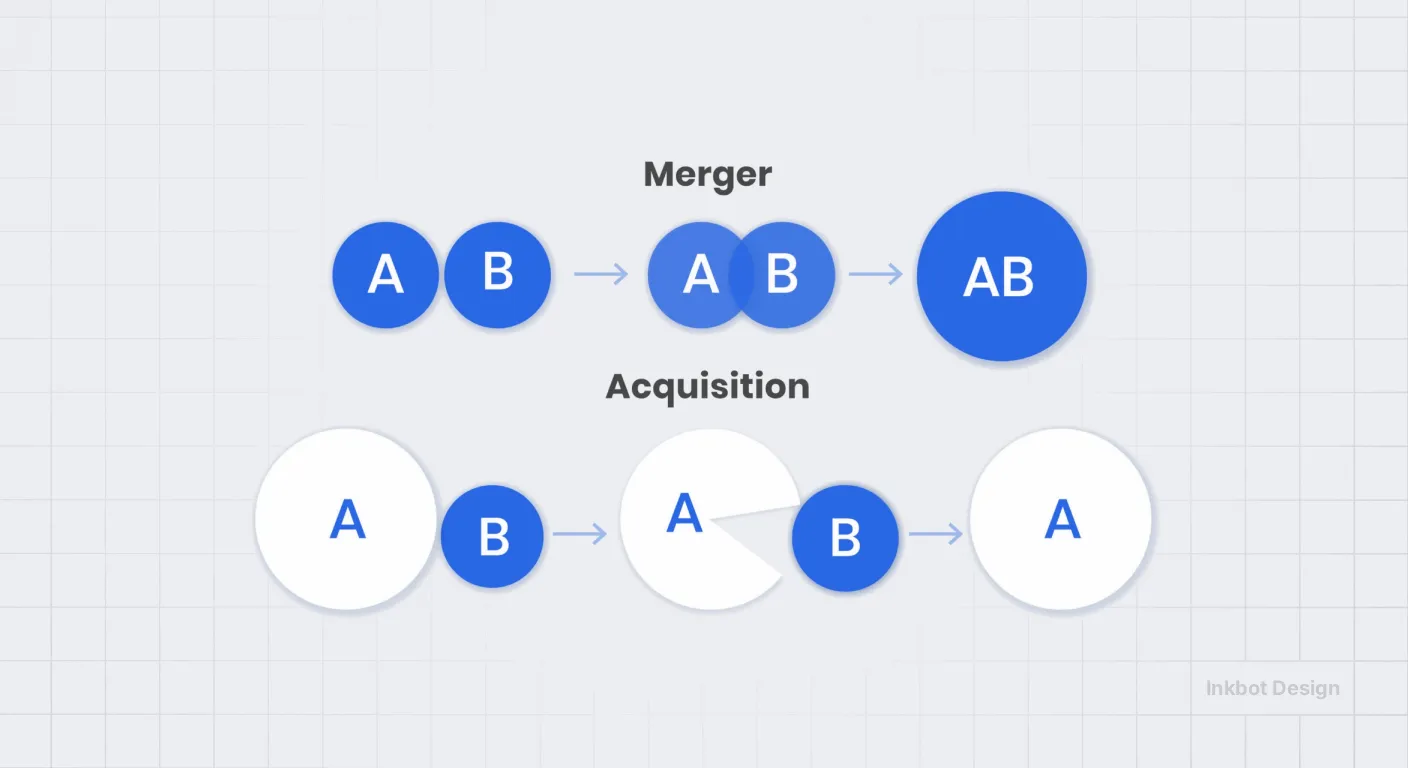
Pre-merger brand strategy is the process of deciding how two organisations will combine their market identities, positioning, reputation and stakeholder relationships before a merger completes.
For a law firm, this involves three connected decisions:
- Commercial positioning: What markets, clients and practice areas should the combined firm compete for?
- Brand architecture: Which existing name, identity or combination best supports that position?
- Decision authority: Who has the power to approve the new firm's positioning, naming and identity?
The process also establishes how clients, employees, referrers and other stakeholders will understand the change.
Pre-merger brand strategy defines how merging organisations align brand equity, positioning, naming, decision authority and stakeholder communication before completion.
The important distinction is timing. The combined firm's identity should reflect decisions already made about its commercial direction, rather than be used to conceal that those decisions remain unresolved.
Why Should Brand Decisions Happen Before a Merger Completes?
Brand decisions should begin before completion because the merger's commercial direction, partner expectations and future organisational structure influence the identity the combined firm needs.
Waiting until after completion can leave the new leadership team having to make decisions that were already made informally.
Consider the position of two merging practices:
- One firm is recognised for its work in complex commercial litigation.
- The other has a stronger reputation in corporate transactions and private client work.
- Both want to attract larger corporate clients.
- Both Managing Partners expect their firm's name to survive.
The problem is immediately apparent. There are competing expectations about the future market position, and a naming exercise cannot resolve them.
McKinsey & Company reported in Organisational culture in mergers (2019) that 95% of executives described cultural fit as critical to the success of integration. The same research reported that 25% cited a lack of cultural cohesion and alignment as the primary reason for the failure of integration efforts.
These figures concern organisational culture rather than brand integration specifically. However, they reinforce an important consideration: a combined firm's public identity needs to reflect an organisational direction that its leadership can actually support.
There is also a financial dimension.
McKinsey & Company reported, based on 160 mergers, that almost 70% failed to achieve the expected synergies in the top-line (revenue) area.
The research does not establish that branding caused those failures. Nor should it be used to predict a merger of UK law firms.
It does demonstrate why revenue expectations need scrutiny. If the merger thesis depends on attracting larger clients, cross-selling practice areas or entering new markets, the combined firm's positioning needs to support those ambitions.
A new identity cannot manufacture a commercial advantage that the underlying business does not possess.
Which Brand Decisions Must Be Settled Before Completion?
A merger agreement does not automatically establish what the combined firm should become in the market. Managing Partners need to settle the commercially consequential brand decisions before commissioning the new identity.
Five decisions deserve particular attention.
1. The combined firm's market position
Decide which clients and markets the combined firm intends to serve.
A practice combining corporate transactions and commercial litigation might decide to position itself around complex business disputes and transactions. That is a more useful starting point than simply describing itself as a full-service law firm.
The positioning must reflect genuine capability. A firm cannot credibly claim specialist expertise across every practice area simply because two businesses have merged.
2. The future naming structure
Decide whether to retain one existing name, combine both names, create an entirely new identity or preserve separate brands within a wider group.
The decision should consider:
- Existing client recognition.
- Partner reputation and professional standing.
- Search visibility and referral recognition.
- Geographic associations.
- The strength of each firm's existing market position.
- The practical consequences of changing the name.
A smaller firm may have a stronger reputation in a commercially attractive specialist market. Size alone should not determine which name survives.
3. The combined practice-area portfolio
Agree which services will sit under the main firm brand and whether any specialist practices require distinct market positioning.
For example, a merged firm might want to maintain a recognisable private client practice while building a stronger corporate offering. The identity system needs to accommodate those commercial differences without making the organisation appear fragmented.
4. The client promise
Define what clients should expect from the combined organisation.
If both predecessor firms promise partner-led service, the merged firm must decide whether that commitment remains operationally feasible. If the combined business introduces larger teams and different delivery structures, the promise may need to change.
This matters because clients judge a firm's reputation through actual interactions, not its new colour palette.
5. The transition and communication plan
Agree how the change will be explained to existing clients, referral partners, employees and the wider market.
That includes deciding when the new name becomes public, how existing relationships will be reassured and how the combined firm will explain its expanded capabilities.
McKinsey & Company reported an average customer loss of 2–5% among merging companies in its 2004 research, based on 124 mergers with relevant data.
That figure is not a law firm-specific benchmark, nor does it attribute customer losses to changes in the brand. It does make continuity a reasonable planning priority.
“A merger can create a stronger business while leaving the market confused about what that business actually offers. Clients need a reason to understand the new organisation, recognise the people they already trust and believe the service they receive will remain worth paying for. Brand decisions should protect that confidence before the new identity reaches the market.”
A practical decision register
Decision | Evidence required | Approval owner |
|---|---|---|
Market positioning | Client mix, sector demand and practice strengths | Joint merger leadership |
Firm naming | Recognition, reputation and search visibility | Agreed partner authority |
Practice architecture | Service overlap and specialist differentiation | Practice leadership |
Client promise | Service model and client expectations | Managing Partners |
Transition communications | Stakeholder impact and implementation timetable | Integration leadership |
These are proposed governance arrangements, not a prescribed legal or regulatory structure. The merger agreement and each firm's partnership arrangements determine the actual approval powers.
Who Should Have Authority Over the Combined Firm's Brand?
The combined firm's brand decisions should have named executive owners, agreed partner approval rights and a documented escalation process.
Leaving authority undefined invites competing instructions. One Managing Partner may favour retaining the established name, while another expects a new identity to signal a change in direction. A marketing team cannot resolve that dispute through creative presentation.
I would separate responsibility into four areas.
Role | Responsibility |
|---|---|
Joint merger leadership | Approves the commercial direction and resolves major strategic conflicts. |
Managing Partners | Sponsors the positioning and ensures partner alignment. |
Practice-area leaders | Validates service claims, specialist credibility and portfolio structure. |
Brand strategy team | Researches, develops and recommends the naming, positioning and identity system. |
The distinction between approval and recommendation matters.
A branding agency should be able to challenge an assumption, identify weaknesses in existing positioning and recommend an appropriate architecture. It should not be expected to decide which partners control the future firm or which practice areas receive commercial priority.
Those are leadership decisions.
There are also two objections worth addressing.
"We cannot decide everything before the deal completes."
Correct. Some information may remain confidential, be transaction-dependent, or be subject to approval. The answer is to distinguish decisions that can be made conditionally from those that cannot yet be finalised.
A provisional naming recommendation, for example, can be developed before completion without public announcement.
"Our partners will never agree on one identity."
That may be true. But disagreement needs a defined process rather than an indefinite design exercise.
Agree on which decisions require unanimous approval, which can be delegated and how unresolved issues reach a final decision-maker. The partnership agreement and transaction documents must take precedence over any informal branding governance arrangement.
The goal is clarity over who decides, not an artificial promise that everybody will agree.
How Should a Merged Law Firm Choose Its Future Brand?
A merged law firm should choose its future brand by comparing the commercial value of its existing identities against the position it wants to occupy after completion.
There is no universally correct naming strategy. The appropriate choice depends on the strength of each firm's reputation, client recognition, practice-area positioning and future commercial objectives.
Situation | Possible direction | Reason |
|---|---|---|
One firm has substantially stronger recognition | Retain the stronger name | Protects existing market recognition. |
Both firms have valuable, established reputations | Combined name | Preserves recognition from both organisations. |
Both brands have limited differentiation | Develop a new name | Creates room for a distinct market position. |
A specialist practice has independent recognition | Retain a specialist sub-brand | Protects valuable specialist positioning. |
The merger is strategically agreed, but the future structure remains uncertain | Temporary endorsed identity | Allows transition without forcing premature permanence. |
These are decision options, not automatic recommendations.
The right answer needs evidence.
For example, a 12-partner specialist litigation practice merging with a 25-partner general commercial firm may find that the smaller practice has greater recognition among its target clients in a particular specialist market.
Retiring that specialist name simply because the acquiring firm is larger could sacrifice useful market recognition.
This is a hypothetical illustration, not a documented client case.
The analysis should examine:
- Which name is most recognised by the clients the combined firm wants to attract?
- Which practice areas generate the strongest commercial opportunities?
- Does either identity carry reputational baggage?
- Will the combined firm serve the same geographical markets?
- Does retaining both identities create confusion about responsibility or service delivery?
- Can the proposed positioning be supported by the actual combined team?
McKinsey & Company's 2004 research also reported that acquiring companies paid an average premium of 10–35% of the target company's pre-announcement market value.
That historical finding concerns acquisition premiums, not law firm valuations. It reinforces the general commercial importance of understanding what the acquired organisation contributes before decisions are made about its identity.
Brand equity is part of that assessment, although it should not be confused with a standalone financial valuation.
The strongest identity is the one that helps the combined firm communicate a credible commercial position while protecting the recognition worth retaining.
What Should Managing Partners Do When Brand Decisions Remain Unresolved?
Managing Partners should establish a documented pre-close decision register rather than allow unresolved brand questions to drift into the post-merger integration programme.
A useful starting framework has four stages.
Stage 1: Establish the evidence
Collect the existing brand assets, client feedback, market positioning, referral sources, practice-area performance and reputation indicators for both organisations.
Do not assume the larger firm's identity is automatically more valuable.
Stage 2: Identify the decisions
Separate the questions into naming, positioning, portfolio architecture, client communication and identity implementation.
Record what has been agreed, what remains disputed and what depends on transaction completion.
Stage 3: Assign authority
Give every material decision an owner, approval route and deadline.
Record partner objections rather than treating silence as agreement.
Stage 4: Commission the strategy
Once the commercial direction and decision rights are sufficiently clear, commission the positioning and identity work.
Where the merger remains conditional, work can proceed on a confidential or provisional basis, subject to appropriate transaction and legal approvals.
For a Managing Partner, the practical value is considerable. The new identity has a defined job, an agreed audience and an approved strategic direction.
The combined firm's brand needs a decision owner before it needs a designer.
A law firm merger creates a series of commercial decisions that will shape the combined organisation's reputation long after the transaction completes.
Naming, positioning, practice-area architecture and client communication should all follow an agreed direction. The larger firm does not automatically deserve the stronger name. Nor should partner preference alone determine which identity survives.
The decision-rights framework is what holds the process together.
Managing Partners should start by documenting the brand decisions, assigning ownership and identifying the evidence required for approval.
If your firm is considering a merger or has already agreed to one, Inkbot Design's free Brand Equity Audit™ can identify where existing brand positioning, reputation and identity are losing commercial ground and what needs to be addressed.
Start with the evidence. Agree the direction. Then commission the design.
Questions people ask
When should a law firm start its merger branding process?
A law firm should begin assessing its brand equity, market position and stakeholder relationships during pre-merger planning. Public identity changes should follow the appropriate transaction approvals. Early strategic work allows leadership to identify conflicts before they become expensive post-completion decisions.
Should two merging law firms keep both names?
Not necessarily. Retaining both names makes sense when both organisations have valuable market recognition, and the combined name remains practical. Where one name has considerably stronger recognition among the target clients, retaining that identity may be preferable. The decision requires evidence rather than partner seniority.
Who should choose the name of a merged law firm?
The authorised leadership and partnership decision-makers should approve the name in accordance with the governance arrangements established for the transaction. Brand strategists can assess recognition, positioning and naming options, but the final authority must come from the organisation's agreed decision-making structure.
Is a complete rebrand necessary after a law firm merger?
No. A complete rebrand is not automatically necessary. A firm may benefit from retaining an established name, updating its visual identity or creating an endorsed structure. The appropriate level of change depends on the existing brand equity, future positioning and the extent of the organisational change.
What happens if partners disagree about the new firm's brand?
Disagreement should be addressed through an agreed decision-making process. Managing Partners should identify the disputed issues, establish approval thresholds and document the evidence supporting each option. Where agreement cannot be reached, the matter should follow the transaction's agreed escalation and approval arrangements.