Professional Services Firm Naming: Personal Name or Branded Name?
Professional services firms treat the personal-versus-branded name choice as a matter of appearance. It is not. The name signals where the firm’s value lives — in one expert’s judgement or a transferable system. Choose the wrong one for your operating model and you undermine trust, recruitment, saleability and succession simultaneously.
 By Stuart Crawford
 Reviewed by Tabitha Ayers
11 min read
On this page11 min left
- Personal Name or Branded Name – Which Should Your Firm Choose?
- What Your Firm's Name Signals About Where Its Value Lives
- What the Name Does to Your Firm's Saleability and Succession
- What the Name Signals to the Senior People You Want to Hire
- Why AI-Era Buyer Research Has Raised the Cost of Getting This Wrong
- “Our Clients Come From Referrals, Not Search”
- How to Decide – and When, in a Rebrand
- The Verdict
- Professional Services Firm Naming FAQs
Picture a 40-partner accountancy firm that spent eighteen months building an automated advisory line – a service its founder had never personally delivered, run by a team he'd hired precisely so the firm could work without him.
Then they put his surname on the new brand. They built a system and named it after a man.
When a larger group came to acquire them, the valuation talks kept snagging on one question: What are we buying if he retires?
That is the naming mistake that almost nobody names correctly. It gets framed as taste – does “Hartley & Cole” look more established than “Northstar Advisory”, or more old-fashioned?
Wrong question. The name is not a matter of appearance.
It is a signal of where your firm's value is designed to live, and getting it wrong doesn't cost you style points. It costs you at the negotiating table.
Before you brief a designer on a single logo, the brand naming decision needs to be settled at a level that most firms skip entirely.
Personal Name or Branded Name – Which Should Your Firm Choose?
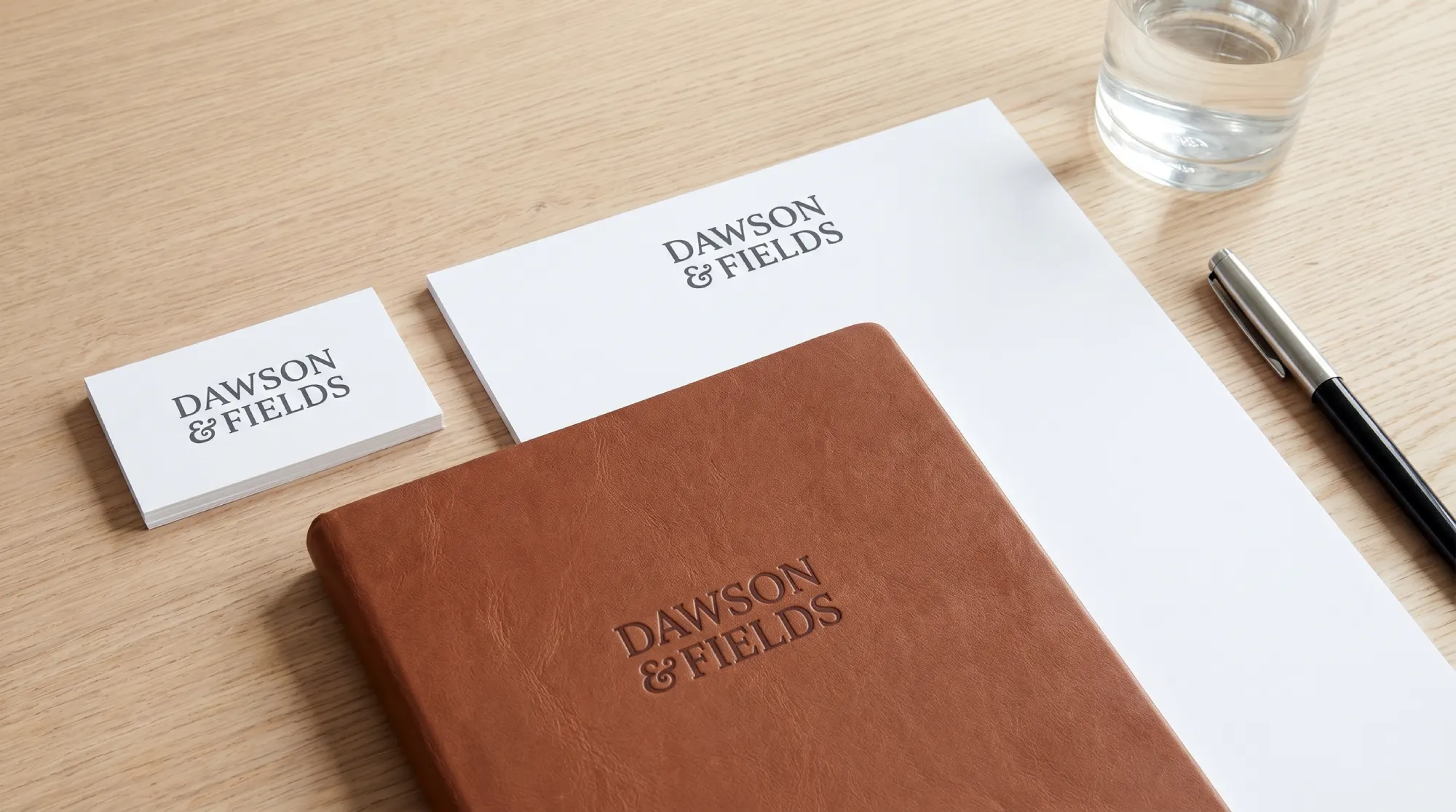
Choose based on where your firm's value is meant to live, not on which name looks more professional. A personal name signals that clients are buying one expert's judgement. A branded name signals they are buying a transferable system – process, team, collective capability. Neither is better. The mistake is choosing one while building the other.
- A personal name concentrates trust and referral equity in an individual, which helps early and complicates succession later.
- A branded name lets value accrue to the organisation, which is essential if you plan to grow a team, recruit senior talent, or sell.
- The decision is reversible but expensive – retrofitting a brand onto a personal name after a firm has scaled forfeits years of accumulated recognition.
A professional services firm's name signals its operating model – a personal name implies clients buy one expert's judgement, a branded name implies a transferable system.
What Your Firm's Name Signals About Where Its Value Lives
“Smith Advisory” and “Northstar Advisory” are selling two different things, and every prospect knows it before the first meeting.
Smith Advisory says: you get Smith – his experience, his calls, him in the room.
Northstar Advisory says: you get an organisation – a method, a bench, a result that doesn't depend on which partner picks up the phone.
The name isn't decoration. It's the shortest possible description of the underlying operating model.
This is the reframe most naming advice misses. The ranking articles argue personal vs branded as a contest of identity styles – traditional against modern, warm against corporate. That framing sends firms to the wrong criteria.
The real question is not which name feels more credible. It is whether the name matches the machine you are building. A boutique where two named partners personally deliver every engagement, and clients would feel short-changed meeting anyone else?
The personal name is honest – it describes the product. A firm hiring associates specifically so the founder can step back? A personal name on that firm is a lie the market eventually notices.
Hinge Research, the professional-services marketing firm, has found that visible individual expertise is one of the most common criteria buyers use to select a firm, and often the factor that decides the win.
That looks, at first, like an argument for personal names. It is the opposite. It explains why the mismatch is dangerous – if buyers are drawn in by a named expert's visible authority, and the firm has quietly become a team-delivered business, the name keeps making a promise the delivery no longer keeps.
The expertise that won the pitch belongs to a person the client may never work with.
“A name is the shortest sentence a firm ever writes about itself. “Buy my judgement” and “buy our system” are different businesses, different valuations and different succession plans. Firms rarely fail because they picked the wrong one. They fail because they picked one and built the other.”
What the Name Does to Your Firm's Saleability and Succession
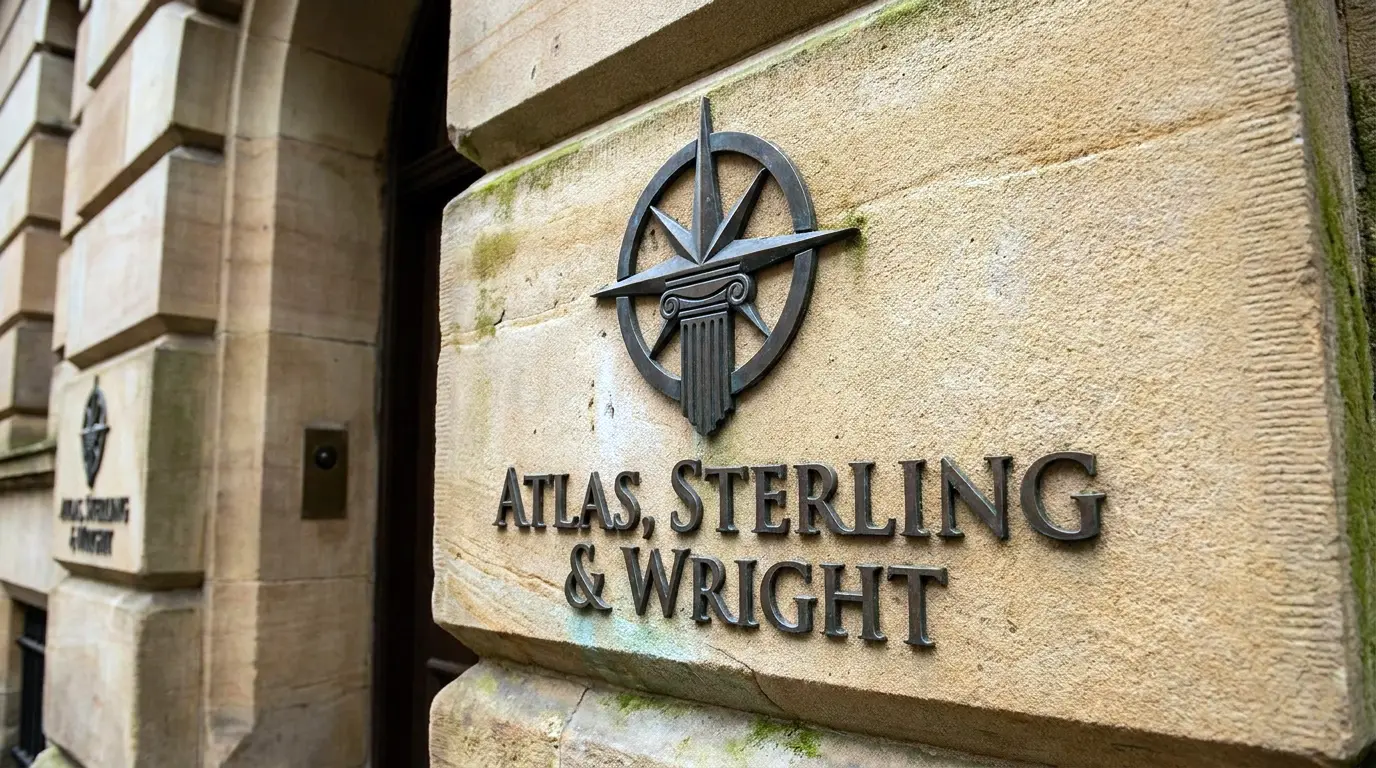
A firm named after its founder carries a structural discount into every acquisition conversation, because the buyer has to price the risk that the asset walks out when the founder does. This is not abstract.
Law-firm consolidation is running hot: Fairfax Associates recorded 59 US-involved law-firm mergers in 2025, up from 50 in 2024, and Reuters reported the count rising 18% year over year.
Firms are buying and being bought. When the name and the value both live in one person, the seller hands the buyer a reason to discount.
The succession mechanics are where personal names bite hardest for a 50–200 person firm. Fairfax Associates also reported that 76% of 2025 mergers involved at least one firm with between five and 20 lawyers – smaller practices folding into larger platforms, exactly the transition point where a founder-named firm discovers its equity is trapped.
The clients were sold on a name. The name is retiring.
What transfers? A branded name doesn't solve retirement, but it means the equity you spent twenty years building stays with the entity rather than leaving with the person.
There is a genuine counter-case, and it deserves to be stated plainly. Plenty of founder-named firms sell perfectly well – the name becomes a heritage asset the acquirer keeps precisely because clients trust it.
The distinction is not “personal names hurt valuations”. It is that a personal name only holds its value in a sale when the firm has also built transferable delivery underneath it, so the buyer is purchasing a system that happens to carry a respected name, not a single retiring individual.
The name being personal is survivable. The value being personal is what gets discounted.
The correction is a sequencing one. Decide what you are building – an expert's practice or a transferable business – before you decide what to call it.
Firms get this backwards: they pick the name that flatters them today, then build an operating model that contradicts it, and pay the difference years later when someone finally reads the contradiction out loud.
What the Name Signals to the Senior People You Want to Hire
A firm named after its founder makes recruiting ambitious senior talent measurably harder, because a name on the door tells a prospective partner whose firm this really is.
The candidate you most want – the one with their own following, capable of building a practice – reads “Hartley & Associates” and hears “you will always be an associate in Hartley's firm.”
A branded name leaves room for them to become an owner of something, not a hire inside someone else's name.
This connects directly to the internal alignment problem that kills deals.
The 2025 Edelman–LinkedIn B2B Thought Leadership Impact Report, drawing on responses from nearly 2,000 global professionals, found that more than 40% of B2B deals stall due to internal misalignment within buying groups.
A firm that cannot align its own partners around a shared identity – because the identity belongs to one of them – carries that misalignment into every pitch. The prospect notices when three partners describe the firm in three different ways.
Why AI-Era Buyer Research Has Raised the Cost of Getting This Wrong
The cost of a name whose value lives in one person's head has risen sharply, because buyers increasingly meet firms through AI-generated summaries before they ever meet a partner.
Thomson Reuters' 2026 AI in Professional Services Report, which surveyed more than 1,500 professionals across 27 countries, found organisation-wide AI usage almost doubled from 22% in 2025 to 40% in 2026, with a majority of individual professionals now using publicly available tools such as ChatGPT.
For the first time, the first impression of your firm is often assembled by a machine.
A machine cannot summarise a reputation that lives in one partner's phone contacts. Ask ChatGPT “who are the best mid-market tax advisors in the North West”, and it answers from what's legible – published thinking, a discoverable team, and institutional presence.
The founder, whose authority is thirty years of lunches, doesn't appear. His firm was on every shortlist that ran through his network. It's on none of the shortlists that a buyer's AI assistant now builds first.
This does not mean personal names are finished. It means a personal name now has to be backed by institutional proof – published thinking, a legible team, a discoverable body of work – so that when a buyer's AI assistant is asked “who are the best firms for X”, the answer isn't dependent on someone already knowing the founder's name.
The firms most exposed are those whose reputations were built entirely on a network that AI cannot see. If you are weighing this alongside the broader mechanics of naming a professional services firm, machine-legibility now belongs on the checklist next to trademark and domain.
“Our Clients Come From Referrals, Not Search”
Referral-led firms need this decision more than search-led firms, not less, because referral equity is the most person-dependent asset a firm owns. The objection sounds decisive: if our work comes from relationships, the name is irrelevant.
The opposite is true. A referral is one person vouching for another – and when the vouching attaches to an individual rather than a firm, every referral quietly reinforces that the value lives in a person, not an organisation. That is fine until that person retires, gets sick, or wants to sell.
The harder version of the objection is worth answering honestly: relationships genuinely do outperform names in professional services, and a great name has never won an engagement that a weak reputation lost. Correct.
The name is not the winning factor. What the name does is decide where the equity from all that winning accumulates – in the founder's personal brand, or in the firm's.
Two identical referral-led firms, same clients, same results: the one built under a branded identity can be handed on or sold; the one built under a founder's name largely cannot. The referrals were never the question. Where their value lands is.
How to Decide – and When, in a Rebrand

Match the name to the operating model you are actually building, then decide before the rebrand's visual work begins – not after.
The sequence matters because a logo, a website and a launch built around the wrong name compound the cost of correcting it. Most firms brief the designer first and interrogate the name last. Reverse it.
If your firm is… | The name should signal… | Because… |
|---|---|---|
Two named experts, personally delivering every engagement | Personal | The name honestly describes the product clients are buying |
A founder building a team to eventually step back | Branded | A personal name will contradict the model and trap equity |
Preparing for acquisition in 3–5 years | Branded (or personal name + transferable delivery) | Buyers discount value that is associated with a named individual |
Recruiting senior partners with their own followings | Branded | A founder's name signals whose firm it will always be |
Heritage practice with deep client trust in the name | Personal, backed by institutional proof | The name is an asset only if delivery is already transferable |
Referral-led and planning succession | Branded | Referral equity must transfer to the entity, not the person |
The judgement call the table can't make for you is the honest one: which firm are you actually building, stripped of how you'd like to describe yourself at a dinner party?
A firm of the size to be running a proper brand naming workshop should treat this as the first agenda item, not a downstream design choice – because everything visual is a consequence of it.
The Verdict
The personal vs branded debate was never about which name looks more professional. It is about where you have decided your firm's value should live – and whether the name you're about to choose tells the truth about that decision.
A firm buying its own founder's judgement should say so. A firm building a transferable system should say that instead. The failure mode is not picking the “wrong” style.
It is picking one identity while quietly building the other, and paying the difference at the exact moment – a sale, a retirement, a senior hire – when you can least afford it.
Do one thing today: write down, in a sentence, what a client is actually buying when they hire you – one person's judgement, or an organisation's capability. If your firm's name and that sentence disagree, you have found your rebrand's real starting point.
To see exactly where that gap is costing you commercial ground, request a free Brand Equity Audit™ – a structured diagnostic that shows where your brand is leaking value and what to do about it.
Professional Services Firm Naming FAQs
Is it true that founder names hurt professional services firms?
No, a founder's name only hurts when the firm's value has become team-delivered while the name still promises one expert. A founder name backed by transferable delivery can be a heritage asset that an acquirer keeps. The liability is the mismatch, not the personal name itself.
How does a firm's name affect its acquisition value?
A name concentrating value in one individual invites buyers to discount for the risk that the asset leaves when that person does. Fairfax Associates recorded 59 US-involved law-firm mergers in 2025; in acquisition talks, equity tied to a retiring named founder consistently raises harder valuation questions than equity held by the entity.
What's the difference between a personal name and a branded name strategically?
A personal name signals clients are buying one expert's judgement; a branded name signals they are buying a transferable system of process, team and collective capability. The strategic difference is where value accumulates – in an individual's reputation, or in the organisation that can be grown, staffed and sold.
When should we decide on the name during a rebrand?
Before any visual work begins. The name declares your operating model, and logo, website and launch all inherit from it. Firms that brief a designer first and settle the name last build expensive assets around a decision they hadn't yet made properly, then pay to correct them.
Does the firm name matter if our clients come from referrals?
Yes – referral-led firms are the most person-dependent of all, so where referral equity accumulates matters more, not less. A referral attached to an individual reinforces the value that lives in a person. A branded identity lets that same referral equity build within an entity that can be transferred or sold.
Will a personal name make it harder to recruit senior talent?
Yes – ambitious senior candidates capable of building their own practice read a founder's name as a permanent statement of whose firm it is. A branded name leaves room for them to become owners of a shared organisation rather than hire inside someone else's name.