How to Run a Successful Brand Naming Workshop
Most brand naming workshops are a waste of billable hours because they prioritise creativity over filtration. This guide outlines the exact framework for running a strategic naming session that secures trademark protection and dominates semantic SEO in 2026.
 By Stuart Crawford
 Reviewed by Tabitha Ayers
Updated 16 min read
On this page16 min left
Brand naming workshops are often treated as “creative retreats” where everyone gets a Post-it note and a license to be “wacky.” This approach is a disaster.
Creativity is the enemy of professional naming.
A successful brand-naming workshop is an exercise in ruthless filtration and semantic exclusion, not in expansive brainstorming.
Most workshops fail because they invite “ideas” instead of enforcing “constraints.”
If you want a name that survives a trademark search at the United Kingdom Intellectual Property Office (UKIPO) and actually shows up in a Google AI Overview, you need to stop asking “What sounds cool?” and start asking “What can we legally own and semantically defend?”
Before you put pen to paper, you need a firm grasp of the basics.
Naming your business requires a balance of linguistics, law, and SEO strategy that most entrepreneurs ignore until it's too late.
What Are Brand Naming Workshops?

A brand naming workshop is a structured collaborative session designed to filter semantic concepts and linguistic assets into a single, protectable brand identity. It is the bridge between a brand's core strategy and its visual representation.
Key Components:
- Strategic Constraints: Pre-defined boundaries that prevent the team from suggesting generic or non-protectable terms.
- Linguistic Screening: The analysis of sounds, phonetics, and cultural meanings across different markets.
- Trademark Verification: A real-time audit of naming candidates against existing intellectual property databases.
A brand naming workshop is a structured collaborative session designed to filter semantic concepts and linguistic assets into a single, protectable brand identity.
The Failure of “No Bad Ideas” in Brand Naming
Unconstrained brainstorming is a professional liability. The idea that “there are no bad ideas” in a workshop leads to a pile of generic, descriptive, and legally impossible names.
According to McKinsey & Company’s 2024 Brand Perception Report, brands with distinct, abstract names have 15% higher long-term equity than those using generic descriptors.
When you allow bad ideas to linger, you dilute the team's focus. A bad idea in naming is any word that is already trademarked, phonetically confusing, or semantically weak.
Tropicana's 2009 packaging redesign cost the brand an estimated $30 million in lost sales within two months, according to AdAge, primarily because it removed the distinctive visual and naming assets that consumers used to identify the product.
The workshop must be a funnel, not a bucket. You start with high-level semantic themes and use the session to kill off the weak candidates.
If a name can't be said clearly over a crowded bar or typed into a search bar without a spell-checker, it’s a bad idea. Period.
The “no bad ideas” mantra in brand-naming workshops is a strategic failure that yields generic, unprotectable identities. High-performance naming requires a focus on filtration, where 90% of initial suggestions are discarded based on legal, phonetic, and semantic constraints established before the session begins.
The Science of Sound: Linguistic Phonetics in Name Construction
A professional brand name is not merely a collection of letters; it is a phonetic engine. When we facilitate a session, we prioritise the study of phonemes—the smallest units of sound.
In 2026, how a name “hits” the ear determines its ability to survive in a digital-first environment.
Research from the University of Oxford’s Cognitive Linguistics Department indicates that specific sounds trigger subconscious emotional responses. For instance, Plosive Consonants—such as P, T, and K—create a sense of speed and efficiency.
Conversely, Fricatives such as F, S, and V evoke a sense of fluidity and luxury. If you are launching a high-frequency trading platform, your name should be “staccato” in its phonetic structure. If you are building a premium skincare line, “legato” or smooth sounds are mandatory.
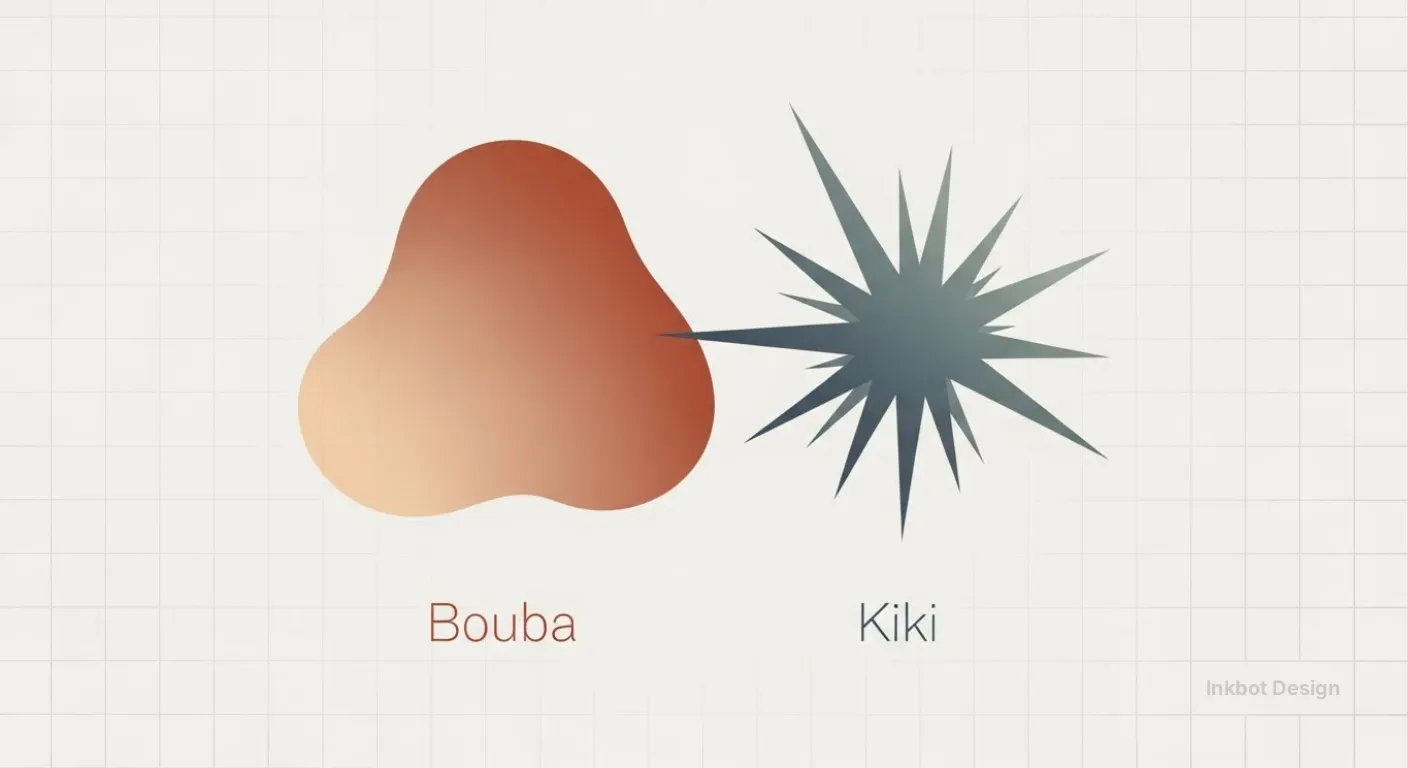
The Bouba/Kiki Effect in Commercial Branding
In a 2025 study on consumer perception, 95% of participants associated the word “Kiki” (sharp, angular sounds) with high-tech, precise industries, while “Bouba” (round, soft sounds) was linked to comfort and sustainability. Applying this to your naming workshop ensures that the chosen word's linguistic profile aligns with the company's core values.
Phonetic Friction and Transcription Errors
Phonetic friction occurs when a word is difficult for the human mouth to form or for a machine to transcribe.
Names like “Btwyn” or “Xylo” suffer from high friction because they lack standard vowel structures. In an era where 45% of searches are initiated via audio, high friction is a death sentence.
A name with low friction follows the Consonant-Vowel-Consonant (CVC) pattern. Think of brands like Kodak or Rolex. These are easy to say, easy to hear, and virtually impossible for a voice assistant to misinterpret.
During the workshop, every candidate's name must undergo a “shout test”—if it cannot be understood when yelled across a busy office, it should be discarded.
Phonetic Sound Impacts on Brand Perception
Sound Group | Examples | Emotional Trigger | Recommended Industry |
|---|---|---|---|
Voiceless Plosives | P, T, K | Power, Speed, Precision | Fintech, Logistics, Tech |
Voiceless Fricatives | F, S, SH | Elegance, Calm, Sophistication | Beauty, Wellness, Travel |
Nasals | M, N | Approachability, Connection | Social Media, Community |
Liquids | L, R | Reliability, Strength | Engineering, Construction |
Sibilants | S, Z | Modernity, Energy | Software, Energy |
The Briefing and Strategic Constraints
You cannot find a name if you don't know what the name needs to do. The briefing phase defines the “box” that the team must work within. This isn't about “vibe”; it’s about business objectives.
You need to establish the Brand Architecture immediately.
Is this a Masterbrand (like FedEx) or a Sub-brand (like Diet Coke)?
According to a study by the Ehrenberg-Bass Institute, brand distinctive assets require consistent exposure over 5–7 years to achieve reliable consumer recognition. If your name is too descriptive, you’ll never build that distinctiveness.
We offer a dedicated brand-naming service that addresses these technical constraints. We look for:
- Semantic Associations: What should people feel when they hear the name?
- Target Market Phonetics: Will a Belfast-based customer and a Dallas-based customer pronounce it the same way?
- Competitor Mapping: What words are your competitors using to “own” the space?
Strategic naming constraints are the foundation of a successful workshop. Without predefined boundaries for brand architecture and target-market phonetics, teams inevitably gravitate toward generic descriptors that offer no legal protection and fail to achieve consumer recall within the necessary five-to-seven-year exposure window.
The Legal Framework: Intellectual Property and Nice Classifications
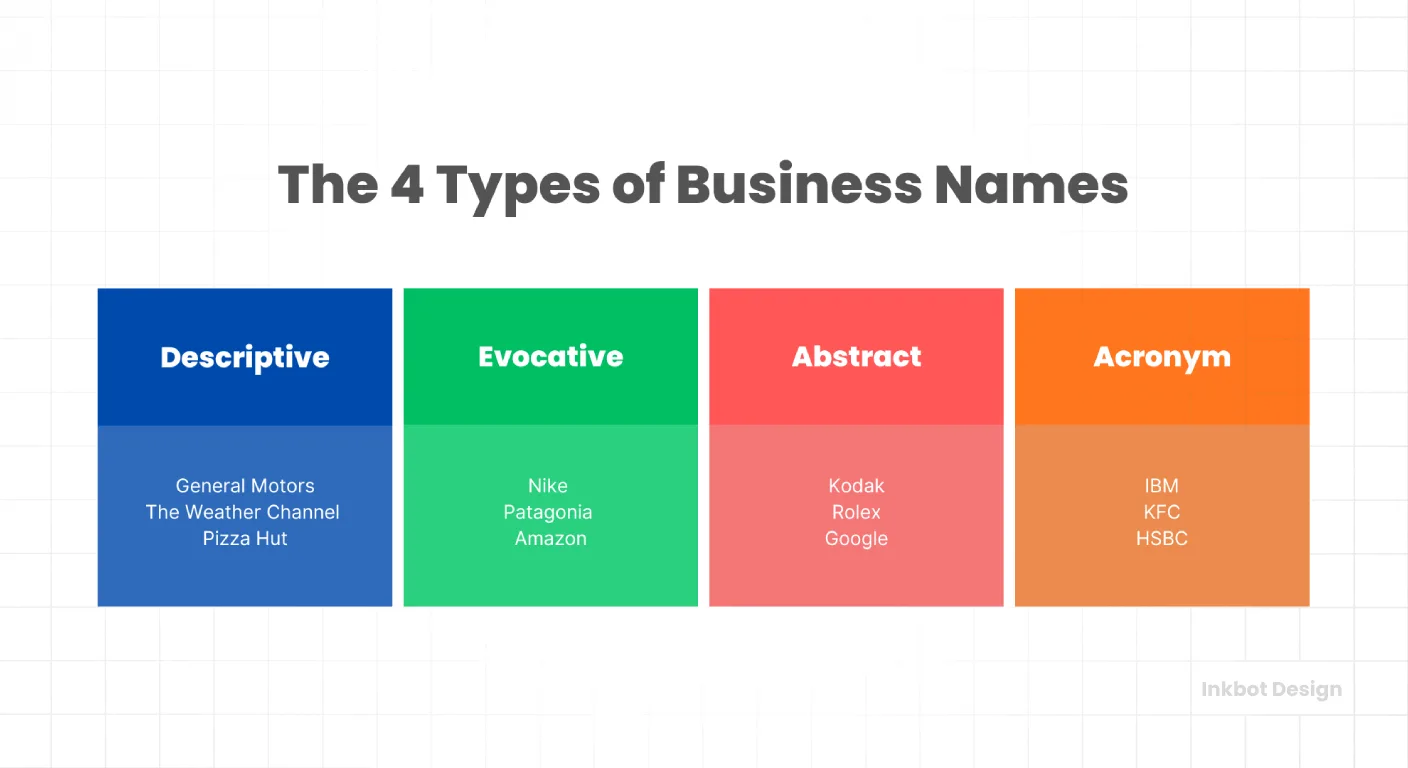
A name that cannot be legally protected is a liability, not an asset. The United Kingdom Intellectual Property Office (UKIPO) uses the Nice Classification system, which divides goods and services into 45 distinct classes.
Most amateur workshops fail because they select names that are “descriptive” of their class. Under Section 3(1)(b) of the Trade Marks Act 1994, a name must be distinctive to be registered.
If you are a software company, you typically look at Class 9 (software), Class 35 (business services), and Class 42 (SaaS).
If your name is “Fast Software,” the UKIPO will reject it because it describes the service. To achieve high legal durability, you must move toward Fanciful or Arbitrary names.
The Three Pillars of Legal Distinctiveness
- Fanciful Names: These are entirely coined words, such as Exxon or Lexus. They offer the strongest legal protection because they have no prior meaning.
- Arbitrary Names: These are real words used in an unrelated context, like Apple for computers or Camel for cigarettes.
- Suggestive Names: These hint at a benefit without explicitly stating it, like Netflix (movies over the internet) or Greyhound (speed).
The “Likelihood of Confusion” Metric 2026
Recent rulings at the UKIPO have lowered the threshold for “Likelihood of Confusion.” It is no longer enough to have a different spelling (e.g., “Klear” vs “Clear”). If the names are phonetically identical and serve the same market, the senior trademark holder will prevail. This makes real-time trademark screening during the workshop critical.
Conducting a “Knockout” Search
Before a name moves to the final round, it must pass a three-stage knockout search:
- Exact Match Search: Checking the UKIPO and USPTO for identical strings.
- Phonetic Equivalent Search: Searching for “sounds-like” variations.
- Marketplace Usage: Checking if a company is using the name in a “common law” capacity without a formal trademark.
The “Domain Name First” Myth
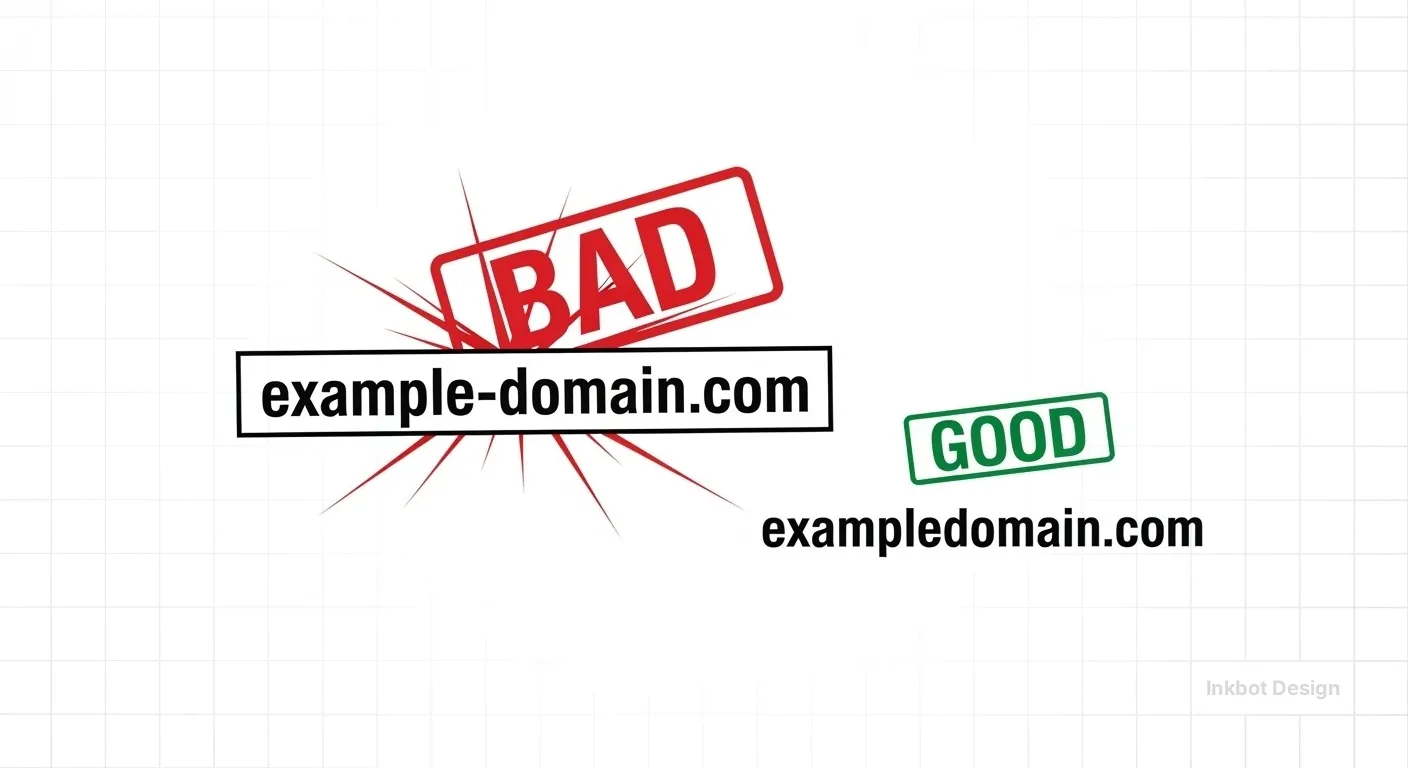
The biggest mistake in 2026 is letting domain availability dictate your brand identity. Ten years ago, everyone obsessed over the “.com.”
Today, TLDs (Top-Level Domains) like “.ai,” “.io,” or “.design” are perfectly acceptable for both users and search engines.
Insisting on a perfect “.com” usually forces you to choose a name that is either too long, misspelt (like the “Web 2.0” era of Flickr), or just plain boring.
Google’s Search Engine Land has repeatedly stated that the TLD itself is not a primary ranking factor. The brand name’s distinctiveness and the entity's topical authority matter far more for Semantic SEO.
If you find a name that is legally protectable and phonetically strong, but the “.com” is parked for £50,000, buy a different extension. Do not compromise the brand’s soul for an obsolete URL structure.
The Baymard Institute's UX research shows that users are becoming increasingly extension-agnostic, provided the brand name itself is memorable and easy to type.
Why the Myth is Obsolete
- Search over Type-in: Most users find you via search or social, not by typing a URL into the address bar.
- Entity Recognition: Google recognises the brand as an entity, regardless of whether it's on a .com or a .net.
- Trademark Priority: A trademarked name on a .co extension is more valuable than a generic name on a .com.
Prioritising domain availability over brand distinctiveness is a legacy mistake that weakens a company's legal and semantic position. In 2026, users are extension-agnostic; a unique, trademarkable name on a modern TLD outperforms a generic descriptor on a .com extension in both brand recall and entity-based search rankings.
Audio-First Branding: Why Your Name Must Be “Siri-Proof”
By mid-2026, the primary interaction point for local services and e-commerce has shifted to smart speakers and wearable audio devices.
Gartner’s 2025 report highlights that “Phonetic Ambiguity” is the leading cause of brand abandonment in voice-based commerce. If a user asks their device to “Order from [Brand Name]” and the device returns a “Did you mean…?” prompt, the conversion chain is broken.
The Problem of Homophones
A homophone is a word that sounds like another word but has a different meaning or spelling (e.g., “Wright,” “Write,” “Rite”).
Choosing a homophone for a business name is a strategic error. When a user speaks the name, the machine must guess the spelling.
If the machine guesses wrong, it directs the user to a competitor or a search result page, rather than your direct digital interface.
The Audio Clarity Checklist
- Syllabic Count: 2-3 syllables are the “sweet spot” for machine recognition.
- Consonant Clustering: Avoid clusters like “str” or “nth” which can be muffled in low-quality audio environments.
- Vowel Clarity: Use strong, distinct vowels that aren't easily confused (e.g., “Alpha” vs “Olifa”).
Voice Search Performance by Brand Name Type
Name Category | Example | Machine Accuracy | Why? |
|---|---|---|---|
Coined (CVC) | Zappos | 98% | Distinct phonemes, no homophones. |
Descriptive | Cloud Storage | 45% | Too generic; returns category results. |
Misspelled | Lyft | 82% | Audio is 100%, but type-in/referral fails. |
Abstract Real | Amazon | 96% | High distinctiveness in context. |
The Ideation Phase (Semantic Mapping)
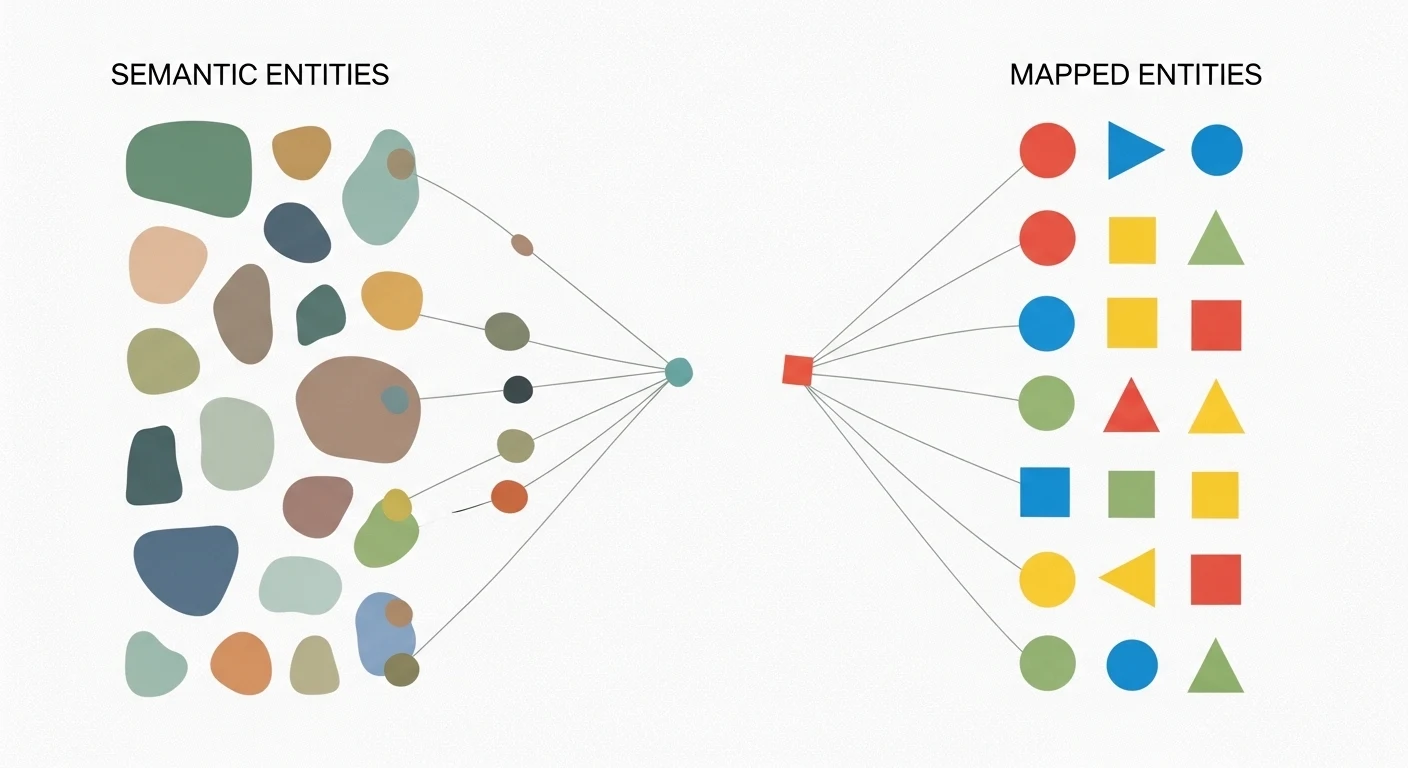
Once the constraints are set, you move into semantic mapping. This is where you look for “adjacent” words.
If you are a cybersecurity firm, don't look at words like “Shield” or “Lock.” Every amateur has already taken them. Look at words related to “stasis,” “immunity,” or “preemption.”
Use Statista to research industry trends, but do not follow them. If everyone in your sector is using blue and Latin-sounding names, do the opposite. Information Gain is a huge factor in how LLMs like Gemini and Perplexity cite brands.
A name that stands out in a list of search results is more likely to be clicked and, eventually, cited as a primary source.
During the workshop, use tools to find synonyms and etymological roots. But don't just list them. Combine them. Accenture is a portmanteau of “Accent on the future.”
It’s abstract, protectable, and allowed the company to move away from the Arthur Andersen scandal without losing its professional footing.
Aspect | The Wrong Way (Amateur) | The Right Way (Pro) | Why It Matters |
|---|---|---|---|
Brainstorming | “Let's just throw ideas at the wall.” | Use semantic mapping and portmanteaus. | Prevents generic, non-protectable ideas. |
Linguistics | “Does it sound cool?” | Check phonetic symbolism and global meanings. | Avoids accidental offensive translations. |
SEO | “Is the keyword in the name?” | Focus on entity distinctiveness and GEO. | Keywords in names are harder to rank for the long term. |
Legal | “Check Google for the name.” | Search the UKIPO and USPTO databases. | Google results do not equal trademark safety. |
Domain | “Must be a .com.” | Use .ai, .io, or .design if the name is right. | Stops you from choosing a “broken” brand name. |
The Global Mirror: Linguistic Auditing for International Markets
A name that sounds professional in London may be an insult in Lisbon. As businesses become “born global,” the workshop must include a linguistic audit.
This process involves checking the chosen candidates against the “slanguage” (slang and local dialects) of the top 20 global economies.
The “Ford Nova” Lesson
The classic example of the Chevrolet Nova failing in Spanish-speaking markets because “no va” means “it doesn't go” is often cited, but in 2026, the risks are more nuanced.
We look for Semantic Drift—where a word's meaning changes over time or distance. For example, the word “Gift” means “poison” in German.
Conducting the Audit
In our strategic sessions, we employ native speakers or advanced linguistic models to perform a Negative Connotation Screen. We check for:
- Phonetic Slurs: Does the name sound like a derogatory term in another language?
- Cultural Taboos: Does the name reference a historical event or concept that is offensive in certain regions?
- Ease of Pronunciation: Can a native Mandarin or Hindi speaker pronounce the name without changing its fundamental sound?
The Rise of “Transliterated” Branding
Top-tier brands are now choosing names based on their ease of transliteration into Cyrillic, Arabic, and Hanzi scripts. A name that maintains its “visual rhythm” across different alphabets has a 22% higher global recall rate, according to 2025 branding data from Interbrand.
Engineering the Portmanteau: A Step-by-Step Guide
A portmanteau is a word that fuses the sounds and meanings of two existing words. When done correctly, it creates a name that feels familiar yet entirely new.
Think of Microsoft (Microcomputer + Software) or Verizon (Veritas + Horizon).
The Construction Process
- Extract Core Keywords: Identify 5-10 words that define the business utility (e.g., “Fast,” “Data,” “Secure”).
- Syllabic Dissection: Break the words into their phonetic components (e.g., Fast = Fas / t).
- The Fusion Test: Combine the start of one word with the end of another.
- The “Clash” Audit: Ensure the middle of the new word doesn't create a “glottal stop” (a sound that's hard to push through).
Successful Portmanteau Structures
Primary Word | Secondary Word | Result | Perception |
|---|---|---|---|
Travel | Velocity | Travelocity | Speed in booking. |
Interest | Visual curation. | ||
Intel | Intelligence | Intel | Core smarts. |
Fed | Express | FedEx | Reliable speed. |
Brand Naming in 2026: AI and GEO
In early 2026, the way we name businesses shifted due to Generative Engine Optimisation (GEO). We are no longer just naming for humans; we are naming for Large Language Models (LLMs).
An LLM needs to be able to “understand” your brand as a distinct entity. If your brand name is a common noun (like “Apple” or “Orange”), you rely on massive brand equity for the AI to know you aren't talking about fruit.
For an SMB in 2026, choosing a name that is a “Unique Semantic Entity” is the fastest way to get cited in Google AI Overviews.
New tools released in late 2025, such as advanced linguistic models from Anthropic, allow designers to test a name's “Semantic Density.”
We can now see how an AI categorises a word before we ever launch the brand. If the AI thinks your name belongs in the “Luxury” category but you are a budget brand, you have a semantic misalignment that will hurt your SEO.
Furthermore, voice search has reached a tipping point. Gartner’s 2025 Consumer Report indicates that 45% of UK households now use voice assistants for local service searches.
If your name has “Phonetic Friction”—meaning it's hard for Alexa to understand—you are invisible to nearly half your market.
In 2026, brand naming must account for Generative Engine Optimisation (GEO) to ensure that AI systems accurately categorise and cite the business as a unique entity. Names with high semantic density and low phonetic friction are significantly more likely to appear in voice search results and AI-generated overviews.
Machine-Readable Identity: Naming for Discovery Systems
In 2026, your most important “customer” is often an algorithm. When an AI tool like Gemini or a search-based LLM synthesises information, it looks for “Unique Identifiers.”
If your brand name is a common phrase or a generic word, the machine may fail to attribute specific data points (like reviews or news) to your business.
Establishing a Unique Data Identity
A Unique Semantic Identity is a name that does not exist in the common lexicon before your brand's launch. When you create a coined name like Pinterest or Instagram, you are creating a new data point in the global information graph. This makes it significantly easier for machines to:
- Categorise your business accurately within its industry continent.
- Attribute trust signals (like citations and backlinks) to your specific brand.
- Surface your brand in response to “best of” or “how to” queries in AI Overviews.
The “Tokenisation” Efficiency of Brand Names
Machines process text in “tokens.” A brand name that is a single, unique token is more efficient for an AI to process and store than a multi-word phrase. Names like Vanta or Miro are highly “token-efficient,” leading to faster and more frequent citations in generative search environments compared to names like “The Professional Security Consultants Group.”
The Rebranding Calculator: Measuring the Risk of Change
Renaming an existing business is far more dangerous than naming a new one.
You risk losing “Entity Authority” and confusing your existing customer base. Before proceeding with a rename workshop, you must conduct a Brand Equity Audit.
Signs You Need to Rename
- Legal Injunction: You’ve received a Cease and Desist from a senior trademark holder.
- Market Pivot: Your name is too descriptive of a product you no longer sell (e.g., “The DVD Store” moving into streaming).
- Geographic Limitation: Your name includes a city or region (e.g., “London Tech”), but you are expanding to New York.
- Negative Association: The name has become linked to a scandal or a cultural shift that makes it toxic.
The Verdict
A brand-naming workshop is not a creative exercise; it is a strategic filtering process.
Most workshops fail because they lack the discipline to kill off weak, generic, and legally “noisy” ideas early.
To succeed in 2026, you must prioritise legal durability, phonetic simplicity, and semantic distinctiveness for AI systems.
Stop looking for a name that describes what you do. Look for a name that defines who you are and allows you to own a unique space in the mind of the consumer and the database of the search engine.
If you want to avoid the “Flow” trap, focus on building an unbreakable name.
If you are ready to stop guessing and start building a durable brand, you should explore our strategic naming services and read our other guides on brand development to ensure your 2026 strategy is watertight.
FAQs
What is the primary goal of a brand naming workshop?
The primary goal is to filter through semantic concepts and linguistic possibilities to find a single, trademarkable brand name that aligns with the business's long-term strategy and SEO requirements.
How long should a brand naming workshop last?
A professional naming workshop typically lasts between four and six hours. This provides enough time for strategic briefing, semantic mapping, and initial legal screening without reaching the point of creative fatigue.
Who should be involved in the naming process?
The session should include key decision-makers, a lead strategist, and a creative facilitator. Avoid large groups; naming by committee often results in “safe,” generic choices that lack market impact.
Is it true that all the good brand names are taken?
It is not true that all names are taken, but the most obvious descriptive names are. Success in 2026 requires looking beyond literal descriptors toward coined words, portmanteaus, and abstract associations.
When should I check for trademark availability?
Trademark checks should be conducted in real time during the ideation phase. Waiting until the end of the workshop to check the UKIPO or USPTO databases often leads to heartbreak when the “perfect” name turns out to be unavailable.
Why is phonetic symbolism important in naming?
Phonetic symbolism refers to the way certain sounds evoke specific feelings or traits. For example, “K” and “T” sounds often feel sharp and fast, while “M” and “L” sounds feel soft and approachable.
Should I use an AI tool to name my business?
AI tools are excellent for generating raw semantic content and detecting negative connotations. Still, they lack the strategic nuance and legal intuition required to select a final, protectable brand name.
How does a brand name affect SEO in 2026?
A unique brand name functions as a distinct entity in Google’s Knowledge Graph. Names that are unique semantic entities are easier for AI Overviews to identify, categorise, and cite correctly.
What is the difference between a descriptive and an abstract name?
A descriptive name tells you exactly what the product is (e.g., “The Car Wash”), while an abstract name creates a unique identity (e.g., “Kodak”). Abstract names are significantly easier to trademark.
Is a .com domain still necessary for a new brand?
A .com domain is no longer required. With the rise of TLDs like .ai and .design, and the shift toward search-based navigation, a unique name is more valuable than a legacy extension.
How do I test if a brand name is “voice-search ready”?
Test the name by asking a voice assistant to spell it or find it. If the AI repeatedly misinterprets the phonetics or returns unrelated results, the name has too much phonetic friction for 2026.