Professional Services Brand Naming: A Governance Guide
Most professional services firms name by creative workshop, then discover the name won’t survive a merger, a partner exit, or an AI buyer’s shortlist. Naming is an operational asset governed by partnership agreements, service-line architecture and machine-readable discoverability. This guide reframes the decision for firms rebranding ahead of growth or acquisition.
 By Stuart Crawford
 Reviewed by Tabitha Ayers
Updated 13 min read
On this page13 min left
- What Professional Services Brand Naming Actually Is
- Why Intelligent Firms Treat Naming as a Creative Project
- The Turn: Naming Is Now a Pre-RFP Visibility Filter
- The Governance Layer Everyone Skips
- What This Means for a Firm About to Rebrand
- The Objection: “Our Clients Come From Referrals, Not AI”
- Naming as a System, Not a Name
- Where This Stands Now
- The Verdict
- Frequently asked questions
The last time a managing partner told me their firm name “just needs to feel more premium,” I asked who would own it after the next partner left.
Silence.
That silence is the whole problem with professional services brand naming, and it costs more than any font choice ever will. A name in a professional services firm is not a creative artefact.
It is an operational asset – written into partnership agreements, load-bearing across every service line, and now the single string of text an AI model uses to decide whether your firm appears on a buyer's shortlist at all.
Most firms discover this in the wrong order.
They run a naming workshop, fall for something clever, register the domain, and only later find the name cannot survive a merger, a service-line expansion, or a machine trying to classify what they actually do.
The naming decision gets locked before the architecture, governance, and digital reality that should have shaped it. For a firm rebranding ahead of a growth phase or acquisition, that sequence error is expensive to unwind.
Getting the naming discipline right sits at the centre of any serious brand naming programme.
What Professional Services Brand Naming Actually Is
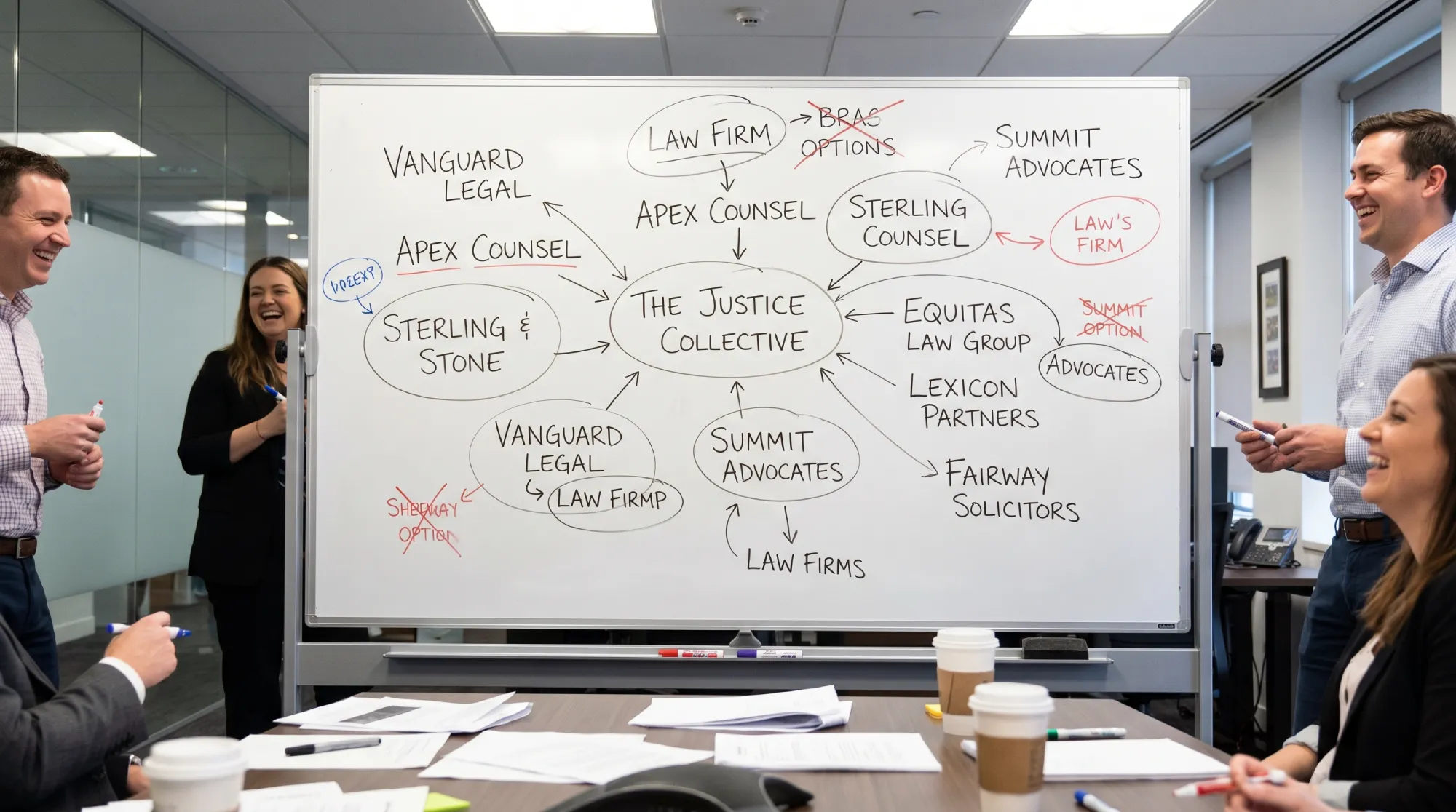
Professional services brand naming is the discipline of selecting and governing a firm's name as an operational asset – one that must survive partner changes, service evolution, and machine-readable discovery – rather than as a one-off creative choice. It sits upstream of the logo, website, and messaging, and its downstream consequences flow for years.
- A firm's name is embedded in partnership agreements, contracts, and domains, making a change to it a governance action rather than a design refresh.
- The name is the primary string an AI model uses to classify and shortlist a firm before a buyer visits any website.
- Distinctiveness matters far less than legibility: a name AI cannot classify vanishes from problem-category summaries.
Professional services brand naming is an operational asset governed by partnership agreements, service-line architecture, and AI-readable category language, not a one-off creative exercise.
Why Intelligent Firms Treat Naming as a Creative Project
The creative-project view is not stupid – it is the default for good reasons.
For most of the last century, professional services firms won work through relationships, referrals, and the reputation attached to a partner's surname. In that world, the name genuinely was a branding surface: it signalled heritage, gravitas, and personal accountability.
A name that “felt right” to the partners and the top-tier clients was doing its job because those clients were the only discovery channel available.
Design agencies reinforce this. The onetoo brand-strategy framework, one of the more thorough public naming processes, structures the work as a strategic brief, name generation, screening, testing, and decision – a fundamentally creative pipeline that produces 200–300 candidates and filters them.
It is a good process. It also assumes the hard part is invention.
For firms whose buyers still arrive by referral, that assumption holds well enough to keep producing names everyone in the room likes.
The prevailing view earns respect because, for a relationship-led firm with a stable partnership, a well-crafted name really has been sufficient. The problem is not that this view was ever wrong. The problem is that the discovery channel underneath it has moved.
The Turn: Naming Is Now a Pre-RFP Visibility Filter
The channel that made “distinctive and premium” enough has been replaced by machines that read names literally.
B2B buyers now assemble their initial vendor shortlists inside AI tools, and those tools classify a firm on the legibility of its name and category language – before any human at the firm is involved.
The evidence is no longer speculative.
The 2X AI Visibility Index (2026) found that 96% of B2B companies are effectively invisible in AI-driven early-stage buyer discovery, surfacing mainly when a buyer already knows their name; only 4.3% maintain a healthy discovery funnel appearing in early, problem-focused queries.
Responsive (2025), surveying more than 350 B2B buyers worldwide, found that one in four now use generative AI more often than conventional search when researching suppliers, and two-thirds rely on AI chatbots as much or more than Google or Bing when evaluating vendors.
Forrester Research (2025) reports that B2B AI-driven traffic is already growing at more than 40% per month.
Read those three findings together, and the mechanism becomes concrete. When a buyer asks an AI assistant “which firms handle cross-border tax disputes for mid-market manufacturers,” the model builds a 5–8 name longlist from how firms are described across their content and third-party sources.
A name that reads as a person, or as an opaque Latin coinage, gives the model nothing to attach to that problem. The firm is not rejected at the shortlist stage. It is never classified into the category in the first place.
“A name that cannot be classified is not a name that ranks poorly. It is a name that never enters the shortlist. In an AI-mediated market, the most expensive naming failure is not being disliked – it is being uncategorisable, and therefore invisible at the exact moment a buyer defines their problem.”
The Governance Layer Everyone Skips
The reason names fail is that firms decide them before deciding who owns them and what they must cover.
Naming in a professional services firm is bound to two documents, most creative processes never open: the partnership agreement and the service-line architecture.
Consider partner churn. A firm named after three founding partners has written those individuals into its brand equity.
When one exits retirement, dispute, or a rival poaching them, the name either misrepresents the firm or triggers a costly change. The Tanj analysis of founder naming makes the succession point, but stops at reputation.
The sharper issue is contractual: who has the right to the name, what happens to it on a partner's departure, and whether the partnership agreement even addresses it. Most do not. That is a governance gap disguised as a branding choice.
Service-line architecture compounds it. A firm named for what it did in 2015 – say, a compliance specialist – locks its category signal at that moment.
When it expands into advisory, restructuring, or transactions, the name actively works against discoverability, telling both humans and AI that the firm is narrower than it is.
The Starr Conspiracy's 2025–26 B2B rebranding analysis identifies M&A-driven architectural shifts as a primary force driving firms to rethink masterbrand versus sub-brand strategies. Naming decisions are now driven by corporate structure, not marketing preference.
What This Means for a Firm About to Rebrand
If the name is a governance asset, then the rebrand sequence most firms follow is backwards, and fixing the order is the highest-leverage change available. Architecture and discoverability decisions must precede name selection, not follow it.
The cost of inaction is measurable in the discovery data. Agency's Annual AI Visibility Index (2026) found that of the B2B marketers who have assessed how their brand appears in AI answers, 46% report their positioning as mixed or inaccurate, and only 25% monitor it regularly.
A firm that names first and checks later is very likely sitting in that 46%, misclassified by the models building its buyers' shortlists, with no one watching.
For a 50–200 person firm heading into a growth phase, every quarter of misclassification is a pipeline that forms without them in it.
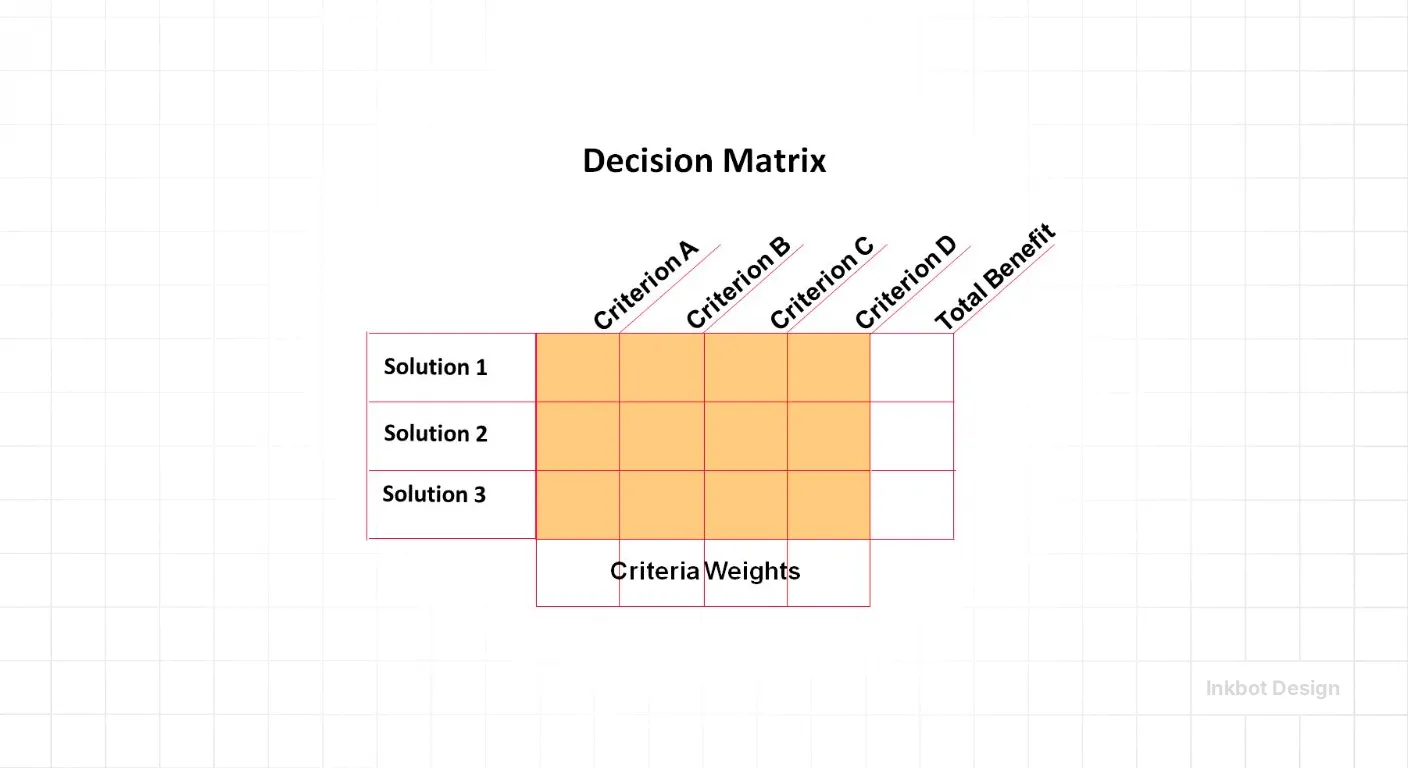
The practical correction is a sequence, not a slogan. Decide service-line architecture and masterbrand strategy first. Settle the governance – name ownership, succession, and what triggers a change – inside the partnership agreement.
Then, and only then, generate names against criteria that include machine legibility and category alignment, not just how they sound in the boardroom.
The Default Approach | What It Costs | The Better Approach | Why |
|---|---|---|---|
Name generated in a creative workshop first | Name conflicts with later architecture decisions | Fix service-line architecture before naming | The name inherits a stable structure to describe |
Founder surnames locked in | Misrepresents firm after partner exit; hard to sell | Name the method or category, govern ownership | Survives partner churn and eases acquisition |
“Distinctive and premium” as the brief | AI cannot classify the firm into a problem category | “Legible and category-aligned” as the brief | Enters AI shortlists at the problem-definition stage |
Trademark and domain checked; AI legibility ignored | Invisible in generative discovery | Test the name in AI prompts before deciding | Discovery now runs through AI as much as SERPs |
Naming owned by partners/brand team alone | Performs poorly in search and AI | Include SEO/AI-visibility owner in the decision | The name must work where buyers actually search |
Name treated as final creative deliverable | No plan for service or structural change | Name treated as a governed, revisable asset | Firms restructure; the naming system must flex |
The Objection: “Our Clients Come From Referrals, Not AI”
The strongest counter from this reader is that their pipeline is relationship-led, so AI discovery is someone else's problem – and it deserves an honest answer, not a dismissal. It is partly true today and rapidly less true each quarter.
Two things undercut the referral defence.
First, referral itself now routes through machines: the referred buyer still checks the firm in an AI assistant before the first call, and a name the model misclassifies undermines the referral's credibility at the verification step.
Second, the trend line is unambiguous. Forrester Research (2025) reports B2B buyers adopting AI-powered search at three times the rate of consumers, with generative engines expected to carry a fifth or more of organic discovery.
Responsive (2025) found the effect strongest in exactly the advisory-heavy categories professional services firms compete in. A firm can be referral-led and still lose the deals where the referral prompts a second look, as the name fails.
The honest concession: if a firm's entire book is locked, long-standing relationships with zero new-logo ambition, naming legibility matters less.
Almost no firm rebranding ahead of a growth phase fits that description. Growth means new buyers, and new buyers now start with a machine.
Naming as a System, Not a Name
The reframe the reader should now hold is that the deliverable was never a name – it was a naming system built to survive the three forces that break firms: partner churn, service evolution, and AI search.
This is where the creative-project model finally breaks down, and where the evidence lands.
The market is already moving this way. Preemp's State of Brand Naming 2025, analysing more than 10,000 brands across 21 naming methods, identifies a clear shift toward shorter, more pronounceable names that combine category clarity with distinctiveness, and greater scrutiny of how names perform in digital contexts, including AI prompts.
Professional services, still leaning on legacy surnames and abstract coinages, is the sector most out of step with that shift.
The naming-as-method cases the tanj analysis cites – McKinsey building on a methodology, Accenture signalling a new era, Ogilvy carrying a philosophy – succeeded precisely because the name pointed at what the firm does, not at who founded it. That is a system decision, not a creative flourish.
A naming system means the name is chosen against operational criteria (governance, architecture, machine legibility), owned explicitly in the partnership agreement, and stress-tested against the firm's own five-year structural plan before anyone debates typography.
Replace the creative brief with an operational one, and the name stops being a liability the firm manages and becomes infrastructure the firm compounds.
Where This Stands Now
AI-mediated discovery has moved from an emerging trend to a present-tense constraint on naming, and the 2025–26 data make the shift specific.
Forrester Research (2025) reports that 90% of organisations now use generative AI somewhere in their purchasing process, that B2B AI-driven traffic is growing more than 40% per month, and that Google's global search share recently fell below 90% for the first time in fifteen years as ChatGPT, Perplexity, Claude, and Google's AI Overviews gained ground.
The buyer behaviour underneath those numbers is what makes naming urgent. Responsive (2025) found buyers arrive well-informed – 37% run detailed comparisons and 18% conduct extensive due diligence before contact – and typically start with five to eight vendors before narrowing to three or fewer.
The Agency Annual AI Visibility Index (2026) adds that 81% of B2B marketing leaders call brand visibility in AI answer engines a blind spot, and responsibility for it is fragmented, with 26% of firms assigning no clear owner at all.
The Starr Conspiracy's 2025–26 analysis, meanwhile, shows leading firms already running AI-accelerated brand audits and phasing rollouts to protect active deals.
The composite picture: buyers build shortlists inside AI tools, most firms cannot see how they are classified, and almost none have assigned anyone to own the problem. A name that is legible to those models is no longer a refinement. It is the entry ticket to the shortlist.
The Verdict
Naming stopped being a branding decision the moment buyers started building shortlists inside machines that read names literally.
For a professional services firm, the name is now an operational asset – written into the partnership agreement, load-bearing across every service line, and the single string an AI model uses to decide whether the firm exists for a given problem.
Treating it as a creative project is not a small mistake. It is the sequence error that locks a firm into a name it will spend a decade apologising for.
The reframe holds under pressure. The 2X AI Visibility Index (2026) shows 96% of B2B firms are already invisible in early AI discovery.
Responsive (2025) shows a quarter of buyers preferring generative AI to search for vendor research. Forrester Research (2025) reports the channel is growing by more than 40% per month.
Preemp's 2025 analysis shows the wider market moving toward legible, category-aligned names while professional services cling to surnames and coinages. None of that is about distinctiveness. All of it is about whether a machine can classify the firm and a governance structure can hold the name steady through change.
So do this today: before you brief a single creative idea, write down what your firm's name must survive – the next partner exit, the next service line, the next buyer who asks an AI assistant to name the best firms for their problem.
If your current name fails any of those tests, the name is not the deliverable.
The system is. Request a free Brand Equity Audit™ at /services/brand-audits// and find out exactly where your name is costing you ground before your next rebrand locks the error in.
Frequently asked questions
Why is a firm's name considered a governance decision, not a branding one?
Because the name is embedded in partnership agreements, client contracts, and domains, changing it is a legal and structural change, not a design refresh. Ownership, succession rights, and change triggers belong in the partnership agreement, which makes naming a governance matter with branding consequences rather than the reverse.
How does professional services brand naming affect AI search visibility?
AI models classify a firm from its name and category language when building buyer shortlists. The 2X AI Visibility Index (2026) found that 96% of B2B firms were invisible during early AI discovery. A name a model cannot categorise never enters the problem-category summary, removing the firm before any human evaluation.
What's the difference between a distinctive name and a legible one?
A distinctive name stands out to humans; a legible name is easy for both humans and AI to classify into a category and problem. In an AI-mediated market, legibility matters more because a clever but opaque name gives models nothing to attach to a buyer's query.
Is it true that founder names hurt professional services firms?
Yes – founder names create succession, acquisition, and classification problems. They misrepresent the firm after a partner exits, deter buyers wary of individual-tied brands, and give AI models no category signal. Naming the method or category, as McKinsey and Accenture did, avoids all three.
When should a firm decide on its name during a rebrand?
After settling service-line architecture and masterbrand strategy, and after fixing name ownership and succession in the partnership agreement. Deciding the name first – the common sequence – locks it before the structure and digital reality that should shape it are known, forcing expensive corrections later.
Why do so many firms end up with names that no longer fit?
Because they name what the firm does at one moment, then expand. A name chosen for a compliance specialist actively signals narrowness once the firm adds advisory or transactional work. The Starr Conspiracy's 2025–26 analysis shows M&A and service-line expansion now driving most naming problems.
How much of B2B vendor research now happens through AI?
Responsive (2025) found that one in four B2B buyers use generative AI more often than conventional search for supplier research, and two-thirds rely on AI chatbots as much or more than Google or Bing. Forrester Research (2025) reports that AI-driven B2B traffic is growing by more than 40% per month.
What should the naming brief include that most firms omit?
Machine legibility, category alignment, name ownership, and resilience to partner churn and service change. Most briefs specify only tone and distinctiveness. Adding operational criteria – and involving the firm's SEO or AI-visibility owner – produces a name that works where buyers actually search.
Does naming still matter if our clients come from referrals?
Yes – referred buyers still verify a firm in AI tools before the first call, so a misclassified name undermines the referral during verification. Referral-led firms pursuing growth acquire new buyers who start with a machine, making legibility relevant even when the current book is relationship-driven.
Who inside a firm should own the naming decision?
Partners set strategy, but the decision should include whoever owns SEO and AI visibility, plus legal input on the partnership agreement. Agency's 2026 index found 26% of firms assign no clear owner for AI visibility, which is how names that look good on a slide end up performing poorly in discovery.
What is the biggest risk of getting professional services brand naming wrong?
Being uncategorisable. The 2X AI Visibility Index (2026) shows most B2B firms are already invisible in early AI discovery. A name a model cannot classify keeps the firm off the shortlist at the moment a buyer defines their problem – a loss that never appears in analytics.
How is naming linked to a firm's acquisition value?
Names tied to individual founders reduce acquisition appeal, because buyers hesitate to purchase equity bound to people who may leave. A name built on a method or category transfers cleanly. Naming decisions are increasingly made with M&A architecture in mind, per The Starr Conspiracy's 2025–26 analysis.