B2B Buyer Psychology: Why Clients Choose the Firm They Can Defend
Professional services buyers rarely choose the strongest firm on paper. They choose the option they can defend to finance, legal, procurement and the board. Research from Gartner, Forrester and Edelman–LinkedIn shows buying groups are conflicted, risk-averse and full of hidden vetoes. Firms that make recommending them feel safe get shortlisted.


On this page8 min left
- B2B Buyers Choose the Decision They Can Defend
- “We already know B2B buyers are emotional.”
- “Fine, but I'm pitching to the person who signs.”
- “So we should look safe? That's how firms end up bland.”
- What your brand has to hand the internal champion
- The firm that is easiest to defend wins the room you're not in
- Frequently asked questions
Your next client will not hire the best firm on their shortlist.
They will hire the firm they can defend: to the finance director, to the partner who quietly preferred the incumbent, and to themselves in eighteen months if the engagement goes sideways.
You'll object to that. Most MDs do, usually because they can name clients they won on merit. Some of those wins were real.
The 2025 Edelman–LinkedIn B2B Thought Leadership Impact Report, from the communications firm Edelman and LinkedIn, found that more than 40% of B2B deals stall due to misalignment in the buying group.
That means a pitch you thought you lost on quality may have been lost in a meeting you never knew took place.
If a rebrand is on your roadmap, run it through this lens first — who inside your client has to defend choosing you, and what are you giving them to do it with? That question is where our brand positioning research starts.
B2B Buyers Choose the Decision They Can Defend
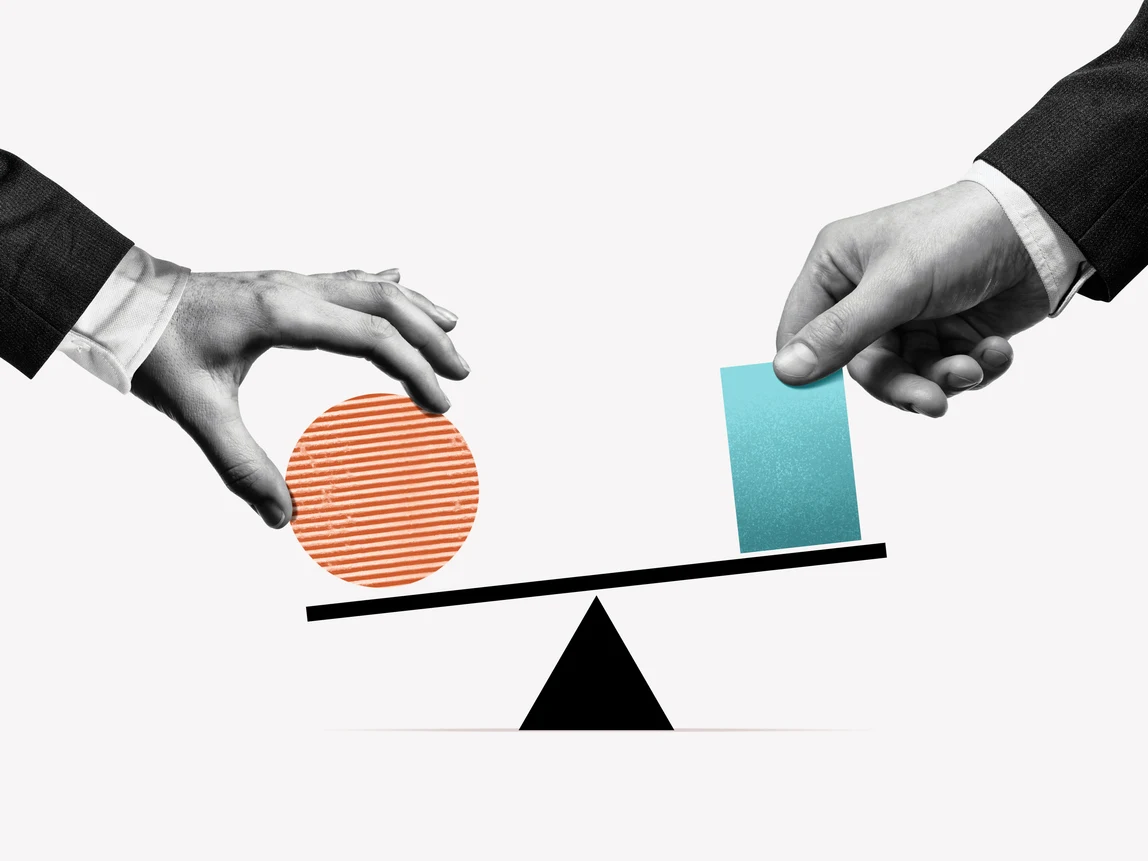
B2B buyer psychology in high-consideration professional purchases is driven by defensibility. The individual recommending a law firm, accountancy practice or consultancy is weighing personal exposure as much as provider quality. The winning firm is the one that makes the recommendation easy to explain, easy to compare and safe to own.
- Forrester Research's Business Trust Survey found that 43% of B2B buyers make defensive purchase decisions more than 70% of the time.
- Gartner's May 2025 buyer-team research found that 74% of B2B buyer teams show unhealthy conflict during the decision process.
- The Edelman–LinkedIn 2025 report found that hidden buyers in finance, legal, procurement, compliance and operations can veto up to half of shortlisted providers.
B2B buyer psychology in high-consideration purchases centres on defensibility: buyers choose the provider they can justify to colleagues, not necessarily the objectively best option.
Defensibility is one part of a bigger question about how a firm is positioned in its market. That question is covered in our work on brand positioning for professional services firms.
“We already know B2B buyers are emotional.”
You've read that argument. So have I, many times, usually attached to a stat about the subconscious mind. The argument deserves a fair hearing, because it corrected something real.
For decades, B2B marketing assumed a spreadsheet was doing the buying. Capability statements list every service—websites led with the year of founding.
The “buyers are human” camp pointed out, rightly, that nobody signs a £180,000 advisory mandate in a state of calm neutrality. Feelings are involved. Intelligent marketers hold this view because it's partly true.
The problem is which feeling?
“Emotional” sends firms towards warmth, storytelling and brand films. The feeling that actually governs a high-consideration purchase is narrower and colder: fear of blame.

Forrester Research, the analyst firm, found in its Business Trust Survey that 43% of B2B buyers make defensive purchase decisions more than 70% of the time. A defensive decision is not the one most likely to produce the best result. It's the one least likely to leave the recommender exposed.
The mechanism is simple once you see it. The payoff to the person recommending you is lopsided:
- If your firm excels, the credit spreads across the committee.
- If your firm disappoints, the blame lands on whoever put your name forward.
A rational person facing that asymmetry discounts the upside and inflates the downside. That is logic applied to a different question. The committee asks, “Who is best?” The recommender asks, “What happens to me?”
This explains the loss that stings most. A sharp 70-person firm out-thinks a household name in the pitch room, then watches the mandate go to the household name.
The old procurement line about nobody getting fired for buying IBM has lasted fifty years because it describes a real incentive, not a lazy one.
“A professional services firm does not lose to a bigger competitor because the buyer preferred the bigger competitor's thinking. It loses because recommending the bigger name carries less personal risk for the recommender. Until your brand lowers that risk, better work will keep finishing second to safer work.”
“Fine, but I'm pitching to the person who signs.”
You are. But the person who signs is rarely the person who decides alone.
The Edelman–LinkedIn 2025 report calls the rest “hidden buyers”: stakeholders in finance, legal, procurement, compliance and operations who rarely take a sales meeting but can veto up to half of shortlisted providers.
In a professional services purchase, you've met their fingerprints without meeting them. The pitch goes brilliantly on Tuesday. On Friday, you get an email asking you to “clarify the fee basis” and “confirm your PI cover”. None of them heard your pitch. All of them can end it.
In a professional services purchase, those hidden buyers look like this:
- The FD who reads your fee proposal cold.
- General counsel checking your engagement terms.
- Procurement compares you against the panel firms they already know.
None of them heard your pitch. All of them can end it.
Gartner, the research and advisory firm, surveyed 632 B2B buyers in August and September 2024 and published the findings in May 2025:
- 74% of buyer teams exhibited unhealthy conflict during the decision-making process.
- Groups that reached consensus were 2.5 times more likely to report a high-quality deal.
- Content built around the buying group's collective needs, rather than customised for individual personas, improved consensus by 20%.
B2B buyer psychology is, therefore, a group-alignment problem wearing a one-to-one disguise. Your contact is a messenger, and you are writing their script.
How AI search changes the validation step
Forrester Research's State of Business Buying, 2026, found that business buyers now begin discovery and research with generative AI and AI search tools.
It also found that those tools often return incomplete or unreliable information, and that buyers respond by seeking validation from colleagues, external influencers and trusted human sources.
Forrester also reports that buying groups are growing, procurement is becoming more influential, and trials are increasingly used to reduce perceived risk.
For a professional services firm, AI search can put the firm on a shortlist, but a colleague's confidence keeps it there. An AI summary of a firm is also only as clear as the positioning it summarises.
A firm that cannot describe itself in one sentence gets described vaguely by the machine as well.
“So we should look safe? That's how firms end up bland.”
No. Bland is not defensible either. It is merely forgettable, and a forgettable firm gives the champion nothing to say except the fee.
The same Edelman–LinkedIn report makes this point for me: only 41% of hidden buyers say “the safest choice” matters most at the moment of purchase. Buyers are not hunting for the dullest option. They are hunting for an option they can explain.
Safe means familiar. Defensible means explainable. A champion who says “they seemed very professional” loses to the FD's first question. A champion who says “they only handle restructuring for owner-managed businesses, and they've published the process” survives it.
Specificity is what makes a smaller firm defensible against a bigger one. The big name wins on familiarity. You win by having a reason.
What your brand has to hand the internal champion

When you leave the room, your contact re-pitches you to people who are busier and more sceptical than they are, from memory.
Every brand asset you own either helps that second pitch or gets in its way. Treat the champion as your most important audience, and ask of each asset: could my contact forward this to the FD without adding a paragraph of apology?
Edelman–LinkedIn found that 79% of hidden buyers are more likely to advocate for vendors that consistently produce high-quality thought leadership.
That is the clearest evidence that the second pitch can be won with material, not charm.
The Default Approach | What It Costs | The Better Approach | Why |
|---|---|---|---|
Homepage leads with “trusted advisers since 1998” | The champion has nothing specific to repeat | A one-line position that a non-specialist can say aloud | A sentence survives a forwarded email; a heritage claim does not |
Case studies written only for the end client | The FD and procurement find no answers to their questions | Case evidence that answers cost, risk and process questions explicitly | Gartner found collective-needs content improves consensus by 20% |
Thought leadership as an occasional blog post | Hidden buyers who never meet you have nothing to read | Consistent, opinionated publishing on the problems you solve | 79% of hidden buyers favour consistent thought-leadership producers (Edelman–LinkedIn, 2025) |
Fee logic held back until the pitch | Procurement fills the gap with worst-case assumptions | A published engagement model explaining how you price | Surprise is the risk defensive buyers fear most |
A credentials deck listing every service | You look like every other firm on the panel | Narrow proof of the one thing you are chosen for | A comparison becomes winnable when the difference is visible |
Rebrand treated as a visual refresh | A nicer logo on the same hard-to-explain firm | A rebrand that starts with positioning and message | Identity should carry a position, not replace one |
A new identity makes a firm look credible. A clear position makes it easy to recommend. Rebrands that succeed deliver both, in that order. If you're sequencing that work, the logic behind brand development strategies for scaling firms is the next useful read.
The firm that is easiest to defend wins the room you're not in
B2B buyer psychology in professional services comes down to one uncomfortable fact. Your prospect is choosing the decision they can defend, and the defending happens without you. The evidence points in the same direction:
- Forrester's defensive-buying data explains why better firms lose to safer ones.
- Edelman–LinkedIn's hidden buyers explain who loses for you.
- Gartner's consensus research shows that material built for the whole group changes the outcome.
So judge your brand by one test: can someone who likes you explain, compare and recommend you without feeling exposed? If the answer is “not really”, a rebrand that starts with visuals will not fix it.
A free Brand Equity Audit™ shows exactly where your brand is making it hard for you to defend, and what to change first.
Frequently asked questions
Why do B2B buyers choose the “safe” option over the best one?
B2B buyers often choose the option that limits personal blame. Forrester Research found 43% of B2B buyers make defensive purchase decisions more than 70% of the time. The recommender gains little if a provider excels and loses a lot if it fails, so familiar, easily justified providers win.
What is a hidden buyer in B2B purchasing?
A hidden buyer is a stakeholder, usually in finance, legal, procurement, compliance or operations, who influences a purchase without engaging with sales. The 2025 Edelman–LinkedIn B2B Thought Leadership Impact Report found that hidden buyers can veto up to half of the shortlisted providers.
Is B2B buying emotional or rational?
B2B buying is both. The dominant emotion is fear of being blamed for a poor choice, and acting on that fear is a rational response to personal risk. Marketing that answers the fear with clarity and proof outperforms marketing that answers it with warmth alone.
Has AI changed how businesses choose professional services and providers?
Yes. AI now shapes discovery more than trust. Forrester's State of Business Buying, 2026, found that buyers begin research with generative AI but often find its answers unreliable, so they validate choices with colleagues and trusted human sources.
Does thought leadership influence B2B purchase decisions?
Yes. The 2025 Edelman–LinkedIn report found 79% of hidden buyers are more likely to advocate for vendors that consistently produce high-quality thought leadership. Consistency matters because hidden buyers rarely meet the seller and judge the firm on what they can read.