Category Design for Consulting Firms: The 6-Stage Method
Category design for consulting firms is usually mis-sold as inventing a market and evangelising it for years. For most £2m–£20m firms that is fiscally reckless. The reliable route reframes an expensive, ambiguous problem buyers already have, names its cost, and builds a proprietary method around resolving it credibly.
 By Stuart Crawford
 Reviewed by Tabitha Ayers
Updated 13 min read
On this page13 min left
A £6m change-management consultancy spent eight months and a quarter of its marketing budget trying to name and own “Adaptive Transformation.”
Prospects nodded politely and still asked how the day rate compared to the incumbent's. The label changed the website. It changed nothing in the pitch.
That is the standard failure. Most category design advice is written for venture-backed software companies with the capital to fund years of market education, and it treats the goal as inventing a category.
For a consulting firm, that goal is usually wrong — and occasionally ruinous. The global consulting market was estimated at $275bn in 2025 by Source Global Research, and inside a market that size, the firms losing ground are rarely losing on capability.
They are losing because the buyer cannot tell them apart from four other credible firms, and defaults to comparing rates. An effective consulting brand strategy solves the recognition problem before it becomes a rate problem.
The reliable opportunity is not to persuade a sceptical market that a new category exists. It is to take an expensive, ambiguous problem the buyer already has and make it easier to recognise, prioritise, and buy help for.
How Category Design Works for a Consulting Firm
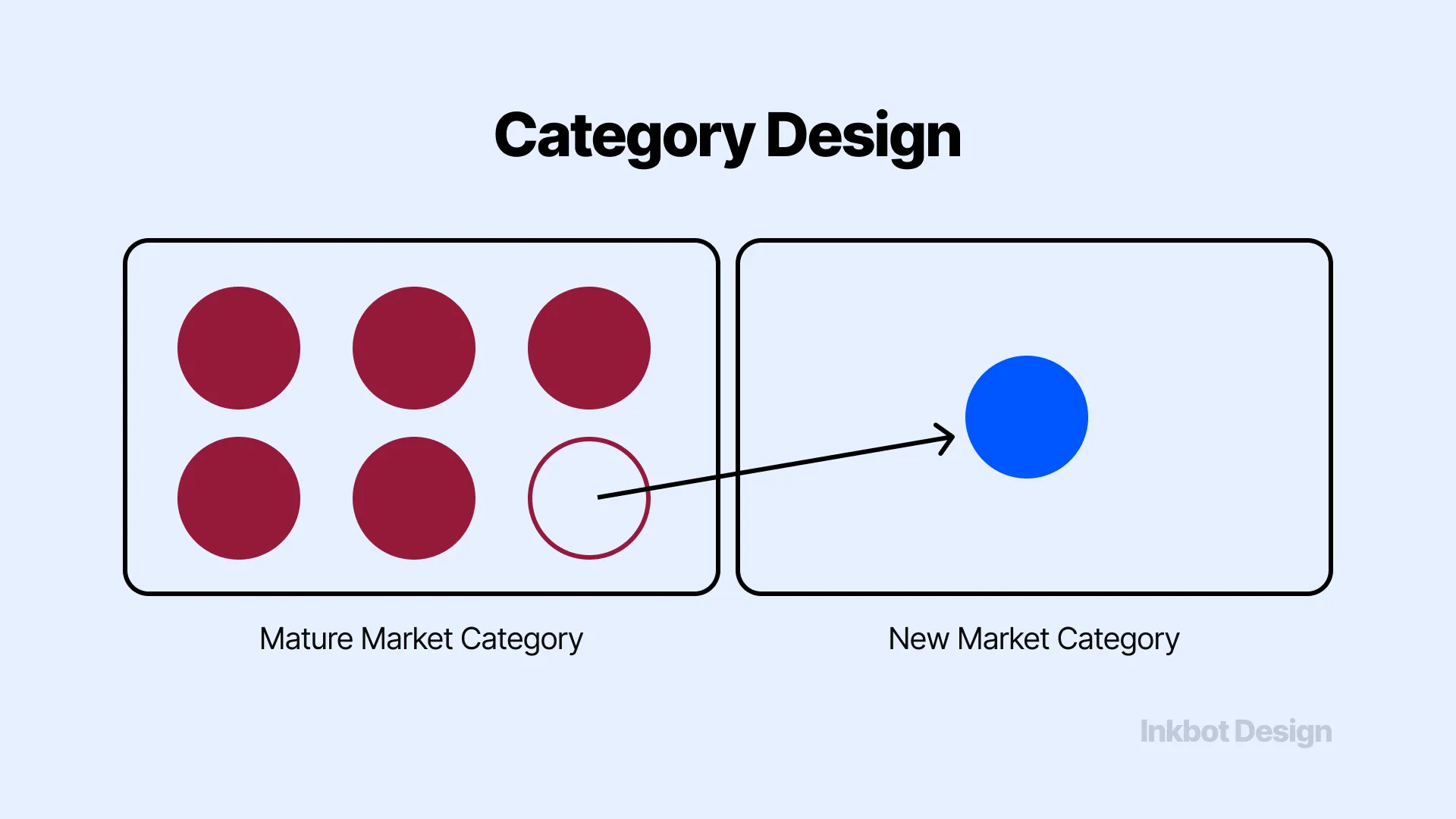
Category design for a consulting firm is achieved in six stages: identify a costly, recurring problem; reframe it through a sharper commercial lens; name the problem and its cost; build a proprietary diagnostic method; evidence the method; and give the buying group language to act on it. The aim is demand creation through recognition, not market invention.
- A consulting firm rarely needs a new market; it needs an existing problem made legible and urgent.
- The proprietary method — not the category label — is what de-risks the buying decision.
- Category language works when it helps an internal champion build consensus, not just when it differentiates the firm.
Category design for consulting firms means reframing an existing, costly problem and building a proprietary method around it, rather than inventing a brand-new market category.
Before You Start
Category design fails when a firm attempts it without a genuine repeatable point of view.
The honest prerequisite is a problem you have solved more than once, in a way you can articulate as a method rather than as “it depends on the client.”
If every engagement is bespoke and improvised, there is no category to design — there is a talented team, which is a different asset.
Firms with revenue below roughly £2m often lack the delivery repetition needed to know which problem they actually own. Establish that first.
The second prerequisite is tolerance for narrowing. Category design focuses a firm on a single problem definition, which means visibly declining adjacent work.
Grinberg's caution in The Category Design Trap is correct on this point: a firm unwilling to turn away mismatched enquiries will dilute the position until it means nothing.
1: Identify the Costly Recurring Problem
Start with the problem you are repeatedly hired to fix, not the service you sell. The distinction matters because buyers anchor to problems, not to your capability labels.
A firm that sells “operating model design” is describing its method; the buyer is experiencing “we restructured, and productivity fell off a cliff.” Name the second thing.
You know this stage is done when you can state the problem in the buyer's own words, complete with the moment they notice it.
The failure mode here is choosing a problem that is real but cheap — one nobody loses sleep over. The problem must carry cost: lost revenue, regulatory exposure, failed transformation, stalled deals.
2: Reframe the Problem Through a Sharper Commercial Lens
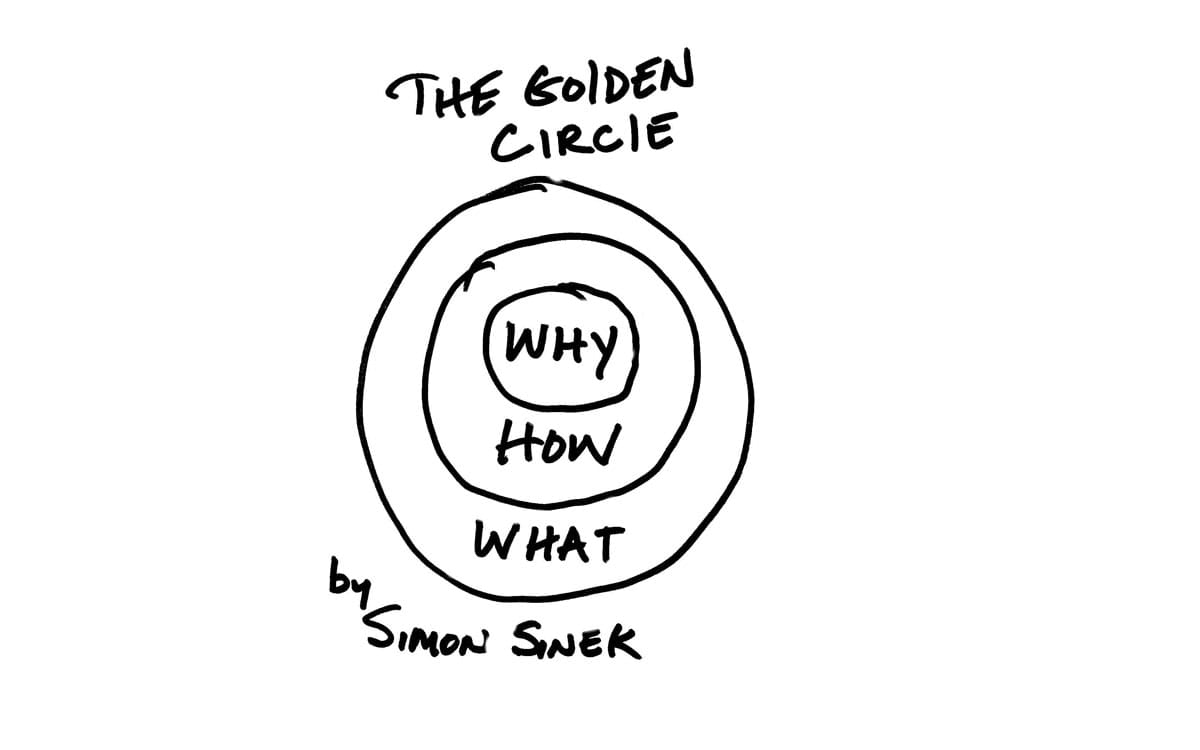
Reframing means changing how the buyer understands a familiar problem so that your firm's approach becomes the obvious response. This is the stage most firms skip, and skipping it is why labels fail.
Simon Sinek did not invent a leadership category; he reframed the familiar problem of disengaged teams as a failure to communicate purpose — “Start With Why.”
Clayton Christensen reframed the question of why competent companies fail as The Innovator's Dilemma. Neither invented a market. Both gave an existing, expensive problem a sharper commercial frame.
For a consulting firm, the reframe succeeds when a prospect hears it and thinks, “That is exactly our situation, and I hadn't put it that way.”
It fails when the frame is clever but describes nothing the buyer recognises.
Run it past three past clients before it touches a website: if they don't immediately recognise their own situation in it, the frame is about you, not them — and it goes back to the desk.
“A consulting firm that invents a category label sounds like it is escaping comparison. A firm that gives an under-recognised, expensive problem a precise name sounds like it understands the client better than the client does. The second is believable. The first is jargon until proven otherwise, and proof takes years; most firms do not have.”
3: Name the Problem and Its Cost
Naming turns a diffuse worry into something a buyer can prioritise and defend internally. An unnamed problem competes for attention against every other unnamed problem and usually loses to whatever has a budget line.
A named problem — with a quantified cost of inaction — earns its own line. This is where category design becomes commercially useful rather than cosmetic.
The name must describe the problem, not your solution. “Post-Merger Value Leakage” names a problem a CFO recognises; “Integration Excellence Framework” names your product and helps nobody prioritise anything.
The failure mode is to name the offer rather than the pain. Buyers do not lie awake worrying about your framework.
4: Build a Proprietary Diagnostic Method
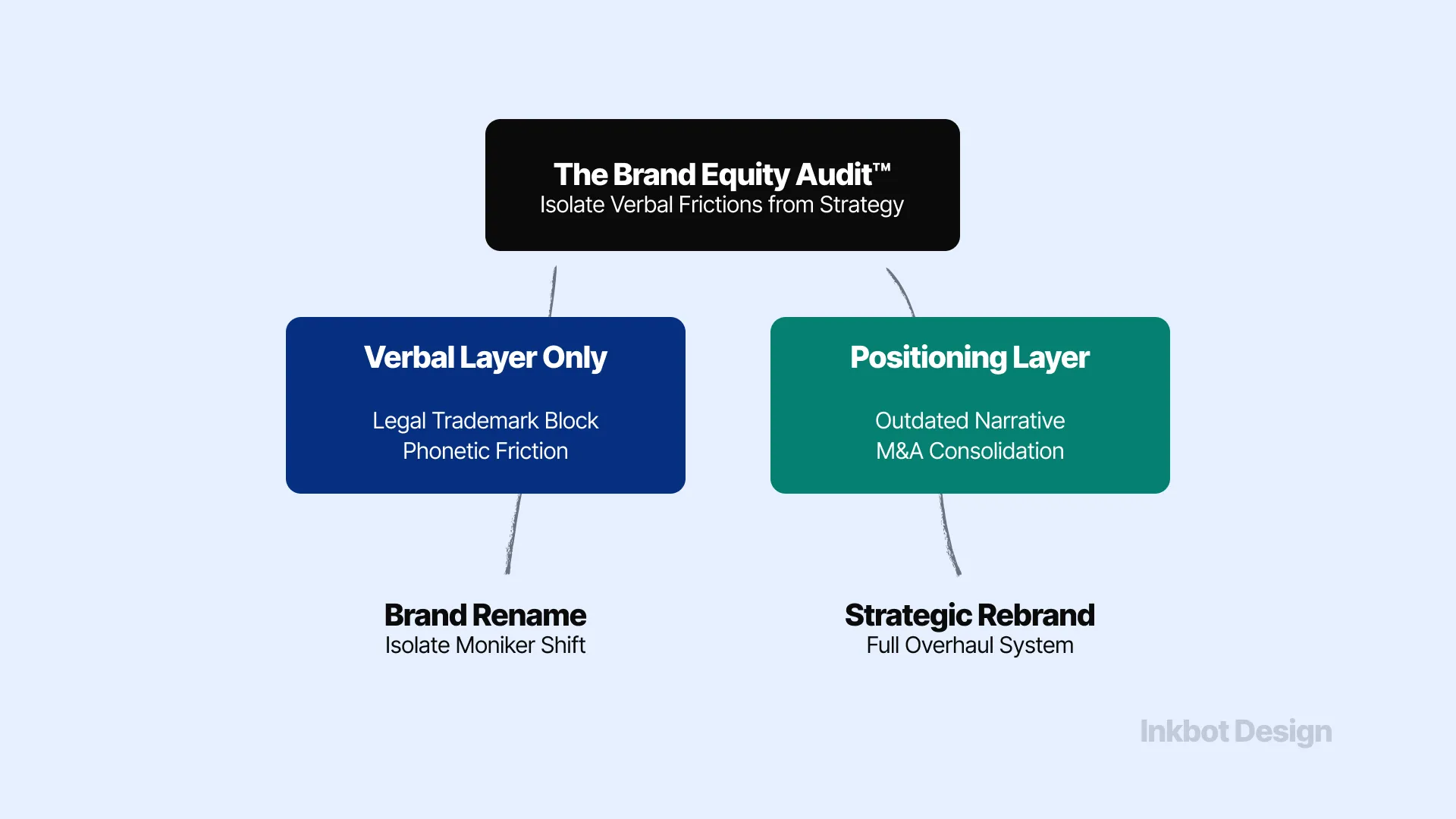
A proprietary method is the repeatable process by which your firm diagnoses and resolves the named problem, and it is what actually de-risks the purchase.
Category labels are copied in an afternoon; a credible diagnostic with defined stages, inputs, and outputs is not.
This is the barrier to entry PlayBigger calls a “blueprint,” translated into terms a services firm can afford — a method, not a market-education campaign.
The method works when a prospect can see how you would work before they sign, which lowers perceived risk and, in turn, justifies a premium.
Research from the Edelman–LinkedIn 2025 B2B Thought Leadership study found that 60% of senior buyers say strong thought leadership makes them more willing to pay a premium, because a demonstrated method reduces the uncertainty that makes buyers haggle.
The failure mode is a “method” that is really a list of your services with numbers next to them.
5: Evidence the Method
Evidence converts a claimed method into a credible one, and it is the stage that separates a firm's buyers' trust from one they interrogate.
An assertion invites cross-examination; a diagnostic applied to a named situation with a documented before-and-after ends it. The proof is the method run against a real engagement, with the decisions and the result visible.
That is the part most firms leave as a testimonial and a logo wall, which proves nothing about the method itself.
6: Give the Buying Group a Shared Language
The final stage is often misunderstood as differentiation from the named sponsor. Its real function is to arm an internal champion with language that the rest of the buying group will accept.
The Edelman–LinkedIn 2025 study introduced the “hidden buyer” — stakeholders in finance, legal, compliance, procurement, and operations who never take the sales meeting but decide whether a deal survives.
More than 40% of B2B deals stall on internal misalignment involving exactly these people.
A named problem gives your champion a phrase to align them around.
The 2025 study found 81% of hidden buyers say strong thought leadership helps them recognise challenges they had not previously identified, and 95% say it makes them more receptive to outreach.
Category design succeeds at this stage when finance and operations start using your problem name in their own meetings.
The AI Consulting Land-Grab

The current market makes this method timely rather than theoretical.
The Management Consultancies Association reports that almost all member firms expect rising demand for AI-related services, with around three-quarters planning significant internal AI investment over the next two years, averaging £1.9m.
Meanwhile, 66% of UK consulting leaders identify AI services as their largest expected source of growth, according to figures cited alongside Source Global Research's 2025 market estimate.
Here is the consequence. As every firm adds “AI consulting” to its service pages, the label ceases to function as a position.
Broad capability labels are becoming easier to copy, while specific, commercially consequential problem definitions become more valuable. The firms that stand out will not be those adding AI to every heading.
They will be those who name a specific, costly problem that AI adoption creates — AI governance readiness for regulated firms, value-realisation gaps after stalled pilots, decision-rights confusion in AI transformation — and build a diagnostic to resolve it.
A firm sharpening an AI consultancy brand faces this decay directly: “AI consulting” is already too crowded to carry a position on its own.
The market context punishes generic labels in a specific way: it allows a buyer to swap you for the next firm on the shortlist without incurring any loss.
Source Global Research put the global consulting market at $275bn in 2025, with uneven growth — cybersecurity consulting forecast to expand by around 9% while spending shifted from traditional technology work toward data and analytics.
Capability labels are commoditising. A named, evidenced problem is the one thing on your website a competitor cannot copy by Friday.
The Step Everyone Gets in the Wrong Order
Intelligent practitioners hold the “invent a category” view for a good reason: the research is seductive.
PlayBigger's finding that a category king captures 76% of the category's market cap is real, and for a venture-funded software company with capital to educate a market over years, category creation can be the correct, if high-risk, play. The logic is sound in its native habitat.
It translates poorly into consulting firms because it inverts the sequence. The software model prioritises naming the category early and treats evidence as accumulating after the lightning strike.
A consulting firm cannot afford that order. It does not have years of runway to evangelise a market into existence, and its buyers — as Grinberg's Category Design Trap argues — anchor to existing categories rather than fabricated ones.
Put the label first, and you spend money teaching the market a word while your pipeline compares you on rate.
The working order reverses it: reframe and evidence the problem first, let the method prove itself on real engagements, and let the category name emerge as shorthand for something already demonstrated.
The name is the last thing you earn, not the first thing you declare. Firms that lead with the label are doing step three before step one — and wondering why the buyer hears jargon.
“Name the category first, and you are asking a sceptical buyer to accept a market that does not yet exist. Reframe and prove the problem first, and the category name becomes a convenience — a short way to refer to something the buyer already believes. That is the entire difference between demand creation and expensive noise.”
A Sceptical Reader's Two Objections
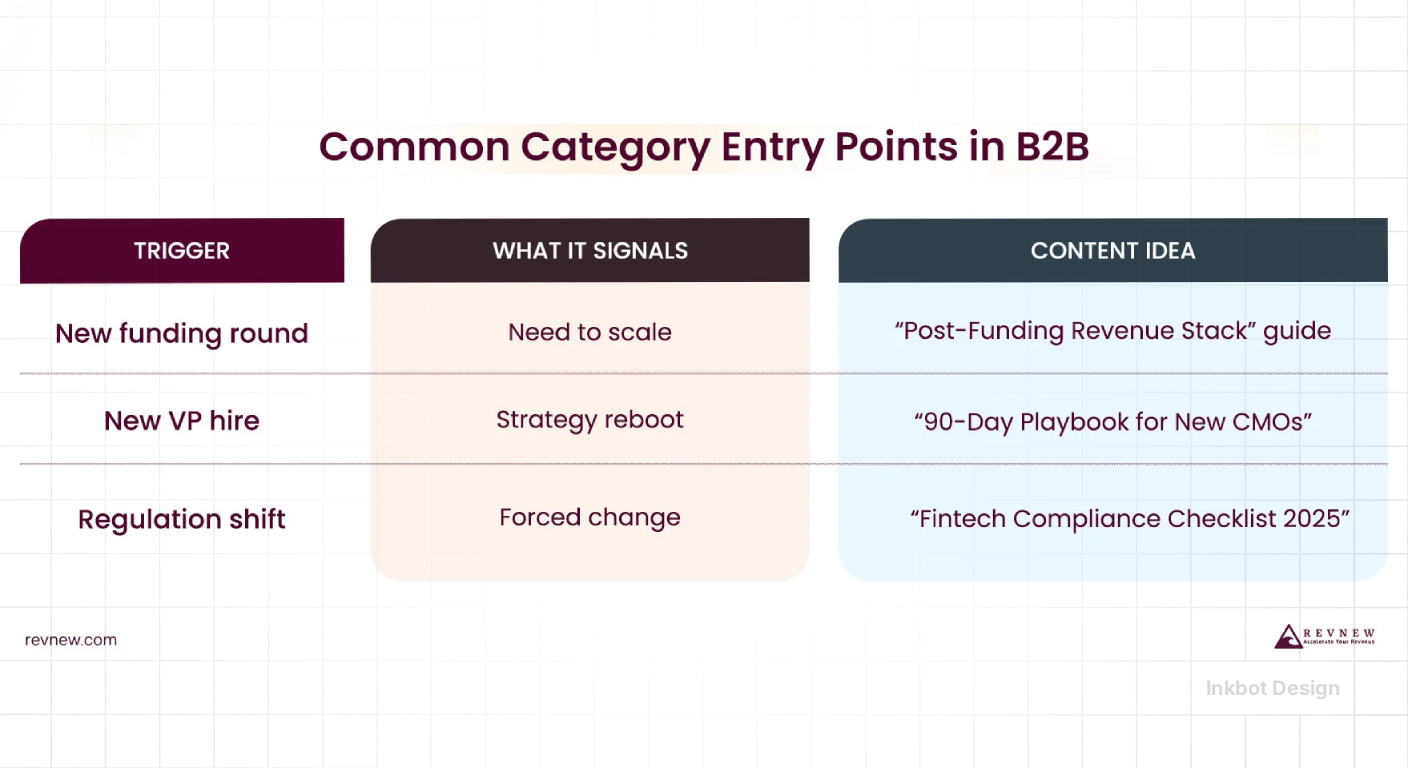
“Isn't this just niching with extra steps?”
No. A niche narrows who you serve — “CRM consulting for hospitals.”
Category design changes how a problem is understood, so your approach becomes the obvious response. You can niche without reframing anything, and most firms do. The reframe is the part that moves a buyer from inertia to enquiry.
“Our buyers are rational; this sounds like marketing theatre.”
The mechanism is the opposite of theatre.
Edelman–LinkedIn's 2025 research found more than 75% of senior buyers have researched an offer they were not previously considering after encountering strong thought leadership. A precise problem frame gives a rational buyer a reason to look — and a reason to prioritise a spend they had been deferring.
The Verdict
Category design for consulting firms is worth doing, and rarely worth doing the way the software playbook describes.
The evidence through this piece points in one direction: buyers anchor to problems, not to invented markets; proprietary method — not the label — is what de-risks the purchase; and the buying group needs shared language more than the sponsor needs novelty.
Every stage of the method serves recognition, not invention.
The distinction the whole article turns on is a matter of sequencing. Firms that fail put the category name first and hope evidence catches up.
Firms that succeed reframe an expensive problem, prove a method against it, and let the name arrive last as shorthand for something already believed.
Get the order right, and category design stops being a branding gamble and becomes demand creation. Get it wrong, and you have paid to teach the market a word it did not ask for.
Do one thing today: write down the single most expensive problem your firm is hired to fix most often, in your buyer's exact words, not your own.
If you cannot state it cleanly, that is the work — and it is where category design actually begins.
If you want an outside read on where your positioning is losing commercial ground, request a free Brand Equity Audit™. This structured diagnostic identifies exactly where your brand is leaking value and what to do about it.
Frequently asked questions
What is category design for a consulting firm?
Category design for a consulting firm is the practice of reframing an existing, expensive problem so that the firm's approach becomes the obvious response, and then building a proprietary method to resolve it. It creates demand through recognition rather than inventing a new market category.
How is category design different from niching?
Niching narrows who you serve, such as CRM consulting for hospitals. Category design changes how a problem is understood, so your method becomes the natural response. A firm can niche without reframing anything; the reframe is what moves buyers from inertia toward enquiry.
Is it true that inventing a new category captures most of the market?
Yes — PlayBigger's research shows category kings capture around 76% of the category's market cap. But that dynamic applies to venture-backed firms that can educate a market over the years. Most £2m–£20m consultancies lack the capital and runway to safely invent a category.
Why do consulting firms fail at category design?
Consulting firms fail when they name a category before proving a method. Buyers anchor to existing problems, so a label with no demonstrated diagnostic behind it reads as jargon. The reframe-and-evidence work must precede the name, not follow it.
When should a consulting firm attempt category design?
A firm should attempt category design once it has repeatedly solved the same expensive problem and can describe it as a method rather than improvised, bespoke work. Firms with revenue below roughly £2m often lack the delivery repetition needed to know which problem they genuinely own.
How does category design help with rate pressure?
Category design reduces rate pressure by lowering perceived risk. Edelman–LinkedIn's 2025 study found that 60% of senior buyers pay a premium for strong thought leadership because a demonstrated method reduces the uncertainty that drives buyers to haggle over day rate rather than value.
What is a proprietary method in category design?
A proprietary method is the repeatable process by which a firm diagnoses and resolves its named problem, with defined stages, inputs, and outputs. Labels are copied in an afternoon; a credible diagnostic is not. The method, not the category name, is what de-risks the buying decision.
How does category design affect the buying group?
Category design gives an internal champion language that the wider buying group will accept. Edelman–LinkedIn's 2025 research found that more than 40% of deals stall due to internal misalignment, and 81% of hidden buyers say strong thought leadership surfaces problems they had not previously recognised.
Should an AI consultancy use “AI consulting” as its category?
No — “AI consulting” is decaying as a position. The MCA reports that around three-quarters of member firms are investing significantly in AI, so the label is commoditising. Standout firms name a specific costly problem AI adoption creates and build a diagnostic around it.
What is the “hidden buyer” in consulting sales?
The hidden buyer, defined in Edelman–LinkedIn's 2025 study, is a stakeholder in finance, legal, compliance, procurement, or operations who never takes the sales meeting but influences whether a deal survives. Category language gives champions a shared problem name to align these stakeholders.
How do you name a category correctly?
Name the problem and its cost, not your solution. “Post-Merger Value Leakage” names something a CFO recognises and can prioritise; “Integration Excellence Framework” names your product and helps nobody. The failure mode is to name the offer rather than the pain the buyer actually feels.
What is the first step in category design for a consultancy?
The first step is identifying the costly, recurring problem your firm is repeatedly hired to fix, stated in the buyer's own words. Start with the problem the client experiences, not the service you sell, because buyers anchor to problems rather than capability labels.