Brand Portfolio Strategy: What to Build, Buy or Kill
You have three brands and a board paper due Friday.
One earns well. One barely covers its own marketing line. One came with an acquisition eighteen months ago, and nobody has decided what to do with it.
The paper asks a simple-looking question – which do we invest in – and the honest answer is that most firms answer it with the wrong number.
They rank by revenue, fund the top, and quietly starve the rest until someone proposes killing them.
That instinct feels disciplined.
It is often the most expensive mistake a professional services board makes, because the brand you starve for underperformance may be the one holding a door shut against a competitor.
Getting this wrong has a documented system-level cost.
McKinsey & Company notes that weak brands can damage the entire portfolio, because spreading resources too thinly undermines overall performance – the drain is real.
But McKinsey also warns that identical metrics across brands signal either weak measurement or brands positioned too closely together.
Read those two together, and the board’s task changes shape. It is not “cut the weak.” It is “know what each brand is for.”
That is a brand architecture agency question before it is a finance question.
- Decide each brand's role: growth engine, defensive moat, adjacency tester, cash cow or exit; allocate capital accordingly.
- Assess brands by contribution, traction and momentum (per MIT Sloan), not revenue; low earnings can signal strategic value.
- Kill only when the brand truly lacks role: no growth, defensive function, cash or optionality; overlap flags exit, per Harvard Business Review.
Which Brands Should You Build, Buy or Kill?
Build the brands that create future value, the numbers can’t yet show – a growth engine or an adjacency tester. Buy when acquisition fills a genuine capability or category gap you cannot build fast enough. Kill only when a brand has no role: no growth, no defensive function, no cash contribution, no strategic optionality. Revenue rank alone should never decide.
- A brand’s role predicts its value to the portfolio more reliably than its current revenue.
- Weak-earning brands can be worth funding as defensive cover or acquisition hedges.
- The exit decision should follow role absence, not underperformance.
Brand portfolio strategy is the board-level discipline of assigning each brand a defined role – growth engine, defensive moat, adjacency tester, cash cow or exit candidate – then allocating capital by role rather than by current revenue.
The Criteria That Actually Decide It – And the One That Doesn’t
The seductive criterion is current revenue, and it is the one that most often misleads boards. A brand can post modest numbers and still be the most strategically valuable asset you own.
The criteria that hold up under scrutiny come from how serious institutions assess portfolios, not from marketing convention.
MIT Sloan Management Review frames portfolio renewal around three dimensions: contribution, traction, and momentum.
That trio matters because it separates what a brand earns now (contribution) from whether it is winning (traction) and accelerating (momentum).
A brand can be low on contribution and high on momentum – exactly the profile you fund, not cut. The same MIT Sloan work tells managers to look beyond the top line and review annual revenues, direct marketing expenses, hidden costs, and hidden benefits when assessing contribution.
Hidden benefits are where the defensive-cover brand hides.
Harvard Business School’s brand portfolio material adds the discipline most firms skip: clarify each brand’s role and scope within an integrated system before you judge its performance.
The judge’s role first, then performance against that role. A fighter brand judged by margin looks like a failure. Judged by the competitor it blocks, it may be doing its job precisely.
The criterion that doesn’t matter as much as it’s marketed: visual tidiness. Consolidating five identities into one clean masterbrand looks like a strategy and photographs well in a rebrand deck.
It is an aesthetic decision dressed as a portfolio decision – and it can destroy option value in the name of coherence.
“A brand that earns little but blocks a competitor from a segment is not underperforming. It is performing a different job than the one on the P&L. Boards that judge every brand by the same revenue line will always sell their cheapest insurance policy at the worst possible moment.”
The Build Decision: Growth Engines and Adjacency Testers

Build when a brand has a compounding role. Two roles justify sustained capital: the growth engine (rising traction and momentum, clear runway) and the adjacency tester (a low-cost probe into a segment you might enter properly later).
For a professional services firm, the adjacency tester is often a specialist sub-brand launched into a niche – a dedicated forensic-accounting line, a standalone advisory arm – that lets you learn a market without betting the parent’s name on it.
The mechanism is risk-transfer. A separate brand absorbs the reputational and positioning risk of an unproven market, so the core brand doesn’t have to.
If the adjacency works, you have a running start and a proven proposition.
If it fails, the core brand is untouched. That optionality has real value even before the sub-brand turns a profit, which is exactly why revenue-only assessment kills adjacency testers prematurely.
The Buy Decision: When Acquisition Beats Building

Buy when you need a capability, client base, or category position you cannot build fast enough to matter.
In professional services, acquisition usually buys a team and its relationships – and with them, a brand that already carries trust in a market you want.
Deloitte’s 2026 Global Divestiture Survey signals that boards are actively rethinking divestiture strategy, which is the mirror image of the buy decision: the same portfolio logic that tells you when to acquire tells you when to sell.
The trap on the buy side is assuming you must absorb the acquired brand into yours on day one. Sometimes the acquired brand’s local equity is the asset – collapse it too quickly, and you pay for a client base you then frighten off.
The role question applies to bought brands as hard as built ones: what job does this brand do that the parent can’t?
The Kill Decision: Role Absence, Not Underperformance

Kill a brand when it has no role, not when it merely earns little.
The test is subtraction: if this brand disappeared tomorrow, what would the portfolio lose beyond its revenue? No growth, no defensive function, no adjacency learning, no cash contribution, no optionality – then it is genuinely dead weight and holding it costs focus.
Harvard Business Review content on brand portfolio strategy points boards toward three renewal signals: overextension, overlap, and underperformance. Overlap is the sharpest kill signal, because two brands competing for the same clients waste capital on both sides.
Berkshire Hathaway’s March 2026 portfolio update shows disciplined killing in practice: concentration in a small number of durable holdings, modest trimming, and selective exits from smaller, less core positions.
The pattern is instructive – Berkshire Hathaway does not cut on weakness alone; it exits positions that no longer fit the system while concentrating capital on durable winners. Role-fit governs the cut, not the size of the line.
The Decision Table: What to Do in Your Situation
| Your scenario | Build / Buy / Kill | Why |
| The acquired firm has strong local client trust, but weak revenue | Build (hold the brand) | Local equity is the asset; collapsing it forfeits the client base you paid for |
| Two service-line brands chase the same clients | Kill one (merge) | Overlap wastes capital on both sides; McKinsey’s “too close” signal applies |
| Small sub-brand blocks a specialist competitor in a niche | Build (fund defensively) | Defensive moat; its job is blocking, not earning |
| Legacy brand, no growth, no defensive role, low cash | Kill | Role absence, not just underperformance – the honest cut |
| New niche line showing early momentum, little revenue | Build (adjacency tester) | Momentum over contribution; funding optionality |
| Gap in a category you can’t build into fast enough | Buy | Acquisition buys speed and an established position |
The Trap: Consolidating Because It Feels Tidy
The default a rebranding board reaches for – usually ahead of a growth phase or acquisition – is consolidation.
Roll everything into one masterbrand. It promises simpler marketing, a single message, and lower costs.
The tell that you are about to make this mistake is that the argument for consolidation is about neatness and internal effort, not about what clients or competitors will do in response.
Consolidation is right when your sub-brands genuinely overlap and confuse buyers. It is wrong for a sub-brand to hold distinct equity in a segment that the masterbrand can’t credibly enter.
Reuters reported on 1 July 2026 that Russia’s Sberbank lowered its 2026 corporate lending forecast, citing deteriorating borrower health and rising restructuring requests, and flagged worrying trends in portfolio quality.
The lesson translates directly: portfolio quality matters as much as volume. A consolidation that improves your org chart while degrading the quality and defensive spread of your brand system is a bad trade that the board will feel the effects of two years later.
The Real Board Question: Role, Not Revenue
Most portfolio advice – including both pieces likely ranking above this one – stops at “rationalise and simplify.” Intelligent people hold that view for good reason: simplification cuts cost, sharpens the message, and reduces the internal drag of maintaining many identities.
On a spreadsheet, fewer brands almost always look better. The steelman is real.
It is also incomplete, and the evidence shows why. MIT Sloan’s contribution/traction/momentum model exists precisely because contribution alone misreads a portfolio – a brand low on current earnings but high on momentum is a build case, not a cut.
McKinsey’s warning that identically performing brands signal brands positioned too closely is really a warning about role: if two brands look the same on every metric, at least one lacks a distinct role.
The problem was never that you have too many brands. It is that too many of them have no defined role.
So the board question changes. Not “what should we cut” but “where should scarce capital go so the portfolio wins as a system.”
Assign every brand one role – growth engine, defensive moat, adjacency tester, cash cow, or exit candidate – and the build/buy/kill decisions stop being arguments and start being consequences of a role you already agreed on.
In 17 years of brand work, the pattern I see most often is a board about to consolidate a portfolio on cost logic, one meeting away from killing the sub-brand that was quietly keeping a specialist competitor out of their best segment.
You might object that role-assignment is just consultant theatre – a nice framework that dissolves when the numbers are tight. Fair challenge.
The discipline earns its place only if it changes a decision: it does, the moment it stops you from cutting a defensive brand you’d have cut on revenue alone.
The second objection: Doesn’t holding weak brands just entrench the fragmentation McKinsey warns about? Only if they lack roles.
A brand with a defined defensive or adjacency role is not fragmented. It is coverage.
The Verdict
The board’s decision on the brand portfolio is not a cleanup. It is capital allocation, and capital follows role.
Rank your brands by revenue, and you will fund the obvious earners while selling your cheapest strategic insurance – the low-earning brand that blocks a competitor, tests an adjacency, or holds trust in a market your masterbrand can’t reach.
The firms that get this right, from Berkshire Hathaway’s disciplined concentration to any well-run professional services group, do the same thing: they decide role first, then let build, buy and kill follow from it.
That is the shift this article argues for. Stop asking which brands are weak. Start asking which brands have no role – because those are different questions with different answers, and only the second one tells you where to place scarce capital.
A brand can be weak and worth every pound you spend defending it. A brand can be profitable and still deserve to go, because it overlaps with another, and you are funding the same fight twice.
Before your next board paper, do one thing: write a single word beside every brand you own – engine, moat, tester, cash cow, or exit. The brands you can’t label are your real portfolio problem, and they are rarely the ones the revenue line flags.
If you want that assessment done rigorously before you commit capital, request a free Brand Equity Audit™. This structured, written diagnostic identifies exactly where your brand is losing commercial ground and what to do about it, delivered in 48 hours with no sales call.
FAQs
What is a brand portfolio strategy?
Brand portfolio strategy is the board-level discipline of assigning each brand a defined role and allocating capital based on that role rather than on current revenue. It coordinates brands to maximise return, minimise risk, and identify gaps, overlaps, and pruning candidates across the whole system.
Why shouldn’t I just cut my weakest brands?
Because revenue understates strategic value, MIT Sloan Management Review separates contribution from traction and momentum precisely because a low-earning brand can be winning or accelerating. A weak brand may also serve as defensive cover or an acquisition hedge that current earnings never show.
What’s the difference between a house of brands and a branded house?
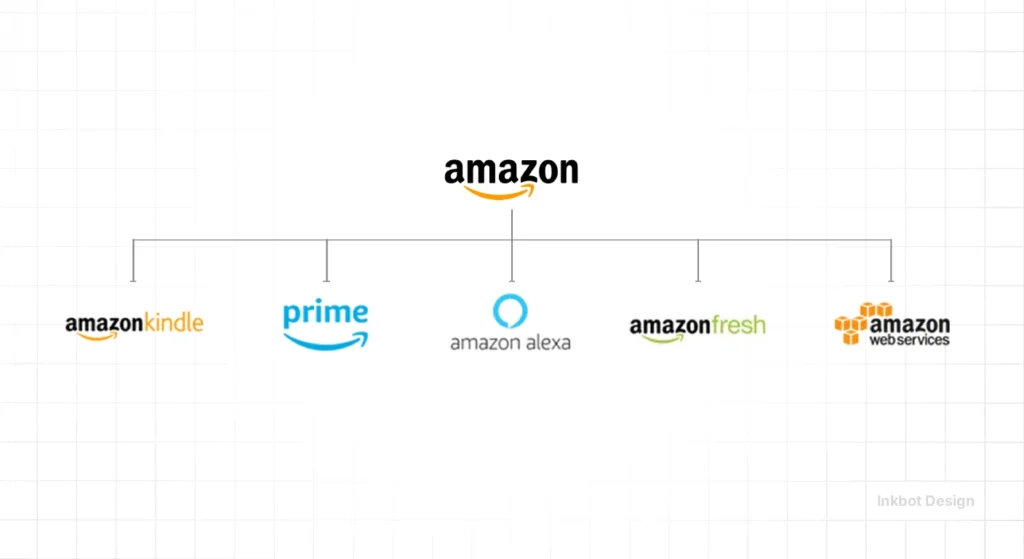
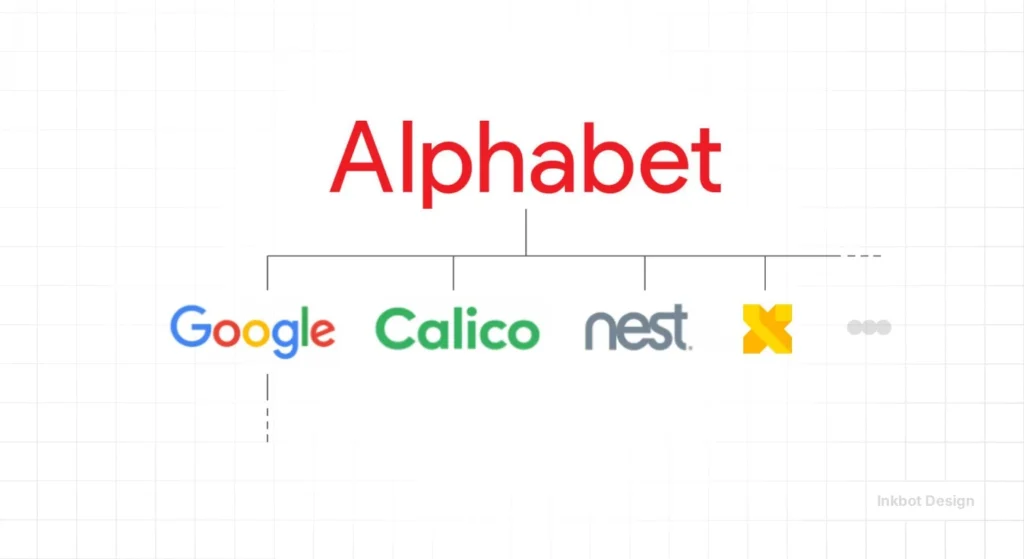
A branded house runs one masterbrand across everything, giving simplicity and efficiency at a higher concentration risk. A house of brands operates separate brands that reach different segments, providing broader coverage with greater management complexity. Neither is universally correct; the right structure depends on the degree of segment overlap.
How do I know when to consolidate sub-brands?
Consolidate when sub-brands genuinely overlap and confuse buyers. Do not consolidate when a sub-brand holds distinct equity in a segment your masterbrand can’t credibly enter. The tell of a bad consolidation is that its argument is about internal neatness, not client or competitor response.
When should a firm retire a legacy brand after acquisition?
Retire it when it has no role: no growth, no defensive function, no adjacency learning, and no meaningful cash contribution. Harvard Business Review flags overlap, overextension, and underperformance as renewal signals. Overlap is the strongest case for retiring or merging a brand.
Is it true that fewer brands are always better?
No, fewer brands are better only when the removed brands genuinely lacked a role. McKinsey & Company warns that spreading resources too thin drains a portfolio, but a brand with a defined defensive or adjacency role isn’t fragmentation. It is deliberate coverage worth funding.
How do you value a brand that doesn’t earn much?
Value it by role, not revenue. Ask what the portfolio would lose if the brand disappeared beyond its earnings – a blocked competitor, a tested adjacency, retained trust in a niche. MIT Sloan calls these hidden benefits, and they are where defensive brands hide.
What is an adjacency tester brand?
An adjacency tester is a low-cost sub-brand launched into a new segment to learn the market without risking the core brand’s reputation. If it succeeds, you gain a running start; if it fails, the parent brand is untouched. That optionality has value before any profit.
How should a professional services firm structure its brand portfolio?
By assigning every brand one clear role – growth engine, defensive moat, adjacency tester, cash cow, or exit candidate – then allocating capital to match. Structure follows role. Firms that skip this step end up funding overlap and starving strategic hedges.
When does acquisition beat building a brand?
Acquisition beats building when you need a capability, client base, or category position faster than you can build it. In professional services, buying a firm usually means acquiring a team, its relationships, and a brand already trusted in the market you want to enter.
What signals that two brands are too close together?
When two brands perform identically across metrics, McKinsey & Company notes that this signals either weak measurement or brands positioned too closely, meaning at least one lacks a distinct role. Identical metrics are a signal of a merge or reposition, not a coincidence.
Does portfolio quality matter more than the number of brands?
Yes – the quality of the role and defensive spread matter more than raw count. Reuters reported in July 2026 that Sberbank flagged worrying trends in portfolio quality while cutting forecasts, a reminder that a portfolio’s health is about the strength of its positions, not their number.
