Brand Identity Design Process: Strategic Guide for Professional Services
Explore the strategic brand identity design process for professional services: from discovery and positioning to concept testing, handover, and rollout governance.
 By Stuart Crawford
 Reviewed by Tabitha Ayers
10 min read

On this page10 min left
- How Does the Brand Identity Design Process Work?
- What Deliverables Should You Expect Beyond a Logo?
- How Should Leadership Teams Evaluate Brand Identity Concepts?
- What should we prepare for discovery?
- How should we judge identity concepts?
- What should the handover include?
- How do we launch without replacing everything at once?
- Approve decisions before approving designs.
- Questions people ask
Before leadership teams and managing partners approve a visual design, they must agree on what approval actually means: confirming that an asset works as a business tool, rather than registering subjective aesthetic preference.
The brand identity design process moves from research and positioning through creative development, testing, handover and rollout.
Each stage should resolve a business question before the next stage consumes more time and budget.
The distinction matters.
Ipsos, the market research organisation, reported in Recognisably You that only 15% of assets in its worldwide database achieved gold status: instantly and uniquely bringing the correct brand to mind in isolation.
Attractive design and demonstrated recognition are different tests.
For a professional services firm, the wider brand identity must translate into things people actually use: proposals, partner profiles, presentations and client communications.
Buying brand identity design services should therefore mean agreeing on the decisions and applications as well as the design outputs.
How Does the Brand Identity Design Process Work?
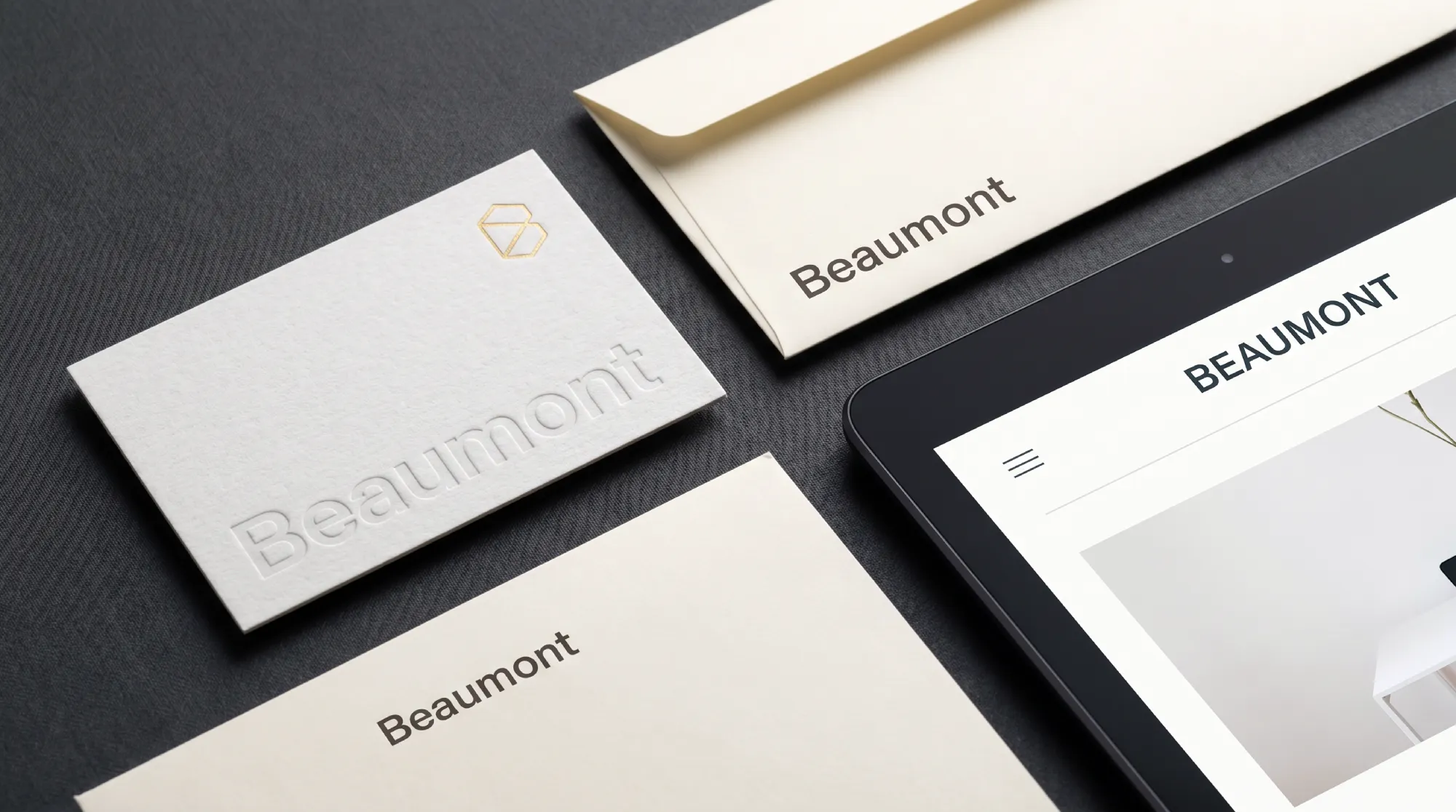
The brand identity design process turns business requirements into a usable identity through discovery, research, positioning, creative direction, concept development, refinement, system design, application testing, handover and rollout.
Those activities can overlap. The useful checkpoint is whether the evidence supports moving forward, rather than whether a presentation has been delivered.
- Discovery should produce an agreed problem and scope.
- Creative development should produce a direction that answers the brief.
- Handover should leave the client able to use the agreed system.
The brand identity design process turns business requirements into a tested identity through research, positioning, creative development, refinement, handover and rollout.
A stage list helps you plan the work. An approval gate helps you judge the work.
Stage | Typical Scope | Primary Commercial Output | Approval Gate (Question to Resolve) |
|---|---|---|---|
1. Discovery & Research | Weeks 1–2 | Strategic brief, client/competitor audit, perceptual gap analysis | Are we solving the right commercial problem, and what existing brand equity must be retained? |
2. Strategic Positioning | Weeks 2–3 | Category position map, value proposition, verbal narrative | Can the firm substantiate its claimed positioning without relying on generic claims? |
3. Creative Direction | Weeks 3–4 | Visual territories, typographic hierarchy, composition principles | Does the creative territory express the strategic brief without imitation? |
4. Concept Development & Refinement | Weeks 4–6 | Primary and secondary identity systems, colour systems, asset library | Does the identity function as a working system across complex corporate documents? |
5. Application Testing & Stress-Testing | Weeks 6–8 | Working templates (proposals, pitch decks, technical reports) | Can internal non-design staff independently edit materials without breaking layouts? |
6. Handover & Governance | Weeks 8+ | Master specifications, software asset kits, rollout timeline | Can the practice independently maintain, license, and govern the identity? |
Treat that table as a commissioning framework, not a universal formula. A limited visual refresh may require less research than a post-acquisition repositioning.
Testing can also send a project backwards. McKinsey & Company’s The Business Value of Design (2018) recommends incorporating user insights from the first idea through to post-launch.
Although that research covers design more broadly, the lesson from the process is relevant: discovering a problem early is preferable to protecting an approved sequence.
What Deliverables Should You Expect Beyond a Logo?
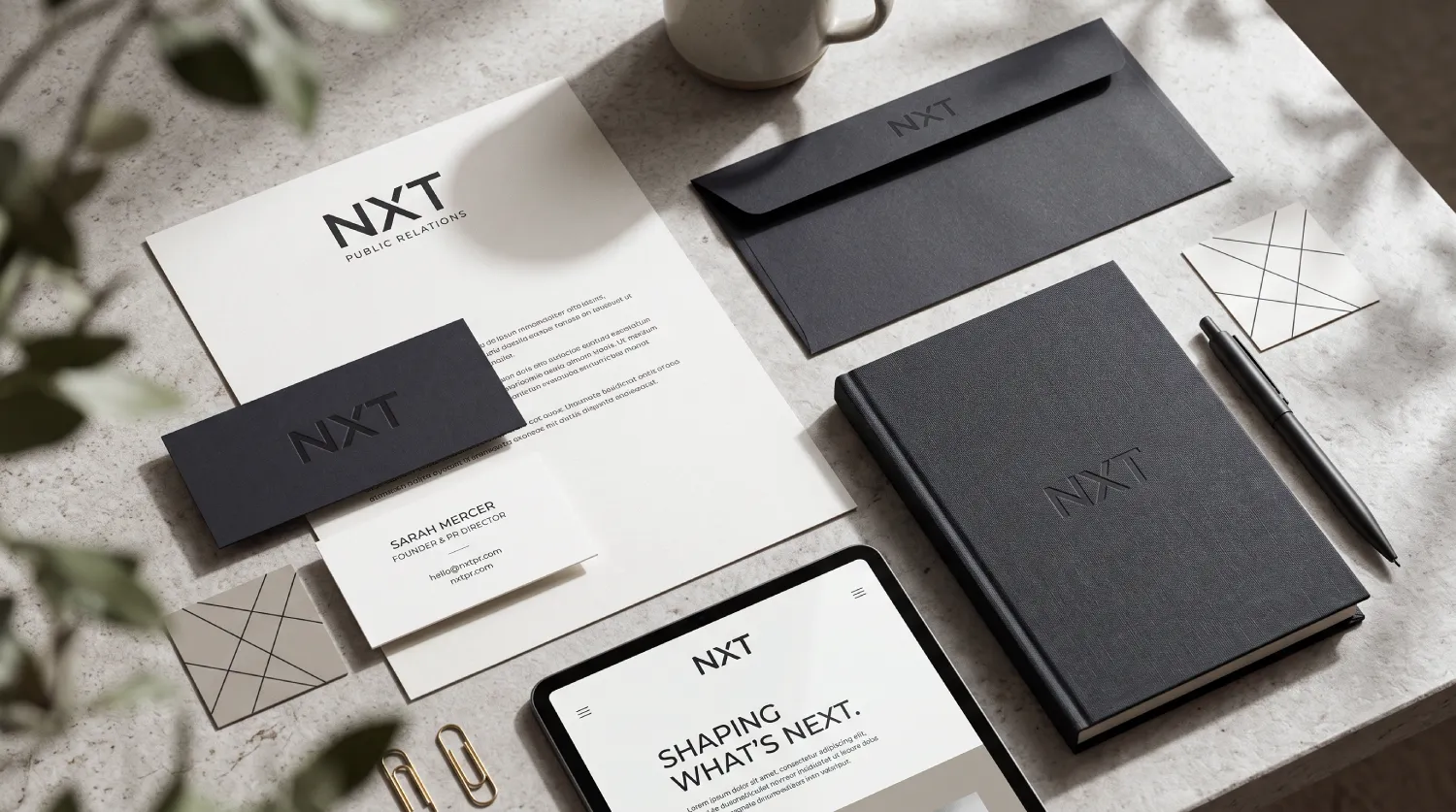
Commissioning a brand identity involves purchasing strategic decisions, operational rules, and usable document architectures, not simply an isolated logo file.
Professional-services firms require identity assets that directly support high-stakes proposals, pitch decks, partner profiles, and technical reports.
When evaluating agency proposals, require the scope of work to separate strategic discovery from visual engineering.
For example, Inkbot Design delivers brand architecture through the Brand Equity Blueprint™ as a fixed-scope engagement, establishing positioning and comprehensive brand specifications before production commences.
Core Deliverables for Professional Services Practices
- Market & Perception Intelligence: Forensic audit of current client perceptions, competitor positioning, and the "Meaning Gap" unaddressed in your sector.
- Verbal Identity System: Core brand narrative, messaging logic, service value propositions, and editorial tone guidelines.
- Visual Identity Architecture: Primary and secondary logo marks, responsive digital lockups, colour hierarchy, and typography specifications.
- High-Stakes Document Templates: Production-ready templates for proposals, board presentations, and tender submissions configured for real-world software.
- Brand Governance Specifications: A master brand guidelines document defining exact usage parameters, exclusion zones, and digital file hierarchies.
What Internal Teams Should Handle vs Outsource
Internal teams should gather historical collateral, arrange partner access, document operational constraints, and identify recurring bottlenecks in document processing.
Conversely, market positioning, typographic system engineering, and master template architecture should be led externally to prevent partner bias from perpetuating the status quo.
How Should Leadership Teams Evaluate Brand Identity Concepts?

Leadership teams should judge brand identity concepts against agreed strategic criteria rather than personal aesthetic preferences.
Testing shortlisted directions requires placing identical content (such as a complex advisory pitch page or partner profile) into each design system to evaluate typographic legibility, information hierarchy, and layout resilience.
The 4-Step Objective Feedback Framework
When reviewing design concepts across a partner group, avoid subjective phrases like "make it more modern." Use this structured feedback sequence:
- Observation: Name the specific visual element observed (e.g. "The typography on the cover page uses a light sans-serif font.").
- Requirement: Identify which agreed brief criterion is compromised (e.g. "The brief requires rapid legibility for procurement boards reading printed bid summaries.").
- Consequence: Describe the operational or commercial friction (e.g. "The mandate title lacks sufficient visual weight against the decorative graphic.").
- Question: Formulate the testable design challenge (e.g. "Can the typographic hierarchy be restructured to give precedence to the document title?").
According to Ipsos's 2026 analysis in Recognisably You, brand asset portfolios with high distinctiveness are associated with a 31% higher likelihood of consideration and a 38% higher likelihood of ongoing usage.
What should we prepare for discovery?
Bring the materials a prospective client would encounter, and the documents staff struggle to produce.
Useful inputs include:
- Recent proposals, presentations and reports.
- Current website and service descriptions.
- Win/loss feedback, where available.
- Existing guidelines and source files.
- Business priorities and intended audiences.
- Known implementation constraints.
Include awkward examples. A proposal that takes hours to format may reveal more about the required system than a polished award submission.
Ask the agency to separate findings from assumptions. A partner’s belief about why clients choose the practice is worth investigating; the belief is not automatically a customer finding.
The discovery output should identify what the team knows, what remains uncertain and which uncertainty could change the brief.
Should we replace everything?
Do not make replacement the default.
Ipsos’s 2026 account of O2’s Bubl robot describes a new character introduced alongside established cues, including blue colouring and bubbles. Bubl achieved Ipsos silver status. The example illustrates how a new asset can be developed within an existing recognisable portfolio; O2’s outcome does not predict the results of a services rebrand.
For your practice, review whether an existing colour, symbol or document style helps clients recognise the business. Distinguish “we are tired of seeing this” from evidence that the asset confuses.
The available evidence may support retaining, refining or replacing different parts of the identity.
What must positioning settle?
The positioning decision should identify the intended buyer, the relevant problem and the evidence supporting your promise.
Take a hypothetical 90-person advisory practice moving towards larger acquisition-related assignments. Assume the practice already has relevant expertise and permission to use supporting examples.
The brief could require the identity to make that expertise easier to recognise through service descriptions, partner credentials and proposal content. The project should not invent expertise that the practice has yet to build.
That hypothetical teaches a decision; the example is not an Inkbot Design client result.
A useful approval test is whether leadership can answer:
- Whom are we prioritising?
- What should that audience understand about the practice?
- What can we show to support the claim?
- Which existing signals contradict the intended position?
If the answers remain contested, a moodboard will not settle the business question. Pause there.
When do we influence the direction—and what if we dislike it?
Influence should occur at defined checkpoints, before detailed production makes changes expensive.
Agree the business brief first. Review creative direction next. Judge developed concepts against the same criteria. Then refine the selected system and test the applications.
Those are different decisions. Treating every meeting as an unrestricted opportunity to restart the project makes the scope impossible to manage.
What should creative direction approval mean?
A creative direction might explore typography, imagery, colour relationships and composition. The purpose is to agree the character of the proposed identity before polishing every component.
Ask the agency to explain how the direction answers the brief.
If the practice needs dense technical reports, the direction should make room for hierarchy, charts and sustained reading. A dramatic homepage mock-up does not answer that requirement.
Ask which features are essential to the direction and which remain exploratory. Approving an overall direction should not silently imply approval of every reference image or colour value.
Record the decision in plain language.
How should we judge identity concepts?
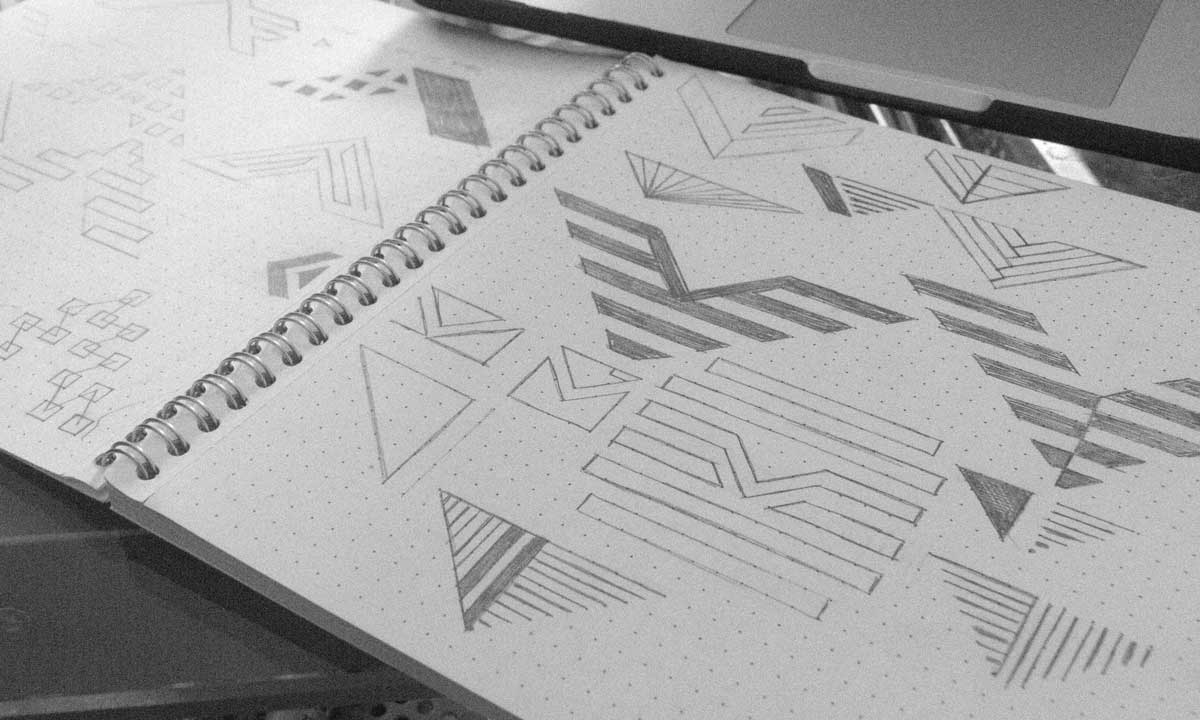
Judge each concept using the same content and applications. Otherwise, you may choose the better mock-up rather than the better identity.
Put the same content into each shortlisted direction: a proposal page, a partner biography and a chart. Check whether the buyer can read the hierarchy and whether staff can reproduce the layout.
Review the visual identity as a working system:
- Is the name readable in the intended settings?
- Can long service titles fit without improvised formatting?
- Do charts remain understandable?
- Does the system distinguish headings, evidence and supporting detail?
- Can the intended software reproduce the design?
Ipsos’s gold classification measures brand linkage and uniqueness, not whether a design committee likes an asset. The distinction is useful when reviewing concepts: aesthetic preference, usability and recognition require different questions.
An unfamiliar identity cannot reasonably be expected to have established recognition on the day of presentation. Test whether the intended audience understands the material and whether the design creates confusion with competitors; do not claim an early preference test proves long-term brand equity.
What if I dislike the work?
Disliking a concept is useful information when you can connect the reaction to a requirement.
“The type feels too informal for our acquisition reports” gives the designer a hypothesis to examine. “Make it more premium” leaves the designer guessing.
Use this feedback structure:
- Observation: what do you see?
- Requirement: which agreed criterion does the design miss?
- Consequence: what problem could that create?
- Question: what should be explored or tested next?
For example: “The proposal cover gives the decorative graphic more emphasis than the assignment title. Our brief prioritises quick identification of the mandate. Can the hierarchy be revised?”
No design vocabulary required. Just a reason.
The agency should also explain disagreement. A designer may have evidence that the requested change would reduce legibility or weaken the system. Leadership can then decide with the trade-off visible.
What counts as a revision?
A revision develops the agreed direction. A change request alters the agreed requirement.
Adjusting spacing or improving chart contrast may be refinement. Adding a newly acquired subsidiary, changing the target audience or commissioning a name change may reopen the brief.
Agree how changes will be assessed before concepts are presented. The agreement should state the included review rounds, the feedback owner and how additional work affects fees and timing.
There is no universal correct allowance. A tightly scoped refresh and a multi-office repositioning create different review demands.
Can we actually use what gets delivered?
Test that question before final handover, using the staff and software that will produce the materials.
A polished PDF proves that a designer can create one. The PDF does not prove that a business development manager can edit the proposal template without breaking the layout.
Ask the marketing owner to produce and export a real document using the supplied template. If the document breaks without the designer present, handover is not finished.
What should the handover include?
Agree the inventory during scoping, then check the inventory against the final delivery.
Depending on the project, the handover may require:
- Appropriate logo versions and export formats.
- Colour specifications and typography guidance.
- Editable templates in the agreed applications.
- Image and graphic assets with usage information.
- Guidelines covering common production decisions.
- File access, ownership and support boundaries.
Confirm font and image licensing arrangements with the relevant suppliers. Receiving a file does not, by itself, answer where every component may be used.
Do not ask for every possible format out of habit. Ask for the formats your staff, developers and print suppliers actually need.
How do we launch without replacing everything at once?

Prioritise materials by use and consequence.
A live proposal template or frequently visited service page may need attention before an infrequently used office item. Agree what must change at launch and what can follow through normal replacement cycles.
Assign an owner and target date to each application. Keep an exception list so an old template remains a known migration task rather than becoming an unofficial alternative.
McKinsey & Company’s 2018 design research supports continued learning after launch. Apply that principle by collecting production problems and user feedback rather than treating publication as the final quality check.
Track practical signals: template errors, repeated requests for exceptions, missing assets and staff reliance on the designer for routine tasks.
Commercial measures can also be reviewed, but attribution requires care. Ipsos’s 2026 analysis associated stronger asset portfolios with a 31% higher likelihood of consideration and 38% higher likelihood of usage than weaker portfolios. Those relative comparisons do not establish that a redesign will create equivalent improvements.
Approve decisions before approving designs.
A production schedule tells you when the presentation arrives. Your approval criteria tell you whether the project is ready to continue.
Use the brief to settle the business problem. Use research to challenge assumptions and identify what deserves to survive. Use applications to judge the design beyond the presentation. Use a staff-operated acceptance test to close handover.
If the position is already clear and the templates are the problem, commission that narrower fix. A full rebrand should not be the automatic answer.
If you need a starting point for diagnosis, request Inkbot Design’s free Brand Equity Audit™: a written review that identifies priority brand weaknesses and corrective actions. The published offer involves a short commercial brief and no required sales call.
Today, write one page naming the problem, the required applications and the person authorised to approve the work.
Questions people ask
How long does a brand identity project take?
A credible schedule depends on research scope, stakeholder access, approval turnaround and implementation requirements. Ask for a stage-based timetable that identifies client decisions and dependencies. A design-production estimate should not be mistaken for the time needed to complete website, document and supplier migration.
When should we choose a refresh rather than a full rebrand?
Choose a refresh when the audience and position remain appropriate but specific visual or application problems need correction. Consider broader work when the intended market, proposition or organisational structure has changed. Confirm the diagnosis first: an inconsistent presentation template does not automatically justify replacing the identity.
Can we phase the work to control expenditure?
Yes — identity work can be phased when each phase has a usable outcome, and the dependencies are explicit. Research and briefing can precede production; lower-priority applications can follow launch. Avoid deferring work essential to using the identity, such as the proposal template your team needs immediately.
Does the identity process include changing our name?
No — a name change should not be assumed to be included. Naming creates additional strategic, legal and implementation dependencies. Establish whether the existing name remains before detailed identity development, or agree explicitly how a later naming decision would affect the work already approved.