Video Content Marketing Strategy: A Comprehensive Guide
Video content has become an indispensable tool for businesses to engage with their target audience.
And when combined with a well-crafted marketing strategy, video can be a game-changer for your brand.
So, let’s dive into video content marketing and explore how you can harness its power to drive engagement, increase conversions, and boost your bottom line.
- Video content is essential for engaging audiences and driving conversions in today's digital marketing landscape.
- Understanding your target audience and defining clear goals are crucial for a successful video content strategy.
- Optimisation, promotion, and continuous analysis of video performance enhance effectiveness and reach.
What is Video Content Marketing?
Video content marketing uses video across various platforms to promote a brand, product, or service.
It involves creating engaging, informative, and entertaining video content that resonates with your target audience and encourages them to take a desired action, such as making a purchase, subscribing to your email list, or interacting with your brand on social media.
Why a Video Content Marketing Strategy Matters
In a world where attention spans are shrinking, video content is a powerful medium for capturing and retaining your audience’s interest. Here are a few reasons why video content marketing is a must-have in your marketing arsenal:
- Visual Appeal: Video enables you to present your message in a visually appealing and engaging way, making it easier for your audience to digest and retain the information.
- Emotional Connection: Well-crafted video content can evoke emotions, creating a deeper connection between your brand and your audience.
- Increased Engagement: Video content is highly shareable and encourages active engagement, leading to higher social media reach and a more substantial online presence.
- Improved Search Engine Optimisation (SEO): Video content can enhance your website’s search engine ranking, driving more organic traffic.
- Versatility: Video can be used across various platforms, from your website and social media channels to email marketing and even physical events.
Understanding Your Target Audience
Before creating video content, it’s essential to understand your target audience. Ask yourself these questions:
- Who are they?
- What are their interests, pain points, and preferences?
- Where do they spend their time online?
- What kind of video content resonates with them?
Answering these questions will help you craft video content that speaks directly to your audience, increasing the chances of engagement and conversion.
Defining Your Goals
Clearly defining your goals is the foundation of any successful video content marketing strategy. Ask yourself:
- What do you want to achieve with your video content?
- Do you want to increase brand awareness, drive sales, or provide educational content?
- How will you measure success? (e.g., views, shares, conversions, etc.)
Clear goals will help you create targeted video content and measure the effectiveness of your strategy.
Setting a Realistic Budget
Right, before you even think about hitting record, let’s talk about the money.
A strategy without a budget isn’t a strategy; it’s a wish. You need to know what you’re spending.
Think of it in three parts. First, pre-production encompasses planning, scriptwriting, and all the preparatory work.
Then you’ve got the actual production, the filming. This could be gear, hiring a space, or paying people.
Finally, post-production, which includes editing, music, and making everything look polished.
You don’t need a Hollywood budget. Honestly, you can start with your phone and some free editing software.
However, you must know your costs. That’s the only way you’ll figure out if you’re actually getting a return on your investment.
Developing Your Content Strategy

To create a successful video content marketing strategy, businesses must follow a structured approach. Here are the steps to follow:
1. Define Your Goals
Defining your goals is the first step in developing a video content marketing strategy. What do you want to achieve with your video content? Are you looking to increase brand awareness, drive sales, or educate your audience? Understanding your goals will help you create content aligned with your objectives.
2. Identify Your Target Audience
The next step is to identify your target audience. Who are you trying to reach with your video content? Understanding your target audience’s demographics, interests, and pain points will help you create content that resonates with them.
3. Develop a Content Plan
Once you’ve defined your goals and identified your target audience, it’s time to develop a content plan. This plan should outline the types of videos you’ll create, the topics you’ll cover, and the frequency of your content creation.
a. Video Types
There are many different types of videos you can create, including:
- Product demos
- Tutorials
- Explainer videos
- Interviews
- Vlogs
- Live videos
- Webinars
b. Content Topics
Consider your target audience’s interests and pain points when selecting video topics to ensure relevance and engagement. You can also use keyword research tools to identify popular topics and trends in your industry.
c. Frequency
Consistency is vital when it comes to video content marketing. Determine how often you’ll publish new videos and follow a consistent schedule. This will help you build a loyal following and engage your audience.
4. Create High-Quality Content
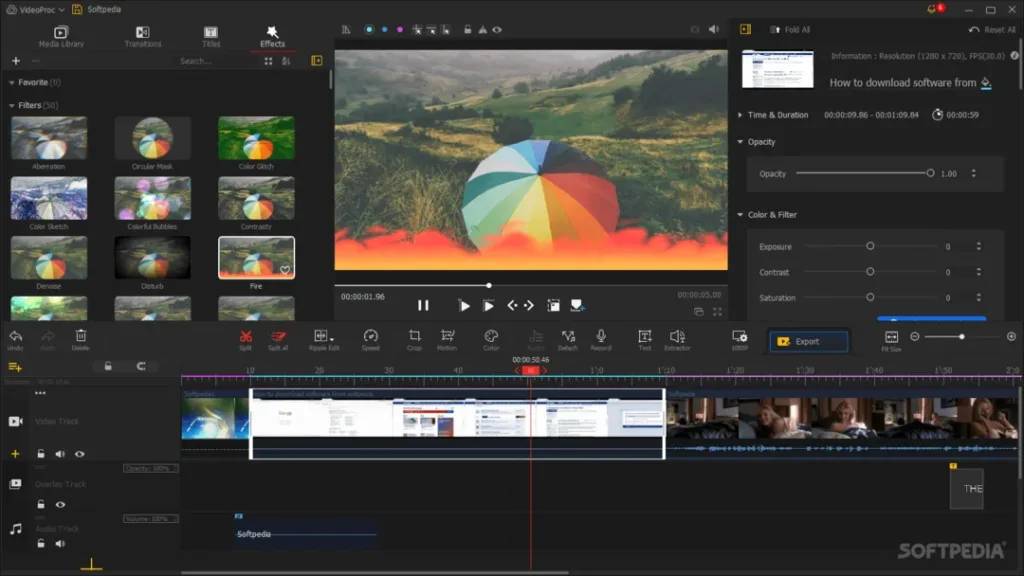
Once you’ve developed your content plan, it’s time to start creating high-quality video content. Here are some tips for creating engaging and compelling videos:
a. Use High-Quality Equipment
Invest in high-quality equipment, such as a DSLR camera, a tripod, and a microphone. While you don’t need to break the bank, using high-quality equipment will ensure your videos look professional.
b. Focus on Lighting and Sound
Good lighting and sound are essential for creating high-quality videos. Use natural light or invest in lighting equipment to ensure your videos are well-lit. Use a microphone to capture clear and crisp audio.
c. Use Engaging Visuals
Use engaging visuals, such as animation, graphics, and b-roll footage, to keep your viewers engaged and interested in your content.
d. Tell a Story
When creating video content, tell a compelling story that resonates with your target audience. Utilise a narrative structure, character development, and conflict to maintain your viewers’ engagement and interest.
e. Use Humour and Personality
Feel free to use humour and personality in your videos. This will help to make your content more engaging and memorable for your viewers.
f. Leverage AI Tools
Look, the thing is, creating content can be a proper time-suck. But here’s the good news.
AI can be your new best mate for this. It’s not just some buzzword; it’s a set of tools that can genuinely speed things up.
Stuck on a script? AI can spit out a solid first draft in seconds.
Need a voiceover but can’t stand the sound of your own voice? Text-to-speech tools are scarily good now.
Some AI editors can even look at all your footage and pull out the best takes for you.
And it gets better. Generative AI can create b-roll footage from a simple text description.
Need a shot of a London bus in the rain? Just ask for it.
This tool helps you produce significantly more content, much faster, without compromising quality. It’s about working smarter, not harder.
5. Optimise Your Videos for SEO

To ensure your videos are discoverable online, optimising them for search engines is essential. Here are some tips for optimising your videos for SEO:
a. Use Relevant Keywords
Use relevant keywords in your video titles, descriptions, and tags to help search engines understand what your videos are about.
b. Create Transcripts
Create transcripts of your videos and upload them to your website. This will help search engines understand the content of your videos and improve their rankings.
c. Use Closed Captions
Use closed captions in your videos to make them more accessible and improve their online discoverability.
6. Promote Your Videos
Once you’ve created high-quality video content, promoting it to reach your target audience is essential. Here are some strategies for promoting your videos:
a. Share on Social Media
Share your videos on social media platforms like Facebook, Twitter, and LinkedIn. Utilise relevant hashtags and actively engage with your audience to expand the reach of your videos.
b. Collaborate with Influencers
Collaborate with influencers in your industry to expand your reach to new audiences. Influencers can help to promote your videos to their followers and increase your brand’s visibility.
c. Use Email Marketing
Use email marketing to promote your videos to your existing customer base. Include links to your videos in your email newsletters and encourage your subscribers to share them with friends and colleagues.
d. Use Paid Advertising
Use paid advertising to promote your videos on social media and search engines. This can increase the reach of your videos and drive more traffic to your website.
7. Measure and Analyse Your Results
Finally, it’s essential to measure and analyse the results of your video content marketing strategy. Utilise tools like Google Analytics, YouTube Analytics, and social media analytics to monitor your videos’ performance and pinpoint areas for improvement.
Examine metrics such as views, engagement rates, and conversion rates to assess the effectiveness of your strategy. Use this data to refine your approach and create even more effective video content in the future.
Types of Video Content
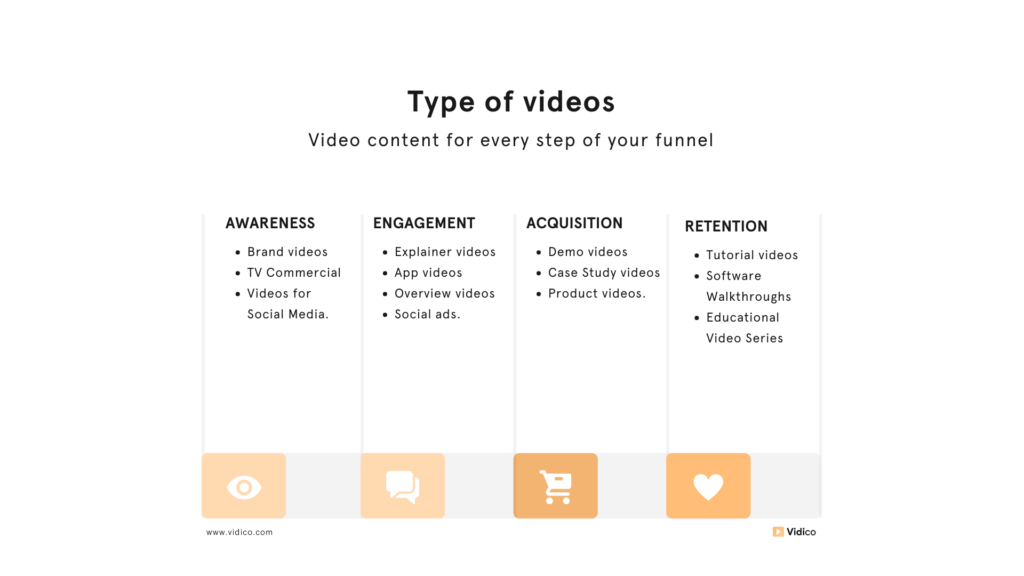
Creating various video content is essential to keep your audience engaged and interested. Here are some popular types of video content to consider:
1. Educational and Explainer Videos
These videos aim to educate your audience about your products, services, or industry-related topics. They can help position your brand as a thought leader and build trust with your audience.
2. Product Demonstrations and Tutorials
Showcase your products or services in action with detailed demonstrations and tutorials. These videos help potential customers understand the value of your offerings and how to use them effectively.
3. Customer Testimonials and Success Stories
Share real-life customer experiences and success stories to build credibility and social proof for your brand. These videos can be powerful in influencing purchasing decisions.
4. Behind-the-scenes and Company Culture Videos
Give your audience a glimpse into your company’s culture, values, and day-to-day operations. These videos can help humanise your brand and foster a deeper connection with your audience.
5. Live and Interactive Videos
Engage with your audience in real-time through live broadcasts, Q&A sessions, or interactive videos, encouraging participation and feedback.
6. Entertaining and Viral Content
Create fun, entertaining, and shareable videos that tap into popular culture, trends, or humour. These videos help increase brand awareness and reach a wider audience.
7. User-Generated Content (UGC)
Right, this one’s a game-changer. Why not have your actual customers create videos for you?
That’s what user-generated content is all about.
Think about it. People trust other people far more than they’ll ever trust a brand’s shiny advert.
So, encourage them to send in videos. Unboxing clips, testimonials, showing how they use your product, and maybe run a competition.
It’s authentic, builds a community, and provides a wealth of powerful social proof.
Best part? It costs you next to nothing. It’s basically free marketing that works better than the expensive stuff.
Video Content Optimisation and Distribution
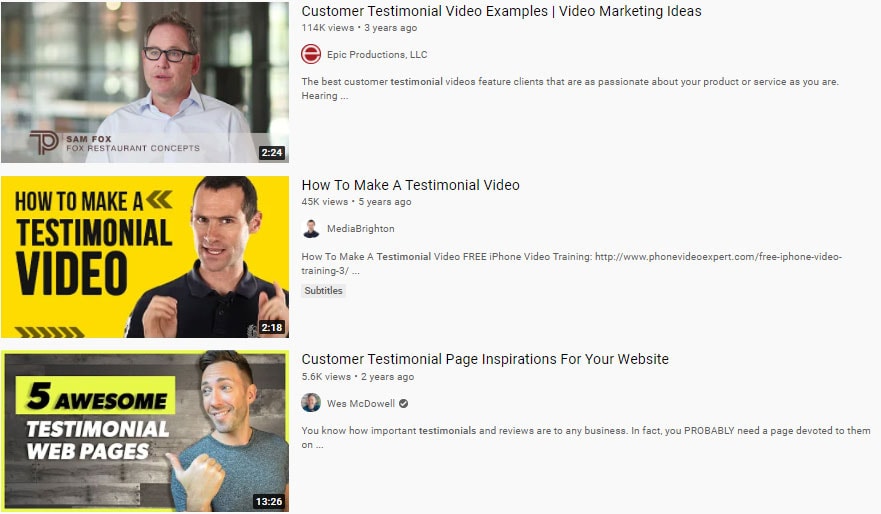
Optimising and distributing your video content effectively across various platforms ensures it reaches its full potential.
Video Optimisation
- Choose an engaging and descriptive title that includes relevant keywords.
- Write a compelling description that summarises the video’s content and includes target keywords.
- Use appropriate tags and categories to improve discoverability.
- Include closed captions or transcripts to improve accessibility and SEO.
- Create eye-catching thumbnails that grab attention and accurately represent the video’s content.
Video Distribution
Before you start chucking your videos everywhere, stop for a second. The biggest mistake people make is treating every platform the same.
It just doesn’t work. A video that goes viral on YouTube will likely die a slow death on TikTok.
You’ve got to tailor your content. Short, punchy, vertical videos are the currency of TikTok, Instagram Reels, and YouTube Shorts.
Their job is to grab attention in the first two seconds. However, for your website or main YouTube channel, a longer, horizontal video is generally more effective.
You have more room to tell a story, create a proper tutorial, or delve in-depth.
The platform dictates the format, not you. Play by their rules, and you’ll get the engagement you’re after.
Simple as that.
- Embed video content on your website, blog posts, and landing pages.
- Share your videos on social media platforms like YouTube, Facebook, Instagram, Twitter, and LinkedIn.
- Include video content in your email marketing campaigns to drive engagement and click-through rates.
- Encourage your audience to share your videos by making it easy to copy and paste embed codes or share links.
- Consider paid advertising options, like YouTube pre-roll ads or social media sponsored posts, to expand your reach.
Video Content Analytics and Measurement
Tracking and analysing key performance indicators (KPIs) is essential to continuously improve your video content marketing strategy. Here are some metrics to consider:
- Views: Track the number of views your videos receive across different platforms.
- Engagement Rates: Monitor key engagement metrics, such as likes, comments, shares, and average watch time, to gauge audience interest and interaction.
- Click-Through Rates (CTR): Measure the percentage of viewers who click through to your website or other desired destinations from your video content.
- Conversion Rates: Track the number of viewers who take the desired action, such as making a purchase, filling out a form, or subscribing to your email list.
- Social Media Reach and Engagement: Analyse your video content’s performance on social media platforms, including reach, impressions, and engagement metrics.
Utilise these analytics to determine what resonates with your audience and make informed, data-driven decisions to refine your video content strategy.
Conclusion
In today’s digital landscape, video content marketing has become a powerful tool for businesses to connect with their target audience, build brand awareness, and drive conversions.
By understanding your audience, setting clear goals, developing a comprehensive content strategy, and optimising and distributing your video content effectively, you can unleash the full potential of video marketing.
Remember, video content marketing is an ongoing process that requires continuous improvement and adaptation. Stay up-to-date with the latest trends, analyse your performance metrics, and refine your strategy to keep your audience engaged and your brand competitive.
So, what are you waiting for? Start crafting a winning video content marketing strategy today and watch your brand soar to new heights!
FAQs
How often should I publish new video content?
There’s no one-size-fits-all answer, but consistency is critical. Aim to publish new video content that resonates with your brand and audience on a regular basis. Depending on your resources and goals, this could be done on a weekly, bi-weekly, or monthly basis.
How long should my videos be?
The ideal length for your videos depends on the type of content and your audience’s preferences. Generally, shorter videos (1-3 minutes) tend to perform better for social media and educational content, while longer videos (5-10 minutes) may be suitable for in-depth tutorials or product demonstrations.
Should I use paid advertising to promote my video content?
Paid advertising can be an effective way to expand your reach and increase the visibility of your video content. Consider platforms like YouTube, Facebook, and Instagram for targeted video advertising. Start with a small budget, test different ad formats and targeting options, and analyse the results to optimise your campaigns.
How can I improve the discoverability of my video content?
Optimise your video titles, descriptions, and tags with relevant keywords to improve search engine visibility. Encourage engagement by asking viewers to like, comment, and share your videos. Collaborate with influencers or other brands to cross-promote your video content and expand your reach to new audiences.
What kind of equipment do I need to create high-quality video content?
While professional-grade video equipment can produce exceptional results, you don’t necessarily need expensive gear to create quality video content. Start with a decent smartphone camera, invest in a tripod or stabiliser, and consider purchasing an external microphone for better audio quality. As your video skills and budget grow, you can gradually upgrade your equipment.

