How to Write a Slogan Your Professional Services Firm Can Prove
A managing partner shortlisting three firms for merger advisory is not a compliment to your slogan. They are trying to decide which choice they will not have to defend to a board in 18 months.
Your line has exactly one job in that moment: make the low-risk option easier to recognise.
Most professional services slogans fail because they claim trust rather than reduce the risk of getting it wrong.
Edelman and LinkedIn’s 2024 research, which surveyed almost 3,500 management-level professionals across seven countries, found 73% treat a firm’s published thinking as a more trustworthy signal of capability than its marketing materials or product sheets.
A slogan that reads like marketing works against that instinct.
- Make one precise, provable promise that reduces a buyer's risk and points them to the evidence that backs it.
- Ensure the promise is narrow and falsifiable, survives scrutiny from finance or procurement, and cannot be truthfully copied by a competitor.
- Audit and evidence-check the firm can prove the line before publishing; verify operations, client experience and run trademark clearance.
How to Write a Slogan for a Professional Services Firm
Write a slogan for a professional services firm by making one precise, provable promise about a specific client problem, in plain language that the whole business can stand behind.
Drop the claims of trust and excellence. The line’s job is to reduce a buyer’s uncertainty about a high-consequence decision, then lead that buyer to the evidence that backs it.
Three things follow from that:
- The promise must be narrow enough to be falsifiable — a line nobody could disagree with says nothing.
- The promise must survive contact with a sceptic in finance or procurement, not only the partner who likes it.
- The promise must already be true inside the firm before it goes on the website, because the rest of your verbal identity will be measured against it.
A professional services slogan works by making a precise, provable promise that reduces buyer uncertainty about a high-consequence decision, not by sounding polished.
What a Slogan Actually Does for a Professional Services Buyer
A slogan for a professional services firm reduces the buyer’s fear of making the wrong choice.
That is the mechanism, and it is worth being exact about why it matters.
Buying an accountant, a litigator, or an IT partner is a low-information decision with high consequences: the client cannot inspect the work before committing, the cost of a bad choice is high, and the person signing often has to justify it to others.
Uncertainty, not ignorance, is the thing standing between you and the instruction.
This is where the “keep it catchy” advice quietly misleads a serious firm. Catchiness optimises for recall. A professional-services buyer does not have a recall problem — they have a risk problem.
Edelman and LinkedIn found that 86% of senior buyers value thinking that challenges their assumptions, and the same body of research shows they treat substance as a trust signal. A line engineered to be memorable, in that context, spends its one impression on the wrong variable.
I’ll put it plainly. Your slogan is not an advert. It is the shortest possible answer to the question “why is hiring you a safe decision?” — and it should point to proof, not feelings.
This is also why work on the line belongs inside a broader programme of brand voice and copywriting, not a one-afternoon brainstorm.
The words on the homepage are downstream of a decision about what the firm is actually promising.
“A professional services buyer does not forget your name. They forget why they should trust you with a decision they cannot afford to get wrong. A slogan’s real work is to make that trust rational — to hand the buyer a specific, checkable reason rather than a feeling. Write for the risk, not the memory.”
The 3 Types of Slogan, and Which Suits Your Firm
Before you write anything, pick your type — because the three that work are not equally safe, and firms almost always reach for the riskiest one. Hinge Marketing’s professional-services guidance sorts them cleanly.
Descriptor — say what you do, like Hinge Marketing’s “The Land Lawyers.” Dull? Maybe. But for a 60-person firm nobody’s heard of yet, clarity is the scarcest thing you own, and a descriptor buys it outright.
Benefit or market position — stake one specific advantage, like Hinge Marketing’s “the accessible CPAs.” This is where most mid-market firms should live, because the promise is narrow enough, actually, to prove.
Emotion or aspiration — the feeling-led line. Hinge Marketing is blunt that it needs deep research and a large ad budget to land, and it is the one firm that falls for it anyway. Without Nike’s media weight behind it, it produces expensive noise.
First, settle whether you need a line at all: the case hinges on whether your logo needs a tagline.
How to Write the Line: a Five-Step Method

Five steps, in order. The order is the point — most firms do step five first and wonder why the result is bland.
- Name the one client problem you reduce uncertainty about. Not three. One. “Will this firm actually pick up the phone in a crisis?” is a real fear you can answer.
- Write the promise in plain words. State the answer to that fear directly. Strip anything a competitor could also say without lying.
- Pressure-test it against a hidden buyer. Read it as the finance director or the procurement lead, not the partner who commissioned it. If it means nothing to them, it will not survive the buying group.
- Audit whether the business can prove it. Before the line is allowed near a website, list the evidence that demonstrates it. No evidence, no line. (This is step six’s job done early.)
- Run a trademark and clearance check. Hinge Marketing rightly flags that once a line is chosen, a trademark search and IP advice protect the investment. Do this before you print anything, not after.
Where step two gets hard, worked examples of lines that hold up are more useful than adjectives — a set sits in these brand voice examples.
Why “Trusted Partner” and “Innovative Solutions” Quietly Fail
“Trusted partner.”
“Innovative solutions.”
“Excellence delivered.”
Read three professional-services websites in a row, and you will meet all three, which is the whole problem — they describe the category, not the firm. They fail for a reason worse than being generic. They read as avoidance.
Edelman and LinkedIn found 65% of senior buyers prefer a conversational, less formal style, and that the buyers who sign are hunting for a point of view, not reassurance. Safe corporate language signals a firm that has something to hide or nothing to say.
One test settles it. Could a direct competitor put this line on their site tomorrow without it being false?
If so, it describes your sector. “We are a trusted partner” is true of every firm that has never been sued.
Make Sure the Business Can Prove the Promise
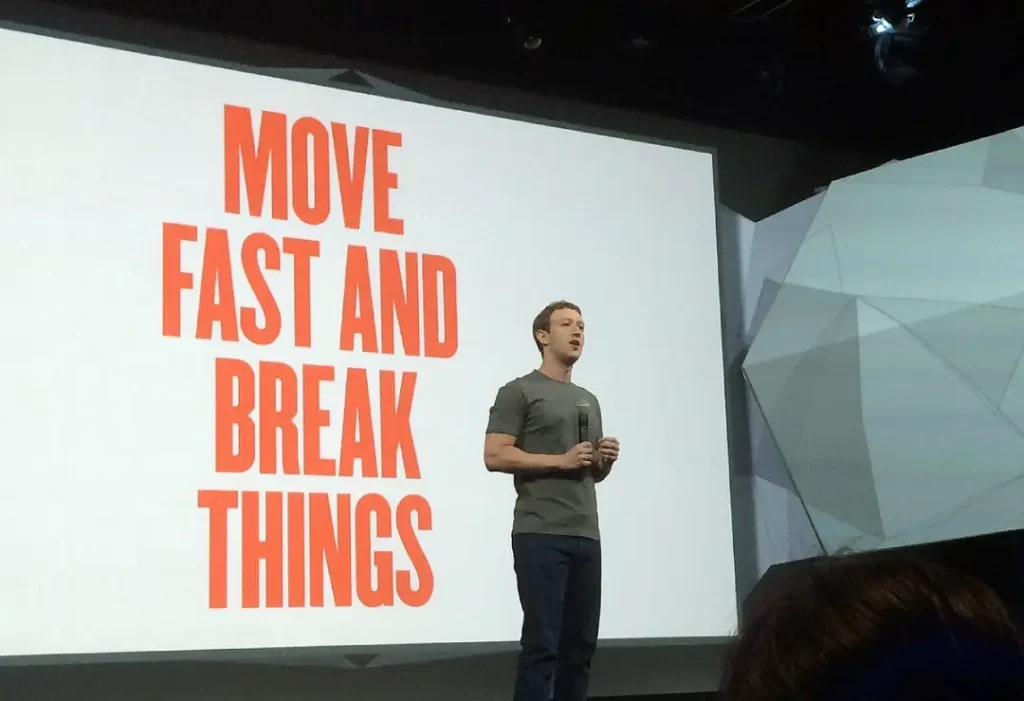
A slogan is a cheque the rest of the business has to cash.
This is the step that separates a line that wins work from a cosmetic one, and it is the step almost every guide skips. If your line promises “answers within the hour,” the phones have to answer within the hour — in reception, in the associate’s inbox, in the out-of-office.
The moment the experience contradicts the promise, the promise becomes evidence against you.
The clearest current example of the promise–proof gap is how firms talk about technology.
Thomson Reuters’ 2025 research, surveying 1,702 professionals across legal, tax, accounting, audit and adjacent fields, found 57% of clients want their firms to use generative AI — yet 71% of law-firm clients and 59% of tax-firm clients did not know whether their firm used it at all.
A firm calling itself “modern,” “innovative,” or “future-ready” that cannot tell its clients which technology it runs on has written a cheque it is not cashing. The words invite a question the firm has not answered.
The single most common failure is not a weak line. It is a good line the firm cannot demonstrate, which is worse than no line at all, because it sets an expectation the service then breaks.
Buying Groups and the AI Transparency Test
The buyer is no longer one person, and that changes how the line has to work.
Edelman and LinkedIn’s 2025 research reports that more than 40% of B2B deals stall because of misalignment inside the buying group — the “hidden buyers” in finance, procurement, legal and compliance who can halt a purchase without ever being the person using the service.
A slogan written purely for the managing partner will not carry the deal. It has to make sense to people assessing commercial, operational and regulatory risk at the same time.
The second shift favours smaller firms if they are brave enough to take a position.
The same 2025 research found 53% of B2B decision-makers say brand recognition matters less when a firm’s thinking is strong.
A 90-person consultancy does not need a big-brand slogan. It needs a defensible idea, reinforced by visible specialists and real insight.
Governing how that idea shows up consistently — across the site, the proposals and the AI tools that now paraphrase your firm to buyers — is its own discipline, covered in these brand guardrails for AI search.
The Line Is a Cheque — Write One You Can Cash
A professional services slogan earns nothing by claiming trust.
It earns attention by making one precise promise a nervous buyer can check — and then the firm proves it.
Everything in this guide bends toward that: write for the buyer’s risk, not their recall; make a promise narrow enough to be falsifiable; and audit the evidence before the line goes live, because “trusted partner” is not a position, it is a place to hide.
The catchiness advice was never wrong so much as aimed at the wrong problem.
Start today with one test, not a brainstorm. Put your current line next to your two closest competitors’ lines and see if you could swap them without anyone noticing.
If you could, you do not have a slogan — you have a description of your market wearing your logo.
If you want an outside read on where your line and the brand behind it are losing commercial ground, request a free Brand Equity Audit™ — a structured diagnostic that shows exactly where the promise and the proof have come apart, and what to do about it.
FAQs
Does a professional services firm actually need a slogan?
No, not always. A firm only needs a slogan if it must clarify what it does, separate itself from near-identical competitors, or make one specific promise stick. A well-known firm, or one with deeper positioning problems, may find a slogan is noise it does not need.
What is the difference between a slogan, a tagline and a positioning statement?
A tagline and a slogan are effectively the same short public line beside your name. A positioning statement is the longer internal decision about who you serve and why you win. The positioning comes first; the slogan is its shortest public expression, and should never contradict it.
How long should a professional services slogan be?
Short enough to say in one breath, usually two to five words. Length is not the goal, though. A precise seven-word promise beats a vague three-word one every time, because the buyer is judging credibility, not counting syllables.
Why do so many B2B slogans sound identical?
Because “trusted partner” and “innovative solutions” describe the whole category, every firm can use them without lying. Edelman and LinkedIn found senior buyers increasingly read this safe corporate language as avoidance rather than reassurance — it signals a firm with nothing specific to say.
How do I know if my slogan is any good?
Ask whether a direct competitor could put the same line on their site tomorrow without it being false. If they could, it describes your category, not your firm. A working slogan makes a promise narrow enough that a rival would be lying to copy it.
