Brand Guardrails for AI Search: Protecting Your Firm
Brand guardrails are no longer internal PDF documents. They are external semantic architectures engineered to control what AI models output about your professional services firm. If you fail to dictate your entity data, generative search engines will rewrite your market positioning entirely.
 By Stuart Crawford
 Reviewed by Tabitha Ayers
Updated 9 min read

On this page9 min left
Brand guardrails are no longer internal PDF documents distributed to marketing teams; they are external semantic architectures engineered to control what AI models output about your business.
For decades, professional services firms relied on visual identity and tone-of-voice documents to maintain consistency.
In 2026, those visual and tonal assets are entirely stripped away when generative engines summarise your firm to a prospective client.
Ignoring this structural shift carries severe commercial consequences. Unprepared brands face a 20% to 50% decline in traffic from traditional search channels as user behaviour shifts toward generative answers, according to nav43.
When a CEO searches for a management consultancy or accounting firm, they no longer browse ten blue links. They read a synthesised, AI-generated verdict. If your firm has not engineered the semantic data that feeds that verdict, you do not exist in the consideration phase.
This requires a fundamental pivot in how marketing directors approach SEO. Controlling the narrative now means forcing large language models to associate your brand entity with specific attributes, services, and outcomes.
You must build digital barriers that prevent AI from hallucinating your market position or, worse, omitting you entirely in favour of a competitor with superior entity architecture.
What Are Brand Guardrails for AI Search?
Brand guardrails for AI search are external semantic data structures and off-site brand mentions that dictate how artificial intelligence models interpret, categorise, and summarise a company.
Key Components:
- Off-site brand mentions strategically placed across high-authority, trusted industry publications.
- Entity-based structured data that explicitly links the professional services firm to specific industry concepts.
- Consistent, unambiguous digital PR narratives that provide language models with extractable, highly verified facts.
Brand guardrails for AI search are external semantic data structures and off-site brand mentions that dictate how artificial intelligence models interpret, categorise, and summarise a company.
The Financial Stakes of AI Search Visibility
Why does AI search visibility dictate revenue for professional services firms? AI search visitors convert at significantly higher rates because the generative answer has already qualified the vendor before the user clicks.
Search engines no longer function as simple directories. By 2028, $750 billion in US revenue will flow directly through AI-powered search, according to nav43. Furthermore, AI search visitors are 4.4x more valuable than traditional organic search visitors by conversion rate, based on data from Semrush.
When a language model explicitly recommends a professional services firm, the user treats that output as an objective endorsement rather than an advertisement.
Despite these figures, the vast majority of firms operate completely blind. Only 16% of brands systematically track AI search performance, according to nav43. This creates an immediate commercial advantage for the minority of firms that actively engineer their AI guardrails.
The commercial reality of 2026 is that AI visibility dictates pipeline. When AI search visitors convert at 4.4 times the rate of traditional organic traffic, failing to control your brand entity within language models is professional negligence. Firms must architect their digital presence for machines first, humans second.
Myth-Busting: The Death of the Backlink Dictatorship
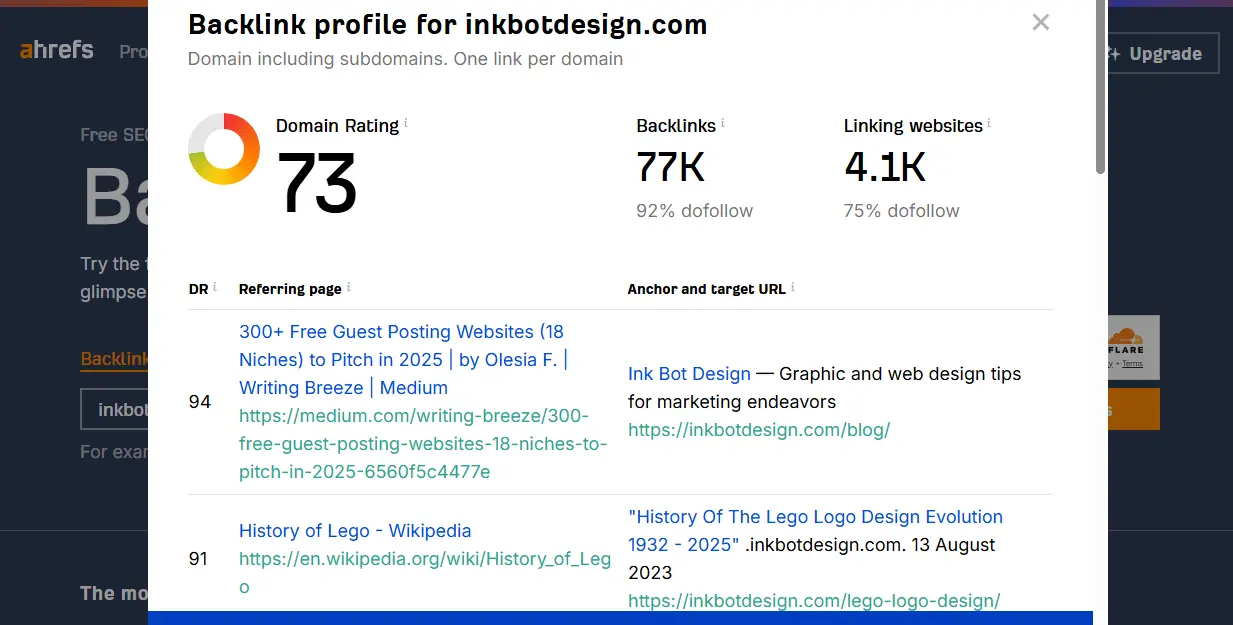
Traditional SEO taught marketing directors that securing backlinks was the absolute foundation of digital authority. This advice was entirely correct for the algorithm era of 2010 through 2023, where hyperlinks functioned as votes of confidence.
In 2026, relying on backlinks to secure AI visibility fails completely. Generative engines evaluate entity consensus, not hyperlinked votes. Ahrefs, the SEO software suite, found that brand web mentions show the strongest correlation with AI Overview visibility at 0.664.
In stark contrast, brand web mentions correlate much more strongly than backlinks, which scored a remarkably low 0.218. You no longer need a website to link to your domain; you need highly authoritative platforms to explicitly state your firm's name in connection with your core services.
Professional services firms must immediately redirect budget from traditional link-building campaigns toward unlinked brand mention acquisition. You must dominate the off-site narrative.
Traditional backlinks are mathematically irrelevant to AI Overview inclusion. When brand mentions correlate at 0.664 and backlinks sit at 0.218, investing in hyperlinked votes is a waste of capital. Language models seek consensus through unlinked, authoritative citations. That is your new guardrail.
Building Semantic Brand Guardrails in 2026
Off-site factors control AI output by establishing a statistical consensus about your firm that the language model cannot ignore. The top three correlations with AI visibility are off-site factors: brand web mentions (0.664), brand anchors (0.527), and brand search volume (0.392), according to Ahrefs.
If your firm publishes excellent thought leadership on its own domain but receives zero mentions in industry press, the AI model will ignore you. Currently, 26% of brands have zero mentions in AI Overviews, as measured by Ahrefs.
To build a guardrail, your PR team must secure exact-match brand mentions alongside your target services across trusted publications. This consensus forces the AI to output your desired positioning.
Why Is Technical Entity Architecture Required?
Technical entity architecture is required because language models do not read websites; they parse relationships between known entities. Proper technical SEO establishes these mathematical relationships explicitly.
You must deploy advanced schema markup that defines the professional services firm as a distinct entity, linking its leadership team, locations, and services directly to recognised Wikipedia or Wikidata concepts. This removes ambiguity.
When a language model evaluates your firm, it requires structured, unambiguous data to formulate an answer. Without this architecture, the model guesses your expertise, often incorrectly.
How Does Consumer Intent Shape AI Brand Strategy?
Consumer intent shapes AI brand strategy because buyers now use language models as primary research assistants, bypassing corporate websites entirely.
About 50% of Google searches already have AI summaries, and that is expected to rise to more than 75% by 2028, according to nav43.
More urgently, 50% of consumers polled by McKinsey intentionally seek out AI-powered search engines. Furthermore, 44% of AI-powered search users say the AI engine is their primary and preferred source of insight, ahead of traditional search at 31%, as reported by nav43.
Your guardrails must be designed to intercept this intent. If your firm is not the recommended entity within the AI summary, the buyer journey ends before you ever see the analytics data.
Building brand guardrails requires technical, off-site execution. You must establish mathematical consensus through unlinked brand mentions on authoritative domains. When 26% of brands have zero mentions in AI Overviews, survival requires explicit entity architecture, not visual style guides.
The State of AI Search in 2026
The adoption of generative search has moved past early adopters and firmly into mainstream buyer behaviour.
Microsoft Advertising cites the IAB’s 2026 Outlook Study, stating that 73% of marketers are prioritising content optimised for AI-generated answers, and cross-platform measurement has risen to 72%, up from 64% year over year. The industry has fully accepted that AI summarisation is the primary battleground for visibility.
This shift in marketing priority directly mirrors buyer reliance on artificial intelligence. Klaviyo’s 2026 AI Consumer Trends Report reveals that 60% of global consumers interact with AI at least weekly.
More critically for professional services and product marketing, 39% have purchased an AI-recommended product in the last six months.
The trust placed in AI recommendations is exceptionally high among frequent users. Klaviyo reports that 83% of AI Enthusiasts state AI recommended a product they later bought within the last six months. This level of trust means that an AI recommendation functions identically to a trusted colleague's referral.
Firms are adapting their media spend to match this reality. Kantar’s 2026 Marketing Trends notes that net 61% of marketers plan to increase creator-content investment in 2026. This data explicitly supports the idea that third-party narrative control matters more than ever.
You cannot rely solely on your owned media; you must pay for, or earn, authoritative third parties to validate your entity. Additionally, Kantar indicates that 24% of AI users already use an AI shopping assistant, and net 35% of marketers plan to increase retail media network investment in 2026.
The global market has fundamentally restructured around AI validation. When 73% of marketers prioritise content for AI-generated answers, the era of traditional organic search is effectively over. Third-party entity validation is the only reliable method to secure market share.
Data Comparison Table
Decision Point | The Wrong Way | The Right Way | Why It Matters |
|---|---|---|---|
Authority Building | Buying hyperlinked guest posts | Securing unlinked brand mentions on high-trust domains | Brand mentions correlate 0.664 with AI visibility; backlinks only 0.218. |
Narrative Control | Updating internal Tone of Voice PDFs | Publishing highly structured digital PR with atomic claims | AI strips visual and tonal identity; it only extracts semantic facts. |
Performance Tracking | Measuring standard organic clicks | Tracking AI Overview inclusion and zero-click brand mentions | 16% of brands track AI performance, yet it drives 4.4x higher conversions. |
Content Strategy | Writing long, narrative-driven blog posts | Engineering easily extractable, highly factual entity statements | AI engines extract sentences, not narratives. Pronoun usage destroys AI context. |
Brand Validation | Relying exclusively on owned website content | Investing in third-party creator content and industry press | Net 61% of marketers are increasing creator spend to control off-site narratives. |
The Verdict
Brand guardrails are no longer internal PDF documents distributed to marketing teams; they are external semantic architectures engineered to control what AI models output about your business.
We have established that visual identity and traditional link-building hold no power over SearchGPT or Perplexity. When brand web mentions correlate with AI visibility at 0.664, and AI visitors convert at 4.4 times the rate of standard traffic, the financial imperative is absolute.
Professional services firms must stop treating search engines as directories and start treating them as independent analysts. You must feed these analysts structured, unambiguous entity data and validate that data through off-site consensus.
If you leave your digital footprint to chance, the models will misinterpret your positioning, erase your competitive advantages, or replace you entirely with a firm that invested in proper architecture.
Your brand reputation is now at the mercy of a machine's algorithmic summary.
Stop auditing your PDFs and start auditing your machine-readable entity. Request a free Brand Equity Audit™ — a structured diagnostic that identifies exactly where the brand is losing commercial ground and what to do about it.
━━━━━━━━━━━━━━━━━━━━━━━━━━━━━━━━━━━━━━━━━━━━━━━
Frequently asked questions
What is a brand guardrail for AI search?
A brand guardrail for AI search is an external semantic data structure that dictates how language models interpret your company. Brand guardrails rely on unlinked brand mentions, structured schema markup, and off-site consensus to prevent AI engines from hallucinating your market position.
Why do traditional backlinks fail in generative search?
Traditional backlinks fail in generative search because AI models evaluate entity consensus rather than hyperlinked votes. Ahrefs data proves that unlinked brand web mentions correlate at 0.664 with AI Overview visibility, while traditional backlinks correlate at only 0.218.
How do AI search engines impact website traffic?
AI search engines impact website traffic by answering user queries directly on the results page, eliminating the need to click. Unprepared brands face a 20% to 50% decline in traffic from traditional search channels, according to nav43, making AI visibility highly critical.
When should a professional services firm update its AI guardrails?
A professional services firm should update its AI guardrails immediately before a strategic rebrand, acquisition, or growth phase. Establishing entity data prior to a major market move ensures that generative models correctly interpret and distribute the new corporate positioning to prospective buyers.
Is it true that AI search visitors convert better?
AI search visitors convert 4.4 times higher than traditional organic search visitors, according to Semrush data. This occurs because the AI model actively recommends the professional services firm, acting as an objective third-party endorsement that heavily pre-qualifies the prospective client.
What is the difference between brand guidelines and semantic guardrails?
Brand guidelines are internal documents dictating visual identity and tone of voice for human employees. Semantic guardrails are external digital structures, such as structured data and off-site brand mentions, designed explicitly to control how artificial intelligence models process and output corporate information.
How do off-site brand mentions protect market positioning?
Off-site brand mentions protect market positioning by forcing language models to recognise an undeniable consensus across authoritative publications. When trusted third-party platforms repeatedly associate a professional services firm with specific expertise, the AI model adopts that positioning as an objective fact.
Why are pronouns dangerous for AI content extraction?
Pronouns are dangerous for AI content extraction because language models pull isolated passages without surrounding context. If a sentence uses “the firm” instead of the explicit company name, the AI citation engine cannot resolve the entity, rendering the insight invisible to the algorithm.
How many marketers are optimising for AI answers?
According to the IAB’s 2026 Outlook Study cited by Microsoft Advertising, 73% of marketers are prioritising content optimised for AI-generated answers. This confirms that securing visibility within AI summaries is now the dominant digital marketing strategy globally.
What percentage of brands track their AI search performance?
Only 16% of brands systematically track AI search performance, according to data from nav43. This massive measurement gap provides a significant commercial advantage to professional services firms that proactively monitor and engineer their entity presence within language models.