Trust Signals Don’t Work by Looking Trustworthy: They Make You Easy to Defend
Trust signals borrowed from eCommerce assume one shopper making a low-risk purchase. Executive buyers of professional services are committees assessing personal, organisational and implementation risk. The evidence that converts them is not decoration — it is ammunition a senior sponsor uses to defend the choice to finance, procurement and the board.


On this page9 min left
- Trust Signals Convert Executive Buyers by Making the Choice Defensible
- Why Intelligent Marketers Trust the eCommerce Playbook
- Executive Buying Is a Committee Sport, Not a Solo Purchase
- What This Means for Your Rebrand
- “But Our Sector Values Discretion — We Can't Name Clients”
- Build Trust Signals as Internal-Defence Ammunition
- The Verdict
- Frequently asked questions
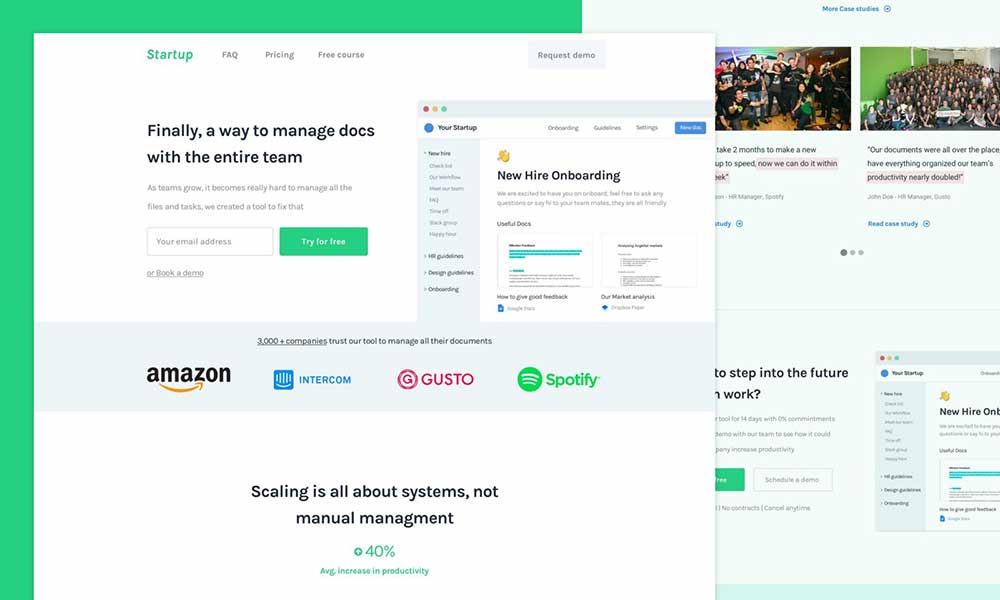
A partner at a mid-sized advisory firm forwarded me their new website last year, proud of the five-star Google rating and the wall of client logos above the fold.
It had converted precisely no one from their target tier.
The problem wasn't credibility.
The problem was that none of it gave their champion inside a prospective client anything to forward to a sceptical finance director.
That distinction is the whole game, and almost every article on trust signals misses it.
Trust Signals Convert Executive Buyers by Making the Choice Defensible
Trust signals convert C-suite buyers of professional services not when a website looks trustworthy, but when its evidence lets a senior sponsor defend choosing you to everyone who will scrutinise the decision. The buyer is rarely one person. The signal's job is to survive a room the buyer walks into without you.
- The individual sponsor is assessing personal reputational risk before organisational fit.
- Finance, procurement, IT and the board each apply a different test to the same evidence.
- Generic reassurance passes the sponsor and fails the committee.
Trust signals convert executive buyers when their visual evidence makes the purchasing decision easy to defend internally to finance, procurement and the board.
Understanding why a champion needs defensible evidence rather than reassurance is itself an exercise in cognitive bias mitigation strategies — the buying group is a machine for finding reasons to say no.
Why Intelligent Marketers Trust the eCommerce Playbook
The prevailing view is reasonable, which is why it persists.
Trust signals, as a discipline, came out of eCommerce conversion optimisation, where the evidence is genuinely strong: badges, reviews and guarantees measurably increase checkout completion.
Crazy Egg, WordStream and Mailchimp all codify the same sensible playbook — security seals near payment fields, reviews on product pages, one or two recognisable logos rather than a cluttered wall.
For a £40 purchase from a stranger, that model is correct. Zero-risk bias is real, and a money-back guarantee genuinely soothes a hesitant shopper making a decision alone in thirty seconds.
The trouble is that professional services buying looks nothing like a £40 checkout. A firm choosing a rebrand partner, an advisory retainer, or an audit is not a single person making a decision in thirty seconds.
Applying checkout psychology to a six-figure committee decision is a category error — sound advice imported into the wrong situation.
Executive Buying Is a Committee Sport, Not a Solo Purchase
The evidence that breaks the eCommerce model is the buyer's own behaviour.
Gartner reported in June 2025 that 61% of B2B buyers prefer an overall rep-free buying experience — meaning your website is doing the persuading before any human from your firm gets to contextualise it.
The proof has to stand entirely on its own.
And it has to stand up to a crowd. McKinsey's 2024 B2B Pulse research found buyers use an average of ten interaction channels during a purchase, and more than half said they were likely to switch suppliers after a poor cross-channel experience.
The website, the LinkedIn presence, the pitch deck and the proposal are all being cross-checked by different people, for different anxieties.
“The individual sponsor rarely rejects you. The committee does. Every trust signal on your website is either ammunition your champion can carry into a room you will never enter, or it is a decoration that dies at the door of the finance director's office.”
Forrester's 2025 Buyers' Journey Survey found that 64% of business buyers at manager level or above are now Millennials or Gen Z — a cohort that runs more self-guided research and expects proof in scannable, verifiable formats. The wall of logos does not survive that scrutiny. A named outcome does.
What This Means for Your Rebrand
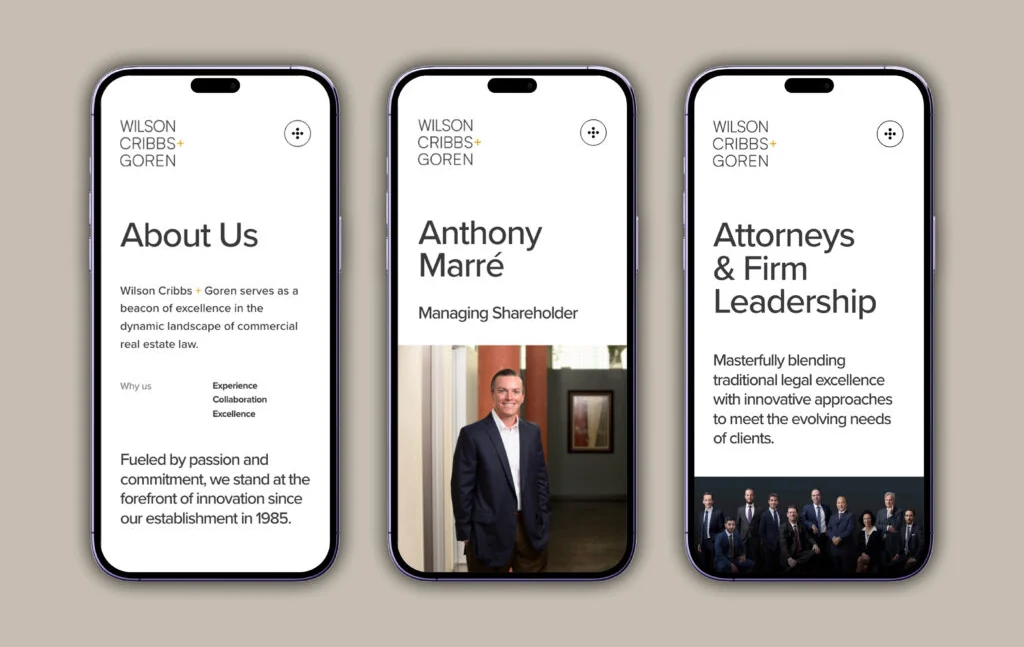
If executive buying is a committee sport, the implication is uncomfortable: most of what firms proudly display is built for the wrong reader. The sponsor might like your logos.
The procurement lead wants to know who else in their sector you've delivered for and what changed. The finance director wants a defensible justification for this fee.
The cost of getting this wrong is not a lower conversion rate. It is losing engagements you were qualified to win to a competitor whose evidence gave their champion a cleaner case.
ISACA's 2024 State of Digital Trust research found that 82% of respondents expect digital trust to become more important over the next five years, while only 20% said their organisations were increasing digital trust budgets.
That gap is where firms fall behind — recognising trust matters while underinvesting in the evidence that proves it.
The Default Approach | What It Costs | The Better Approach | Why |
|---|---|---|---|
Wall of client logos | Impresses the sponsor, tells procurement nothing | Sector-specific named outcomes | Procurement can verify relevance |
Aggregate star rating | Reads as eCommerce, not advisory | Attributed case evidence with figures | The board wants specifics, not averages |
Generic security badges | Answers a question nobody in the room asked | Clear methodology and delivery detail | Addresses implementation risk |
“Trusted by leading firms” | Unverifiable, so discounted | Named clients with permission | Defensible under scrutiny |
Awards from unknown bodies | Ignored by a sceptical CFO | Original thought leadership | 86% more likely to invite you to tender |
“But Our Sector Values Discretion — We Can't Name Clients”
The strongest objection from this reader is real: many professional services firms operate under genuine confidentiality, and naming clients isn't always possible.
Fair. But confidentiality is not a licence for vagueness — it is a brief for a different kind of specificity.
An anonymised case study that still carries the sector, the firm size, the specific problem, and the measured outcome (“a 200-partner litigation practice cut proposal turnaround from three weeks to four days”) gives a champion something defensible without breaching confidence.
The failure is not the missing logo. The failure is the abstraction that replaces it.
The second objection: “Our buyers are sophisticated; they see through marketing.” Precisely the point. Sophisticated buyers discount decoration and reward verifiable specifics — which is an argument for better trust signals, not fewer.
Build Trust Signals as Internal-Defence Ammunition
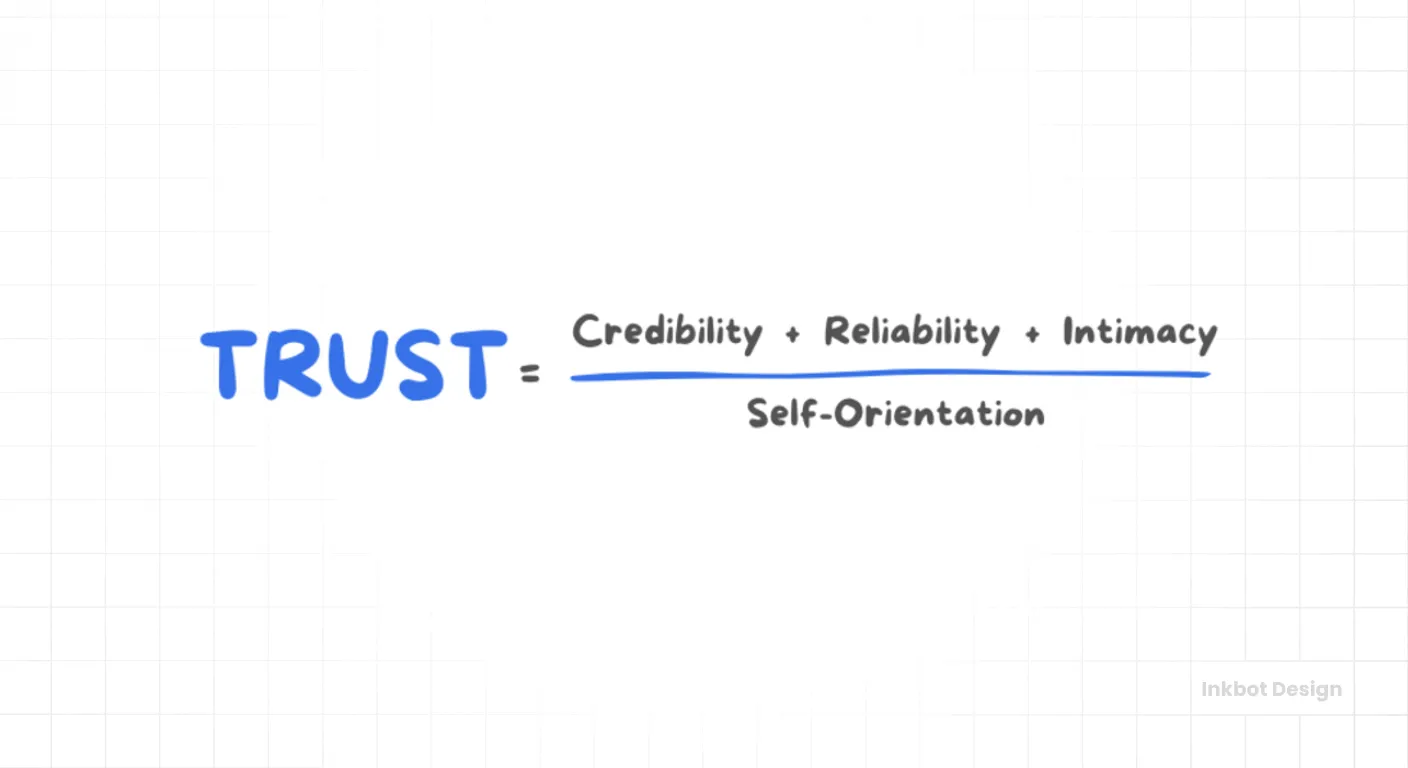
The prevailing view treats trust signals as a cosmetic applied to a website's conversion rate.
Intelligent people hold this because in eCommerce, it is demonstrably true, and the data is clean. But executive buying inverts the logic.
Here, a trust signal earns its place only if it survives being forwarded to someone more sceptical than the person who found it.
Edelman and LinkedIn reported in 2025 that 75% of decision-makers trust thought leadership more than conventional marketing when judging a firm's capabilities, and 86% were more likely to invite firms with high-quality thought leadership to tender.
That is not a vanity metric. It is evidence that intellectual trust signals — original research, a credible point of view, useful frameworks — do the defending work that a logo cannot.
A partner can forward a sharp piece of sector analysis to their board. They cannot forward a five-star average.
There is a machine dimension too. 6sense's 2025 Buyer Experience Report found 94% of B2B buyers use large language models during their buying process.
Structured case studies, named experts and unambiguous sector terminology are now read by both the committee and the AI summarising for them. Vague brand claims are invisible to both.
This connects directly to how social proof on a website must be structured to be legible, and why manipulative tactics like decoy pricing fail with buyers who reason for a living.
The Verdict
Stop asking whether your website looks trustworthy. It is the wrong test, borrowed from a purchase that bears no resemblance to yours.
A £40 shopper deciding alone in thirty seconds is soothed by a badge. A buying group spending six figures on your firm is doing something else entirely — assembling a case, anticipating objections from finance and procurement and the board, and looking for a champion willing to stake their own credibility on you.
Every trust signal on your site should be built for that champion. Not to make them feel good, but to arm them for a room you will never enter.
The named outcome they can cite. The sector-specific case they can forward.
The framework that signals you understand their world well enough to be defensible.
Gartner's rep-free majority means this evidence works on its own before anyone from your firm speaks. McKinsey's switching data means it must hold across every channel a committee checks.
The shift is small to state and hard to execute: your website is not a shop window, it is a briefing document for the person defending you internally. Build it for the argument they will have to win.
If you're preparing to rebrand and want to know exactly where your current evidence is costing you defensible ground, request a free Brand Equity Audit™ — a written diagnostic showing where your brand is losing commercial ground and what to do about it.
Frequently asked questions
What are trust signals for a professional services website?
Trust signals are the visible evidence — case studies, named outcomes, credentials, thought leadership and testimonials — that let a prospective client judge your firm's credibility. For professional services, the strongest signals are specific and verifiable rather than aggregate, because executive buyers must defend the choice to colleagues.
Why don't client logos convert executive buyers?
Logos impress the individual sponsor but tell a procurement lead nothing about relevance or outcome. A committee assessing a six-figure engagement needs sector-specific, verifiable evidence it can scrutinise. A wall of logos reads as eCommerce decoration and fails the moment a sceptical finance director asks what those firms actually got.
What's the difference between eCommerce and professional services trust signals?
eCommerce trust signals soothe one shopper deciding alone in seconds using badges and guarantees. Professional services trust signals must survive a buying group — finance, procurement, IT and the board — each testing the evidence differently. The first optimises a fast solo purchase; the second arms a champion to defend a slow, high-risk one.
Is it true that most B2B buyers avoid sales reps?
Yes — Gartner reported in June 2025 that 61% of B2B buyers prefer an overall rep-free buying experience. This means your website must establish credibility before anyone from your firm can contextualise the offer, so the visual and written evidence has to stand entirely on its own.
How should a firm display case studies confidentially?
Anonymise the client but keep the specifics: sector, firm size, the precise problem and the measured outcome. “A 200-partner litigation practice cut proposal turnaround from three weeks to four days” is defensible without naming anyone. Confidentiality forbids the logo, not the specificity that makes evidence credible.
When should thought leadership count as a trust signal?
Thought leadership functions as a trust signal when it demonstrates genuine expertise that a buyer can forward internally. Edelman and LinkedIn found in 2025 that 86% of decision-makers were more likely to invite firms with high-quality thought leadership to tender, making original analysis one of the most defensible signals available.
Why do buyers use AI during the buying process?
6sense's 2025 Buyer Experience Report found 94% of B2B buyers use large language models while researching suppliers. Buyers use AI to summarise and compare firms quickly, which means structured, specific, clearly attributed content is now read by machines as well as committees — and vague claims are invisible to both.
How many trust signals should a website display?
There is no fixed number; relevance beats volume. One sector-specific named outcome outperforms twenty generic badges because a buying group can verify and forward it. The test is not quantity but whether each signal gives a champion something defensible to cite when scrutinised internally.
What makes a trust signal defensible to a finance director?
A defensible signal carries specifics a finance director can check: named or clearly described clients, measurable outcomes and a justification for the fee. Aggregate ratings and unverifiable claims fail to withstand procurement's scrutiny. Specificity is what converts a sponsor's preference into an approved decision.
Do trust signals still matter if buyers are sophisticated?
Yes — sophistication raises the bar rather than removing it. Sophisticated buyers discount decoration and reward verifiable specifics, so they need better trust signals, not fewer. The evidence a sceptical buyer respects is precisely the evidence their champion can use to defend the choice to an equally sceptical board.
How do trust signals connect to a rebrand?
A rebrand is the moment to rebuild evidence around defensibility rather than appearance. Instead of asking whether the new site looks credible, ask whether each element arms a champion to win an internal argument. This reframes trust signals from cosmetic to commercial and directly affects which engagements the firm can win.
What's the biggest trust-signal mistake professional services firms make?
The biggest mistake is importing eCommerce tactics — badges, star ratings, logo walls — into a high-consideration committee purchase. These soothe an individual but give a champion nothing to defend the decision with. The fix is specific, verifiable, forwardable evidence built for scrutiny, not reassurance.