Decoy Pricing: Make Your Best Package the Obvious Choice
Most B2B service firms price backwards and end up discounting. Decoy pricing fixes that — not through manipulation, but through architecture. This guide explains how to build a three-tier service lineup where one option makes your preferred package the obvious, intelligent choice. Includes pricing structures, how to set objective fences, proposal tactics, and a full FAQ.
 By Stuart Crawford
 Reviewed by Tabitha Ayers
Updated 14 min read
On this page14 min left
- What Decoy Pricing Actually Is
- Why B2B Service Packages Are Perfect for This
- The Anatomy of a Decoy in a Service Package
- How to Design a Decoy That Actually Works
- The Fences Have to Be Objective
- What Happens in B2B Proposals
- Common Mistakes When Building Decoys in Service Packages
- Decoy Pricing and Your Positioning
- How to Test Whether It's Working
- The Ethical Line
- Starting Points for Inkbot Design Clients
- Frequently asked questions
Most B2B service firms price backwards. They work out their costs, add a margin, and present the result, hoping the client says yes.
Then they discount when pushed. Then they wonder why every deal feels like a negotiation.
Decoy pricing flips that entire dynamic. It's not a trick.
It's architecture – and when you build it right inside a B2B service package, you stop fighting for perceived value and start making your preferred option feel inevitable.
I've used this across Inkbot Design's own service packages, and I've watched it change the conversation from “can you do it cheaper?” to “actually, what does the full engagement include?”
This is how it works, why it works, and how to build it properly without looking like you're playing games.
What Decoy Pricing Actually Is
Decoy pricing is a behavioural pricing strategy in which a third, deliberately inferior option is added to a lineup to make the preferred option appear the obvious, high-value choice.
The third option – the decoy – is asymmetrically dominated: it is clearly worse than the target on at least one dimension the buyer cares about, and no better on any other.
Its purpose is not to sell. Its purpose is to make comparisons easier.
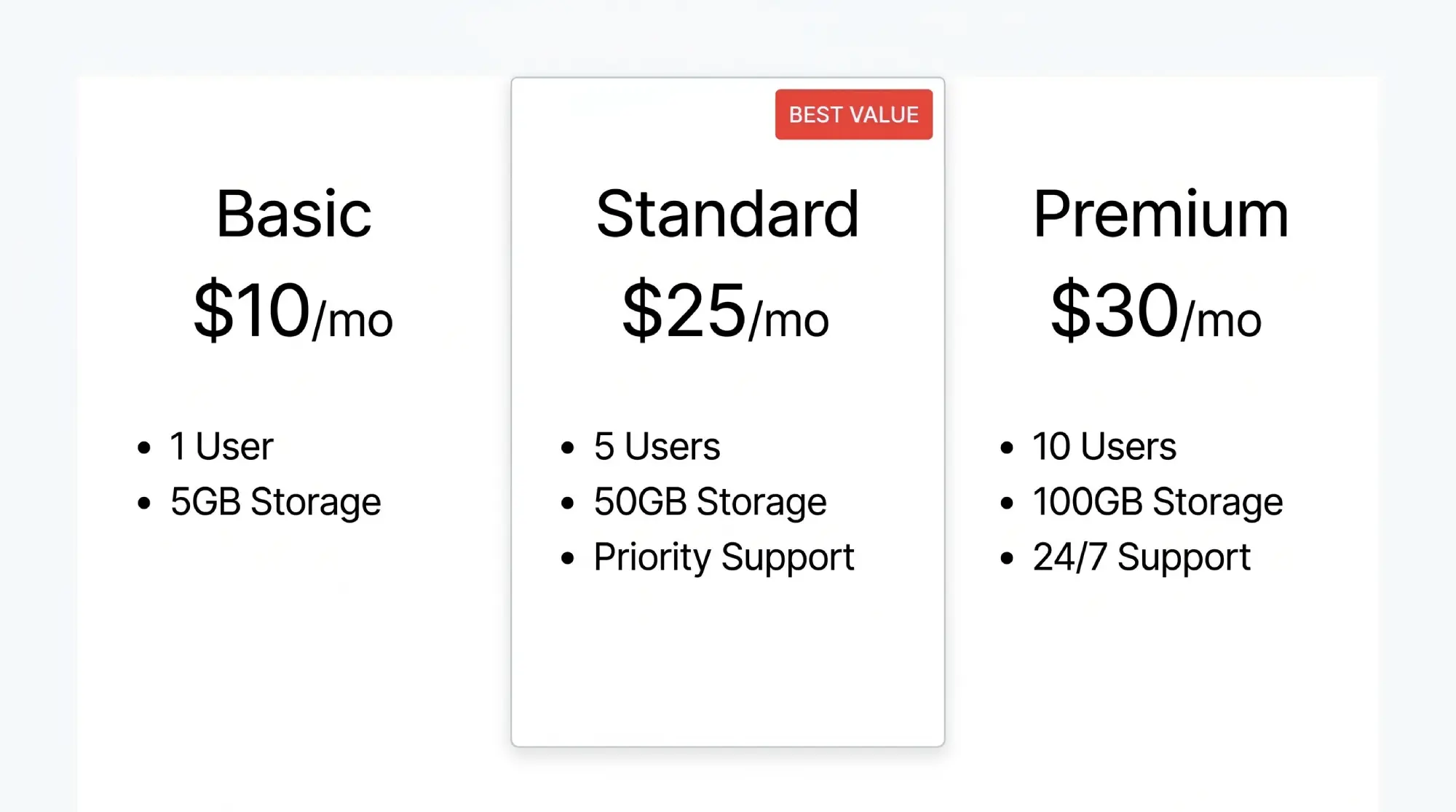
The mechanism draws on the attraction effect, first documented by Huber, Payne, and Puto in 1982: when people face two options they struggle to compare, adding a dominated third option systematically increases the selection of the option it resembles most closely.
You are not changing what the buyer wants. You are changing how easy it is for them to see that your preferred option delivers it.
In B2B service packaging – branding, consulting, legal, financial advisory – this matters enormously. Professional services buyers are comparing scope, access, expertise, and outcomes simultaneously. They find that comparison genuinely difficult.
A well-designed decoy resolves the difficulty in your favour, without pressure, without discounting, and without a word of persuasion.
Most B2B service firms price backwards. They work out their costs, add a margin, and present the result, hoping the client says yes. Then they discount when pushed. Then they wonder why every deal feels like a negotiation.
Decoy pricing flips that dynamic. It is not a trick – it is architecture.
Why B2B Service Packages Are Perfect for This
Consumer decoy pricing is blunt – you're shifting a mass market decision. B2B is different. The buyers are more sophisticated, the packages are more complex, and the stakes are higher. That's exactly why decoy pricing works so well here.
In B2B professional services – branding, strategy, accountancy, legal, consulting – clients are comparing options along multiple dimensions simultaneously: scope, deliverables, access, response times, expertise, outcomes.
They're rarely price-shopping in isolation. They're value-shopping, and they find it genuinely difficult to judge where the value lives.
A well-constructed decoy solves that problem for them. It sharpens the contrast, clarifies the value, and removes the cognitive friction that causes otherwise interested clients to slow down, request more quotes, or default to their previous provider.
For service firms specifically, this also reduces discount pressure. When a client can clearly see that Option B is meaningfully better than Option A for only a modest difference in investment, the justification for asking you to knock money off Option B evaporates.
The Anatomy of a Decoy in a Service Package
Let's be precise about what a decoy is and isn't, because there's a common mistake here.
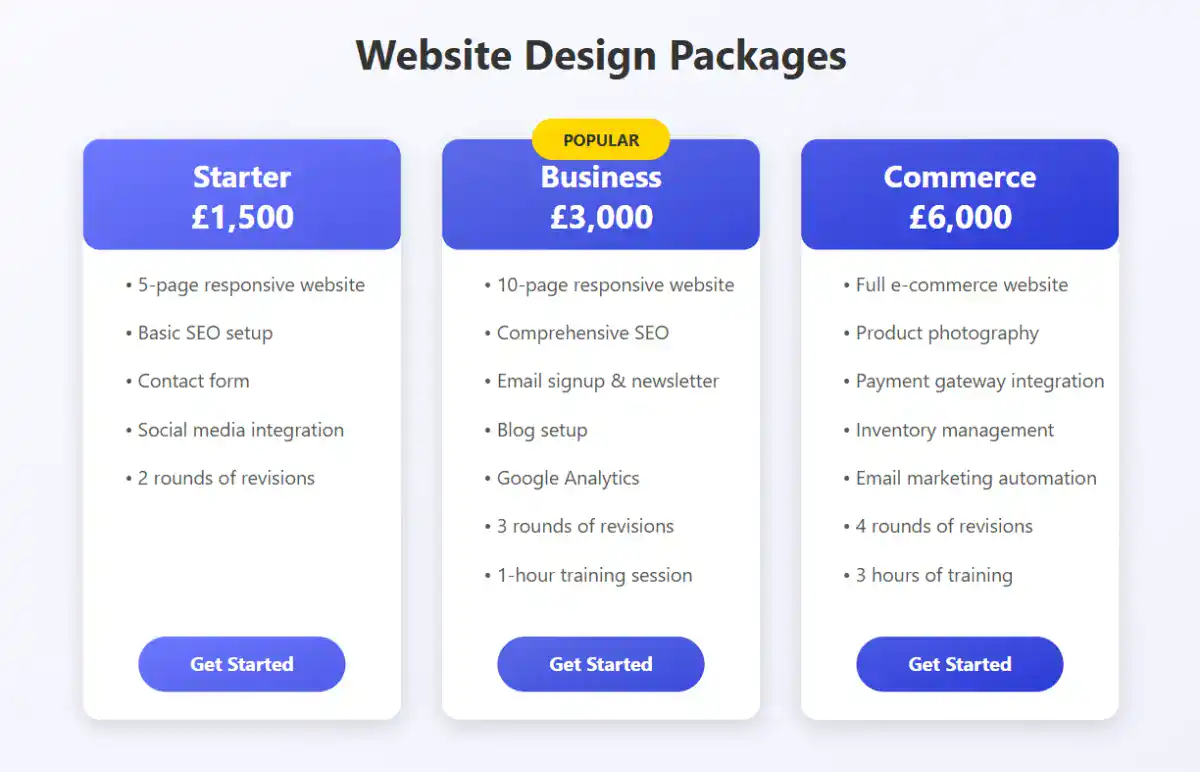
A decoy is not your “budget” tier. It is not a stripped-back version you offer to clients who can't afford you. A decoy is a deliberately engineered option that is asymmetrically dominated – meaning your target package beats it on at least one dimension the client genuinely cares about, and is not worse on any other.
For a B2B branding or design firm, those dimensions typically include:
- Scope – number of deliverables, rounds of revision, strategy depth
- Access – direct Creative Director involvement vs junior team
- Speed – turnaround time and response SLA
- Longevity – what you own after the engagement, licensing, and ongoing support
- Outcomes – defined, measurable business results vs output delivery
The decoy sits close in price to your target package but removes one or two of those dimensions in ways that matter. It's not a worse version. It's a worse version – specifically inferior on the things your best clients care most about.
Here's a real structural example:
Foundation Package – £4,500 Brand identity design: logo, colour palette, typography. Two revision rounds. PDF brand guidelines. No strategy, no discovery, no access to the Creative Director. Files delivered in 10 working days.
Brand Equity Blueprint™ – £7,500 Full brand strategy and identity. Discovery workshop. Competitive positioning. Logo, visual identity system, brand guidelines. Three revision rounds. Direct Creative Director access throughout. Delivered in six weeks with rollout support.
Growth Partnership – £3,000/month Ongoing strategic brand management, monthly creative, priority access.
In that lineup, the Foundation Package is the decoy relative to the Brand Equity Blueprint. It's £3,000 cheaper – which feels significant.
But look at what it removes: strategy, discovery, CD access, rollout support. For any client who cares about results rather than just a logo file, the Blueprint is clearly worth the extra cost. The Foundation Package makes that clarity explicit.
Notice the Growth Partnership doesn't compete on the same dimension at all – it's a retainer model and frames the Blueprint as the sensible entry point into a longer relationship.
How to Design a Decoy That Actually Works
There are four things you need to get right.
1. The decoy must be real and purchasable.
This cannot be a phantom option. It must be something you'd actually deliver if someone chose it. Clients who sense they're being manipulated will disengage entirely. The decoy only works if it's coherent – a genuine offer with genuine limitations. It is an offer most thoughtful buyers won't choose once they've compared it to your target package.
2. The price gap must be close enough to trigger comparison.
If the decoy is £2,000 and the target is £7,500, the brain doesn't compare them – it files them in different categories. The decoy needs to be close enough that the client naturally asks, “What's the difference?” and then finds the answer obvious. A gap of roughly 30–50% tends to work in professional services. So if your target package is £7,500, your decoy might sit at £4,500–£5,500.
3. The decoy must be worse on things clients actually care about.
This requires you to know your clients. If discovery and strategy are what differentiate your work, the decoy removes those. If direct Creative Director access is what clients pay a premium for, the decoy uses the project team. You're engineering a felt inferiority – not just a lesser version on paper.
4. Your target package must be presented as the default intelligent choice.
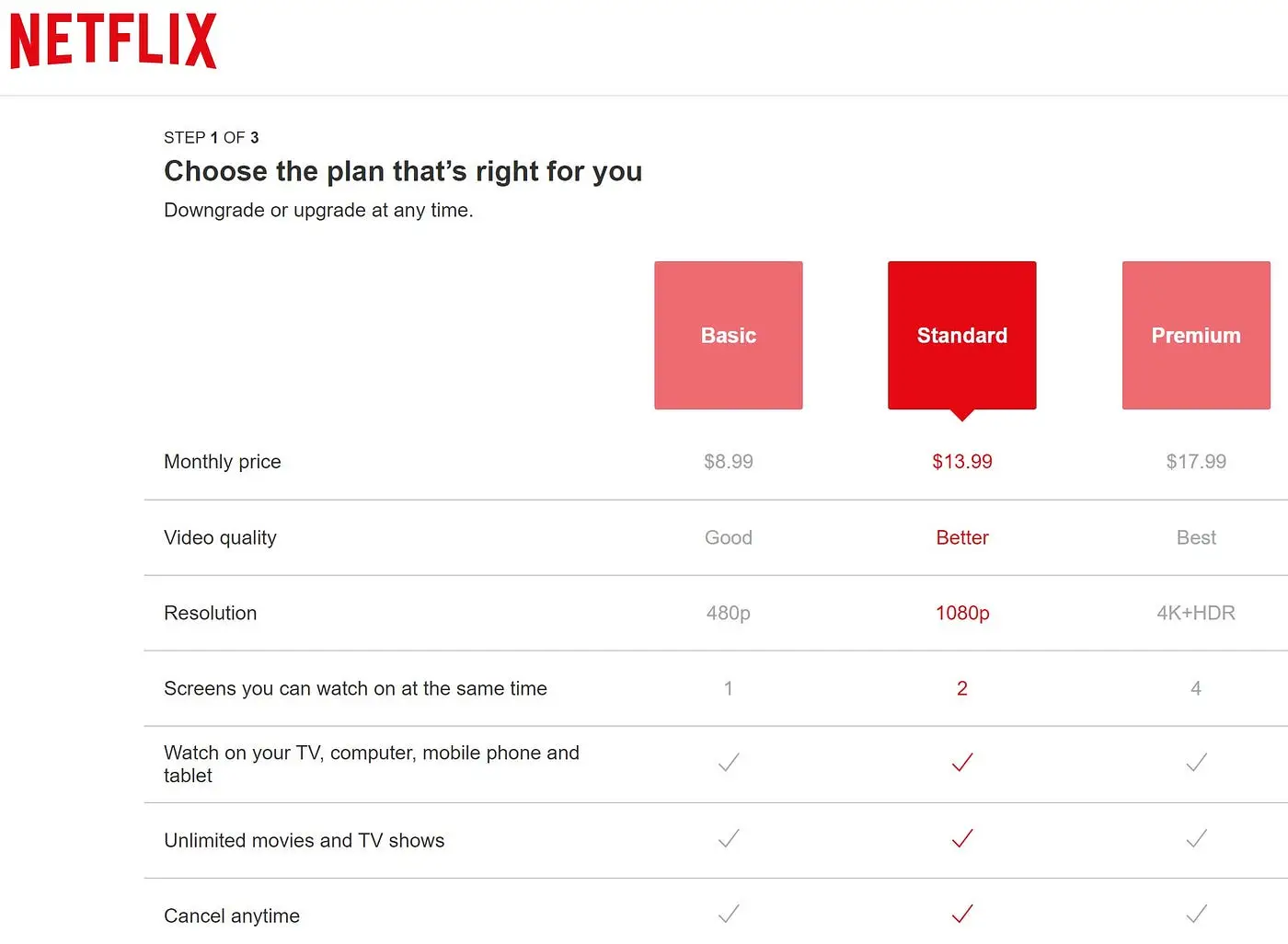
This is where presentation matters. On a proposals page or in a formal quote, your target package should be visually distinct – highlighted, labelled (“most popular,” “recommended”), or positioned centrally. The decoy sits beside it, making the case for it without you having to say a word.
The Fences Have to Be Objective
The single biggest mistake I see service firms make when building tiered packages is fuzzy fences. A fence is the defined difference between one tier and another.
Fuzzy fences – “more strategic,” “deeper thinking,” “better results” – do nothing for decoy pricing because clients can't evaluate them.
Objective fences look like this:
- One discovery workshop vs none
- Creative Director leads vs senior designer leads
- Brand guidelines document: 40-page vs 8-page PDF
- Three revision rounds vs one
- Rollout support included vs files-only delivery
- Monthly check-in call vs email support only
These are binary, visible, and comparable. The client can look at two packages and know exactly what they're getting and what they're not. That clarity is what makes the decoy effect work – because the client can see, without interpretation, that the decoy is missing something they need.
If your service is genuinely intangible and you can't define the fences, you have a productisation problem before you have a pricing problem.
What Happens in B2B Proposals
Decoy pricing isn't just for a website pricing page. It's a proposal architecture tool.
When I'm preparing a proposal for a B2B client – say a law firm or financial advisory firm looking for a full brand identity – I don't present a single option. I present three, built around the decoy logic.
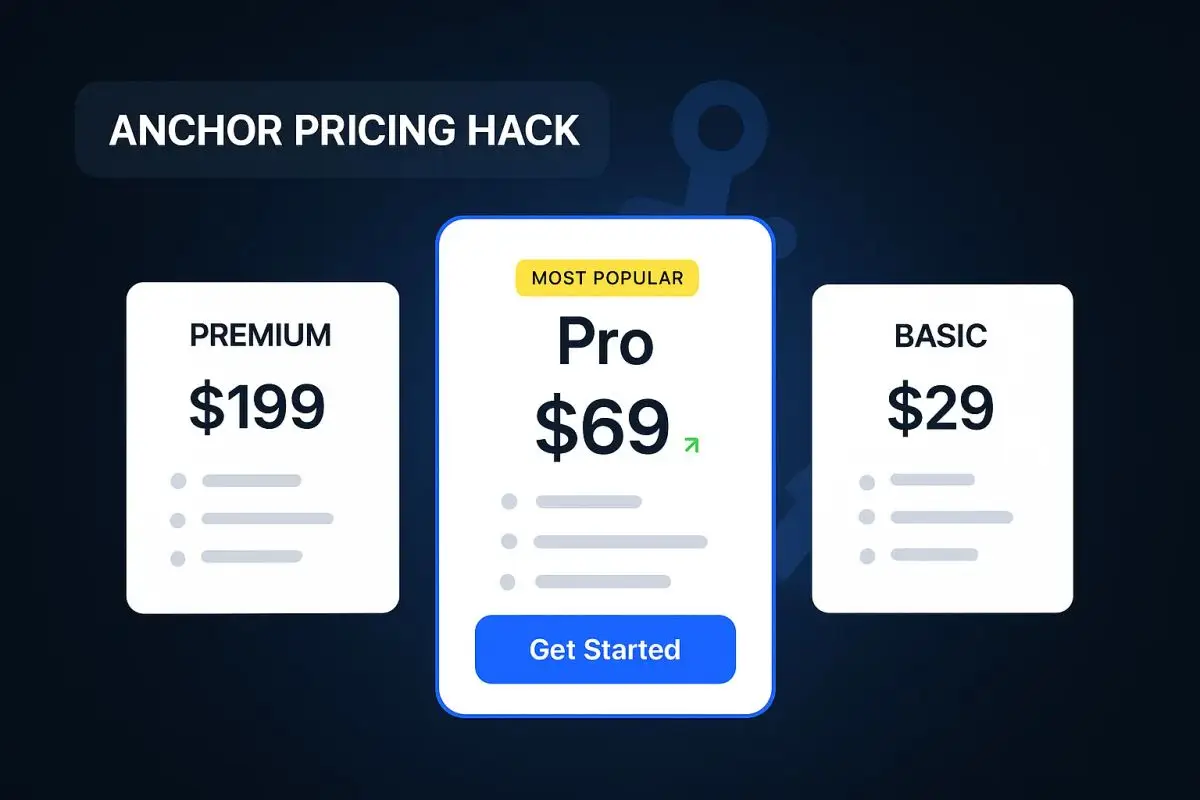
The middle option is my target: the full Brand Equity Blueprint at £7,500. The lower option is the decoy: a brand identity package without strategy or positioning work, at around £5,000. The upper option is a broader engagement – brand plus digital touchpoints plus quarterly review – at £12,000.
The decoy (£5,000) serves to make the Blueprint obvious. The £12,000 option anchors the upper end and makes £7,500 feel like the measured, professional choice rather than the premium one.
This is not manipulation. Every option is real and deliverable. I'd do the £5,000 project if they chose it. But I know – because I know my clients – that the professionals running these firms care deeply about positioning and strategic rigour. The decoy simply makes that care visible.
The result is reliably fewer discount requests and more clients choosing the target package without negotiation.
Common Mistakes When Building Decoys in Service Packages
Making the decoy too cheap. If the Foundation option is priced at £500 and the target is £7,500, clients don't compare them. The decoy needs to be in the same register as the target.
Making the decoy genuinely awful. If the lowest option is embarrassingly limited, it damages your brand positioning. The decoy should be a legitimate, professional offer – just not the best one.
Letting the fences collapse in conversation. If a client asks, “Can I add the discovery session to the Foundation package?” and you say yes, you've undone the architecture. Fences need to hold. If the client needs discovery, they need the Blueprint. The answer to that question is “yes, and that takes us into the Blueprint scope, which is £7,500.”
Ignoring unit economics by tier. The decoy is designed not to sell heavily, but some clients will choose it. Make sure it's profitable. Don't price it as a loss leader; you're hoping no one buys. If they buy it, deliver it well.
Not refreshing it. Markets change. Competitor packages evolve. What made your target look obvious two years ago may not today. Review your pricing architecture at least twice a year.
Decoy Pricing and Your Positioning
There's a deeper function to decoy pricing that most people miss. It doesn't just influence individual buying decisions – it communicates what you value.
If your decoy is the version without strategy, you're implicitly saying: strategy is what we're really here for. The Foundation Package exists, but it's not our heartland. Our best work happens when we do the thinking as well as the making.
For Inkbot Design, that message is important. We're a strategic brand consultancy, not a logo factory. The pricing architecture reflects that. Clients who just want a logo file and aren't interested in the thinking behind it – the decoy is right for them, and they'll choose it, and that's fine. But the architecture nudges the clients who care about outcome-based pricing toward the work we do best.
Decoy pricing, done well, is brand positioning expressed through price.
How to Test Whether It's Working
You're not guessing here. The metrics are clear:
- Mix shift: What percentage of new clients are choosing your target package vs the decoy or premium tier? If the decoy is working, the target tier share should increase over 60 days after implementation.
- Discount frequency: Are you being asked to reduce the target package price less often? Track it.
- Proposal-to-contract rate: Does conversion improve or hold steady? If it dips, your fences may be unclear, or the price gap may be wrong.
- Average project value: Simple. Is ARPU going up?
If the decoy itself starts selling at volume – say, more than 20% of new projects – it means either the decoy is too attractive or the target package's value isn't clear enough. Revisit the fences.
The Ethical Line
Decoy pricing gets a bad reputation when people conflate it with deception. They're not the same thing.
Deception means hiding attributes, presenting unavailable options, or baiting clients into a package, then switching them to another. That's not decoy pricing – that's fraud, and it destroys client relationships.
Genuine decoy pricing means every option on your proposal is real, deliverable, and honestly described. You're not hiding anything. You're organising your offer in a way that helps clients make a good decision – one that reflects what they actually need.
The client who chooses the Foundation Package gets exactly what it says. The client who chooses the Blueprint gets exactly what it says. The decoy structure just makes sure those clients land in the right place.
If you believe your target package delivers better outcomes for most B2B clients – and if you've designed it well, it should – then making that obvious isn't manipulation. It's clarity.
Starting Points for Inkbot Design Clients
If you're a professional services firm – law, finance, consulting, accountancy – thinking about your brand investment, the architecture above directly translates into how we structure our engagement options as a B2B brand strategy agency.
The Brand Equity Blueprint™ at £7,500 is built to be the intelligent choice: brand strategy, full identity, Creative Director-led, structured discovery, and proper guidelines. The Foundation Package exists for firms that genuinely just need a visual identity refresh with no strategic component. The Brand Equity Partnership™ at £3,000/month is for firms ready to build brand equity as an ongoing asset.
That's not a coincidence. It's architecture.
If you want to understand where your brand investment should sit, the Brand Equity Audit™ is the starting point – free and structured to give you a clear picture before any commitment.
Frequently asked questions
What is decoy pricing?
Decoy pricing is a pricing strategy that introduces a third, deliberately inferior option alongside two others. The inferior option – the decoy – exists to make the preferred, higher-value option look like an obvious choice by comparison. It works by simplifying the buyer's decision rather than persuading them directly.
How does the decoy effect work psychologically?
The decoy effect exploits the difficulty people have when simultaneously comparing two options across multiple dimensions. When a clearly dominant third option is introduced, it serves as a reference point, making one of the remaining options look unambiguously superior. The buyer's cognitive load drops, and selection of the target option increases – without any change to price or product.
Is decoy pricing ethical and legal?
Yes, when every option presented is genuine, deliverable, and honestly described. Decoy pricing becomes problematic – and potentially illegal – if the decoy option is a phantom (unavailable), if attributes are misrepresented, or if reference prices are fabricated. Structuring your offer so that one option looks more attractive than another is not deception. It is a presentation. Every supermarket, SaaS company, and professional services firm does this in some form.
How many pricing options should you show?
Three is the standard. One option forces a yes-or-no decision. Two creates a binary comparison with no anchor. Three allows the decoy to do its work – shaping the comparison without overwhelming the buyer with choice. Beyond four options, cognitive load increases, and the decoy effect weakens. If your service genuinely requires more than three tiers, group them and highlight one as recommended.
What price gap should separate the decoy from the target option?
In B2B professional services, a gap of 30–50% typically works – close enough that the buyer naturally compares the two, but far enough that the target's added value is visible. If the gap is too small, the decoy may cannibalise the target. If it is too large, the buyer files them in separate mental categories, and the comparison never happens. Always test: run both price points with real proposals and track which tier clients choose.
What makes a good decoy option in a B2B service package?
A good decoy removes something the client genuinely needs – a discovery workshop, Creative Director access, strategic positioning, or rollout support – while staying close in price to the target. The fences must be objective and visible: defined deliverables, named roles, and stated turnaround times. Fuzzy differences (“more strategic,” “deeper thinking”) do not create the felt inferiority required for the decoy effect to function.
Can decoy pricing work in B2B proposals, not just on a pricing page?
Yes – and in some ways it works better in proposals. When presenting to a B2B client, structure your proposal with three options: a decoy priced 30–50% below your target but meaningfully limited in scope, your target as the recommended engagement, and a premium option anchoring the upper end. The decoy makes the target look measured and professional rather than expensive. Sales teams that use this structure consistently report fewer discount requests and faster decisions.
What is the difference between decoy pricing and anchoring?
Anchoring sets a high reference price first, making everything that follows feel comparatively affordable. Decoy pricing structures compare concurrent options to make one look superior. The two techniques complement each other: the premium option in a three-tier lineup serves as an anchor, while the decoy makes the mid-tier option feel like the intelligent, balanced choice. Used together inside a good-better-best architecture, they cover both the initial price impression and the comparison that follows.
How do you know if your decoy pricing is working?
Track four metrics over 60 days after implementation: the percentage of clients choosing your target tier (mix shift), how often clients ask for a discount on the target (discount frequency), your average project value (ARPU), and proposal-to-contract conversion rate. Success looks like more clients in the target tier, fewer discount requests, and stable or improved conversion rates. If the decoy itself starts selling at more than 20% of volume, either its fences are too attractive, or the target's value is not clear enough.
Does decoy pricing work for creative and branding agencies?
It works particularly well for creative and branding agencies because the value differences between tiers – strategy vs execution, Creative Director vs project team, discovery workshop vs brief-only – are meaningful to buyers but difficult to price intuitively. A decoy that removes the strategic component at a modest price reduction makes the full-strategy engagement look like the sensible, professional choice. For agencies, decoy pricing also communicates positioning: it signals what you actually value and where your best work happens.