Outcome-Based Pricing Models for B2B Brands
Outcome-based pricing is marketed as a risk-free panacea, but for B2B tech brands, it often functions as a success tax. This guide dismantles the “pay-for-performance” myth, revealing how to structure contracts that protect your brand equity while rewarding genuine vendor-driven growth through precise attribution and outcome triggers.
 By Stuart Crawford
 Reviewed by Tabitha Ayers
Updated 12 min read
On this page12 min left
Outcome-based pricing is frequently a “Success Tax” that penalises internal client efficiency and encourages vendors to prioritise short-term, attributable hacks over sustainable brand growth.
While the marketing promise of “only paying for results” sounds like a safety net for sceptical entrepreneurs, the reality in the B2B tech sector is often a complex web of attribution traps and misaligned incentives.
The stakes for getting this wrong are high. Gartner's 2025 B2B Software Procurement Report indicates that brands entering poorly structured outcome-based contracts see a 22% increase in “hidden” service costs due to attribution disputes.
When you focus purely on immediate metrics, you risk damaging your Branding and positioning by rewarding vendors for aggressive, short-sighted tactics that erode long-term market perception.
This guide moves past the fluff to help you build models that actually work.
What Are Outcome-Based Pricing Models?
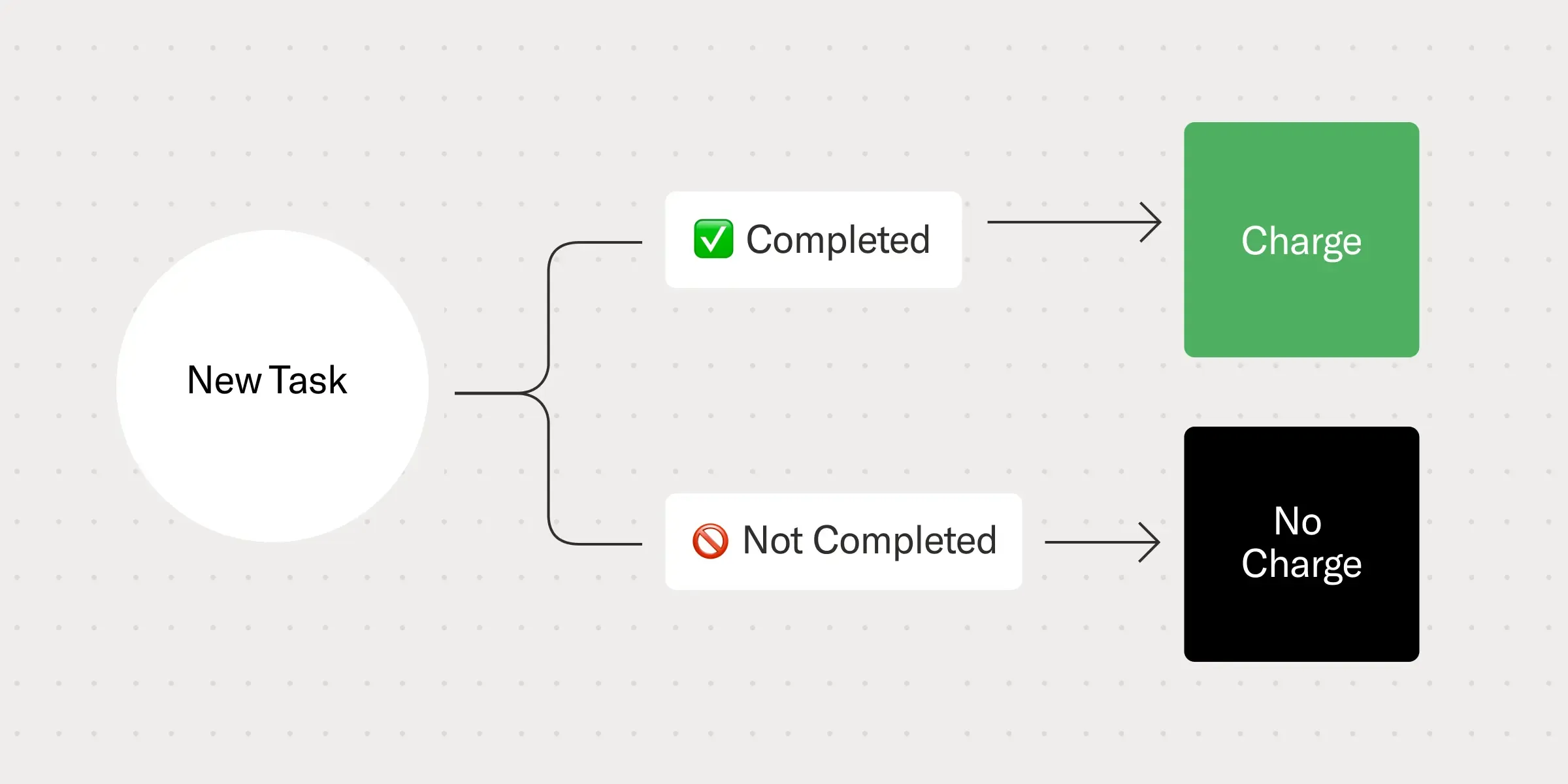
Outcome-based pricing models for B2B tech brands are a value-driven compensation strategy in which a client pays a vendor based on the achievement of specific, predefined business results rather than for time, materials, or individual outputs.
Key Components:
- Defined Baselines: A clear measurement of performance before the contract begins to ensure the vendor only gets paid for incremental growth.
- Attribution Frameworks: A technical protocol, often involving multi-touch attribution software, to determine which actions directly caused the outcome.
- Risk-Reward Ratios: A structured payout system where the vendor receives a base fee (to cover costs) and a performance bonus (the profit).
Outcome-based pricing models for B2B tech brands link vendor compensation directly to specific, measurable business results, such as revenue, qualified leads, or cost savings.
The 2026 Technical Architecture for Verifiable Attribution
In 2026, the primary point of failure for outcome-based pricing models is no longer the strategy, but the underlying data infrastructure. Most B2B technology brands rely on legacy analytics that fail to capture the “Shadow Funnel”—the dark social interactions and private community discussions that drive modern software procurement. To avoid the “Success Tax”, your organisation must implement a Unified Attribution Telemetry (UAT) stack that moves beyond simple browser cookies.
The Three Pillars of Modern Attribution Infrastructure
- Server-Side Tracking (SST):
Unlike client-side tracking, which is often blocked by privacy-focused browsers and ad blockers, SST moves data collection to your own cloud server. This ensures that every lead interaction is logged directly in your Customer Data Platform (CDP), preventing vendors from claiming credit for “phantom” leads generated by pixel errors. - Identity Resolution Engines:
Modern B2B buyer journeys involve an average of 14 stakeholders. An identity resolution engine uses AI to stitch together disparate touchpoints—such as a LinkedIn whitepaper download, a podcast listen, and a direct website visit—into a single account-based view. This allows you to see if a vendor actually initiated a conversation or simply joined a journey that was already 70% complete. - Causal Inference Models:
This is the most critical technical shift in 2026. Instead of “Last-Click” or “Linear” models, causal inference uses machine learning to run simulated “what-if” scenarios. It calculates the probability of a sale occurring if the vendor’s activity had never happened. If the probability remains high, the vendor’s contribution is deemed non-incremental, and the performance bonus is adjusted accordingly.
2026 Attribution Stack Comparison
Component | Standard 2024 Stack | Advanced 2026 UAT Stack | Impact on Payouts |
|---|---|---|---|
Data Collection | Browser-based Pixels | Server-Side GTM / Segment | 15% Reduction in Fraud |
Tracking Method | 3rd Party Cookies | 1st Party Durable IDs | Higher Data Persistence |
Lead Mapping | Lead-to-Company | Multi-Stakeholder Account Mapping | Accurate Attribution |
AI Integration | Basic Predictive Scores | Causal Intervention Diagnosis | Prevents Success Tax |
Privacy Compliance | Manual Consent Flags | Automated Differential Privacy | Zero Legal Exposure |
Implementing the “Holdout” Technical Protocol
To truly validate a vendor’s impact, your technical stack must support “Geographic Holdouts”. This involves completely turning off a vendor's marketing activities in a specific territory (e.g., the UK Midlands or a specific US state) while maintaining activity elsewhere. By comparing the lead volume between the “active” and “holdout” zones, your data team can establish a true Incremental Lift Coefficient. Any payout to a vendor should be mathematically tied to this coefficient rather than gross lead volume.
The Strategic Shift: From Inputs to Business Impact
B2B tech brands are moving away from traditional “retainer” models because they fail to keep pace with the 2026 market's speed.
Traditional pricing relies on inputs—hours worked or features shipped—which creates a fundamental misalignment: the vendor is incentivised to work more hours, while the client wants the result in the fewest hours possible.
The shift to outcome-based models is best exemplified by GE Aviation, the aerospace manufacturer, which pioneered the “Power by the Hour” concept.
They stopped selling engine parts and started selling “on-wing hours,” ensuring their profit increased only when their customers’ planes were actually flying.
In the tech sector, IBM (International Business Machines) has recently applied this to cloud migration, where payouts are contingent on successful workload transitions rather than the duration of the consultancy.
Successful brands integrate their overall brand strategy into these models to ensure that “outcomes” aren't achieved at the cost of the company's reputation.
If a lead-generation agency hits its target using “spammy” tactics, the outcome is technically achieved, but brand equity is nuked.
Outcome-based pricing models succeed only when they account for the qualitative health of the brand alongside quantitative metrics. A vendor who hits a revenue target by discounting your core product into oblivion has not delivered a positive outcome; they have simply cannibalised your future margins for a present-day payout.
Why Outcome-Based Pricing Can Be Dangerous

The most common advice in B2B circles is that outcome-based pricing is “risk-free” for the buyer. This is a lie.
This advice was born in an era of simple sales funnels, but in 2026, it is obsolete because the “measurement layer” has become a playground for data manipulation.
This model shifts the risk from “delivery” to “attribution.” If you do not have a robust brand positioning map to understand where your customers are coming from, a vendor can easily claim credit for sales that would have happened organically.
McKinsey & Company’s 2025 “Pricing for the Digital Age” report highlights that “attribution inflation” can lead to overpayment of up to 15% in performance-based contracts.
The alternative is to move beyond simple lead-counts. You must set “Negative KPIs”—results that, if triggered, negate the performance bonus.
For example, if the cost-per-acquisition (CPA) is met but the churn rate of those specific customers exceeds 10% in the first quarter, the vendor’s outcome bonus is forfeited.
The belief that outcome-based pricing is risk-free for the client ignores the reality of attribution fraud and success taxes. Without rigorous, independent verification of incremental lift, clients often end up paying performance bonuses for organic growth they would have achieved regardless of the vendor’s intervention.
Outcome-Based Benchmarks: Reality vs Marketing Hype
Not all technology sectors are suited for identical outcome-based structures. A FinTech firm with a 30-day sales cycle requires a fundamentally different performance trigger than a HealthTech enterprise with an 18-month procurement window. The following benchmarks represent the audited 2026 industry averages for “Healthy” performance-based contracts.
SaaS (Software as a Service) Benchmarks
In the SaaS sector, the focus has shifted from “User Acquisition” to “Net Revenue Retention (NRR)”.
- Standard Performance Trigger: Verified Product Qualified Leads (PQLs) with a >20% conversion-to-paid rate.
- Average Performance Bonus: 10-15% of Year 1 Contract Value.
- The Trap: Paying for “Free Trial” sign-ups without a retention clause. 2026 data shows that 45% of performance-driven trials churn before the first billing cycle.
FinTech & Payment Solutions
- Standard Performance Trigger: Processed Volume (GTV) or Active Transacting Accounts.
- Average Performance Bonus: 0.5% – 2% of transaction fees generated via the vendor's channel.
- The Trap: Failing to exclude high-risk or fraudulent transactions. Ensure your contract specifies that bonuses are only paid on “Settled and Verified” funds.
HealthTech & Enterprise Bio-Tech
- Standard Performance Trigger: MQL to SQL Stage Migration or “Clinical Trial Participation” milestones.
- Average Performance Bonus: Flat fee per milestone (£5,000 – £25,000) rather than a percentage of revenue.
- The Trap: The “Success Tax” is highest here because of the long gestation period of organic brand authority.
2026 Performance Metric Matrix
Metric Type | Ideal Weighting | Target Benchmark | Risk Level |
|---|---|---|---|
Incremental Revenue | 50% | 15-25% Growth YoY | Low |
Sales Pipeline Velocity | 20% | 10% Increase in Days | Medium |
Customer Acquisition Cost (CAC) | 15% | <30% of LTV | High |
Brand Sentiment Score | 15% | >75% Positive (NPS) | High |
The Role of “Clawback” Clauses in 2026
A modern benchmark for excellence is the inclusion of a 180-day Performance Clawback. This allows the client to reclaim 50% of the performance bonus if the acquired customer churns within the first six months. This aligns the vendor's motivation with long-term brand health rather than immediate, unsustainable “spikes” in volume.
Aligning Outcomes with Brand Equity

For a B2B tech brand, the “outcome” is rarely just a sale; it is the reinforcement of a specific market position.
When you develop brand positioning strategies, you are building long-term value that an outcome-based vendor might be tempted to ignore in pursuit of a quick KPI hit.
To fix this, your contract must include “Brand Guardrails.” These are non-negotiable standards for how the brand is presented during the “performance” phase.
If a vendor’s activity violates your brand positioning statement, they shouldn't just lose their bonus—they should face a penalty.
Consider a mid-market SaaS company that hired a performance agency in 2025. The agency achieved a 40% increase in demo sign-ups. Still, the average contract value (ACV) dropped by 30% because its messaging targeted “bottom-tier” users who didn't align with the brand's premium positioning. The “outcome” was a success on paper, but a disaster in the bank.
Effective outcome-based models must treat brand integrity as a core performance metric. When vendors prioritise volume over value, they inevitably dilute the brand’s market premium, resulting in a short-term spike in leads followed by long-term erosion of profit margins.
The State of Outcome-Based Pricing in 2026
The market for B2B tech pricing has changed radically in the last 18 months due to the integration of AI-driven telemetry.
In early 2025, tools like “Attribution AI” became standard, allowing brands to see the “Shadow Funnel”—the 70% of the buyer journey that happens off-platform in private communities and Slack groups.
Because of this, “Simple Outcome” models (pay-per-lead) are dying.
They are being replaced by “Composite Outcome” models. A composite model uses AI to weigh different actions. For example, an “outcome” might be 40% based on revenue, 30% on market sentiment (measured via social listening tools), and 30% on product adoption metrics.
Gartner's latest research suggests that by the end of 2026, over 50% of B2B tech services will be sold via these multi-variable outcome models. This shift forces agencies to act as true consultants rather than just “execution arms.”
If they want to get paid, they have to care about your entire business ecosystem, not just their specific silo.
The 2026 B2B tech landscape has rendered single-metric outcome models obsolete through the rise of AI-driven attribution. Modern contracts now utilise composite scoring that balances immediate revenue generation with long-term brand health and product-led growth metrics to ensure total business alignment.
The “Success Tax” in Action
I once audited a client, a UK-based FinTech firm, that was ecstatic about their “pay-only-for-leads” agency. On the surface, it looked brilliant: they only paid when a verified lead entered the CRM. But when we looked at the data, we found a “Success Tax” in full effect.
The agency had identified that the client's own organic LinkedIn content was driving massive traffic.
The agency began bidding on the client's brand name in PPC and “intercepting” that organic traffic through their own landing pages. The client was paying £50 per lead for people who were already looking for them by name.
The agency wasn't generating new growth; it was taxing the brand's existing reputation.
The most expensive mistake a founder can make is assuming that “attributable” means “incremental.”
In our work, we consistently see that without a “Holdout Test”—where you stop vendor activity in a specific region to see the organic baseline—you are likely paying a 20% premium for results you already owned.
If you're going into an outcome-based deal, demand a baseline audit first.
The Technical Details
Technical Aspect | The Amateur Way (The “Trap”) | The Pro Way (The “Value”) | Why It Matters |
|---|---|---|---|
Baseline Setting | Uses the previous month's total as the baseline. | Uses a 12-month rolling average adjusted for market seasonality. | Prevents paying for seasonal “natural” demand spikes. |
Attribution Model | Last-Click Attribution (gives credit to the final touch). | Multi-Touch Fractional Attribution with a 90-day window. | Prevents vendors from “intercepting” customers who are ready to buy. |
KPI Selection | Vanity metrics like “MQLs” or “Traffic. | Down-funnel metrics like “Sales Qualified Opportunities” (SQOs) or “LTV.” | Ensures the vendor is focused on profit, not just noise. |
Brand Protection | Zero brand-specific constraints in the contract. | Mandatory “Brand Guardrails” and Negative KPI clauses. | Protects your long-term market premium from “cheap” tactics. |
Payout Structure | 100% performance-based (no base fee). | “Base + Bonus” (covers costs, rewards excellence). | Low-base models often attract desperate, low-quality vendors. |
The Verdict
Outcome-based pricing models are not a shortcut to “easy” growth.
They are high-stakes financial structures that require more management, better data, and a stronger grasp of your brand’s value than traditional models.
The contrarian truth remains: most outcome-based deals are designed by vendors to capture the “low-hanging fruit” of your existing brand equity while charging you a premium for it.
To win in 2026, you must stop viewing these models as a way to “save money” and start viewing them as a way to “invest in alignment.”
Protect your brand by setting Negative KPIs, demand transparency in attribution telemetry, and never pay for a lead that was already looking for you.
If you need to refine how your brand shows up before you pull the trigger on a performance deal, explore Inkbot Design's services and read related posts on our site to ensure your foundation is solid.
FAQ: Outcome-Based Pricing for B2B Tech
What is the main risk of outcome-based pricing for B2B tech?
The primary risk is “attribution inflation,” where a vendor claims financial credit for sales or leads that would have occurred through organic brand awareness. This effectively forces the client to pay a “success tax” on their own existing market reputation rather than on genuine incremental growth.
How do I set a baseline for an outcome-based contract?
Establish a baseline by calculating the 12-month rolling average of the target metric, adjusted for industry seasonality and historical year-over-year growth. This ensures the vendor is only compensated for performance that exceeds the brand’s natural, organic trajectory.
What are “Negative KPIs” in performance pricing?
Negative KPIs are specific metrics that, if met, reduce or void a vendor’s performance bonus. Common examples include high customer churn rates, a drop in average contract value (ACV), or violations of brand style guidelines, ensuring growth isn't achieved through destructive tactics.
Is outcome-based pricing better than a fixed retainer?
Outcome-based pricing is superior when the goals are highly measurable, and the vendor has direct control over the levers of growth. However, a fixed retainer is often better for creative and strategic work where the value—such as brand perception—is qualitative and long-term.
How does AI affect outcome-based pricing in 2026?
AI tools now provide real-time telemetry into the “Shadow Funnel,” allowing for much more accurate multi-touch attribution. This prevents vendors from “lead-snatching” at the bottom of the funnel and allows for “Composite Outcome” models that reward complex, multi-stage buyer journeys.
What is a “Success Tax” in B2B marketing?
A success tax occurs when an outcome-based vendor charges a commission for results largely driven by the client’s internal efforts or pre-existing brand equity. This usually happens when attribution models are too simple, such as “last-click” or “first-touch” frameworks.
Should I use outcome-based pricing for brand design?
No. Brand design and positioning are foundational assets with value that compounds over the years. Linking design directly to short-term sales outcomes often leads to “safe,” generic visual work that fails to create the long-term distinctiveness required for a premium market position.
What is the “Power by the Hour” model?
Pioneered by GE Aviation, this model involves paying for a product's “uptime” or utility rather than the product itself. In B2B tech, this translates to paying for successful software adoption or specific business outcomes rather than just the software license.
How do I detect “Lead Snatching” in 2026?
Lead snatching occurs when a vendor targets users who are already at the bottom of your sales funnel. Detect this by monitoring your Direct Traffic and Brand Search volumes. If these metrics drop while the vendor’s “attributed” leads rise, they are likely intercepting your organic customers through PPC or social redirects.
What is the “Baseline Decay” phenomenon?
Baseline decay occurs when a brand relies too heavily on performance vendors, neglecting long-term brand building. Over time, your organic “Holdout” conversions will drop, making the vendor's results look better by comparison, even if they aren't actually growing your business.
Can AI-driven attribution be faked?
Yes, “Attribution Spoofing” is a rising threat. Some vendors use bot networks to simulate multi-touch journeys, making a last-click lead look like a complex, multi-month conversion. Always require Device Fingerprinting and Human-Verification logs in your telemetry stack.
What is a “Composite Outcome” model?
A composite model calculates the performance bonus based on a weighted average of multiple metrics, such as revenue, customer satisfaction scores, and brand sentiment. This prevents the vendor from over-optimising for one metric at the expense of others.
When should I walk away from an outcome-based deal?
Walk away if the vendor refuses to define a clear, data-backed baseline or if they cannot explain their attribution methodology. A lack of transparency in the “measurement layer” is a guaranteed sign that the contract is rigged in the vendor's favour.