3 B2B Brand Positioning Strategies to De-Risk the Complex Sale
In complex professional services sales, positioning is not about standing out. It is about reducing perceived risk. Learn the positioning strategies that align buying committees and justify premium fees.



On this page5 min left
In complex B2B sales, positioning is not primarily a differentiation exercise; it is a risk-reduction exercise.
Most articles treat positioning as a way to make a brand sound distinctive or interesting.
In long, multi-stakeholder purchases, buyers are rarely choosing between interesting options. They are trying to avoid a costly, visible, career-risking mistake.
A position wins when it gives every person in the buying committee a credible reason to say that your firm is the safe, intelligent choice.
If your firm cannot clearly articulate why you are the safest commercial option available, good luck. That proposal will be shredded by a CFO who has never met you.
What Are Brand Positioning Strategies?
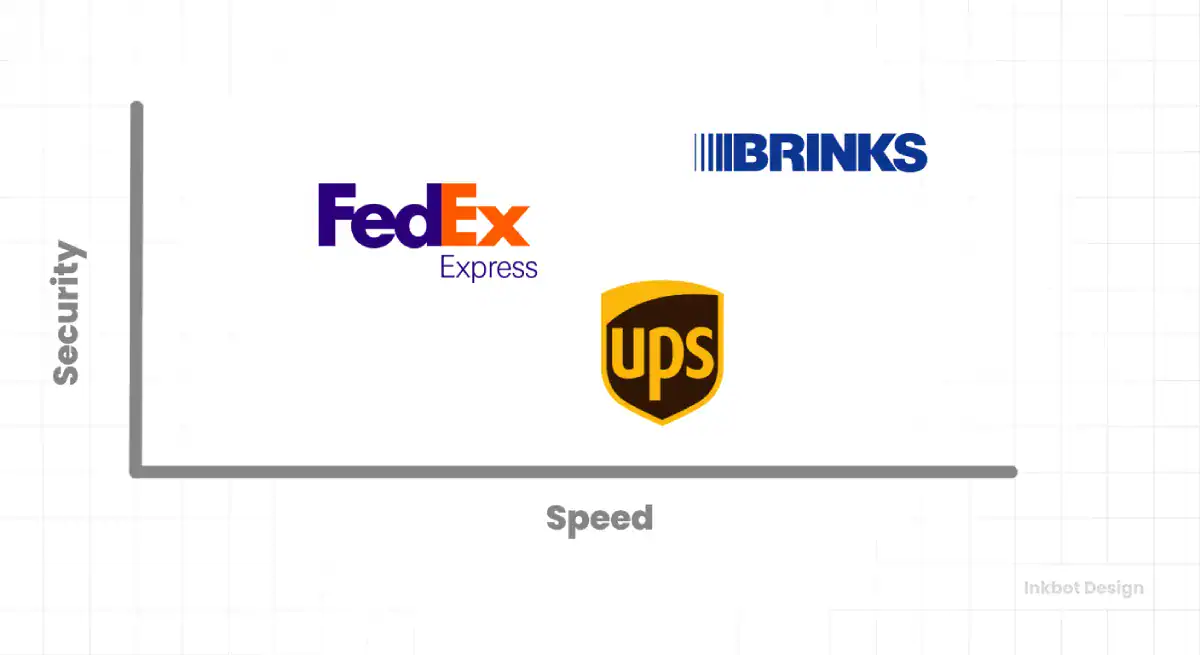
Brand positioning strategies are the calculated decisions a firm makes to occupy a specific, defensible space in the minds of its target buyers.
In professional services, this means aligning what your firm uniquely delivers with the specific risks your ideal client is trying to avoid.
- Market focus: Narrows the scope of operations to an audience willing to pay a premium.
- Proof alignment: Connects your marketing claims directly to verifiable evidence and outcomes.
- Sales enablement: Arms the business development team with arguments that survive committee scrutiny.
Brand positioning strategies are strategic frameworks businesses use to differentiate themselves, but in complex B2B sales, effective positioning focuses on reducing perceived buyer risk.
The Risk-Reduction Reframe: Why Differentiation Fails
Professional services leaders frequently ask why their firm loses pitches to safe, boring competitors despite having a demonstrably better methodology.
The answer is simple. You are selling differentiation to a committee that is actively buying risk mitigation.
A 2026 report by Forrester on the state of business buying found that the typical buying decision now includes 13 internal stakeholders and nine external influencers.
That number rises further for complex or strategic purchases.
Your champion might love your innovative approach. The procurement director, the external legal counsel, and the chief operations officer do not care. They evaluate vendors on downside risk.
A May 2026 Gartner survey of 645 B2B buyers found that 69% of buyers want to validate AI-generated research with a human sales representative before proceeding.
Buyers are actively seeking trust signals to validate their choices.
This explains why claims of "superior quality" or "exceptional customer service" fail to win business. They are expected table stakes.
When a buyer challenges your fee structure, they are not necessarily asking for a discount. They are signalling that the link between your fee and their business outcome is unclear, and therefore risky.
Proper brand positioning forces you to stop competing on vague promises of quality and start competing on verifiable risk reduction.
“Buyers are rarely choosing between interesting options. They are trying to avoid a costly, visible, career-risking mistake. A position wins when it gives every person in the buying committee a credible reason to say: “This is the safe, intelligent choice.”
Three Defensible Positioning Strategies for Complex Sales
If you want to escape the commodity trap, you must adopt a strategy that a sceptic can verify.
Over 17 years of building brand identities for professional services firms across 21 countries, the pattern has been consistent. Firms that scale predictably use one of these three approaches.
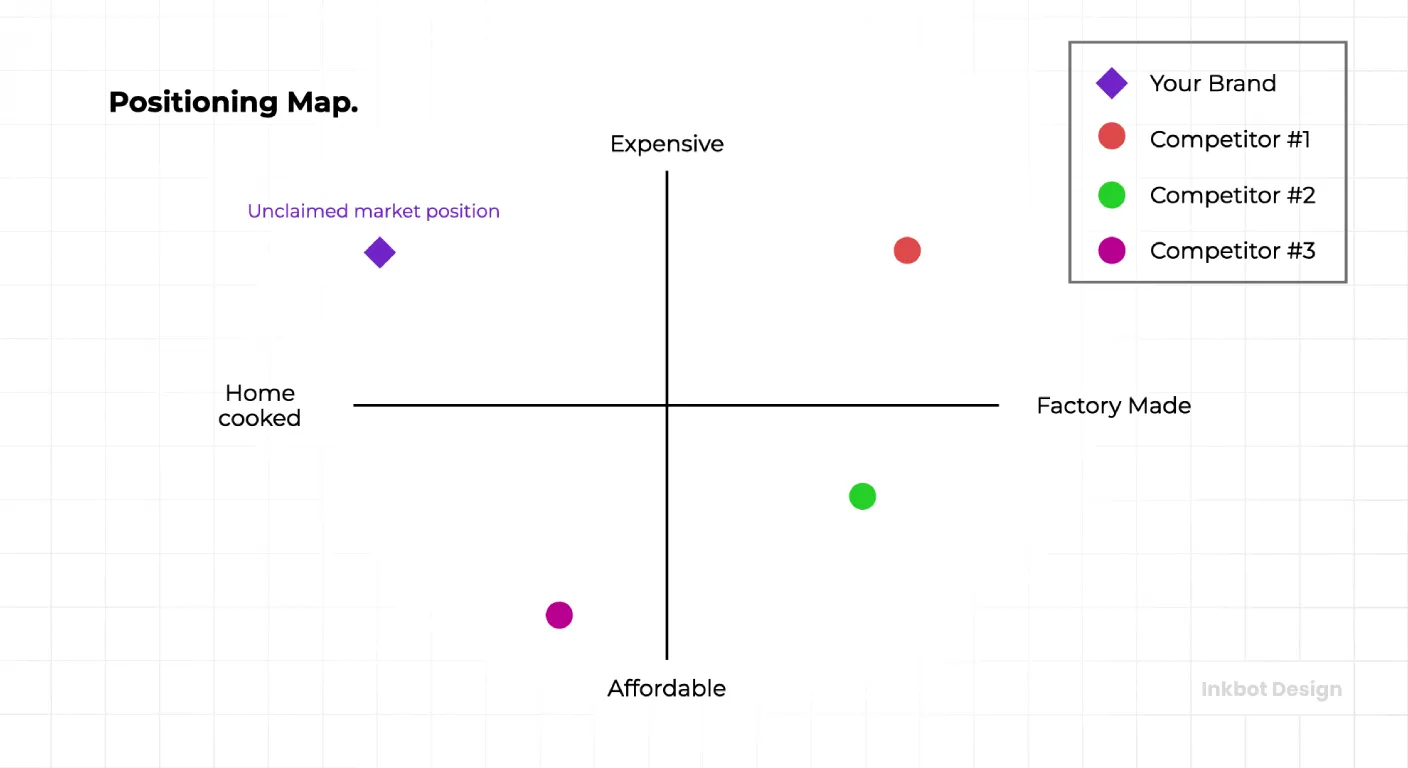
1. Deep Vertical Specialisation
Industry specialisation restricts your focus to a specific sector.
This tightly tailors your messaging and, more importantly, immediately proves to the buyer that you understand their regulatory and operational context.
When a 50-person architectural practice positions itself as a specialist in "healthcare environments," it eliminates the risk of designing a beautiful hospital corridor that violates infection-control protocols.
Buyers pay a premium because the agency has already absorbed the learning curve.
2. Methodological Ownership
If you cannot restrict your firm to a single industry, you must own a specific, methodical approach. This strategy associates a rigid, trademarked process with your firm.
When you define exactly how an outcome is achieved, you reduce execution risk.
A 2026 study by the LinkedIn B2B Institute and Ipsos found that credibility is built through reinforcing signals from brands, employees, and peers—and this credibility directly affects buying-group confidence.
A defined methodology is a highly visible credibility signal.
Instead of claiming to offer "strategic HR consulting," a firm positioned around methodological ownership sells a "90-Day Executive Integration Framework."
The framework itself becomes the differentiator. Buyers can see the steps, predict the timeline, and measure the progress. It is safe.
3. Role-Focused Alignment
Role-focused specialisation targets a specific professional cohort or job function.
Rather than selling to the company, you sell to the Chief Technology Officer or the Head of Talent Acquisition.
This is a highly effective competitive positioning analysis play.
When your entire firm is built to make the Chief Financial Officer look intelligent, you align with their personal career motivations.
You remove the risk that your service will make them look incompetent in front of the board.
All marketing collateral, thought leadership, and case studies speak strictly in the financial terminology that the CFO uses daily.
The Buying Committee Trial: Aligning Internal Stakeholders
A strong position must survive contact with the hidden buyer.
The LinkedIn B2B Institute, citing Bain data, reports that more than 40% of B2B deals are abandoned entirely.
Furthermore, hidden buyers veto around half of shortlisted vendors. Your primary competitor is not another firm; it is internal disagreement resulting in no decision.
You must position for the committee, not just the champion.
A July 2026 report from the LinkedIn B2B Institute states that 95% of hidden buyers say strong thought leadership makes them more open to outreach.
You execute this by mapping your chosen brand positioning framework across the specific concerns of the 13 stakeholders.
- The CEO sees thought leadership proving market share growth.
- The CFO sees pricing structures tied to measurable milestones.
- The technical lead sees documented methodologies reducing integration friction.
Forrester data from 2026 shows that more than 60% of business buyers now use a trial during evaluation; among buyers making purchases of $10 million or more, 78% use a trial first.
If your positioning allows for a phased diagnostic or audit before a major commitment, you instantly lower the barrier to entry and reduce transaction risk.
The Verdict
In complex B2B sales, differentiation gets you in the room. Risk reduction wins the contract.
Do not waste time trying to make your professional services firm sound unique.
Make it sound undeniable. Buyers are navigating complex, multi-stakeholder purchasing processes where a mistake costs them their reputation.
Your firm must look, sound, and operate like the safest commercial decision available.
If your current messaging relies on claims of quality, passion, or innovation, your positioning is a liability.
Stop guessing what the buying committee thinks of your brand.
Request a free Brand Equity Audit™ at Inkbot Design to identify exactly where your brand is losing commercial ground and what to do about it.
Questions people ask
Why do generic brand positioning strategies fail in B2B sales?
Generic strategies fail because they focus on emotional differentiation rather than on reducing commercial risk. Complex B2B sales involve buying committees assessing downside risk. Vague promises of "exceptional quality" cannot be verified and therefore do not align stakeholders or protect the buyer's career.
What is the difference between brand positioning and brand messaging?
Positioning is the internal strategic decision about what space you will occupy in the market and which specific risks you solve for your ideal buyer. Messaging is the external execution—the specific words, taglines, and copywriting used to communicate that positioning across your website and sales collateral.
How does strong positioning reduce price pressure?
Yes—strong positioning isolates your firm from direct comparison. When you have a specific methodology or deep vertical specialisation, the buyer cannot easily compare your fees with those of a generalist firm. The fee is justified by the reduction in execution risk and the elimination of the learning curve.
How long does a brand repositioning exercise typically take?
Repositioning a professional services firm typically requires three to six months. This accounts for internal alignment, external client interviews, competitor analysis, framework development, and the rollout of the new positioning across marketing, sales, and delivery teams.
Should a 50-person professional services firm specialise in just one industry?
No—deep vertical specialisation is highly effective, but it is not the only option. If industry restrictions limit growth, firms can instead specialise by role (e.g., serving only Chief Financial Officers) or by methodological ownership, demonstrating expertise through a rigid, proprietary process.