What is Brand Management? Simple Framework Anyone Can Use
“Brand management” is one of those phrases that marketing agencies frequently use. It sounds important. It sounds complex. It sounds expensive.
Most of the time, it’s used to confuse you into buying things you don’t need.
They’ll talk about “synergies”, “brand actualisation”, and “storytelling paradigms.” It’s nonsense. It’s designed to make simple things sound profound.
The truth? Brand management isn’t a dark art. It’s not some mythical beast that can only be tamed by multinational corporations with billion-dollar budgets.
It’s a discipline. It’s a job. And for a small business owner, it’s one of your most important jobs.
- Brand management is not an event; it's a continuous process that shapes and protects your business's reputation.
- A strong brand promise should be simple, credible, and distinguishable from competitors to foster customer loyalty.
- Managing brand perception is crucial; it's the gap between how you view your brand and how customers perceive it.
- Consistency in brand identity and experience is vital for building trust and ensuring a strong, resilient reputation.
Brand Management Isn’t What You Think It Is

Before defining brand management, we must tear down what it isn’t. Most entrepreneurs get this wrong from the start. They chase the wrong things, waste money, and end up with a brand that’s all surface and no substance.
It’s not your logo.
A founder spends thousands on a slick logo, gets a new set of business cards, and sits back, thinking, “Right, branding is sorted.
No. It’s not.
Your logo is a symbol. A shortcut. A visual trigger. It’s the face, but it isn’t the person. A great logo on a terrible business is like putting lipstick on a pig. It might look momentarily better, but it’s still a pig.
I once knew a tech startup that had a phenomenal logo. It was clean, clever, and won design awards. But their software was buggy, their customer service was nonexistent, and their delivery dates were pure fiction. The company folded in 18 months. Nobody remembers the pretty logo. They remember the frustration.
Your logo is a container for meaning. Brand management is the job of filling that container with positive meaning.
It’s not a one-and-done job.
You “do” branding. You manage a brand. See the difference?
Branding is the event. It’s the initial flurry of activity: naming the business, defining the strategy, designing the identity. It’s like planting a garden. You do a lot of heavy lifting upfront to get the seeds in the ground.
Brand management is the rest of it. It’s the daily watering, the constant weeding, the pruning, and the protection of the garden from pests. It never stops. It’s the long, often tedious, but utterly essential process of ensuring what you’ve planted grows strong and healthy.
When you think the job is “done,” the weeds grow.
The Cheat Sheet: Branding vs. Brand Management
If you’re skimming, this is the difference between the launch and the legacy.
| Feature | Branding (The Launch) | Brand Management (The Legacy) |
| The Action | Defining & Designing | Monitoring & Maintaining |
| The Analogy | Planting the garden | Watering & Weeding |
| The Duration | 3–6 Months (Project-based) | Forever (Process-based) |
| The Goal | To be seen | To be trusted |
| Who Does It? | Designers & Strategists | Owners & Employees |
It’s not just for the big boys like Apple and Nike.
A small business owner might look at a company like Apple and think, “I can’t compete with that. They have billions for advertising and stores that look like temples.”
You’re missing the point.
Brand management is more critical for a small business. You don’t have a billion-pound marketing budget. You have your reputation. That’s it. Your reputation is your greatest asset, and brand management is the art of actively building and protecting that asset.
A few thousand unhappy customers are a rounding error for a giant corporation. For a local plumber, three bad reviews can be a death sentence. You have less room for error. You have to be more disciplined.
So, What Is It? The No-Nonsense Definition
Alright, enough about what it isn’t.
Brand management is the ongoing process of controlling how people perceive and what they say about your business when you’re not present.
It’s the deliberate shaping of your reputation. It’s about ensuring that the business you think you’re running is the same business your customers are experiencing.
That’s it—no jargon required.
This process breaks down into three core jobs that you, the business owner, must oversee. Always.
- Making a Clear Promise: This is your strategy. It’s deciding what you stand for, who you’re for, and what you’ll deliver. This promise must be simple, credible, and different from the competition.
- Keeping That Promise Relentlessly: This is your execution. It’s ensuring that every interaction a customer has with your business—from your website to your packaging to your returns policy—backs up your promise.
- Protecting the Reputation That Follows: This is your vigilance. It’s listening to what people say, measuring whether you keep your promise, and defending your reputation against misinformation and mistakes.
This cycle—Promise, Keep, Protect—is the engine of brand management.
The Core Components You Need to Worry About
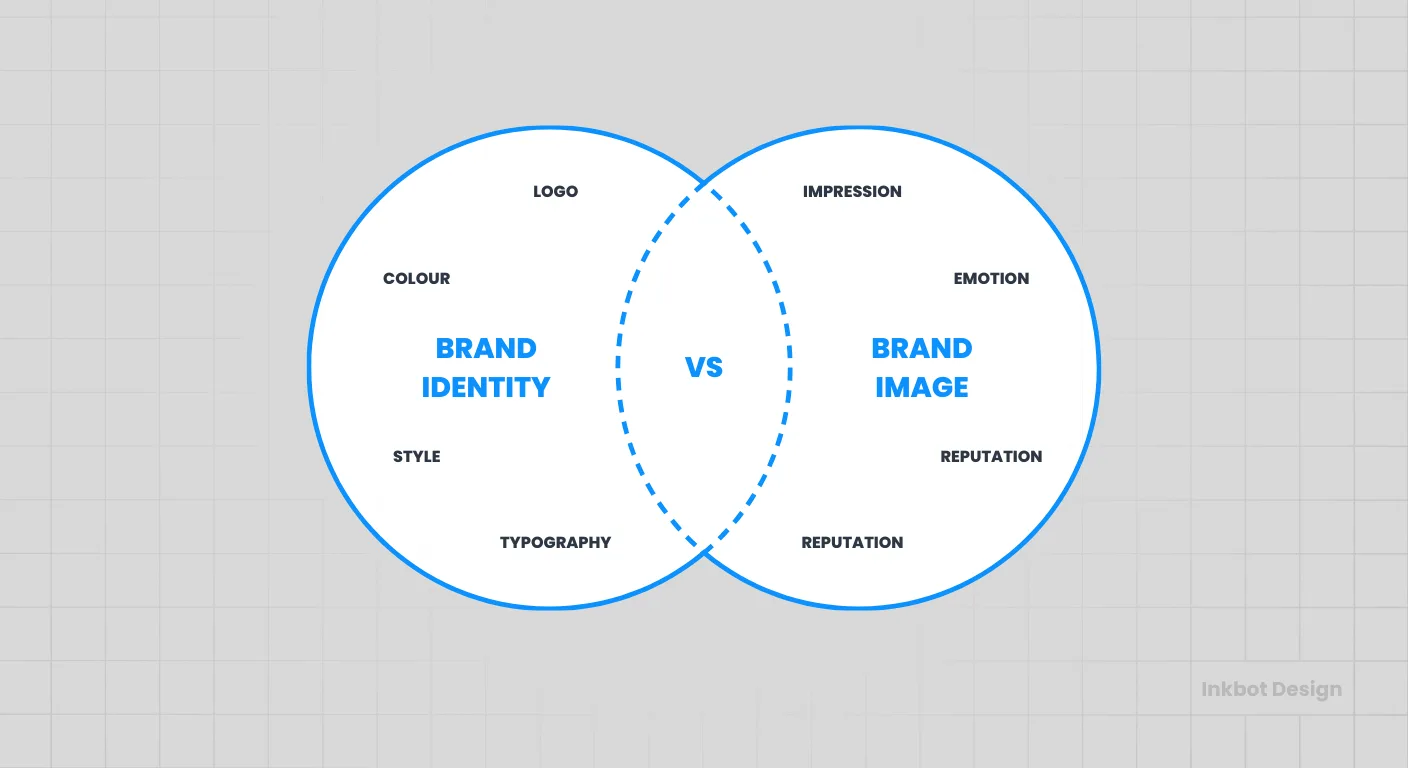
To manage this cycle effectively, you need to understand the various moving parts. Again, let’s skip the MBA-level complexity and focus on the four things that matter in the real world.
Brand Identity: Your Toolkit, Not Your Brand
Your brand identity is the collection of tangible and sensory elements you use to express your brand.
- Visuals: Logo, colour palette, fonts, photography style.
- Voice: Your tone and language in your emails, website copy, and social media. Are you formal, witty, warm, and direct?
This is your toolkit. It’s essential for creating a consistent look and feel. But the toolkit is not the house. It’s just the stuff you use to build it. Having a professional brand identity is the first step. It provides the assets and, crucially, the Brand Guidelines—the rulebook that dictates how to use them. Without this rulebook, chaos ensues.
Modern Tools for Brand Guardians
While the philosophy of brand management remains human, the execution in 2026 is powered by software. You don’t need an enterprise budget, but you do need a “Single Source of Truth.”
- Digital Asset Management (DAM): Stop using messy Google Drive folders. Tools like Canto or Brandfolder ensure that every team member uses the latest version of your logo and approved assets.
- Visual Consistency: Canva for Teams has become the industry standard for SMEs to lock in brand kits (colours, fonts, and logos) so non-designers can’t “go rogue.”
- Reputation Monitoring: Move beyond manual searches. Brand24 and Mention use AI to track your brand’s “share of voice” and sentiment across Reddit, TikTok, and news sites in real-time.
- Customer Trust: Platforms like Trustpilot and REVIEWS.io are now essential touchpoints for brand management. They provide the “social proof” that feeds directly into how search engines perceive your brand’s authority.
| Tool Category | Recommended for SMEs | Key Feature |
| Governance | Frontify | Online Brand Guidelines that update in real-time. |
| Listening | Google Alerts (Free) / Awario | Tracks mentions of your name and competitors. |
| Execution | Buffer or Hootsuite | Ensures consistent tone and timing across social. |
Brand Perception: The Uncomfortable Truth
Here’s a tough pill: Your brand is not what you say it is. It’s what they—your customers, the public, your staff—say it is.
Brand perception is the aggregate of every experience, rumour, review, and news story about your business. It’s the gut feeling people have when they hear your name. You can try influencing it with your brand identity and marketing, but you can’t control it directly.
The space between the brand you think you have and the brand they believe you have is where brand management happens. Your job is to close that gap.
Brand Equity: Your Most Valuable (and Invisible) Asset
Brand equity is the commercial value of your reputation.
It’s why people cross the street to go to a specific coffee shop. It’s why people will happily pay a £500 premium for an iPhone over an Android with similar specs. It’s the measurable value of trust.
Equity is built slowly, over years of keeping your promise. It results in:
- Customer Loyalty: They come back without you having to bribe them with discounts.
- Price Premium: You can charge more because people trust your quality and experience.
- Word-of-Mouth: People recommend you for free. The best marketing there is.
Equity is the financial reward for good brand management. It’s an intangible asset that makes your business more resilient, profitable, and valuable.
Is Your Brand Relationship-Driven or Transaction-Driven?
The “how” of brand management changes depending on who you are selling to.
- B2C (Business to Consumer): Focuses on Brand Salience (being thought of in buying situations) and emotional connection. Think of Oatly—their brand management is about being quirky, visible, and lifestyle-aligned.
- B2B (Business to Business): Focuses on Risk Mitigation and Professional Authority. Your brand management is driven by “Thought Leadership” on LinkedIn, detailed case studies, and whitepapers. In B2B, your brand is a “promise of safety” for a professional buyer.
Brand Experience: Where the Work Happens
If you remember one thing from this article, make it this: Your brand is the sum of all its touchpoints.
A touchpoint is any point of interaction between your business and a customer. Any. The journey is littered with them:
- I saw your ad on Instagram.
- The loading speed of your website.
- How easy it is to find a product.
- The checkout process.
- The confirmation email.
- The box that arrives at their door.
- The unboxing experience.
- The product itself.
- The email you sent asking for a review.
- How do you handle their customer service query when something goes wrong?
This is where brands are built or destroyed. You can have the world’s best logo and a heart-warming brand story, but if your delivery partner is always late or your customer service agent is rude, that’s your brand. The experience is the truth. Managing the brand is managing the experience.
A Practical Brand Management Process for People With a Business to Run
This doesn’t need to be complicated. You don’t need a 50-page document. You need a simple, repeatable process.

How to Conduct a Brand Audit (The 30-Minute Health Check)
Before you build, you must assess. Use this checklist once a quarter to ensure your brand hasn’t drifted.
- Visual Alignment: Open your website, your Instagram, and your latest invoice. Does the logo match? Is the “brand blue” the exact same hex code?
- The “Search Yourself” Test: Search for your business name + “reviews.” What are the first three results? If it’s a disgruntled ex-employee on Glassdoor or an unanswered complaint on a forum, your brand management has a leak.
- Voice Consistency: Read your last three customer service emails. Do they sound like they were written by the same person who wrote your homepage?
- Competitor Benchmarking: Look at your top three competitors. Are they making a promise you aren’t? If they’ve moved to “Sustainable Delivery” and you’re still on “Fast Delivery,” your perception may be ageing.
Step 1: Strategy & Positioning (The Thinking Bit)
Before you do anything, you must think. Don’t just “start a business.” Decide what you’re trying to build. You can do this by answering three brutally simple questions:
- Who is this for? Be specific. “Everyone” is not an answer. A 25-year-old urban cyclist is the answer. A time-poor parent of toddlers is the answer.
- What do I do for them? What problem do you solve? What desire do you fulfil? This is your value proposition.
- Why should they choose me over everyone else? This is your differentiator. Is it speed, quality, service, price, or ethics? You can’t be all of them. Pick one or two and own them.
The answers to these questions form your brand promise. Write it down.
Step 2: Creating Your Assets (The Doing Bit)
Now that you know the ‘why’, you can create the ‘what’. This is where you develop your brand identity—your logo, website, and packaging.
My advice? Don’t cheap out—rubbish in, rubbish out. A poorly designed identity makes your business appear amateurish from the outset. It creates an uphill battle you don’t need to fight. Get it done professionally. It’s a foundational investment.
Step 3: Consistent Implementation (The Boring, Critical Bit)
Here’s where most businesses fail. Not in a blaze of glory, but through a slow death by a thousand tiny inconsistencies.
This is the grind. It ensures the correct logo is displayed on every invoice. It ensures that your social media posts use the brand’s tone of voice. It ensures that your new employee understands the brand promise on their first day.
It’s boring. It’s repetitive. It requires checklists and discipline. But consistency is what builds trust. It shows you’re professional and you care about the details. Inconsistency shows you’re sloppy.
Step 4: Monitoring & Listening (The Reality Check)
You’ve made your promise, and you’re trying to keep it. But are you succeeding? Time to find out.
You don’t need expensive survey software. You need to listen.
- Social Listening (The Ear to the Ground): Don’t just wait for tags. Use tools to find people discussing you without tagging you. For small businesses, Google Alerts is the free baseline. For serious growth, look at tools like Mention or Brand24 (or even AI-powered sentiment trackers) to catch a whisper before it becomes a shout.
- The “NPS” Pulse Check: You don’t need complex data, but you do need one number. Once a quarter, ask your email list the “Reputation Score” question: “On a scale of 0-10, how likely are you to recommend us to a friend?” Tracking this single number tells you if your brand equity is rising or falling.
- Review Triage: Reply to every review. The good ones get a “thank you” (reinforcing loyalty). The bad ones get a polite, public offer to fix it (showing the world you have integrity).
Listen for patterns. If three people say your delivery is slow, it is. Fix it. If five people praise a specific staff member, that person is a brand champion. Reward them.
This isn’t about vanity searching. It’s about getting free, unfiltered feedback on how well you’re keeping your promise. It’s a gift. Use it.
The “Oh Sh*t” Protocol: Managing a Brand Crisis
Sooner or later, you will drop the ball. You’ll ship a broken product, send a rude email, or get dragged on Twitter. This is the ultimate test of brand management. Do not hide. Do not delete the comments. Follow the AAA Protocol:
- Acknowledge: Admit the mistake immediately. “We messed up.”
- Apologise: No “sorry if you were offended.” Meaningful apologies take responsibility.
- Action: Clearly state how you are addressing the issue so it never happens again. Your brand isn’t judged by the mistake; it’s judged by how you recover.
Brand Management for AI and Large Language Models (LLMs)
In 2026, people aren’t just “Googling” you; they are asking AI assistants like Gemini, ChatGPT, and Perplexity for recommendations. These systems draw on your entire digital footprint to determine whether you are “trustworthy.”
- Entity Clarity: Ensure your Google Business Profile and LinkedIn company page have identical, factual information. AI looks for “Entity Matches” to verify you exist.
- Structured Data: Use Schema.org markup on your website. This is technical brand management—telling the AI exactly what your logo is, who your founders are, and what your reviews say.
- Sentiment Control: If 80% of your mentions on Reddit or X are negative, AI models are likely to “hallucinate” or explicitly state that your service is poor. Managing your brand now means participating in community discussions, not just broadcasting ads.
The Brutal Mistakes That Will Sink Your Business
I’ve seen hundreds of businesses repeat the same mistakes. Avoid these; you’re already ahead of 90% of the competition.
Inconsistency: The Silent Killer
One day, your emails are signed off with “Cheers,” and the next day, they are signed off with “Sincerely.” Your Instagram posts feature edgy memes, but your website uses dry, corporate language. You use a different shade of blue on your Facebook page because you couldn’t find the correct hex code.
Each of these is a tiny crack in the foundation of your brand. Individually, they’re nothing. But together, they paint a picture of a business that is amateurish, confused, and lacks organisation. It silently erodes trust.
Ignoring Your People
You can have the most inspiring brand strategy in the world, but it’s worthless if the person answering your phone doesn’t know it, believe it, or care about it.
Your employees are your brand. They deliver the experience. They must be your first and most committed brand ambassadors. If you don’t sell them on the promise first, they’ll never be able to sell it to your customers. Onboarding shouldn’t just be about systems; it should be about culture and mission.
Faking Your “Purpose” and “Values”
This is a modern plague. Every company now feels the need to have a profound “purpose.” A fast-fashion brand suddenly starts talking about sustainability. An oil company runs ads about green energy.
Customers have a highly tuned BS detector. They can smell inauthenticity a mile away. Don’t claim a purpose you can’t back up with concrete action. If you’re a bakery, your purpose can be as honest and straightforward as “making people happy with incredible pastries.” That’s a more believable purpose than pretending to solve world hunger. Be honest about what you are.
Rebranding Because You’re Bored
“I’m a bit tired of our logo.” “This design feels a bit dated.”
These are terrible reasons to rebrand. A rebrand is a costly, risky, and disruptive surgical procedure for a business. It should only be undertaken for serious strategic reasons:
- A fundamental shift in your business model.
- A merger or acquisition.
- Your brand has acquired such a negative reputation that it may be beyond repair.
Changing your identity for aesthetic reasons is an act of vanity. It confuses loyal customers, erases any brand equity you’ve built, and rarely addresses the underlying business problem.
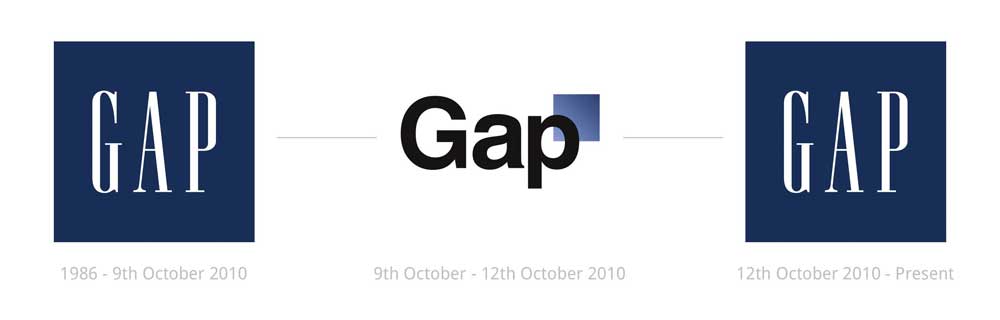
Remember when The Gap tried to change its iconic logo in 2010? The public backlash was so swift and brutal that they reversed the decision in less than a week. It was a masterclass in alienating your customers and looking foolish.
Look, This Isn’t Magic. It’s Discipline.
Building and managing a brand is not about one big, brilliant idea. It’s not a stroke of creative genius.
It’s the relentless accumulation of a thousand small, sound decisions. It’s answering the email promptly. It’s choosing the better quality box. It’s apologising properly when you mess up. It’s making sure your website works on a mobile phone. It’s keeping your promise, day in, day out, even when it’s a pain in the arse.
It’s the discipline to be consistent. The courage to be honest. And the humility to listen.
How Do You Know If It’s Working?
Forget complex KPIs and analytics dashboards for a moment. You’re a business owner, not a data scientist. Look for simple, powerful signs:
- Are your reviews getting better? Is the sentiment positive?
- Is your repeat business rate going up? Are customers coming back without you having to constantly offer discounts?
- Can you command a slight price premium? Can you raise your prices by 3% without causing everyone to leave? That’s a sign of brand equity.
- Are you getting more referrals? Are good customers sending you more good customers?
- Is it easier to hire good people? Do talented people want to work for you because they’ve heard good things?
These are the real-world indicators that show your brand is gaining strength.
So, the next time someone tries to sell you on a complex “brand management solution,” you know what to do.
Politely ignore them.
Focus on your promise. Focus on keeping it. And focus on the discipline required to do that every single day. The rest is just noise.
Are you actively managing your brand, or are you just letting it happen to you?
The choice, and the work, is yours.
We should talk if you’ve decided it’s time to build a professional foundation with a brand identity designed for the real world. If you’re still figuring things out, at least arm yourself with more knowledge by reading our other posts.
Just don’t do anything.
Frequently Asked Questions (FAQs)
How do I calculate the ROI of Brand Management?
While a brand is an intangible asset, you can track it via Customer Acquisition Cost (CAC) and Customer Lifetime Value (LTV). Strong brands have lower CAC because people already trust them and higher LTV because loyal customers stay longer. In 2026, companies with high brand equity spend 20–30% less on paid ads.
What is the difference between a Brand Manager and a Marketing Manager?
A Marketing Manager focuses on demand generation and sales (the “now”). A Brand Manager focuses on the health of the reputation and long-term equity (the “forever”). Marketing brings people to the door; Brand Management ensures they like what they see and tell their friends.
How does Brand Management help in a recession?
During economic downturns, consumers become risk-averse. They stop “experimenting” and stick to brands they trust. Effective brand management creates a “trust moat” that protects your price point when competitors are forced to discount.
Do I need a “Brand Custodian” for a small team?
Yes, but it doesn’t have to be a new hire. A brand custodian is any team member—often the founder or a senior lead—who has the final “no” on anything that violates the Brand Guidelines. Their job is to protect the consistency of the experience.
What does a brand manager do?
A brand manager acts as the guardian of the brand. They ensure consistency across all marketing, communications, and customer experiences. For a small business owner, this is often one of the many hats you wear yourself.
What is an example of good brand management?
Apple is a classic example. They manage every touchpoint—from their minimalist product design and simple software to their store layouts and customer service—to consistently deliver a promise of quality, innovation, and ease of use.
How can I manage my brand on a tight budget?
Focus on consistency and customer experience. It costs nothing to use the same logo and tone of voice everywhere. Providing excellent, friendly customer service costs little. Listening to reviews and acting on feedback is also free.
What is a brand audit?
A brand audit is a health check for your brand. It’s a systematic review of how consistently your brand is presented and how it’s perceived by the market, typically by examining your marketing materials, online presence, and customer feedback.
How does brand management affect customer loyalty?
Consistent, positive experiences build trust. When customers trust you will consistently deliver on your promise, they have no reason to look elsewhere. This trust is the foundation of genuine customer loyalty.
Can bad brand management destroy a business?
Absolutely. Inconsistent messaging, a poor customer experience, and a failure to deliver on promises can quickly erode trust. Once trust is gone, customers leave, reputation plummets, and the business can fail.
What are brand guidelines?
Brand guidelines serve as a rulebook for effectively utilising your brand’s assets. They specify your official logo, colour palette, fonts, and tone of voice to ensure everyone (employees, agencies, partners) uses them consistently.
How often should a business review its brand strategy?
A full review should occur every few years, or whenever there is a significant change in your market or business goals. However, you should constantly monitor your brand’s performance (via reviews and feedback) monthly or quarterly.
