Defining Your Target Audience Archetype for B2B
Your target audience is not a person; it is a psychological state within a committee.
If you are building marketing strategies based on individual personas, you are marketing to ghosts.
Most B2B brands fail because they try to appeal to “Marketing Mary” or “IT Ian,” ignoring the complex interplay of motivations that drive a modern procurement group.
Brands that undergo a significant pivot or redesign within three years of launch lose an average of 16% brand recognition equity, according to Millward Brown, the global brand equity firm.
This loss is often a direct result of failing to anchor the brand to a stable Target Audience Archetype.
Without this foundation, your Branding and positioning will lack the psychological resonance required to close complex deals in a sceptical 2026 market.
- Prioritise Target Audience Archetypes over fictional buyer personas; they capture the Decision-Making Unit's collective psychology.
- Design messaging to satisfy Risk-Averse Guardian, Efficiency Architect, Disruptive Visionary, Pragmatic User, and Gatekeeper.
- Optimise content for AI Proxy Buyer systems with semantically dense, verifiable atomic claims and named entities.
- Demonstrate Proof of Human Thought through contrarian insight, proprietary data, and lived expertise to outpace AI-generated fluff.
- Embed archetype fields in CRM, adopt archetypal scoring, and provide no-login, utility-first tools to build trust before data capture.
What Are Target Audience Archetypes?
A Target Audience Archetype is a recurring pattern of behaviour and motivation that defines how B2B buying committees make collective procurement decisions. Unlike a persona, which focuses on superficial individual traits, an archetype addresses the underlying psychological drivers that influence a group.

- Psychological Foundation: Archetypes tap into universal human motivations, such as the desire for security, innovation, and efficiency.
- Decision-Unit Focus: They account for the various roles within a buying committee, from the Gatekeeper to the Visionary.
- Intent Alignment: Archetypes align your messaging with the specific stage of the buyer’s journey and their current business objectives.
A Target Audience Archetype is a recurring pattern of behaviour and motivation that defines how B2B buying committees make collective procurement decisions.
The Buyer Persona Myth: Why “Marketing Mary” is Dead
The traditional buyer persona is a relic of an era when marketing was a one-to-one conversation.
In 2026, this approach is not just ineffective; it is actively harmful to your ROI.
Why Fictional Personas Fail the B2B Test
Fictional personas encourage marketers to focus on irrelevant details.
Knowing that your target likes “craft coffee and indie music” does nothing to help you navigate a 12-month enterprise software procurement cycle.
These details create a false sense of intimacy that does not exist in a corporate environment.
According to Gartner’s 2024 report on B2B buying complexity, the average group size for a single purchase is now 6 to 10 stakeholders.
Each of these stakeholders brings a different psychological archetype to the table.

The Problem with Job-Title Targeting
Job titles are increasingly meaningless in a fragmented corporate landscape.
A “Head of Innovation” at an FTSE 100 firm has entirely different motivations and constraints than a “Head of Innovation” at a Series B startup.
By targeting the title, you miss the archetype. One may be a “Safety-First Bureaucrat,” while the other is a “Disruptive Change-Agent.”
Your branding must speak to the latter’s desire for impact, not the former’s need for compliance.
The Shift to Intent and Context
In 2026, data-driven intent signals are far more valuable than static persona documents.
Research from McKinsey & Company shows that B2B companies that use advanced personalisation—targeting archetypal behaviours rather than job titles—see a 15% increase in marketing efficiency.
You must stop asking “Who is my customer?” and start asking “What psychological state is this committee in when they encounter my brand?”
B2B buying personas are fictional distractions that ignore the reality of group decision-making. In 2026, the only way to build consensus within a procurement committee is to target the underlying psychological archetypes that drive collective risk assessment and value perception.
Jungian Foundations of B2B Decision Making
To understand why the Risk-Averse Guardian or the Disruptive Visionary exists in a B2B committee, we must look at the Jungian Theory of Collective Unconsciousness.
In a corporate environment, individuals do not act as their “at-home” selves; they adopt Professional Personas that align with universal archetypal patterns.
The Mechanism of Collective Risk
When a group of 10 people in a Decision-Making Unit (DMU) evaluates a high-stakes contract, they revert to their primary roles to ensure the survival of their department.
- The Shadow (The Anti-Archetype): This represents the collective fear of the group—usually professional failure or system collapse.
- The Wise Old Man/Woman (The Architect): The pursuit of logic and structural integrity to combat the Shadow.
- The Hero (The Visionary): The drive to overcome current limitations through new tools.
The Validation Loop
In 2026, the human brain processes B2B marketing through a Validation Loop.
First, the Guardian filters for “Safety Signals” (social proof, longevity). If these are missing, the loop terminates. If they are present, the Visionary then looks for “Growth Signals.”
If your brand provides both simultaneously, you achieve Neural Synchrony across the committee. This is not about “empathy”; it is about Pattern Matching at a subconscious level.
The Four Primary B2B Archetypes in 2026
To master your brand strategy, you must identify which of these four archetypes dominates your target decision-making units.

The Risk-Averse Guardian
The Guardian’s primary motivation is the preservation of the status quo and the avoidance of professional embarrassment.
They are the ones who ask about “SLA uptime” and “historical case studies” first. They do not care about your “revolutionary” features; they care that you won’t break their existing systems.
To win them over, your brand must project stability and legacy.
The Efficiency Architect
The Architect is obsessed with brand positioning strategies that promise measurable, incremental gains. They speak in terms of ROI, person-hours saved, and “optimisation.”
They are often the most technical members of the committee and will sniff out fluff immediately. Your content for this archetype must be data-heavy and results-oriented.
The Disruptive Visionary
The Visionary is looking for a competitive edge that will propel their career or their company to the next level.
They are the primary advocates for new technology and are willing to take calculated risks for high rewards. They are bored by “safe” choices.
Your branding for the Visionary must be edgy, forward-thinking, and aspirational.
The Pragmatic User
The User is the person who actually has to live with your product or service every day. While they may not have final budget authority, they have significant “veto power.”
If they think your solution looks difficult to use, the deal will stall. They value brand positioning maps that show ease of integration and user-centric design.
The Gatekeeper: The Fifth Hidden Archetype
While the original guide identifies four archetypes, a fifth has emerged in 2026: The Gatekeeper.
This is often a procurement specialist or a legal counsel whose only job is to find a reason to say “No.”
The Gatekeeper is not moved by vision or efficiency. Documentation Completeness moves them. Your brand must have a “Resource Hub” specifically for them, containing:
- Standard Contractual Clauses (SCCs).
- Insurance Liability Certificates.
- Vendor Onboarding Checklists.
B2B decision-making units are composed of conflicting archetypes: the Risk-Averse Guardian, the Efficiency Architect, the Disruptive Visionary, and the Pragmatic User. Successful brands do not choose one; they craft a narrative that addresses the Guardian’s psychological safety while satisfying the Visionary’s ambition.
Archetype Nuance: SaaS vs Manufacturing vs Fintech
An archetype is not a static monolith; its expression changes based on the Regulatory Environment and Operational Velocity of the industry.

1. Enterprise SaaS: The “Velocity Architect”
In the software sector, the Efficiency Architect is replaced by the Velocity Architect. Their primary motivation is not just saving time, but the Compound Interest of Speed. They demand to know how your API reduces “Time-to-Value.”
- Key Trigger: Interoperability and future-proofing.
- Entity Mapping: SDKs, Documentation, Uptime, Latency.
2. Heavy Manufacturing: The “Legacy Guardian”
In manufacturing, the Guardian is the dominant force. They are motivated by Physical Risk Mitigation. They view “disruption” as a threat to a 30-year supply chain.
- Key Trigger: Provenance and durability.
- Entity Mapping: ISO Standards, Physical Stress Tests, Warranty Longevity.
3. Fintech & Banking: The “Compliance Visionary”
Fintech presents a paradox. The Visionary must operate within strict legal boundaries. This creates the Compliance Visionary, who seeks innovation only to automate regulatory compliance.
- Key Trigger: Secure innovation.
- Entity Mapping: GDPR, FCA Compliance, Encryption Standards, Audit Trails.
Target Audience Archetypes in 2026
The landscape of audience identification has shifted radically over the last 18 months, driven primarily by the integration of Generative AI into the procurement process.
The AI Proxy Buyer: Programming for Machine-Readable Trust
By mid-2026, 72% of enterprise procurement journeys begin with an AI Agent.
These agents—such as OpenAI’s Corporate Navigator or Google’s Procurement Bot—do not “read” your website like a human. They perform Entity Extraction and Predicate Analysis.
The Logic Gate Mechanism
The AI Proxy operates on a Binary Trust Filter. It looks for Atomic Claims that it can verify against third-party databases (such as Companies House, Gartner Peer Insights, etc.).
- Ineffective Claim: “We are the leading provider of innovative solutions.” (Filtered as noise).
- Effective Atomic Claim: “Our platform reduces AWS egress costs by 14% for firms with >£50m ARR.” (Categorised as a high-value fact).
Structuring Content for AI Archetypes
To pass the AI Proxy, your brand content must be Semantically Dense. This involves:
- Named Entities First: Start sentences with the core subject (e.g., “The [Product Name] provides…”).
- Explicit Attribute Mapping: Clearly link your product to an archetypal need using JSON-LD Schema.
- Cross-Verification Points: Link to external, high-authority datasets that confirm your claims.
Defining “Proof of Human Thought” (PoHT) in a Generative World
As AI-generated content saturates the market, the Disruptive Visionary and the Efficiency Architect have developed a “Scepticism Filter.”
They can sense “Average Content.” Proof of Human Thought (PoHT) is the antidote.
The Three Pillars of PoHT:
- Contrarian Insight: Taking a documented stand against industry consensus (e.g., “Why the Cloud is actually costing you more in 2026”).
- Proprietary Data: Sharing first-party research that an AI cannot find in its training data.
- Lived Experience (The Consultant’s Voice): Using specific, non-generic anecdotes that demonstrate Deep Domain Expertise.
From Lead Magnets to Utility-First Branding: The 2026 Asset Pivot
The B2B professional in 2026 is “Gated-Content Fatigue” personified. They will not trade their work email for a 20-page ebook of generic advice.
To win an archetype, you must provide Instant Value through Utility Assets.
The Utility Matrix
Each archetype requires a specific type of interactive tool to validate its professional role:
- For the Architect: An Interactive ROI Calculator that allows them to input their own company data and receive a customised report.
- For the Guardian: A Risk-Assessment Scorecard that helps them audit their current vendors against 2026 safety standards.
- For the Visionary: A Competitive Gap Analysis Tool that shows where their company lags behind industry leaders.
Technical Execution: The “No-Login” Strategy
The most successful 2026 brands offer the tool before the gate. You allow the user to see the result, but gate “Professional PDF Export” or “AI-Enhanced Deep Dive.”
This builds Trust Equity before asking for data. This strategy satisfies the Pragmatic User who needs to see the tool’s interface before recommending it to the committee.
Operationalising Archetypes: The CRM Transformation Guide
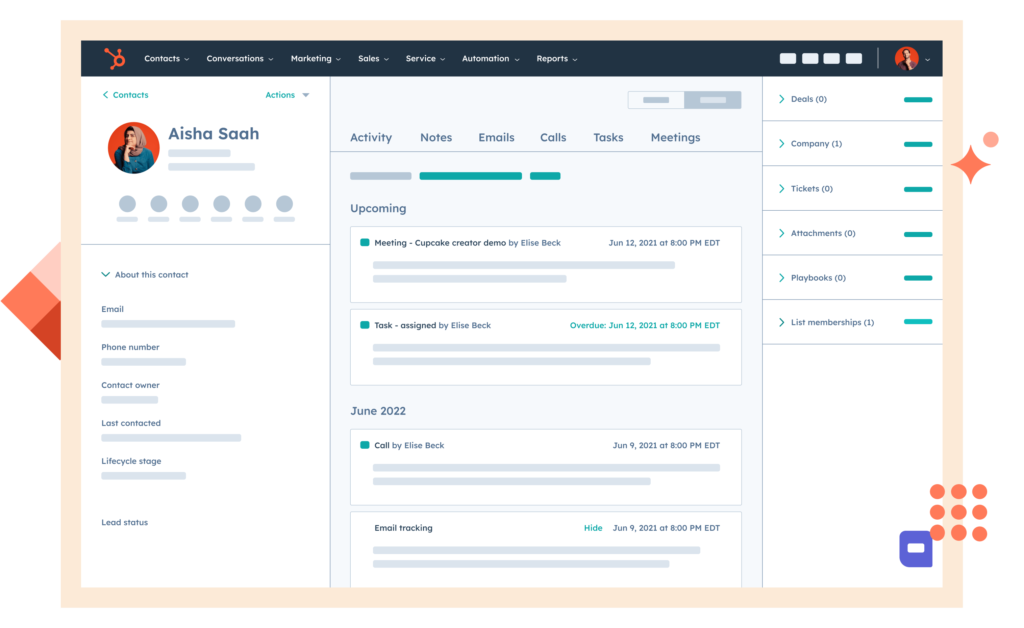
A strategy that exists only in a PDF is useless. In 2026, the Target Audience Archetype must be a mandatory data field within your Customer Relationship Management (CRM) system, such as Salesforce or HubSpot.
Transitioning from Lead Scores to Archetypal Fit
Traditional lead scoring is linear (e.g., +5 for a whitepaper download). Archetypal Scoring is multidimensional. It measures a lead’s Psychological Velocity.
- Guardian Signals: Searching for “legal terms,” “security certifications,” or “transition guides.”
- Visionary Signals: Searching for “case studies in innovation,” “beta access,” or “competitive edge.”
The CRM Schema Update
Your sales team should not tag a lead as “CEO.” They should tag the lead as [Visionary | High Intent | Risk-Neutral]. This allows for Dynamic Content Delivery.
If the CRM identifies a high density of “Guardian” archetypes within a single account, the automated email sequence should pivot from “disruptive features” to “implementation stability.”
In our work at Inkbot Design, we consistently see that the most expensive mistake a founder can make is falling in love with a fictionalised version of their customer.
You cannot “empathise” your way into a corporate budget.
You have to understand the mechanics of outcome-based pricing and the psychological friction of the procurement group. Stop drawing pictures of your customers and start mapping their fears.
Professional Archetype Mapping vs Amateur Persona Building
| Technical Aspect | The Wrong Way (Amateur) | The Right Way (Pro) | Why It Matters |
| Data Source | Stock photos and “intuition.” | Intent signals and sales transcripts. | Accuracy in B2B is measured in revenue, not aesthetics. |
| Audience Focus | Individual “Marketing Mary” personas. | Decision-Making Unit (DMU) archetypes. | Groups buy software; individuals just use it. |
| Messaging | Vague “benefits” like “Save time.” | Atomic claims with named evidence. | AI Overviews cannot cite vague promises. |
| Visual Strategy | Generic “modern” templates. | Brand Distinctive Assets (BDAs). | AI-generated genericism is the 2026 death knell. |
| Success Metric | “Does this feel like our customer?” | “Does this build consensus in the DMU?” | Consensus is the only thing that closes enterprise deals. |
The 90-Day Pivot: A Step-by-Step Execution Plan
Phase 1: The Audit (Days 1-30) Analyse the last 20 “Lost Deals.” Identify which archetype vetoed the sale. Was it a Guardian who lacked security proof? Or an Architect who didn’t see the ROI?
Phase 2: Content Mapping (Days 31-60) Audit your top 50 pages. Assign each page a “Primary Archetype Target.” If 80% of your pages target the “Visionary,” you have a Structural Authority Deficit for the Guardian and Architect.
Phase 3: Deployment (Days 61-90) Update your CRM fields. Train the sales team on Archetypal Identification during discovery calls—launch “Utility-First” assets to replace old lead magnets.
The Verdict
Your B2B strategy is failing because you are chasing ghosts. The fictional “buyer persona” is a distraction from the psychological reality of the 2026 market.
To rank, to be cited by AI, and—most importantly—to sell, you must pivot to a Target Audience Archetype framework.
This guide has substantiated that B2B decisions result from collective psychological states within a committee.
You have seen how the “Risk-Averse Guardian” and the “Disruptive Visionary” must both find what they need in your brand narrative. Ignoring this complexity in favour of a single, simplistic persona is a recipe for irrelevance.
Stop guessing what “Marketing Mary” wants for lunch. Start defining the psychological archetypes that control your target budgets.
If you’re ready to stop playing at marketing and start building a brand that actually converts in the 2026 landscape, explore Inkbot Design’s services and read our related posts to master your positioning.
FAQ Section
What is the difference between a buyer persona and a target audience archetype?
A buyer persona is a fictionalised individual based on demographics and personal traits. In contrast, a target audience archetype is a psychological framework that identifies recurring patterns of behaviour and motivation within a buying committee. Archetypes focus on the underlying “why” behind procurement decisions rather than superficial “who” details.
Why are traditional buyer personas failing in 2026?
Traditional personas fail because they focus on individuals, even though B2B decisions are made by committees of 6 to 10 stakeholders. They rely on irrelevant personal details that do not influence corporate procurement. Furthermore, Generative AI now filters for atomic, data-driven claims that generic personas cannot provide.
How do I identify my B2B target audience archetype?
Identify your archetype by analysing sales call transcripts, intent-based search data, and lost-deal post-mortems. Look for recurring psychological friction points—such as fear of risk or obsession with efficiency—rather than job titles. Map these motivations to the four primary archetypes: Guardian, Architect, Visionary, and User.
What role does AI play in defining target audience archetypes?
AI tools in 2026 allow for synthetic persona testing and the analysis of vast datasets to identify intent signals. AI Proxy Buyers also act as gatekeepers, requiring brands to structure their content using atomic claims. This ensures that your archetypal messaging is correctly categorised and cited by generative engines.
Can a single brand target multiple archetypes?
Yes, a brand must target multiple archetypes simultaneously to build consensus within a B2B buying committee. Your core messaging should satisfy the “Risk-Averse Guardian” with social proof and stability while exciting the “Disruptive Visionary” with innovation and competitive advantages. This dual-track approach is essential for complex sales.
What is an “Anti-Archetype” in B2B branding?
An Anti-Archetype defines the psychological profile of a customer you specifically do not want to attract. By explicitly excluding certain behaviours—such as “low-budget tyre-kickers” or “high-maintenance micro-managers”—you sharpen your appeal to your primary archetypes. This exclusionary strategy increases marketing efficiency and improves lead quality.
How does archetypal branding affect SEO in 2026?
Archetypal branding improves SEO by increasing “Entity Density” and creating “Atomic Claims” that AI systems like Google’s AI Overviews can easily extract. By focusing on specific psychological triggers and technical needs, you create more “Information Gain” than competitors who use generic, persona-based content.
What is “Proof of Human Thought” in 2026 branding?
Proof of Human Thought is a content strategy that uses complex, data-rich, and opinionated insights to distinguish a brand from generic, AI-generated fluff. In a market saturated with “perfect” but hollow assets, demonstrating lived experience and contrarian viewpoints builds trust with sceptical B2B archetypes.
How do I map archetypes to the B2B sales funnel?
Map archetypes by identifying which psychological state dominates each funnel stage. The “Visionary” often triggers the Top of Funnel (ToFu) search for change, while the “Guardian” and “Architect” dominate the Middle and Bottom of Funnel (MoFu/BoFu) during the risk-assessment and technical-validation phases.
Why is “Marketing Mary” considered a myth?
“Marketing Mary” is a myth because she represents a simplified, one-dimensional view of a buyer that doesn’t exist in the real world. Real B2B buyers are part of a complex “Decision-Making Unit” with conflicting goals. Using a single persona ignores the bureaucratic friction and collective psychology that actually determine a sale.