Semantic Brand Equity: Managing AI Brand Perception
I recently audited a potential client’s digital presence—a high-end architectural firm. On their website, they looked impeccable. To a human, they were the gold standard.
Then I ran their brand through a series of LLMs.
The AI didn’t care about their mission statement. Because the firm had no clear semantic connection to “sustainable urban planning” or “luxury residential architecture” in the broader web, the LLM categorised them as a “general construction contractor.”
Every time a high-net-worth individual asked an AI for a “top-tier luxury architect in London,” this firm was nowhere to be found.
They were invisible where it mattered most.
Ignoring your brand awareness in the context of machine understanding is a terminal mistake in 2026. If the algorithms that now gatekeep 70% of B2B discovery don’t know what you represent, your physical brand assets are just expensive wallpaper.
The financial risk is total: you are paying for a reputation that the world’s most influential “researchers”—AI agents—cannot see.
- Semantic Brand Equity: AI visibility depends on your brand's vector embeddings, entity links, and citations across authoritative sources.
- Machine Perception Management: optimise Schema/JSON-LD, SameAs, and targeted citations to prevent vector drift and improve recommendation probability.
- Citation Strategy: build Tier 1 and Tier 2 co-occurrences, white papers, and Knowledge Graph entries to become the AI's definitive recommended answer.
What is Semantic Brand Equity?
Semantic Brand Equity is the measurable value and authority a brand possesses within the latent space of Large Language Models and Knowledge Graphs.
It is defined by the strength, accuracy, and sentiment of the mathematical relationships (vectors) between a brand entity and its core industry attributes, values, and competitor sets.
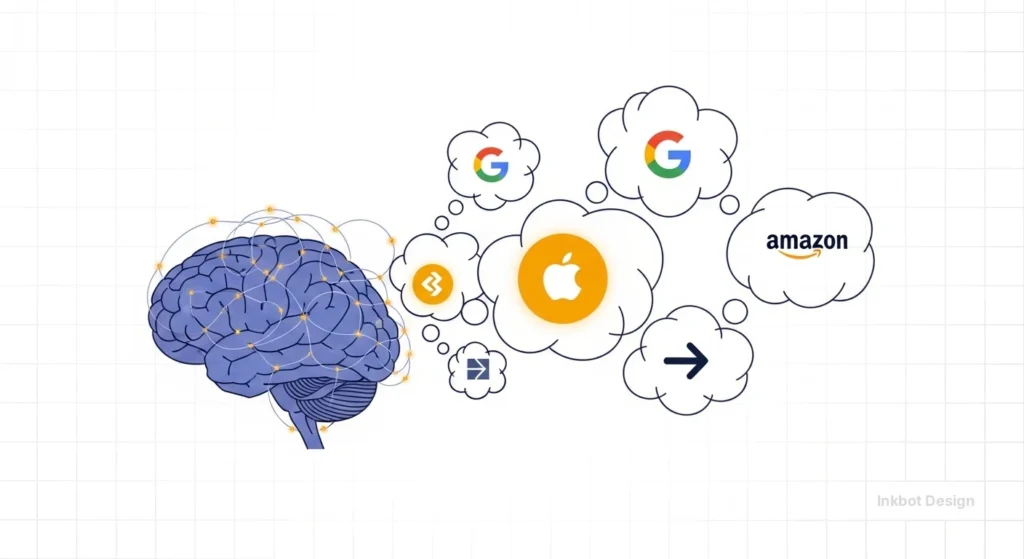
The three core elements of Semantic Brand Equity include:
- Entity Association: The degree to which an LLM links your brand name to specific keywords, problems, and solutions.
- Sentiment Vectoring: The mathematical “mood” assigned to your brand based on training data (reviews, articles, social discourse).
- Contextual Proximity: How closely your brand sits next to “Market Leaders” in the AI’s internal map of your industry.
The Architecture of Machine Perception: How AI Maps Your Brand
To influence how a machine perceives your business, you must first understand the architecture of the Latent Space.
Unlike traditional search engines that rely on a static index of keywords, modern systems like Google Gemini, Claude 3.5, and Llama 4 use a multidimensional map where every concept, brand, and person is a coordinate.
The Role of Vector Embeddings
When a user asks an AI about your industry, the model doesn’t look for your website; it calculates the distance between the user’s intent and your brand’s Vector Embedding.
If you are a high-end architectural firm in London, your brand coordinates must sit within a specific cluster that includes “sustainable design,” “RIBA standards,” and “luxury residential projects.”
If your digital presence is scattered across unrelated topics—perhaps due to outdated blog posts about company picnics or generic news releases—your vector drifts.
This “Vector Drift” is the primary reason why AI assistants often ignore market leaders in favour of smaller, more semantically focused competitors.
Ground Truth: The Sources AI Trusts
In 2026, AI models weigh information based on the “stability” and “authority” of the source. While your own website provides the foundation, the AI verifies this data against:
- Common Crawl: The massive dataset of the web used for training.
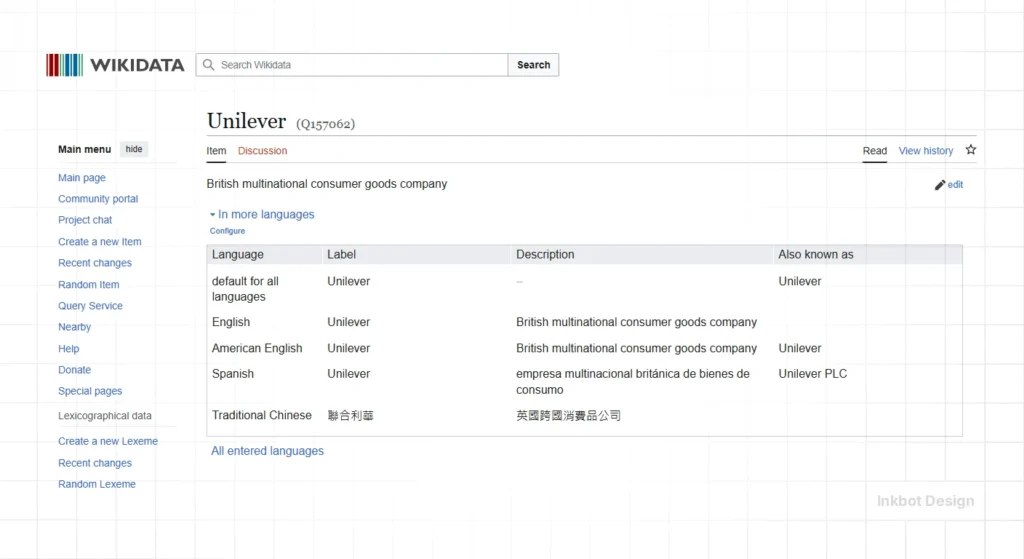
- Wikidata & Wikipedia: The backbone of most modern Knowledge Graphs.
- Industry Journals: Peer-reviewed content that acts as high-signal truth for B2B brands.
- High-Intent Communities: Platforms like Reddit and Stack Overflow, where real-world sentiment is gauged.
Example: A skincare brand, Vesta Skin, was struggling to appear in “best natural moisturiser” queries. Despite having high-quality products, the AI categorised them as “discount retail” because their primary digital citations came from coupon sites. By pivoting their PR to focus on scientific dermatological journals and high-authority fashion publications, they shifted their vector into the “Premium/Medical-Grade” cluster within six months.
The Vector Space: Why Your Logo is Just a Coordinate
In traditional marketing, we talk about “Top of Mind” awareness. In 2026, we talk about Vector Proximity.
When an AI like Gemini or Claude processes information, it doesn’t “read” your website the way a person does. It converts your brand into a series of numbers in a high-dimensional space.
If you are a digital marketing service, your brand needs to be mathematically close to “ROI,” “Growth,” and “Technical Excellence.”
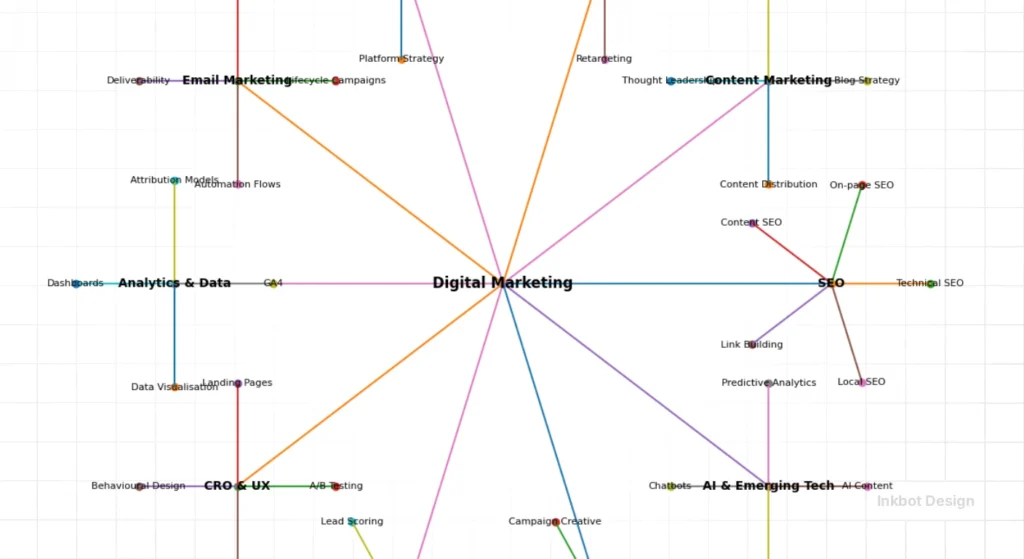
If your online mentions are buried in low-quality directories or associated with irrelevant topics, your vector drifts. You end up in the “No Man’s Land” of the latent space.
A recent Gartner study indicated that by 2026, 60% of CMOs will shift their focus from traditional SEO to “Machine Perception Management” to combat this drift.
| Strategy Element | Traditional Digital Marketing (2020) | Machine Perception Management (2026) |
| Primary Goal | Rank #1 on Page 1. | Be the “Definitive Recommended Answer.” |
| Key Metric | Organic Traffic & Bounce Rate. | Vector Proximity & Confidence Score. |
| Content Focus | Keyword-rich blog posts. | Entity-rich technical guides & citations. |
| Authority Signal | Domain Authority (DA). | Citations in Ground Truth datasets. |
| Link Building | Anchor text & quantity. | Contextual Co-occurrence & quality. |
| User Interaction | Clicking a link. | Conversational Discovery via an AI agent. |
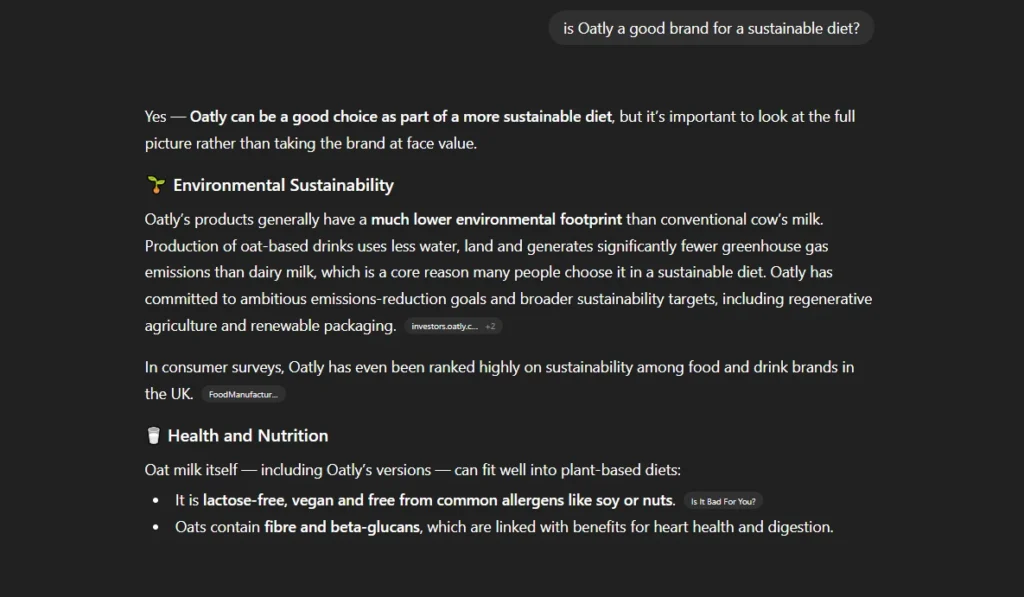
Real-World Example: The “Oatly” Semantic Shift
Oatly didn’t just build a brand; they built a semantic wall.
By aggressively associating their entity with “sustainability,” “post-milk generation,” and “vegan activism” across every digital touchpoint, they forced LLMs to categorise them not just as a “food product,” but as a “sustainability leader.”
When you ask an AI about sustainable diets, Oatly comes up because its semantic equity is tied to the concept of sustainability, not just the milk category.
Beyond the Website: Influencing the 2026 Training Data
The most dangerous assumption in modern marketing is that your website is your brand’s primary representative. In machine perception, your website is merely one vote in a massive, global election.
To win, you must campaign across the entire Web Corpus.
The Hierarchy of Digital Citations
Not all mentions are equal. To build robust Semantic Brand Equity, you must categorise your digital footprint into three tiers:
| Tier | Source Type | Machine Perception Impact | Action Required |
| Tier 1 | Wikipedia, Reuters, NIST, Gartner | Foundational: Defines who you are and what you do. | Focus on factual, unbiased citations and official reports. |
| Tier 2 | Industry News, Niche Publications, Trustpilot | Contextual: Associates you with specific problems/solutions. | Regular press releases and technical guest columns. |
| Tier 3 | Social Media, General Blogs, Forums | Sentiment: Influences the “mood” and trust score. | Community management and consistent brand voice in discussions. |
Strategy: The “Citation Loop”
To ensure an AI like OpenAI’s SearchGPT or Perplexity recommends you, implement a citation loop.
This involves taking a proprietary insight (a data study or a unique framework), publishing it on your site, and then ensuring it is cited by at least three Tier 1 or Tier 2 sources.
The co-occurrence of your brand name with the unique insight and the authoritative source creates a permanent, high-trust link in the machine’s memory.
Addressing AI Hallucinations
If an AI provides incorrect pricing or service information, it is rarely a random glitch. It is usually a sign of “Data Fragmentation”—the machine is finding conflicting information across the web.
To fix this, you must “flood the zone” with a Master Entity Record. This is a combination of a perfectly structured “About” page and a comprehensive Wikidata entry that provides the ground truth the machine is looking for.
Entity Relationships and the Power of Co-occurrence
To build semantic brand equity, you must master Co-occurrence. If “Inkbot Design” is frequently mentioned in the same paragraph as “Top Branding Agency UK” or “Expert Logo Design,” the AI creates a permanent neurological link between those two entities.
This isn’t about anchor text. It’s about Contextual Co-occurrence.
If you want to be known for brand equity, you need to appear in research papers, industry news, and high-level discussions regarding that topic.
The AI notes the proximity. Over time, your brand becomes a “synonym” for the service you provide.
Real-World Example: Adobe and “Creativity”
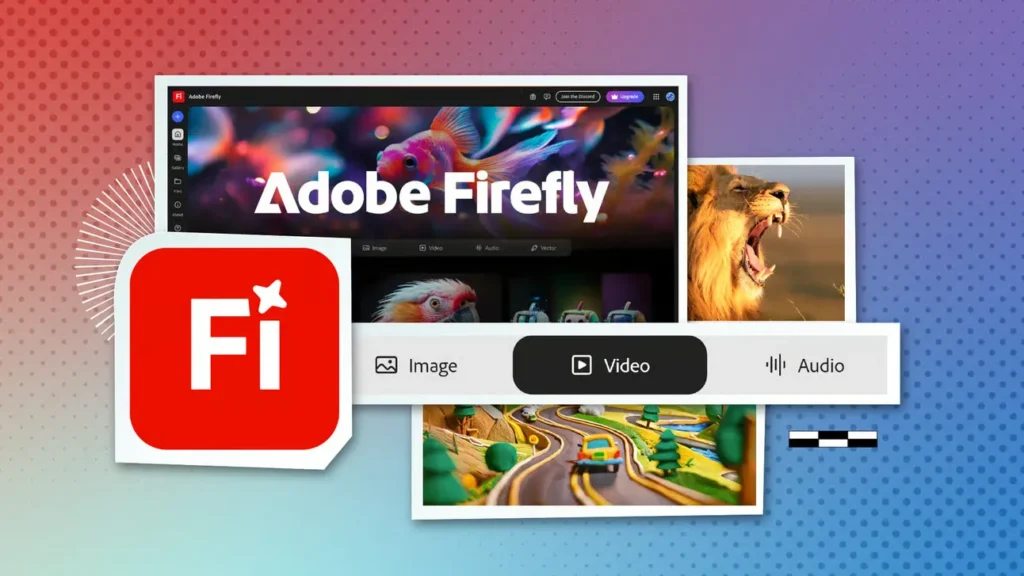
Adobe has so much semantic equity that the brand name has become a verb in some contexts. Still, more importantly, in the latent space of an LLM, “Adobe” and “Creative Professional” are virtually inseparable.
This was achieved through decades of brand alliances and community-driven content that reinforced the entity relationship.
The State of Semantic Brand Equity in 2026
As of early 2026, we have moved beyond simple “Search.” We are in the age of the Answer Engine.
Google’s Search Generative Experience (SGE) and OpenAI’s SearchGPT have fundamentally changed the “Cost of Retrieval.”
Users no longer want a list of links; they want a definitive answer. If your brand is not part of that answer, you don’t exist.
Recent changes in pricing for API access to LLMs have led to more “agentic” browsing. Your potential clients are now using AI agents to “Find me the best branding agency for a tech startup in Manchester.”
These agents don’t look at Google Ads. They scan the semantic web for the most “authoritative” entity.
If you haven’t worked on enhancing brand trust through technical SEO and semantic markup, you are filtered out before the human even sees the results.
Technical On-Page SEO for AI Perception
You cannot just write “human” content and hope for the best. You need to speak to the machines. This involves:
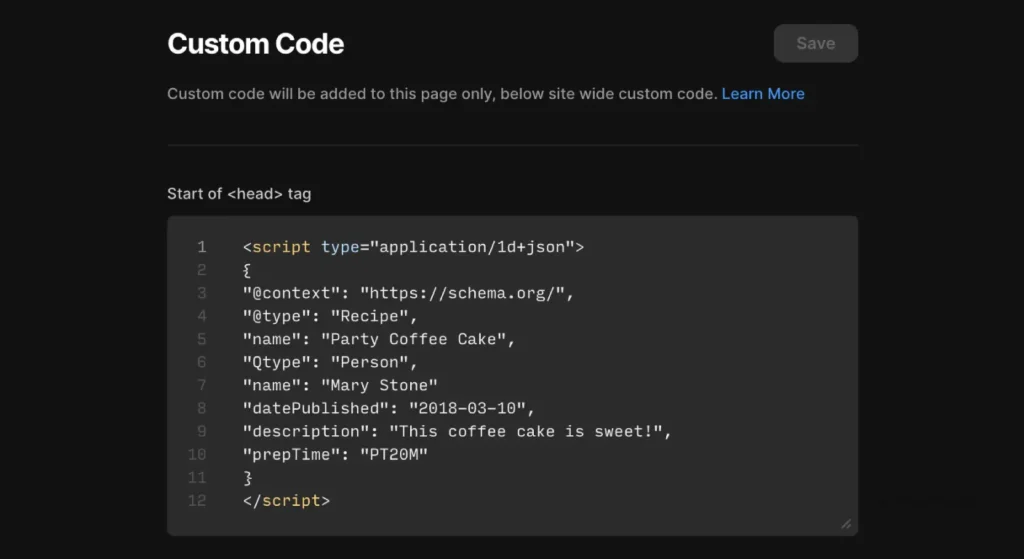
- Schema Markup (JSON-LD): Explicitly telling the search engine who you are, what you do, and what you are “About.” This is the foundation of digital marketing services.
- Schema ‘SameAs’ Properties: Linking your entity to your social profiles, Wikipedia pages, and official entries in business databases.
- Entity-Based Content Structures: Organising your pages around “Topics,” not just “Keywords.” Use H2 and H3 tags to define the “Root,” “Rare,” and “Unique” attributes of your subject.
For instance, if you are discussing brand salience, don’t just define it.
Connect it to word-of-mouth marketing and brand ambassadors to show the AI that you understand the entity’s entire ecosystem.
Technical Perception Management: Speaking to the AI
If your content is for humans, your code is for the machines.
In 2026, Schema Markup is no longer a “nice-to-have” for rich snippets; it is the primary way you declare your entity’s relationships to the world’s Knowledge Graphs.
Implementing the SameAsProperty
The SameAs property in your JSON-LD is the single most powerful tool for entity disambiguation.
It tells the AI: “This brand mentioned here is the same entity as the one on this Wikipedia page, this LinkedIn profile, and this Crunchbase listing.”
JSON

{

  "@context": "https://schema.org",

  "@type": "Organization",

  "name": "Inkbot Design",

  "url": "https://inkbotdesign.com",

  "logo": "https://inkbotdesign.com/logo.png",

  "sameAs": [

    "https://www.wikidata.org/wiki/Q1234567",

    "https://www.linkedin.com/company/inkbot-design",

    "https://en.wikipedia.org/wiki/Inkbot_Design",

    "https://twitter.com/inkbotdesign"

  ],

  "description": "A leading Belfast-based branding agency specialising in machine perception and semantic identity."

}
The “About” and “Mentions” Schema
To further clarify your expertise, use the about and mentions properties within your article schema.
If you are writing about Semantic Brand Equity, explicitly link the article to the concept’s Wikidata ID.
This removes any ambiguity for the LLM during crawling.
Optimising for the “Cost of Retrieval”
AI agents are programmed to be efficient. If your data is buried behind complex JavaScript or non-standard layouts, the “Cost of Retrieval” becomes too high.
The AI may skip your content in favour of a competitor whose site is structured for rapid data extraction.
Use clear, hierarchical headings (H2, H3, H4) and ensure your most essential entity claims are in plain text near the top of the page.
The Semantic Brand Audit: A Step-by-Step Framework
Traditional metrics such as “Monthly Active Users” and “Keyword Rankings” are lagging indicators. To understand your brand’s future, you must audit its machine perception today.
Step 1: The Zero-Shot Identity Test
Open ChatGPT (GPT-4 or later) and Google Gemini. Input the prompt:
“Provide a factual summary of [Brand Name], including its core specialism and three main competitors.”
- The Goal: The summary should align perfectly with your brand pillars.
- The Red Flag: If the AI lists competitors that are not in your league, or fails to mention your core specialisms, your Contextual Proximity is broken.
Step 2: Sentiment Vector Analysis
Ask the AI:
“What are the most common criticisms and praises for [Brand Name] based on web discourse?”
This reveals the “Sentiment Vector” assigned to you. Because LLMs are trained on historical data, this will often uncover “ghost” issues—negative reviews from three years ago that are still tainting your machine’s reputation.
Step 3: The Recommendation Probability Test
Ask:
“I am a [Persona, e.g., CEO of a tech startup] looking for [Service]. Which three companies should I hire and why?” If you aren’t recommended, ask the follow-up: “Why wasn’t [Your Brand] included in that list?”
The AI will often provide a startlingly honest answer:
“While [Brand] is well-regarded, it lacks the verified industry citations found with [Competitor].”
This is your direct roadmap for improvement.
Step 4: The Knowledge Graph Verification
Use tools like the Google Knowledge Graph Search API to see if your brand has a unique Entity ID.
If you don’t exist in the Knowledge Graph, you are merely a “string” (a collection of letters) rather than a “thing” (a recognised entity).
Advanced Strategies: Co-Branding and Alliances
One of the fastest ways to “borrow” semantic equity is through co-branding. When a small brand partners with a giant, the LLM serves as a “bridge” between the two.
This is also why affiliate marketing can be a double-edged sword.
If your brand is only mentioned on “coupon” sites, your semantic equity will be “cheap” or “discounted.”
If you are mentioned in a McKinsey report, your equity shifts toward “authoritative” and “premium.”
Choose your brand alliances carefully. In 2026, you are known by the company your entity keeps in the latent space.
Industry-Specific Strategies for Machine Perception
How you build equity depends heavily on how your customers use AI.
B2B: The Authority Play
For B2B brands, LLMs are used as research assistants. Decision-makers use AI to “shortlist the best providers.”
- Strategy: Focus on Technical White Papers, Case Studies, and LinkedIn Thought Leadership. AI agents value depth and data.
- Key Entity: Ensure your brand is associated with “Industry Standards” (e.g., ISO certifications or specific proprietary methodologies).
B2C: The Sentiment and Lifestyle Play
In B2C, AI serves as a lifestyle curator. Users ask for “the best sustainable shoes” or “coolest coffee shops in Shoreditch.”
- Strategy: Focus on Review Aggregators, Reddit Discussions, and Influencer Mentions. AI agents value “social proof” and “vibe.”
- Key Entity: Ensure your brand is associated with “Values” (e.g., B-Corp status, vegan, luxury, affordable).
The Verdict
Semantic Brand Equity is not a “nice-to-have” marketing buzzword; it is the fundamental infrastructure of digital visibility in 2026.
Traditional SEO, which focused on tricking a search engine into ranking a page, is dead.
Modern SEO is about convincing an Artificial Intelligence that your brand is the most logical, authoritative, and trustworthy answer to a user’s problem.
If you continue to ignore how LLMs perceive your brand, you are essentially opting out of the modern economy.
You can have the best logo design in the world, but if the AI thinks you’re irrelevant, you’re invisible.
Stop guessing and start managing your machine perception.
If you need an expert to audit your semantic footprint and fix the gaps in your AI reputation, request a quote today.
Let’s make sure the future of search knows precisely who you are.
Frequently Asked Questions: Navigating the Semantic Web
What is the difference between Brand Equity and Semantic Brand Equity?
Traditional brand equity is the value perceived by humans based on memory and emotion. Semantic Brand Equity is the value perceived by machines based on data points, vector proximity, and entity relationships in an LLM’s training set.
Why is my brand not showing up in ChatGPT or Gemini?
Likely due to a lack of “Semantic Density.” If your brand isn’t mentioned frequently in high-authority contexts or lacks clear Schema markup, the AI doesn’t have enough “confidence” to include you in its answers.
How does co-occurrence affect my brand?
Co-occurrence is the AI’s way of understanding “guilt by association” or “glory by association.” If you are mentioned alongside industry leaders, the AI assumes you are one of them. If you are mentioned alongside “scams,” you are categorised as such.
Does my website’s design affect semantic equity?
Directly, no. Indirectly, yes. Good design leads to better user engagement and higher-quality backlinks, which are the signals LLMs use to determine authority and trust.
How do I fix a “hallucination” where AI says something wrong about my brand?
You must “flood the zone” with correct, authoritative data. Update your Schema, get featured in reputable publications, and ensure your “About Us” and “Wikipedia” (if applicable) information is clear and consistent.
How long does it take for AI to recognise my brand’s new direction?
Unlike traditional search, which can take days to update, LLMs often operate on “training cut-offs.” However, with the rise of Retrieval-Augmented Generation (RAG) and real-time search integration in 2026, changes to your digital citations can be reflected in AI answers within 2–4 weeks.
Can I pay to be a “recommended” brand in AI answers?
Directly, no. While traditional ads still exist, the organic “answer” is based on the AI’s calculation of trust and authority. You cannot “bid” on the primary recommendation in a conversational interface; you must earn it through semantic density and citations.
Does social media engagement affect my brand vector?
Indirectly. While a “Like” on Instagram is not a direct signal, the discourse on social platforms is indexed. If people on Reddit are discussing your product’s reliability, that sentiment is extracted and added to your brand’s vector.
What should I do if my brand name is also a common word?
This is a “Disambiguation” challenge. You must use Schema Markup and specific co-occurrence strategies to tie your brand name to your industry. For example, if your brand is called “Apple,” you ensure your digital citations always appear alongside “technology,” “iPhone,” and “Cupertino.”
Is a Wikipedia page mandatory for high semantic equity?
It is not compulsory, but it is the “Gold Standard.” A Wikipedia page acts as a primary source for Knowledge Graphs. If you cannot get a Wikipedia page, focus on Wikidata, which is more accessible and equally crucial for machine understanding.
What is “Vector Drift” and how do I prevent it?
Vector Drift occurs when your brand is mentioned in contexts unrelated to your core business, causing the AI to lose confidence in what you do. Prevent it by maintaining a tight “Topic Cluster” strategy and ensuring your PR efforts are focused on high-relevance publications.
Why does the AI recommend a smaller competitor over my established brand?
The AI likely perceives the competitor as more “semantically focused.” If your competitor has 100 high-quality citations all pointing to one specific niche, and you have 1,000 citations spread across 50 different topics, the AI may view the competitor as the “specialist” and therefore the better recommendation for that specific query.
Does brand awareness still matter in 2026?
More than ever, but the type of awareness has changed. You don’t just need people to know you; you need the data to know you. Awareness is now a technical SEO metric.
How can Inkbot Design help with Semantic Brand Equity?
We specialise in the intersection of creative branding and technical SEO. We don’t just design logos; we build “Entity-First” brands that are mathematically optimised for discovery in an AI-driven market.