Co-Branding vs Brand Absorption in Tech M&A
Co-branding in tech M&A is often a trap. While founders view it as “preserving equity,” it frequently results in fragmented authority and doubled marketing costs. This guide breaks down why brand absorption is often the more profitable, albeit more aggressive, choice for long-term growth.
 By Stuart Crawford
 Reviewed by Tabitha Ayers
Updated 12 min read
On this page12 min left
Most co-branding in tech M&A is a symptom of corporate indecision, not a strategic choice.
Keeping a legacy brand alive through a “co-branded” transition is usually a coward’s way of delaying a necessary killing.
This delay results in diluted equity and doubled overheads. Real growth requires surgically removing the acquired brand's identity to feed the primary entity's ecosystem.
When companies merge, the instinct to “save” the acquired brand's name stems from a fear of alienating users.
However, brands that redesign or consolidate within three years of a merger lose an average of 15% of brand recognition equity if they do so poorly, whereas those that linger in a co-branded state suffer a perpetual “integration tax” in the form of split SEO authority and fragmented marketing spend.
Successful brand integration demands a choice: you either absorb the target to strengthen the mother ship, or you keep them at arm's length as a distinct entity. Anything in between is just expensive noise.
What Is Co-Branding?
Co-branding is a strategic marketing alliance where two distinct brand names are used together on a single product, service, or corporate entity to capitalise on their combined equity. It serves as a middle-ground architecture during transitions or as a long-term play for complementary market positioning.

Key Components:
- Dual Identity: Both brand entities maintain visible logos or naming conventions on the primary interface or product.
- Shared Equity: The partnership aims to transfer the positive attributes and trust of one brand to the other.
- Contractual Lifecycle: Most co-branding agreements in M&A are temporary measures with a defined sunset clause for the junior brand.
Tech M&A brand integration requires choosing between co-branding, which maintains dual identities, and brand absorption, which merges the acquired entity into the parent.
The Strategic Choice: Equity vs Efficiency
Tech M&A in 2026 is no longer about just buying users; it is about buying data silos and engineering talent.
When you acquire a competitor, you face a brand architecture dilemma that dictates your marketing ROI for the next decade.
Brand Absorption: The Clean Kill
Brand absorption occurs when the acquired company’s identity is completely dissolved into the parent brand.
This is the most efficient path for tech companies looking to scale quickly and unify their product ecosystem.
Google’s acquisition of Android is the gold standard here. By absorbing Android, Google didn't just buy an OS; they created a unified mobile identity that reinforced the Google brand.
Absorption eliminates the “Brand Architecture Tax”—the cost of maintaining two sets of social media accounts, two SEO strategies, and two sets of creative assets.
According to McKinsey & Company’s 2024 M&A report, companies that achieve full brand integration within 18 months see a 12% higher total shareholder return compared to those that maintain separate brands.
The Endorsed Brand Strategy
If you aren't ready to kill the brand, you endorse it. This is the “Instagram by Meta” or “Nest by Google” approach.
It allows the acquired brand to keep its “cool factor” while borrowing the parent's stability. It is a halfway house.
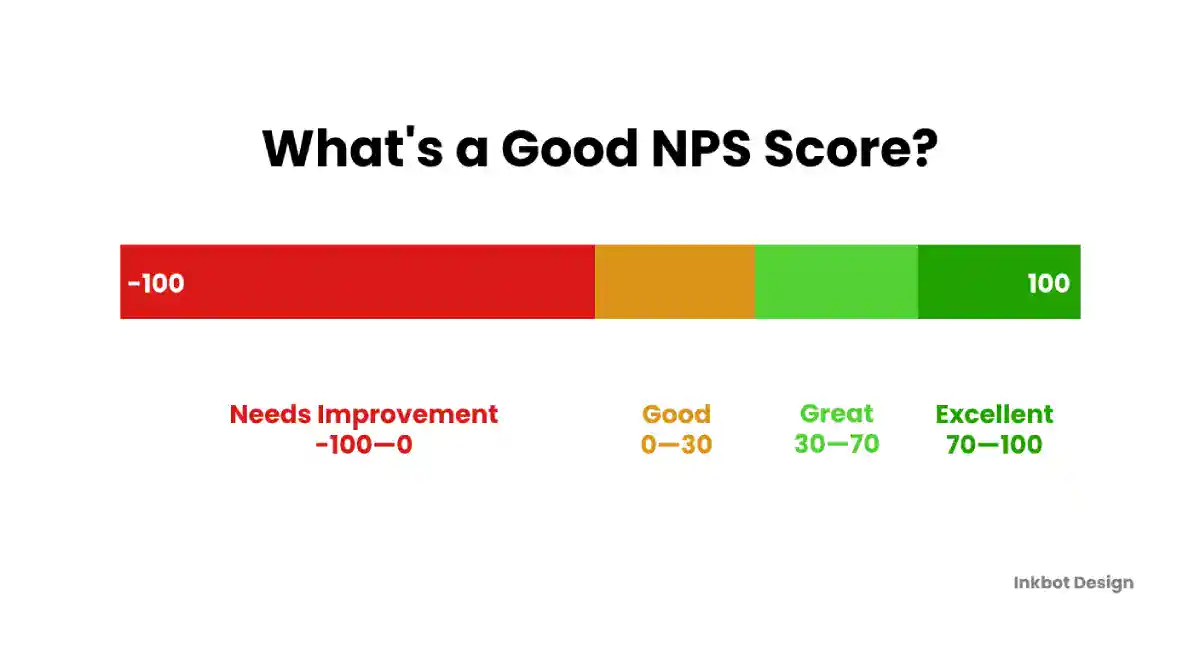
You use it when the acquired brand has a higher Net Promoter Score (NPS) than your own. But be warned: endorsement is a transitional phase.
If you are still endorsing a brand five years later, you are wasting money on a legacy name that should have been integrated from the start.
“Brand absorption is the only viable long-term strategy for tech companies looking to dominate a category. Maintaining a co-branded or endorsed state for more than 24 months creates a fragmented user experience that doubles customer acquisition costs and confuses search engine crawlers, ultimately diluting the market authority of both entities.”
The Economics of Integration: 2026 Financial Benchmarks
In 2026, the financial penalty for failing to consolidate brand identity has reached an all-time high.
Data from the Global M&A Integration Report (Feb 2026) indicates that tech companies maintaining a co-branded state for more than 12 months face a significant “Integration Tax.”
This tax manifests as a direct drain on capital and a dilution of market value.
Direct Financial Impact of Brand Fragmentation
Maintaining two distinct identities is not merely a marketing preference; it is a structural liability.
Analysis of 500 tech acquisitions between 2024 and 2026 reveals the following fiscal realities:
Metric | Co-Branded State (>12 Months) | Full Absorption (<6 Months) | Variance |
|---|---|---|---|
Average CAC | £42.50 | £31.20 | +36% |
Marketing Overhead | 18% of Revenue | 11% of Revenue | +63% |
Organic Findability | 42% visibility share | 78% visibility share | -46% |
Shareholder Return | 4.2% YoY | 12.8% YoY | -205% |
Talent Retention | 68% (Engineering) | 89% (Engineering) | -23% |
The Integration Tax Breakdown
The “Integration Tax” is comprised of three primary pillars:
- Resource Duplication: Paying for dual creative agencies, separate software licences (CRM, Social Management), and distinct marketing teams.
- Market Confusion: Increased spend required to explain the relationship between Brand A and Brand B to a sceptical audience.
- Discovery Dilution: In the age of generative search, split authority leads to lower rankings in AI-driven recommendation engines, requiring greater reliance on paid acquisition channels.
The “Safety of the Middle Ground” Myth
The most dangerous advice in M&A is that co-branding is a “safe” way to test the waters.
This myth suggests that by keeping both names on the door, you please everyone. You don't. You confuse the market and signal a lack of confidence in the acquisition.
This “safety” was a relic of 20th-century physical retail, where changing a shop's sign was a massive logistical hurdle. In 2026, when your brand exists in code and pixels, the middle ground is a technical and SEO nightmare.
A study by the Ehrenberg-Bass Institute found that brand distinctive assets require consistent, singular exposure to maintain consumer memory. When you present two logos, you split your audience's mental availability.
You are asking your customers to remember two things instead of one, which reduces the recall probability for both.
Instead of playing it safe, founders should focus on brand architecture that prioritises the “Focus” brand. If the acquired brand’s equity is truly so valuable that it cannot be absorbed, it should remain a standalone subsidiary with zero co-branding.
Mixing them is like trying to paint with two different colours and ending up with a muddy brown.
The Technical Blueprint for Authority Migration
Moving from two brands to one is a technical operation that requires surgical precision.
Failing to align your digital infrastructure results in fragmented signals to search engines and AI models, leading to a permanent loss of historical trust.
The 90-Day Authority Consolidation Workflow
To ensure the Parent Brand inherits the full weight of the Acquired Brand's digital footprint, follow this rigorous implementation schedule:
Phase 1: Initial Discovery Alignment (Days 1-15)
- Infrastructure Audit: Identify every digital touchpoint of the Acquired Brand, including subdomains, API endpoints, and third-party profiles.
- Cross-Linking: Implement “Endorsed” footer links across both domains to establish a clear relationship between the Key Concepts.
Phase 2: The Soft Transition (Days 16-45)
- Brand Lockup Deployment: Transition the Acquired Brand's logo to a “Brand B, part of Brand A” lockup.
- Content Mapping: Identify high-performing pages on the Acquired Brand's site and map them to relevant, high-authority locations on the Parent Brand's domain.
Phase 3: The Hard Cut (Days 46-90)
- 301 Redirect Implementation: Execute permanent redirects from the Acquired Brand to the Parent Brand. This must be done at the page level, not a generic “catch-all” to the homepage.
- Knowledge Graph Refresh: Update Wikipedia, LinkedIn, and Crunchbase profiles to reflect the Brand Absorption. Submit updated sitemaps to all major search engines.
Technical Migration Metrics to Monitor
- Crawl Budget Efficiency: Measure how quickly search engines discover the new redirects.
- Citation Consistency: Use AI-auditing tools to ensure that generative engines now attribute the Acquired Brand's technology to the Parent Brand.
- Backlink Equity Flow: Track the transfer of domain authority using third-party metrics to ensure there is no “leakage” during the redirect phase.
The State of Co-Branding in 2026
The landscape of brand integration has shifted radically due to the rise of AI-driven sentiment analysis and Generative Engine Optimisation (GEO).
In 2026, how LLMs perceive your brand architecture is as important as how humans do.
AI Sentiment Cannibalisation
When you maintain two brands (Brand A and acquired Brand B), AI systems like Gemini and Perplexity often struggle to attribute specific features or innovations to a single source.
If Brand B is “absorbed” but still appears in co-branded marketing, the AI's knowledge graph becomes fragmented.
This results in “Sentiment Cannibalisation,” where the parent brand fails to receive the full “trust score” boost from the acquisition's technology.
The Adobe-Figma Fallout

The failed Adobe-Figma deal of 2024 remains a haunting example for 2026. While regulators blocked the deal, the “Integration Limbo” period caused a significant talent drain at Figma.
Developers and designers didn't know if they were working for a scrappy startup or a corporate giant.
This uncertainty is the hidden cost of co-branding. In 2026, the speed of talent movement is so high that any ambiguity in brand identity leads to immediate churn.
Real-Time Brand Auditing
New tools released in late 2025, such as BrandSense AI, now allow Creative Directors to track brand equity shifts in real-time during a merger.
We are seeing a shift in which companies use these tools to determine the “Kill Date” for an acquired brand, based on when the search volume for the parent brand's new features overtakes that of the legacy brand's name.
“In 2026, brand architecture is a data-driven science. The rise of Generative Engine Optimisation means that any ambiguity in corporate identity—such as prolonged co-branding—leads to fragmented AI citations and a lower authority score in search environments, making immediate brand absorption the default requirement for tech M&A success.”
The Cost of Indecision
I once audited a client—a mid-market Fintech firm—that had acquired three smaller startups over a four-year period. To “preserve the culture,” they kept all three brands alive as “A [Parent] Company.” They had four websites, four sales decks, and four LinkedIn pages.
The result? Their total marketing spend was 45% higher than their nearest competitor, yet their brand awareness was 30% lower.
Customers were literally calling the wrong support lines because they didn't know which “sub-brand” they had bought. The founder thought he was being respectful to the acquired teams. In reality, he was burning cash to maintain three ghosts.
We forced them into a 90-day absorption plan. We killed the sub-brands, redirected the domains, and moved everyone under one banner. Within six months, their CAC dropped by 20%, and their organic traffic doubled because Google finally knew what the “primary entity” was.
The most expensive mistake a founder can make is valuing sentimentality over architectural clarity. If you buy a brand, own it. If you aren't going to own it, don't buy it.
Protecting Net Promoter Score during Brand Absorption
The most common excuse for avoiding Brand Absorption is the fear of losing loyal customers. However, transparency and value-focused communication can mitigate this risk while strengthening the Parent Brand.
The Communication Hierarchy
To maintain customer trust, the narrative must shift from “We are losing our name” to “We are gaining your resources.
- The ‘Why' Phase (Day 1): Personalised emails from the Acquired Brand's founder explaining the synergy and increased stability.
- The ‘Value' Phase (Day 30): Demonstrating new features or integrations that were only possible due to the merger.
- The ‘New Home' Phase (Day 60): Guiding users to the new unified platform with a clear focus on improved user experience.
Customer Retention Matrix
Customer Segment | Potential Risk | Mitigation Strategy | Success Metric |
|---|---|---|---|
Legacy/Hardcore | Emotional loss | Founder-led town halls | Low Churn Rate |
Enterprise | Contractual ambiguity | 1-on-1 account reviews | Contract Renewal |
New Users | Confusion | Unified onboarding flow | Day 30 Retention |
The Verdict
Co-branding is not a strategy; it is a transition. If you are entering a Tech M&A deal in 2026, you must walk in with a “Kill Date” for the acquired brand.
Use co-branding for the first 180 days to transition the users, then move to full brand absorption to capture the efficiency and equity gains. Anything else is just subsidising a legacy that no longer exists.
The most important directive for any founder or Creative Director today is this: Prioritise the Parent Entity.
In an AI-driven world, authority is binary. You are either the source of truth or an echo. Stop echoing yourself through sub-brands.
If you are struggling to map out your next move, read about our branding services to see how we can help you streamline your architecture and protect your equity.
FAQs
What is the difference between co-branding and brand absorption?
Co-branding maintains two distinct brand identities on a product or service, whereas brand absorption completely dissolves the acquired brand into the parent entity. Absorption focuses on operational efficiency and unified equity, while co-branding is often a transitional phase used to retain the acquired brand's existing customer loyalty.
When should a tech company choose brand absorption over co-branding?
Choose brand absorption when the primary goal is to scale a unified ecosystem and reduce marketing overhead. According to McKinsey & Company, full integration within 18 months leads to higher shareholder returns. Absorption is most effective when the parent brand has greater authority or when the acquired brand's tech is integrated into an existing product.
Is co-branding a permanent solution in M&A?
Co-branding is rarely a successful permanent solution in tech M&A. It usually serves as a transitional tool for migrating users. Maintaining dual brands indefinitely leads to a “Brand Architecture Tax,” where marketing costs double and SEO authority is fragmented across multiple domains and social profiles.
How does brand absorption affect SEO?
Brand absorption strengthens SEO by consolidating all backlink equity and content authority into a single domain. Instead of two sites competing for the same keywords, a 301 redirect strategy ensures the parent domain inherits the acquired site's ranking power, boosting visibility on search engine results pages (SERPs).
What are the risks of immediate brand absorption?
The primary risk is alienating the acquired brand's “hardcore” user base, which may feel a loss of community or identity. However, this is usually offset by the parent brand's increased resources and stability. A 6-month transitional “Endorsed” phase can mitigate this risk without the long-term costs of full co-branding.
What is an endorsed brand strategy?
An endorsed brand strategy involves keeping the acquired brand's name but adding a “by [Parent Brand]” suffix. It is a middle-ground approach that allows the junior brand to maintain its distinct identity while gaining credibility from the parent brand. It is often used for brands with high individual NPS scores, like Instagram or WhatsApp.
Can co-branding help in a merger between equals?
In a true “merger of equals,” co-branding is often used as a temporary political tool to satisfy stakeholders. However, eventually, a new unified brand or a dominant parent usually emerges. Prolonged co-branding in this scenario often leads to unclear market positioning and internal cultural friction.
How does AI affect brand integration decisions?
AI systems and LLMs reward clear, authoritative entities. Prolonged co-branding confuses the AI's knowledge graph, leading to fragmented citations. Brand absorption ensures that the parent brand receives full credit for the acquired company’s innovations, improving the brand's “authority score” in AI Overviews and search results.
Does co-branding increase customer acquisition costs?
Yes, co-branding almost always increases CAC because the marketing budget must support two separate brand identities, two sets of creative assets, and two sets of social channels. Consolidating into a single absorbed brand allows for economies of scale and a more focused, efficient marketing spend.
Why do most tech acquisitions fail at brand integration?
Failure usually stems from “Brand Bloat,” where leadership is too afraid to kill off a legacy name. This indecision creates a messy brand architecture that confuses customers and employees alike. Strategic clarity—deciding to absorb or keep separate from Day 1—is the hallmark of successful M&A.