Loss Aversion Marketing: Why Buyers Fear the Rebrand
Loss aversion influences how professional services buyers assess risk, including the decision to appoint a new agency or approve a rebrand. Effective messaging must explain the commercial cost of inaction while making the proposed change credible. The objective is a defensible business decision, not manufactured urgency or unnecessary anxiety.



On this page9 min left
- What Is Loss Aversion Marketing?
- Why Loss-Focused Messaging Can Make Professional Services Buyers Hesitate
- How to Make the Commercial Cost of an Ineffective Brand Visible
- How to Reduce the Perceived Risk of a Rebrand or New Agency Appointment
- When Should Professional Services Firms Use Loss-Based Messaging?
- A Rebrand Should Reduce Uncertainty, Not Manufacture It
- Questions people ask
Professional services buyers can recognise that their existing brand is holding the business back and still refuse to approve a rebrand.
The reason is straightforward: changing something familiar introduces a perceived risk of its own.
Loss aversion marketing examines how people evaluate potential losses against potential gains.
For a professional services firm, that means understanding both the cost of remaining with an ineffective brand and the perceived cost of appointing a new agency, changing market positioning or replacing an established identity.
The distinction matters. A managing partner who believes a rebrand could damage client recognition needs evidence and reassurance, not another sales pitch about what happens if they do nothing.
According to Edelman and LinkedIn's 2025 research, 85% of hidden decision-makers rated a vendor's understanding of their business challenges and needs as moderately or very important in the final RFP decision. Only 41% rated the vendor as the safest choice.
The commercial argument must be credible. Fear alone will not make it so.
What Is Loss Aversion Marketing?
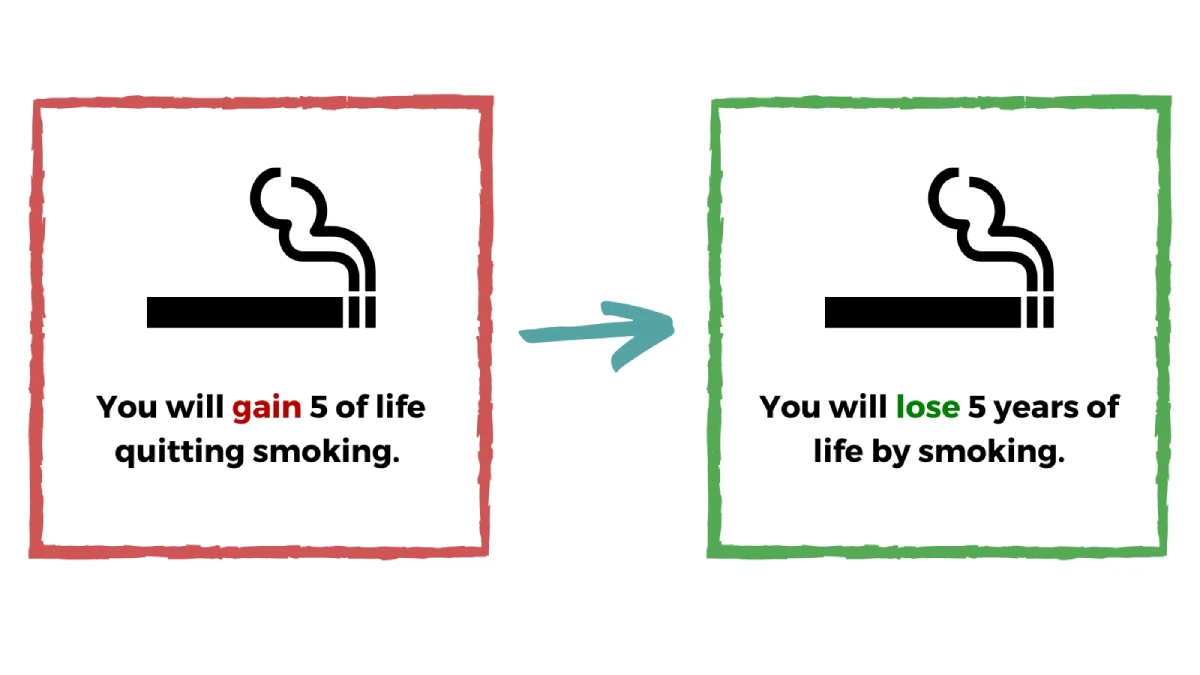
Loss aversion marketing is the practice of framing a purchasing decision around what a person or organisation could lose by not acting, rather than focusing exclusively on the potential benefits of acting.
The concept comes from behavioural economics and Daniel Kahneman and Amos Tversky's Prospect Theory, published in 1979.
The principle helps explain why a business owner may react more strongly to the possibility of losing an established client than to the possibility of winning a new one.
Three distinctions matter:
- Potential loss: What could disappear or deteriorate if the current situation continues?
- Potential gain: What could improve if the organisation makes a change?
- Perceived risk: What might go wrong because of the proposed change?
For a professional services firm, these considerations can influence decisions about agency appointments, brand repositioning, consultancy engagements and marketing investment.
Loss aversion also sits within a broader collection of behavioural influences. Understanding the relationship between perceived risk, established habits and decision-making requires a wider appreciation of cognitive bias mitigation strategies.
The important distinction is that recognising a potential loss does not automatically make a proposed solution attractive.
A buyer still needs to believe the alternative is worth the risk.
Why Loss-Focused Messaging Can Make Professional Services Buyers Hesitate
Loss-focused messaging can make a professional services buyer more cautious when the proposed solution introduces risks that the seller has not addressed.
The conventional marketing argument is understandable. If a business owner believes poor positioning is costing the firm profitable instructions, making that commercial consequence visible can encourage action.
There is a legitimate reason to communicate urgency.
Consider a hypothetical 12-partner accountancy practice. The partners believe their positioning no longer reflects the advisory work they want to win. They are competing against larger firms and struggling to communicate why their specialist expertise justifies their fees.
A marketing agency tells the partners that every month without a rebrand costs them prospective clients.
That sounds persuasive until the managing partner asks three questions:
- How many prospective clients are being lost?
- What evidence connects those lost opportunities to the existing brand?
- What happens if the new identity confuses existing clients?
The agency has highlighted one potential loss while ignoring two others.
The buyer has good reason to hesitate.
The two-sided loss problem
A professional services buying decision can involve competing perceptions of risk:
The Default Approach | What It Costs | The Better Approach | Why |
|---|---|---|---|
Emphasise lost enquiries | Creates pressure without establishing causation | Examine enquiry quality and conversion evidence | Connects the problem to commercial performance |
Warn about competitors taking market share | Encourages defensive thinking | Identifies specific positioning differences | Makes the competitive issue understandable |
Suggest that an outdated identity damages credibility | Makes a subjective judgement sound like fact | Examine actual client and prospect feedback | Gives the buyer something to assess |
Promise a dramatic transformation | Introduces uncertainty about delivery | Define the scope and implementation stages | Reduces perceived project risk |
Push for immediate approval | Increases concern about making the wrong decision | Explain the decision criteria and next steps | Gives stakeholders a defensible basis for approval |
These are recommended decision practices, not measured conversion outcomes.
What the buyer research tells us
Edelman and LinkedIn's 2025 research provides a useful perspective on purchasing in professional services.
The research reports that 64% of hidden decision-makers agreed that an organisation's thought leadership is a more trustworthy basis for assessing its capabilities and competencies than its marketing materials and product sheets.
Another 73% agreed that thought leadership is one of the best ways to assess the type and calibre of thinking an organisation is likely to deliver to clients.
These figures matter because professional services buyers are evaluating the judgement behind the proposal, not simply the promised outcome.
A law firm considering a new brand consultancy wants to know whether the agency understands its commercial pressures, professional obligations and competitive position.
A list of branding services does not answer that question.
Neither does a countdown timer.
The strongest loss-based message gives the buyer a reason to investigate, not a reason to panic.
For a business preparing a strategic rebrand, the distinction is particularly important. A proposed change needs to address the risks of the existing position while demonstrating that the agency understands the risks of implementation.
How to Make the Commercial Cost of an Ineffective Brand Visible

A professional services firm should connect brand-related losses to observable commercial problems before presenting a rebrand as the solution.
This requires separating genuine evidence from assumptions.
An established brand may have weaknesses. That does not mean every missed pitch, poor enquiry or stagnant revenue figure is caused by branding.
The managing director needs to know what the evidence actually shows.
Consider five areas worth examining.
1. Positioning and fee justification
Can the firm explain why a client should choose its services over a competitor charging less?
If prospective clients repeatedly compare the firm on an hourly basis without recognising its specialist expertise, the positioning may need to be examined.
The commercial question is whether the firm's messaging communicates a reason to pay its fees.
2. Enquiry quality
Are enquiries coming from the type of client the firm wants to attract?
A corporate law practice targeting larger commercial instructions may receive plenty of enquiries but few from businesses that match its intended client profile.
The number of enquiries alone tells the managing partner very little.
3. Pitch differentiation
Can partners explain what makes the practice different without relying on generic descriptions such as experienced, professional or client-focused?
If five partners give five different answers, the firm may have a positioning problem.
4. Client confidence
Do existing clients recognise the firm's intended market position?
A rebrand that improves the firm's visual presentation while confusing established clients could introduce a problem that did not previously exist.
This is why client communication and implementation planning matter.
For practical examples of how visual credibility influences professional buyers, see visual trust signals in professional services website design.
5. Recruitment and market perception
Does the firm's public identity communicate the type of organisation it wants to become?
A practice preparing for acquisition, geographic expansion or a new specialist service may discover that its existing identity no longer reflects its intended direction.
The problem is strategic alignment, not necessarily the logo.
These five areas provide a starting point for a brand audit. They do not establish causation independently. Each requires evidence appropriate to the firm's circumstances.
A brand audit should distinguish three things: confirmed commercial problems, plausible brand-related explanations and assumptions requiring further investigation.
For example, a poor pitch win rate is measurable; attributing that result to the firm's visual identity requires additional evidence, such as prospect feedback or documented objections.
Record what the firm knows, what it suspects and what it can demonstrate. That distinction prevents a weak commercial argument from becoming an expensive branding brief.
How to Reduce the Perceived Risk of a Rebrand or New Agency Appointment

A professional services firm can reduce perceived rebranding risk by making the proposed investment understandable, defining what will change, and explaining how existing commercial relationships will be protected.
This is where the two-sided loss framework becomes useful.
The agency must demonstrate an understanding of the current problem while making the proposed solution easier to evaluate.
Establish what must be protected.
Before changing an identity, establish what already works.
A professional services firm may have substantial recognition within a specialist market, long-standing client relationships, or a reputation associated with a particular trading name.
Those assets deserve protection.
A full rebrand may be appropriate when the firm's positioning, market ambitions or business structure have materially changed. A brand refresh may be more sensible when the underlying positioning remains sound, but the visual identity and communications need attention.
The distinction affects the scope, cost and implementation risk.
Define the boundaries of the proposed change.
A managing partner should be able to explain exactly what the agency is proposing.
A credible brand proposal should establish:
- What is changing in the firm's positioning.
- Whether the name, logo and visual identity will change.
- Which existing brand assets will remain.
- How website content and marketing materials will be updated.
- How staff and existing clients will be informed.
- What implementation responsibilities sit with the agency and the client.
A proposal that simply promises a modern identity leaves too much unanswered.
A proposal that defines the work gives the buying committee something concrete to approve.
Demonstrate understanding before asking for commitment.
Edelman and LinkedIn's 2025 research reports that 85% of hidden decision-makers considered a vendor's understanding of their business challenges and needs moderately or very important in the final RFP decision.
The implication for professional services agencies is straightforward: the quality of the diagnosis matters.
A managing partner should not have to explain the same commercial problem repeatedly because an agency is more interested in presenting its portfolio than understanding the business.
A credible proposal should demonstrate that level of contextual understanding through its reasoning, questions and recommendations, rather than relying on a credentials page alone.
Make the decision easier to justify internally.
A rebrand involving 50–200 employees may require agreement from several partners, directors or departmental leaders.
Each stakeholder may have a different concern.
The finance director may question the investment. A senior partner may worry about recognition among existing clients. The marketing director may want evidence that the positioning is strong enough to support the next stage of growth.
The agency should provide information that directly addresses those concerns.
Before approving a rebrand, a managing partner should be able to show the partners the agency's diagnosis, the proposed scope, the assets that will remain and the implementation responsibilities.
Without those details, the board is being asked to approve an uncertain project on the strength of a sales presentation.
Thought leadership can support that process. Edelman and LinkedIn's 2025 research found that 73% of hidden decision-makers considered thought leadership one of the best ways to assess the type and calibre of thinking an organisation is likely to deliver.
This is one reason the hierarchy of social proof in B2B website design deserves attention when building a professional services firm's digital presence.
Credibility must be demonstrated through the diagnosis, proposed work and evidence presented to the buying committee.
When Should Professional Services Firms Use Loss-Based Messaging?
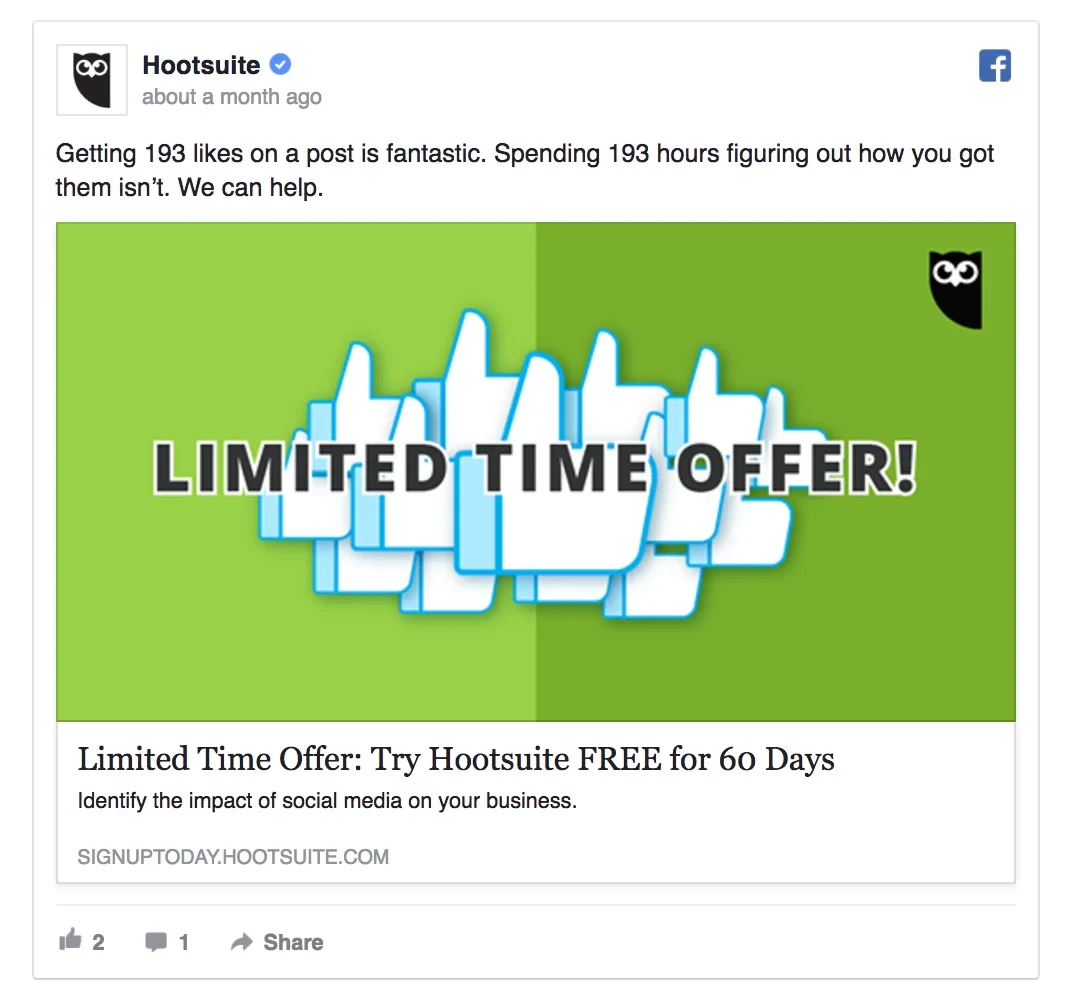
Professional services firms should use loss-based messaging when a genuine commercial problem can be identified and explained without exaggerating its consequences.
The approach is unsuitable when the alleged loss is speculative, the proposed solution is poorly defined, or the buyer is being pressured to decide without adequate information.
Use the following decision test:
Situation | Recommended messaging | Reason |
|---|---|---|
Documented positioning problem | Explain the commercial implications | The problem can be investigated |
Unverified claim about lost clients | Request further evidence | Avoid presenting speculation as fact |
Established brand with valuable recognition | Explain how recognition will be protected | Acknowledges the risk of change |
Firm preparing for acquisition | Explain how brand architecture and identity will support the transaction | Connects branding to a defined business event |
New agency appointment | Demonstrate understanding, scope and delivery responsibilities | Reduces uncertainty about the supplier |
The distinction is particularly important for firms operating in regulated professional sectors.
Legal, financial and accountancy practices may face additional requirements around client communications, professional claims and marketing approval.
A firm should not use the fear of commercial decline to manufacture urgency where the evidence does not support it.
The managing partner needs a reasoned decision, not a more alarming headline.
A Rebrand Should Reduce Uncertainty, Not Manufacture It
Loss aversion marketing is useful for professional services firms because it explains the consequences of maintaining an ineffective brand and addresses the risks of replacing it.
Both sides matter.
A firm may be losing opportunities because its positioning no longer reflects its expertise. A rebrand may help address that problem. However, the proposed change also needs a credible scope, a clear commercial rationale and an implementation plan that protects existing relationships.
The buyer should be able to explain why the current situation needs attention and why the proposed solution is worth considering.
That is the standard.
If your firm is preparing for growth, an acquisition, or market repositioning, Inkbot Design's free Brand Equity Audit™ identifies where your brand may be losing commercial ground and what warrants attention.
Start with the evidence. Then decide whether a rebrand is justified.
Questions people ask
What is an example of loss aversion in professional services marketing?
A consultancy explaining how an outdated market position could affect its ability to attract higher-value clients is using loss-based messaging. The argument is strongest when supported by evidence such as the quality of enquiries, pitch feedback, or documented changes in client requirements.
Why do B2B buyers fear changing professional services providers?
B2B buyers may associate changing providers with implementation problems, lost institutional knowledge, disrupted relationships and uncertainty about delivery quality. A new appointment therefore introduces perceived risks alongside the potential benefits of a better supplier.
Is loss aversion more powerful than the desire for gains?
Loss aversion describes a tendency for people to weigh potential losses differently from equivalent gains. The strength of that effect varies with context, framing and individual circumstances. A universal two-to-one psychological ratio should not be treated as a reliable marketing formula.
How can a professional services firm create urgency without using fear?
A professional services firm can establish legitimate urgency by explaining a documented business problem, its commercial implications and the consequences of delaying a decision. The message should distinguish verified costs from assumptions and give stakeholders enough information to assess the proposed response.
Does loss aversion work in B2B marketing?
Yes — loss-based framing can help B2B buyers recognise the consequences of maintaining an existing problem. However, complex purchasing decisions also require confidence in the supplier, evidence of understanding and clarity about implementation. Creating anxiety without addressing perceived switching risks can undermine the buying decision.