Win-Loss Analysis: Why Buyers Choose Another Firm
Win-loss research can reveal why prospective clients choose another professional services firm, retain an existing supplier or postpone a decision. The useful findings sit beyond sales objections. They expose buyer priorities, perceived risks and acceptable compromises. Those decisions provide practical evidence for positioning before committing to a strategic rebrand.
 By Stuart Crawford
 Reviewed by Tabitha Ayers
10 min read

On this page10 min left
- What Is Win-Loss Analysis, and Why Does It Matter to a Professional Services Firm?
- What Should You Prepare Before Investigating Won and Lost Deals?
- How Do You Collect Reliable Feedback From Buyers?
- Why Did the Buyer Choose the Alternative Instead of Your Firm?
- The Buyer Substitution Map
- How Do You Turn Buyer Decisions Into Positioning Before a Rebrand?
- When Should You Change Your Positioning Based on the Findings?
- The Verdict: Find Out What Buyers Chose Instead
- Questions people ask
A professional services firm can lose a £100,000 engagement to a smaller competitor and still leave the sales meeting believing the problem was price.
Take that as a hypothetical, not a client case.
The buyer might have preferred direct partner access, a narrower scope or a lower initial commitment. Each explanation points towards a different positioning decision.
Win-loss analysis examines why buyers choose or reject a provider, revealing the alternatives, perceived risks and trade-offs behind purchasing decisions.
For a professional services CEO preparing a rebrand, those findings can expose a positioning problem that another round of visual design will not fix.
The useful question is not simply what clients liked about your firm. It is what they chose instead, and why.
What Is Win-Loss Analysis, and Why Does It Matter to a Professional Services Firm?
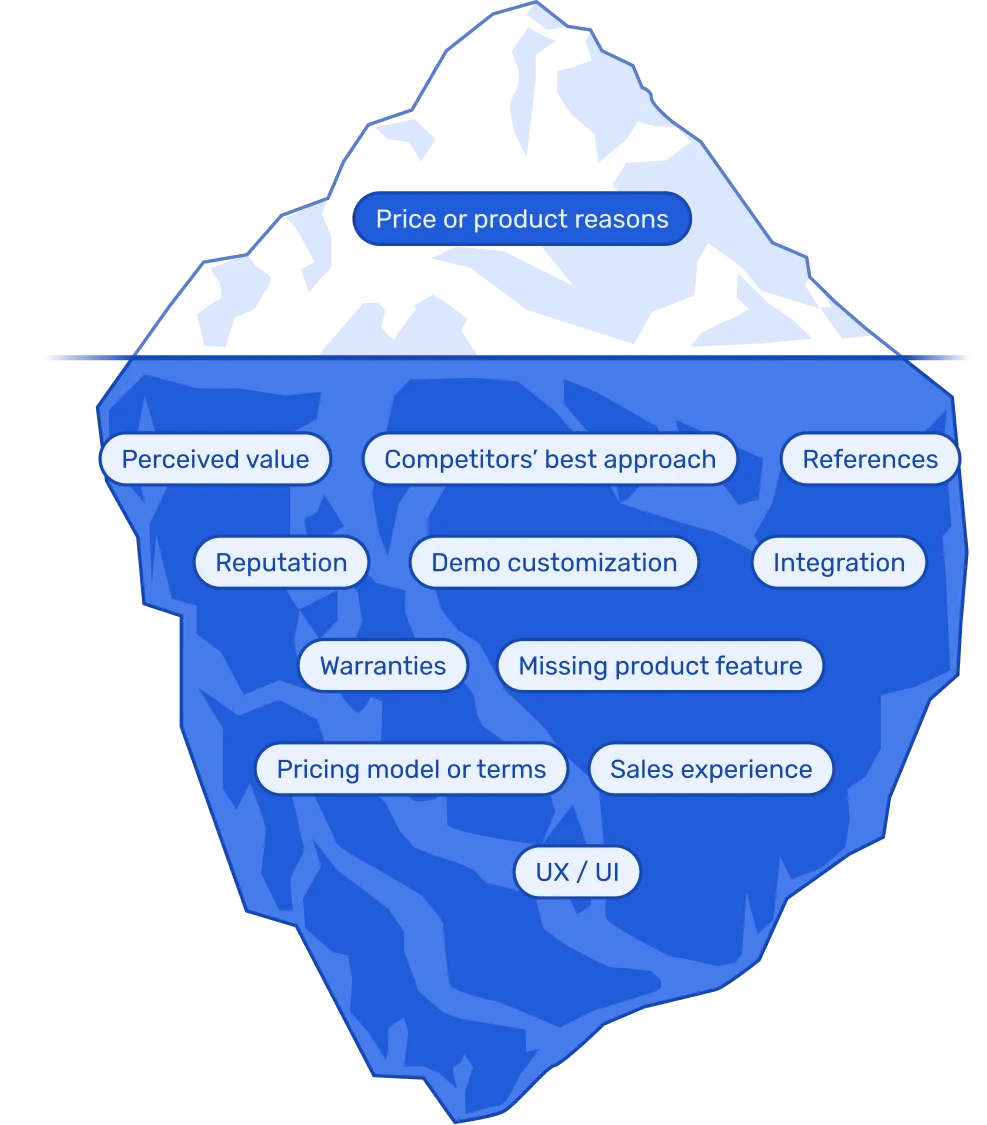
Win-loss analysis is the structured investigation into why prospective customers choose your organisation, choose a competitor, or abandon a purchase decision.
It combines buyer interviews, sales feedback and available commercial records to identify the factors influencing those outcomes.
For a professional services firm, the findings can inform:
- Positioning: Which expertise or commercial proposition influences buyer choice?
- Differentiation: Why does a prospective client consider another provider more suitable?
- Perceived risk: What makes appointing your firm feel like a bigger commitment?
- Brand investment: Does the business need a new identity, a clearer position or a change in how it communicates its expertise?
The distinction matters before a rebrand.
A consultancy might believe its market position is held back by an outdated identity. Lost proposals could reveal something quite different: prospective clients cannot distinguish its services from those of three other consultancies.
Changing the logo would leave that problem intact.
Gartner's B2B buying research is supplied as evidence that buyers spend just 17% of their buying time meeting potential suppliers.
The underlying strategic consideration is straightforward: a firm's positioning needs to make sense outside the sales meeting, where much of the buyer's evaluation takes place.
That is why brand positioning research should inform a rebrand before visual identity decisions are made.
A broader brand positioning strategy gives the findings a commercial context.
What Should You Prepare Before Investigating Won and Lost Deals?
Before contacting former prospects, establish which decisions you want to investigate, which deals qualify and who will interpret the findings.
Without those boundaries, the exercise can become a collection of interesting conversations that never informs a commercial decision.
Define which buyer decisions belong in the research
Start by selecting a manageable group of recently completed opportunities.
For a professional services business with 50–200 employees, useful categories include:
Deal outcome | What to investigate |
|---|---|
Won against a competitor | Why did the buyer trust your firm? |
Lost to a competitor | What made the alternative preferable? |
Lost to an internal team | Why did internal delivery appear safer or more economical? |
No decision | What prevented the buyer from committing? |
Existing supplier retained | What made switching seem unnecessary? |
Project postponed | Which concern or competing priority delayed the investment? |
Include wins and losses. Studying only failed proposals produces an incomplete picture of buyer preferences.
Set a defined research period, perhaps the previous six months, and record the deal value, service category, buyer role, industry and outcome. These are proposed sampling parameters, not established statistical requirements.
Separate research ownership from sales performance
The person collecting feedback should be able to challenge the sales team's interpretation without turning the exercise into a performance review.
A managing partner might believe that a lost client rejected the firm because its fees were too high. The sales director might blame the proposal. The marketing director might argue that the brand lacked differentiation.
All three could be wrong.
Assign one research owner, agree on the questions before interviews begin and record the original sales explanation separately from the buyer's account.
How Do You Collect Reliable Feedback From Buyers?

Reliable buyer feedback comes from asking consistent questions, interviewing people close to the decision and comparing their explanations against available commercial records.
Sales representatives can provide useful context. They should not be the only source.
Choose the right people to interview
Prioritise the people who participated in the purchasing decision.
In a 12-partner hypothetical consultancy, that might mean interviewing the managing partner who approved the appointment, the operations director who assessed delivery capacity and the marketing director who evaluated the proposed positioning work.
Each person may have experienced the same proposal differently.
A managing partner might have focused on commercial risk. An operations director might have questioned implementation capacity. The marketing director might have preferred the competitor's sector knowledge.
Those differences are useful.
Start with the decision-makers, then include other stakeholders where their influence materially affected the outcome.
For high-value or strategically important engagements, direct interviews allow for the investigation of unexpected answers. For larger volumes of smaller deals, structured surveys and recorded-call reviews may help identify recurring themes.
Do not assume that automated analysis can explain every purchasing decision. A recording can identify a price objection. It cannot necessarily establish whether price was the decisive factor.
Ask questions that reveal the decision.
Avoid asking buyers whether they liked your proposal. Most people can find something positive to say, particularly when they want to maintain a professional relationship.
Ask questions that reconstruct the actual choice.
Interview question | What it reveals |
|---|---|
What prompted you to look for a provider? | Original purchasing motivation |
Which other options did you consider? | Actual competitive alternatives |
What mattered most when making the decision? | Buyer priorities |
What concerned you about appointing each provider? | Perceived risk |
What made the chosen option more suitable? | Decisive trade-off |
What did you accept or give up by choosing that option? | Acceptable compromise |
What would have changed your decision? | Potential positioning gap |
Ask buyers to describe what happened rather than defend their decision.
If someone says another consultancy was cheaper, follow up:
"Was the lower fee the deciding factor, or did the other consultancy offer something you considered more appropriate for the project?"
That distinction changes the interpretation.
A lower fee might reflect a smaller scope, less senior involvement, a shorter engagement or simply a more comfortable purchasing commitment.
Cross-check what buyers tell you
Compare interview responses with the original proposal, CRM records, meeting notes and recorded sales conversations where available and lawfully retained.
Look for contradictions.
A sales representative might record price as the reason for a lost opportunity. The buyer might explain that the proposal failed to demonstrate relevant experience in their sector.
The difference is important.
Use the sales record as context, not as a replacement for the buyer's explanation.
Why Did the Buyer Choose the Alternative Instead of Your Firm?

The most useful findings from win-loss research are the alternative a buyer selected and the compromise that made it acceptable.
This is the point at which research becomes positioning input.
A professional services firm should investigate the full range of competing commitments, not simply the names of rival businesses.
Identify the real alternative.
A buyer comparing two consultancies presents an obvious competitive situation. The less obvious decisions can be more revealing.
Consider these alternatives:
- Appoint a larger consultancy with recognised sector experience.
- Hire a smaller specialist with a narrower range of services.
- Use an internal marketing team.
- Retain an existing supplier.
- Appoint an independent consultant.
- Postpone the engagement.
- Do nothing.
The last three are particularly easy to overlook.
A professional services firm can lose a substantial opportunity even if another agency wins the work. The buyer might decide that the financial and organisational commitment is unnecessary.
That is still a purchasing decision.
Build a Buyer Substitution Map
The Buyer Substitution Map is a practical framework for translating interview findings into positioning questions. It is an editorial framework proposed here, not a validated research instrument or independently tested model.
The Buyer Substitution Map
Five questions to reconstruct the purchasing decision.
- Original requirement
What was the buyer trying to achieve? - Chosen alternative
What did the buyer select instead of your firm? - Perceived risk
What concern made your proposition less attractive? - Accepted compromise
What limitation was the buyer willing to accept in the chosen alternative? - Positioning implication
What must your firm demonstrate differently to become the more credible choice?
Consider a clearly hypothetical 12-partner consultancy preparing to reposition ahead of expansion.
The consultancy loses a brand strategy engagement to a smaller independent provider.
The initial sales report says the competitor charged less.
A follow-up interview establishes that the buyer wanted direct access to the person responsible for the strategy. The larger consultancy proposed a team-based engagement with several stages of delivery. The independent provider offered a smaller project with direct principal involvement.
The buyer accepted a narrower delivery model because direct access mattered more than the additional services.
The positioning implication is not automatically to reduce fees.
The consultancy needs to decide whether its senior expertise is visible enough, whether its delivery model creates unnecessary distance from decision-makers and whether its proposition communicates the value of its broader capability.
That is a more useful starting point for a rebrand.
“The competitor you need to understand is the alternative that made sense to your buyer. Sometimes that is another consultancy. Sometimes it is an internal team, an existing supplier or a decision to wait. Until you know what the buyer chose instead, you are comparing your business against an incomplete version of the market.”
Separate the buyer's stated reason from the actual trade-off
One interview does not establish a market-wide pattern.
A buyer's retrospective explanation may also be incomplete. People do not always remember every factor that influenced a decision, and a polite explanation may conceal a more difficult conversation.
Look for repeated evidence across separate decisions.
For example, if several buyers independently prioritise direct partner access, but your proposals repeatedly foreground a large delivery team, that is a positioning question worth investigating.
If only one buyer mentions the issue, treat it as an individual preference until further evidence emerges.
The objective is to find patterns without forcing every interview into the same explanation.
How Do You Turn Buyer Decisions Into Positioning Before a Rebrand?
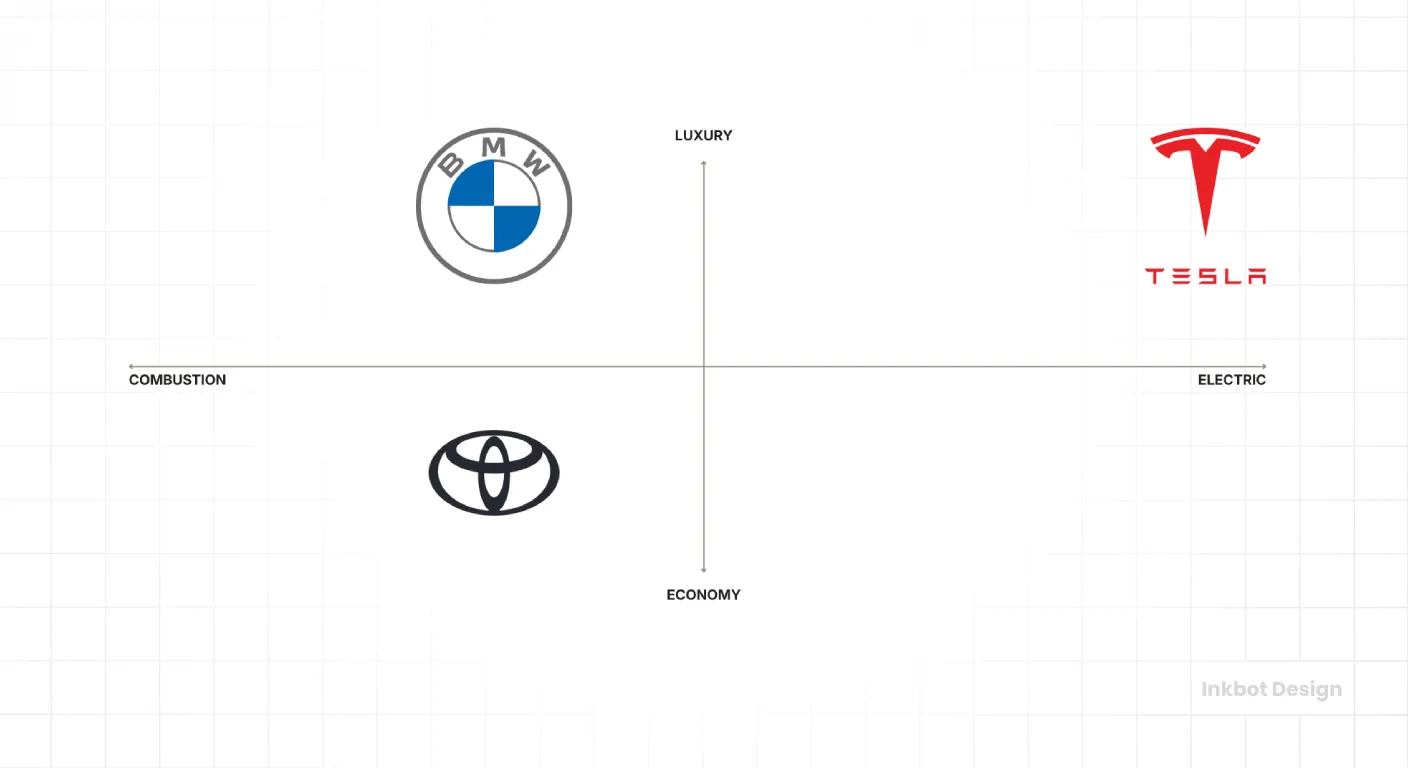
Translate repeated buyer trade-offs into decisions about target audiences, competitive differentiation, commercial proposition and proof.
A list of objections is not a positioning strategy.
Each finding needs a commercial interpretation, a decision and evidence that the proposed change addresses the underlying issue.
Connect the research to positioning decisions
Use the following interpretation table to move from buyer evidence to a possible response.
Buyer finding | Positioning question | Potential response |
|---|---|---|
Buyers cannot distinguish your specialist expertise | Is the firm's specialism sufficiently defined? | Narrow the positioning around a recognisable area of expertise. |
Competitors appear more established | Does your proposition demonstrate relevant proof? | Strengthen sector-specific case studies and credentials. |
Buyers prefer direct partner involvement | Is senior expertise visible throughout the buying journey? | Make partner involvement explicit in the proposition. |
Internal teams are considered more economical | Is external expertise worth the additional commitment? | Explain the commercial value of specialist intervention. |
Buyers repeatedly postpone decisions | Is the proposed engagement too difficult to justify? | Investigate the entry proposition and perceived implementation risk. |
Existing suppliers retain clients | Is there a convincing reason to switch? | Clarify the commercial difference between the status quo and your offer. |
These are possible responses, not automatic prescriptions. A smaller consultancy should not manufacture a large-firm proposition simply because one buyer preferred an established provider.
Distinguish a positioning problem from an identity problem
This is where the research becomes particularly relevant to a rebrand.
A professional services firm can have an excellent visual identity and still communicate an unconvincing commercial proposition.
Consider three different findings:
Finding one: Buyers cannot identify the firm's specialism.
The likely problem is positioning. The organisation needs to clarify whom it serves, which problem it solves and why its expertise matters.
Finding two: Buyers understand the firm's expertise but perceive the brand as outdated.
A visual identity refresh may be appropriate, provided the underlying proposition remains sound.
Finding three: Buyers perceive the organisation as several unrelated businesses following an acquisition.
The issue may involve brand architecture, the relationship between acquired businesses and the clarity of the combined proposition.
These situations need different responses. A logo redesign will not resolve a confused post-acquisition brand structure.
Inkbot Design's brand positioning testing process is relevant where a proposed position needs to be evaluated before it becomes the foundation of a wider identity project.
The broader competitor messaging framework can also help when buyer interviews reveal that several providers are communicating essentially the same promise.
Make the positioning decision explicit.
Before approving a rebrand, document five things:
- The buyer group the firm intends to serve.
- The alternative against which the firm competes.
- The reason that alternative currently appears more attractive.
- The evidence supporting the firm's proposed difference.
- The changes required in positioning, messaging and identity.
If the findings cannot support a clear decision, commission further research.
Do not use a new brand identity to disguise an unresolved strategic argument between partners.
When Should You Change Your Positioning Based on the Findings?
Change positioning when multiple independent buyer decisions reveal a consistent problem with the firm's perceived relevance, differentiation or credibility, and the business can substantiate a better alternative.
One lost proposal is insufficient.
A single high-value loss may justify further investigation, particularly if the opportunity exposes a risk that could affect future growth. It does not automatically justify changing the firm's entire market position.
Look for agreement between:
- Direct buyer interviews.
- CRM and proposal records.
- Competitor positioning.
- The firm's actual service capabilities.
- The commercial priorities agreed by senior leadership.
If the research reveals that the firm is attracting the wrong prospects, revisit its target audience. If the right prospects understand the proposition but distrust the evidence, strengthen the proof.
If buyers understand the offer but consistently find the visual presentation inconsistent with the firm's capabilities, investigate the identity.
The competitive analysis framework can provide additional market context, with findings suggesting that the firm's perceived difference needs to be assessed against broader competitor behaviour.
Start with the decision, not the design brief.
Win-loss research should influence the rebrand brief before creative development begins.
Otherwise, the design team inherits assumptions that the research was supposed to test.
The first practical step is to select five to ten recently completed opportunities as an initial exploratory sample. This is a suggested starting exercise, not a statistically representative sample size. Include wins, competitor losses, no-decisions and instances where an existing supplier was retained.
Interview the decision-makers, complete the Buyer Substitution Map and compare the findings.
If a consistent positioning issue emerges, investigate it further. If the evidence points to a sales process or service-delivery problem instead, address that first.
Inkbot Design offers a free Brand Equity Audit™ for businesses that want to identify where their brand is losing commercial ground and what needs attention before investing in a rebrand.
The Verdict: Find Out What Buyers Chose Instead
A professional services firm needs to understand why a buyer chose an alternative before deciding what its brand should communicate differently.
Sales feedback can identify objections. Buyer interviews can explain the decision. The most useful interpretation connects the two to the compromise the buyer accepted.
That alternative might be a competitor, an internal team, an existing supplier or no purchase at all.
The distinction matters because each represents a different positioning problem.
Start with five to ten recent opportunities. Speak directly to the people involved in the decisions. Record what they selected, what risk they wanted to avoid and what they were prepared to compromise.
Then decide whether the evidence supports a positioning change, a visual refresh or no rebrand at all.
Do the research before writing the design brief.
Questions people ask
What is the difference between win-loss analysis and competitive analysis?
Win-loss analysis investigates why individual buyers chose or rejected a provider. Competitive analysis examines the wider market, including competitor positioning, services, pricing and perceived differentiation. The two complement each other: buyer research reveals actual purchasing decisions, while market analysis helps explain the competitive conditions behind those decisions.
How many interviews should a professional services firm conduct?
There is no universally correct number. The appropriate sample depends on deal volume, the diversity of buyer groups and the consistency of emerging findings. Start with a defined exploratory sample, include different outcomes and continue investigating where explanations conflict. Do not describe a small convenience sample as statistically representative.
Should we interview clients who chose our firm?
Yes. Interviews with successful clients reveal which aspects of the proposition created confidence and why your firm became preferable to the alternatives. Without successful deals, research risks focusing exclusively on weaknesses and overlooking the commercial strengths that should remain central to positioning.
Can win-loss research identify why buyers do not purchase?
Yes. No-decision outcomes should be investigated alongside competitor losses. A buyer might postpone a project because of budget restrictions, internal priorities, uncertainty about implementation or insufficient confidence in the expected value. These findings can reveal positioning and purchasing-friction issues that competitor-focused research misses.
Should win-loss analysis happen before a rebrand?
Yes — particularly when the purpose of the rebrand is to improve market differentiation, attract a different buyer group or support expansion. Research helps establish whether the problem concerns positioning, proof, service delivery, brand architecture or visual identity. A cosmetic redesign should not be used to solve a commercial problem that has not been diagnosed.