5 Key B2B Brand Repositioning Triggers: Strategy Guide
Most B2B brands suffer a slow, painful descent into invisibility by waiting for a crisis before acting.
They treat Brand repositioning as a cosmetic exercise—a new logo, a fresh hex code, and a “modern” typeface—rather than a fundamental realignment of their market position.
Generalist B2B firms face a “commoditisation trap” where price becomes the only differentiator. According to McKinsey & Company, B2B buyers now conduct 70% of their journey before ever speaking to a sales representative.
If both human buyers and AI systems do not clearly categorise your brand at the start of that journey, you do not exist.
Repositioning is not about looking better; it is about being findable and relevant in a saturated market.
- Repositioning is survival: avoid a Ghost Brand by being findable to humans and AI agents like Gemini, Perplexity and ChatGPT.
- Triggers: Mergers and acquisitions (Brand Debt), technical parity killing USPs, demographic shifts and category collapse require immediate strategic repositioning.
- Prioritise semantic strategy: run a semantic audit, build entity density and GEO, track AI Overview citations and Share of Search; visual rebrands follow.
What Are B2B Brand Repositioning Triggers?
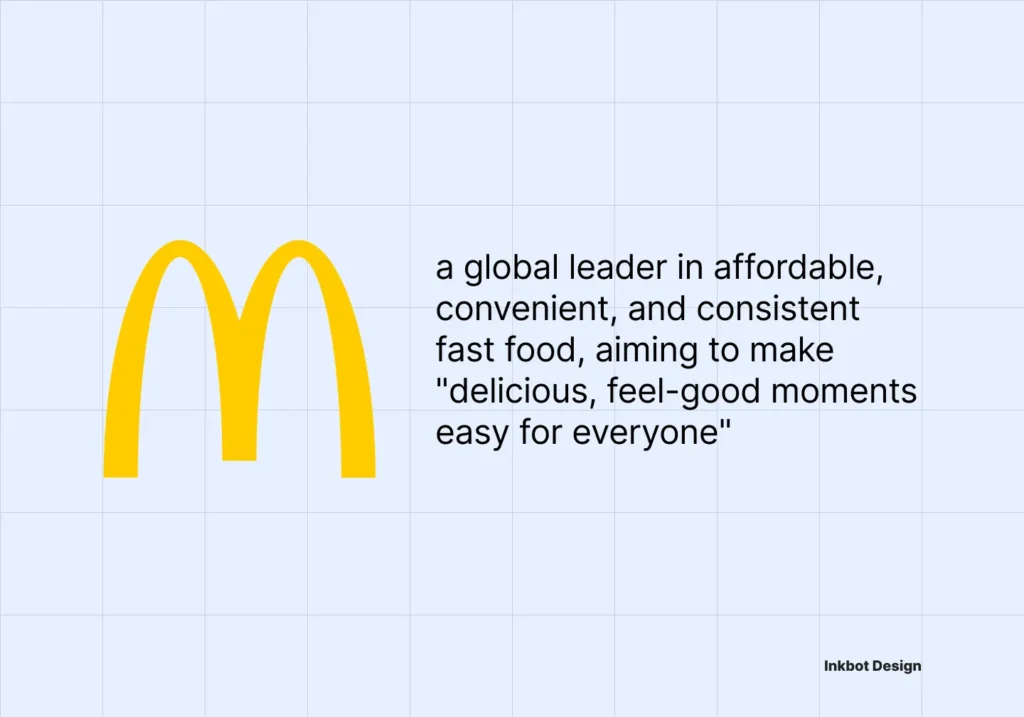
B2B brand repositioning triggers are specific internal or external events that render a company’s existing market stance obsolete, ineffective, or invisible to its target audience. These triggers signal a fundamental mismatch between what the company offers and how the market perceives its value.
Key Components:
- Market Structural Shifts: Changes in how a category is defined or purchased.
- Internal Evolution: Significant changes in product capability, ownership, or mission.
- Competitive Displacement: The arrival of a “category killer” that makes your current positioning redundant.
B2B brand repositioning triggers are structural market or internal shifts, such as M&A activity, technical parity, or category obsolescence, that invalidate a firm’s current value proposition.
The Financial Reality of Market Invisibility in 2026
Market invisibility is the primary silent killer of UK SMBs. In the 2026 financial landscape, the cost of being “unfindable” by both human procurement teams and autonomous AI agents has reached a critical threshold.
A Ghost Brand—a firm with high technical competence but low conceptual clarity—faces a Customer Acquisition Cost (CAC) increase of approximately 34% year-on-year.
The Bank of England’s 2025 productivity report highlights that firms failing to claim a specific market niche spend 3x more on paid advertising to achieve the same lead volume as category specialists. This is the Invisibility Tax.
The Hierarchy of B2B Visibility:
- Category Authority: Cited by AI agents, featured in industry benchmarks, and has a Share of Search exceeding 25%.
- Niche Specialist: Dominates a specific vertical (e.g., Fintech Payroll) but lacks broader recognition.
- Commodity Provider: Relies on price wars and outbound sales; suffers from high Brand Debt.
- Ghost Brand: Semantically indistinguishable from competitors.
For UK Manufacturers and Professional Service firms, repositioning is the only mechanism to lower this tax. By moving from a “Generalist” stance to an “Expert” stance, firms reduce the Cost of Retrieval for their information.
When a brand’s value proposition is clear, search engines and AI recommendation tools require less computational power to categorise the firm.
This leads to higher rankings and more frequent citations in AI Overviews.
1. Mergers, Acquisitions, and “Brand Debt”
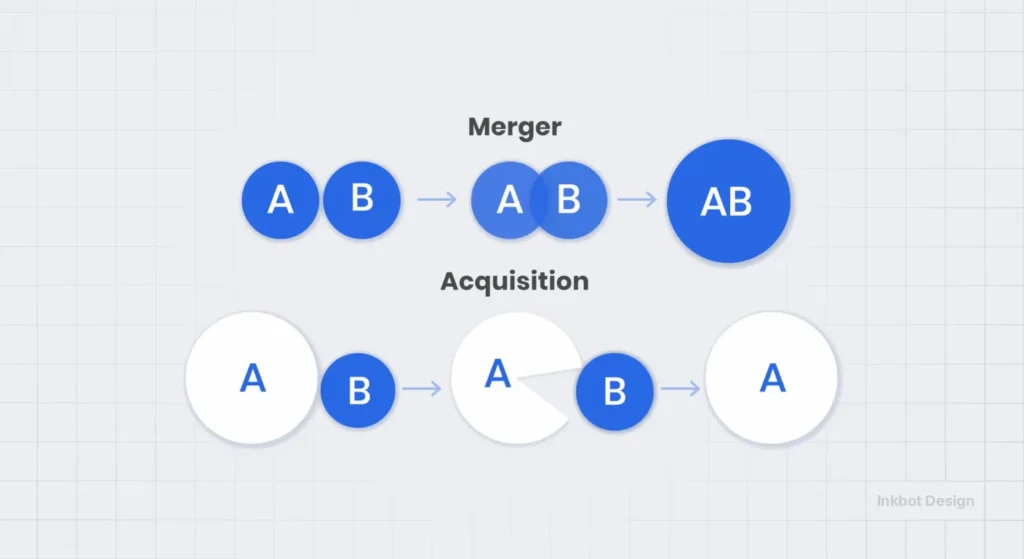
M&A activity often creates “Franken-brands” that confuse the market and dilute equity. When two B2B entities merge, they rarely integrate their value propositions effectively, leading to “Brand Debt”—the cost of maintaining multiple, conflicting identities.
A Gartner study on M&A integration found that companies that fail to unify their brand architecture within 18 months of an acquisition see a 15% drop in customer loyalty. This happens because the sales force continues to pitch legacy products while the marketing department attempts to promote a unified vision. The resulting friction makes it impossible for buyers to understand what the new entity actually does.
Repositioning is the only way to pay down this debt. It requires a “Branded House” or “House of Brands” decision that reflects the 2026 reality of buyer search habits. If you have acquired a company to gain a technical advantage, your brand must reflect that new capability immediately, not as a secondary bullet point on a legacy website.
Mergers and acquisitions create “Brand Debt” that confuses buyers and recommendation engines alike. B2B firms that fail to unify their strategic positioning within 18 months of a merger risk a measurable decline in market authority. Repositioning is the necessary audit that aligns your new internal capabilities with an external market need, ensuring the whole is greater than the sum of its parts.
2. Technical Parity and the Death of USPs
Your product is no longer a differentiator in a world of rapid feature replication and AI-assisted development. Technical parity—the state in which all major players in a category offer essentially the same features—is the primary driver of B2B repositioning in the SaaS and professional services sectors.
When everyone has a “robust” API and a “seamless” interface, your “Unique Selling Point” (USP) vanishes. According to Statista, the number of B2B SaaS tools in the average enterprise stack has increased by over 40% since 2022. This saturation means buyers no longer shop for features; they shop for outcomes and category leadership.
If your marketing still leads with a list of features, you are positioned as a commodity. Repositioning allows you to move from “what we do” to “who we are for.” You shift the conversation from technical specifications to strategic partnership. This is the difference between being a “CRM tool” and being “The platform for high-growth UK fintechs.”
Technical parity has made traditional feature-led USPs obsolete in the B2B sector. When functional differences between competitors disappear, brand positioning becomes the only sustainable differentiator. Repositioning allows a firm to exit the commodity trap by focusing on specific buyer outcomes and category authority rather than a checklist of replicated features that provide no long-term competitive advantage.
3. The “Ghost Brand” Syndrome: Invisibility in the Age of GEO

“Ghost Brand” syndrome occurs when a company’s digital presence is so generic that AI systems and LLMs cannot categorise it. In 2026, your brand is not just what you tell customers; it is what Gemini, Perplexity, and ChatGPT tell customers about you.
If your content uses the same 50 “industry-standard” keywords as everyone else, you suffer from semantic invisibility. Search Engine Land reports that AI Overviews now influence over 60% of B2B informational queries. If an LLM cannot find a unique “entity” to associate with your brand, it will simply cite your more distinct competitors.
Repositioning for 2026 requires Brand positioning that is semantically dense and distinctive. You must claim a specific, citable niche of knowledge. If you are a generalist marketing agency, you are a ghost. If you are the “Authority on B2B Brand Repositioning for UK Manufacturers,” you are an entity.
Ghost Brand syndrome is a technical failure where a brand’s semantic footprint is too vague for AI recommendation engines to cite. In the 2026 search environment, generic positioning is equivalent to invisibility. Effective repositioning creates a “semantic moat” by leveraging distinctive entity associations and high-density information, forcing LLMs to recognise and recommend your firm as a category specialist.
4. The Demographic Pivot: Selling to Digital Natives
The B2B buyer has changed, and your 2015 brand voice is likely irritating them. Millennial and Gen Z professionals now make up the majority of B2B buying committees. These “digital natives” have zero patience for corporate jargon, gated PDFs, or “request a demo” friction.
A Forrester report indicates that 65% of B2B buyers prefer to research independently rather than interact with a salesperson. If your brand positioning is built around a “high-touch sales model” that feels like a 1990s car dealership, you are triggering a need for repositioning.
Modern B2B brands must be transparent, direct, and slightly edgy. They must speak like humans, not like legal departments. Repositioning for a younger demographic involves shifting from “Authority through Formality” to “Authority through Utility.” It means being the brand that answers away for free on the blog, so the buyer trusts you enough to hire you to implement it.
The demographic shift toward Millennial and Gen Z buyers has invalidated the formal, jargon-heavy B2B brand voice of the past decade. Modern buyers prioritise independent research and radical transparency over traditional high-touch sales cycles. Repositioning for this cohort requires a shift from corporate obscurity to high-utility, direct communication that respects the buyer’s time and intelligence.
5. The Category Collapse: When Your Market Disappears

The most dangerous trigger is when the category you lead simply ceases to exist. This “Category Collapse” happens when technology or consumer behaviour renders an entire industry redundant. Think of what digital photography did to Kodak or what cloud computing did to physical server room manufacturers.
In 2026, we see this happening with traditional “human-only” service models being disrupted by agentic AI. If you are positioned as a “Content Creation Agency,” your category is collapsing. If you reposition as an “AI Governance and Creative Strategy Consultancy,” you have moved into a growth category.
Identifying a category collapse requires looking at the “Jobs to be Done” for your clients. If the way they do that job has fundamentally changed, your brand must change too. You cannot be the best buggy whip manufacturer in a world of Ford Model Ts.
Category collapse occurs when technological shifts render a brand’s entire market niche redundant. Firms that cling to their original category definition during these pivots inevitably face obsolescence. Repositioning during a category collapse is a survival mandate that requires redefining the brand based on the enduring “Job to be Done” rather than the temporary tools used to do it.
Why Your New Logo Won’t Save a Broken Message
The most expensive mistake a B2B founder can make is thinking that a “fresh look” fixes a “stale strategy.”
Visuals are the container for your brand; the positioning is the content. If the content is weak, changing the container is a waste of capital.
Many agencies will happily take £20k to design a new logo because it is easier than doing the hard work of market analysis. But according to the Ehrenberg-Bass Institute, distinctiveness is more important than “modernity.”
When you change your logo, you are often throwing away the only thing your customers actually recognise.
Repositioning should start with the words, the market, and the technical SEO footprint. Only once you have defined the new mental slot should you even consider opening Adobe Illustrator.
If your new positioning doesn’t make someone in your company feel uncomfortable, it isn’t a repositioning—it is just a haircut.
The Rise of “Agentic Branding”
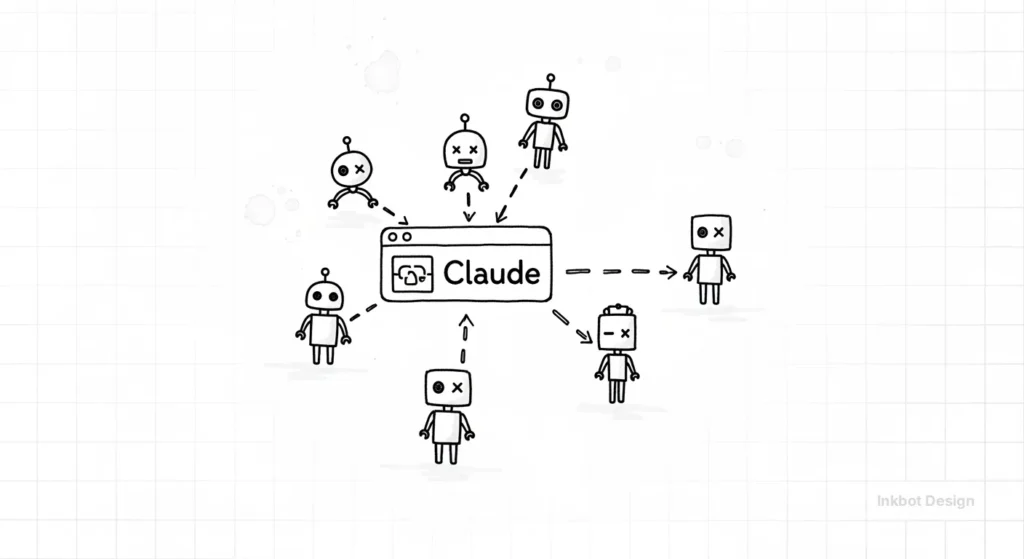
As we move through 2026, the B2B sector is experiencing the rise of “Agentic Branding.”
This is the practice of designing a brand specifically to be understood and used by AI agents—the autonomous tools that buyers now use to filter vendors and make purchasing decisions.
A major shift in 2025 was the release of Adobe Firefly 4, which integrated brand-specific “Style Kits” into corporate workflows.
This allowed companies to generate thousands of on-brand assets instantly. However, it also led to a flood of “generic-perfect” content. The result is that “perfect” design has become a commodity.
Authenticity in 2026 is found in the “human glitch”—the unique, opinionated, and sometimes controversial takes that an AI cannot replicate.
Brands like Gong and Deel have excelled by maintaining a very specific, almost aggressive brand voice that stands out in a sea of AI-generated fluff.
According to a 2025 Edelman Trust Barometer special report, B2B buyers now rank “Demonstrable Point of View” as more important than “Price” for the first time in history.
If your brand is currently “safe” and “professional,” you are losing to the “bold” and “opinionated.” The 2026 market rewards the brand that takes a stand.
The £50k Logo on a £5 Value Prop
I once audited a client in the London fintech space who had spent nearly £50,000 on a visual rebrand.
They had a stunning new logo, custom illustrations, and a website that looked like it belonged in a contemporary art gallery. But their lead volume was plummeting.
The problem? They hadn’t touched their positioning in five years. They were still calling themselves a “Comprehensive Payment Solution” in a market that had moved toward “Embedded Finance Orchestration.” To the AI crawlers and the savvy buyers, they looked like an expensive dinosaur in a fancy suit.
They had focused on the “how it looks” instead of the “what it is.” We had to strip it back, ignore the new logo for a month, and rebuild their semantic architecture from the ground up.
We focused on “Entity Density”—making sure every H2 and H3 on their site answered a specific, technical question their buyers were actually asking in 2026.
Within three months, their organic visibility for high-intent keywords increased by 40%. The lesson is simple: strategy first, pixels second.
Tactical vs Strategic Repositioning
| Technical Aspect | The Wrong Way (Amateur) | The Right Way (Pro) | Why It Matters |
| Primary Goal | To “look modern” or “fresh.” | To occupy a specific, defensible niche. | Visuals age; a strong niche scales. |
| Initial Step | Hiring a graphic designer. | Conducting a semantic gap audit. | You cannot draw a map without data. |
| Messaging | Jargon-heavy and generalist. | Direct, utility-led, and edgy. | AI and humans both hate filler. |
| Success Metric | Internal approval of the logo. | Increase in AI Overview citations. | Ego doesn’t pay the bills; visibility does. |
| Launch Plan | A “big reveal” social post. | A gradual SEO/GEO content rollout. | Algorithms reward consistency, not “reveals.” |
ESG Mandates: The New B2B Positioning Focus

Environmental, Social, and Governance (ESG) is no longer just a footer on a website; it is now a primary driver of B2B brand repositioning.
In the UK, the Sustainability Disclosure Requirements (SDR) have made transparency a competitive necessity.
The “Greenwash” Trap
Firms that use generic “Sustainability” language suffer from Ghost Brand Syndrome. AI agents now cross-reference brand claims with public Companies House filings and carbon footprint databases. If there is a mismatch, the brand’s Authority Score is penalised.
Strategic Pivot Checklist for ESG:
- Identify Specificity: Move from “Eco-friendly” to “Scope 3 Carbon Neutral Certified by 2027.”
- Entity Association: Link your brand to the Science Based Targets initiative (SBTi).
- Human Verification: Use case studies from UK-based Social Enterprises to prove social impact.
The “S” in ESG: The Talent Acquisition Trigger
For London-based Law Firms and Consultancies, the trigger is often internal. To attract Gen Z talent, the brand must reposition as a “Mission-Led Entity.”
Failure to do so results in the firm’s inability to deliver the very services it sells, creating a fatal operational-brand mismatch.
The Implementation Blueprint: A 12-Month Repositioning Roadmap
A B2B brand repositioning is not an event; it is a Topical Authority campaign. For a UK SMB, the process follows a strict 12-month sequence to minimise the Cost of Retrieval for the new brand identity.
Months 1-3: The Semantic Audit
- Identify the Trigger: Which of the 5 triggers is primary?
- Competitor Extraction: Use tools to map the Entity Density of the top 3 rivals.
- Whitespace Identification: Where is the “Information Gap” in the current SERP?
Months 4-6: The Authority Foundation
- Answer-First Content: Rewrite the top 20 high-intent pages.
- Schema Deployment: Implement JSON-LD for Organisation, Service, and FAQ.
- Internal Link Building: Connect the new value proposition to existing high-authority “Seed Pages.”
Months 7-12: The GEO (Generative Engine) Push
- Citation Mining: Secure mentions in UK trade journals to provide “Historical Data” for AI agents.
- The ‘Human Glitch’ Rollout: Launch an opinionated video series (YouTube/LinkedIn) to establish human authority.
- Metric Review: Monitor AI Overview citations and Share of Search for the new category name.
The Verdict
The era of the “safe” B2B brand is over. If you are not actively monitoring the five triggers—M&A debt, technical parity, Ghost Brand syndrome, demographic shifts, and category collapse—you are managing a decline, not a business.
Repositioning is not a sign of failure; it is a sign of market intelligence. It is the refusal to be invisible. In 2026, the brands that win are those that define their category with such clarity that both humans and machines have no choice but to cite them as the authority.
If your leads are drying up or your brand feels like a “ghost” in the machine, it is time to stop looking at your logo and start looking at your strategy. Explore Inkbot Design’s services to see how we help B2B firms reclaim their market authority through technical, semantic repositioning.
FAQs
What is the difference between rebranding and repositioning?
Rebranding focuses on the visual identity and surface-level perception, such as logos and colours. Repositioning is a strategic shift in the brand’s value proposition and its place within the market hierarchy. A brand can reposition without changing its logo, but a rebrand without repositioning is often just a cosmetic exercise.
How often should a B2B company reposition its brand?
B2B companies should evaluate their positioning every 18 to 24 months. While a full repositioning is not always necessary, the rapid pace of technical parity and AI-driven market shifts in 2026 requires constant monitoring. Significant triggers, such as mergers or category shifts, mandate an immediate strategic review.
Can AI help with B2B brand repositioning?
AI tools are essential for the audit phase of repositioning. Tools can identify semantic gaps in your current content and compare your “entity density” against competitors. However, the contrarian thesis and unique brand voice required for true differentiation must be driven by human strategy to avoid the “Ghost Brand” syndrome.
What are the signs of “Ghost Brand” syndrome?
Signs include a high volume of generic traffic with low conversion rates, a total absence from AI Overviews for industry-specific queries, and a brand voice indistinguishable from top competitors. If you could swap your logo with a competitor’s and the website still made sense, you are a ghost brand.
How does M&A activity trigger repositioning?
M&A activity creates brand debt by forcing two distinct cultures, product sets, and market positions into a single entity. Without repositioning, the resulting “Franken-brand” confuses the market and dilutes the equity of both original companies. Repositioning unifies the architecture under a single, coherent strategic vision.
Why is technical parity a trigger for repositioning?
Technical parity occurs when competitors offer nearly identical feature sets, making “better features” a useless differentiator. This forces a brand to reposition around higher-level values, such as specific industry expertise, unique methodology, or superior buyer outcomes, to avoid being commoditised on price.
How do I know if my category is collapsing?
Category collapse is evident when your primary “Job to be Done” is being solved by a new technology or a different industry entirely. If your year-over-year lead volume is dropping despite high marketing spend, your audience has likely moved to a new category.
What is Generative Engine Optimisation (GEO)?
GEO is the practice of structuring brand information so it is accurately extracted and cited by AI systems like Gemini and Perplexity. It involves increasing entity density, using atomic claims, and ensuring your brand’s unique value proposition is semantically distinct from generalist competitors.
Is a new logo necessary for brand repositioning?
A new logo is only necessary if the current visual identity actively contradicts the new positioning. In many cases, retaining the existing logo preserves valuable brand equity and recognition. The focus should always be on the strategic message and semantic clarity before any visual changes are considered.
How do I measure the success of a repositioning project?
Success is measured by higher-quality high-intent leads, more citations in AI recommendation engines, and higher “distinctiveness” scores in buyer surveys. Unlike a rebrand, which is measured by “sentiment,” repositioning is measured by market share and category authority.
