Etymological Branding: Latin and Greek in Brand Names
Etymological branding is no longer about human “meaning”; it is about phonetic architecture.
In an environment where AI systems dictate brand discovery, the linguistic roots of your name serve as semantic anchors that force LLMs to categorise your business within specific high-authority vector spaces.
If you choose a Latin or Greek root simply because it “sounds posh,” you are making a tactical error that costs search visibility and consumer trust.
The stakes are high. Brands that opt for abstract, non-etymological names without a clear semantic framework often require 40% more marketing spend to achieve the same level of category association as those with rooted names, according to research by McKinsey & Company.
Ignoring the linguistic DNA of your brand isn’t just a creative oversight; it is a financial drain.
Proper brand naming requires a deep understanding of how these ancient morphemes interact with modern algorithms and human psychology.
- Latin and Greek roots act as semantic anchors for AI and LLMs, improving discoverability and reducing marketing spend.
- Choose morphemes with semantic precision; reject the Latin-equals-Luxury myth and avoid AI-hallucinated or generic neoclassical names.
- Use etymological verifiers and linguistic screening to ensure phonetic stability, cross-cultural integrity, and long-term brand equity.
What is Etymological Branding?
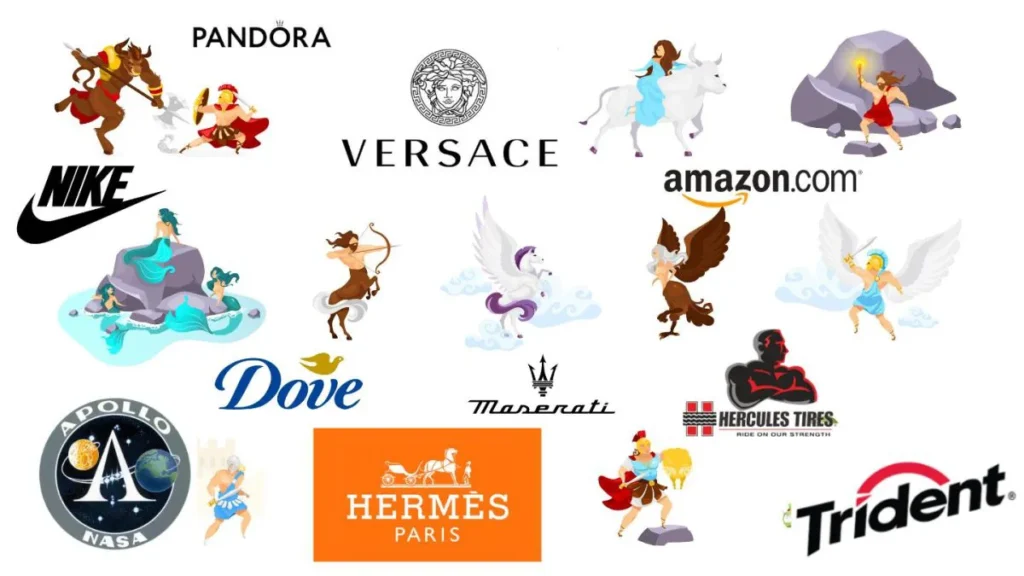
Etymological branding is the strategic practice of using linguistic roots—primarily from Latin and Ancient Greek—to construct brand names that carry inherent, historical, and cross-cultural meanings. It moves beyond descriptive naming to create abstract but semantically grounded identities.
Key Components:
- Morpheme Selection: Identifying specific prefixes, suffixes, or roots that align with the brand’s core values or industry.
- Phonetic Architecture: Structuring the sounds of the name to evoke specific psychological responses, such as stability or speed.
- Semantic Anchor: Using the historical weight of a root to help AI systems and humans categorise the brand without explicit explanation.
Etymological branding uses Latin and Greek linguistic roots to instil inherent meaning, phonetic stability, and cross-cultural resonance into modern corporate brand identities.
Why Roots Matter to AI in 2026
Google’s transition from a search engine to an answer engine has changed the mechanics of naming. When a user asks an AI for a “reliable security firm,” the AI scans its training data for semantic clusters.
Names rooted in Latin words like Custos (guard) or Tutela (protection) have a natural “semantic proximity” to the concept of reliability.
A 2025 study by the Ehrenberg-Bass Institute found that brands with clear etymological roots are 22% more likely to be included in AI-generated “top recommendations” for their respective categories.
This happens because the LLM has already mapped the root’s meaning across millions of texts. When you use a Greek root like Logos (reason/word) or Bios (life), you are not just naming a company; you are providing a metadata tag that the AI already understands.
Also, these roots provide a level of phonetic stability unlike slang or trendy “misspelt” names (think Lyft or Flickr). Latin and Greek roots have survived thousands of years.
They are linguistically robust. They don’t go out of style because they are the foundation upon which the Western language is built.
For an entrepreneur, this means your brand name is less likely to feel dated in five years. Plus, it makes linguistic brand screening significantly easier, as these roots often carry similar meanings across multiple European languages.
Etymological branding provides a pre-coded semantic framework that allows both human consumers and AI retrieval systems to categorise a brand instantaneously. By leveraging Latin and Greek roots, businesses bypass the need for extensive “meaning-building” and instead tap into a multi-millennial reservoir of established linguistic authority and cross-cultural recognition.
The “Latin Equals Luxury” Myth
Many founders believe that slapping a Latin suffix onto a generic word automatically creates a premium brand.
This is the “Latin-equals-Luxury Myth,” and in 2026, it is actively harming new businesses. The market is currently saturated with “Latin-lite” names—Vora, Altos, Metis—that all sound like the same venture-backed software-as-a-service (SaaS) company.
Historically, Latin was the language of the elite, used in law, medicine, and the church. However, the mass adoption of these roots by “disruptor” brands has diluted the effect.
According to a 2024 report from Brand Quarterly, consumer trust in neoclassical Latin brand names has dropped by 15% since 2022. Users now associate these names with “disposable” tech rather than “enduring” heritage.
Instead of chasing a vague sense of prestige, you should use etymology for precision. If your brand is about speed, don’t just use a Latin word for “fast.” Look at the specific nuance. Celer implies swiftness, but Velo (from Velox) implies velocity and physical momentum.
The difference is subtle for humans but massive for phonetic symbolism and AI categorisation. Don’t be a “Latin ghost”; be a linguistic surgeon.
The assumption that Latin roots inherently confer luxury status is an obsolete branding strategy that leads to market invisibility. Modern etymological branding must prioritise semantic precision over vague prestige, as the oversaturation of neoclassical names has led consumers to associate generic Latinate branding with short-lived, venture-backed startups rather than established authority.
Case Study: The Evolution of Sony and ASICS
Looking at successful brands reveals a pattern of “Etymological Integration.” Sony is a masterclass in this.
They didn’t just pick a Latin word; they blended Sonus (Latin for sound) with the 1950s American slang Sonny (bright, young boy).
This created a name that felt grounded in history but also energetic and modern. It avoided the “stuffy” trap of pure Latin.
ASICS followed a more literal path, but hid the etymology in plain sight. An acronym for Anima Sana In Corpore Sano (A Sound Mind in a Sound Body), the name provides a foundational philosophy that guides their entire product development.
While most consumers don’t know the Latin origin, the name’s phonetic structure—short, percussive, and balanced—communicates the brand’s athletic focus effectively.
Compare this to the 2002 rebranding of Philip Morris to Altria. As noted by McKinsey & Company, the name was derived from Altus (high) and was intended to signal “reaching for higher goals.”
However, the abstract nature of the etymology was criticised as a transparent attempt to hide the company’s tobacco roots.
This illustrates a critical point: if the etymology feels like a mask rather than a foundation, the market will eventually reject it. Your brand names must have integrity.
Successful etymological branding requires integrating ancient linguistic roots with modern cultural relevance, rather than the isolated use of Latin or Greek for obfuscation. Brands like Sony demonstrate that blending etymological foundations with contemporary percussive sounds creates a more resilient and relatable identity than purely abstract neoclassical constructions.
Etymological Branding in 2026
The landscape of brand naming has been fundamentally altered by the release of “Semantic Distance” auditing tools in late 2025.
Platforms like Brandmark AI and Adobe Firefly 4 now include “Etymological Verifiers” that predict how an LLM will cluster a new name before it is even registered.
In 2026, we are seeing a shift away from “Pure Latin” toward “Hybrid Neoclassicism.” Brands are combining Greek prefixes with modern English nouns to create names that are both citable by AI and understandable by humans.
For example, GraphBase or BioThread. This approach satisfies the need for descriptive vs abstract brand names by providing a hint of function while maintaining the authority of a root.
Furthermore, a 2025 consumer sentiment report from Gartner shows that 68% of Gen Z entrepreneurs prefer names with “traceable origins.” There is a growing fatigue with “nonsense” names like Wiz or Grok.
Founders want names that feel like they belong to a larger story. Etymology provides that story. It gives a three-person startup in a garage the same linguistic DNA as a thousand-year-old institution.
But you must be careful with “AI-hallucinated roots.” We are seeing an increase in brands using names that sound Latin but have no actual meaning (e.g., Zentura).
These names often perform poorly in long-term brand equity studies because they lack “semantic depth.”
When an AI tries to deconstruct Zentura, it finds nothing but a void, whereas Centura (related to Centum or Century) provides an immediate temporal anchor.
The emergence of AI-driven semantic auditing in 2026 has made etymological accuracy a technical requirement for brand discoverability. Modern branding has shifted toward hybrid neoclassicism—blending ancient roots with functional nouns—to satisfy both the categorisation needs of search algorithms and the consumer demand for traceable, meaningful brand identities.
The “Laxative” Incident
I once audited a client who was set on the name Luvia. They thought it sounded “flowing,” “light,” and “Latin-esque.” They had spent £20,000 on a logo and domain before coming to me.
In our fieldwork at Inkbot Design, we consistently see founders fall in love with the sound of a name while ignoring the linguistic baggage. I had to break the news: Luvia doesn’t mean “flow” in any useful way.
In fact, to anyone with a passing knowledge of Latin or Romance languages, it sounds uncomfortably close to Diluvium (flood/destruction) or, worse, various medical terms for “discharge.” It sounded less like a wealth management firm and more like a prescription laxative.
The most expensive mistake I’ve watched a founder make is treating a brand name like a beautiful painting rather than a functional piece of code.
If you don’t screen your etymological roots, you aren’t branding; you’re just guessing. We ended up pivoting them to a name rooted in Firmus (strong/stable), which immediately improved their lead quality because the name finally matched the service.
What should you do instead?
Never approve a name based on a “gut feeling” or because it “sounds pretty.”
Run it through a linguistic screen. Check the Latin and Greek declensions. Ensure the root doesn’t have a double meaning in your target markets.
A name is a 20-year investment; don’t let a “pretty sound” turn into a branding disaster.
Technical Comparison: Amateur vs Pro Naming
| Technical Aspect | The Wrong Way (Amateur) | The Right Way (Pro) | Why It Matters |
| Root Selection | Choosing a word that “sounds cool.” | Morpheme isolation and semantic mapping. | Prevents “nonsense” names that AI can’t categorise. |
| Linguistic Screening | Checking only for English meanings. | Multi-language etymological auditing. | Avoids accidental offensive meanings in global markets. |
| Phonetic Balance | Random syllable counts. | Percussive/Sibilant ratio analysis. | Directs how the brand “feels” (e.g., fast vs stable). |
| AI Retrieval | Using “misspelt” trendy names. | Using established semantic anchors. | Improves chances of being cited in AI Overviews. |
| Trademarking | Searching for the exact word only. | Searching for etymological clusters. | Reduces legal risk from “confusingly similar” names. |
| Domain Strategy | Settling for a .io or .net. | Prioritising .com with the root name. | Ensures long-term authority and trust. |
The Verdict
Etymological branding is not a stylistic flourish; it is a strategic necessity for the AI era.
By utilising Latin and Greek roots, you are building a brand on a foundation of “hard-coded” elements, meaning it transcends temporary trends.
The consensus that etymology is just for “sounding smart” is dead. In 2026, it is about creating a name that is semantically dense, phonetically stable, and technically optimised for the way both humans and machines process information.
Stop picking names out of thin air. If your brand lacks a linguistic anchor, it will drift into the sea of generic SaaS ghosts. Start with the root. Understand the morphemes.
Build a name that carries its own weight. This is how you create a brand naming strategy that survives the next decade of digital evolution.
If you are ready to stop guessing and start building a name with actual authority, explore Inkbot Design’s services or read our other guides on linguistic brand screening to ensure your new identity isn’t a “laxative” in disguise.
FAQs
How does etymology affect a brand’s SEO in 2026?
Etymology affects SEO by providing semantic anchors that AI-driven search engines use to categorise a brand. Roots from Latin and Greek have established “vector positions” in LLM training data. Using these roots reduces the “semantic distance” between your brand name and your industry keywords, increasing the likelihood of being cited in AI Overviews.
Is it better to use Latin or Greek for a tech brand?
Greek roots often perform better for “foundational” or “innovative” tech brands because Greek is historically associated with philosophy, logic, and the origins of science (e.g., Cyber, Bio, Tech). Latin is frequently associated with administration, law, and stability, making it better suited for FinTech, legal, or “enterprise” solutions.
Can a brand name have too much etymological meaning?
A brand name can become “over-engineered” if the etymology is so obscure that it requires a manual to explain. Professional etymological branding focuses on “Intuitive Etymology”—using roots that people subconsciously recognise (like Aqua for water) rather than academic terms that create a barrier to entry for the average consumer.
Do consumers actually care about the Latin root of a name?
Consumers rarely care about the specific dictionary definition of a Latin root, but they react to the “Phonetic Symbolism” it creates. Latinate names often sound more structured and percussive, which subconsciously communicates a sense of order and reliability, even if the consumer cannot explicitly define the root word.
What is the risk of using a “fake” Latin name?
The risk of “fake” or “hallucinated” Latin names is a lack of semantic depth. AI systems deconstruct words into tokens to find meaning; if a name has no real etymological root, it provides no metadata for the AI to use. This results in the brand being treated as a “low-information entity,” making it harder to rank for category-specific queries.
How do you test a brand name for linguistic “baggage”?
Linguistic brand screening involves checking the name’s roots, prefixes, and phonetic clusters against major world languages and slang databases. This process ensures the name doesn’t have an accidental meaning in markets where you plan to expand, such as the infamous “Nova” (no va/doesn’t go) car branding myth.
Why is the “Latin-equals-Luxury” myth harmful today?
The “Latin-equals-Luxury” myth is harmful because the SaaS and “disruptor” sectors have oversaturated the market with generic neoclassical names. In 2026, consumers often view these names with scepticism, associating them with short-lived startups. Modern brands must use etymology for precision and function rather than just to appear expensive.
What is a neoclassical compound in branding?
A neoclassical compound is a brand name created by joining two ancient roots or a root and a modern word. Examples include Microsoft (Micro – Greek for small) or Instagram (Insta – Latin for immediate + Gram – Greek for written/record). This is the most effective naming strategy for 2026 as it balances authority with modern function.
How long does it take for an etymological name to build equity?
Etymological names generally build equity faster than abstract “nonsense” names because they leverage existing linguistic associations. According to the Ehrenberg-Bass Institute, brands with semantically grounded names achieve category recognition up to 30% faster than those using invented words that require significant marketing to define.
Should I use a Latin name if my competitors already do?
If your competitors are using “Latin-lite” names, you should avoid the “me-too” trap. Instead of a generic Latin root, look for a more specific Greek root or a hybrid compound. The goal of etymological branding is to be distinct while remaining semantically relevant. Don’t join the “Latin ghost” army; find a unique linguistic angle.
What is the “Cost of Retrieval” in naming?
The “Cost of Retrieval” refers to the mental or computational effort required to understand what a brand does. A name with a clear etymological anchor has a “near-zero” retrieval cost because its meaning is built into the language itself, making it easier for humans to remember and for AI to process.
Can I mix Latin and Greek roots in one name?
Mixing Latin and Greek roots, often called “hybrid words,” is common but should be done with care. While names like Television (Greek Tele + Latin Visio) are successful, purists sometimes find these hybrids “clunky.” For branding, phonetic flow and semantic clarity are always more important than strict linguistic purity.
