Brand Positioning Testing Before Investing in a Rebrand
A proposed brand position requires more than approval from partners and positive customer reactions. It needs evidence. This guide explains how professional services firms can test buyer perception, competitive differentiation and commercial credibility before investing in a rebrand, and how to decide whether the evidence is strong enough to commit.



On this page7 min left
A proposed brand position can receive unanimous partner approval and favourable client feedback while remaining indistinguishable from the competition.
For a professional services firm preparing to invest in a rebrand, that distinction needs to be resolved before the new identity is developed.
Brand positioning testing establishes whether a proposed market position is understood, credible and commercially meaningful before a business commits to a rebrand.
For a 50–200-person consultancy preparing for expansion, acquisition or market repositioning, the decision affects how the firm attracts clients, competes for work and justifies its fees.
Positioning should sit within a wider brand positioning strategy, supported by proper brand positioning research.
The starting point is straightforward. Stop asking whether people like the proposed positioning. Start asking whether it gives them a convincing reason to choose the firm.
How to test a brand position before committing to it
Brand positioning testing should establish four things before a rebrand proceeds:
- Buyer understanding: Do prospective clients understand what the firm stands for and who it serves?
- Commercial relevance: Does the position address a problem buyers genuinely want solved?
- Competitive differentiation: Can buyers distinguish the firm from credible alternatives?
- Organisational credibility: Can the firm demonstrate the expertise and delivery capability behind its claims?
A positioning statement that passes all four checks has a stronger basis for approval than one supported solely by internal agreement or favourable survey responses.
Are the right buyers responding to the position?
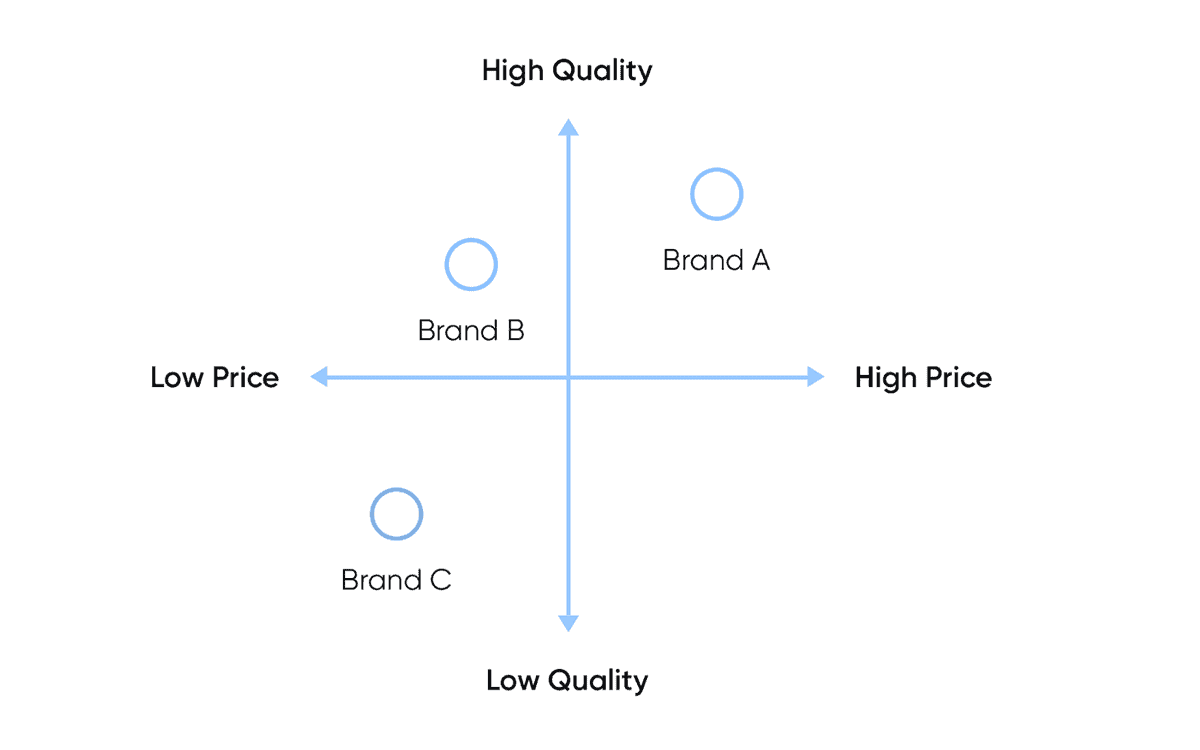
The first stage is establishing whether the proposed position makes sense to the people who actually purchase the firm's services.
A Managing Partner might believe a consultancy is known for strategic transformation. Existing clients might see it as a dependable implementation partner. Prospective clients might not understand the distinction at all.
Those are three different market perceptions.
Start with a positioning hypothesis.
Write down the proposed position in one sentence.
For example, a hypothetical 80-person management consultancy might propose:
"We help mid-market manufacturers improve operational performance through data-led transformation."
This is a starting hypothesis, not a finished positioning statement.
Break the statement into four testable components:
- Audience: Mid-market manufacturers.
- Problem: Poor operational performance.
- Capability: Data-led transformation.
- Expected value: Improved operational performance.
Each component creates a research question.
Does the audience recognise the problem? Does the description communicate something the buyer actually needs? Does the capability distinguish the consultancy from its alternatives? Can the business demonstrate the expected value?
Interview buyers rather than asking for compliments

Select research participants based on their role in the buying decision. Include current clients, former clients, prospective buyers and decision-makers who selected competitors.
Record these groups separately rather than combining their responses into one average. Existing clients can explain why they bought; lost prospects can reveal why the proposed position failed to influence their decision.
Ask questions that reveal actual decision-making:
- What would you expect a firm with this positioning to do?
- Which business problem would make you approach it?
- What would make you choose it over another consultancy?
- What evidence would you need before trusting the claim?
- Which type of organisation would you expect this firm to serve?
- What would make the positioning irrelevant to your needs?
Avoid asking, "Do you like this positioning?"
Most people can offer a polite opinion. Far fewer will explain what they would actually do with the information.
Look for changes in understanding.
Record how buyers describe the business before showing them the proposed position. Then repeat the exercise afterwards.
Compare the language.
Do buyers identify the intended specialism? Do they recognise the problem the firm solves? Can they explain why they might choose it?
A useful distinction emerges between comprehension and preference.
A buyer might say the proposed statement sounds professional. That is a positive reaction, but it does not establish that the statement has changed their understanding of the organisation.
Can your firm credibly own the position in its market?
A position can resonate with prospective buyers and still be commercially weak.
The problem is ownership.
If five competing consultancies could use the same positioning statement without changing a word, the proposed differentiation needs further examination.
A firm should be able to explain why its chosen position belongs to that business rather than simply describing an attractive market opportunity.
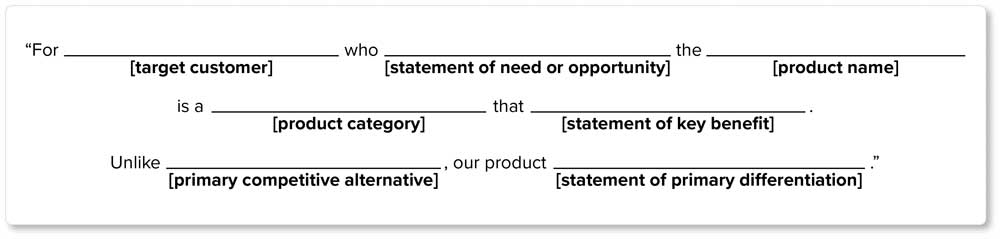
Test the position against competitors.
Start with the language competitors use to describe themselves.
Examine:
- Homepage headlines and service descriptions.
- Industry specialisms.
- Published case studies.
- Leadership profiles and expertise.
- Client testimonials.
- Sales presentations and proposals.
- Evidence supporting commercial claims.
The objective is to identify where the proposed position overlaps with existing market language.
Inkbot Design's competitor messaging framework can provide a useful starting point for examining how competing organisations communicate their value.
A wider competitive analysis can help establish whether the proposed position has a defensible place in the market.
Consider the hypothetical manufacturing consultancy again.
"Data-led transformation" might sound credible, but competing firms could easily make the same claim. The phrase does not explain whether the consultancy specialises in manufacturing efficiency, supply chain optimisation, operational technology, or something else.
The positioning needs a more specific basis.
Apply the competitor substitution test.
Take the proposed positioning statement and place a competitor's name at the beginning.
Does the statement remain equally convincing?
If the answer is yes, the differentiation needs further examination.
The competitor substitution test identifies generic language, not necessarily an absence of differentiation. Two consultancies can both claim industry expertise while offering different senior-level involvement, specialist knowledge and delivery models.
Compare the evidence behind each claim, not simply the wording. The position must give buyers a credible reason to distinguish the organisations.
Audit the evidence behind the promise.
For every central positioning claim, identify the proof required to support it.
Positioning claim | Evidence to examine |
|---|---|
Industry specialist | Relevant sector experience and documented client work |
Strategic adviser | Evidence of senior-level advisory responsibility |
Technical expertise | Qualified personnel and demonstrable technical capability |
Measurable performance improvement | Documented project outcomes and methodology |
International capability | Actual international delivery experience |
Specialist implementation partner | Relevant implementation projects and delivery resources |
A firm should distinguish between capability it already possesses and capability it hopes to develop.
That distinction becomes particularly important during an acquisition or growth phase. A new market position might depend on specialist expertise that currently sits with only one departing partner or a small delivery team.
The claim could be commercially attractive. The organisation may not yet be able to support it.
What evidence should determine whether you commit?
The final stage is to bring the research together and decide whether the proposed position is ready to inform the rebrand.
A useful decision should not depend on a single survey result, a partner vote, or a particularly enthusiastic client.
Assess the position against four approval criteria.
Approval criterion | Evidence required | Warning sign |
|---|---|---|
Buyer understanding | Buyers accurately describe the firm's intended specialism | Buyers interpret the position differently |
Commercial relevance | Buyers recognise the problem and its importance | Positive feedback without a relevant purchase need |
Competitive distinction | Buyers can identify meaningful differences from alternatives | Competitors could make the same claims |
Credibility | The firm can substantiate its promises | Claims depend on unproven capabilities |
Separate positive feedback from purchase intent
A buyer saying "I like this" is not the same as requesting a proposal.
Likewise, an improved understanding of the firm's specialism does not automatically establish willingness to pay a premium.
Look for stronger signals:
- A buyer requests a meeting about the specific service.
- A prospect asks for relevant case studies.
- A decision-maker introduces the firm to another stakeholder.
- The positioning helps the buyer explain why the firm belongs on a shortlist.
- A prospect identifies a specific problem that the firm is equipped to address.
A meeting request, referral or request for a case study is a useful behavioural signal, but none proves willingness to pay or guarantees a sale.
Treat these actions as evidence of interest and investigate what happened next. Pricing, procurement requirements, existing relationships and the availability of alternative providers can all influence the eventual purchase.
Decide what happens when the evidence is mixed
Not every proposed position will pass immediately.
A useful decision framework has three outcomes.
1. Approve
The intended audience understands the proposition, recognises its relevance, can distinguish the firm from alternatives and accepts the supporting evidence.
Proceed to the wider brand strategy and identity development.
2. Refine
Buyers recognise the underlying proposition but misunderstand a particular element. Perhaps the specialism is credible, but the target audience is too broad.
Adjust the positioning and repeat the relevant research.
3. Reject
The proposed position depends on an unsupported capability, has no convincing competitive distinction or attracts an audience the firm cannot serve profitably.
Return to the strategic work.
That is not a failed rebrand. It is a decision made before the organisation commits significant time and money to implementing the wrong direction.
A Managing Director should approve a position only when the research supports the intended audience, the commercial proposition and the firm's ability to deliver the promise. Partner agreement is necessary for implementation, but it cannot substitute for buyer evidence.
A brand position should change the buying conversation

The real test of positioning is what happens after a prospective client encounters it.
Does the buyer understand the firm's specialism? Can they explain why it belongs on their shortlist? Is there a credible reason to choose it over another provider?
Those questions deserve more attention than the question of whether a statement receives favourable reactions in a research session.
A useful positioning decision also needs to account for organisational reality. A 50-person specialist practice and a 200-person multi-office consultancy may have very different requirements.
A post-merger organisation has different alignment challenges from a business repositioning through organic growth.
There is no universal survey score that settles those decisions.
Before you commit, ask four questions
- Can the intended buyer explain what makes the firm relevant?
- Can the firm demonstrate why it deserves to own the proposed position?
- Can buyers distinguish the organisation from its actual competitors?
- Does the evidence justify the investment required to implement the position?
If the answer to any of these is no, there is more strategic work to do.
If you are preparing for a rebrand, Inkbot Design offers a free Brand Equity Audit™. The structured diagnostic identifies where your brand may be losing commercial ground and what needs attention.
Test the position before you build the brand around it.
Questions people ask
What is brand positioning testing?
Brand positioning testing is the process of evaluating whether a proposed market position is understood, relevant, credible and differentiated in the eyes of prospective buyers. It uses research, competitive assessment and behavioural evidence to help businesses decide whether a positioning direction is ready for implementation.
How do you test brand positioning with customers?
Use structured interviews with existing clients, former clients and prospective buyers. Ask participants to explain what the proposed position means, which problems it addresses, what makes the organisation different and what evidence they would need before considering its services.
Should you use surveys or interviews to test brand positioning?
Interviews are useful when you need to understand why buyers interpret a position in a particular way. Surveys can help assess patterns across a larger sample. The appropriate method depends on the research question, audience size, budget and the decisions the results need to inform.
How do you know whether brand positioning is differentiated?
Compare the proposed position with competitor messaging, capabilities, client evidence and market specialisms. If competitors can make the same claims with equally credible evidence, the proposed position needs greater specificity or a different basis for differentiation.
When should you test positioning before a rebrand?
Test the proposed position before finalising the brand strategy and developing the visual identity. Research conducted at this stage allows the business to reconsider its audience, specialism and commercial proposition before committing to identity design, messaging and organisation-wide implementation.