Brand Positioning vs Brand Strategy: What Does Your Firm Need?
Brand positioning defines why a specific buyer should choose your firm over the alternatives. Brand strategy connects that choice to the decisions and delivery that make it credible. Confusing their scope leads to the wrong brief. Diagnose whether your problem is competitive choice, wider alignment or execution before commissioning work.



On this page5 min left
- What is the difference between brand positioning and brand strategy?
- Where does positioning sit within a brand strategy?
- Does your firm need positioning work, wider strategy work or better execution?
- How can you distinguish a positioning problem from an execution problem?
- What should a positioning-led agency brief deliver?
- Commission the missing decisions, not another deck
- Questions people ask
Brand positioning is the competitive choice within your brand strategy: why a specific buyer should choose your firm over the alternatives.
Brand strategy connects that choice to the identity, messaging, experience and decisions needed to make it credible.
Confusing the two can leave you buying a new message when the business needs harder decisions—or commissioning a strategy project when proposals simply need fixing.
The useful question in brand positioning vs brand strategy is what needs changing. For the underlying concept, start with what is brand positioning. Here, the job is deciding what to commission.
What is the difference between brand positioning and brand strategy?
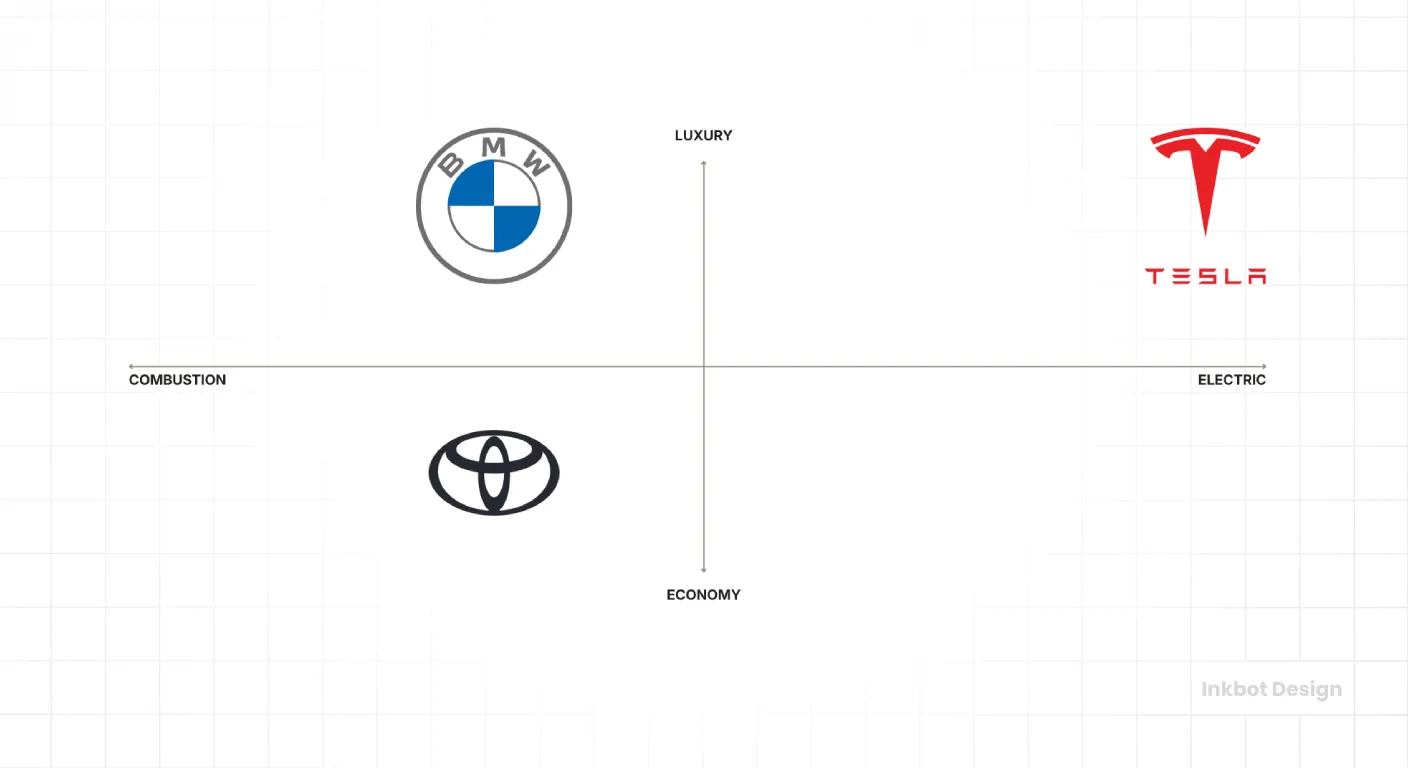
Brand positioning defines the buyer, competitive context and credible reason to choose your firm. Brand strategy is the broader plan that connects that position to brand expression and delivery. Choose a positioning-led brief when the competitive choice is unclear; choose wider strategy work when audience priorities, promises, or delivery decisions also need to be resolved.
- Brand positioning sits within brand strategy, rather than replacing it.
- A brand positioning statement records a choice; it does not implement that choice.
- A credible position expressed badly may need an execution correction, not repositioning.
Brand positioning vs brand strategy compares the competitive choice with the wider plan connecting that choice to brand identity, messaging, experience and business decisions.
Use that distinction when reviewing proposals. A document that names your target audience and competitors may help establish competitive positioning. Unless the brief also addresses how the firm will express and support that position, do not assume it covers the wider strategy.
Equally, a wider scope is not automatically better. If leadership has already resolved those decisions, paying another agency to reopen them needs a reason.
Where does positioning sit within a brand strategy?
Brand positioning connects what buyers need with a choice your firm can credibly support. A useful brand strategy framework then traces the consequences of that choice across the business.
Consider a hypothetical UK accountancy firm employing 90 people. Its partners want to prioritise owner-managed manufacturers facing capacity constraints in their finance teams. That is more useful than “ambitious businesses”, but an audience description alone does not explain why anyone should choose the firm.
The relationship between the brand strategy components might look like this:
Component | Question it answers | Hypothetical accountancy-firm illustration |
|---|---|---|
Brand purpose | Why does the organisation exist beyond its immediate transactions? | Help owners make informed decisions about their businesses |
Target audience | Whose needs take priority? | Owner-managed manufacturers without a full internal finance team |
Value proposition | What useful value does the offer provide? | Management reporting and financial guidance without recruiting a finance director |
Brand positioning | Why choose this firm over relevant alternatives? | Manufacturing-focused support combining reporting with regular decision meetings |
Brand promise | What should clients expect consistently? | Financial information explained in time to support agreed decisions |
Reasons to believe | What supports the claim? | Relevant assignments, named expertise and a documented delivery process |
Brand messaging and experience | How will the choice become visible and credible? | Sector-specific proposals, appropriate evidence and dependable reporting routines |
This is a working model, not a universal taxonomy. Brand purpose may guide the organisation without differentiating it: another accountancy firm could hold the same belief.
The positioning choice needs closer scrutiny. If manufacturing clients value something else, or several competitors provide indistinguishable support, the proposed brand differentiation remains a hypothesis. Interview buyers and compare actual offers before approving the wording.
The promise also has operational consequences. If the hypothetical firm promises timely decision support, somebody must own reporting deadlines and client meetings. A sentence cannot cover a missing process.
Is a brand positioning statement the same as a brand strategy?
A brand positioning statement is a concise record of the intended buyer, competitive context, difference and supporting evidence. Brand strategy addresses the wider decisions required to express and support that choice.
For the hypothetical accountancy firm, the statement would not decide which partner owns the manufacturing offer, how proposals present its evidence or what happens when reporting is late.
Nor is the statement necessarily public-facing copy. Its job is internal clarity; the website headline has a different job. Compare B2B positioning statement examples when you need to test the structure, not borrow another firm’s claim.
Does your firm need positioning work, wider strategy work or better execution?
Brand positioning work is appropriate when the competitive choice needs to be resolved. Wider brand strategy work is appropriate when the unresolved choices extend into priorities, promises or delivery. Implementation work fits when those decisions remain sound, but their expression or execution falls short.
Start with evidence, not the label an agency puts on its workshop.
The scenarios below are diagnostic illustrations, not reported client outcomes.
Situation | Evidence to inspect | Likely starting scope | Wrong shortcut |
|---|---|---|---|
Partners agree on priority clients but cannot explain why those clients should choose the firm | Buyer interviews, competitor offers and recent proposals | Positioning-led work | Redesigning the logo first |
A merger leaves conflicting audiences and service promises | Partner priorities, overlapping offers and delivery capability | Wider strategy, including positioning | Asking a tagline to settle the disagreement |
Clients understand the difference, but the website obscures it | Buyer language compared with website and proposal copy | Messaging correction | Reopening a supported position |
The promise is clear, but delivery contradicts it | Client feedback, handovers and service processes | Delivery correction; reconsider the promise if necessary | Advertising the promise more loudly |
Discounting has increased | Deal mix, procurement pressure, pricing and buyer feedback | Diagnose before choosing scope | Treating every price objection as a brand problem |
The firm wants to enter an unfamiliar sector | Buyer needs, relevant credentials and competing alternatives | Research, then positioning or wider strategy | Replacing the sector name in existing copy |
A new sector or merger warrants investigation, not an automatic rebrand. The B2B brand repositioning triggers help distinguish a changed competitive situation from an internal appetite for something new.
How can you distinguish a positioning problem from an execution problem?
Brand positioning needs to be examined when buyers cannot identify a relevant, credible reason to choose the firm. Execution needs examination when that reason is understood, but particular communications or service interactions fail to support it.
Compare leadership’s intended position with customer perception. Ask recent buyers what alternatives they considered, why they selected the firm and what nearly stopped them. Include unsuccessful opportunities where access is possible; satisfied clients alone cannot explain every lost pitch.
“We already have a strategy deck.”
Keep the decisions that still hold. If the deck identifies the right buyer and supported difference, a messaging correction may be enough. Revisit the strategy when its assumptions no longer match the evidence—not because the presentation looks dated.
“We only need better wording.”
Possibly. If partners agree on the offer and buyers recognise its value, commission the writing. If each partner wants a different audience or promise, the copywriter is being asked to settle a leadership decision.
Do not outsource the disagreement.
What should your agency brief include—and what comes first?
Brand strategy work should establish enough direction to make positioning choices, but the process need not follow a rigid sequence. Research may overturn an attractive position; testing may expose a promise the firm cannot deliver.
For the hypothetical accountancy firm, leadership might initially prioritise all manufacturers, then discover that its strongest evidence concerns owner-managed firms without internal finance leadership. That finding should change the brief before the website changes.
What should a positioning-led agency brief deliver?
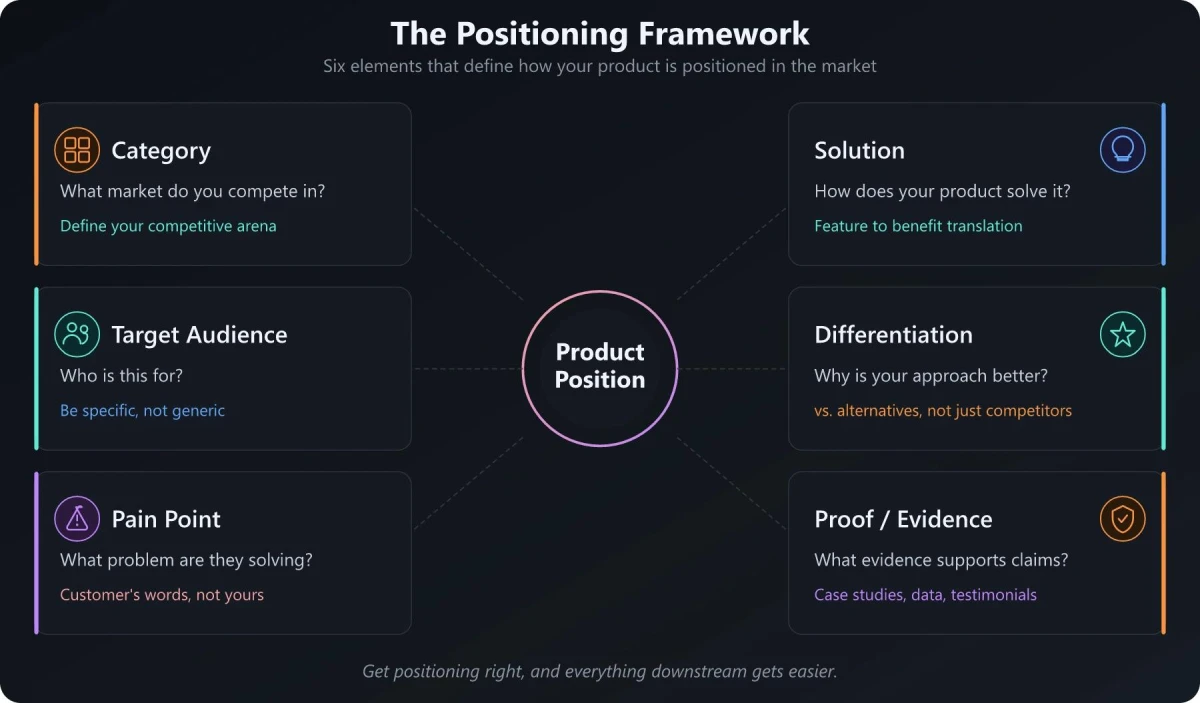
A positioning-led agency brief should deliver a documented competitive choice, supporting evidence and clear implications for implementation. It should not end with an approved sentence.
Specify:
- The priority buyer and buying situation.
- The alternatives buyers consider, including doing nothing or using internal resources.
- The proposed difference and reasons to believe it.
- The research supporting the choice and assumptions still requiring testing.
- Implications for messaging, identity and service delivery.
- Named implementation owners and a review plan.
Judge the work by whether those decisions can be used in a proposal or client conversation. Workshop count and deck length do not answer that question.
When those requirements match your gap, compare brand positioning and differentiation services.
If the brief must also resolve conflicting audiences or promises, compare the scope of brand strategy services and the Brand Equity System™.
Before signing, ask which decisions the engagement resolves, which implementation tasks it includes and what remains your responsibility. Strategy can guide a new identity without including its design.
Commission the missing decisions, not another deck
Brand positioning defines why the buyer should choose your firm. Brand strategy connects that choice to decisions the firm can carry through. Neither label excuses an unclear scope.
Today, place your latest proposal beside a competitor’s. Mark the reason to choose, the evidence supporting it and the promise delivery must keep. Treat missing answers as questions to investigate, not proof you need a rebrand.
If the position is sound and only the copy is weak, an internal correction or specialist writer may be enough. If the scope remains unclear, request a free Brand Equity Audit™.
Inkbot Design’s written diagnostic reviews positioning, messaging, visual consistency and visibility, then prioritises corrective actions. It is a starting diagnosis, not proof of revenue causation.
Questions people ask
Can a firm have brand positioning without a documented brand strategy?
Yes — a firm can occupy a recognisable competitive position without documenting a wider brand strategy. For example, buyers might choose a consultancy for its sector expertise. The practical question is whether leadership understands that preference and can support it consistently, rather than whether a strategy document exists.
Should brand strategy always come before brand positioning?
No — brand strategy and brand positioning can develop iteratively. Initial audience and business priorities inform a proposed position; buyer research and delivery checks may then change those priorities. Agree on enough direction to investigate a position, but do not protect an early strategy assumption when the evidence contradicts it.
Does changing brand positioning require a new logo?
No — changing brand positioning does not automatically require a new logo. Review whether the existing identity supports the intended position and works across the necessary applications. A messaging or service change may be sufficient; redesign becomes relevant when there is an identifiable identity problem, not simply a new statement.
How should a firm measure whether positioning is working?
Brand positioning should be assessed against the intended buyer response. Ask whether relevant buyers understand the offer, recognise the proposed difference and believe its evidence. Review enquiry fit, proposal feedback and fee objections alongside that research, while recording pricing, staffing or market changes that could also explain commercial results.