How to Write Team Bios: The Executive Bio Formula
Most team bios document careers and prove nothing. For professional services firms, each bio should answer the buyer’s real question: why trust this person with this problem? This guide sets out a three-line executive bio formula, placement rules for length and voice, and how to keep a firm’s bios consistent.
 By Stuart Crawford
 Reviewed by Tabitha Ayers
11 min read
On this page11 min left
- How to Write a Team Bio That Wins Work
- The Three-Line Executive Bio Formula
- One Partner Bio, Before and After
- Length, Voice and Format by Placement
- Bios as a Brand System: Keeping 120 Profiles Consistent
- What to Cut From an Executive Bio
- How to Write Team Bios: Consent and Regulation for UK Firms
- A Bio Has One Job
- Frequently asked questions
Open your firm's team page and read your own bio as a stranger would.
- Twenty years' experience.
- A passion for client service.
- A marathon, possibly a Labrador.
Then ask whether any of it tells a finance director why she should give you a £400k disposal instead of the firm down the road.
Most team bios in professional services are miniature CVs, which is a problem because buyers aren't recruiting. They're checking whether this particular person can be trusted with this particular problem.
According to the Edelman–LinkedIn 2024 B2B Thought Leadership Impact Report, 73% of decision-makers consider visible thought leadership a more trustworthy basis for judging a firm's capabilities than its marketing materials.
A good bio belongs on the evidence side of that divide. Most sit firmly on the brochure side.
The bio is where your positioning becomes a person.
That makes it the most personal part of your brand messaging application, and one strand of the wider discipline of brand voice and copywriting for professional services firms.
Treat it as a formatting job, and it will read like one.
How to Write a Team Bio That Wins Work

Write each team bio to answer one buyer question: why should I trust this person with this problem? State what the person is trusted to solve, give two or three pieces of specific proof, then explain how their approach changes the client's outcome. Cut everything else.
- Relevance comes first. The opening line names the problem the person solves, not their job title.
- Proof comes second. That means matters, clients, numbers and qualifications a buyer can check.
- Method comes third. How the person thinks is what separates two equally qualified partners.
A strong team bio states what the person is trusted to solve, the proof they can solve it, and how their expertise changes client outcomes.
The Three-Line Executive Bio Formula
Every executive bio, whatever its length, is built from three lines.
A 30-word team card uses one sentence for each. A 250-word profile page expands each line into a paragraph. Neither version adds a fourth category, which is where bios usually go wrong.
Line One: What This Person Is Trusted to Solve
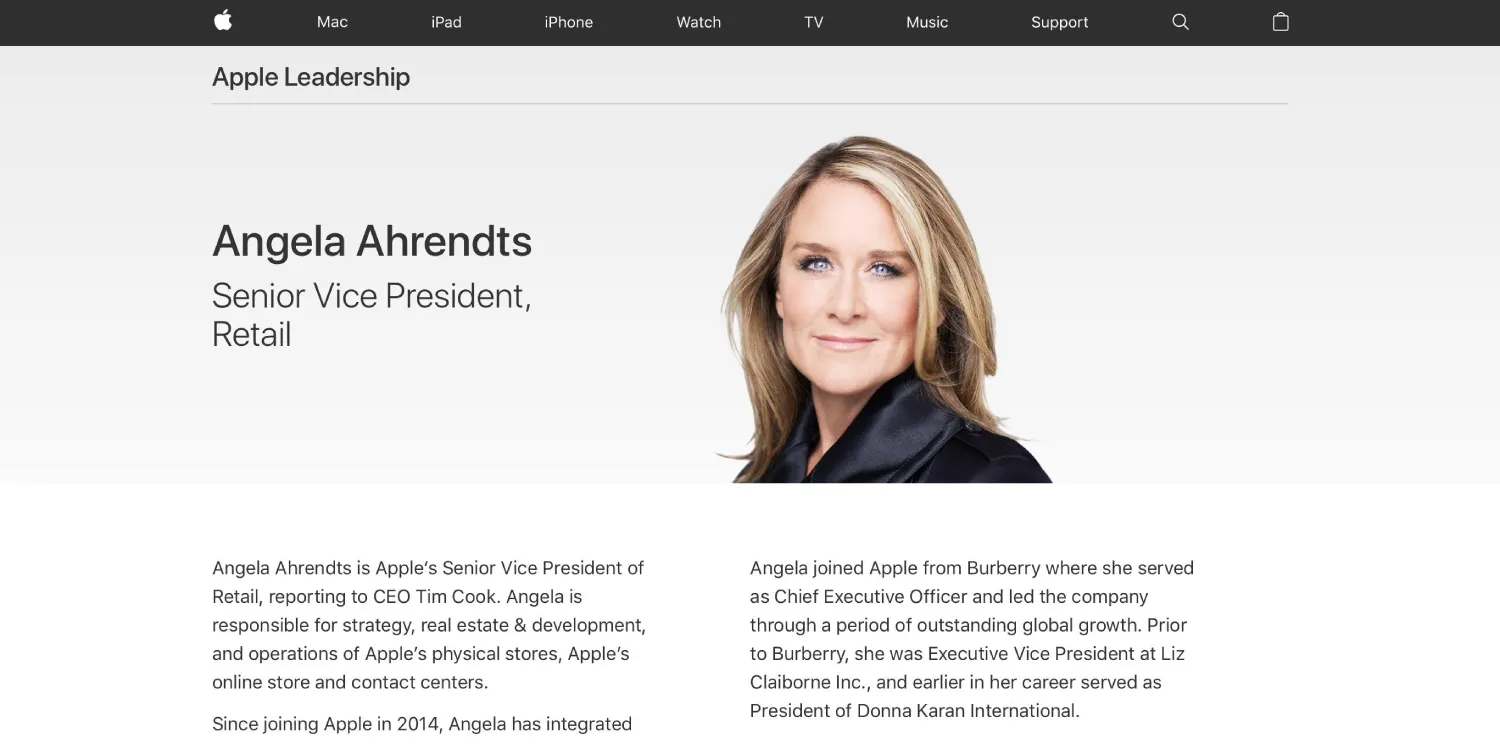
The first line of an executive bio should name the commercial problem the person solves and who they solve it for. “Partner, Corporate” is a filing label. “Advises founder-owned manufacturers selling businesses valued at £10m–£60m” gives a founder a reason to keep reading.
A buyer scanning a team page is matching faces to their own problem and deciding relevance within the first line. If the line doesn't mention their problem, the buyer moves on and never reaches the impressive part in paragraph three.
A job title locates a person inside the firm. A trusted-to-solve line locates them inside the buyer's problem, and that is the only place the buyer is looking.
Line Two: The Proof That Makes the Claim Credible
Proof in an executive bio is anything specific that a buyer can verify. In rough order of strength:
- Named client work, where the client has given permission.
- Countable facts: the number of completed matters, the value range, and years in one niche.
- Regulated qualifications a buyer can verify, such as admission to the roll, ICAEW membership or CTA status.
- Published thought leadership, the person actually wrote.
That fourth item carries more weight than most firms assume. The same Edelman–LinkedIn research reports that 90% of decision-makers become more receptive to outreach from firms producing strong expertise-led content.
Link the bio to the person's articles and talks, and to case studies written around confidential work where client consent is tight.
Proof that a buyer can't check is decoration.
Line Three: How Their Expertise Changes the Outcome
The third line is the one partners find hardest, because it requires admitting they have a method. For example: “Runs vendor due diligence before the buyer does, so price issues surface while the seller can still fix them.”
That sentence does two jobs. It describes a judgement call, and it names the consequence for the client. Two partners with identical CVs will rarely write the same third line.
That is why the third line, more than any credential, answers the buyer's quiet question: what will working with this person actually be like?
It follows the same proof-first logic as proof-led B2B brand storytelling. The claim only lands because it arrives with its reason attached.
“A team bio is a risk assessment the buyer runs without telling you. Every line either lowers the perceived risk of choosing your firm or wastes the few seconds a buyer gives it. Years of experience and a passion for service mean nothing. A named problem, checkable proof and a visible method do, and they do it before the first meeting is booked.”
One Partner Bio, Before and After
This is an illustrative composite, not a real person.
Before:
“Sarah is a Partner in our Corporate team with over 20 years' experience. She is passionate about delivering exceptional client service and is known as a dynamic, results-driven leader. Outside work, Sarah enjoys hiking and spending time with her family.”
After:
“Sarah Mitchell advises founders selling owner-managed businesses valued between £5m and £50m. Since 2015, she has led [X] completed sales, including [named transaction, with client permission]. Founders bring Sarah in early because she runs vendor due diligence before a buyer does, which means pricing problems get fixed before heads of terms rather than argued about after.”
What changed:
- The job title disappeared from the opening line, and a buyer problem took its place.
- Three adjectives were replaced by a number and a name. The brackets are deliberate: if you can't fill them, the claim shouldn't be made.
- The hobby went. Keep it back for the first meeting.
Length, Voice and Format by Placement
A person doesn't have one bio. They have four to six, and each placement gives the buyer a different amount of attention.
A team card gets a glance, a proposal gets read by the one person who has to defend the shortlist, and a byline gets read by someone deciding whether the article is worth trusting.
The lengths below are Inkbot Design house standards, set by that attention span rather than by research. Treat them as a starting point.
Placement | Length | Voice | Lead with |
|---|---|---|---|
Team page card | 25–40 words | Third person | Line one only |
Full profile page | 150–250 words | Third person | All three lines plus links to published work |
Pitch or proposal | 60–100 words | Third person | Relevance to this client's issue, rewritten per bid |
LinkedIn About | 150–300 words | First person | Line one, in their own voice |
Article author byline | 30–50 words | Third person | Why they're qualified to write this piece |
Speaker or awards entry | 50–80 words | Third person | Credential plus topic |
Voice follows ownership.
When the firm publishes the bio, a third person does the vouching, and the firm is putting its name behind the person. On LinkedIn, the person is speaking for themselves, so the first person is the only version that doesn't read like a press release someone forgot to edit.
Mixing the two on the same page is the fastest way to look like nobody checked.
Photographs matter more than the copy, uncomfortably. Nielsen Norman Group's 2010 eyetracking study, “Photos as Web Content”, found that users looked closely at photos of real people and ignored generic filler imagery.
A team page is where that attention concentrates. Commission consistent, recent headshots and put them on the same template as the rest of your B2B website copywriting.
Bios as a Brand System: Keeping 120 Profiles Consistent

Buyers now reach a shortlist faster and leave it more slowly. G2's 2026 buyer research describes a compressed discovery phase followed by a longer, more demanding evaluation phase, in which buyers test whether a provider's claims hold up and whether they can defend the choice internally.
AI search may put your firm in front of a buyer. It can't make them comfortable handing over a complex matter.
That comfort comes from evidence: the work you've done, the expertise you can demonstrate, and the people who will apply it. A team bio is where those three things meet. It's also a page several members of a buying group will open separately, often without telling you.
So bios can't be 120 separate essays written by 120 people in 120 registers.
The case for leaving bios personal is a good one. Partners build reputations individually. Lateral hires bring their own following. Homogenised, corporate bios are genuinely worse than idiosyncratic ones.
They read like a directory, and buyers can tell. Any partner who resists a centralised rewrite on those grounds deserves a proper answer.
The answer is to standardise the structure and the facts, and leave the sentences alone. The three lines are fixed. The wording stays personal. In practice, that means five decisions:
- One owner. Marketing or business development owns the bio set, not each fee-earner.
- Interview, then draft. Most partners describe their work far better out loud than on a blank page. A 20-minute conversation beats a self-written draft almost every time.
- Tiering. Client-facing leaders get full profiles. Everyone else gets a card. A 150-person firm does not need 150 profile pages.
- A trigger-based review. Update bios annually alongside appraisals, and whenever a notable matter is completed.
- One source of truth. The same approved facts feed the website, proposals and LinkedIn. AI search engines and buyers both cross-check names, roles and claims across channels. Inconsistency reads as either carelessness or inflation.
The second objection usually comes from firms mid-rebrand: “We'll fix the bios after the new identity launches.” That's backwards.
If the positioning shifts and the people pages don't, the buyer meets the new brand on the homepage and the old firm on every profile.
What to Cut From an Executive Bio
The Edelman Trust Barometer 2025 found that 69% of people worry that institutional leaders deliberately mislead them. Against that background, unprovable self-praise works against you. Delete on sight:
- Adjectives about the person: dynamic, passionate, results-driven, innovative, exceptional. If a claim is true, a number will say it better.
- “Over X years' experience” as the opening. Keep it as a proof point. Tenure alone tells a buyer nothing about relevance.
- Every sector touched. List three. Listing eleven signals that the person has no niche.
- Full education history. Keep only the qualifications a buyer would actually check.
- Hobbies, unless the hobby does real work. A tax partner who sits on a rugby club's finance committee has a relevant detail. A tax partner who enjoys “travel and good food” has a sentence nobody will remember.
The same discipline runs through all brand copywriting that sells a specific position. Every word has to earn the reader's next second.
How to Write Team Bios: Consent and Regulation for UK Firms
For some firms, the bio was never optional copy.
Under the SRA Transparency Rules, law firms offering certain services, including residential conveyancing and probate, must publish the experience and qualifications of the people doing the work and their supervisors.
Which means the one page most partners treat as an afterthought is, for these firms, partly a compliance document. Worth knowing before someone “tidies up” the team page.
A bio is also personal data under UK GDPR. Get written sign-off from each person on the final text and photograph, and remove a leaver's profile promptly rather than when someone finally notices.
Firms regulated by the FCA should apply the “fair, clear and not misleading” standard to bios as they would to any financial promotion. A claim about outcomes in a bio is still a claim.
A Bio Has One Job
The best team bios establish commercial relevance, and career history appears only as supporting evidence.
Each should prompt a buyer to answer a single question: Why should I trust this person with this problem? Relevance first, checkable proof second, visible method third, and everything else cut or held back for the meeting.
Start today with one bio, your own. Rewrite the first line so it names the problem you solve and who you solve it for. If you can't write that sentence, your bios aren't the problem. Your positioning is.
That's what a free Brand Equity Audit™ is built to find: a structured diagnostic showing exactly where your brand is losing commercial ground, your people pages included, and what to fix first.
Frequently asked questions
Should team bios be written in first or third person?
Third person suits the firm's own website, proposals and bylines, because it reads as the firm vouching for its people. First-person suits LinkedIn, where readers expect the individual's own voice. The facts should be identical in both versions. Only the grammatical person changes.
How long should an executive bio be?
An executive bio should be 25–40 words on a team page card and 150–250 words on a full profile page. A pitch version should run 60–100 words and be rewritten for each proposal. Every version uses the same three components: what the person solves, the proof, and their method.
Should team bios include hobbies or personal details?
Only when the detail does commercial work. A personal interest that is relevant to clients or gives a buyer a genuine point of connection can stay. Generic interests such as travel or food add length without building trust and belong in the first meeting rather than in the bio.
Who should write the bios in a professional services firm?
Marketing or business development should own and draft the bios, working from a short interview with each person. Self-written bios drift in length, voice and quality across a firm. Central ownership keeps structure and facts consistent while each bio still sounds like its subject.
How often should team bios be updated?
Team bios should be reviewed at least annually, ideally alongside appraisals, and updated whenever a notable matter completes or a role changes. Leavers' profiles should come down promptly. An out-of-date bio signals to a buyer that the firm isn't paying attention to detail.
Do junior staff need full bios on the website?
No. Full profile pages belong to client-facing leaders and the people buyers will actually work with. Junior staff can appear on team page cards with a name, role and one relevant line, which keeps the site manageable without hiding the wider team.
Can AI tools write team bios?
Yes, for structure and first drafts, but not for the parts that matter. AI tools can apply the three-line format consistently. The proof and the method line have to come from interviewing the person, because those details are specific, checkable and unavailable to any tool that hasn't done the work.