Your B2B Website Copywriting Has 2 Readers. Only One Is Human
A potential client pastes your services page into ChatGPT and asks it to summarise what your firm does and who it’s for.
Whatever comes back (accurate, vague, or wrong) is now the version of your firm that reaches the decision-maker.
Nobody on your side was asked. That summary either survives scrutiny or it doesn’t, and your copy decided which before anyone picked up the phone.
This is the part most guidance on B2B website copywriting misses. It treats the page as something a human reads top to bottom, even as the page is increasingly a source document – extracted, compared, forwarded, summarised, and eventually run past procurement.
Nielsen Norman Group (NN/g), a UX research consultancy, found that 79% of test participants scanned new pages, while only 16% read them word by word. The machine reading your page is just the newest scanner in a queue that was never reading the way you wrote.
For firms mid-rebrand, this is the moment the brand messaging application either holds together across every surface or fractures – because the website is where the new positioning gets tested by people you’ll never meet.
- Build every sentence so when extracted it still states what you do, who you help and why you are the safer choice.
- Decide the single commercial truth first, structure claims for retrievability, then polish prose; architecture before ornament.
- Make claims standalone, attach specific proof to each, state clear differentiation and an extractable next step like 'Request a brand audit'.
- AI summaries shape shortlists early; buyers use AI for speed but verify results, so your page must transmit the same truth to machine and human.
What B2B Website Copywriting Actually Is
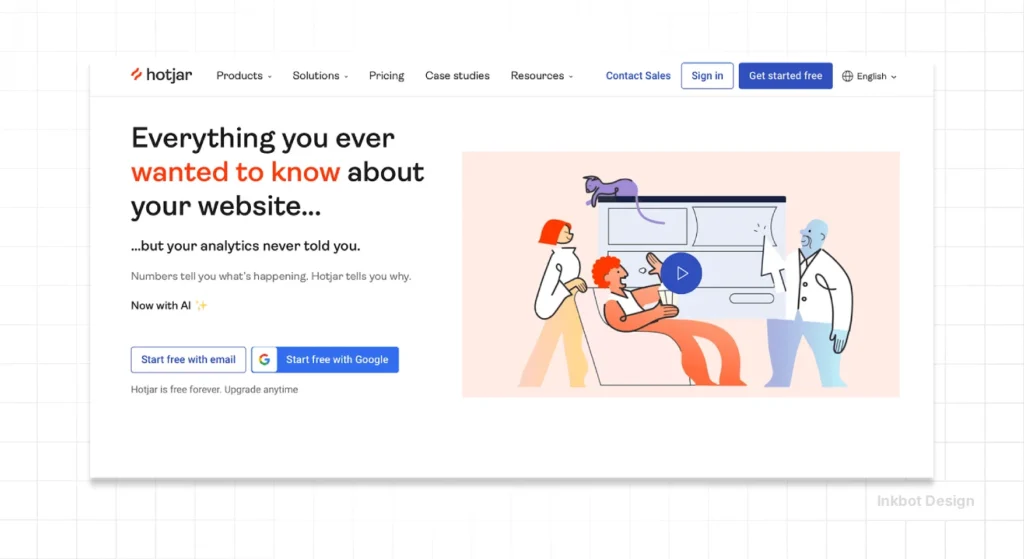
B2B website copywriting is the practice of structuring a company’s offer, audience, differentiation, proof and next step so that both a buying committee and an AI system retrieve the same commercial truth from the page. It is not persuasion layered onto a design. It is a message architecture – the page works as a decision interface at several levels of scrutiny at once.
- A buying committee does not read your site; it extracts from it, member by member, each looking for the one thing that de-risks their vote.
- An AI summariser does the same thing mechanically – pulling claims out of their surrounding context and reassembling them for someone who never visits the page.
- Both fail in the same place: when the commercial truth lives in the layout – the hero image, the sequence of case studies – rather than in sentences that survive being lifted out. Design cannot be extracted. Words can.
B2B website copywriting is the practice of structuring a company’s offer, proof and next step so both buying committees and AI systems retrieve the same commercial truth.
How to Build Copy Both Buyers and Machines Can Retrieve
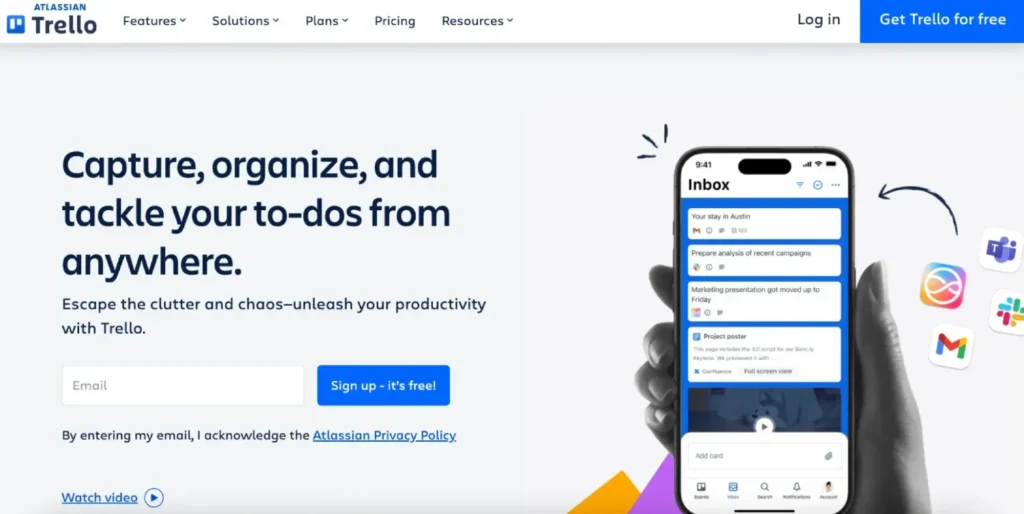
Decide the thing most rebrands leave until last: the single commercial truth the page must transmit. Not the mission statement – the one sentence that, pulled out of context and read cold by a stranger, still says who you help and why you’re the safer bet.
We once audited a services page for a firm where its three partners each described the offering differently on the same page. The AI summary averaged them into mush, and so did every buyer.
The mechanism matters here because it explains why formatting alone never fixes weak copy. When a buyer skims, an LLM extracts, or a referrer forwards a paragraph, each one strips your sentence away from the page that framed it.
If the sentence only makes sense next to the hero image or the case study three scrolls down, it arrives at the decision-maker as noise.
NN/g’s writing-style research puts numbers on the payoff of getting this right: concise copy raised measured usability by 58%, scannable copy by 47%, and objective (non-promotional) copy by 27% – and a site combining all three scored 124% higher.
Those gains are not conversion promises. They are evidence that reducing promotional fog and structuring for fast evaluation is one activity, not two.
So the build is a sequence of legibility, not a sequence of pages:
- State the offer as a standalone claim. “Inkbot Design builds brand identities for UK professional services firms” survives extraction. “We bring your vision to life” does not pull it out of context, and it means nothing to either humans or machines.
- Attach proof to each claim, not to a testimonials carousel. A named client, a specific outcome, a figure. Proof that only exists as a logo wall cannot be retrieved as evidence for any particular claim.
- Make differentiation a sentence, not an impression. If your distinctiveness lives in the tone of voice rather than in a retrievable statement, the machine reassembling your page will describe you exactly like your competitor.
- Name the next step in words. “Request a brand audit” is extractable. A button that says “Let’s talk” tells a summariser nothing about what you actually offer.
Knowing which commercial truth to lead with for this firm at this stage.
This is where clear B2B brand copywriting, as a verbal identity, stops being a style question and becomes an architectural question.
“Your website is not persuading a visitor. It is briefing a committee you will never meet and a machine that will paraphrase you to people who never arrive. Write every sentence so that when it is torn from the page and read alone, it still tells the truth about what you do, who you do it for, and why you are the safer choice.”
The Sequence Mistake That Makes Copy Cosmetic
The error that separates a working page from a cosmetic one is an order-of-operations problem: firms write the words first and think about retrieval last.
They draft persuasive copy, sign it off, then hand it to an SEO to “add the keywords” and a designer to “make it scannable.” The architecture gets bolted on after the meaning is set right, in the wrong order.
Intelligent practitioners hold the opposite view for a defensible reason – copy is a craft, and craft resists being pre-structured; you write to discover what you mean, then tidy. That’s true for an essay. It is not true for a decision interface.
A page that will be extracted, compared and summarised has to be engineered for retrieval from the first sentence, because retrievability is not a finish applied to meaning – it is a property of how the meaning was built.
Reverse the order. Decide the commercial truth, structure the claims so each survives extraction, then write them well.
The prose quality comes last and matters enormously – but it is applied to an architecture that already works, not asked to rescue one that doesn’t.
A page can read beautifully and still be invisible to the committee member skimming for risk and the model paraphrasing for the buyer.
Clarity for humans and structure for machines were never two jobs. They are the same job, and doing it in the wrong sequence is why so much expensively written copy underperforms.
This is the discipline that carries through to every landing page built to convert, where a single retrievable promise does more work than a page of atmosphere.
Where B2B Website Copywriting Stands Now

The machine reader is no longer a forecast.
Forrester reported in November 2024 that 89% of B2B buyers had adopted generative AI in at least one part of their purchasing process, and 87% of those who used it said it helped them achieve better business outcomes for their organisations.
AI is reading your copy because your buyers are the ones feeding it in.
That does not mean buyers trust the output. Forrester’s January 2026 State of Business Buying release reports that buyers use generative AI for speed but find its answers incomplete or unreliable, so they seek validation from trusted sources and human contacts.
The AI summary gets them to a shortlist; human scrutiny decides the deal. Both are reading the same page, and both must retrieve the same truth from it, which is the whole argument of this guide, now with a deadline attached.
The deadline is real because the shortlist forms early. 6sense’s 2025 B2B Buyer Experience research, surveying 4,510 recent buyers on purchases of at least $25,000, found that buyers had four of five shortlist vendors in mind at the start of their journey and bought from that first-day shortlist 80% to 90% of the time.
If your page cannot transmit its commercial truth cleanly during that early, unattended, AI-assisted research phase, you are not on the shortlist to lose.
And the room deciding is crowded: Forrester puts the typical B2B purchase at 13 internal stakeholders and nine external influencers, with 73% of purchases involving three or more departments. That is a lot of people extracting many fragments from one page.
The Verdict
The reframe worth keeping is simple.
Your B2B website copywriting is not two jobs – clarity for people, structure for search – competing for the same budget.
It is one job: building a page that transmits the same commercial truth whether a managing partner skims it, a procurement lead interrogates it, or an AI system paraphrases it for a buyer you never meet.
The firms that still treat those as separate optimisations are writing beautiful copy that fractures the moment it leaves the page.
Do one thing today: take your current services page, paste it into an AI tool, and ask it to describe what your firm does and who it’s for.
If the answer isn’t the firm you’re rebranding into, your copy is losing ground you can’t see. A Brand Equity Audit™ shows you exactly where – and what to change first.
FAQs
What is B2B website copywriting?
B2B website copywriting is the practice of structuring a firm’s offer, proof and next step so buying committees and AI systems retrieve the same commercial truth. It treats the page as a decision interface read by humans and machines, not as persuasive text alone.
How is writing for buyers different from writing for AI search?
It isn’t two activities. Nielsen Norman Group found 79% of users scan rather than read, and AI systems extract the same way. Copy structured so each claim survives being pulled from context serves both readers at once, which is why they’re a single job.
Why does our website copy lose deals we expected to win?
Often, the commercial truth is implied by design rather than stated in words. When a committee member skims or an AI summarises, they strip sentences from context. If a claim only makes sense beside the hero image, it reaches the decision-maker as noise.
When should we rebuild website copy – before or during a rebrand?
During, as an early step. The website is where new positioning gets tested by people you never meet, including AI systems that buyers feed it into. Fixing copy after the rebrand ships means the wrong commercial truth circulates while you finalise everything else.
Is it true that AI has changed B2B buying?
Yes – Forrester reported in November 2024 that 89% of B2B buyers use generative AI at some point in their purchase process. Buyers still verify AI output against trusted human sources, so your page must satisfy both the machine summary and later human scrutiny.
How long should B2B website copy be?
Long enough to state each commercial claim with its proof, and no longer. Nielsen Norman Group found that concise copy raised usability by 58%. Length is never the target; retrievability is – every sentence should survive being read alone.
