How to Build a Brand Messaging Application That Governs What AI Says About You
A brand messaging application used to mean a style guide. AI changed that. When agencies, freelancers, and generative tools all produce language in your name, verbal identity becomes a decision system governing what your firm may claim, how it discloses AI, and who approves what before it reaches clients.
 By Stuart Crawford
 Reviewed by Tabitha Ayers
Updated 11 min read
On this page11 min left
Three partners at a growing UK advisory firm described the business three different ways in the same pitch deck last year. The prospect noticed before they did. That was survivable when a human wrote every sentence.
It is not survivable now that a generative tool, a freelance copywriter, and a customer-service platform are all producing language in the firm's name — each one guessing at a position the firm never made explicit.
A brand messaging application is the system that ends the guessing. Not a mood board. Not a tone-of-voice PDF that sits in a shared drive.
According to McKinsey & Company's 2025 global survey, 88% of organisations now report regular AI use in at least one business function — which means your brand's language already travels through machines you do not directly supervise. The question is whether those machines have anything explicit to follow.
Most guidance treats this as a production problem: how to make generated copy sound on-brand. That is the wrong level. The real exposure is strategic.
AI does not merely accelerate content — it reveals whether your firm has a clear enough commercial position, vocabulary, proof standard, and set of red lines to produce recognisable language without a human rescuing every draft.
If you want the deeper foundation beneath this, our work on brand voice and copywriting sits upstream of everything here.
How a Brand Messaging Application Is Built
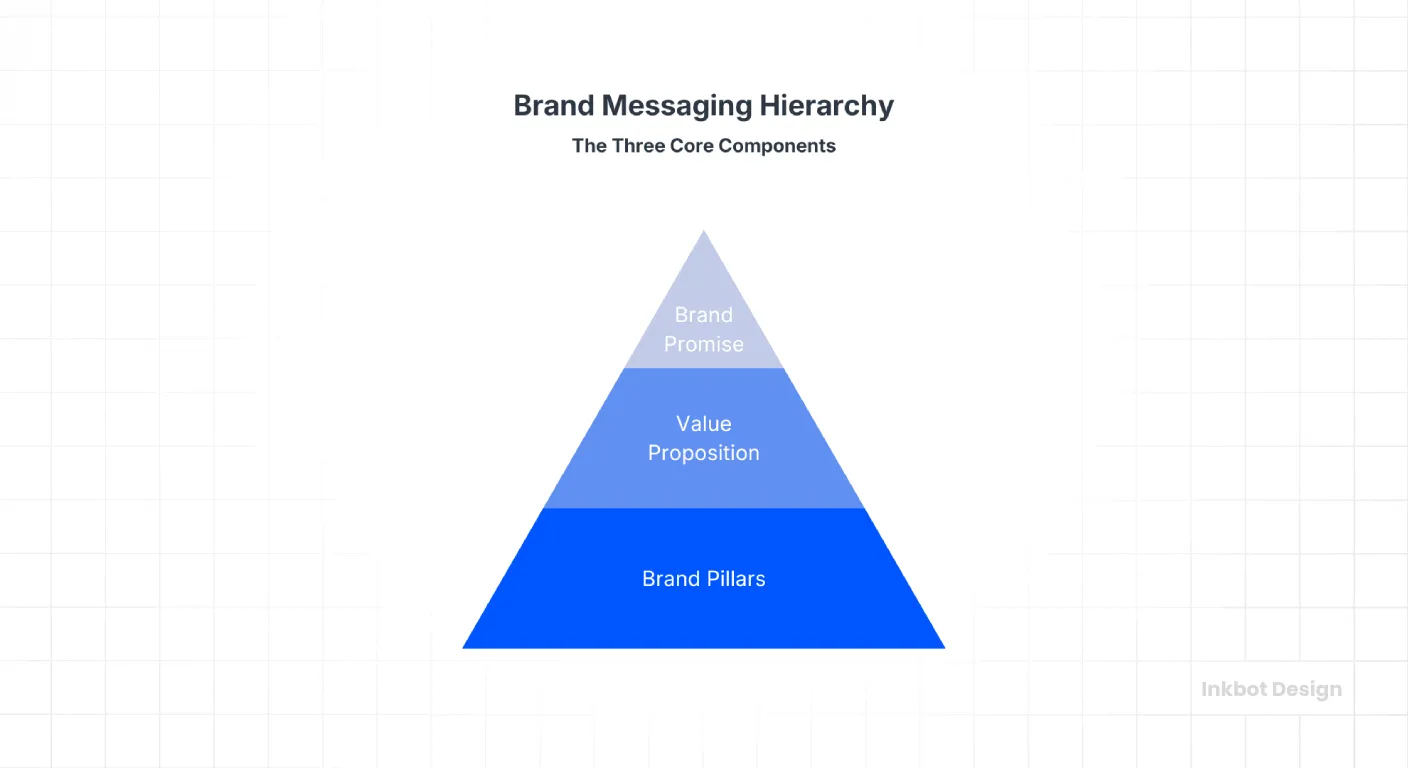
A brand messaging application is built in five stages: define the strategic core, convert it into checkable rules, set evidence and disclosure standards, assign approval authority, and wire it into the tools that generate language. Each stage gates the next. Skip the order, and you get a document, not a system.
- It governs what may be claimed (evidence standard), not just how it sounds.
- It assigns who approves which class of statements before they reach a client.
- It exists as an executable reference tool, and people both use it, not a static guide.
A brand messaging application is a governed system that translates strategic position into reusable language rules, evidence standards, and approval boundaries for both people and AI tools.
What You Need in Place First
You cannot govern a language you have not decided on. Before building any rules, a firm needs a single agreed-upon positioning statement, a defined audience, and a genuine point of view that its leadership will stand behind.
The honest entry condition most guides skip: leadership alignment.
HubSpot's brand framework guidance and Writer's messaging model both assume this exists. In firms of 50–200 people, it usually does not, which is why the three-partners-three-descriptions problem is the rule rather than the exception.
Ask five senior people to write the firm's value proposition in one sentence, separately. If you get five sentences, you have no source material to govern, and no AI tool will invent coherence you never supplied.
Stage One: Define the Strategic Core
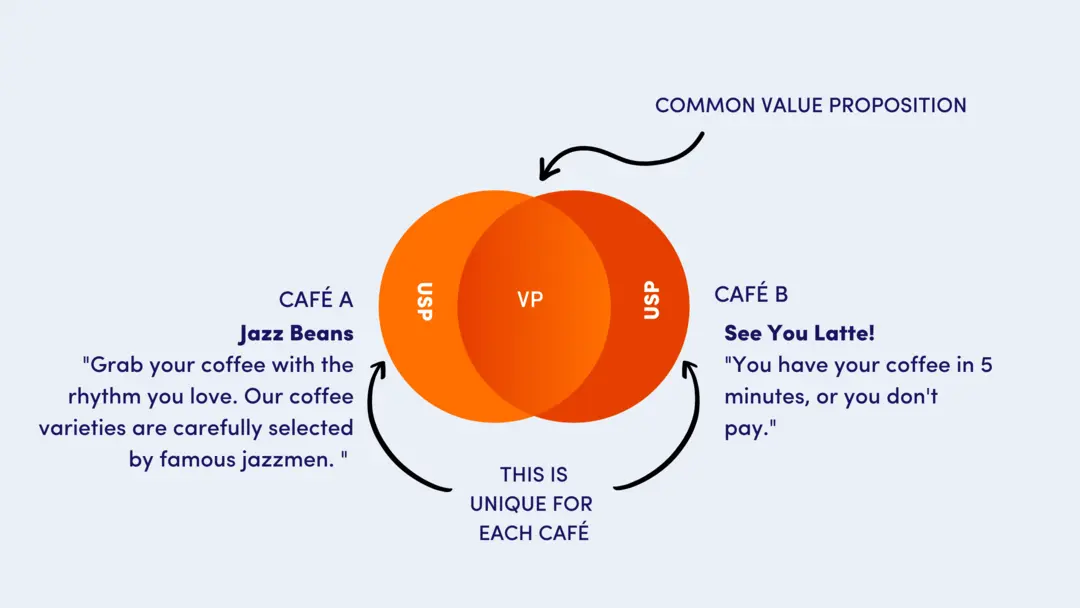
The strategic core is the position from which everything else derives — audience, value proposition, and a defensible point of view.
Done right, it reads as a decision, not a description: it tells you what the firm will not say as clearly as what it will. The failure mode here is the committee-smoothed statement that offends no one and commits to nothing.
A tax practice that positions itself as “trusted advisors delivering excellence” has defined nothing that an AI tool — or a new hire — can act on.
You know this stage is done when the position rules things out. “We do not pitch on price” is governable. “We value quality” is not.
Stage Two: Convert Position Into Checkable Rules
Adjectives cannot be checked; rules can.
Writer's messaging framework makes this point well: translate “be authoritative” into concrete instructions like approved and banned terminology, sentence-level standards, and specific idioms to avoid.
A machine cannot apply “sound confident.” It can apply “never hedge a factual claim with ‘we believe'” and “use ‘fee' not ‘cost'.”
“A verbal identity that lists adjectives governs nothing. A verbal identity that lists rules governs everything downstream of it — every freelancer, every prompt, every autonomous agent producing language in your name. The difference is whether a stranger, or a model, could apply it without asking you.”
The failure mode: a beautiful voice guide full of words like “warm” and “expert” that no reviewer can enforce and no tool can execute. If two people apply the rule differently, it is not yet a rule.
Stage Three: Set Evidence and Disclosure Standards
This is the stage at which AI became non-optional.
A brand messaging application must now specify what proof a claim requires before it can be published, and how the firm discloses its involvement with AI.
The US Federal Trade Commission's action against Workado established the principle plainly: labelling something “AI-generated” does not dilute the obligation to substantiate the claims inside it. Your evidence standard is now a brand asset, not a compliance afterthought.
Disclosure is the newer half. In 2026, the IAB launched a framework for disclosing AI in advertising when it materially changes authenticity, identity, or representation, while the European Commission's AI Act transparency rules began to apply to specified AI interactions and synthetic content.
The IAB standard is useful precisely because it rejects blanket labelling — it asks whether AI changes how the audience interprets the message. That mirrors a good brand strategy: govern what shifts interpretation, not empty procedural theatre.
Stage Four: Assign Approval Authority — The Judgement Layer

“Human in the loop” is where most governance quietly fails, because it answers none of the operative questions.
The better question: which human reviews which type of statement, against which standard, before it reaches which audience? A brand messaging application makes that explicit.
For a professional services firm, that typically means routine thought-leadership formats can be marketing-approved; technical assertions require a subject-matter expert; regulated, comparative, or performance claims require legal or compliance clearance; and material changes to positioning or public point of view require a senior brand owner.
Customer-facing automation must escalate anything involving advice, liability, personal data, or complaints.
“Human in the loop” is not a control. It is a sentence that sounds like one. A control names the reviewer, the statement class, the standard, and the audience — and fails closed when any of the four is missing.
Stage Five: Wire It Into the Tools
A brand messaging application that lives in a PDF governs nothing at the point of generation.
The rules must be configured where language is actually produced — in AI writing tools, content briefs, and customer-service scripts.
This is why the Writer's model stresses centralised configuration: approved terminology and banned words are applied automatically rather than remembered manually.
The gap here is stark. Only 37% of marketers reportedly include AI-governance clauses in vendor contracts — meaning most firms' language rules stop at their own door and evaporate the moment work passes to an agency or freelancer.
A verbal identity that cannot travel fails at scale.
This is the same discipline that governs strong brand storytelling and disciplined brand copywriting: the rules must be transferable, not tribal knowledge.
From Style Guide to Disclosure System
A verbal identity is used to determine only how a brand describes itself.
It must now also determine how a brand discloses its use of AI, explains the limits of automated advice, and distinguishes a genuinely human interaction from a synthetic one. That is a category change, not an addition.
The forces behind it are concrete. McKinsey reports 90% of CMOs are experimenting with AI, but fewer than 10% have scaled it or captured value across workflows — the gap is governance, not capability.
And 51% of organisations using AI report at least one negative consequence. Meanwhile, 79% of people globally agree that companies using AI should be required to disclose it, which turns disclosure from a legal chore into a trust signal that your competitors are mishandling.
The next phase of AI branding is not prompt engineering. It is communication governance.
With the IAB's 2026 disclosure framework and the EU AI Act's transparency rules now in effect, a firm needs agreed-upon language for claims, disclosures, customer expectations, escalation, and accountability — not a tone chart.
On a high-conversion asset like a landing page, the difference between a governed claim and an unsupported one is the difference between a defensible promise and a liability.
The Step Everyone Does in the Wrong Order

Intelligent practitioners build the style layer first — voice, tone, adjectives — because it is visible, satisfying, and easy to present to a board. That instinct is understandable. The style guide is what looks like a brand.
But it is the wrong first move. Building voice before building the decision system produces a firm that sounds consistent and makes incoherent claims — polished sentences making promises no one authorised.
The correct sequence inverts it: strategic core, rules, evidence and disclosure standards, approval authority, voice.
Voice is the last layer, not the first, because it is a surface expression of the decisions made beneath it.
“Build the brand voice before the governance system, and you get a firm that sounds beautiful and says the wrong thing at scale. AI did not create this failure. It just removed the human editors who used to catch it before it reached the client.”
The objection writes itself: this sounds like bureaucracy for a marketing function. It is the opposite.
A governed system is what lets a firm produce AI-assisted content faster — because campaign cycles that once took six to ten weeks can compress to same-day execution only when the rules are explicit enough to run without a meeting.
The bureaucracy is the absence of the system: the endless rounds of “Does this sound like us?”
The Verdict
AI has not made brand messaging less important or easier. It has made vague messaging impossible to hide.
A firm whose position was always slightly fuzzy could paper over it when humans wrote every word and quietly corrected each other.
Hand that same fuzziness to a generative tool, a freelancer, and a service platform running in parallel, and the incoherence prints at volume — in your name, to your clients, before anyone reviews it.
The firms that treat a brand messaging application as a governed operating system — strategic core, checkable rules, evidence and disclosure standards, a named approval authority, tool-level configuration — will produce recognisable, defensible language faster than competitors who are still asking “does this sound like us?” in a Tuesday meeting.
The ones that treat it as a style guide will discover, claim by unauthorised claim, that a tone chart governs nothing.
Start with the blunt test: ask five senior people to write the firm's value proposition separately, today. If the sentences do not match, you have found the exact gap AI is about to expose at scale — and you have your first stage of work.
If you want that gap identified precisely, request a free Brand Equity Audit™ — a structured diagnostic that shows exactly where your brand is losing commercial ground and what to do about it.
Frequently asked questions
What is a brand messaging application?
A brand messaging application is a governed system that translates a firm's strategic position into checkable language rules, evidence standards, and approval boundaries used by both people and AI tools. It replaces the static tone-of-voice PDF with an executable reference that governs what gets claimed and how it is disclosed.
How is a brand messaging application different from a brand voice guide?
A brand voice guide describes how a firm sounds; a brand messaging application governs what it may claim, who approves it, and how AI use is disclosed. The guide is a surface layer. The application is the decision system beneath it that AI now makes non-optional.
Why has AI made brand messaging more important, not less?
Because AI exposes vagueness. When generative tools, freelancers, and platforms all produce language in a firm's name, any gap in position or vocabulary prints at scale. McKinsey reports 88% of organisations now use AI in at least one function, so unclear messaging can no longer hide behind human editors.
Do UK firms need to disclose their use of AI to clients?
Yes — increasingly. The EU AI Act's transparency rules now apply to specified AI interactions and synthetic content, and the IAB launched a 2026 disclosure framework for advertising. With 79% of people globally supporting mandatory disclosure, it is now as much a trust signal as a legal requirement.
Is “human in the loop” enough to govern AI content?
No, it is too vague to control anything. Effective governance names the human reviews, which statement class, against which standard, and before which audience. A subject-matter expert should validate technical claims; a legal expert should clear regulated or comparative claims; a brand owner should approve positioning changes.
When should a firm build its messaging application?
Before a rebrand, growth phase, acquisition, or any point where content production scales beyond a single writer. The trigger is when multiple people or tools start producing language independently — that is, the moment incoherence becomes visible and expensive.
What's the difference between rules and adjectives in brand messaging?
Adjectives like “confident” or “warm” cannot be checked or executed by a machine. Rules like “use ‘fee' not ‘cost'” or “never hedge a factual claim” can. A brand messaging application converts descriptive adjectives into checkable rules that a stranger or a model could apply without asking.
Who should approve AI-generated marketing content?
It depends on the statement class: marketing can approve routine thought leadership; subject-matter experts must validate technical assertions; legal must clear regulated or comparative claims; and a senior brand owner must approve positioning changes. Customer-facing automation should escalate anything involving advice, liability, or complaints.
How does a brand messaging application handle evidence standards?
It specifies what proof a claim needs before publication. The FTC's Workado action confirmed that labelling content as “AI-generated” does not remove the obligation to substantiate its claims. The evidence standard becomes part of the brand system, not a separate compliance step.
Why do most firms' messaging rules fail at scale?
Because the rules do not travel, only 37% of marketers reportedly include AI-governance clauses in vendor contracts, so language standards evaporate when work passes to an agency or freelancer. A verbal identity that cannot be transferred to external partners fails the moment production scales beyond the in-house team.
Can a small professional services firm justify this system?
Yes — smaller firms benefit most, because they lack the layers of editors that catch incoherence in large organisations. A governed system lets a 50-person firm produce AI-assisted content at speed without requiring a partner to review every draft, turning a bottleneck into a repeatable standard.
What is the first step to building one?
Ask five senior people to write the firm's value proposition separately. If the sentences diverge, that gap is the exact incoherence AI will amplify. Aligning them into one governable position is stage one — everything else derives from it.