Business Development Strategy: Why Trust, Not Outreach Wins
Business development stalls are usually misdiagnosed as outreach problems. The real constraint is trust friction – buyers shortlist firms before the first call, and most never reach the list. This guide reframes business development as a trust-transfer process and shows where branding lowers the cost of being believed, shortlisted, and chosen.
 By Stuart Crawford
 Reviewed by Tabitha Ayers
Updated 10 min read
On this page10 min left
- How a Business Development Strategy Actually Works
- What You Need in Place Before You Start
- Stage One: Define the Buyer and the Risk They Are Managing
- Stage Two: Build the Credibility That Reduces That Risk
- Stage Three: Position Against a Category, Not a Competitor List
- Stage Four: Sequence Outreach Behind Proof
- The Judgement Layer: Reading Whether the Problem Is Trust or Demand
- The Step Everyone Does Too Late: Fixing Trust Before Scaling Reach
- The Verdict: Fix the Order Before You Fix the Effort
- Frequently asked questions
A Managing Partner emails me roughly once a month with the same complaint, phrased a dozen ways: “We've doubled our outreach and the pipeline hasn't moved.”
They want a better cadence, a sharper sequence, a new channel.
The honest answer is rarely about volume. By the time most professional services firms increase outreach, the buyer has already built a shortlist – and the firm doing the chasing was never on it.
Dentsu reports that 86% of B2B buyers already have a day-one list of suppliers in mind before they begin a formal process, and 92% ultimately buy from someone on that list. That single pairing reframes the entire exercise.
Business development is not the work of generating interest from a cold market.
It is the work of being one of the three or four names a buyer trusts enough to consider before speaking to anyone. Most firms invest in the conversation.
The decision was substantially made before the conversation began.
This is a problem of strategic digital marketing and brand, not effort. And it is fixable – but only if you diagnose it correctly first.
How a Business Development Strategy Actually Works
A business development strategy works by transferring trust to the buyer before sales engagement, so the firm reaches the shortlist and survives validation.
It is built in five stages: define the buyer and their risk, establish the credibility signals that reduce that risk, position the firm against a category, sequence outreach behind proof, and measure shortlist presence rather than activity.
- Buyers shortlist on trust before contact, so credibility must exist before outreach, not after.
- Branding is the mechanism that carries that credibility – consistency, competence, dependability – into the buyer's head pre-call.
- Outreach amplifies an existing reputation; it cannot manufacture one from a cold start.
Business development is a trust-transfer process in which branding moves credibility to the buyer before the first sales contact, pre-qualifying which firms reach the shortlist.
What You Need in Place Before You Start
You need a defensible category position and consistent credibility signals before any outreach begins – without them, business development amplifies a message the market does not yet believe.
Most guides skip this entry condition because it is uncomfortable: it means the problem may be the firm's brand, not its sales process.
The honest prerequisites are three.
- First, a position the market can repeat back to you – if three partners describe the firm differently in the same pitch, the buyer notices before you do.
- Second, evidence that survives scrutiny: named outcomes, sector references, and proof that withstands a sceptical procurement read.
- Third, a consistent surface – website, proposals, profiles – that does not contradict itself.
Dentsu reports that 30% of brands are rejected before initial contact. A firm rejected at that stage never learns it was in the running.
Get these in place, and outreach has something to amplify. Skip them, and you are paying to be ignored faster.
Stage One: Define the Buyer and the Risk They Are Managing
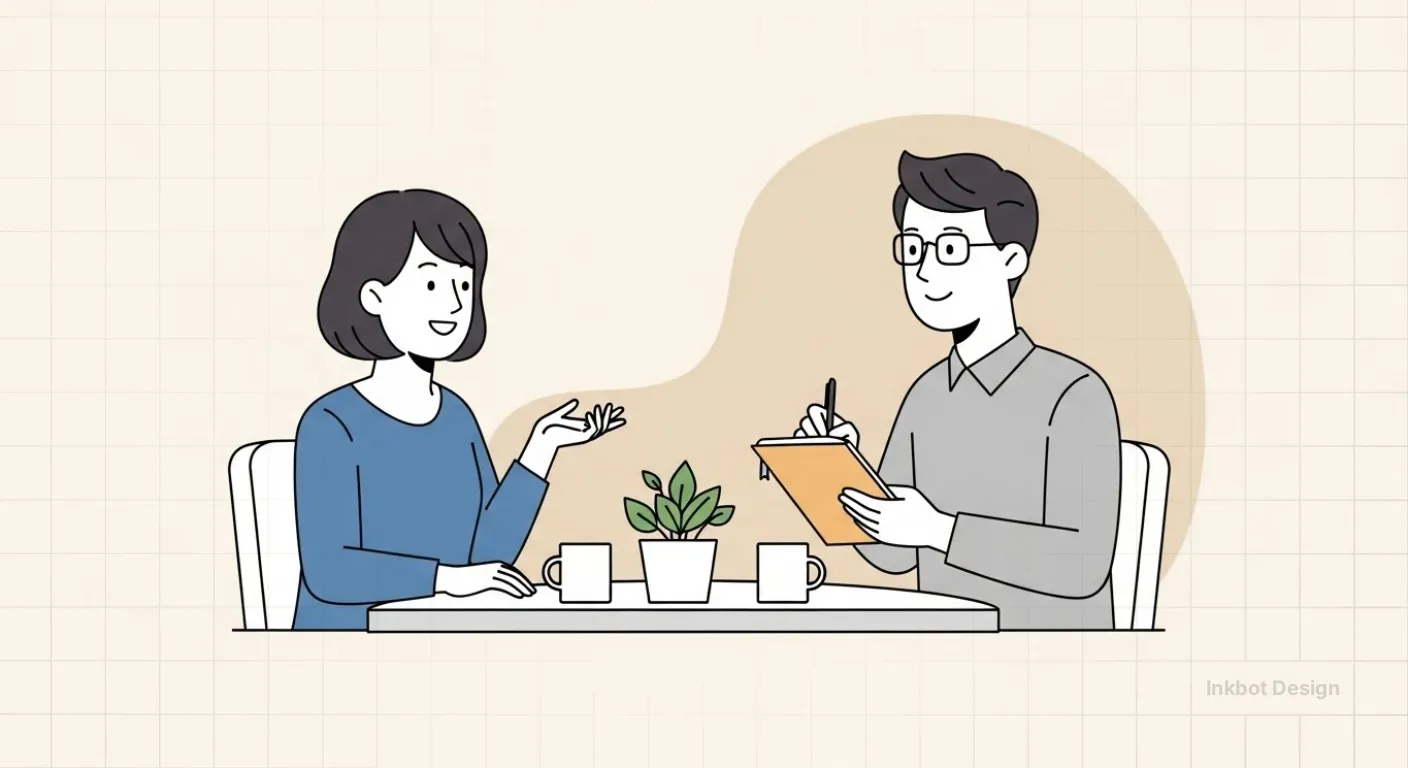
Define the buyer by the risk they manage, not by the service they buy.
A Managing Partner appointing an advisor is making a career-safe decision under scrutiny, and that fear governs the shortlist more than capability does.
Dentsu found that personal drivers now account for 42% of B2B buying decisions, up 10 percentage points since 2021 – buyers are protecting themselves, not optimising a spec sheet.
You know this stage is done right when you can name the specific internal consequence your buyer fears if they choose wrong.
The failure mode is profiling the buyer by demographics – sector, headcount, revenue – and missing the risk calculus that actually drives the decision.
Stage Two: Build the Credibility That Reduces That Risk
Build credibility deliberately, because trust is the number one driver of B2B brand choice, and it must exist before the buyer ever speaks to you.
Dentsu reports that trust has been the top driver of B2B brand choice for three consecutive years, and that buyers are most persuaded when signing feels safe.
Credibility is not a feeling you hope to leave behind after a meeting; it is an asset you build into every surface a buyer touches before the meeting.
You know this stage is working when references, case evidence, and positioning say the same thing without coordination.
The failure mode is treating credibility as something the sales team performs live, rather than something the brand has already established.
Stage Three: Position Against a Category, Not a Competitor List
Position the firm so a buyer can place it in a category and justify the choice internally – vague positioning forces the buyer to do that work, and most will not bother.
Dentsu found that well-known brands win business in 81% of cases, while brands known only to their target buyers win just 4% of the time.
The gap is not awareness for its own sake; it is the ease with which a buyer can defend the choice to colleagues.
You know positioning is working when a buyer can explain why they shortlisted you to someone who has never heard of you.
The failure mode is differentiating on attributes every competitor also claims – responsive, partner-led, commercial – which collapse into noise.
Stage Four: Sequence Outreach Behind Proof
Sequence outreach to follow credibility, never to precede it, because cold outreach into a trust vacuum converts at a fraction of the rate of outreach backed by visible proof.
Dentsu reports the competitive gap between the winning brand and the second choice has narrowed 78% since 2021. When firms look similar, the trusted one wins on margin alone.
This is the stage most firms invert: they scale outreach first and wonder why response rates fall. You know the sequence is right when prospects already recognise the firm when you make contact.
The failure mode is measuring outreach by volume sent rather than by whether the recipient already trusted the name on the email.
The Judgement Layer: Reading Whether the Problem Is Trust or Demand
When business development stalls, the instinct is to send more. The discipline is to ask a harder question first: is the market unaware of us, or unconvinced by us? Those are different problems with opposite fixes. Unawareness is a real problem. Unconvinced is a trust problem. Spending reaches the budget on a trust problem is the most common, most expensive mistake in professional services growth.
This is where 17 years of pattern recognition matter more than any framework. The diagnosis is not in the data alone – it is in reading whether your lost deals died at the awareness stage or the validation stage.
Forrester's 2026 predictions say B2B buyers are shifting from persuasion to proof, with trust becoming a strategic imperative, and that human expertise will matter more alongside AI as buyers seek deeper validation in complex purchases.
A firm losing at validation cannot outdo its way back; it has to fix what the buyer found when they checked.
The Step Everyone Does Too Late: Fixing Trust Before Scaling Reach
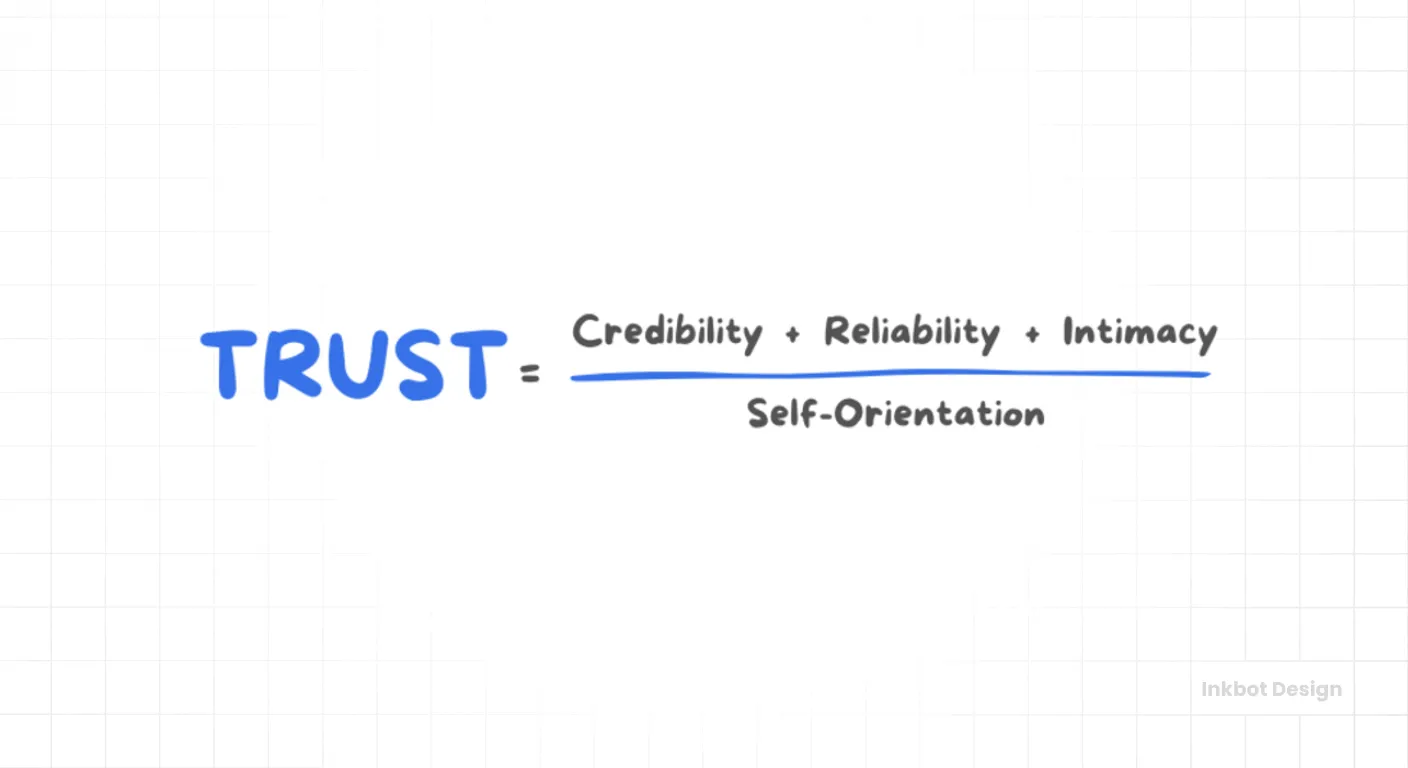
Here is the prevailing view, stated fairly: intelligent operators scale outreach first because outreach is measurable, controllable, and produces activity you can report on Monday. Brand work feels slow, soft, and hard to attribute.
That logic is reasonable – and it is the wrong order.
Branding does not generate demand. It pre-qualifies demand by making the right buyers willing to engage before sales get involved.
Corporate Visions' 2026 roundup cites Forrester data that 86% of B2B purchases stall during the buying process and 81% of buyers are dissatisfied with the provider they ultimately choose – evidence that the problem is rarely too few conversations, and usually too little conviction inside them.
A firm that fixes trust friction first finds its existing outreach suddenly converts, because the name now arrives pre-believed. The replacement directive is blunt: before you scale a single channel, audit whether the firms beating you have better outreach or simply a more trusted brand.
The 2026 Edelman trust reporting now places trust alongside price and quality as a purchase consideration. That is not a brand-team concern. It is a revenue constraint.
Branding does not create demand. It pre-qualifies it. In high-consideration sectors, the firm that wins is rarely the one that reached the most buyers – it is the one the right buyers already trusted enough to shortlist before anyone made a call.
The Verdict: Fix the Order Before You Fix the Effort
Business development in professional services is not a volume contest. It is a trust-transfer process, and the firms that win are the ones already on the buyer's list before the first conversation – because 92% of B2B buyers, on Dentsu's data, choose from a list they built before contact.
Everything in this guide follows from that single fact. Define the buyer by the risk they manage. Build credibility into every surface before outreach begins.
Position so the choice is easy to defend internally. Then, and only then, sequence outreach behind proof.
The firms that struggle have usually inverted this. They scale effort against a trust problem and read the flat pipeline as a reason to scale further.
The shift this article argues for is small to state and hard to do: when business development stalls, check the order of operations before you check the activity levels. A firm that loses at validation cannot make the shortlist.
It has to become easier to believe first.
The single action to take today: pull your last ten lost pitches and mark, honestly, whether each died because the buyer never knew you, or because they checked and were not convinced.
If most fall into the second column, your business development problem is a brand problem wearing a sales costume.
That is precisely what a Brand Equity Audit™ is built to diagnose: where your brand is losing commercial ground at the validation stage, and what to do about it.
Frequently asked questions
What is a business development strategy?
A business development strategy is a plan for generating sustainable revenue growth by identifying the right buyers, building the credibility that earns their trust, and sequencing outreach behind proof. For professional services firms, it serves as a trust-transfer system that puts the firm on buyer shortlists before the first sales contact.
Why isn't more outreach improving our pipeline?
Because outreach amplifies reputation rather than creating it, Dentsu reports that 86% of B2B buyers hold a day-one shortlist and 92% buy from it. If your firm is not already trusted, increasing outreach scales contact into a trust vacuum, which converts poorly. The constraint is usually credibility, not volume.
How does branding affect business development?
Branding lowers the cost of trust in the sales process. It carries consistency, competence, and dependability to the buyer before contact, reducing perceived risk. Dentsu reports trust as the top driver of B2B brand choice for three years running, which is why brand work shapes who reaches the shortlist.
What's the difference between branding and business development?
Business development is the process of converting market demand into revenue. Branding is the mechanism that pre-qualifies the demand by making the right buyers willing to engage. Branding does not replace business development; it determines how much friction business development encounters at the validation stage.
Is it true that branding generates leads?
No – branding does not directly generate leads. It pre-qualifies demand by making the right buyers willing to engage before sales get involved. The distinction matters commercially: brand work raises shortlist presence and conversion quality rather than raw lead volume, which is why attribution is harder, but the effect is real.
When should a firm rebrand for business development?
A firm should consider rebranding when it is losing deals at the validation stage, rather than the awareness stage – when buyers know the firm but are not convinced. Preparing for a growth phase, acquisition, or repositioning is the natural trigger, because trust friction compounds as deal scrutiny increases.
How do B2B buyers actually choose suppliers?
B2B buyers manage risk. Dentsu reports personal drivers now account for 42% of buying decisions, and buyers are most persuaded when signing feels safe. They build a shortlist early, favour firms they can defend internally, and reject 30% of brands before contact. Trust governs the process more than capability.
Why do firms with weaker outreach still win deals?
Because their brand reduces scepticism at the validation stage, Dentsu found that well-known brands win 81% of the time, versus 4% for brands known only to target buyers. A trusted name arrives pre-believed, so its outreach converts at rates that weaker-branded competitors cannot reach, regardless of volume.
How do I know if my problem is trust or demand?
Review your lost pitches. If buyers never knew you existed, it is a real problem solved by visibility. If buyers know you but are not convinced, it is a trust problem that can be solved by credibility and positioning. Spending reaches the budget on a trust problem is the most common growth mistake.
What does business development look like for professional services specifically?
For professional services, business development is reputation-led. Because services are high-consideration and high-risk, buyers shortlist based on trust before contact. Forrester's 2026 predictions note that buyers are shifting from persuasion to proof, which means credibility and validation matter more than outreach cadence in these sectors.
How long does it take to see results from a trust-led business development strategy?
Trust-led results compound rather than spike. Dentsu reports the average B2B decision now takes 54 days longer than in 2021, so credibility built today pays off across longer cycles. Firms typically see improved conversion on existing outreach first, before the new pipeline reflects stronger shortlist presence.
Where should a firm start if business development has stalled?
Start by diagnosing whether deals die at awareness or validation. Audit the credibility surface – website, proposals, references – for consistency before scaling any channel. A structured brand diagnostic identifies where trust is leaking at the validation stage, which is where most professional services pipelines quietly lose deals.