Law Firm Directory Migration: Name Change, Merger or New Practice?
A law firm name change does not give every directory permission to rewrite history. Classify the business change first, then decide which profiles to update, which records need explanation and which require publisher approval. Use a continuity register to track ownership, review provenance, contact routes and public verification after launch.
 By Stuart Crawford
 Reviewed by Tabitha Ayers
10 min read

On this page10 min left
- How should a law firm migrate directory listings?
- Should an existing Google Business Profile survive a law firm name change?
- Does a trading-name change differ from creating a new legal entity?
- What should a firm do when directory migration rules are ambiguous?
- How should a partnership delegate directory updates efficiently?
- Which directories should a law firm update first?
- Can a rebranded or merged law firm keep its existing Google reviews?
- What does predecessor recognition actually prove?
- Why does continuity matter in the current merger market?
- Will clients searching the old law firm name still find the practice?
- How does a firm determine that a directory migration is complete?
- Approve the continuity statement before the edits.
- Questions people ask
Law firm directory migration starts with deciding what the new name represents.
Confirm whether the practice is continuing under a different name, being combined with another business, or becoming a genuinely new operation.
Then check what each directory permits before updating profiles, reviews and contact details.
The cost of getting the basics wrong deserves attention.
In BrightLocal’s Local Business Discovery & Trust Report 2023, 62% of surveyed US consumers said they would avoid a business after finding incorrect information online. That measures stated intentions across local businesses, not losses following UK law firm rebrands.
Directory updates fall under law firm rebranding, but the job has a narrower purpose: to help someone connect the practice they knew with the practice they can instruct now.
That connection is one practical part of law firm branding. The new name needs an explanation wherever the old name is still recognised.
How should a law firm migrate directory listings?
Law firm directory migration requires an approved account of the business change, a register of existing listings and a platform-by-platform decision about updating or replacing records.
Coordinate the changes around the effective date, then check the public profiles, contact routes and historical evidence rather than assuming a submitted edit has finished the work.
- Confirm what continues before assigning the new identity to existing records.
- Check profile eligibility separately from the practice’s legal status.
- Record unresolved publisher decisions with an owner and next action.
Law firm directory migration updates business listings during a name change while preserving accurate connections to existing profiles, contact routes and reputation.
Should an existing Google Business Profile survive a law firm name change?
An existing Google Business Profile should only be retained if the platform’s policies permit an in-place update and the profile continues to reflect the same underlying commercial operation.
While maintaining the same legal entity with Companies House or the Solicitors Regulation Authority (SRA) provides useful supporting evidence, directories enforce their own platform rules for profile eligibility.
According to Google’s Business Profile Rebranding Guidelines, Google permits direct profile updates for minor name changes (defined as edits where core proper nouns, primary categories, and services remain consistent) as well as qualifying multi-location corporate rebrands.
When a firm undergoes a substantial change in ownership, practice scope, or legal succession, Google’s policy requires that the legacy profile be marked as permanently closed and a new profile be established.
Sweeping agency advice to "never delete an existing listing" or "always start fresh" ignores platform governance.
Updating an ineligible profile risks algorithmic suspension and review forfeiture, whereas creating an unnecessary duplicate fractures your local search equity.
Does a trading-name change differ from creating a new legal entity?
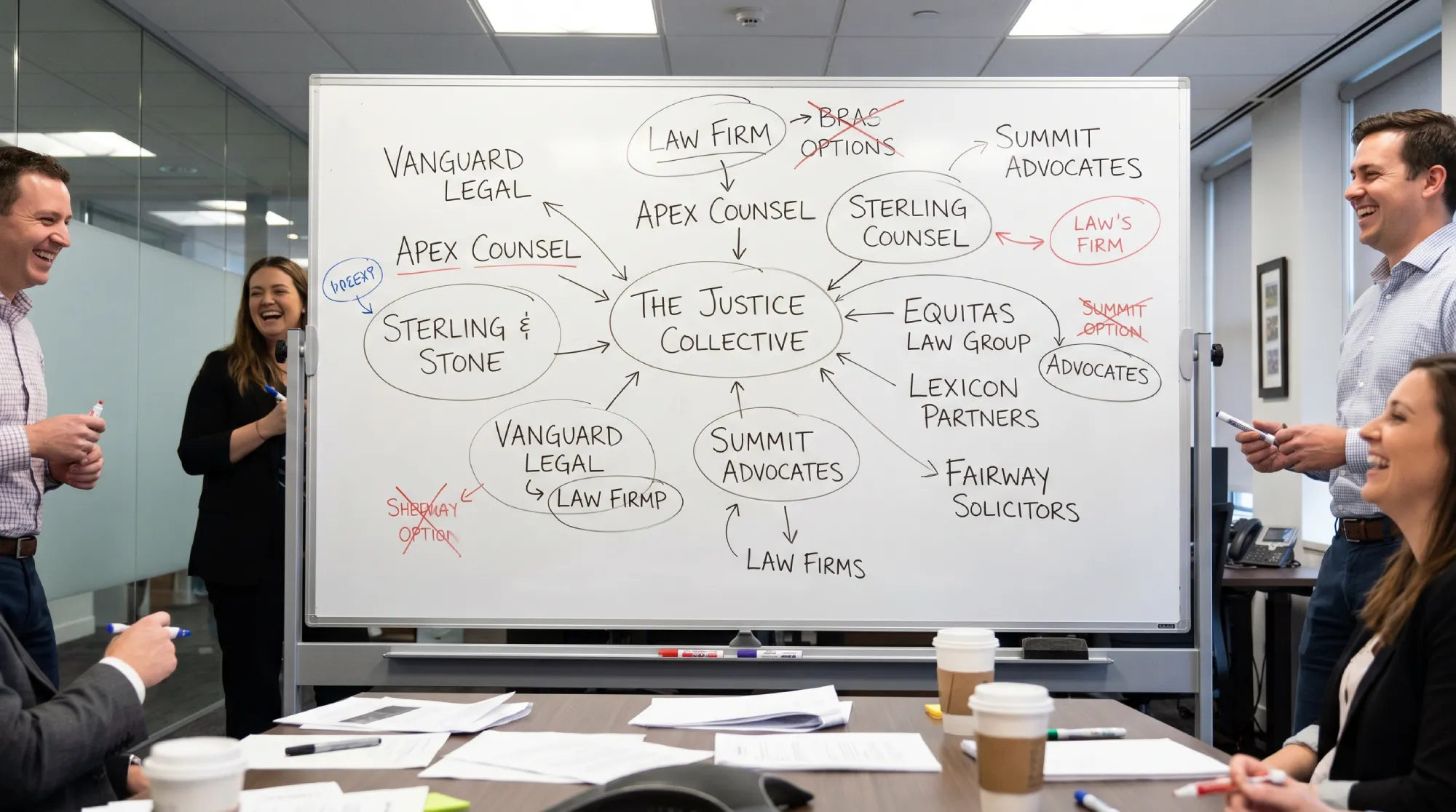
In UK law firm operations, a change of trading name does not necessarily constitute a new business entity. Still, external publishers assess profile eligibility based on factual continuity rather than on Companies House registration alone.
Legal counsel must confirm practice succession, while the marketing team determines whether each directory requires profile editing or replacement.
UK Legal Regulatory Consideration: Under the Solicitors Regulation Authority (SRA) Standards and Regulations, law firms in England and Wales must ensure all public communications, websites, and directory listings clearly state their registered legal entity name, authorisation number, and regulatory status. If your practice operates under a trading name that differs from the entity recognised on the SRA digital register, that distinction must remain fully transparent across all public directories.
Rebrand Scenario | Recommended Primary Action | Platform Policy Boundary to Verify |
|---|---|---|
Visual refresh (operating name unchanged) | Update logos, photography, firm descriptions, and URLs. | No profile migration required; verify image guidelines. |
Minor name amendment (e.g. dropping "& Partners") | Submit in-place name edit on existing verified profiles. | Check publisher’s definition of "minor edit" to avoid re-verification triggers. |
Entirely new trading name (same legal entity) | Prepare continuity evidence (SRA notice, Companies House certificate). | Unchanged corporate ownership does not guarantee eligibility for profile updates under Google's rules. |
Firm merger or combination | Map surviving offices; determine primary brand destination. | Do not assume predecessor profiles or historical reviews can be merged automatically. |
Partner split or boutique spin-off | Separate firm-level profiles from individual practitioner listings. | Historical client reviews cannot be taken with departing partners out of the firm. |
Relocation combined with rebrand | Stage the rebrand and address update sequentially where possible. | Simultaneous edits to name and address trigger severe anti-fraud reverification flags. |
What should a firm do when directory migration rules are ambiguous?
When platform guidelines do not clearly address your merger or renaming structure, escalate the case to the publisher’s support team before submitting irreversible edits.
Provide the former trading name, new brand name, legal entity documentation, effective transition date, and affected office addresses, requesting explicit policy confirmation on whether to update the existing listing or establish a new profile.
Consider a hypothetical scenario: an 18-partner commercial law firm in Manchester adopts a newly coined brand name while retaining its existing partnership structure, SRA authorisation number, offices, and legal teams.
Internally, leadership views the transition as a simple rename. However, because the proper nouns in the business name have completely changed, automated platform filters may classify the submission as a new business.
Checking platform eligibility before launch prevents unexpected suspensions or listing rejections.
How should a partnership delegate directory updates efficiently?

Appoint one migration lead with authority to coordinate marketing, operations and external suppliers. Ask partners to approve the identity statement and exceptions; do not ask partners to manage a queue of directory tickets.
A workable division is:
- Managing partner or delegated sponsor: approves the account of what changed.
- Marketing or operations lead: maintains the register and coordinates requests.
- Website and IT supplier: checks changed links and contact routes.
- Appropriate legal or regulatory adviser: confirms descriptions of the business.
- Directory account owner: submits the change and handles publisher questions.
These are recommended responsibilities, not a staffing requirement. A smaller practice may combine several roles. A multi-office merger may need separate office owners.
Build a continuity register with one row for each distinct profile. Include:
Publisher | Profile URL/ID | Office/person | Current details | Approved details | Account owner | Permitted action | Submitted | Published | Checked | Exception
Keep “submitted” and “checked” separate. An acknowledgement email proves that a request arrived, not that a prospective client sees the right information.
Add access problems before launch: an account held by a former employee, an unknown profile owner or a supplier without permission to edit. A spreadsheet cannot submit the request for you. Annoying, but relevant.
BrightLocal’s 2023 research found that 46% of US consumers identified correct contact information as important when looking for financial and legal services businesses.
Those categories were grouped. The finding supports checking the route to the practice, rather than treating the exercise as a logo replacement.
Which directories should a law firm update first?
Firms should prioritise directory updates based on the risk of client disruption, enquiry volume, and regulatory compliance rather than attempting to update hundreds of fringe citations simultaneously.
A broken telephone number or an incorrect address on a high-traffic listing harms a practice far more than an outdated logo on a secondary directory.
According to BrightLocal’s 2023 survey data, 28% of US consumers state their first reaction to encountering an incorrect business address is to seek an alternative provider.
While this measures general consumer intentions rather than commercial legal instructions, it emphasises that errors in physical location pose an immediate commercial risk.
Directory Prioritisation Tiers for UK Law Firms:
- Tier 1: Primary Search Engines & Regulators (Day 1): Google Business Profile, Apple Maps, Bing Places, and the official regulatory register (Solicitors Regulation Authority / Law Society of Scotland / Bar Standards Board). Correcting regulatory data and primary map pack pins prevents misdirection.
- Tier 2: Legal Sector Authority Platforms (Week 1–2): The Legal 500, Chambers and Partners, ReviewSolicitors, and The Law Society ‘Find a Solicitor’ directory. These profiles drive high-intent commercial evaluation during partner combinations.
- Tier 3: Commercial & Corporate Aggregators (Month 1): Thomson Local, Yell, Central Index, Yelp, Dun & Bradstreet, and relevant local Chamber of Commerce listings.
Assemble a standardised Directory Migration Data Pack before initiating requests:
- Approved new trading name, legal entity name, and formal effective date.
- Clear statement explaining the continuity between legacy and new brands.
- Office-specific postal addresses, primary local telephone lines, and canonical landing page URLs.
- Vector and high-resolution web logo assets, exterior office signage photography, and partner headshots.
- SRA certificate of authorisation, Companies House name-change certificate, or partnership letterhead.
Can a rebranded or merged law firm keep its existing Google reviews?
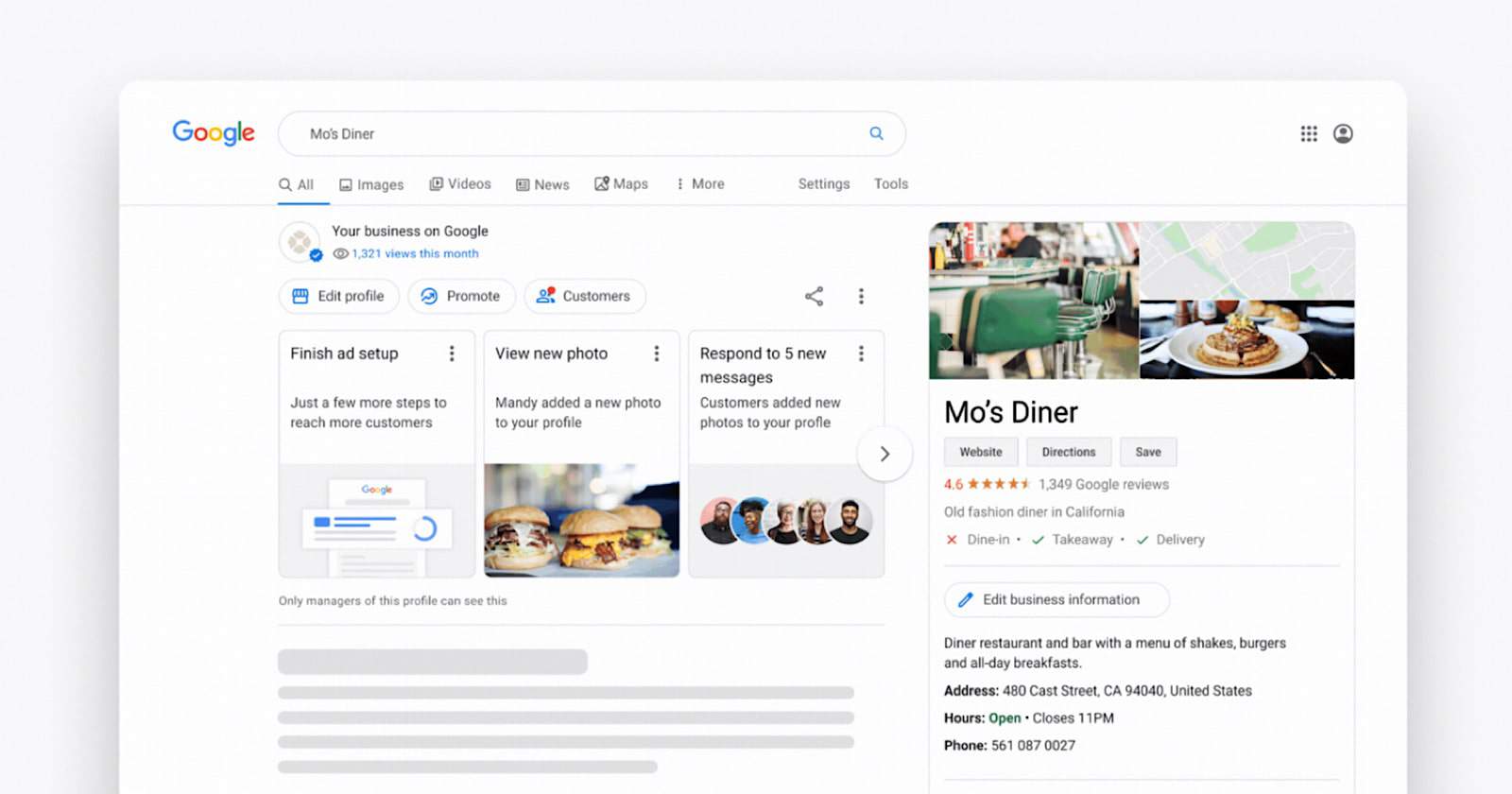
A rebranded law firm can retain its Google reviews if the update qualifies under Google’s policies as a continuing business or multi-location corporate rename.
If the platform determines that a merger, acquisition, or restructuring constitutes a substantially new commercial enterprise, historical reviews may not be carried over to the new profile.
According to Google’s published support documentation, reviews remain attached to a listing during eligible minor name amendments and qualifying multi-location rebranding programmes.
In complex firm mergers or practice consolidations, Google evaluates review transfers on a case-by-case basis; reviews cannot be arbitrarily migrated across unrelated accounts or stripped of context.
What does predecessor recognition actually prove?
Predecessor recognition proves what the original assessment established, within its original scope. A new practice name does not expand that scope.
Chambers Associate, the legal careers publication, provides a useful example.
The 2026 Ashurst Perkins Coie profile expressly states that the underlying Inside View research was conducted with legacy Perkins Coie associates before the combination. The current name and the provenance of the research appear together.
That is an observable editorial choice, not a documented directory-migration success story. The example does not prove that rankings transferred or enquiries improved.
The useful distinction is narrower: a publisher can update the identity while explaining whose experience the historical evidence describes.
For a smaller practice, apply the same reasoning to a testimonial about a departed partner, a ranking for a particular department or research conducted before a merger. Ask what the evidence actually covers before presenting the evidence as a claim about the whole current practice.
Why does continuity matter in the current merger market?
Law firm combinations continue to create public-facing identities with multiple histories. Fairfax Associates, the legal management consultancy, recorded 58 completed mergers in the first three quarters of 2026, compared with 61 in the equivalent period in 2025.
The figure provides context for consolidation; it is not a count of UK mergers or directory migrations.
One supplied example shows the scale of the information problem. Ashurst Perkins Coie announced completion of the combination on 28/06/2026, describing 52 offices across 20 countries and regions.
That announcement establishes the combined identity and announced footprint. It does not establish how every predecessor record should be handled.
The Chambers Associate notice addresses a different question: when was the research conducted, and with which predecessor population?
Keeping those questions separate avoids treating an updated heading as evidence that everything beneath the heading describes the combined organisation.
The principle applies without the international scale. A regional practice combining with another practice still needs to distinguish office histories, current teams and evidence collected before the combination.
A Google-only plan is also too narrow. BrightLocal’s Local Consumer Review Survey 2026, conducted with a representative panel of 1,002 US adults, reports that consumers use an average of six review sites when choosing businesses.
That is not a legal-services-specific result, but it supports checking multiple public sources.
The replacement directive is practical: give each historical claim a scope. Identify the predecessor, department, person or period where that information changes what a reader should infer.
Do not rewrite the history to tidy the branding.
Will clients searching the old law firm name still find the practice?

Maintaining visibility for legacy brand queries requires publishing an explicit transition landing page on your primary website and maintaining functional technical redirects from historical directory citations.
Search engines require structured evidence connecting the former trading name with the continuing entity.
Do not attempt to capture legacy brand queries by adding explanatory text, such as "Formerly Smith & Jones Solicitors", to your Google Business Profile name field.
Google’s Business Profile naming policies explicitly require the title to reflect your real-world business name as consistently displayed across physical office signage, letterheads, and partner business cards.
Inserting extraneous descriptors into the profile name triggers algorithmic suspension.
Recommended Technical Protocol for Legacy Brand Queries:
- Publish a Dedicated Transition Hub: Create an indexed page (e.g., /practice-update/smith-jones-merger/) explaining the rebrand, effective date, surviving partner assignments, and practice transitions.
- Deploy Structured Schema Markup: Populate your website’s Organization schema with the alternateName or legalName properties referencing the predecessor entity.
- Audit Predecessor Inbound Links: Ensure that external directory links referencing the former domain or retired URLs resolve via 301 redirects to the exact departmental or office landing page, not a generic homepage.
- Execute Legacy Journey Testing: Audit the exact paths legacy clients use:
- Former practice name + town/city (e.g., "Smith Jones Manchester").
- Former partner name + predecessor firm.
- Direct clicks on historical Legal 500 or Chambers profiles.
- Incoming reception telephone calls from legacy directory numbers.
How does a firm determine that a directory migration is complete?
A directory listing migration is complete only when the live public listing displays approved branding, routes prospective clients to working destinations, and preserves historical review attribution.
An automated submission confirmation from a directory publisher does not constitute a completed migration.
Verification Vector | Public Quality Standard | Operational Validation Method |
|---|---|---|
1. Entity Identity | Displayed name matches the approved trading name without policy-breaching keyword stuffing. | Inspect public listing across mobile and desktop incognito browsers. |
2. Contact Routes | Telephone number connects to the active office; website link lands on canonical HTTPS page. | Place a physical test call; click the live URL and check for redirect loops or broken parameters. |
3. Location Accuracy | Pin placement and address match current operational office suites. | Verify the accuracy of map pins on Google Maps, Apple Maps, and Bing Maps. |
4. Visual Presentation | High-resolution vector-rendered logo, updated office signage, and correct exterior photos. | Confirm firm-managed imagery appears prominently above outdated crowd-sourced imagery. |
5. Historical Reviews | Reviews remain intact with appropriate editorial attribution. | Audit review counts against pre-migration baseline numbers; flag dropped reviews immediately. |
6. Verification Status | Profile is fully verified, with no pending reverification banners. | Inspect GBP dashboard; confirm absence of reverification notices or suspension warnings. |
Critical Google Verification Protocol: Google explicitly warns that altering a verified business name may automatically trigger a re-verification requirement. Never attempt to edit the business name, address, or primary category while a postal verification code or video verification review is in progress; submitting modifications during this window invalidates the code and restarts the verification cycle.
Approve the continuity statement before the edits.
A directory migration needs an accurate account of what survives the name change. The profile decision follows platform rules; the treatment of historical evidence follows what that evidence actually describes.
Appoint the owner and approve that account before distributing update requests.
A capable internal team can manage straightforward changes. Use a specialist platform or technical support when eligibility, account access, or changes to contact infrastructure create uncertainty.
If the migration exposes a wider gap between the practice’s capability and public identity, request Inkbot Design’s free Brand Equity Audit™.
The diagnostic examines positioning and brand presentation; it does not replace directory approval or technical implementation.
Today’s action: approve one continuity statement and give one person responsibility for applying it.
Questions people ask
Why might Google require re-verification when the law firm address has not changed?
Google frequently triggers re-verification when a verified business changes its trading name, even if the physical address remains the same. Google’s fraud-prevention algorithms treat significant name modifications as potential evidence of a change in business ownership. Practice managers should monitor the Google Business Profile dashboard closely following an edit and prepare official verification evidence—such as lease agreements, SRA certificates, and exterior entrance signage.
Can our firm add "Formerly Known As" to our Google Business Profile name?
No. Google’s Business Profile naming policies strictly prohibit the inclusion of extraneous descriptors, former trading names, or marketing taglines in the business title field. The name displayed on your listing must match your real-world trading name as displayed on physical signage and stationery. Attempting to capture legacy search traffic by adding "Formerly [Old Name]" risks algorithmic profile suspension. Instead, capture legacy searches by publishing a dedicated rebrand transition page on your website.
Does a law firm rebrand necessitate changing the primary website domain?
No. Rebranding a legal practice does not automatically require acquiring a new website domain. Retaining an established domain name preserves years of accumulated backlink authority and search equity. If leadership chooses to migrate to a new web address to reflect the new brand name, the transition must be executed as a dedicated technical domain migration, including 301 redirects, Search Console change-of-address notifications, and backlink updates, managed separately from directory profile updates.
Do we need to notify the SRA before updating external legal directories?
Yes. In England and Wales, the Solicitors Regulation Authority (SRA) must be formally notified of changes to your firm's trading name, legal entity structure, or practising address before those details are published across external platforms. Updating external directories with an unapproved trading name can breach SRA Transparency Rules. Ensure the SRA digital register is updated first, then cascade the approved details across external directories.
When should a law practice engage a specialist supplier for directory migration?
A practice should engage an external directory specialist when the volume of multi-office citations exceeds internal administrative capacity or when complex profile ownership disputes arise. The contract must guarantee that the firm retains absolute administrative ownership of all accounts and that the internal leadership team retains sole authority over the legal continuity statement.