Law Firm Spin-Off Branding: What Must Survive the Separation?
A law firm spin-off creates a difficult branding challenge: clients must understand what remains familiar while recognising why the new practice deserves their confidence. Naming, positioning and visual identity all matter, but the decisions must start with reputation, professional relationships and the commercial reason for operating independently.



On this page9 min left
- What Is Law Firm Spin-Off Branding?
- What Must Clients Continue to Trust After the Separation?
- Should We Use Partner Surnames or an Independent Name?
- What If Another Firm Already Uses Our Name?
- Will the Name Survive Changes in the Partnership?
- What Do We Actually Need at Launch?
- How Do We Compare Branding Proposals Without Paying for Unnecessary Work?
- A Spin-Off Brand Must Earn Its Independence
- Questions people ask
A law firm spin-off is a trust-transfer exercise. The departing partners must preserve the confidence clients already have in their expertise while giving them a compelling reason to choose the independent practice.
That is a more demanding job than designing a new logo.
The Legal Services Consumer Panel's 2026 survey found that 89% of legal-services consumers in England and Wales considered reputation important when choosing a legal services provider.
The new practice therefore has a commercial problem to solve before its new identity appears on a website.
A good starting point is to understand the broader discipline of law firm branding services and how an independent practice should approach law firm rebranding.
What Is Law Firm Spin-Off Branding?

Law firm spin-off branding is the process of establishing an independent legal practice after partners separate from an existing firm, while preserving client confidence in the expertise, relationships and professional reputation that continue.
The work involves defining the new firm's market position, choosing an appropriate name, creating a visual identity and communicating the separation clearly.
Three principles matter:
- Retain: Professional expertise, partner relationships and client confidence that legitimately continue.
- Replace: Institutional assurances, organisational recognition and brand associations that belonged to the predecessor.
- Establish: A commercial reason for clients to choose the independent practice.
Law firm spin-off branding must answer two questions simultaneously: what remains familiar, and what becomes better for the client?
What Must Clients Continue to Trust After the Separation?
Clients need to understand which people, expertise and service commitments continue after a legal practice separates from its former organisation.
The mistake is assuming that clients automatically transfer their confidence from the old firm's name to the new one.
They do not necessarily do that.
The Legal Services Consumer Panel's 2026 survey provides useful context.
Its research found that 89% of legal-services consumers in England and Wales considered reputation important when selecting a legal services provider.
The same survey found that 83% considered specialist expertise important.
The research involved 3,802 people who had used legal services in the previous two years. The findings concern consumer attitudes, not corporate general counsel specifically.
These figures establish two separate considerations for a departing practice: professional reputation and demonstrable expertise.
Neither is communicated particularly well by a newly designed logo.
Separate personal reputation from institutional reputation
A departing partner may have spent 20 years developing relationships with corporate clients, accountants, referral partners and other professional contacts.
Those relationships have value.
However, some of the confidence attached to the former practice may have come from its organisational history, existing infrastructure, established processes or wider professional network.
The new practice must identify which assurances it can genuinely continue to provide.
Reputation asset | Branding consideration |
|---|---|
Partner expertise | Demonstrate relevant experience and specialisation |
Existing professional relationships | Communicate continuity where appropriate |
Practice history | Explain which credentials and achievements legitimately remain attributable |
Organisational infrastructure | Establish the new firm's actual service capabilities |
Client service commitments | Explain who handles matters and how communication continues |
A 12-partner commercial litigation practice, for example, might retain its senior lawyers and established client relationships but operate under a different ownership structure with new administrative arrangements.
The brand must communicate that distinction accurately.
Give clients a reason to prefer the independent practice
The new firm's independence needs a substantive explanation.
Perhaps the departing partners intend to concentrate on corporate disputes rather than maintaining a broad commercial offering. Perhaps the new ownership structure allows clients to work directly with senior partners. Perhaps independence creates a more focused service model.
Those are possible positioning directions, not assumed benefits. Each needs to be true of the actual practice.
The Legal Services Consumer Panel's 2026 survey found that 42% of legal-services consumers reported shopping around before choosing a provider. Among those who shopped around, 52% compared reputation and 57% compared price.
The shopping-around comparison involved 1,606 respondents, rather than the full survey sample.
The new practice therefore needs a proposition that survives comparison.
A statement such as "exceptional legal advice from experienced professionals" tells a prospective client very little. A clear explanation of the disputes the practice handles, the clients it serves and the expertise of its partners gives the buyer something to assess.
The practical priority is to establish the new firm's commercial proposition before commissioning its visual identity.
Should We Use Partner Surnames or an Independent Name?
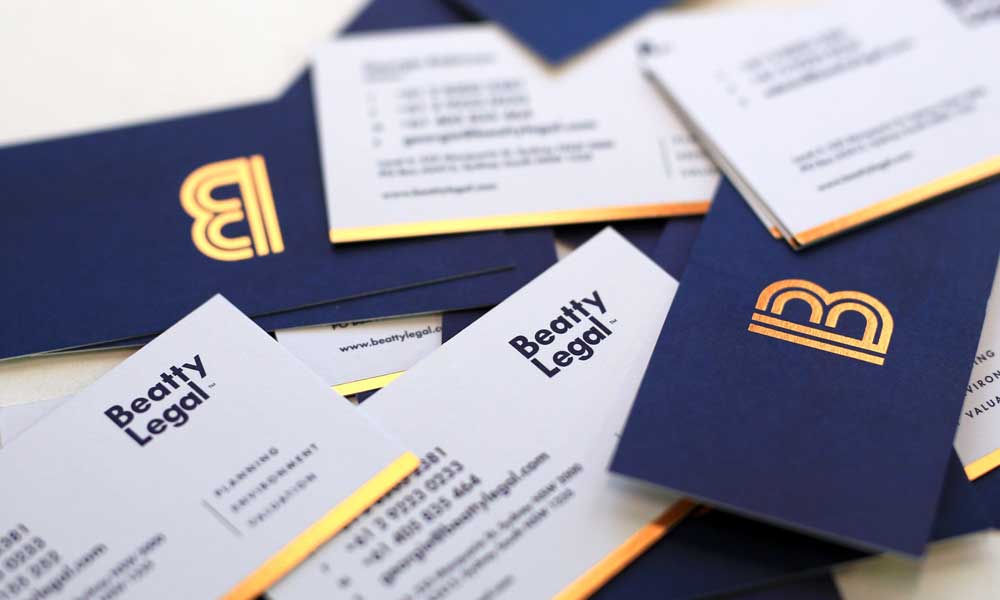
Partner surnames can provide immediate recognition, particularly when the departing partners already have established reputations in their market.
An independent name offers several advantages, including greater flexibility as the partnership evolves.
Neither option is automatically superior.
When partner surnames make commercial sense
A surname-based identity may be appropriate when:
- The founding partners have established individual reputations.
- Existing clients already associate those names with the relevant expertise.
- The partners expect the ownership structure to remain relatively stable.
- The proposed name meets applicable professional and legal requirements.
Consider a hypothetical eight-partner employment law practice leaving a larger regional firm.
If three founding partners generate most of the practice's referral relationships, using their surnames may provide a recognisable starting point.
However, the partners must consider what happens when one retires, another leaves or the ownership structure changes.
A name is a long-term commercial decision. It should not be chosen solely because the founding partners like seeing their names on a building.
When an independent name makes more sense
An independent identity may be preferable when the practice expects to recruit additional partners, expand into other locations or establish a market position that does not depend on individual founders.
The trade-off is recognition.
An unfamiliar name may require more explanation during the initial separation. The departing partners must support the new identity with clear credentials, partner biographies, practice information and consistent communications.
Naming consideration | Partner surnames | Independent name |
|---|---|---|
Existing personal recognition | Potential advantage | Must be established |
Future partner changes | May require explanation | Usually more flexible |
Recruitment | Can depend on founder recognition | Can support a wider partnership identity |
Positioning | Often founder-led | Can express a wider market proposition |
Brand continuity | Depends on surname ownership and usage | Depends on consistent management |
The decision should follow the partnership's expected future, not a preference for traditional legal naming conventions.
What If Another Firm Already Uses Our Name?
Check the proposed name before paying for visual identity development.
Start with existing legal practices, company records, trademark databases, relevant domain names and search results. These are preliminary checks, not a substitute for legal clearance.
The partnership should then obtain advice on applicable intellectual property and professional naming requirements before approving the name.
A search result showing an apparently unused domain does not establish that a business name is legally available.
A practical preliminary review should consider:
- Existing legal practices using the same or similar names.
- Relevant trademark registrations and applications.
- Domain availability and ownership.
- Search results showing competing organisations.
- Applicable Solicitors Regulation Authority requirements.
The fifth point requires particular care. Naming, advertising and professional compliance questions should be checked against current regulatory requirements by an appropriately qualified legal professional.
Check the name before commissioning the identity.
A hypothetical three-partner practice might spend several weeks developing a name, logo and website concept before discovering that an established legal business already operates under a confusingly similar identity.
The design work then becomes a sunk cost.
The sensible sequence is preliminary naming research, legal and regulatory clearance, domain assessment and only then final identity development.
For a practice emerging from a merger or a partnership restructuring, the considerations may differ. The separate question of law firm merger naming strategy deserves its own assessment.
Will the Name Survive Changes in the Partnership?
A law firm's name should reflect the organisation the partners intend to build, not simply the people who happen to own it at launch.
This is particularly relevant when a spin-off involves founding partners approaching retirement or a planned recruitment programme.
A surname-based practice might begin with three partners and grow to 15. Another partner might leave after five years. The original name may still work perfectly well, but the partners should have considered that possibility before launch.
Treat succession as a branding decision.
A useful naming discussion should include:
- What happens when a named partner retires?
- Can the practice retain the existing name?
- Will incoming partners expect their surnames to be added?
- Does the name restrict future practice-area expansion?
- Who controls the brand and its associated intellectual property?
The answers should form part of the partnership's wider governance and ownership discussions.
A generic independent name is not necessarily the answer. A practice built on the reputation of two exceptional founding partners may gain greater commercial recognition by retaining their names.
The important point is to make that choice deliberately.
The best name is one the partnership can explain, own and continue using as the business develops.
What Do We Actually Need at Launch?
A departing partnership needs the materials required to operate under its new identity from the first working day.
Start with the practical items: an approved name, identity files, website, partner biographies, email signatures, letterhead and client communications.
A practice with eight partners and one office may need a relatively simple website. A 35-partner practice operating across three offices and five specialist groups needs a more considered structure, particularly if clients must find individual teams quickly.
Do not commission 30 pages because an agency has included them in its proposal. Each page should serve a genuine client, recruitment, or business development requirement.
Launch requirement | Commercial purpose |
|---|---|
Brand positioning | Explains the new firm's market position and specialisation |
Name and logo | Establishes an identifiable independent practice |
Visual identity guidelines | Keeps communications consistent |
Website | Explains services, expertise, partners and contact routes |
Email signatures and letterhead | Supports everyday professional communications |
Partner biographies | Establishes relevant experience and credibility |
Client communications | Explains continuity and the new organisation |
LinkedIn and directory profiles | Makes the independent identity discoverable |
The website should answer practical questions quickly.
Who are the partners? Which practice areas does the new firm handle? What types of clients does it serve? How can an existing client contact the relevant lawyer?
A prospective client should not need to investigate three pages before discovering whether the practice handles their legal matter.
Existing clients need a separate communication plan. The explanation of the separation should be accurate, appropriately timed and consistent with the partnership's actual arrangements.
The work involved in preserving client relationships through a legal rebrand deserves particular attention where client confidence is commercially important.
Build what the practice needs to operate and communicate professionally. Add the wider marketing programme when the commercial case exists.
How Do We Compare Branding Proposals Without Paying for Unnecessary Work?

A branding proposal should explain the business problem, the work required to address it and what the client will receive.
A long presentation is not evidence of strategic ability.
Neither is an attractive logo concept.
Managing Partners should compare proposals against the same requirements rather than comparing headline prices without understanding the scope.
Questions to ask every branding agency
Evaluation question | What a credible answer should contain |
|---|---|
What are you actually solving? | A clear explanation of the positioning and reputation challenge |
How will you approach naming? | A defined research and assessment process |
What does the identity package include? | Specific deliverables and usage requirements |
Is website development included? | Scope, functionality, content responsibilities and exclusions |
Who owns the finished work? | Clear intellectual property and handover arrangements |
How will success be assessed? | Defined business objectives and measurable indicators |
Ask each agency to separate strategy, naming, visual identity, website development and implementation.
If one proposal includes a 30-page website, ask which pages support the new firm's practice areas, client journeys or recruitment objectives. If nobody can explain their purpose, remove them from the scope.
If another agency promises first-page Google rankings within six months, ask what they control and what they are assuming. No branding agency can guarantee a particular search position.
Pay for defined work. Not presentation theatre.
A smaller project may be appropriate for a three-partner practice with an established proposition and straightforward launch requirements.
A 40-partner, multi-office spin-off with several practice groups may require more extensive stakeholder research, brand architecture and implementation.
The scope should reflect the actual business.
A Spin-Off Brand Must Earn Its Independence
A new legal practice inherits some things from its former organisation and loses others.
The partners may retain their professional expertise and client relationships. They may not retain the institutional recognition, infrastructure or organisational assurances that previously supported those relationships.
That distinction should determine the branding brief.
The Legal Services Consumer Panel's 2026 research reinforces the importance of reputation and specialism in legal-services purchasing decisions. A new name and identity cannot substitute for either.
The right starting point is a clear record of what survives, what must be established and why the independent practice offers clients a worthwhile alternative.
If your partnership is preparing to separate, begin with a diagnostic rather than a logo commission.
Inkbot Design offers a free Brand Equity Audit™ to identify where your existing brand is losing commercial ground and what needs attention. It provides a structured starting point for deciding what your new legal practice needs before investing in its identity.
Questions people ask
How long does it take to brand a new law firm after a spin-off?
The timescale depends on the number of partners, naming decisions, regulatory checks, website requirements and launch arrangements. A straightforward identity project requires less work than a multi-office practice with several specialisms. Agree on the launch date and critical deliverables before commissioning the project.
Should departing partners keep the old firm's name?
No — not automatically. The departing partners must establish whether they have the right to use the existing name and whether doing so accurately represents the new organisation. A fresh identity may be more appropriate where ownership, reputation or the former firm's continued operations create confusion.
Can a new law firm use the names of retired partners?
Potentially, subject to the relevant legal, professional and naming requirements. The partnership should agree how the name will be used, who controls it and what happens if the retired partner's relationship with the practice changes. Obtain appropriate legal and regulatory advice before committing.
Does a law firm spin-off need a completely new website?
No — the new practice needs a website that accurately represents its independent organisation, services, partners and contact arrangements. A complete redesign may be justified, but the scope should reflect the new positioning and functionality requirements rather than an arbitrary page count.
How should a law firm announce a spin-off to existing clients?
Existing clients should receive clear, appropriately timed communication explaining the organisational change, the relevant people, how to contact the new practice and any practical implications for their matters. The wording must accurately reflect the actual arrangements and any applicable professional obligations.
Should a law firm hire a branding agency or manage the spin-off internally?
A partnership with an experienced marketing or design resource may enable a straightforward identity project to be managed internally. A more complex separation involving positioning, naming, multiple practice areas and website development may justify specialist external support. Compare suppliers on strategic scope, deliverables, ownership and accountability.