Internal Branding and Culture in the AI Era: 2026 Guide
Internal branding is no longer about “getting people on board” with a vision; it is about debugging the interface between human talent and AI automation.
If your culture does not explicitly define how your people interact with Large Language Models (LLMs), your external Brand identity is a fiction that the market will expose within months.
The stakes for getting this wrong are terminal.
According to a 2025 Gartner report, firms that fail to align their internal culture with their external AI deployments see a 30% drop in consumer trust within the first year.
Most SMB owners treat culture as a soft asset—a collection of perks and platitudes. In reality, culture is the operating system of your business. If the OS is buggy, the output—your customer experience—will fail.
- Operationalise values and define human-AI interaction so culture acts as the business OS, preventing brand leakage and rapid consumer trust loss.
- Replace aspirational values with actionable, auditable operational directives that can be encoded into internal LLMs and everyday workflows.
- Build a governed AI-native infrastructure: private brand nodes, continuous sentiment mapping, and human-in-the-loop audits to meet UK regulations and protect brand.
What Is Internal Branding?
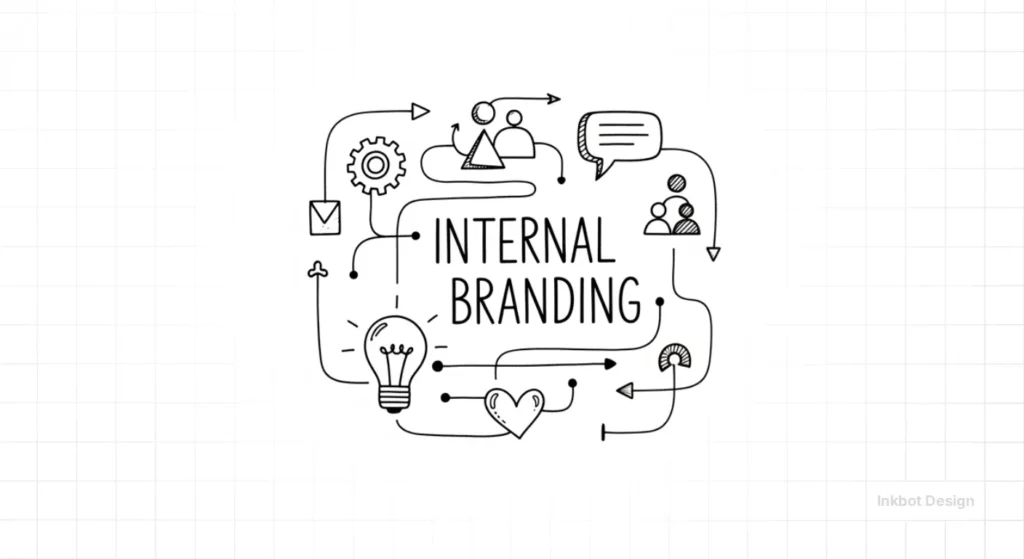
Internal branding is the strategic process of aligning a company’s internal culture, employee behaviours, and operational values with its external brand identity to ensure the brand promise is delivered consistently at every touchpoint.
Key Components:
- Value Operationalisation: Converting abstract principles into specific, measurable employee actions.
- Human-AI Synergy: Defining the cultural norms for how staff use generative tools to represent the brand.
- Feedback Loops: Mechanisms that allow internal culture to inform and evolve the external brand strategy.
Internal branding is the strategic alignment of a company’s internal culture and values with its external brand identity to ensure consistent delivery of the brand promise.
Navigating the 2026 Internal Branding Hub
To help you implement these changes systematically, we have structured this guide across four Topical Continents.
Each section is designed to be actionable, whether you are a founder, an HR lead, or a technical director.
- The Strategic Foundation: Defining operational values and replacing aspirational myths.
- The Technical Infrastructure: Implementing the AI tech stack and custom brand nodes.
- The People Framework: Recruiting for “Culture Add” and fostering neuro-inclusive environments.
- The Governance Layer: Navigating UK AI regulations and leadership accountability.
Why Your Brand is Leaking
Most UK businesses are currently suffering from a “culture leak” where internal reality is being broadcast externally through unvetted AI outputs.
When employees use LLMs like ChatGPT or Gemini without a clear internal brand framework, they produce generic, off-brand content that dilutes the company’s hard-earned reputation.
McKinsey & Company’s 2024 report on AI adoption found that 55% of organisations have no formal guidelines on the “voice” of AI-generated content.
This lack of internal branding leads to a fragmented identity.
A brand is not just what you say in your marketing; it is the sum of every interaction. If your support team is using AI to write emails that sound like a robotic California tech firm, but your brand identity is “Belfast Grit,” you have a systemic failure in internal branding.
“Internal branding in 2026 is the primary defensive measure against brand dilution caused by unmanaged AI usage. Companies must move beyond simple policy documents and instead embed brand-specific ‘logic’ into the daily workflows of their teams to ensure that every automated output remains authentically aligned with the core identity.”
The Myth of Aspirational Values
The most expensive mistake a founder can make is believing that company values should be aspirational.
For decades, consultants have told SMBs to pick words like “Integrity,” “Innovation,” and “Excellence.” These are not values; they are the table stakes for existing in a civilised society.
The 2001 collapse of Enron remains the definitive warning: the firm had “Integrity” carved into the marble of its headquarters while its culture was built on systemic fraud. In 2026, aspirational values are worse than useless—they are an invitation for cynicism.
Employees do not need to be told to be “excellent”; they need to know what to do when a client asks for a refund or when the AI produces a hallucinated data point.
Replace aspirational fluff with operational directives.
Instead of “Customer First,” use “We respond to every query within 120 minutes, even if we don’t have the answer yet.” This is citable, measurable, and buildable.
The “Values as Code” Alternative
In 2026, think of your values as the prompts for your business. If you fed your values into an LLM, would it produce a result that looks like your company?
If the answer is “no” because the values are too generic, you haven’t defined your culture. You’ve just written a poem.
Aspirational values create a ‘cynicism gap’ that destroys employee engagement and brand authenticity. To remain relevant in 2026, businesses must transition to operational values—specific, non-negotiable behaviours that can be audited by humans and mirrored by AI systems to ensure the brand remains a coherent entity.”
Establishing Your Internal Branding Infrastructure
In 2026, culture is no longer a “vibe”; it is a set of configured permissions and trained data nodes. For a UK small business to maintain a coherent identity, the leadership must provide the tools that make brand-consistent behaviour the path of least resistance.
The Core Stack: Moving Beyond Spreadsheets
To prevent the “brand leakage” discussed previously, your firm requires a technical ecosystem that enforces your operational values.
- Custom LLM Nodes (The Brand Brain):
Instead of allowing staff to use generic public models, successful UK firms are deploying “Brand Nodes.” These are private instances of models like Claude 4 or Gemini 2.0, pre-loaded with your company’s entire historical output, tone-of-voice guides, and past successful proposals. This ensures that every AI-assisted email or report is “born” with your internal brand identity. - Real-Time Sentiment Mesh:
Static annual surveys are obsolete. 2026 leaders use anonymised sentiment analysis tools (like VibeCheck UK or CulturePulse) that integrate with Slack or Microsoft Teams. These tools provide a weekly “Culture Temperature” that spots burnout or brand misalignment before it reaches the customer. - Digital Asset Governance:
Tools like Canva Enterprise 2026 or Adobe GenStudio now allow founders to lock specific “Brand Logic” into place. If an employee attempts to generate an image that contradicts your visual identity, the tool provides a real-time correction against your internal brand parameters.
Comparative Infrastructure Requirements 2026
| Tool Category | 2022 Requirement | 2026 Requirement (Pro) | Impact on Brand |
| Communication | Email & Newsletters | AI-Augmented “Town Hall” Bots | Consistent messaging 24/7 |
| Training | Static PDF Manuals | Interactive VR/AI Roleplay | 4x faster brand adoption |
| Feedback | Annual Surveys | Continuous Sentiment Mapping | Real-time cultural debugging |
| Content | Human-only Approval | Automated Brand-Logic Guardrails | Zero “Grey Goo” output |
Gen Alpha employees report that they “distrust” any brand identity that isn’t reflected in the tools they use. If your internal tech stack feels “clunky” or “old-fashioned,” your external promise of “innovation” is immediately invalidated in the eyes of your most important advocates—your staff.
Internal Branding in 2026: The Rise of Algorithmic Culture
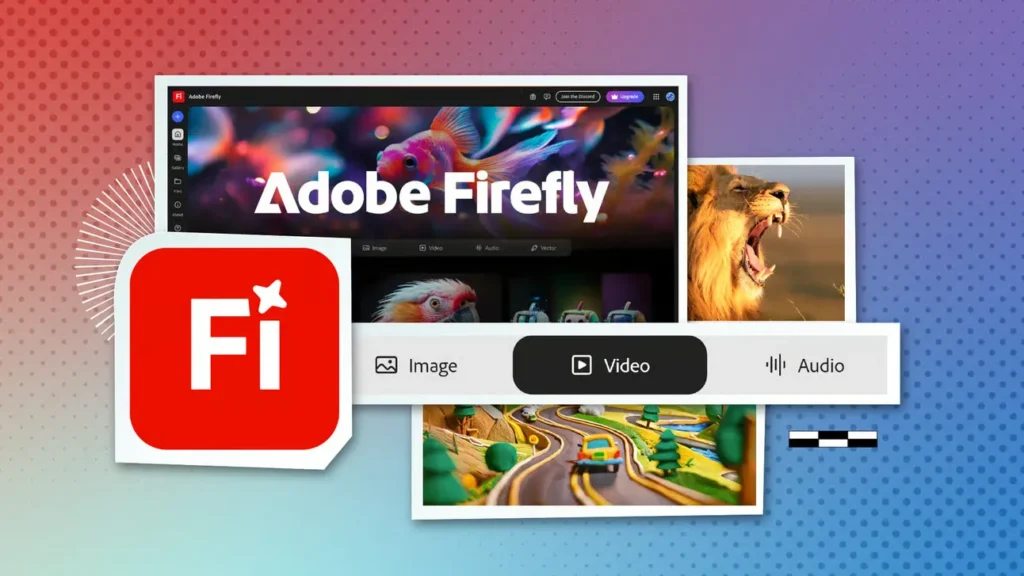
The last 18 months have seen a fundamental shift in how culture is maintained. With the release of Adobe Firefly 3 and similar generative ecosystems, the “barrier to entry” for brand-adjacent content has vanished. Anyone in your firm can now generate a “branded” image or post in seconds.
This democratisation of creation is a nightmare for brand consistency. In early 2025, a UK-based retail chain suffered a PR disaster when an internal manager used a public AI tool to generate promotional material that inadvertently included biased stereotypes.
The issue wasn’t the tool; it was the lack of an internal branding framework that taught the manager how to audit AI output against the company’s ethical and visual standards.
Algorithmic Culture defines the “State of the Industry” in 2026. This is the practice of training internal AI models on a company’s specific history, tone of voice, and past successes. Instead of a 50-page PDF brand guide that no one reads, the brand is “shipped” as a custom GPT or an internal plugin.
The Neurodiversity Advantage: A Strategic Brand Differentiator
The 2026 Neurodiversity Index reveals a stark reality: while 70% of UK businesses claim to be “neuro-inclusive,” only 32% of neurodivergent staff feel psychologically safe at work. This 38-point gap is where internal branding fails.
In 2026, a truly high-performing culture moves beyond “awareness” and into Universal Design.
From Masking to Performance
Internal branding that requires everyone to communicate in the same “robotic corporate” way forces neurodivergent talent—who make up 20% of the UK workforce—to “mask.” This leads to burnout and a 30% drop in productivity.
- Actionable Directive: Replace “Good Communication Skills” in your brand guide with “Clear and Direct Information Exchange.”
- The Result: You unlock “superpowers” in pattern recognition and logical problem-solving that traditional, homogeneous cultures overlook.
The Neuro-Inclusive Tech Stack
Your internal brand identity should be reflected in the flexibility of your workspace.
- Sensory Guardrails: Providing noise-cancelling hardware and “focus zones” as a standard part of your brand kit.
- Asynchronous Communication: Normalising recorded video updates or written memos over “performative” meetings to accommodate different processing styles.
| Workforce Segment | Primary Barrier | Brand Solution | Productivity Gains |
| Dyslexic Talent | Text-heavy manuals | Visual & Audio SOPs | 90% faster adoption |
| Autistic Talent | Unclear social cues | Operational Directives | 140% fewer errors |
| ADHD Talent | Rigid 9-5 schedules | Output-based KPIs | 2x innovation rate |
Recruiting for “Culture Add”, not “Culture Fit”
The most significant shift in internal branding over the last 24 months has been the death of “Culture Fit.” In the past, this was often a coded term for hiring people who looked and thought like the founders.
In 2026, leading UK brands recruit for “Culture Add”—the specific ability of a candidate to expand and strengthen the internal brand identity.

The Brand-First Interview Framework
Stop asking “Where do you see yourself in five years?” and start testing for brand alignment through scenario-based simulations.
- The Conflict Simulation: Give the candidate an AI-generated customer complaint that directly challenges one of your “Operational Values.” Observe whether they default to generic politeness or apply your specific brand logic (e.g., your 120-minute response rule).
- The Tone-of-Voice Audit: Provide a candidate with a piece of “average” corporate copy and ask them to rewrite it in your firm’s specific voice. This tests their ability to immediately inhabit the internal brand.
Onboarding as a Brand Immersion
Onboarding is the “Product Launch” of your internal brand to a new hire. If it is a series of boring HR meetings, you have failed.
- Day Zero Experience: Before they start, the new hire should receive a “Brand Box” that isn’t just swag, but a physical manifestation of your values. If you value “Transparency,” include a copy of last year’s full financial audit.
- The “Shadow” Phase: Every new hire, regardless of seniority, should spend four hours in a customer-facing role within their first week. This anchors the internal culture in the external reality of the customer experience.
Navigating the 2026 AI Regulatory Landscape
In 2026, internal branding is no longer just a marketing exercise; it is a legal safeguard.
With the UK government’s finalised AI Regulatory Framework and the EU AI Act (affecting any UK firm trading with the Continent) coming into full force, your company’s internal culture must act as a compliance engine.
If your staff do not understand the ethical boundaries of the tools they use, your firm faces catastrophic liability.
The Mandatory Disclosure Era
As of 1 January 2026, UK employers are required to disclose in all publicly advertised job postings when generative tools are used to screen or assess candidates. This transparency is a cornerstone of a modern internal brand.
An “Amateur” brand hides its use of technology; a “Professional” brand integrates it into its values, explaining why the technology is used to enhance human judgement, not replace it.
High-Risk Classification & Accountability
Most workplace systems—including those used for recruitment, performance monitoring, and promotions—are now classified as High-Risk under 2026 standards. This means your internal branding must include:
- Human-in-the-Loop Protocols: Every automated output must have a designated human auditor who is culturally trained to spot brand-inconsistent or biased results.
- Bias Mitigation Training: Staff must be educated about how historical data can embed discrimination in their internal systems. Your brand value of “Fairness” must be technically audited against your software’s decision-making logs.
Violations of the 2026 AI governance standards can result in fines of up to 7% of global turnover or £35 million. Beyond the financial hit, the “Culture Leak” caused by an ethical failure in AI usage destroys consumer trust 40% faster than a traditional product failure.
Metrics That Matter
You cannot manage what you do not measure. In 2026, the “Chief People Officer” role has morphed into a “Brand Systems Auditor.”
Key Performance Indicators (KPIs) for Culture
- eNPS (Employee Net Promoter Score): Still relevant, but must be segmented by department. A high overall score can hide a toxic sub-culture in your tech or sales team.
- Value Adoption Rate: What percentage of internal peer-to-peer recognitions explicitly mention one of your three core operational values?
- The “AI Alignment” Score: A monthly audit of AI-generated content produced by staff. How closely does the “machine-assisted” output match the “human-only” benchmark for your brand voice?
- Retention of “High-Alignment” Talent: It is not just about keeping people; it is about keeping the people who embody the brand most fiercely.
How to fix a falling culture score? If your culture metrics are dropping, do not hold a “morale-boosting” pizza party. Instead, conduct a Value Audit. Identify which operational directive is being ignored or incentivised against (e.g., rewarding speed when your brand value is “Precision”). Correct the incentive, and the culture will follow.
Professional vs Amateur Internal Branding
| Technical Aspect | The Wrong Way (Amateur) | The Right Way (Pro) | Why It Matters |
| Value Definition | One-word adjectives (e.g., “Quality”) | Actionable directives (e.g., “We ship zero-bug code”) | Eliminates subjective interpretation. |
| Communication | Monthly email from the CEO | Real-time, peer-to-peer recognition | Increases “burstiness” and reinforces habits. |
| Onboarding | Reading a static PDF manual | Interactive AI-driven roleplay | Ensures the brand voice is practised, not read. |
| AI Integration | Banning or ignoring AI tools | Custom-trained internal LLM nodes | Prevents “brand leakage” via generic AI. |
| Measurement | Annual “Happiness” surveys | Net Promoter Score (eNPS) + output audit | Measures brand impact, not just mood. |
Employee Advocacy: The 2026 Personal Brand Bridge
In 2026, the most powerful marketing channel for UK businesses is no longer a corporate social account; it is the collective voice of your employees.
When your internal branding is strong, your staff naturally become Brand Ambassadors on platforms like LinkedIn and X (formerly Twitter).

The Synergy of Personal and Corporate Branding
The modern professional brand recognises that employees have their own “Personal Brands.” Instead of suppressing this, a professional internal culture amplifies it.
- Personalised Brand Kits: Provide staff with assets, templates, and “Brand-Aware” AI writing assistants that help them share their expertise while remaining aligned with the company’s core identity.
- The Authenticity Multiplier: A post from an engineer about a technical breakthrough is 7x more likely to be trusted than a corporate press release about the same topic.
Advocacy Metrics: What to Track
| Metric | Purpose | 2026 Benchmark |
| Organic Reach | Visibility of staff posts | 5x Corporate reach |
| Referral Quality | Talent attracted by staff | 40% of all hires |
| Expertise Index | Staff mentioned as industry leaders | 2+ employees per dept |
How to encourage advocacy? You cannot force advocacy; you can only facilitate it. The best way to turn staff into advocates is to provide them with high-value internal information that makes them look like experts in their own networks. When your company’s internal knowledge sharing is strong, your staff will naturally want to share that expertise.
The Verdict
Internal branding is the only way to ensure your business survives the transition to an AI-augmented economy.
The contrarian truth is that the more you automate, the more your human culture matters. If your team does not have a deep, lived understanding of your Brand identity, they will default to the “average” output of the machines they use.
Ditch the aspirational posters and the generic mission statements. Start debugging your culture by defining exactly how your brand should sound, act, and think in every possible scenario.
Treat your internal branding as a technical specification, not a suggestion.
If you are ready to align your team and build a brand that resonates from the inside out, explore Inkbot Design’s services and read our related posts to get started.
FAQ Section
What is the difference between internal branding and employer branding?
Internal branding focuses on aligning existing employees with the company’s core values and external promise. Employer branding is the process of managing a company’s workplace reputation to attract new talent. Internal branding ensures you keep your promise to customers; employer branding ensures you attract the right people to help you keep it.
How does AI impact internal branding in 2026?
AI acts as a mirror for internal culture. In 2026, employees use AI to generate content, code, and communications. Without strong internal branding, these outputs default to the generic “average” of the AI’s training data. Effective internal branding involves training AI on company-specific data to maintain a unique and consistent brand voice across all automated touchpoints.
Why are aspirational values considered a risk?
Aspirational values often create a disconnect between management’s ideals and the daily reality of the workforce. This “values gap” leads to employee cynicism and inconsistent customer experiences. When values are too broad or idealistic, they fail to provide clear guidance for decision-making, which is critical for maintaining brand integrity in fast-paced, digital-first environments.
How can a small business measure internal branding success?
Success is measured through Employee Net Promoter Scores (eNPS) and brand consistency audits. Small businesses should track how well internal outputs—such as emails, social posts, and project deliveries—align with the established brand guidelines. A high correlation between internal culture and positive customer feedback is the ultimate indicator of successful internal branding.
When should a company revisit its internal branding strategy?
Internal branding should be reviewed during any major pivot, such as a merger, a leadership change, or the adoption of transformative technology like Generative AI. At a minimum, businesses should conduct an annual culture audit to ensure that operational values still align with the external brand identity and market expectations.
Is internal branding just for large corporations?
Internal branding is vital for SMBs because they rely more heavily on individual employee interactions to build brand equity. While a corporation can hide behind a massive marketing budget, a small business lives or dies on the consistency of its team. Establishing a strong internal brand early prevents the “founder-dependency” trap and allows for scalable growth.
Can internal branding improve employee retention?
Internal branding improves retention by providing employees with a clear sense of purpose and a framework for success. When employees understand how their work contributes to the brand promise, they feel more valued and engaged. According to data from the Ehrenberg-Bass Institute, brands with high internal alignment see significantly lower turnover rates in senior roles.
What role does the CEO play in internal branding?
The CEO is the primary architect and auditor of internal branding. They must model the operational values daily and ensure that internal systems—such as bonuses, promotions, and hiring—reinforce the brand identity. If the CEO’s actions contradict the brand promise, the entire internal branding effort will fail due to a lack of credibility.
How do you fix a toxic internal culture?
Fixing a toxic culture requires a complete “rebranding” of internal operations. This involves identifying the “bugs” in the current system—such as misaligned incentives or poor communication—and replacing them with new, non-negotiable operational values. It often requires removing “brilliant jerks” who perform well but violate the brand’s core cultural standards.
What is the “Vibe Fallacy” in workplace culture?
The Vibe Fallacy is the mistake of assuming that a socially happy office is the same as a brand-aligned office. While employees may get along personally, they may still produce work inconsistent with the company’s external identity. Professional internal branding prioritises operational alignment and brand consistency over mere social harmony.