Core Update Recovery: The 2027 Diagnostic for Professional Services
A sudden drop in traffic after a Google core update triggers panic, usually followed by unnecessary content rewrites. Discover how to diagnose the real cause of the drop, triage your commercial service pages, and recover the buying confidence that drives actual enquiries.



On this page6 min left
When a Google core update flattens your traffic chart, the instinct is to panic.
Panic usually looks like logging into your CMS and indiscriminately rewriting every page that lost visits. It is a waste of time.
Don't do it. Seriously.
Core update recovery is not about treating every lost blog visit as equally important.
Most guides treat a service business like a publisher: identify lost traffic, audit content, and try to recover rankings.
This diagnostic takes a different starting point: which losses are actually costing you qualified enquiries, and what do prospective customers still need to see before they trust you enough to make contact?
Diagnose the search problem first, then prioritise commercially important pages and strengthen the evidence behind your claims.
Success means restoring the right visibility and generating qualified enquiries—not simply returning a traffic chart to its previous height.
Establishing this kind of topical authority requires discipline, not reaction.
What Is Core Update Recovery?
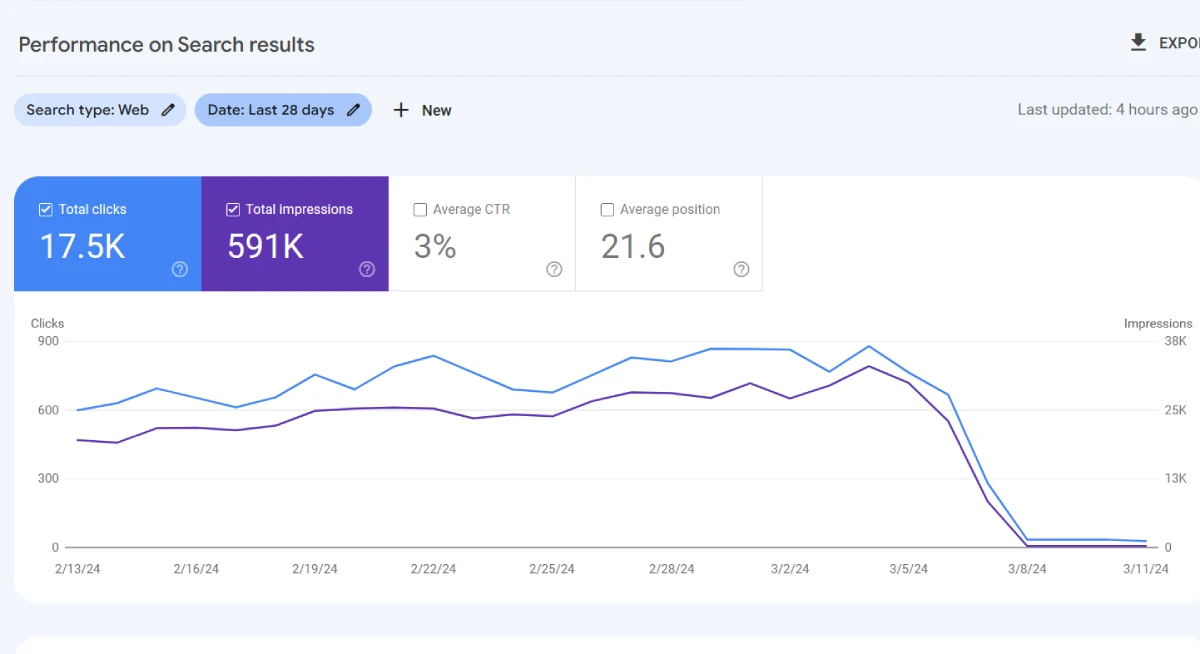
Core update recovery is the systematic process of diagnosing, triaging, and repairing commercial visibility after a broad Google algorithm reassessment.
It requires three stages: isolating intent shifts from technical drops, securing high-value service pages, and rebuilding topical support around your core offerings.
Core update recovery for service businesses involves diagnosing the specific cause of traffic loss, triaging commercially important pages, and strengthening the customer evidence layer to restore qualified enquiries.
1. Diagnose The True Search Problem
Was it the update, a technical penalty, or an intent shift? The answer dictates your entire strategy.
Separate AI summaries from algorithm demotions
Traffic drops are routinely misdiagnosed by agency reporting.
A drop in traditional clicks does not automatically mean Google demoted your website for poor quality. Often, the search intent shifted.
In Pew Research Center’s analysis of U.S. browsing activity from March 2025, users clicked a traditional Google search result on 8% of visits to results pages with an AI summary, compared with 15% of visits to pages without one.
Furthermore, Pew Research Center found that users clicked a link within Google’s AI summary on just 1% of visits to search pages containing a summary.
If a top-of-funnel informational blog post loses 40% of its traffic but your primary service pages remain stable, you have not been penalised. The search engine simply answered the user's basic question directly.
In Pew’s study, 60% of Google queries beginning with question words such as ‘who’, ‘what’, ‘when’ or ‘why’ produced an AI summary.
Chasing that lost vanity traffic by rewriting the post is a mistake. Focus your SEO for professional services strictly on commercial queries where buyers demand an expert.
Wait for the rollout to complete
Should you wait until the rollout ends before acting? Yes—you must wait at least a full week after an update completes before comparing metrics.
GrowthX (2025) reported that site owners should use the post-completion week against the week before the rollout began.
Intervening mid-rollout guarantees you are acting on incomplete, volatile data.
2. Triage Commercially Important Pages First

If a 10% drop on a service page costs £200k in pipeline, that is where your budget goes.
Why didn’t your rewrite or rebuild fix it?
Many firms rewrite text, update publishing dates, cross their fingers, and wait. Nothing happens.
GrowthX (2025) documented that heavily impacted sites like TechRaptor invested heavily in technical audits, schema changes, and author bylines without achieving a traffic rebound.
Effort alone does not guarantee a return to peak traffic.
Core Web Vitals should be treated as baseline hygiene rather than a standalone recovery mechanism.
Conversely, documented rebounds for sites like WaterFilterGuru required roughly 11 to 21 months and deep content overhauls. Patience is mandatory.
3. Build Topical Support Around The Loss
Because Google ranks ecosystems, not isolated URLs, you cannot fix a page by staring only at that page.
Instead of endlessly tweaking a struggling service page, identify gaps in the surrounding content.
A user on Reddit (r/SEO_Xpert, 2025) audited 31 different sites that successfully recovered at least 30% of their lost traffic within 3 to 4 months.
Every single recovering site stopped trying to fix the dropped page directly. They built supporting content around it.
Take a hypothetical 12-partner tax practice. If your primary "Corporate Tax Planning" page drops, you do not rewrite it.
You publish three highly specific guides on niche tax credits and link them back to the main service page. The main page naturally recovers once the ecosystem is established.
4. Restructure Internal Linking Architecture
Are similar city location pages hurting you?
Yes, if they confuse the search engine about which page holds primary authority.
Thin, duplicate location pages routinely cannibalise each other. Pruning or consolidating overlapping pages often helps more than publishing new content (r/SEO_Xpert, 2025).
If your site architecture is bloated, read our specific breakdown on content pruning seo.
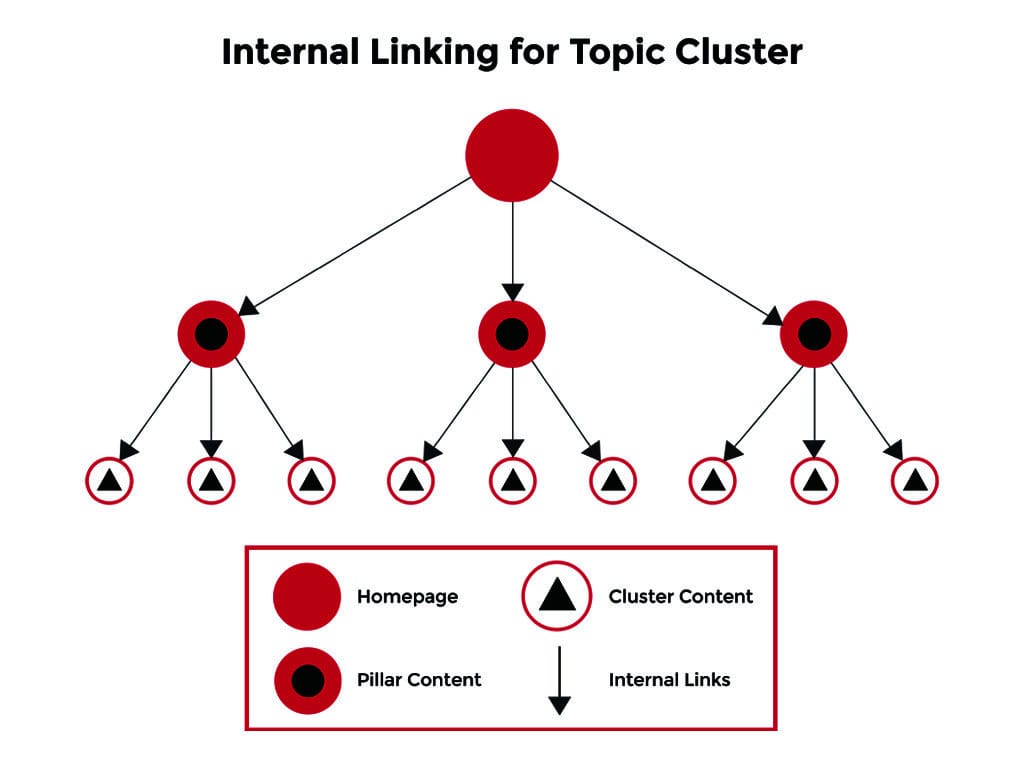
Internal links as recovery levers
Before publishing new content, review the links pointing toward your recovering page. The r/SEO_Xpert (2025) audit found that successful recoveries had up to 3x as many internal links.
These were placed by updating older, trusted posts to link to the recovering URL.
An intelligent internal linking strategy channels historical PageRank directly to the pages that need it most.
5. Strengthen The Customer Evidence Layer
Why does a visually outdated competitor website outrank yours? Because Google—and your prospective clients—are looking for evidence, not aesthetics.
When a core update hits, restoring buying confidence matters more than restoring traffic. What do prospective customers still need to see before they trust you enough to make contact?
The commercial weight of reviews
Buyers demand proof.
In BrightLocal’s 2026 Local Consumer Review Survey, 41% of respondents said they ‘always’ read reviews when browsing for businesses, compared with 29% reported in its 2025 survey.
BrightLocal reported that 47% of respondents would not use a business with fewer than 20 reviews.
If your service page lacks first-hand evidence, it will struggle. Add authentic testing data, real client scenarios, or native video.
GrowthX (2025) explicitly warned that fabricated author profiles or AI-generated headshots pose a high risk due to their low-quality signals.
Establishing genuine author authority (E-E-A-T) is non-negotiable.
"In BrightLocal’s 2026 Local Consumer Review Survey, 54% of respondents said visiting the business’s website was an action they were likely to take after reading positive reviews."
Bridging the research gap
Getting a user to your page is only the first step.
BrightLocal) grouped respondents’ likely next actions into research and purchase steps: 66% would carry out further research after a positive review, compared with 34% who were ready to buy or book.
If your page simply lists services without providing case studies or deep expertise, it fails the research phase entirely.
The Verdict
Stop treating every traffic drop as a crisis of content quality.
A service business must differentiate between informational visits lost to AI summaries and commercial visibility lost to algorithmic reassessment.
Diagnose the search problem first, prune overlapping pages that confuse search engines, and rebuild the internal linking architecture to point to your money pages.
The most urgent action you can take today is to review your top three commercial pages. Do they provide the concrete customer evidence required to justify a premium fee?
If your digital presence is losing ground and you need to understand precisely where your brand is leaking revenue, request a free Brand Equity Audit™. We identify exactly where the brand is losing commercial ground and what to do about it.
Questions people ask
Was my traffic drop caused by a core update or an AI summary?
If your top-of-funnel informational blog posts lost traffic but your commercial service pages remained stable, the cause is likely an AI intent shift. Users are getting answers directly on the search results page. A true algorithmic demotion usually impacts visibility across the entire domain.
Should we wait until the Google rollout ends before making changes?
Yes — you must wait at least a full week after an update completes before comparing metrics. Intervening mid-rollout guarantees you are acting on volatile, incomplete data, which often leads to deleting or rewriting pages that were actually performing well.
Why didn't our content rewrite fix the traffic drop?
Rewriting a single page rarely works because Google ranks ecosystems, not isolated URLs. Successful core update recovery usually requires building topical support around the dropped page and increasing the volume of internal links pointing to it from older, trusted posts.
Do we need to delete old blog posts to recover?
Yes — if those posts are thin, duplicate, or cannibalising your primary service pages. Consolidating or pruning overlapping pages clarifies your site structure, helping search engines understand which page holds primary authority for your core commercial terms.
How does customer evidence affect core update recovery?
Customer evidence, such as authentic reviews and real-world case studies, provides the first-hand experience signals Google requires for E-E-A-T. Pages lacking real evidence are frequently demoted in favour of pages that prove their claims with documented client outcomes.