Content Pruning for SEO: What to Keep Before You Cut
Content pruning should begin with a decision about what your website must preserve. Low traffic alone cannot tell you whether a page supports a buying decision, demonstrates expertise or serves existing clients. Review purpose, diagnose performance, prepare relevant replacements and measure the combined results before approving another round of removals.



On this page6 min left
- How should content pruning for SEO work?
- What should you check before choosing pages to prune?
- Which pages should stay, improve, merge or go?
- What Does Pruning Actually Achieve?
- How should you choose a consolidation destination?
- When is noindex appropriate?
- How will you know whether pruning helped?
- Approve the replacement map before the deletion list
- Questions people ask
Before a rebrand, a quiet article about a specialist service can look like an easy deletion. Check what the article does for buyers first.
Content pruning for SEO means reviewing existing pages, improving or combining useful material, and removing content whose purpose has expired or is genuinely redundant.
Low traffic is a reason to investigate. It is not a deletion instruction.
Anna Crowe, an SEO consultant writing for Search Engine Land, reported that 213 of 386 pages retained during a pruning project received zero search clicks.
The retained pages included product pages and case studies. The measurement window for that zero-click count was not specified.
For a professional services firm, the priority is a website that demonstrates the expertise the business now wants to sell.
That connects content maintenance with topical authority and the wider work of digital marketing for firms that sell expertise.
How should content pruning for SEO work?

Review each page’s purpose, investigate its performance, and choose whether to keep, improve, consolidate, exclude from search or remove the page. Prepare relevant replacements before retiring useful material. Release changes in manageable batches and review affected topics, replacement pages and buying journeys together.
- Keep useful pages even when search traffic is low.
- Combine overlapping material only when a single destination can satisfy the relevant reader needs.
- Remove material when its purpose has expired, and no useful contribution needs to be preserved.
Content pruning for SEO reviews existing pages and prioritises improvement or consolidation before removing material that no longer serves a useful purpose.
What should you check before choosing pages to prune?
Build one inventory combining your content management system, a website crawl, Google Search Console, analytics and backlink information.
Record the following for each candidate:
- URL, page title and responsible owner.
- Intended audience and the question the page answers.
- Search clicks, impressions and relevant queries over a stated period.
- Recorded enquiries or other useful actions, where tracking exists.
- Internal links, external links and technical status.
- Accuracy, overlap and relationship to current services.
Do not treat an empty conversion report as proof that a page contributes nothing. Record tracking limitations alongside the data.
Google Search Console, Google’s search-performance reporting service, recommends examining traffic changes across pages, queries, countries and devices.
Search results can change too.
Ahrefs, the SEO software company, reported that AI Overview presence correlated with a 58% lower average click-through rate for the top-ranking result against a modelled comparison.
The analysis used 300,000 keywords and aggregated desktop Search Console data from December 2023 and December 2025.
That finding does not explain every declining page. Check impressions, rankings and the actual results appearing for the page’s queries before deciding the content has failed.
If an indexing error caused the decline, put the repair into the technical SEO and website infrastructure review.
Deleting the page would answer the wrong problem.
Which pages should stay, improve, merge or go?
Give each page a proposed action and a written reason. Use traffic to prioritise inspection, then judge usefulness against the firm’s current audience and services.
The following scenarios are hypothetical examples for an accountancy or advisory practice, not client results.
Page situation | Proposed action | Decision boundary |
|---|---|---|
A specialist handover checklist used in proposals but receiving little search traffic | Keep or improve | Confirm that the advice remains accurate and the service remains offered. |
An article answering the right buying question with outdated examples | Refresh | Keep the URL where the page’s purpose remains substantially unchanged. |
Two articles answering the same acquisition-planning question | Consolidate | Merge only if one page can satisfy the reader needs of both. |
A partner interview containing useful expertise beneath a short introduction | Expand the accessible written material | Inspect the underlying interview before judging the page by word count. |
An expired event invitation containing no lasting information | Remove | First check links, ongoing access needs and whether a relevant replacement exists. |
A customer utility page with no intended search-discovery role | Consider search exclusion | Confirm that existing users can still reach the page and understand the visibility trade-off. |
The strongest objection is straightforward: “Surely pages with no traffic are doing nothing?”
Not necessarily. A case study sent after a meeting has a different job from an article intended to attract new search visitors. Crowe’s retained zero-click pages illustrate that distinction, although one case study cannot establish how often this occurs elsewhere.
Ask the responsible partner which buying question the page answers. “A prospect needs to see how we handle a multi-office audit handover” is a reason to investigate and preserve the material. “We have always had that page” is not.
What Does Pruning Actually Achieve?

When managing editorial archives, scale is rarely a proxy for authority.
At Inkbot Design, we reduced our blog archive from 3,500 posts down to 300 focused assets.
The result was a structurally clean, highly focused repository, free of generic listicles, that attracted audiences beyond our core professional-services clientele.
While we can describe that editorial shift, we make no claim that reducing post counts automatically guarantees increased search rankings, higher conversion rates, or surging revenue.
Pruning removes friction and clarifies the entity focus; commercial outcomes require dedicated evidence and strategic alignment.
"Your firm needs the exact pages required to explain its work and support its readers—no more, no less."
How should you choose a consolidation destination?
Choose the destination based on reader needs, not traffic alone.
A reader looking for an acquisition-integration checklist should reach material that answers that question. A general consulting homepage is not a suitable replacement because it has higher traffic.
Before retiring an overlapping page:
- Compare the questions answered by both pages.
- Move useful, accurate material into the destination.
- Resolve contradictions and remove repetition.
- Publish and check the destination.
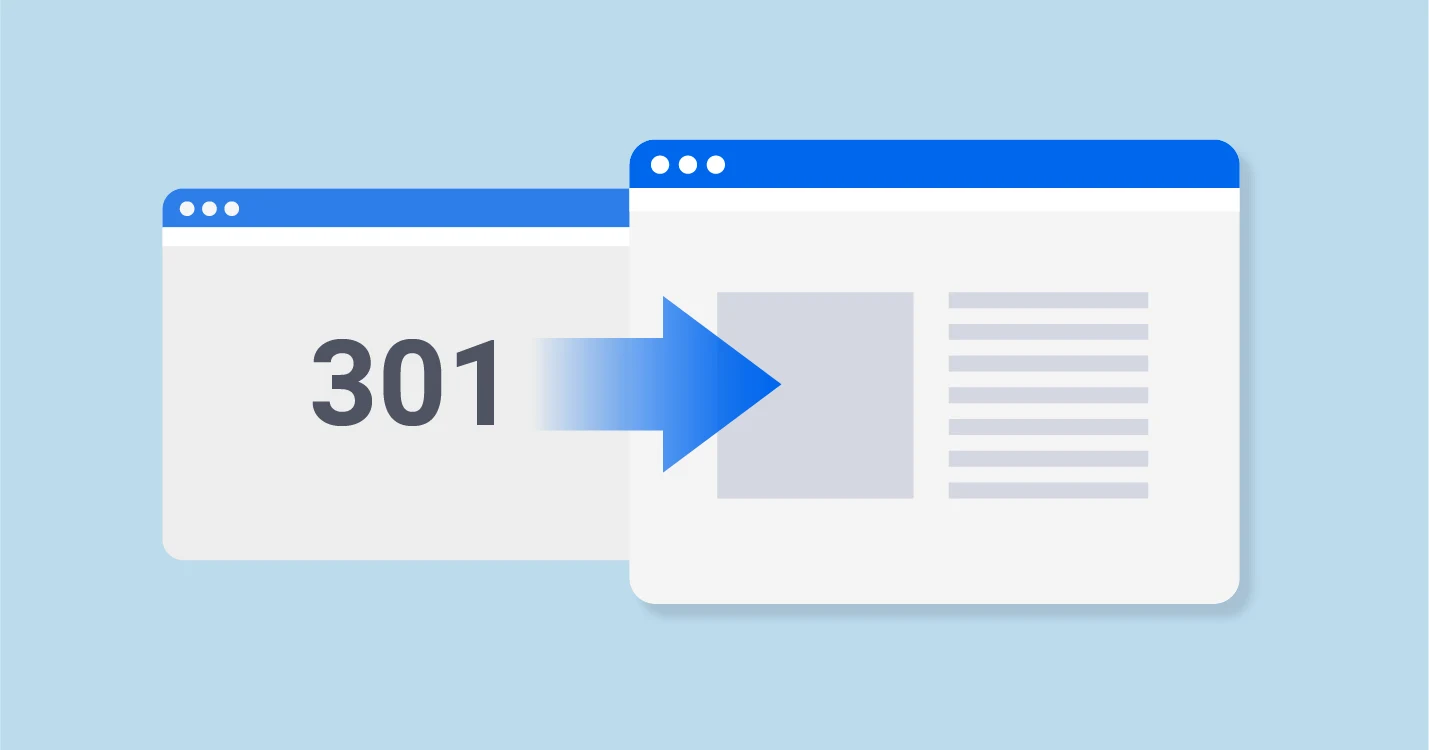
- Implement the planned redirect and update internal links.
Crowe’s case study describes broad hub redirects as a mistake and recommends mapping retired pages to their closest relevant replacement. The same account reports that unpublishing 51 customer pages before redirects existed produced unintended 404 responses.
Where no relevant replacement exists, and the content is genuinely obsolete, removal may be more honest than sending readers to an unrelated page. Have the technical owner implement the appropriate response and check the result.
Update the internal linking structure in the same release. A new destination is incomplete if important navigation and article links still point to retired URLs.
When is noindex appropriate?
A noindex instruction tells search engines not to index a page. The page can remain available to visitors, but search exclusion changes how readers can discover the content. Google documents noindex as an indexing control.
Use search exclusion deliberately for pages that must remain available but do not need to be discovered in search. Do not make noindex the default holding area for every underperforming expert resource.
Google Search Central states that a page must be indexed and eligible to appear with a snippet to qualify as a supporting link in AI Overviews or AI Mode. Indexability does not guarantee inclusion, but noindex removes that eligibility once processed.
The second objection is organisational: “Our partners will never agree to delete their articles.”
Ask each partner to identify the material that must survive, the audience served and an owner for keeping the advice current. A useful passage can move into a better page. Preserving expertise does not require preserving every original URL.
How will you know whether pruning helped?

Save the baseline before implementation. Record affected URLs, replacement destinations, search performance, tracked enquiries and known buying uses. Keep a dated change log.
Review retired pages and replacement pages together. Looking only at surviving URLs can hide losses from the URLs that disappeared.
Be cautious with a rising organic chart. Crowe’s case reported monthly organic sessions increasing from 10,404 in December 2024 to 16,103 in April 2025, a 55% increase.
Paid search sessions fell from 11,863 to 182; combined paid and organic search sessions fell by approximately 27%. Crowe explicitly declined to prove that pruning caused the organic increase.
That is a before-and-after observation, not an experiment.
Extend the assessment where traffic is sparse or seasonal. Google warns that some changes take months to be assessed and do not guarantee a noticeable improvement in search results.
Pause the next batch if a known buying resource disappears, a mapped destination fails, or the affected topic loses visibility without an identified explanation.
Fewer URLs is an implementation result. It is not the success metric.
Approve the replacement map before the deletion list
A pruning proposal should explain what each affected page contributes and what will happen to that contribution.
Ask your marketing lead for a pilot batch with a reason, owner and replacement decision beside every URL. Resolve doubtful pages with the relevant partner before implementation.
Your team can run that review internally. Bring in technical SEO support where redirects, indexability or website architecture exceed the team’s experience.
If the review reveals a wider positioning problem, request Inkbot Design’s free Brand Equity Audit™. The written diagnostic reviews positioning, messaging, visual consistency and visibility; it is not a substitute for a technical pruning audit.
Today, approve the page-purpose and replacement decisions before approving any removals.
Questions people ask
How often should we review existing content?
Set the review schedule around changes in services, advice and audience needs. A rebrand, acquisition, or withdrawal from a service line is a useful trigger for review. As an editorial recommendation, check frequently changing advice more often than stable explanatory material, rather than applying a single deletion cycle to the whole website.
Should old articles be deleted because of their age?
No — age alone is not a sufficient editorial reason to delete an article. Check whether the advice remains accurate, the topic remains relevant, and the page still serves a reader. Update dated information where the underlying purpose survives; remove material whose purpose has genuinely expired.
Does a short page automatically need pruning?
No — word count alone cannot determine usefulness. Inspect what the page contains and what the reader needs. A short page may provide a complete answer, while a brief introduction may conceal an expert interview worth developing. Crowe’s case specifically describes rebuilding podcast pages rather than discarding the underlying expertise.
When should we bring in a specialist?
Bring in technical SEO support when your team cannot confidently assess indexability, redirect behaviour or the consequences of changing a complex site. Use the responsible subject-matter expert to assess accuracy and usefulness. A spreadsheet can organise the evidence; the spreadsheet cannot make those judgements for you.