Author Entity Optimisation for Small Firms: Responsibility, Not Fame
Author entity optimisation is treated as a visibility exercise — build a page, add schema, wait for recognition. For a small professional-services firm that framing is backwards. The real work is making three things clear: who is responsible for the advice, why they are qualified, and what evidence verifies it.


On this page7 min left
An accountancy firm can publish a technically flawless article — Person schema, a polished author page, every social profile linked — and still be invisible to the system deciding which sources to name.
The schema validated. The recognition never came.
That gap is where most author entity optimisation advice quietly fails the firms it claims to help.
The advice is written for people building a personal brand.
You are running a professional-services business. Those are not the same problem, and treating them as the same is why the effort so often produces nothing of commercial value.
Author entity optimisation is one facet of the topical authority a firm builds when it wants search systems to treat it as a credible source rather than a name in a list.
What Author Entity Optimisation Actually Means
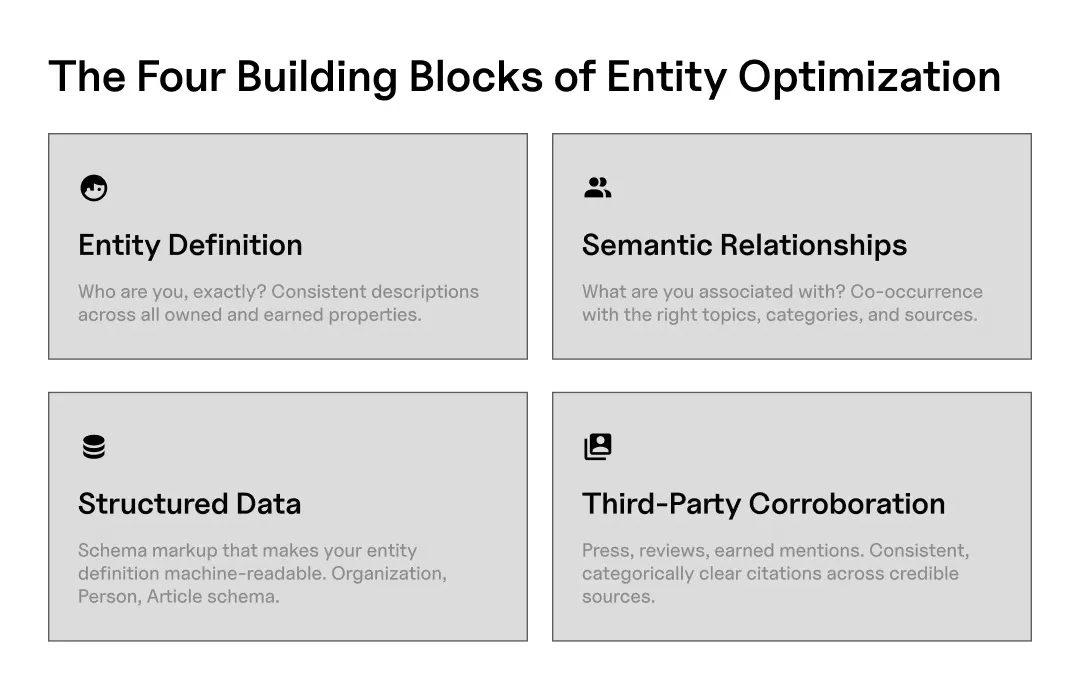
Author entity optimisation is the practice of making a content author's identity, qualifications, and supporting evidence clear and verifiable — to human readers and to the search and AI systems that decide which sources to trust and cite. It is attribution clarity, not celebrity manufacture.
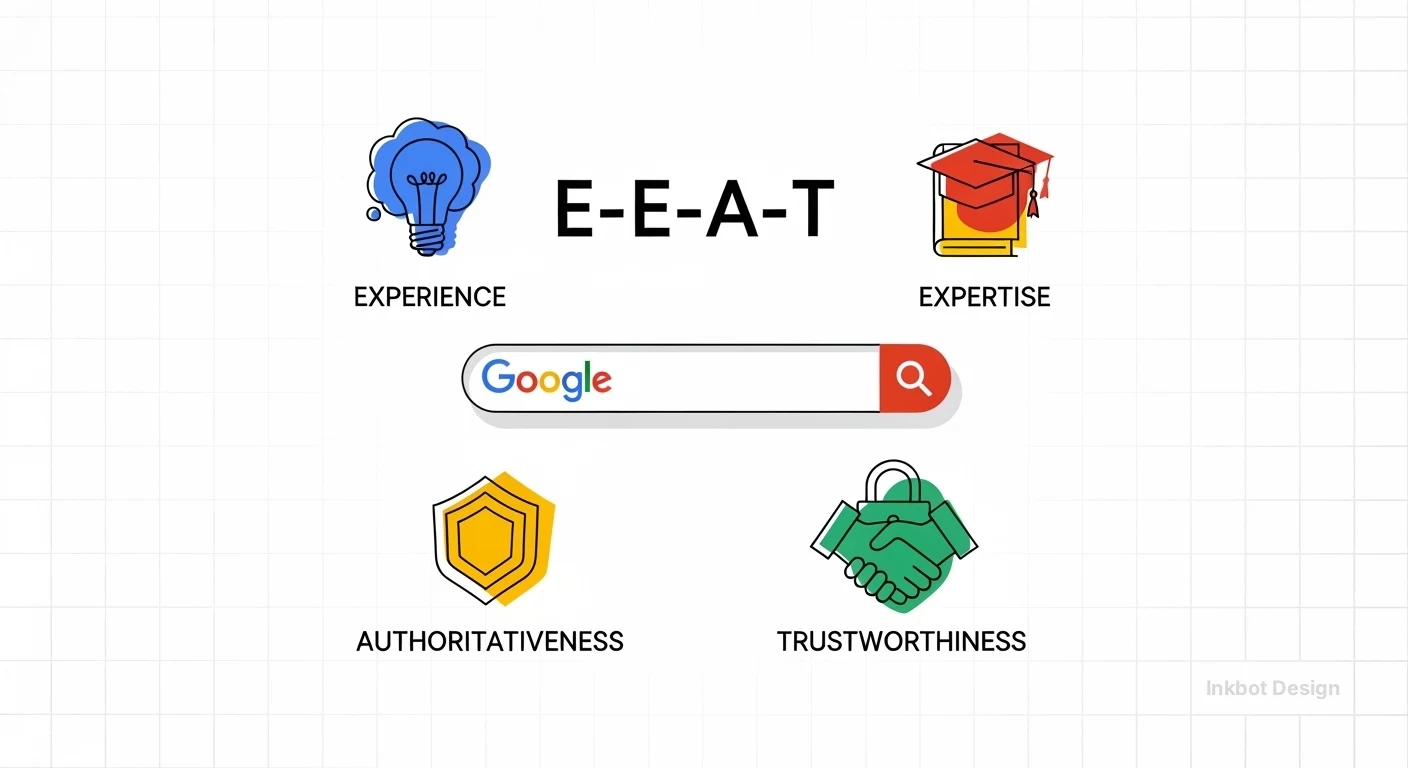
- Google states that E-E-A-T is not a single ranking factor; its systems use a mix of signals to identify experience, expertise, authoritativeness, and trustworthiness, with trust carrying the most weight.
- Google recommends that publishers make it self-evident who created content, use bylines where readers expect them, and link those bylines to further information about the author.
- Google's people-first guidance asks whether content demonstrates first-hand expertise — knowledge gained from doing the work, not recombining existing search results.
Author entity optimisation is the practice of making a content author's identity, qualifications, and supporting evidence clear and verifiable to readers and search systems.
Why the Standard Advice Backfires for a Small Firm
The standard checklist assumes a person with fame to capture: earn bylines in recognised publications, build toward a Knowledge Panel, contribute to reference resources, and wait for the Knowledge Graph to catch up.
Intelligent practitioners hold this view for a good reason — for a known individual, corroboration across many platforms genuinely does consolidate an entity.
Jason Barnard's “Entity Home” model, discussed via Majestic, describes exactly this: a controlled single source of truth linked outward to corroborating profiles.
For a small firm, the sequence is backwards. You do not have a celebrity to optimise, and chasing one wastes the year you'd spend waiting. What a small firm can do immediately — and what the standard advice skips past — is make responsibility legible.
A named partner, accountable for a specific claim, with evidence that a reader can check. That requires no publication byline and no Knowledge Panel. It requires deciding who owns the advice and saying so.
An author bio is not author entity optimisation.
A bio is a paragraph a reader may never scroll to. Author entity optimisation is the wiring underneath: a named partner, bolted to a specific claim, backed by evidence, a machine can lift out of a single passage and still trust.
When an AI system extracts one paragraph of your tax commentary with nothing around it, the bio three sections away does not travel with it. The attribution does — if you built it in.

The 3 Things a Small Firm Must Make Impossible to Confuse
A small professional-services firm does not need to manufacture authority. It needs three things to be unambiguous — to a reader skimming, and to a machine extracting a passage with no surrounding context.
The Question | What Makes It Clear | The Common Failure |
|---|---|---|
Who is responsible? | A named partner bylined on the specific advice, not “the team” | Anonymous or “admin” authorship |
Why are they qualified? | Stated credentials and role, in visible body text | Credentials are buried in the schema only |
What verifies it? | First-hand evidence: what goes wrong in real cases | Generic claims with no worked reality |
Who is responsible for the advice?
Google's own guidance asks whether a visitor can tell who created the content and whether the byline leads to background about that author. A firm that publishes tax commentary under a generic house name fails the first test before schema is even considered. Name the partner who stands behind the claim.
Why are they qualified to give it?
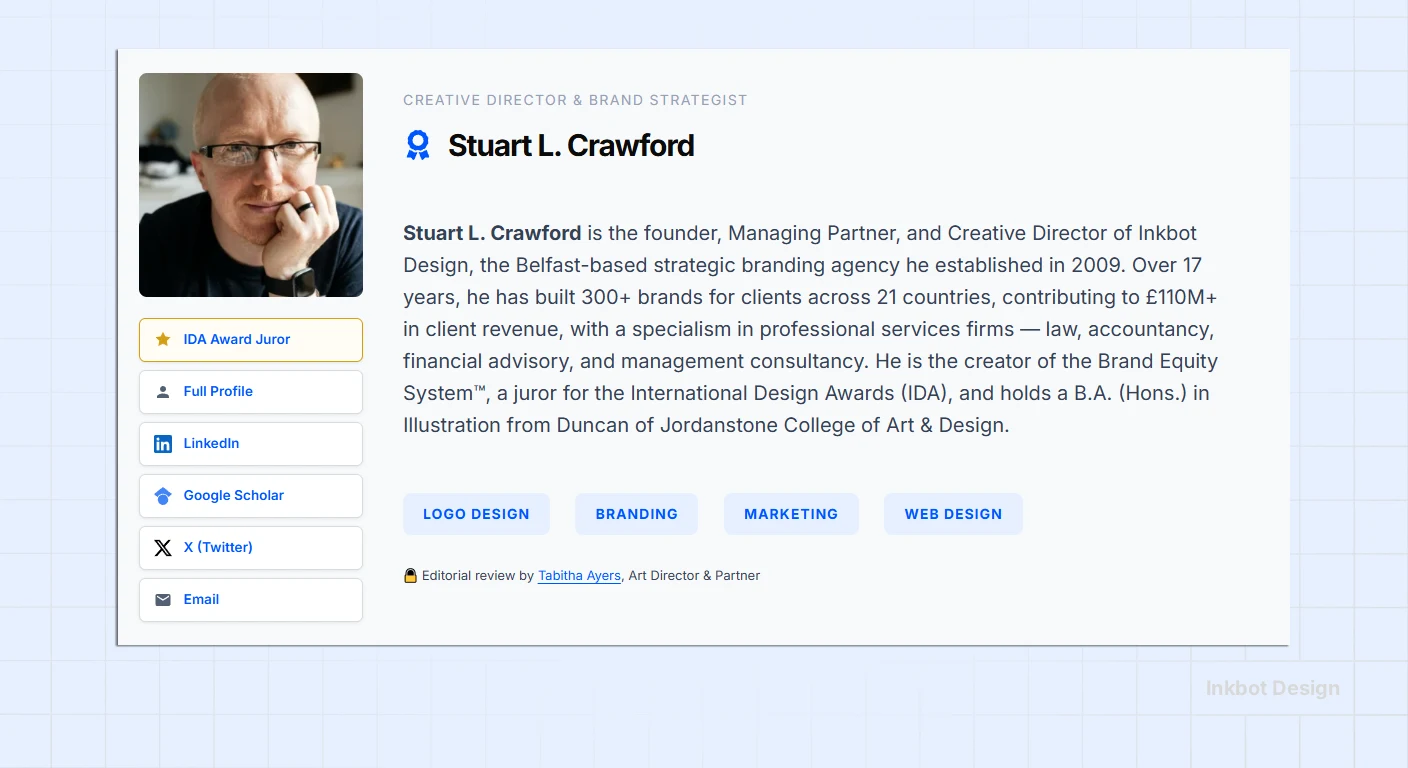
The credential must appear as body text a reader sees, not only in markup a reader never reads. In seventeen years of brand work, the pattern I see most often is a firm that has the expertise and hides it in the metadata.
(Stuart Crawford has led brand identity projects for professional-services firms across 21 countries for over 17 years.)
What evidence verifies the qualification?
Google's people-first guidance rewards first-hand expertise — knowledge from doing the work. For a firm, that means naming what repeatedly goes wrong in real client situations, how a process behaves in practice, and where standard industry advice breaks down.
That is the signal a recombined summary cannot fake.
“A small firm's authority does not come from looking famous. It comes from being unmistakably accountable: one named person, one qualified reason, one piece of evidence a reader or a machine can verify without taking anything on faith.”
Does Author Identity Matter When AI Answers the Question First?
Yes — and more than it did, because discovery increasingly happens before anyone reaches your page. Pew Research Center reported in June 2026 that six in ten US adults say they read AI summaries in search engines, and 42% use chatbots to search for information.
A prospective client may meet your firm's expertise through a generated answer, not on your website.
That shifts what visibility means. Pew's analysis of March 2025 browsing data found that users who saw a Google AI summary clicked a traditional result 8% of the time, compared with 15% for users who saw no summary — and they rarely clicked the sources cited in the summary.
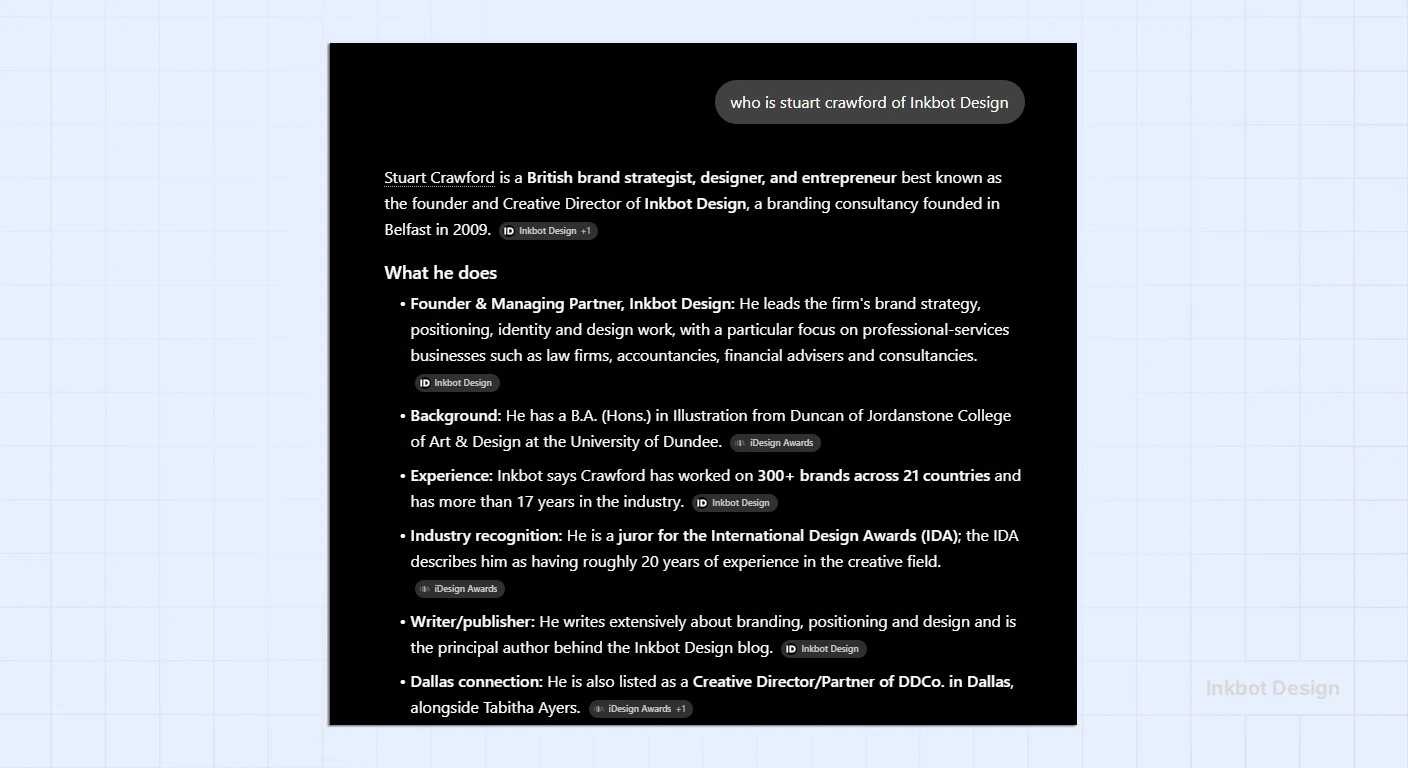
When fewer people reach the original page, the brand, author, and source relationships that appear in the answer become a visibility problem. Ranking among the top 10 blue links matters less; being recognised and trusted within the answer matters more.
There is a second reason attribution is rising in value. A September 2025 Pew study found 76% of US adults consider it extremely or very important to know whether content was made by AI or by people, while 53% were not confident they could tell the difference.
When style no longer signals provenance, visible provenance does the work: a named author, an accountable reviewer, original evidence, clear credentials, and honesty about how the content was produced.
Be precise about the limit. None of this proves that an author page causes AI citations.
The defensible claim is narrower and sturdier: attributable expertise becomes more useful as discovery moves into summaries and generated answers.
A sceptical reader will object that this is unmeasurable — and they're partly right. You cannot yet attribute an enquiry to an AI citation with confidence.
What you can do is make sure that when a system decides who to name, your firm has assigned it to a clear, accountable person rather than a generic house byline.
This connects directly to the broader work of technical SEO for professional services, where entity clarity and site structure reinforce each other.
What to Do First
Author entity optimisation is not a schema task you complete and forget.
It is the discipline of making responsibility, relevance, and evidence impossible to confuse — and the firm that does that gives every search and AI system a clear entity to trust, while the firm chasing a Knowledge Panel waits another year for recognition that may never arrive.
The reframe holds because the evidence carries it: Google asks who is responsible, whether they're qualified, and whether the content shows real experience — the exact three things a small firm can make clear today without borrowing anyone's fame.
Pick one published article and run the ten-second test on it yourself. Can a reader landing a cold name who wrote it see why they're qualified without hunting, and find one fact only your firm could have written? Most firms fail on the third.
Fix that article completely before touching the next — one legible page beats fifty anonymous ones.
If you're not sure whether your firm's expertise is legible to buyers and the systems they now search through, a Brand Equity Audit™ identifies exactly where your authority is going unrecognised and what to do about it.
Frequently asked questions
What is author entity optimisation?
Author entity optimisation is the practice of making a content author's identity, qualifications, and supporting evidence clear and verifiable to readers and search systems. For small firms, it means connecting a named, qualified person to specific advice with checkable evidence — not building personal fame.
How is author entity optimisation different from an author bio?
An author bio describes a person. Author entity optimisation connects that person to a specific claim with verifiable evidence, in a form that a search system can extract from a passage alone. A bio sitting in isolation supplies none of that connection.
Do I need a Knowledge Panel for author entity optimisation to work?
No — a Knowledge Panel is an outcome for already-notable individuals, not a prerequisite. Google recommends clear bylines linked to the author's background as the baseline. A small firm can first make responsibility and evidence legible without any Knowledge Graph recognition.
Does author schema alone improve AI citation rates?
No — schema helps machines parse identity, but Google states E-E-A-T is not a single ranking factor and asks whether readers can see who created content. Credentials shown only in the schema, invisible in the body, miss the signal that readers and raters actually check.
Why does standard author authority advice fail small firms?
Most advice assumes a person with fame to capture — publication bylines, Knowledge Panels, and months of waiting. A small firm has no celebrity to optimise. The available work is making who is responsible, why they're qualified, and what proves it unambiguously immediately.
When should a firm start author entity optimisation relative to a rebrand?
Before content scales, not after. Deciding who owns which advice and how credentials appear is a positioning decision, and retrofitting attribution across dozens of published articles costs far more than setting the pattern once, at the point the brand is being defined.