Buy and Build Brand Strategy: Which Acquired Names Stay?
Serial acquisitions need naming rules that survive the next deal. A professional services group should assess where client trust sits, decide which names deserve independence, and assign clear approval rights. The result is a repeatable architecture playbook, not another rebrand negotiated around the loudest founder at the boardroom table today.



On this page7 min left
Buy and build brand strategy needs one repeatable decision process, not one naming outcome.
For a PE-backed professional services group, that means deciding which acquired names to keep, endorse or retire before the next deal turns another founder’s preference into permanent policy.
The objective is commercial coherence without discarding useful recognition.
The broader brand architecture mergers acquisitions framework explains the structural choices. Serial acquisition adds another requirement: rules that still work when several deals need attention at once.
Stop renegotiating the fundamentals.
How should a serial acquirer approach brand strategy?
A buy and build brand strategy should follow five stages: define the platform’s commercial objective, establish what each acquired name carries, choose its role, assign approval rights and review decisions when circumstances change.
Apply consistent evidence requirements across acquisitions, but allow different naming outcomes where client relationships or specialist positioning justify them.
- Keep a name when evidence supports its continuing commercial role.
- Endorse a name when both acquired recognition and parent credibility matter.
- Retire a name when the case supports consolidation and transition risks have been addressed.
Buy and build brand strategy sets repeatable rules for keeping, endorsing or retiring acquired names as a business completes successive acquisitions.
1. Define what the acquisition platform must achieve

A professional services acquisition platform needs a clear commercial objective before choosing an architecture. Is the group building a single multidisciplinary proposition, expanding regional coverage, or assembling specialist practices that serve different buyers?
Those ambitions suggest different naming requirements. A tax boutique selling complex international advice may need a distinct position. Two general accountancy practices targeting similar regional clients may have less reason to maintain separate propositions.
Write the objective in buyer language: “Clients can obtain audit, tax and transaction advice through one accountable group.” Then test whether the operating business can deliver it. A shared logo cannot create shared delivery.
The parent brand also addresses future sellers. Sovereign Capital reported that Arachas’s brand helped persuade founders to sell their businesses to the insurance broker. That is a qualitative investor account, not proof of a universal acquisition advantage. It establishes a useful question: what should prospective vendors understand about joining your group?
Agree on the answer before debating the stationery.
2. Establish what each acquired name actually carries
An acquired professional services name deserves investigation, not automatic preservation. Founder attachment is evidence of founder attachment. Client value needs separate examination.
What evidence should a serial acquirer collect before changing a name?
A serial acquirer should collect evidence distinguishing loyalty to the firm’s name from loyalty to its people, capabilities and existing arrangements. Interview selected clients and referrers, review recent wins and losses, and ask relationship owners to explain where introductions originate.
Use questions that expose the distinction:
- What name do clients use when recommending the firm?
- Would referrers recognise the parent organisation?
- Which specialist credentials influence shortlisting?
- What would clients think had changed after a rename?
- Which answers come from clients, and which are internal assumptions?
Record uncertainty. If the only evidence is a partner saying “everyone knows us”, the decision remains unproven.
For a smaller acquisition, a focused review may be proportionate. Where a target depends on a few major clients or specialist referral networks, investigate those relationships before approving a visible change.
The relevant task is to preserve acquired brand equity, not to treat every inherited identity as untouchable.
3. Decide which names to keep, endorse or retire
An acquired-brand naming strategy should connect each recommendation to a commercial reason. Avoid a numerical score that lets several weak positives cancel out one unresolved client risk.
Use this proposed decision framework instead:
Evidence or condition | Provisional response | What could change the decision? |
|---|---|---|
Buyers actively seek the specialist firm by name | Keep the name | Evidence that recognition has shifted elsewhere |
Referrers value local recognition and broader group capability | Consider endorsement | Parent capability is not yet credible |
Loyalty appears concentrated in continuing advisers | Investigate retirement | Clients still use the name as a continuity signal |
Acquired and parent propositions serve substantially different needs | Preserve distinction | Buyer needs or propositions converge |
Similar practices compete for the same prospects | Examine consolidation | Separate names serve a documented channel purpose |
Evidence is weak or contradictory | Retain provisionally and investigate | Research supports a defensible decision |
These are decision prompts, not validated predictors of retention.
When should an acquired firm keep its name?
An acquired professional services firm should keep its name when evidence supports a continuing role that the parent cannot readily replace. That might be specialist recognition, a distinct buyer proposition, or a referral network that identifies the practice by name.
Retention need not be temporary. A specialist tax name can remain useful even after finance systems and employment arrangements are integrated. Keep the commercial identity where justified; do not confuse it with unrestricted operational independence.

When does parent endorsement make sense?
Parent endorsement makes sense when the acquired name retains value, and the parent offers something clients can understand and benefit from. “Part of Example Advisory Group” should reflect a real relationship —such as access to additional expertise—rather than imply a delivery model that does not exist.
Finch Brands’ November 2026 analysis describes architecture as an evolving acquisition framework, including regional brands and phased migration. Treat that flexibility as permission to respond to evidence, not an obligation to move every firm through the same stages.
The objection is obvious: “We bought these firms to build one group.”
One group can have different customer-facing names. If separate identities obstruct a shared proposition, consolidation deserves examination. If they serve different buyers, identical naming may solve the wrong problem.
When is an acquired name ready to retire?
An acquired name is ready for retirement when the group has a defensible consolidation case and can explain continuity without hiding material changes. Weak recognition alone does not remove communication, contractual or technical migration risks.
For retirement execution work, use a separate plan for retiring an acquired brand name. Architecture decides the destination. Migration determines how to get there without avoidable confusion.
4. Give exceptions an owner and an approval rule
Acquisition brand governance needs an accountable decision-maker. For a 50–200-person professional services group, that could be the CEO or MD, supported by marketing, the integration lead and client relationship owners.
Do not create a committee for every email signature—Reserve senior approval for decisions that change the architecture or create a continuing exception.
Who should approve an acquired-brand exception?
An acquired-brand exception should be approved by the executive accountable for the group’s commercial outcome, using documented client evidence and delivery implications. Marketing should maintain the decision record; the acquired founder should contribute evidence without being the sole judge.
Keep a short exception register:
- Acquired firm and proposed naming outcome.
- Evidence supporting the exception.
- Operational and marketing consequences.
- Accountable approver and implementation owner.
- Conditions that would justify reconsideration.
The second objection is practical: “We cannot delay every acquisition for a branding exercise.”
You do not need to. During diligence, identify unresolved naming risks and avoid making promises without approval. Complete deeper research where exposure warrants it.
A small practice with limited public recognition should not require the same investigation as a specialist firm dependent on named referral relationships.
Where negotiations involve naming commitments or regulated disclosures, obtain transaction-specific advice before approval.
Documented rules may be enough for a straightforward group. Where exceptions conflict or the parent proposition is unresolved, specialist brand architecture services for professional services firms can help turn competing preferences into an agreed policy.
5. Review the portfolio when the commercial facts change
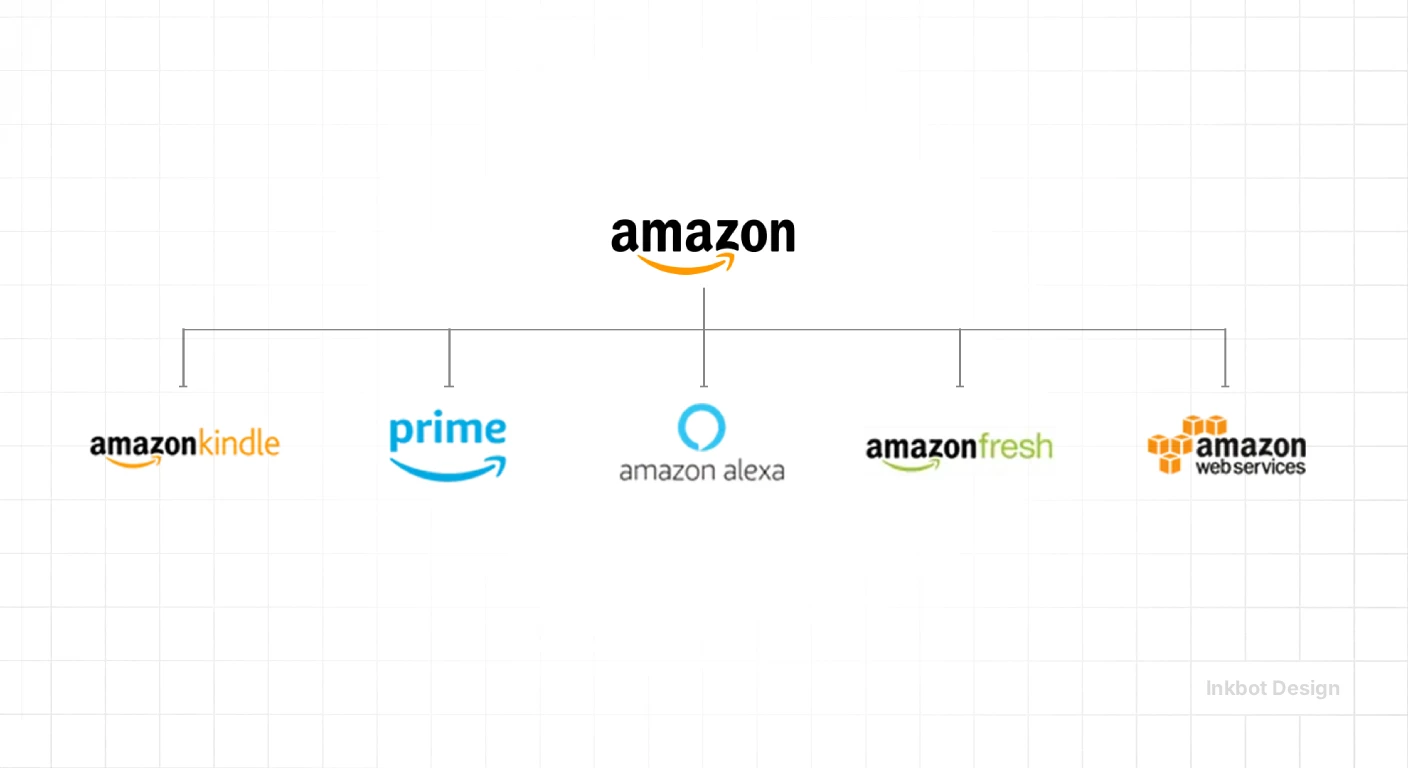
A buy-and-build brand architecture should be reviewed when its assumptions change. A further acquisition might create overlapping propositions. A specialist practice might expand into the parent’s market. A group-level pitch might expose confusion over who delivers the work.
Specify these triggers in the original decision record. “Review when the group launches a combined transaction advisory offer” is more useful than “revisit later”.
Track evidence appropriate to the decision: client understanding, referral descriptions, group-level enquiries and the practical burden of maintaining separate identities. Do not attribute every lost client to naming, or every cross-sale to endorsement. Check other explanations with the account team.
Review is not automatic retirement. A retained specialist name can continue indefinitely if its rationale survives scrutiny. Conversely, an endorsement should not persist simply because nobody owns the next decision.
Once a change is approved, coordinate the M&A brand transition timeline with operational readiness and any applicable legal requirements. A portfolio review authorises planning; it does not make tomorrow a sensible launch date.
Worked example: one policy, three acquisition decisions
The following professional services roll-up is hypothetical, not an Inkbot Design client case or evidence of financial results.
A 140-person advisory group acquires three practices:
Acquisition | Hypothetical evidence | Provisional decision |
|---|---|---|
Specialist tax boutique | Referrers actively seek its name; the parent has little specialist recognition | Keep the acquired name |
Regional accountancy practice | Clients recognise the local firm and value access to wider group expertise | Endorse the acquired name |
General advisory practice | Interviews suggest loyalty sits mainly with continuing advisers; parent services overlap | Prepare retirement, subject to readiness checks |
The policy remains consistent: investigate recognition, test the parent’s relevance and document the risks. The outcomes differ because the evidence differs.
Sequence matters. Retiring the general advisory name first does not mean the tax boutique must follow. Nor does retaining the tax name justify keeping three separate versions of the same service proposition.
The decision process is repeatable. The answer is contextual.
Standardise the rules before the next deal.
A serial acquirer needs an acquired-name policy before another negotiation creates another exception. Today, list every operating name, its commercial purpose, its decision owner and the evidence supporting its status—Mark unknowns rather than dressing them up as strategy.
If your group has clear propositions and few unresolved exceptions, handle that exercise internally. If the parent’s positioning is unclear or no one can explain why the names fit together, request a free Brand Equity Audit™.
Inkbot Design’s structured diagnostic identifies where the existing brand is losing commercial ground and prioritises what to address. It is an initial diagnosis, not confidential acquisition diligence or a complete portfolio architecture programme.
Questions people ask
Does every acquired firm need the same brand architecture?
No — a professional services acquisition group can apply consistent decision rules while retaining different naming arrangements. A specialist practice may need independence, while an overlapping general practice may be better suited to consolidation. The requirement is a documented commercial reason for each arrangement, rather than uniform treatment for administrative convenience.
Can an acquired founder keep their name indefinitely?
Yes — an acquired founder’s name can remain where it serves a continuing commercial purpose and the ownership arrangements permit it. Founder preference alone should not settle the question. Record the evidence, clarify decision rights and obtain legal advice on any negotiated naming commitment before treating it as permanent.
Should a serial acquirer create a parent brand before its next acquisition?
Yes — a serial acquirer should establish a clear parent identity and proposition before further acquisitions, even if clients continue buying from acquired firms. The parent needs to explain the group to vendors, employees and investors. That does not require immediately launching a replacement customer-facing brand or renaming the portfolio.
How much research is enough before changing an acquired name?
An acquired-name research plan should reflect the exposure, not a fixed interview quota. Examine the clients and referral relationships whose loss would materially affect the practice, then compare their accounts with internal assumptions. Where findings conflict, or important relationships remain unexplored, record the uncertainty and defer irreversible naming decisions.